Category Archives: Travel Tips
SAVVY TIPS: Why the savvy traveler, male or female, wears a travel vest and hidden cargo pants!
Security concerns have been increasing around the world during the past decades, not only related to major terrorism in the skies (such as 9/11) or on land (such as the Mumbai Attack), but also related to personal safety concerns arising from a growing number of pickpocket and mugging incidents in tourist destinations everywhere. At the same time, the number as well as the value of items carried by many experienced travelers has continued to increase. Wearing a suitable travel vest and hidden cargo pants is an excellent way for travelers to help address those issues.
Security checks are becoming a more and more frequent part of any international trip. At several airports on our recent trip to India and Nepal, we had to go through three different security checks, most of which included scanning: security check to enter the terminal, security check to enter the passenger area, security check at the door of the plane. The major hotels we were staying at also had security checks, including scanning, at the front door. And the major monuments we were visiting also had their own security checks at the entrance, many of which included scanning. In short, we underwent security checks several times a day.
Now consider this: I am carrying on me all of the following metallic checkpoint-allergic objects: a US smartphone, an Indian smartphone, a Nepal smartphone, a mobile hotspot, an IPad, a high capacity battery charger, a long zoom wi-fi digital camera, a spare camera battery, a spare memory card, earphones, different cords associated with all this equipment, a set of keys and two pens. The challenge of keeping all of these objects organized, inter-connected and easily accessible, a daunting task in itself, is extremely easy with a suitable travel vest, such as the 24-pocket Scottevest travel vest for men or the 17-pocket Scottevest travel vest for women, and that fact alone should be reason enough to use the travel vest. But keeping all of those metallic objects inside a travel vest which you can simply remove at each checkpoint and place in the bin for scanning is an even more invaluable hassle and time saver.
An additional benefit of storing all of these items inside the zippered compartments of a travel vest is that it helps protect against an increasing problem at airport security checkpoints: the theft of valuable items off the scanner belt. Having to watch one travel vest going thru the scanner is a lot simpler and safer than trying to keep track of several individual loose items.
As a complement to the travel vest, hidden cargo pants fulfill an important role. While all metallic objects are carried by the easily removable travel vest, the credit cards, money and passports find refuge in the deep hidden pockets of the hidden cargo pants. Hotel rooms and hotel safes are not a reliable haven for those items anymore, and they should be with you at all times, although not in an easily removable vest. A good pair of hidden cargo pants, such as the 8-pocket Scottevest Hidden Cargo Pants, has deep hidden pockets in which to bury your passport, your money and your credit cards, beyond the reach of any pickpocket. Since these items are not metallic, the security checkpoints will almost always ignore them. Hidden cargo pants have the further benefit of not looking like cargo pants but like a regular pair of slacks, so they are suitable for almost all occasions!
Another savvy tip from BonVoyageurs!
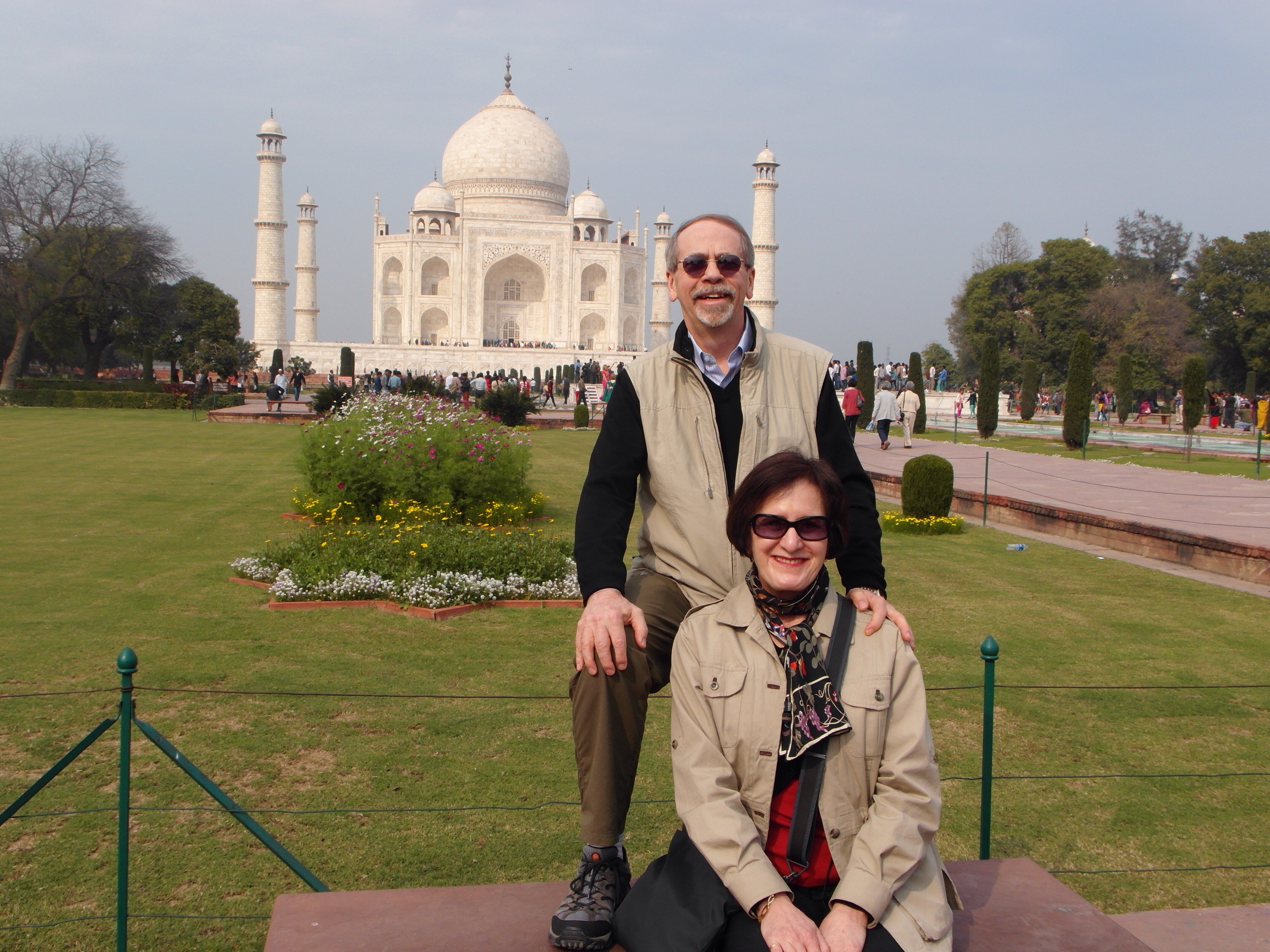
Travel Vest and Hidden Cargo Pants at the Taj Mahal!
DELECTABLE TIDBIT : The hidden passageway atop the Ponte Vecchio in Florence
Millions of tourists flock to Florence (Firenze) every year, but only a handful get to take what may well be the best walking tour in the city. Actually, few tourists even know about the existence of the Percorso del Principe (Passageway of the Prince) tour, and even fewer visitors plan their trip sufficiently ahead to make the required prior tour reservations with the museum office!
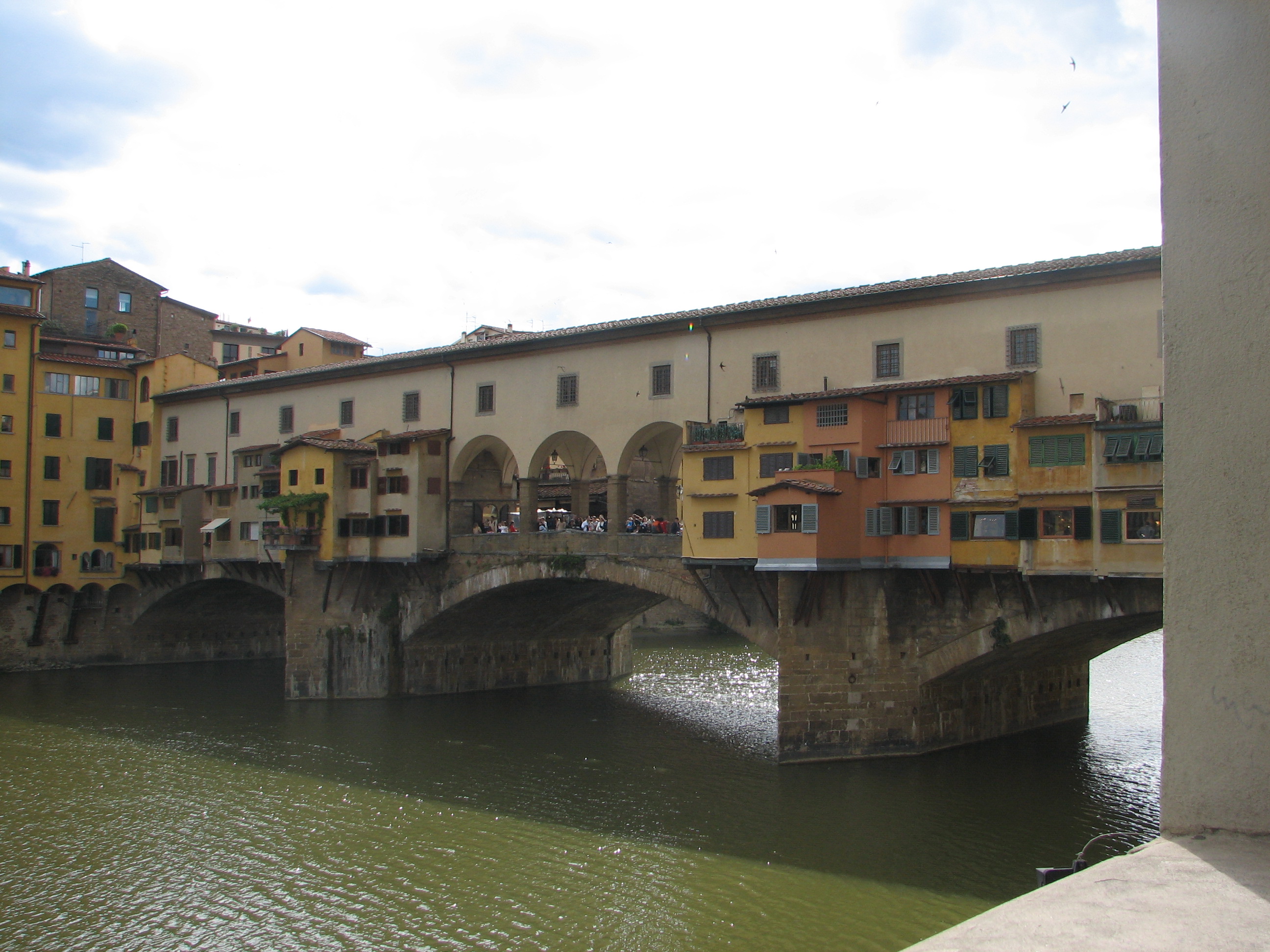
Ponte Vecchio in Florence (Firenze)
Called the Vasari Corridor, the passageway lined with treasures from the Medici collection occupies the top floor of the structure sitting on top of Ponte Vecchio and links the Palazzo Vecchio and the Uffizi Gallery on one side of the Arno river with the Palazzo Pitti and the Boboli Gardens on the other side. The Grand Duke Cosimo de Medici ordered the construction of this elevated enclosed passageway in 1564, using a design by Giorgio Vasari, in order to have his own private and secure passageway between his residence at Palazzo Pitti and his office at Palazzo Vecchio. You can see a very detailed history and description of the corridor and of the tour on a 2010 blog posting by the Tuscan Traveler.
The Percorso del Principe walking tour starts at the Palazzo Vecchio, goes thru the Uffizi Gallery, then along the top floor of the Ponte Vecchio, finally reaching the Palazzo Pitti and the Boboli Gardens. Taking this tour is basically the only way for most of us to visit the Vasari Corridor, and the tour is restricted to a few times on selected weekdays (currently Wednesday, Thursday and Friday).
As an aside, it is always amazing to see the long lines of visitors waiting to buy tickets to get into the Uffizi Gallery, because it is relatively well known that you can buy your ticket online before going and, by doing so, avoid all the lines when you show up at the museum. But the real delectable tidbit here is that you can take a very extraordinary tour in Florence, literally walking in the footsteps of the Medicis, if you have the time and the foresight to book your Percorso del Principe tour in advance. It is preferable to call the museum office directly (Tel: +39-055-2654321 or 055-294883) but you can also book the tickets online.
The Percorso del Principe tour is the most unique tour in Florence and consequently is usually sold out months in advance, so plan early. A Delectable Tidbit from BonVoyageurs.com!
Be forewarned: Confiscating your cellphone and your laptop at the border is perfectly legal!
International travelers, be forewarned: the US federal court decision announced on New Year’s Eve did not seem to attract a lot of attention, but its impact should be of interest to all of you. The court upheld the government’s right, at the borders, to inspect and copy the contents of travelers’ laptops and other electronic devices without the need for reasonable suspicion, even if that means confiscating the devices for the days or weeks necessary to perform such inspections.
Known as the “border search exception”, this tenet of US law allows for “routine” search and seizures at international borders and their equivalents (e.g. airports with international flights) and has been consistently upheld by the US Supreme Court.
What is relatively recent is not only the application of the law to electronic devices, but the right of the government to confiscate the laptop, cellphone or other electronic device for days or weeks (11 days in the case just decided by the federal court), as well as the government’s right to copy everything it finds on the devices. And US customs agents do not need reasonable suspicion of wrongdoing; no particular justification is needed. All the more reason to treat the border agent with attentive and obedient respect!
At the moment, the fact that these searches are rarely performed is the best protection we all have; if the seizure of travelers’ laptops or cellphones were to become more commonplace, the need for reasonable suspicion would very likely become a legal requirement.
Under current law, it is assumed that you are aware that you could be searched when crossing international borders (either at the US border or, perhaps with much more certainty, at the foreign entry/exit point). It is further assumed that, armed with this knowledge, you had the option of taking precautions to mitigate the possible eventual search or seizure of your laptop or cellphone.
The obvious conclusion: don’t carry with you on your laptop, cellphone or ipad any data you do not wish to share with anyone else, and be ready to lose the use of those devices for a couple of weeks.
Take this warning as an incentive to finally clean up your laptop or your cellphone of all that useless or compromising data you’ve been accumulating over the years. Also make sure you have a full backup of all the data you care about, or alternatively, that you are a user of cloud services and have access to all of your data from devices other than the ones you are carrying with you. On the other hand, if you are really paranoid about this, you can simply travel with a laptop free of data and use gotomypc.com or some other remote access software to connect to your computer back at the office or at home during your trip.
Safe travels with your electronic devices!
Which came first? The Delhi Belly, Montezuma’s Revenge or the Cairo Two-Step?
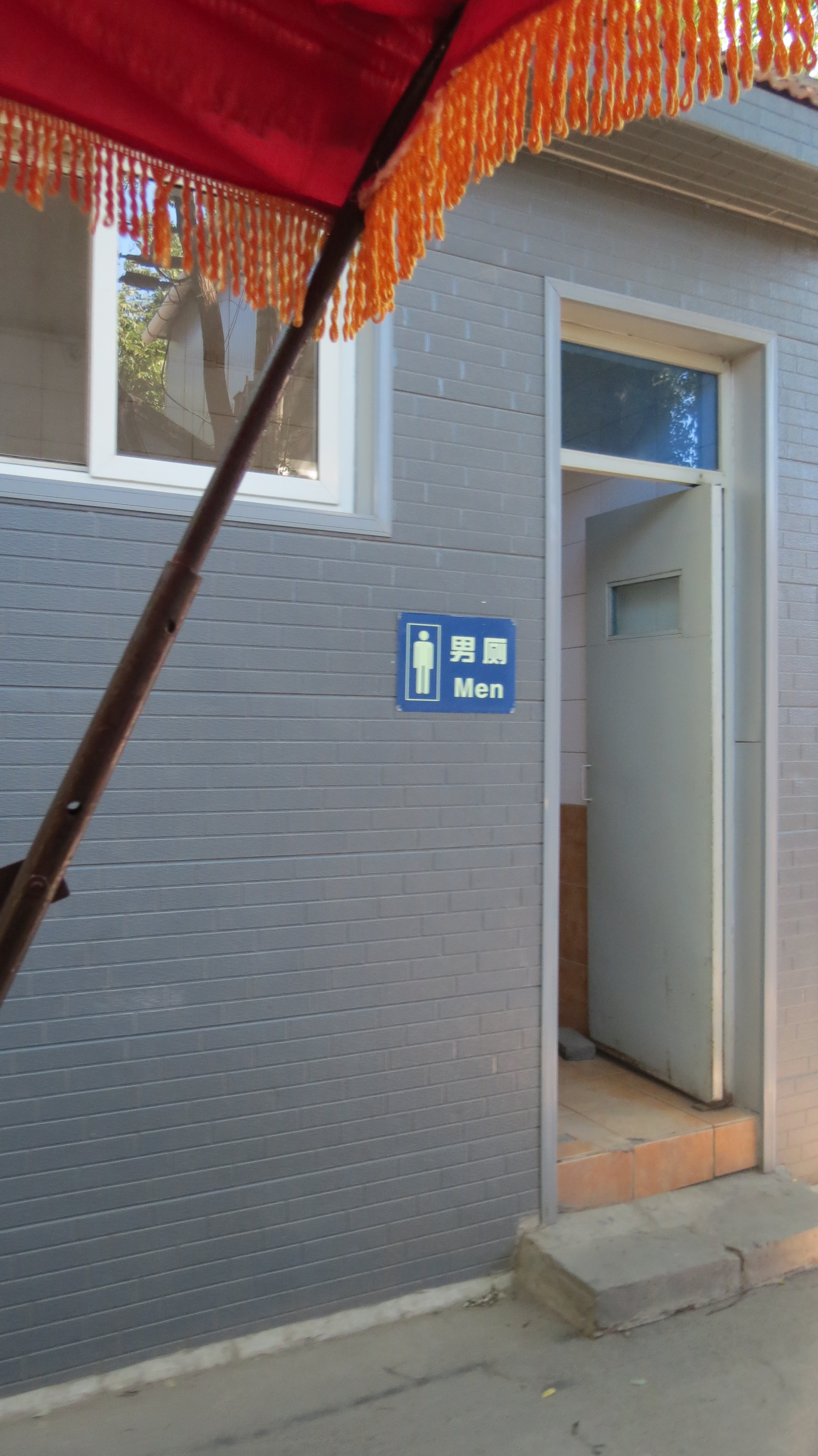
One of the many ubiquitous toilet buildings in a Beijing hutong
As part of my research into Indian food for our upcoming trip to India and Nepal, I came across a recent newspaper article about the discovery by British researchers of a vaccine “against the curse of the Delhi Belly”. Apparently, researchers from the University of Cambridge have come up with a single pill which will cure the diarrhea which so many travelers have to deal with, usually within the first week of their stay in a foreign country.
Traveler’s diarrhea is not a very entertaining subject, but it comes to the surface regularly when preparing for overseas travel. The disease rarely leads to serious health consequences, but the two or three days lost to that illness during a trip can quickly affect or even ruin a good part of your vacation. I find no comfort in the article stating that it affects more than 10 million people each year and up to half of all international travelers and that it is “most common in India and other tropical countries”. However, I frankly don’t recall ever getting traveler’s diarrhea, even though I have traveled all corners of the world many times and have lived more than four years in Mexico, where the illness is referred to as Montezuma’s Revenge, the Gringo Gallop, the Aztec Two-Step, etc… But I am getting older, so my immune system is probably not as strong as before, and it’s been a while since I’ve been to India; will it be different this time around?
Bloggers on the internet seem to indicate that the disease still affects a lot of people traveling to India. The several different names given to the illness, from Delhi or Bombay Belly to Gandhi’s Revenge, only attest to its reach across the sub-continent. It is not reassuring to read that the Delhi Belly was the first nickname for the traveler’s diarrhea to be mentioned in print, and that was in 1942, in reference to the diarrhea affecting Americans on duty overseas. I am not sure if that information is correct, as I would think even the Roman Legions, Mughal conquerors and Spanish Conquistadores had the same problems. I should probably read Marco Polo’s narrative to see if he encountered it on his travels to the east.
For our trip to India and Nepal, preventive measures seem to be the prudent course of action, recognizing the obvious fact that we can only reduce rather than eliminate the risk. Reading that one should be wary of handling the Indian currency itself, because of the germs the bills carry, almost makes one want to walk around wearing disposable gloves every day.
Drinking only bottled water, eliminating ice, closing the mouth while showering (a major concession since I love to sing in the shower!) are obvious first steps. We are used to drinking water only from sealed water bottles on our travels, but it would seem that, for India, we will have to take even stronger precautions. Too many people in India are refilling empty water bottles with tap water and resealing them with krazy glue. The first layer of protection would be to stick to the three major brands of bottled water in India, Bisleri, Aquafina and Kinley (from Coca-Cola). But that may not be enough. I think that our approach needs to be to take our bottles of water only from our five-star hotel each morning and bring them with us during our day of touring; the alternative would be to avoid water all together and move to carbonated drinks or beer (I was a heavy beer drinker when I lived in Mexico and it did preserve my health, since I never experienced Montezuma’s Revenge!).
As for food, the situation is more complicated. The advice gleamed from dozens of internet sites on the matter of eating in India seems uniform in terms of avoiding meat, fish, raw vegetables and fruit (other than the ones you can peel) and street food, and favoring the hot vegetarian cooked dishes of India. But since I am taste-allergic to coriander, yoghurt and chiles, this narrows down considerably my food options. Can I find some tasty lentil dishes which don’t come with added dairy, yoghurt, coriander or chile? The search is on!
Global Entry, TSA PreCheck, … the smart way to travel! And it is not just for US travelers!
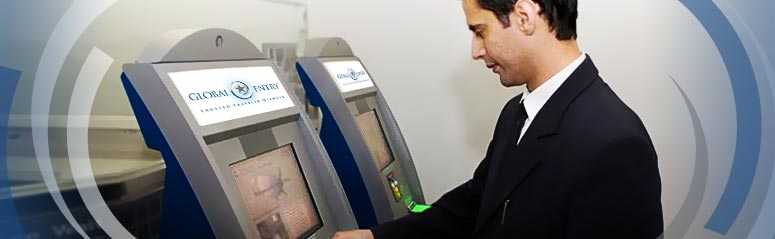 A few years ago, I was coming back from overseas into the US and was waiting in line for my turn to go thru passport control at the airport. While hundreds of us were standing around waiting, we could see a few travelers head to a row of ATM-looking machines on the side of the entry hall and quickly head out to the baggage claims area. Given the long lines one can frequently find nowadays at airport security checkpoints and at customs passport control areas, any way to beat the lines is worth looking into. And that is when I became interested in the growing array of services designed to make it easier for travelers to navigate through security and customs.
I don’t pretend to be an expert in the area, as I am simply a frequent international traveler trying to simplify the hassles of his trips. But what I see are more and more of these programs, and I think people need to be better informed about them. The government of the USA is clearly trying to streamline the system, and it is not alone. Other countries are themselves addressing this issue and devising systems to help travelers. I want to share my understanding of what is currently available, at least for the US traveler, with the readers of my travel blog BonVoyageurs.com (I invite you to enter your email address on the home page and perhaps become the 1,000th follower of the blog!).
First, one needs to understand that there are two basic types of programs, (1) the trusted traveler programs of the Customs and Border Protection (CBP), relating to entry into the country, and (2) the programs of the TSA, relating to going through the security checkpoints. The two types of programs are separate, but closely related in the sense that travelers who belong to some of the CBP programs, like Global Entry, are automatically eligible for some of the TSA’s programs, like PreCheck.
To enter the USA in a speedy fashion, look into one of the following four programs from the CBP:
(1) NEXUS - think of N for north - program for cross-border travel between Canada and the US.
(2) SENTRI - think of S for south- program for cross-border travel between Mexico and the US.
(3) FAST - basically for commercial truck drivers for cross-border travel between the US and Canada or Mexico.
(4) GLOBAL ENTRY - since 2008, the fast growing program for international travelers from the US. This is the program which allows the trusted traveler to use those automated machines in the entry hall of most international airports in the USA so that he/she can zoom thru passport control. Membership in the Global Entry program gets you a “membership” card, but you don’t need that card for the airports; the machines will scan your passport and determine that you are part of the Global Entry program and send you on your way.
The application process for Global Entry is pretty straightforward. You file an application online thru the GOES system (Global Online Enrollment System), after which CBP does whatever it needs to do to check you out and make sure you are not a threat to homeland security, then you get a conditional acceptance letter which asks you to make an appointment for an interview, you go to the interview where you answer questions and get fingerprinted, and voila, you are a member of the Global Entry program and will receive your card in the mail shortly afterwards.
To speed thru security checkpoints, consider the TSA’s PreCheck program. In those US airports where the program operates (more than a hundred as of this writing), PreCheck benefits include being able to go through security without removing your belt or your shoes and without having to take out your laptop or your plastic bag of liquids from your backpack or carry-on bag. It also means separate security lines for PreCheck passengers, and that usually (but not always) greatly accelerates going through the security screening process. TSA has its own application process for the PreCheck program.
However, to get the benefits of both a speedy run through security and a speedy run through passport control upon your return to the USA (in a hundred or so airports), all you need is the Global Entry program because it automatically qualifies you for the PreCheck program. And here also, you don’t need to have your Global Entry card with you when you show up at the PreCheck security checkpoint as your passport will suffice.
But Global Entry is not simply relevant to the USA. It has international dimensions as well because of agreements between the US and a number of other countries! If you are a US citizen and member of the Global Entry program, you can get expedited entry benefits for the Netherlands, Korea, Australia, even New Zealand! The arrangements vary country by country; for example, New Zealand has dedicated lanes for members of the US Global Entry program, Australia allows Global Entry travelers to use the lanes dedicated to the Australian Smart Gate program, while Korea and the Netherlands require Global Entry members to obtain membership in that country’s program before benefits can be used (SES Smart Entry System for Korea, Privium for the Netherlands). Conversely, members of those countries’ trusted traveler programs get the benefits of the Global Entry system in the US in various ways. The details do get complicated, but the bottom line for US travelers is simple: join the Global Entry program.
It will make your travels easier thru both security checkpoints and customs.
Can you spot the pickpocket in this picture? The best way to spot or stop pickpockets …
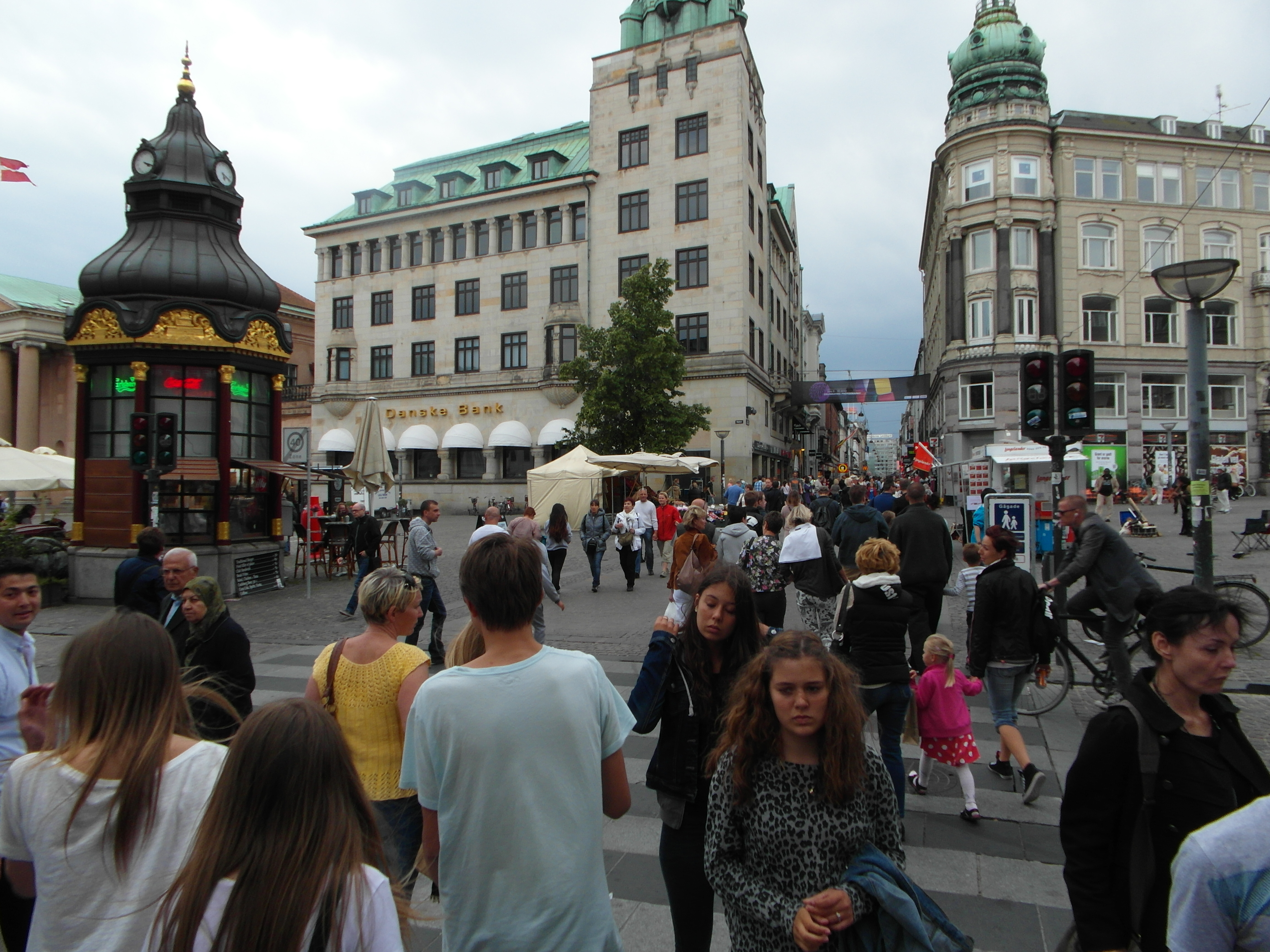
You are looking at Gammeltorv, the oldest square in Copenhagen. I took this picture on June 15th of this year (2013), as we were walking on the pedestrian Storget on our way from the old port of Nyhavn to the Tivoli Gardens. We were traveling with friends, on a 14-day Baltic and Scandinavia cruise aboard the Oceania Marina. We had one day of touring in Copenhagen and were trying to make the most of it. When we arrived at Gammeltorv, my wife decided to make a stop into a shop at the corner of the square.
So I was simply looking at the comings and goings on the busy square when I noticed a pickpocket in action. A street performer was attracting the attention of people walking through the square, the attention of everyone except one man, who was getting close to people and watching them, not the performer. I pointed him out to my friend, saying “See the pickpocket there. He’s the one who’s not looking where everyone else is looking!”
A few days later, in Riga, I became the target of a pickpocket as we were taking a walking tour of the old city but fortunately I noticed him before he could take action and I simply asked him to move away, which he did. Then again, a week later, as were walking along the Esplanade in Helsinki after a succulent meal at Kappelli’s, I noticed among the crowd of people around us a couple of poorly dressed kids followed by an eastern european looking mother with a baby stroller. Again, the key here is to look for what is out of place; in this case, a poor woman with a family of young children in the middle of a totally touristy and non-residential area should be an immediate red flag. I did not believe for a second that she was a tourist, or that she lived in the area and was merely promenading her family.
Can I prove in court that all of these people were in fact pickpockets? No, but I am sure that the odds are that they were indeed pickpockets and I credit my alertness to my surroundings as one of the main reasons for which, after 45 years of international travel to most countries of the world, my turn to be pickpocketed has yet to arrive. It seems that just about everyone else I know who has traveled the world has told me stories of being robbed or mugged. Being alert is not protection against becoming a victim, but it reduces the chances significantly. It makes it more difficult for thieves to approach you without you noticing.
Every time that I find myself in a situation involving a crowd, whether it be a square or a bus or a metro stop or whatever, my antennae go up and my focus shifts to my surroundings. I do not stand still but constantly shift around, on the lookout for anything out of the ordinary. Any situation in which someone can actually touch me or bump against me is a big red flag. Entering or leaving a subway car, for example, or standing in line somewhere to buy tickets or pay for parking are wonderful opportunities for close contact and pickpockets will ply their trade there. I don’t have to work at this anymore, it long ago became second nature to me. And that is why I have, so far at least, spotted the pickpockets before they could make me their next victim. So, RULE ONE for stopping pickpockets is BE ALERT!
Alertness is not solely the passive act of being aware of what’s around you. It also means actively avoiding locations and situations which significantly increase the risk of becoming a target and taking behavioral action when necessary. Walking in the evening can be very enjoyable but it also creates many opportunities for problematic situations, so it requires increased attention and focus and the willingness to change route as appropriate to avoid unnecessary risk. In a sense, you would rather be where crowds are in order to avoid potential muggers, but crowded areas are where the pickpockets are, so you want public areas with a crowd that is not too big as to allow for close human contact. A crowded bus, or metro car, or any other location where people can innocently bump into you is a great open target for pickpockets who use intentional bumping as the way to gain access to your pockets.
This past September, I was sitting on a very crowded bus going from Nice to Saint Paul de Vence. As an aside, I highly recommend the public transport system of the French Riviera; for one euro per trip, you can travel from Cannes to Monaco, from Nice to Vence, all over, in very comfortable and modern buses. However, some of the routes are very popular and crowded, such as the Nice to Monaco and Nice to Saint Paul de Vence routes. Lots of people were standing up in front of me and my mind immediately switched to one of the pickpocket favorite ploys — the pretending to fall on you trick — which gives the pickpocket a chance to go through your pockets while he is pretending to recuperate from his “accidental” fall.
What did I do? I pulled out a ballpoint pen from my pocket and held it in my fist, tip upwards, on my lap. Then I carefully looked in the eye of everyone of the men standing a few inches away from me. The innocent travelers probably thought I was an eccentric, but I had a clear unspoken message for the potential pickpocket: “If you decide to fall on me, you risk having the tip of this pen at best in your chest and at worst right at your throat!” I was probably the only individual who got my own message, but in any case, my alertness helped insure that nothing would happen. Quite honestly, I have no idea what I would really have done should an incident have occurred; I shudder at the thought of hurting an innocent person. But I am determined to be ready for all eventualities in any case.
However, I do not believe that being alert is sufficient protection against pickpockets. One needs also to be prepared for the day when the pickpocket does succeed in getting near you and is able to reach into your pockets. There will be undoubtedly many occasions when you will be distracted or focused on something else, or merely absorbed in an interesting conversation, and that is when you are at the greatest risk. Which is why I want to make sure that, if and when a pickpocket does get to me, he does not take from me anything I care about, like my credit cards, my passport, my money, my cell phone, my hotspot, etc… To obtain that protection means paying attention to the clothing you wear and how you assign items to different pockets.
When I travel, I always wear “protective” clothing, meaning clothing designed to make it extremely difficult, if not impossible, for pickpockets to succeed. Both my shirts and my pants have hidden pockets where my valuable items are kept, while the obvious pockets carry nothing of value whatsoever. In fact, I keep in one of the obvious pockets a small wallet with a couple of expired credit cards with numbers that are no longer in use as well as old worthless currency bills; this is not so much for protection against pickpockets as help against possible muggers.
If I were asked to produce my wallet at the barrel of a gun, that is what I would pull out … and pray that the mugger runs away before noticing anything amiss! Hidden pockets, virtually inaccessible to a pickpocket, carry all my valuables. My cell phone and my hotspot are in my shirt’s hidden zippered pockets under my armpits, easily accessible when I need them, but virtually out of reach to anyone else. This is particularly important to me, because I have a lot of valuable data on my cell phone; it is well protected by a twelve digit passcode, but I still want to do everything within my power to prevent its loss. So, RULE TWO for stopping pickpockets is CARRY NOTHING VALUABLE in your visible or accessible pockets.
Finally, for those of you who carry more or larger objects, such as laptops, you also need to carefully select the bag you will have with you. I always carry a cross-shoulder pickpocket-proof bag. It is designed so that the straps cannot be cut by a thief, and the pockets are closed not only with a zipper but also with a clip which further prevents access by pickpockets. The bag is carried cross-shoulder, with my left arm resting on the bag, so that it cannot be grabbed by someone on a motorcycle speeding by you. Again, these are all what I consider basic precautions. They do not guarantee that I won’t be victimized, but they do reduce the chances significantly. And that is the best one can hope for.
There are companies which offer fantastic clothing and other products to help protect against pickpockets. I encourage all travelers to be vigilant and prepared! Email me if you wish more specific information, or simply use the contact form on my travel blog at BonVoyageurs.com (I invite you to enter your email address on the home page and perhaps become the 1,000th follower of the blog!). Safe travels, everyone!
The best travel app in the world … Don’t leave home without it!
 Being a frequent traveler as well as a smartphone user since such devices came on the market, I have tried and used many many travel apps these past few years. Most of the hundred or so travel apps on my iphone have provided only temporary help or specific help on one or other aspect of a trip, but a few apps stand out from the crowd and have become indispensable in my travels. One app in particular warrants my full recommendation on my travel blog BonVoyageurs.com (I invite you to enter your email address on the home page and perhaps become the 1,000th follower of the blog!).
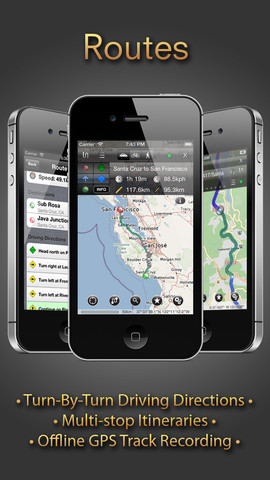
Let me introduce you to Pocket Earth, by GeoMagik, which you can purchase on the ITunes store for less than $3. The authors describe it as “the ultimate travel tool—comprehensive worldwide street maps and travel guides even while you are offline”, and they are absolutely right. I encourage you to visit its website at http://www.geomagik.com/en/pocketearth.html to learn all about its features and benefits, but let me give you my take on it.
The first key feature is that the app will download on your iphone the maps for all the regions or cities which you will visit on your trip so that you can access those detailed maps offline. This is important because I usually turn off the data features of my iphone while traveling internationally in order not to incur the exhorbitant data charges of my US cell phone service provider.
The second key feature of Pocket Earth is that you can save as favorites all the places you plan to stay at, go through or visit. For example, if I were to go to Barcelona in a few months, I would open the app and save Barcelona Airport as my first favorite, and then the hotel where I will stay at, etc… If you dont know exactly what you wish to visit, the Pocket Earth map will already have detailed travel guides and locations to suggest.
The third key feature of Pocket Earth is that you can easily calculate and save all the routes you will take during your trip. Whether it be the route from the airport to your hotel, or from your hotel to the restaurant you are planning to eat at, the app will give you the route and all the info you need (time, distance, …) for getting there and back whether by car, by public transportation or by foot. This is an amazingly easy and useful feature for navigating your way through a city that you don’t know very well. When you get into a cab driven by a guy who is himself a recently arrived immigrant, just open the app and you will see the route the taxi should be taking, with calculations of time and distance. The app is linked to gps so, if you turn on the data feature of your iphone, the app knows where you are and will tell you the route you should be taking and where you are along that route.
A fourth key feature of Pocket Earth is that you can link your iphone contacts to the app. This is extremely valuable because now, all you have to do is enter the hotel you will stay at in your contacts, and presto, your hotel will appear on the Pocket Earth map of your destination. If you enter in your contacts the hotels, restaurants, sights and other places which you will visit (and that is what I do), you will be able to organize your time and navigate the city almost like a local!
The Pocket Earth map has many more features of benefit to travelers, like links to thousands of travel guide sites and pages, etc… All I can suggest is that you take the plunge and fork out the $3 to buy the app; let me know what you think about it.
PS No, I have had no contact with the authors of Pocket Earth and am not getting any kickback or other consideration for making this recommendation.