Monthly Archives: August 2013

Nice, France ~ Le marche aux fleurs, le port et la mer

SAM_0955

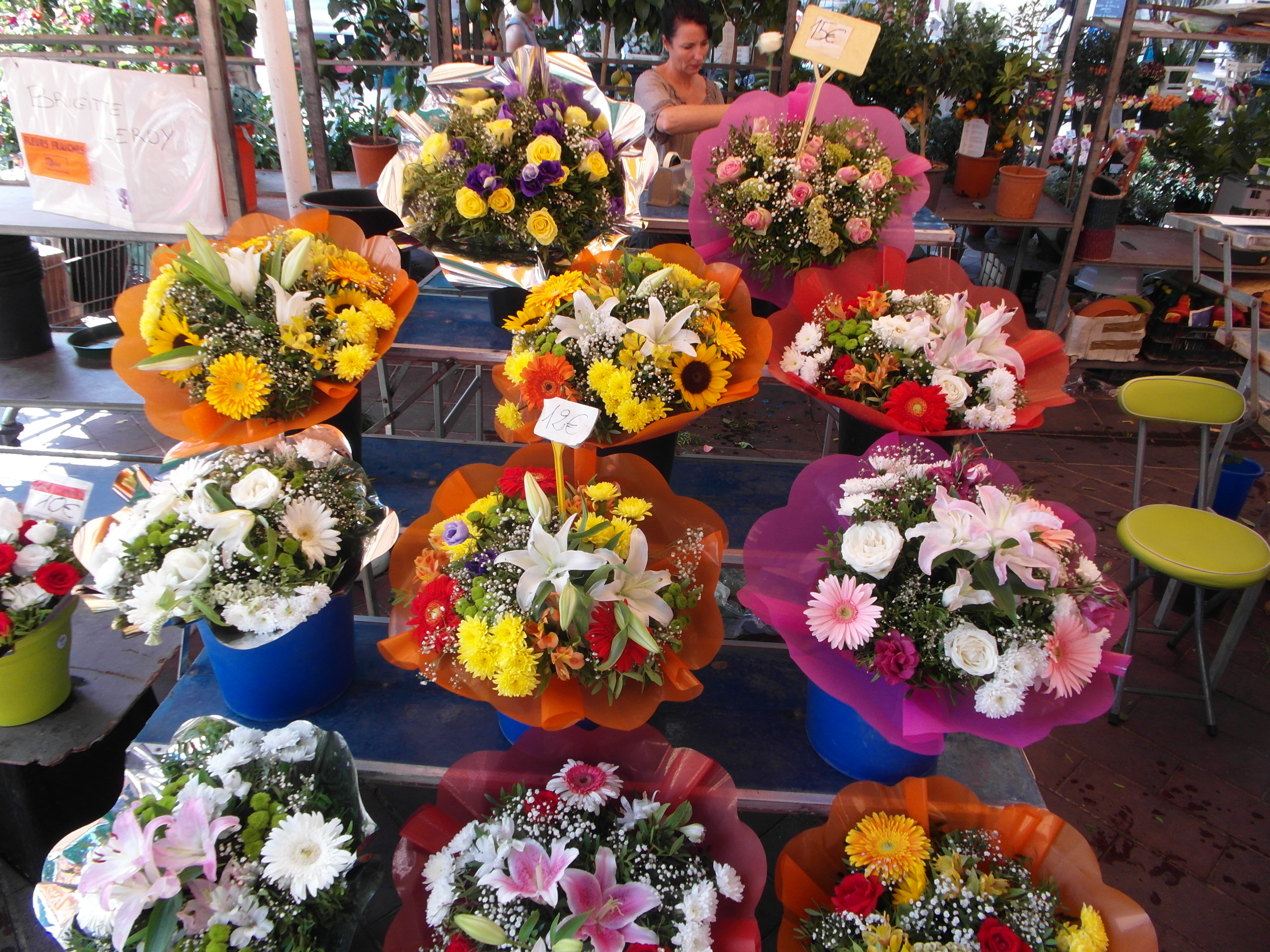
Marche aux Fleurs du Cours Saleya a Nice

Main events of the day

*Visited the Marche aux Fleurs (Flower Market) at Cours Saleya and enjoyed some socca

*Ate lunch on the harbor front at the gastronomic seafood restaurant l’Ane Rouge

*Took a boat tour of Nice, Villefranche and Cap Ferrat

*Enjoyed dinner again at Blue Beach on the beach in front of the Hotel Negresco

Highlights of the day

SAM_0957

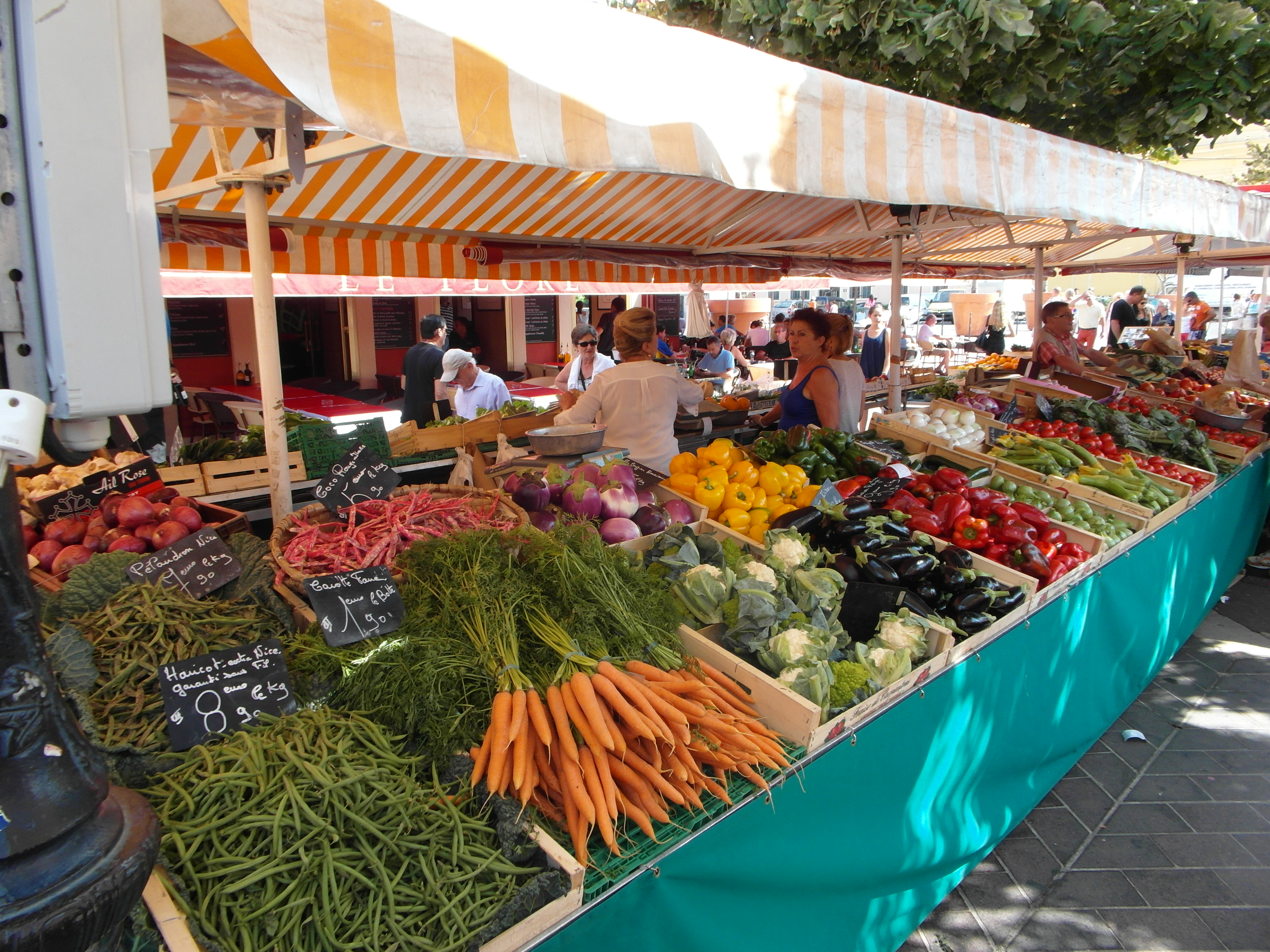
Vegetable stand at the Marche aux Fleurs of Cours Saleya in Nice

Since we have had a busy first few days in Nice, we decided to take it easy today. After breakfast, which for me so far has consisted of pain au chocolat, fruit and tea, we walked over to Cours Saleya in old Nice. This is about a fifteen minute walk, most of it walking thru pedestrian areas lined with bistros and cafes. I continue to be amazed at the number of outdoor restaurants in this town; we must have passed by at least a hundred just to get to Cours Saleya.

Although it is called the Flower Market, only a small part of the market consists of flower stands. Most of the market, several blocks long, consists of a food market (except on Mondays when it turns into a flea market). The breadth of selection and freshness is astounding, and Lynn wasted no time in buying enough fruit and vegetables to load me up with heavy bags to carry for the rest of the morning.

SAM_0969

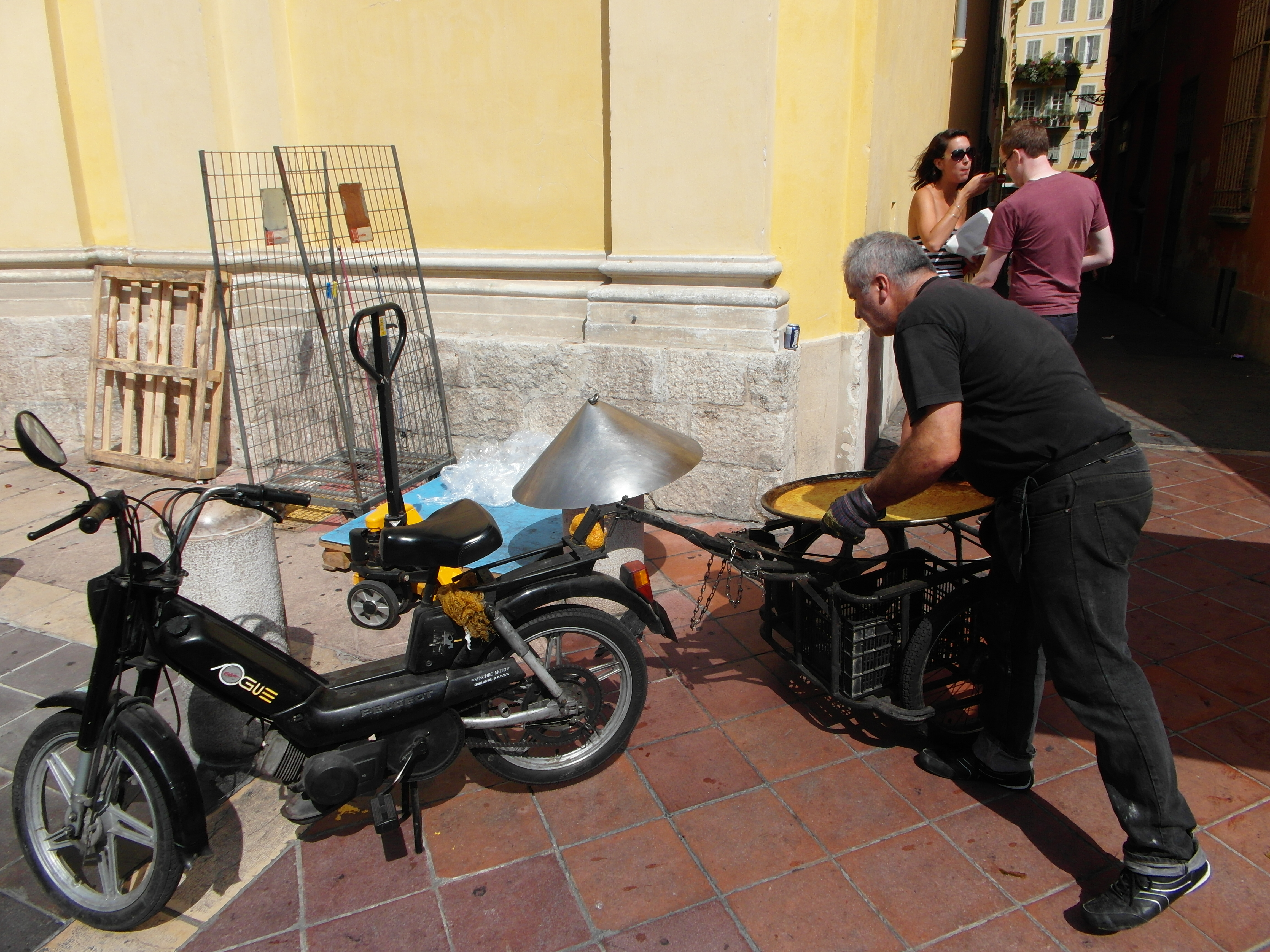
The socca is delivered by motorbike every few minutes to the food stand on Cours Saleya

A tradition which quite a few visitors to Nice seem to respect is to eat some socca at the market. The food stand is in front of the church and offers in addition to the chick pea pancake socca other Nice specialities such as Pissaladiere and tourte de blette.

SAM_0968

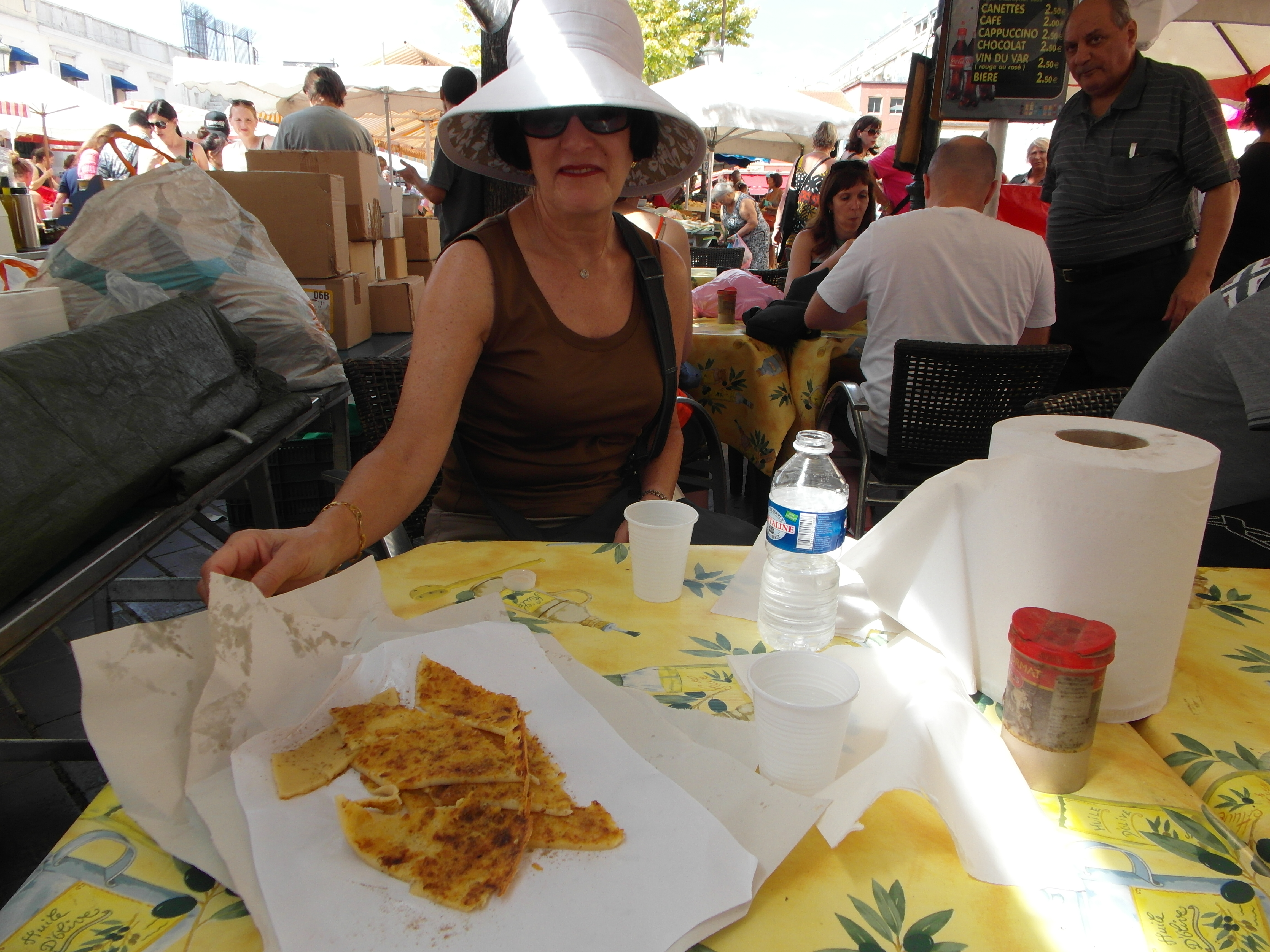
Enjoying socca at the Marche aux Fleurs in Cours Saleya, Nice.

For 3 euros, we got one portion of socca which was more than enough to satisfy our desire to taste this delicacy and also provide me with enough nutrients to handle the twenty minute walk back to the apartment with my load of fruit and vegetables.

SAM_0975

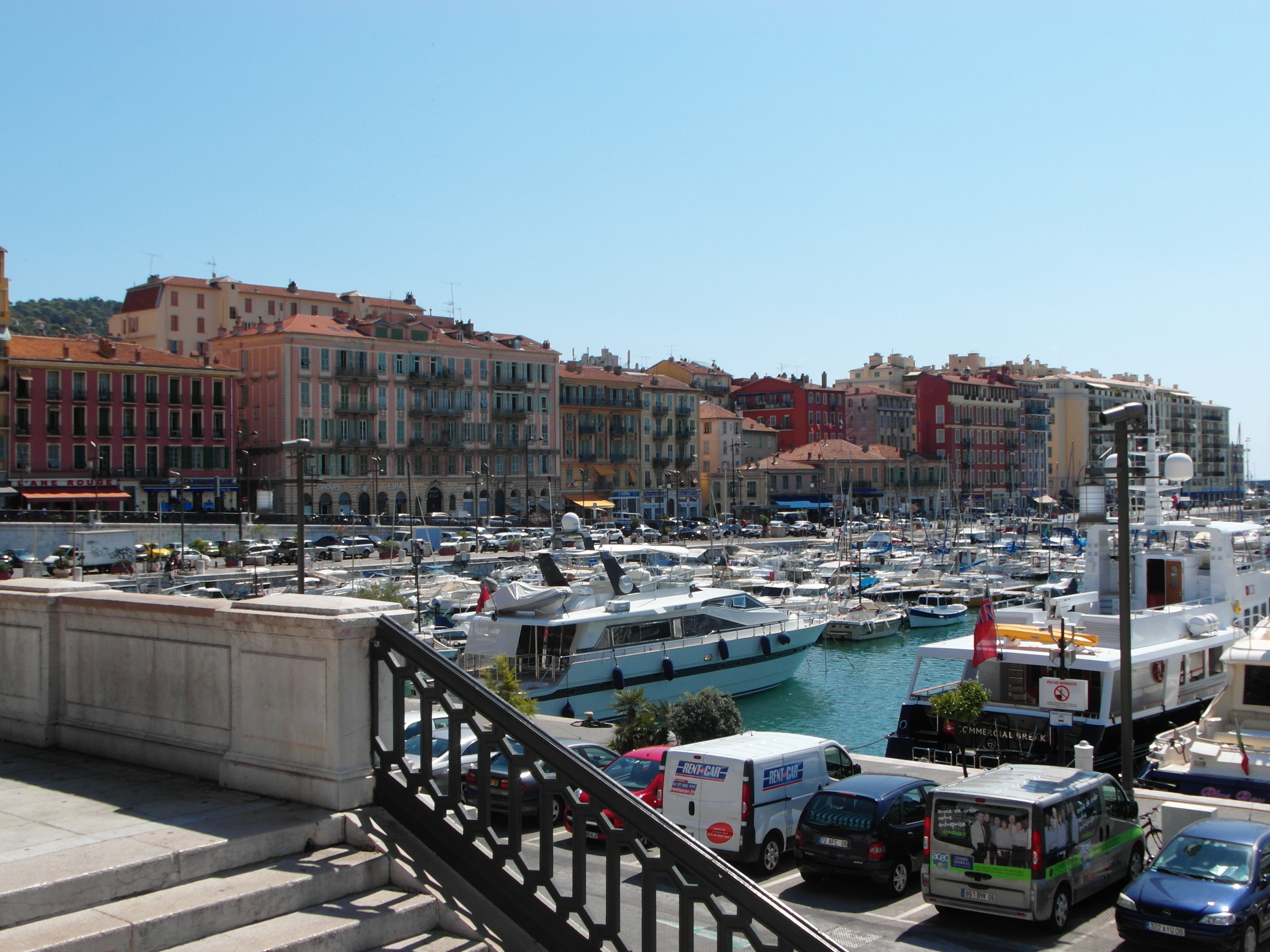
The port of Nice

As soon as the groceries were put away, we headed out to the bus stop, a few steps away from our front door. It is quite easy to master the Lignes d’Azur iphone app, which is quite handy in that it will tell you what the next bus to take is in order to get to your destination, the route and the exact times of departure and arrival. So I knew when we left the apartment that a no 7 bus would be at the bus stop two minutes later and would take us to the Nice port in twelve minutes. Well worth the one euro (US$1.30) cost of the ride, don’t you think?

SAM_0988

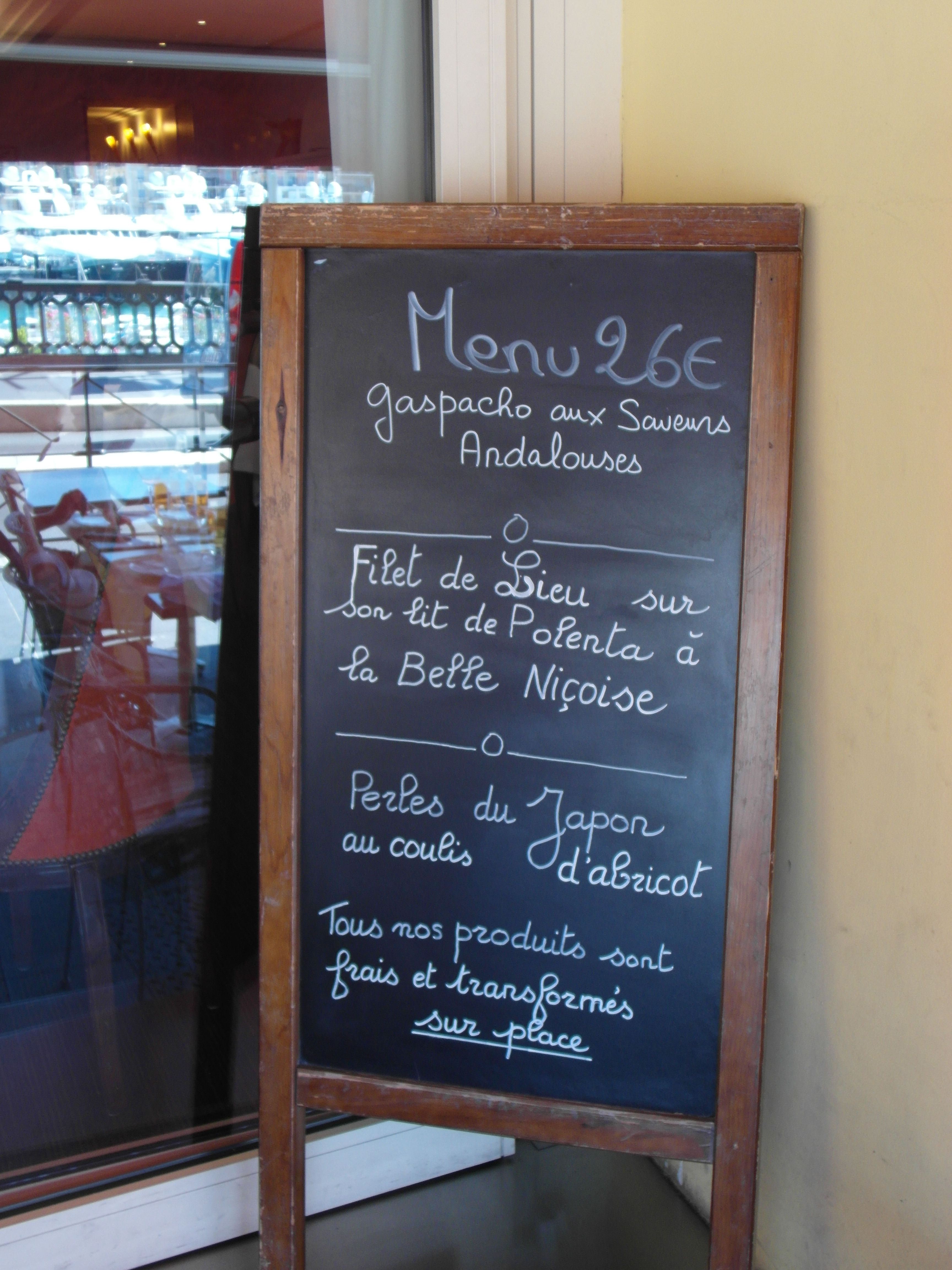
Menu of the day at L’Ane Rouge on the harbor front in Nice

We sat down for a simple lunch at l’Ane Rouge, a gastronomic seafood restaurant on the harbor front. We opted for the menu of the day and for a half bottle of a very refreshing Cotes de Provence Bandol rose. Close to us was the main access road for cars wishing to board the next ferry to Corsica, and it filled up quickly.

SAM_1000

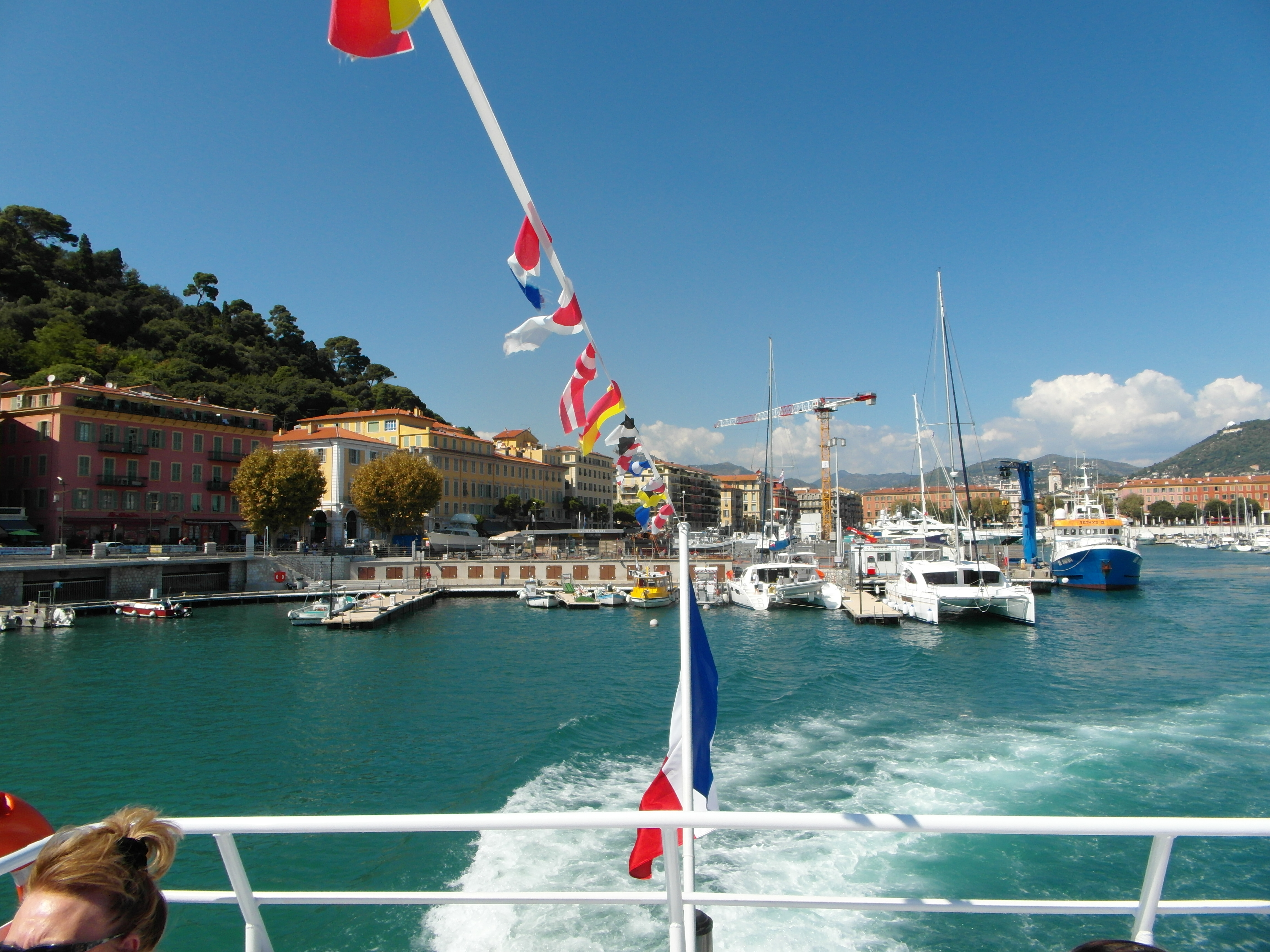
Leaving Nice harbor for a boat ride around Villefranche, Cap Ferrat and Nice

After lunch, we had a reservation for a “promenade en mer”, a boat ride which would take us to Villefranche, Cap Ferrat and along the Nice coast as well. As soon as we left the protection of the port, the winds picked up quite a lot, even though it had seemed from shore to be a windless warm sunny day (by the way, we have just been having fantastic nice sunny warm weather since the first day after our arrival, and the forecast says it will continue that way!).

SAM_1024

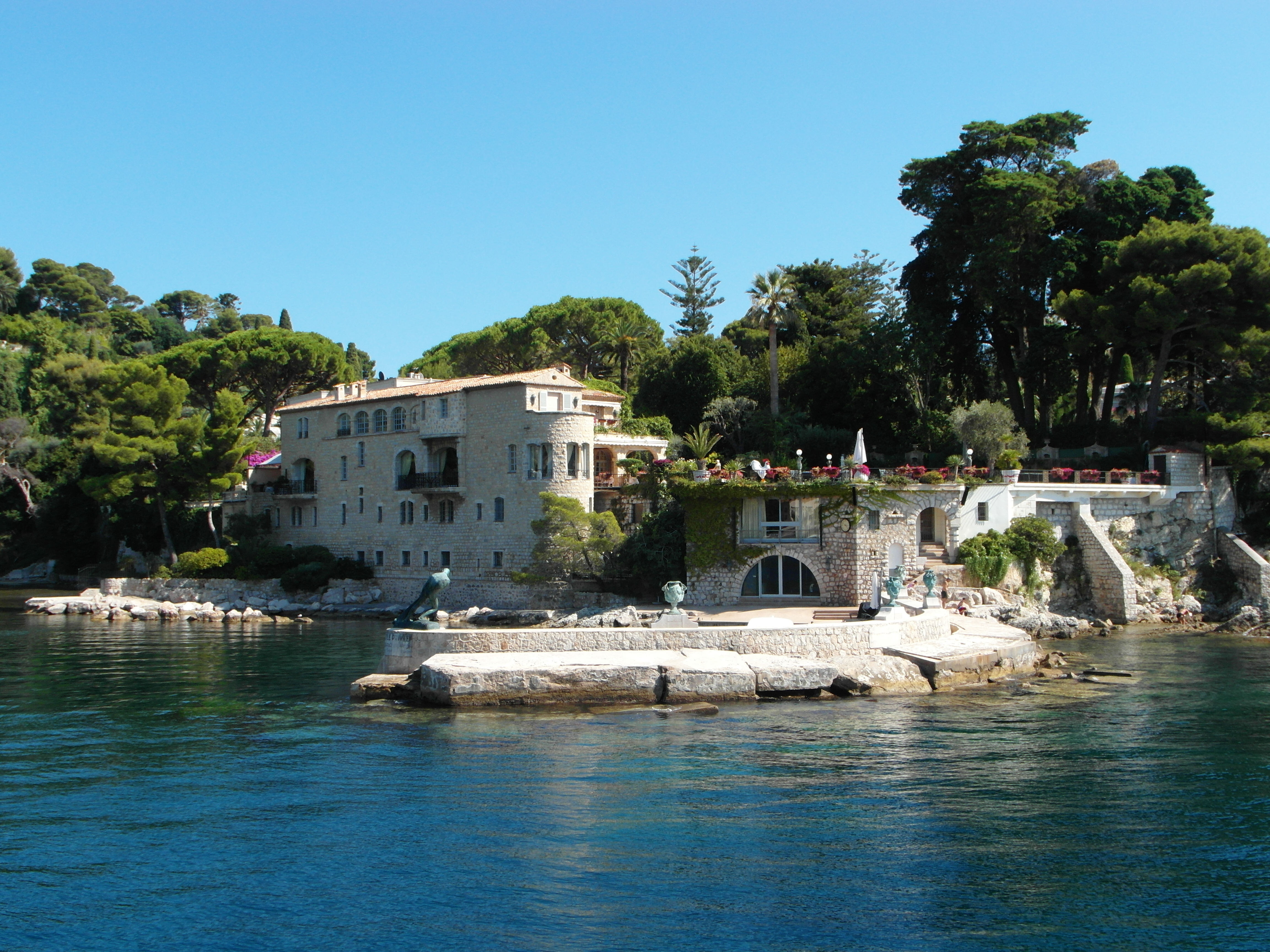
The summer place of the Zanussis in Saint Jean Cap Ferrat

As our boat went along the shoreline of Cap Ferrat and Saint Jean Cap Ferrat, the tour guide started pointing to one fabulous mansion after another built or owned by a celebrity. Kurt Jurgens, Elton John, Tina Turner, Mick Jagger, King Leopold of Belgium, King Farouk of Egypt, Sean Connery, Bill Gates are but some of the names I remember being mentioned. I suspect that seeing them from the water is the only way we were ever going to see them. Of particular interest, Villa Leopolda (owned at some point by Bill Gates) and Villa Ephrussi de Rothschild are the only two “villas” which have a view both of the Villefranche bay as well as of the Monaco bay on the other side of the Cap Ferrat peninsula.

SAM_1031

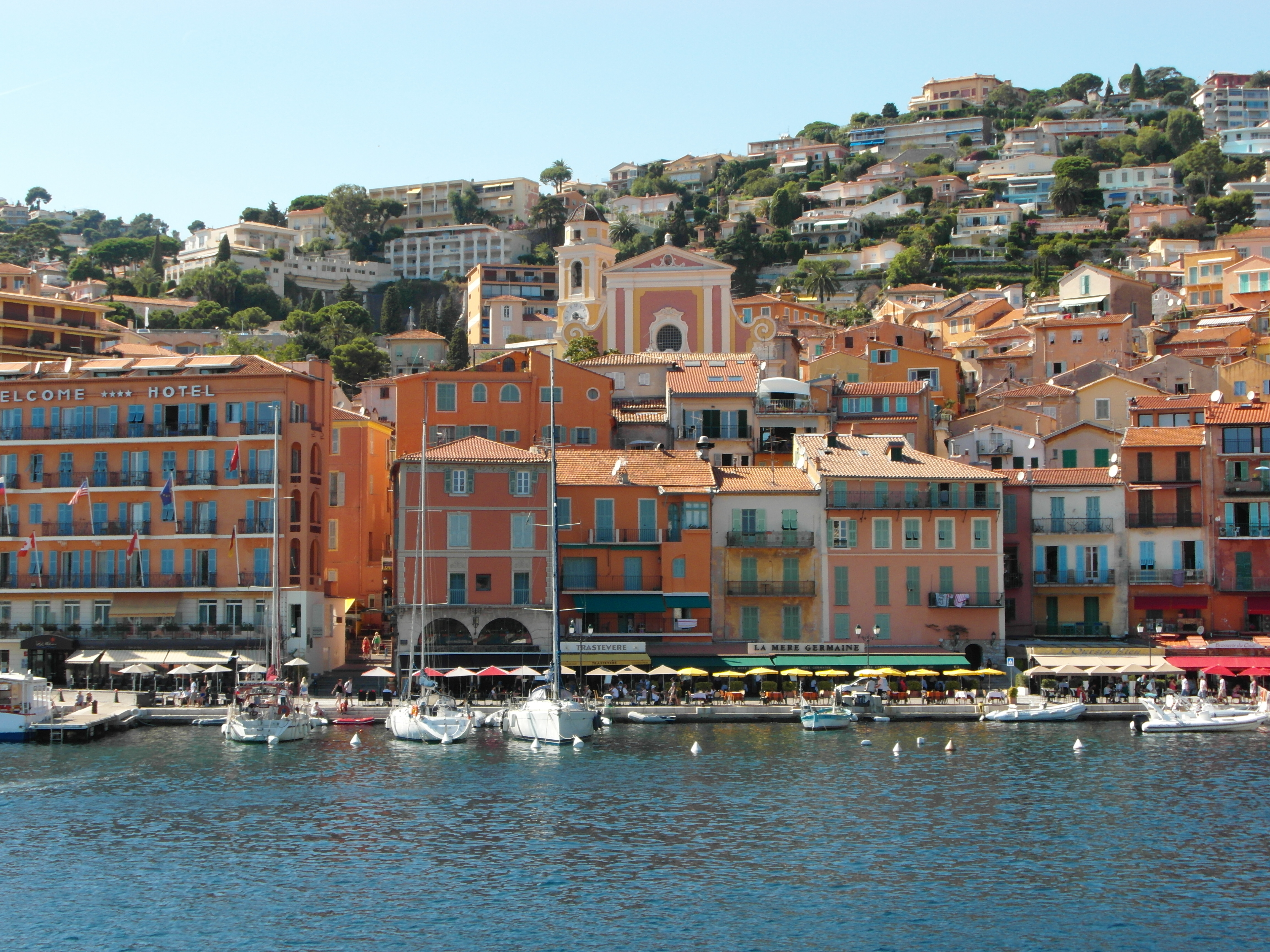
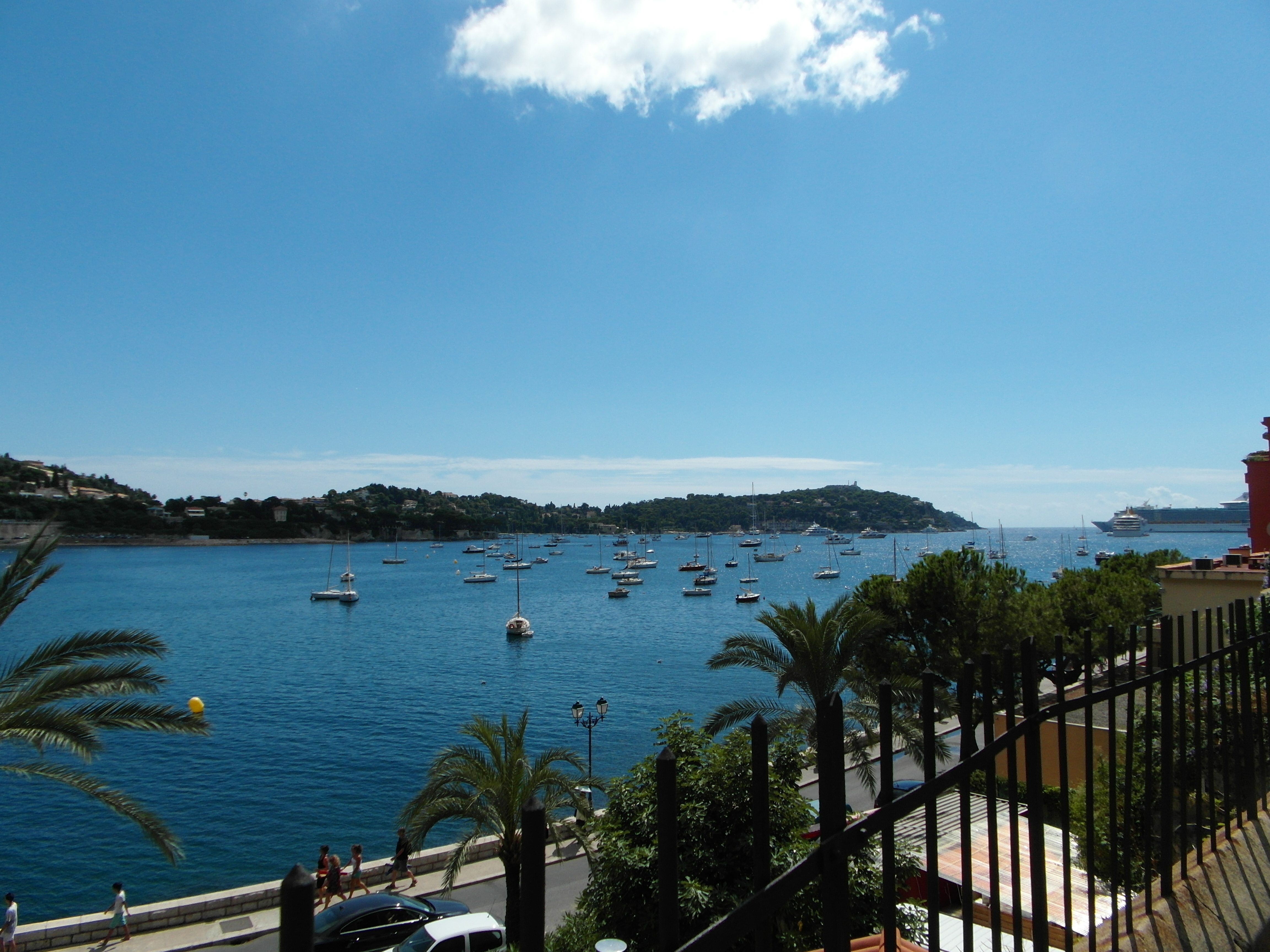
The port of Villefranche-sur-Mer viewed from the water

We particularly enjoyed passing in front of the port of Villefranche-sur-Mer, a fantastic view in itself, and hearing the guide point out the green awnings of La Mere Germaine (where we had bouillabaisse a few days ago) with the comment that it offered the best bouillabaisse in the whole world!

SAM_1054

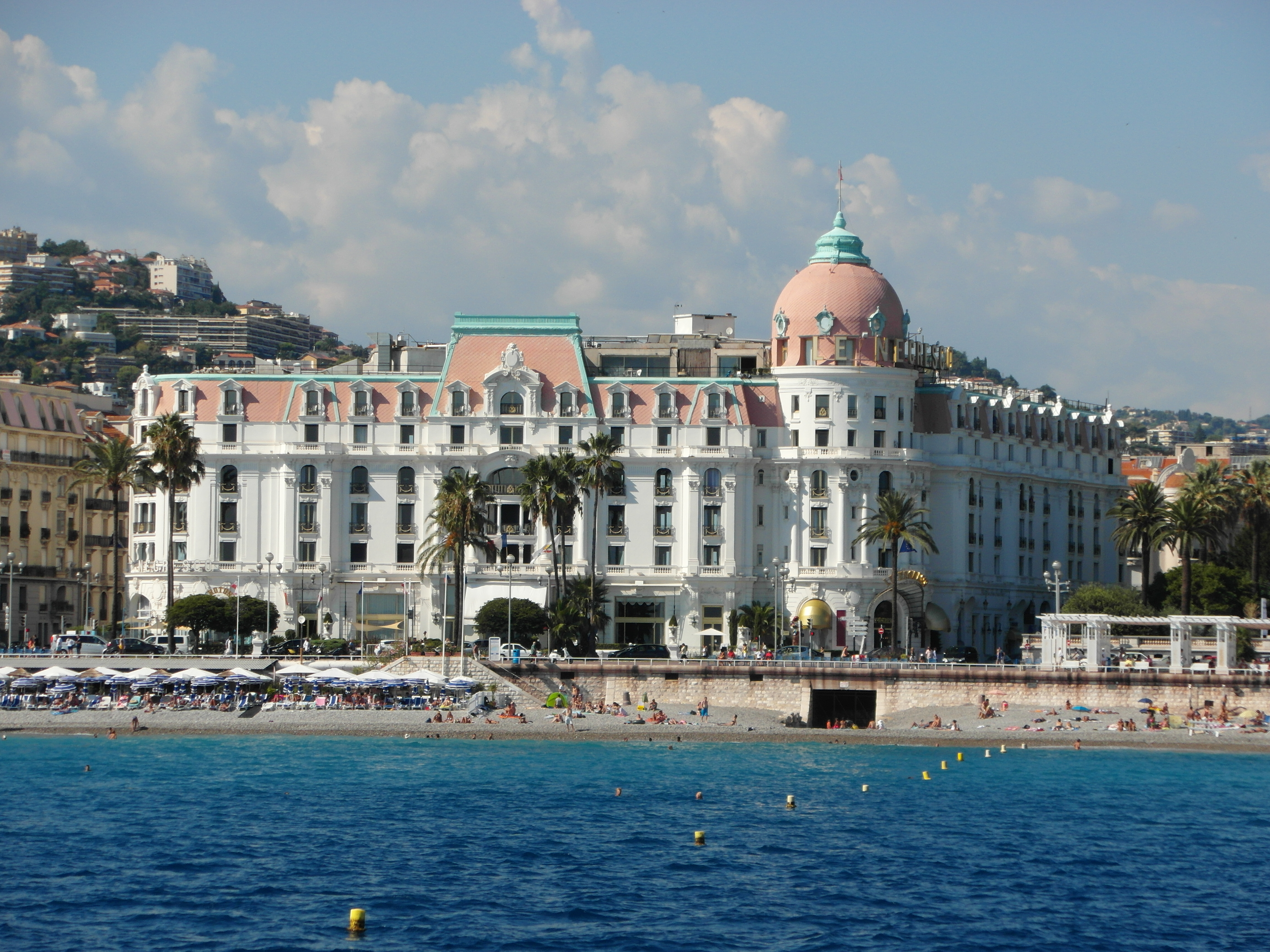
Hotel Negresco of Nice, viewed from the sea

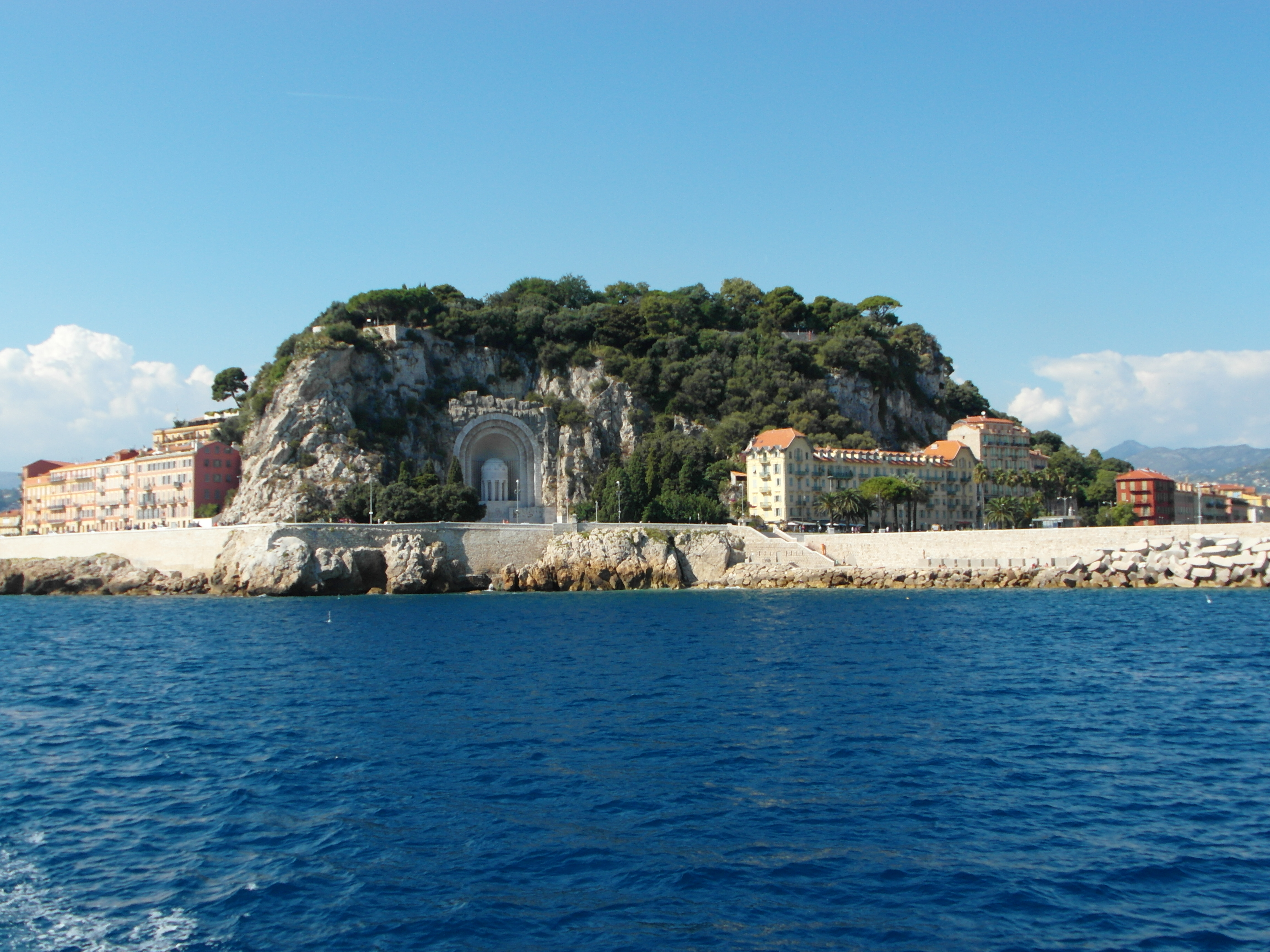
The boat tour later went along the Nice shoreline, offering us great views of Nice from the water.

SAM_1061

La colline tu chateau in Nice

SAM_1073

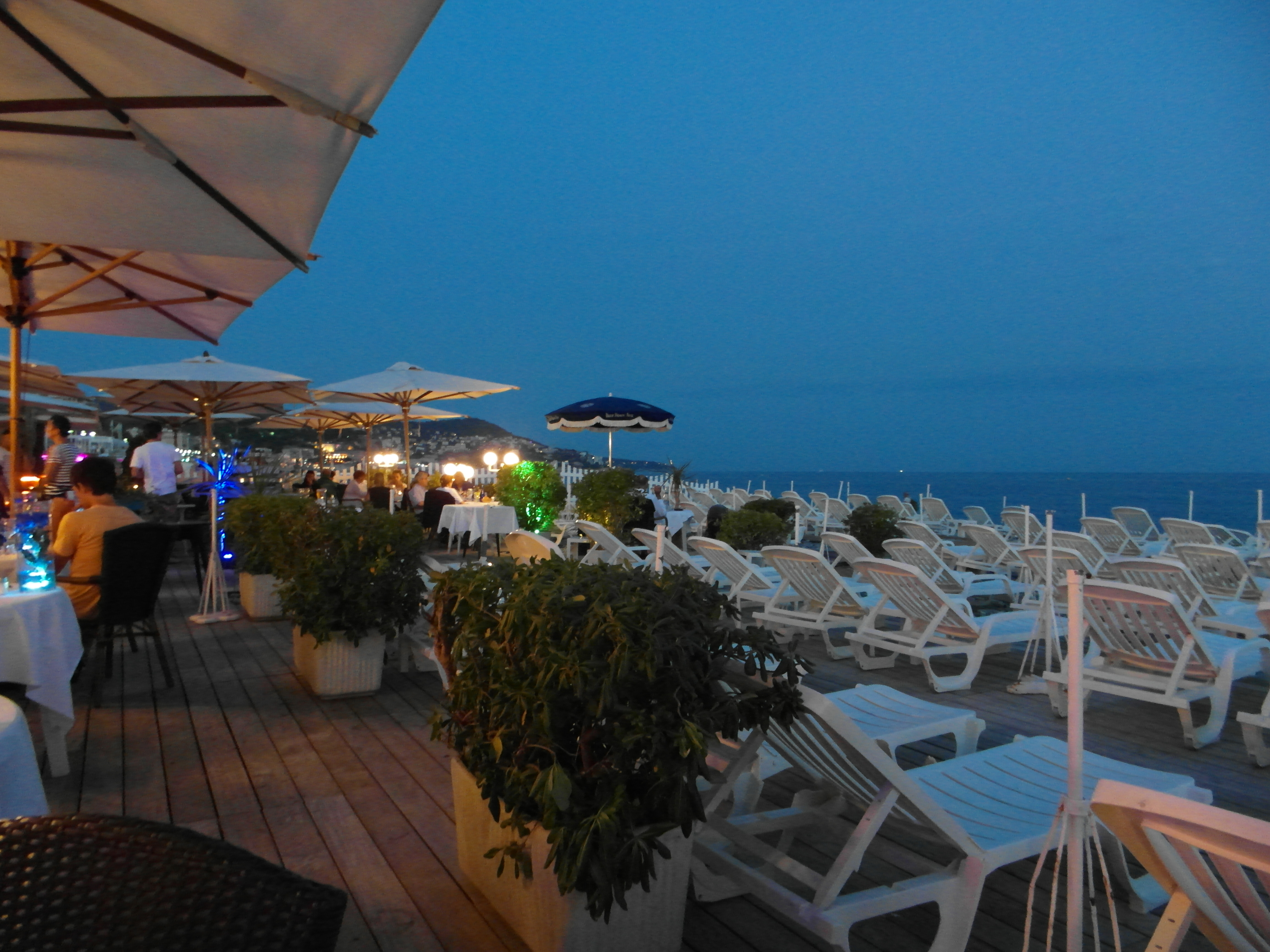
Sunset at the Blue Beach restaurant on the beach in Nice

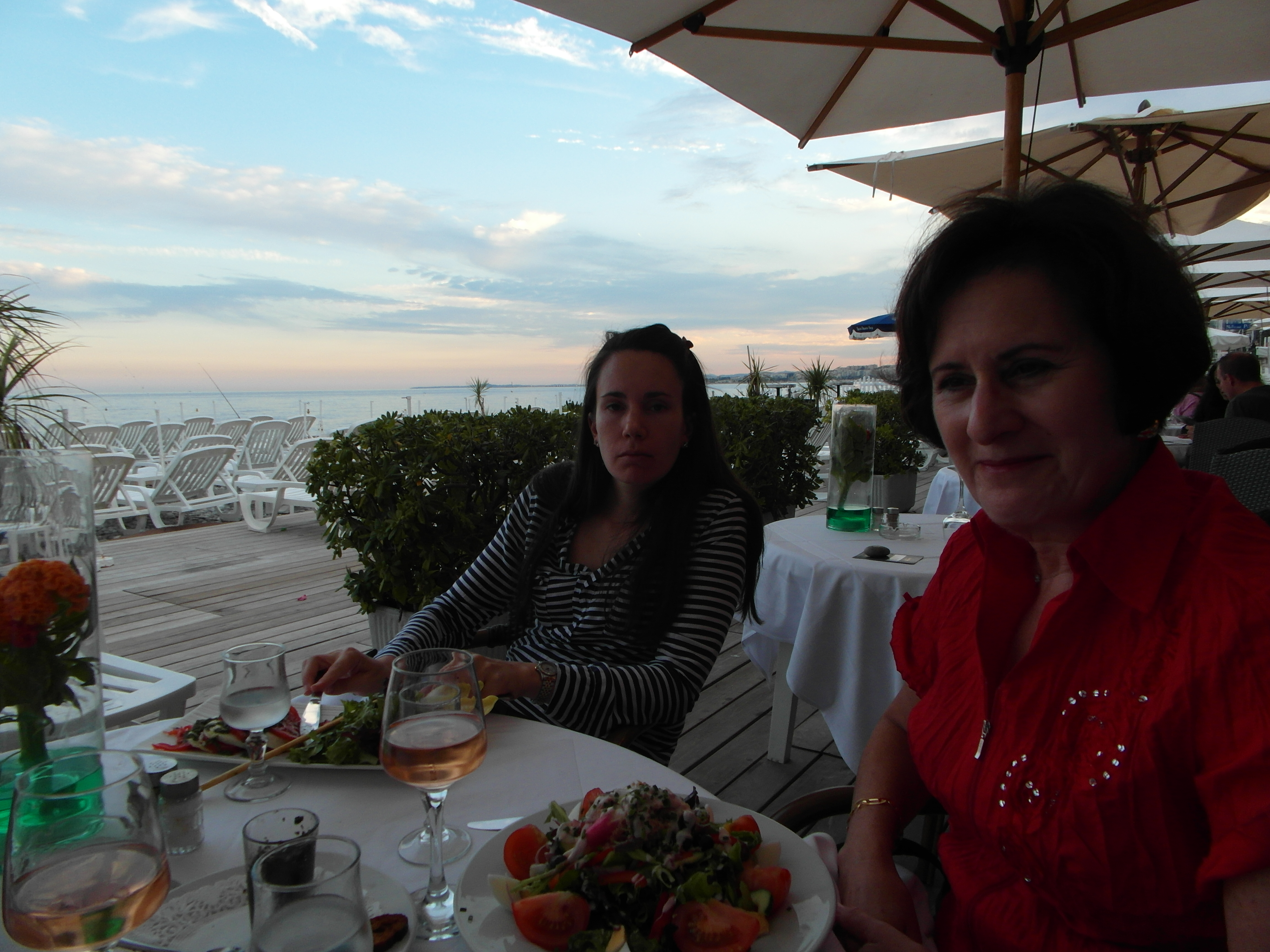
And what better way to end a day than with a good salade nicoise at Blue Beach on the beach of Nice at sunset. It was so heavenly and peaceful … and then I remembered that they don’t have the waves and the tides and the noise of an ocean beach. They have the serenity of the Mediterranean.

BonVoyageurs Tips

*Take a photo of the menu with your phone. It saves having to remember what you ate, which is pretty hard to do as you get as old as we are and particularly if you eat out frequently.

*I cannot recommend highly enough the shirts with hidden pockets which I am wearing on this trip. Six pockets of which five are hidden give me plenty of carrying space for my iphone and my mobile hotspot. More importantly, the hidden pockets under the arms are so well hidden that they provide me with space which is not only pickpocket-proof but also mugger-proof. A great addition to my hidden cargo pants, which I have been taking on trips for a couple of years now.

La Colombe d’Or ~ Luncheon in the shadow of artists

SAM_0902

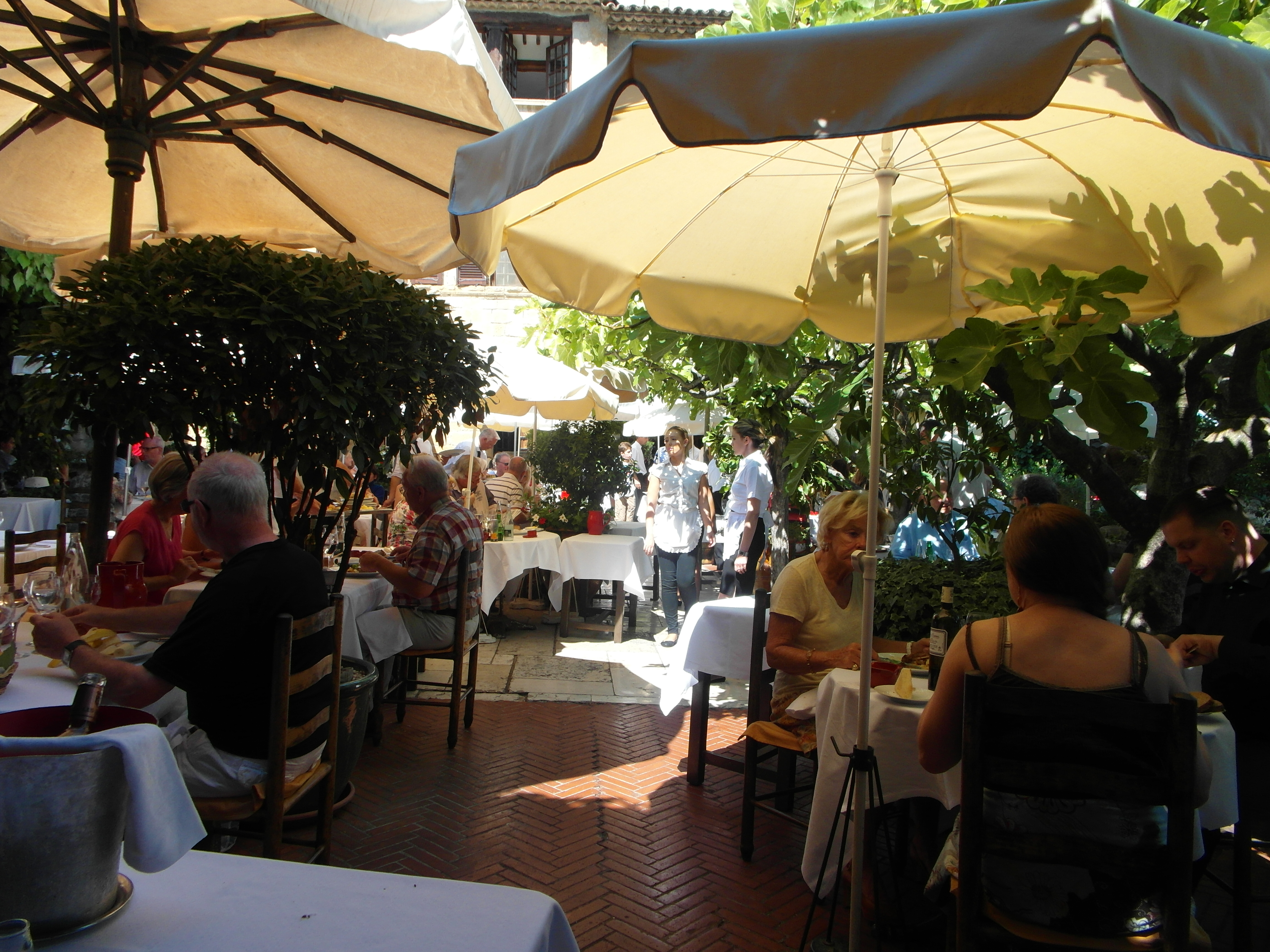
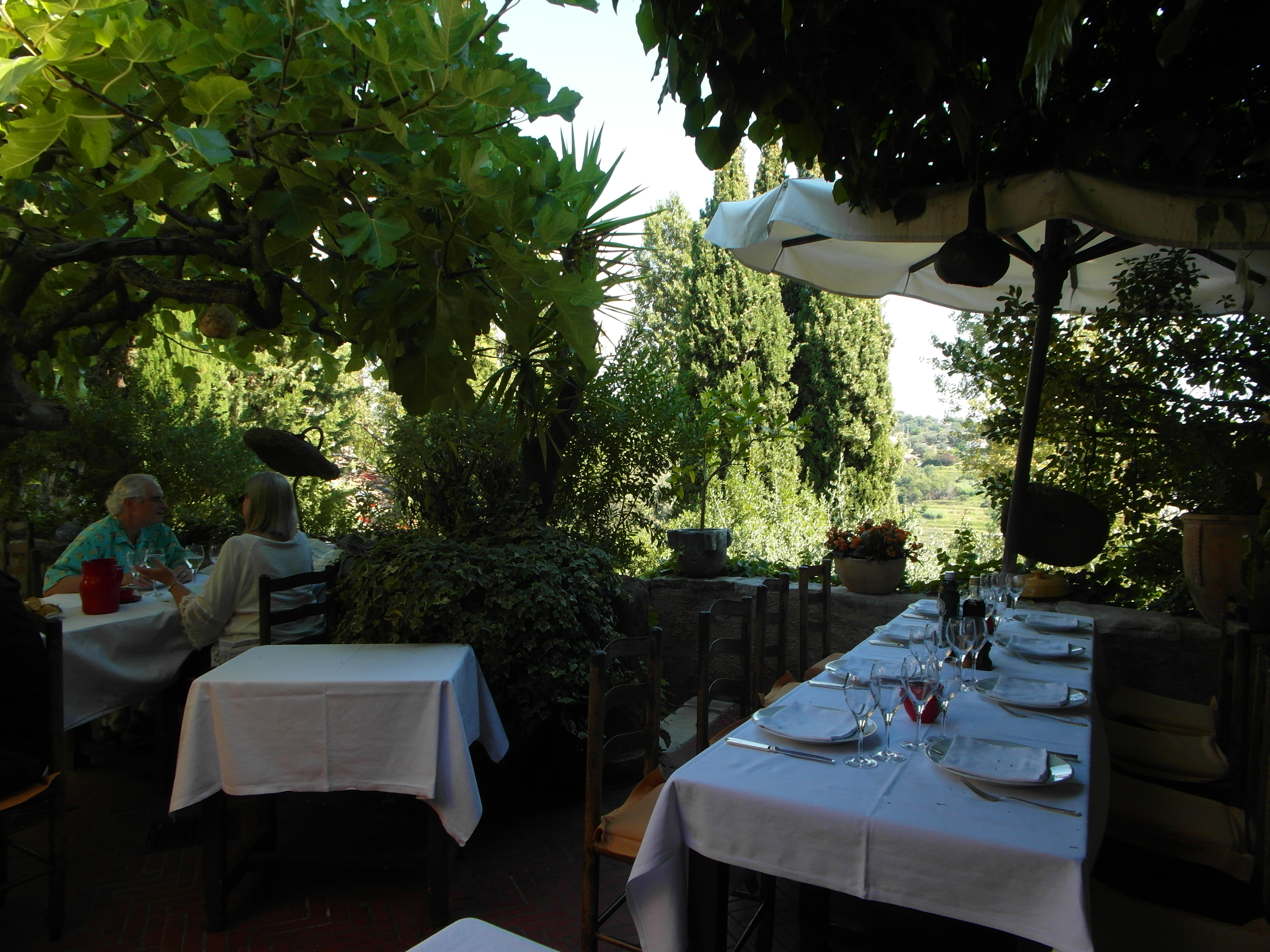
Terrasse Restaurant La Colombe d’Or in Saint-Paul-de-Vence

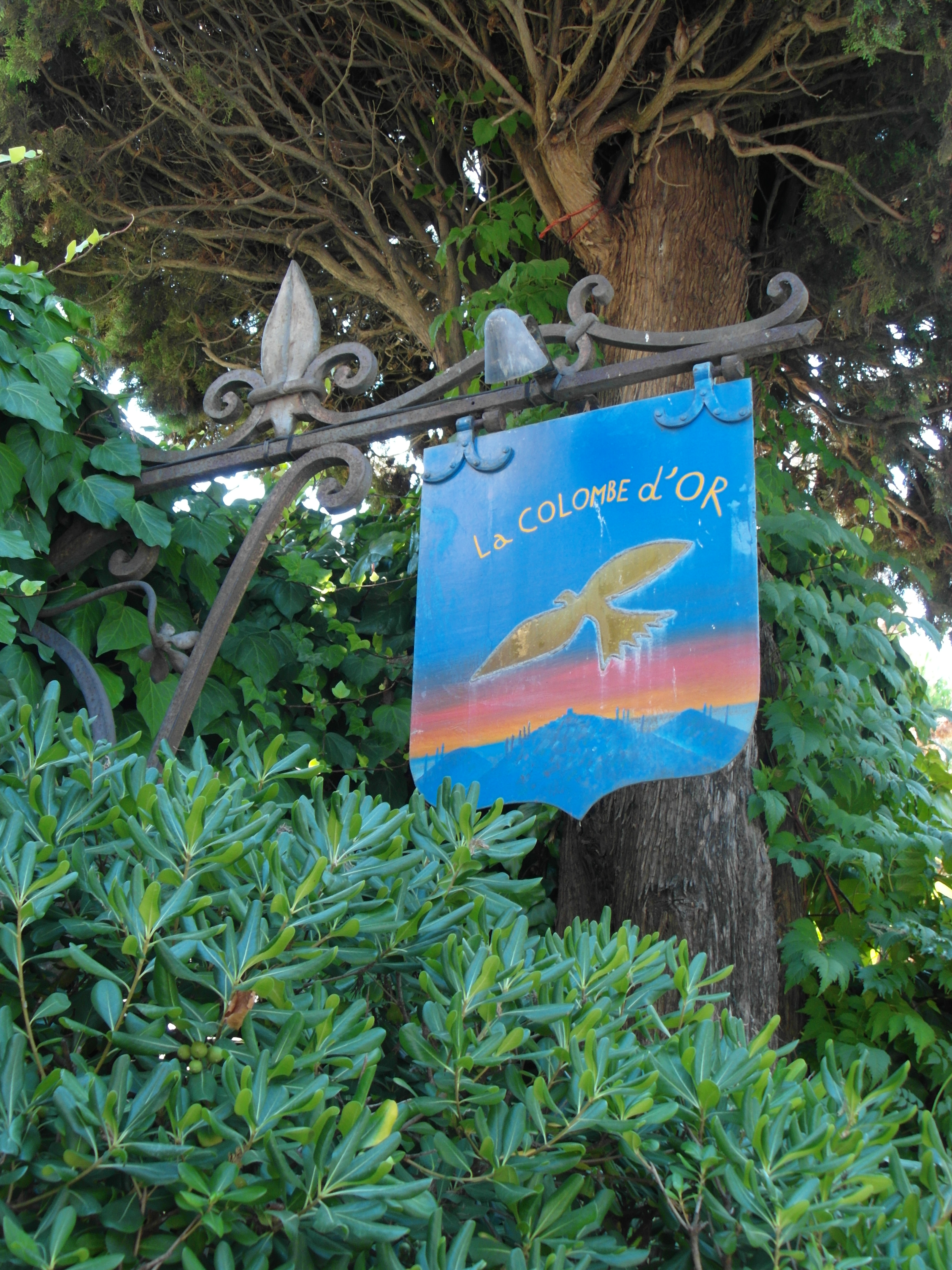
Sometimes the spirit of a place is so strong that its influence sets the mood and tone. Such is the case with La Colombe d’Or, a restaurant which was frequented regularly by artistic greats such as Picasso, Chagall, Modigliani, Matisse, Miro, Hemingway, Fitzgerald, Isadora Duncan, Yves Montand, Edith Piaf and the list goes on …

SAM_0882

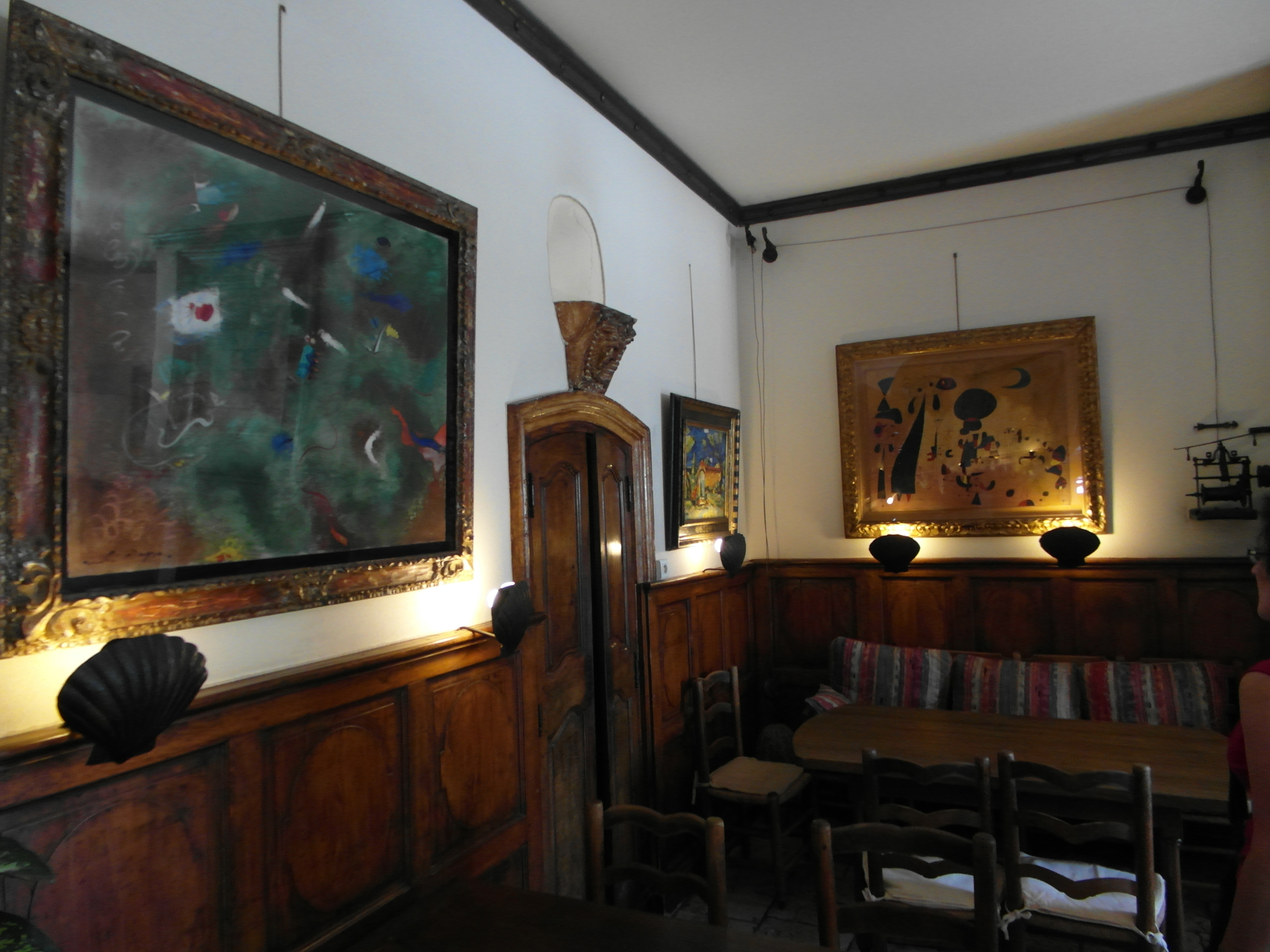
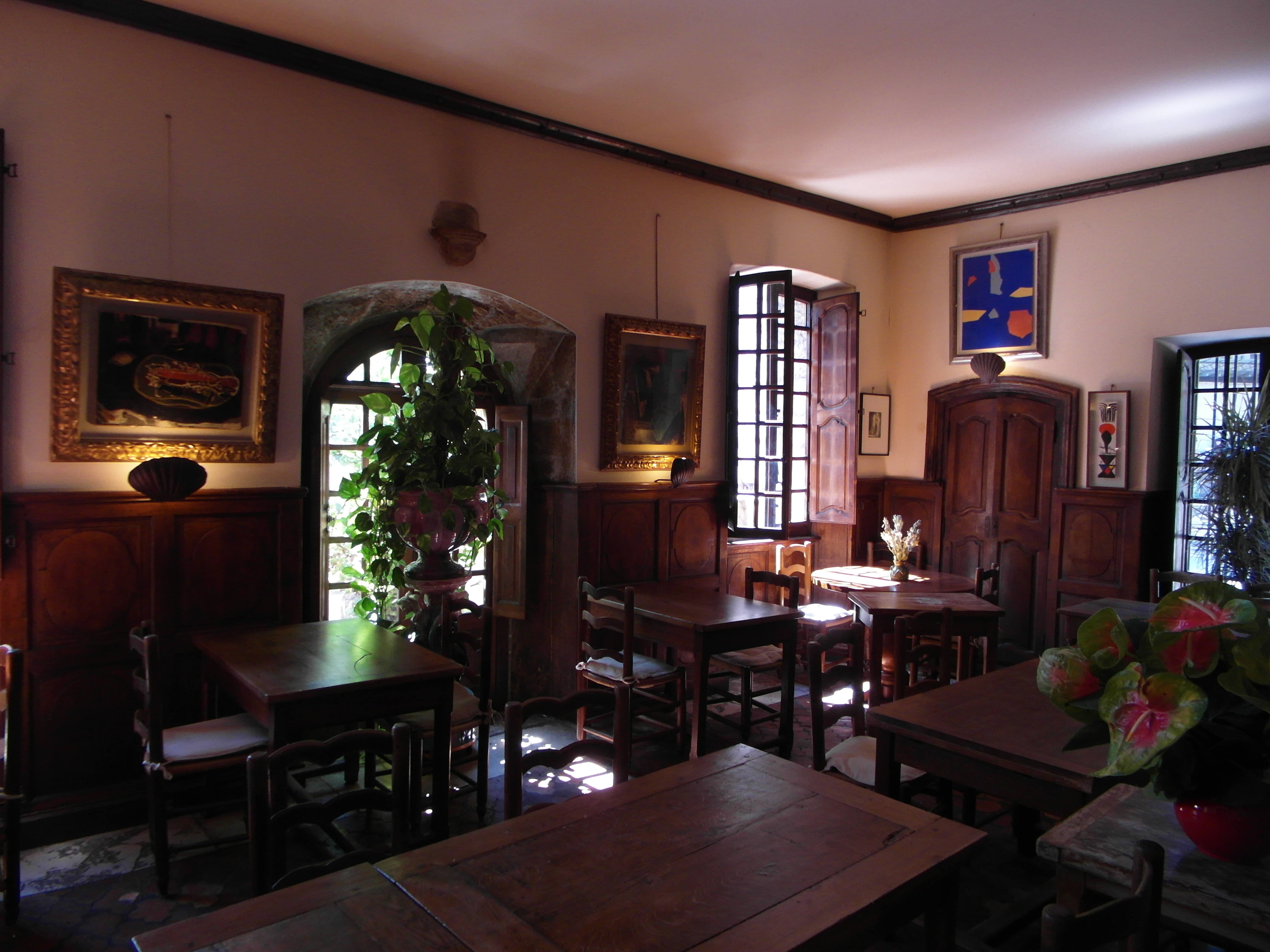
Interior of La Colombe d’Or featuring magnificent works of art

Why did this restaurant attract so many creative geniuses and why does it still serve as a mecca for the rich and famous? I suspect the artistic passions of the original owner, Paul Roux, who regularly accepted paintings in lieu of payment, gave birth to a tradition of artistic joie de vivre that is the hallmark of this captivating restaurant.

SAM_0910

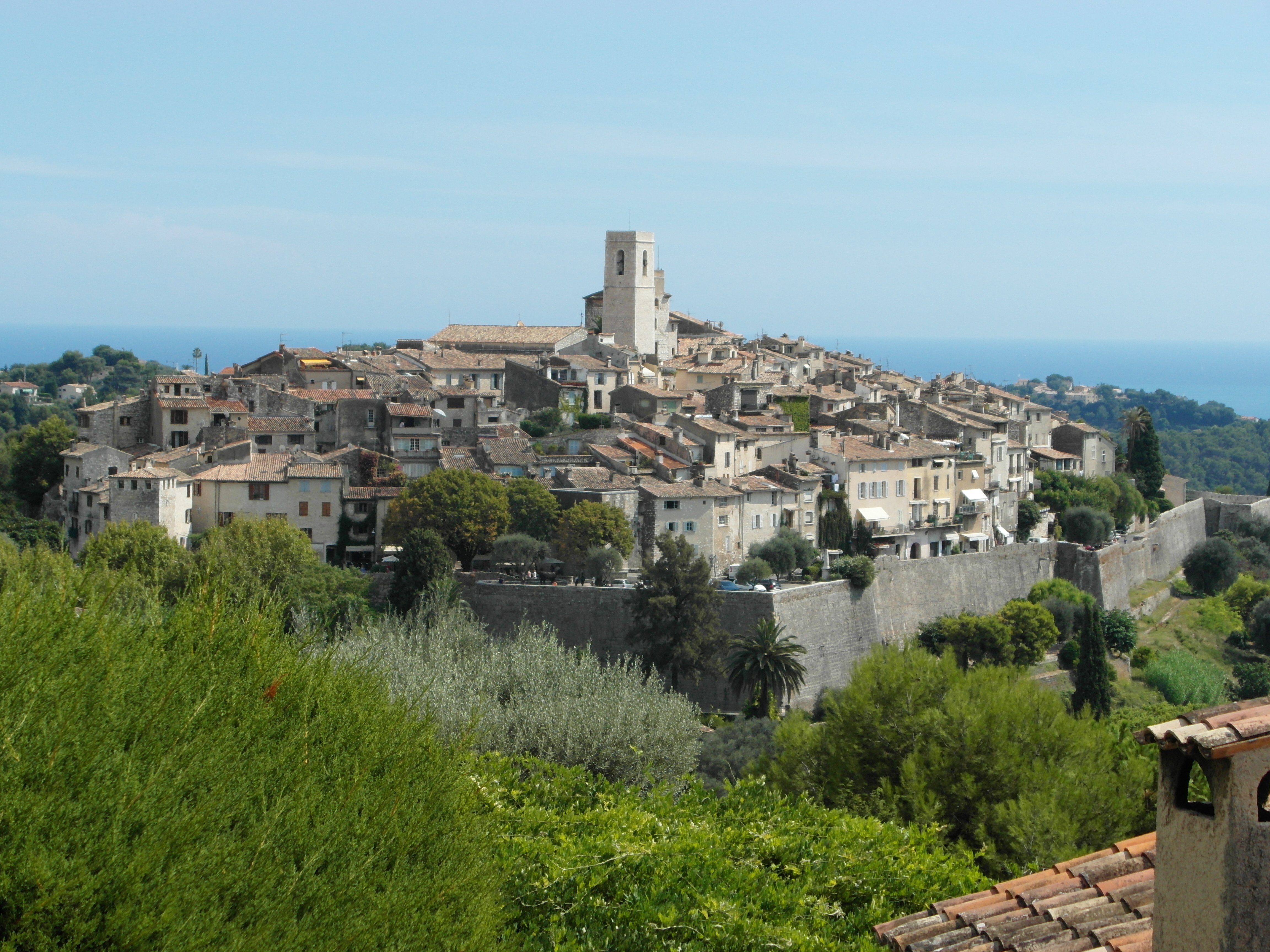
The village perche of Saint-Paul-de-Vence

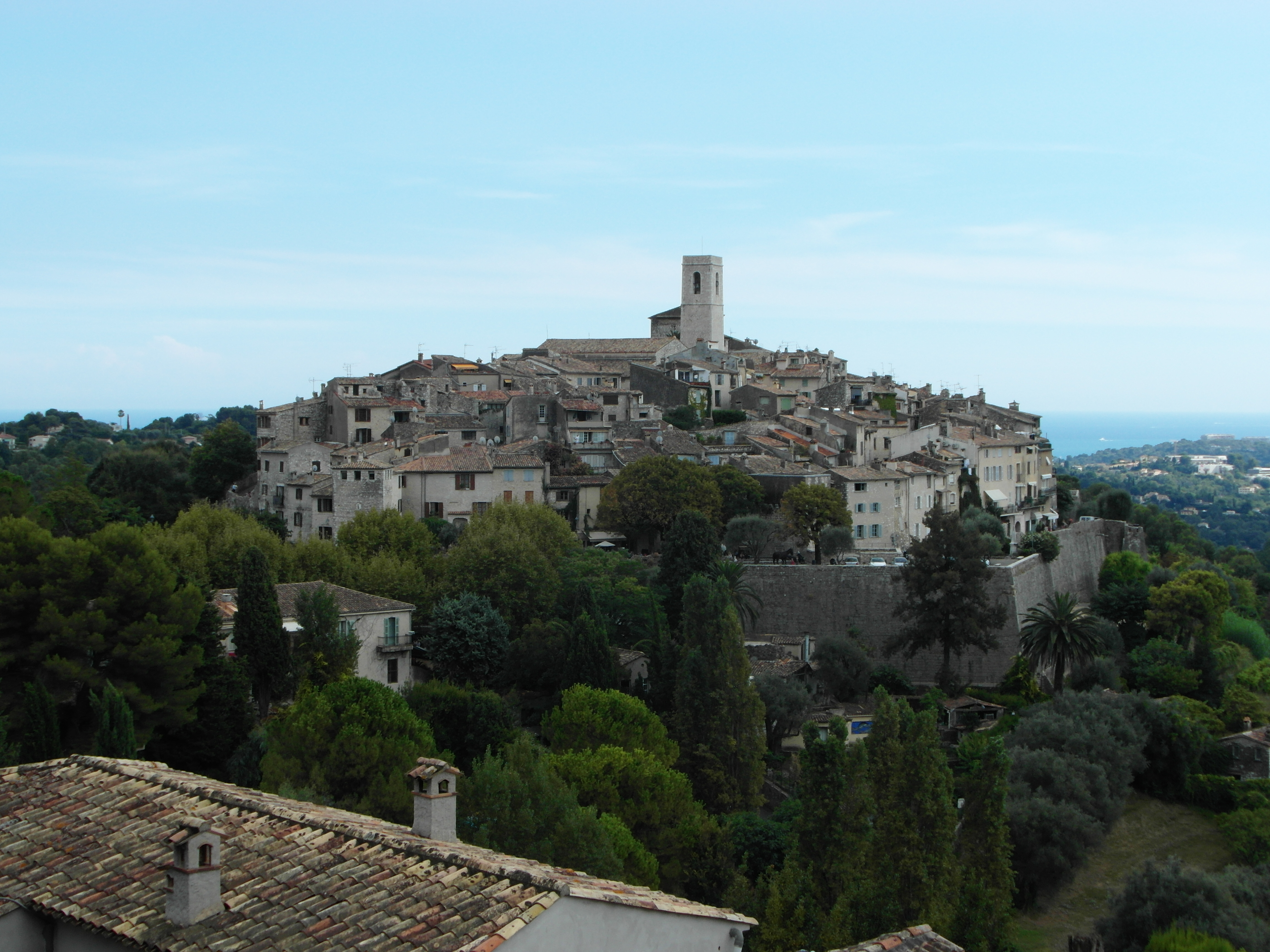
But there’s more to the magic of La Colombe d’Or than simply art …. Picture a perfectly preserved Medieval village perched on a hillside … aah yes, another French village perché … simply a heartbeat away from the glorious Mediterranean on the magnifique Cote d’Azur. Just outside the Medieval walls of the village, with beautiful gardens and a commanding view of the valley below, lies a truly unique hotel, La Colombe d Or, which many have called the most romantic hotel in the world. This is the home of and the inspiration for this extraordinary restaurant which has inspired decades of artists and lovers. Over the years, artists have regularly left their mark by painting directly onto the walls or by offering a painting, sculpture or oeuvre d’art. The ambiance speaks of beauty, creativity, charm and romance.

So do the talents of the chef, Hervé Roy, live up to the restaurant’s legend? I don’t recall fresh oysters on the menu but otherwise … a resounding yes!

SAM_0887

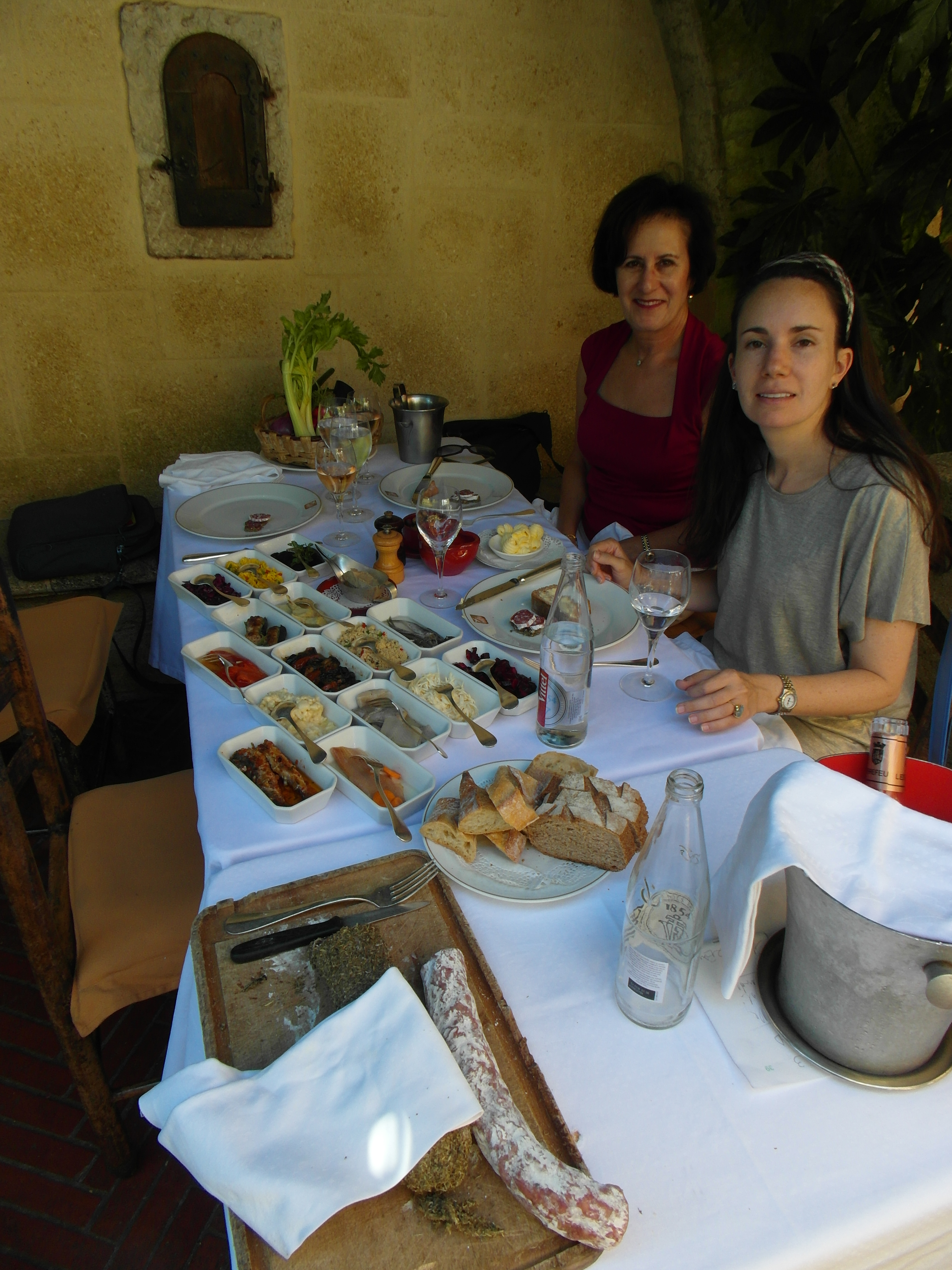
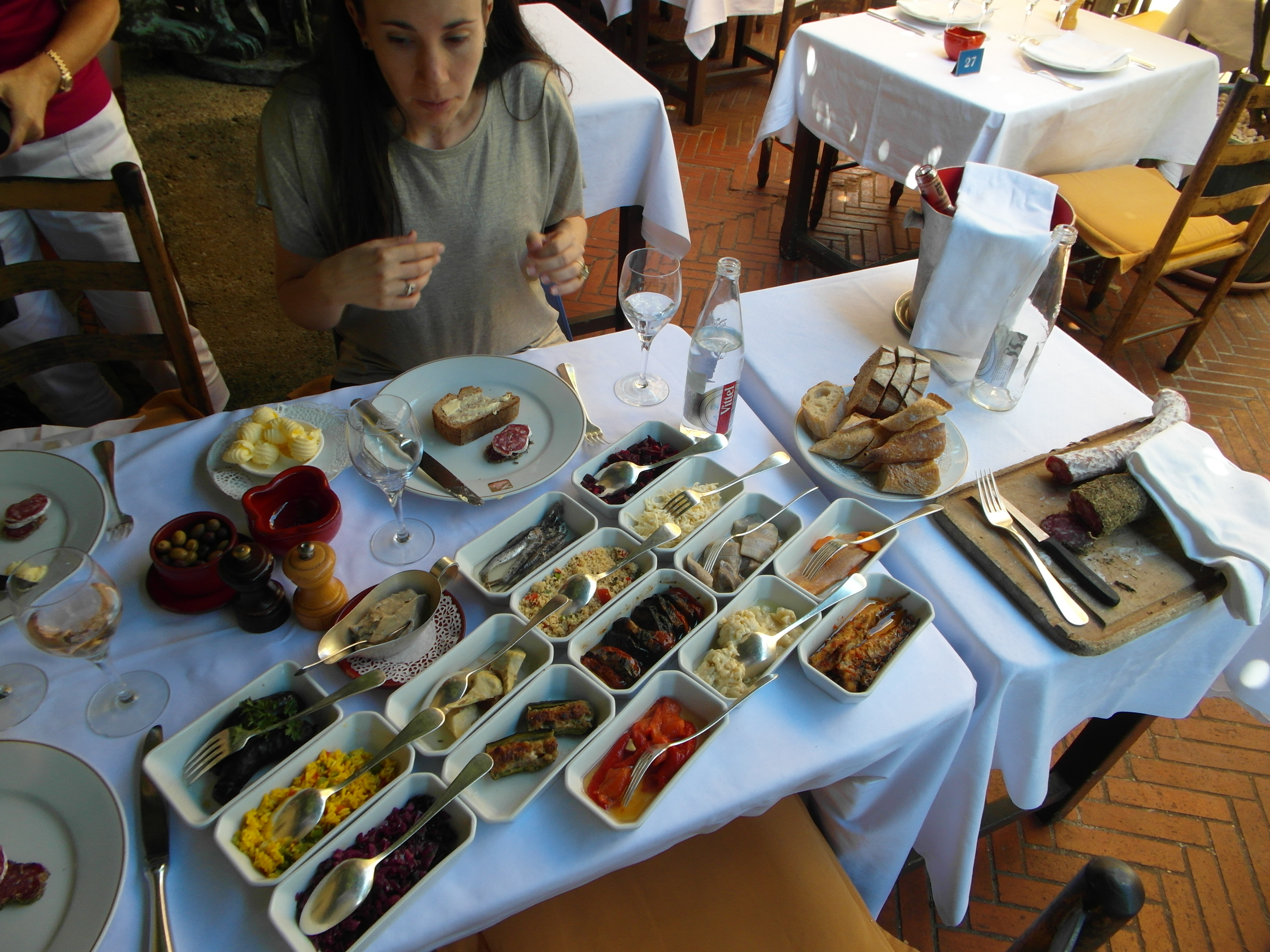
Les Hors d’Oeuvre Colombe d’Or with Charcuterie and Crudites

We began our luncheon with his classic entrée of Les hors d’oeuvres Colombe d’Or with charcuterie and were taken aback by the beauty, quality and quantity of the vast assortment of dishes that arrived. Each had its own special preparation, from grilled and marinated local eggplant and tomatoes to smoked fish, and each was prepared from fresh, local ingredients in traditional Provençal fashion. Freshly cut sausages and a big basket of farm fresh produce, including radishes and fennel, completed the experience. Many might have considered that first course a satisfying lunch in itself, but we had two more courses to come!

SAM_0898

Quenelles de Saumon Frais

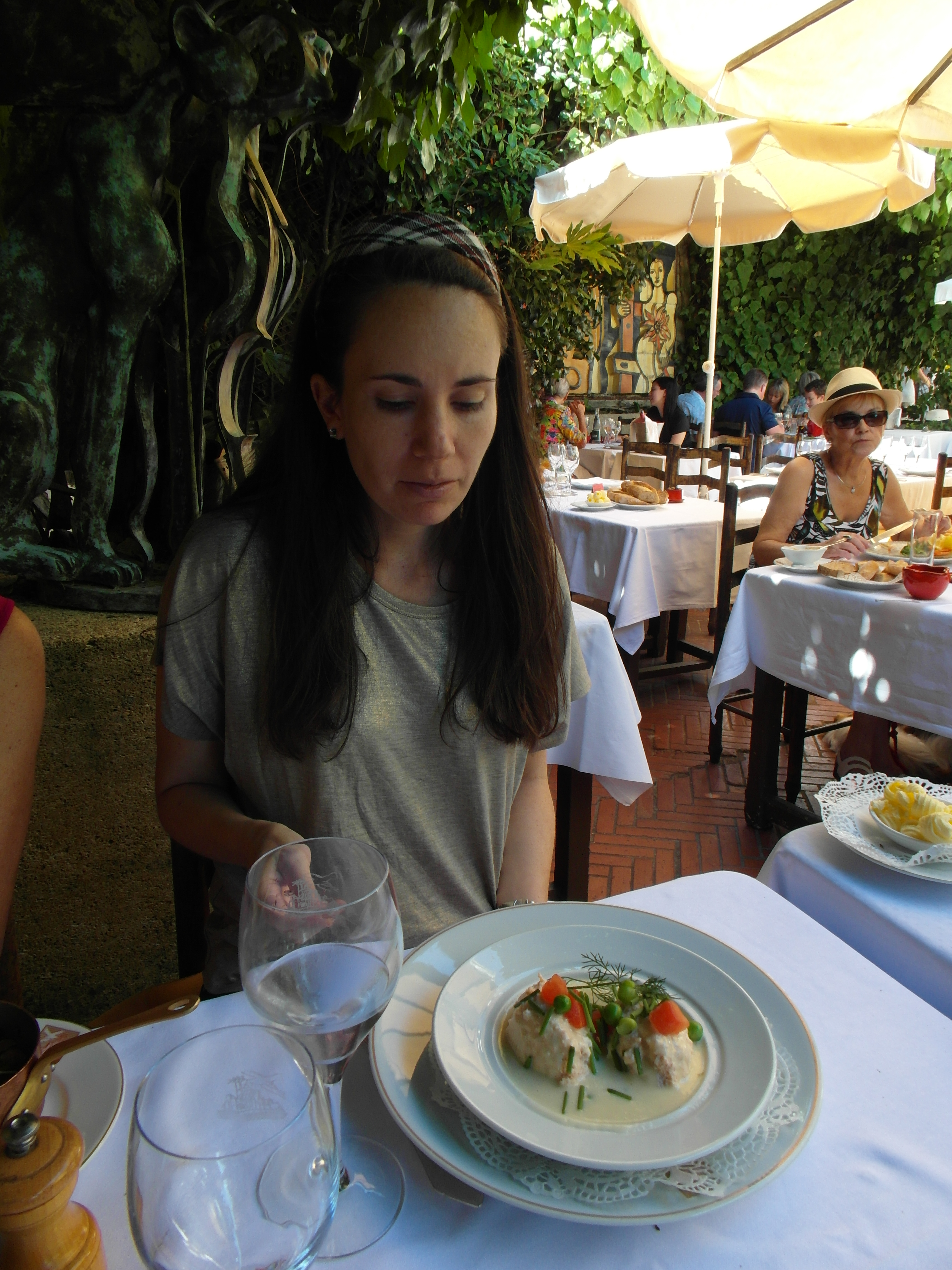
Fish was the theme of the main course. Our daughter selected fresh salmon quenelles which were sumptuous in a light béchamel sauce.

SAM_0899

Aioli tout simple a la Morue fraiche et ses cinq legumes

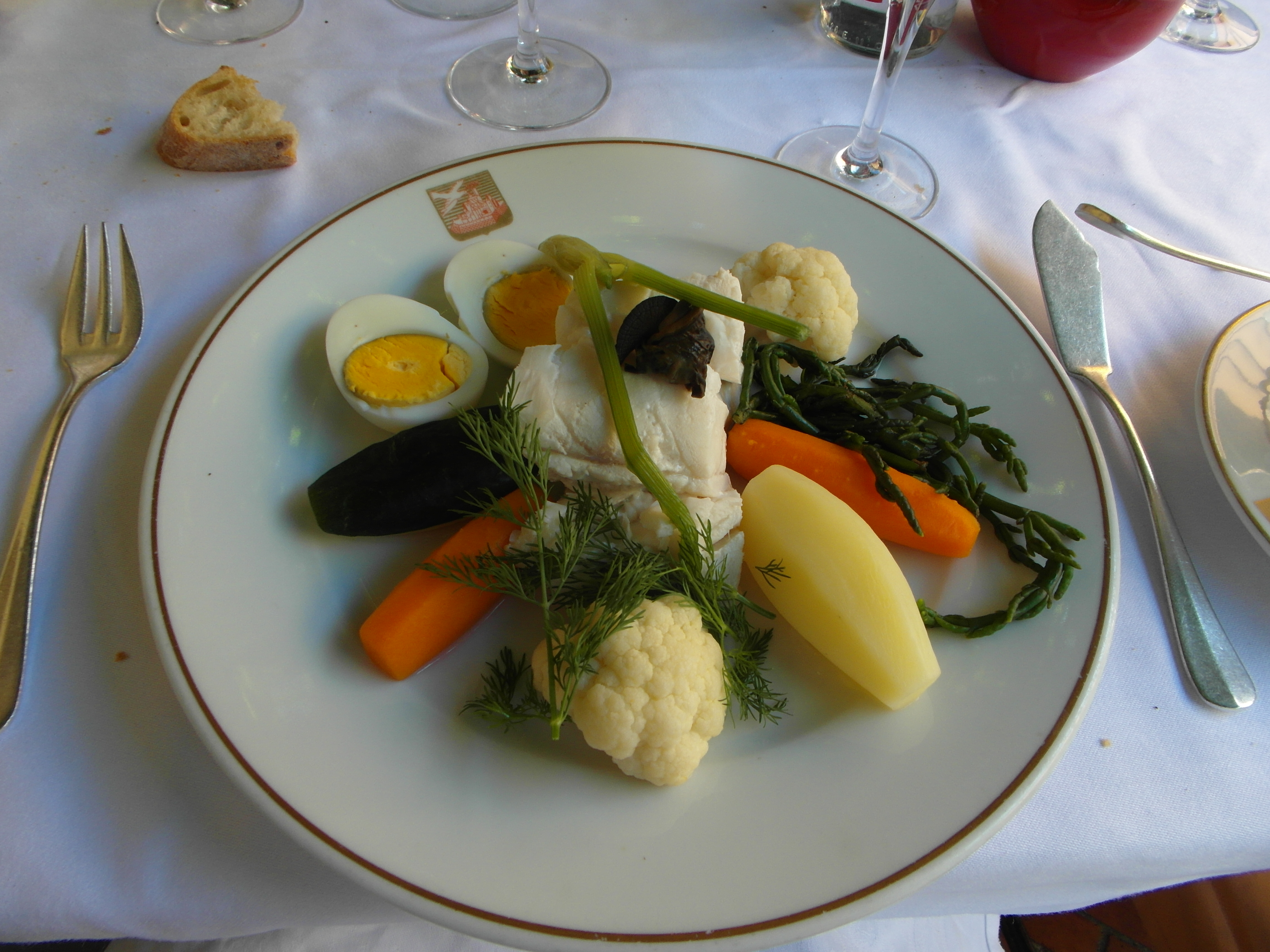
Denis feasted on steamed fresh cod with 5 vegetables accompanied by a “simple aoli” sauce, and I enjoyed perfectly grilled fresh Mediterranean sea bream seasoned with fresh herbs and lemon. The freshness and quality of the ingredients needed no extra enhancement to be simply delicious beyond the assistance of a light, refreshing Cote de Provence Rosé.

For dessert we shared a country style French apple tart, prepared using Paul Roux’s mother’s recipe, and a dark chocolate cake. Both were equally satisfying.

A meal with generous portions, solicitous service, superb ingredients, perfection in preparation and charming presentations … in a magical, romantic and, most especially, artistic setting.

In the footsteps of Marc Chagall in Saint-Paul-de-Vence!

SAM_0921

Saint-Paul-de-Vence

Highlights of our day in Saint-Paul-de-Vence:

SAM_0870

La Colombe d’Or in Saint-Paul-de-Vence

*We had lunch at La Colombe d’Or in Saint-Paul-de-Vence. The founder of La Colombe d’Or, Paul Roux, liked to paint and as a result ended up attracting artists, writers, celebrities to his hotel, his restaurant and the hilltop village of Saint-Paul-de-Vence. From Picasso to F. Scott Fitzgerald, from Yves Montand to Ernest Hemingway, they all contributed to the world fame of this place. The inside walls of La Colombe d’Or really come to life with an incredible array of priceless art.

SAM_0884

Inside restaurant at La Colombe d’Or in Saint-Paul-de-Vence

In an earlier post, I mentioned the story of the famous jealousy row which led Zelda Fitzgerald to throw herself off the parapet of the terrasse restaurant because of the attention which F. Scott Fitzgerald was giving to the famed ballet dancer, Isadora Duncan.

SAM_0897

Terrasse restaurant at La Colombe d’Or with stone parapet made famous by Zelda Fitzgerald

Lunch on the terrasse was in itself an exceptional experience. Service was in a league by itself, as there were probably as many staff as patrons. As to the food, you should have seen the look on my daughter’s face when our appetizers arrived! Large saucissons with fifteen plates of assorted appetizers including black boudin, one of my favorites.

SAM_0886

Hors d’Oeuvres at La Colombe d’Or

The rest of the meal was no less impressive, and we enjoyed the complimentary house mandarine grappa at the end.

In the afternoon, we took a themed private guide tour of Saint-Paul-de-Vence, titled “Sur les pas de Chagall in Saint-Paul-de-Vence” (In the footsteps of Chagall in Saint-Paul-de-Vence). Marc Chagall lived the last twenty years of his life in Saint-Paul-de-Vence and is buried in the cemetery there.

SAM_0920

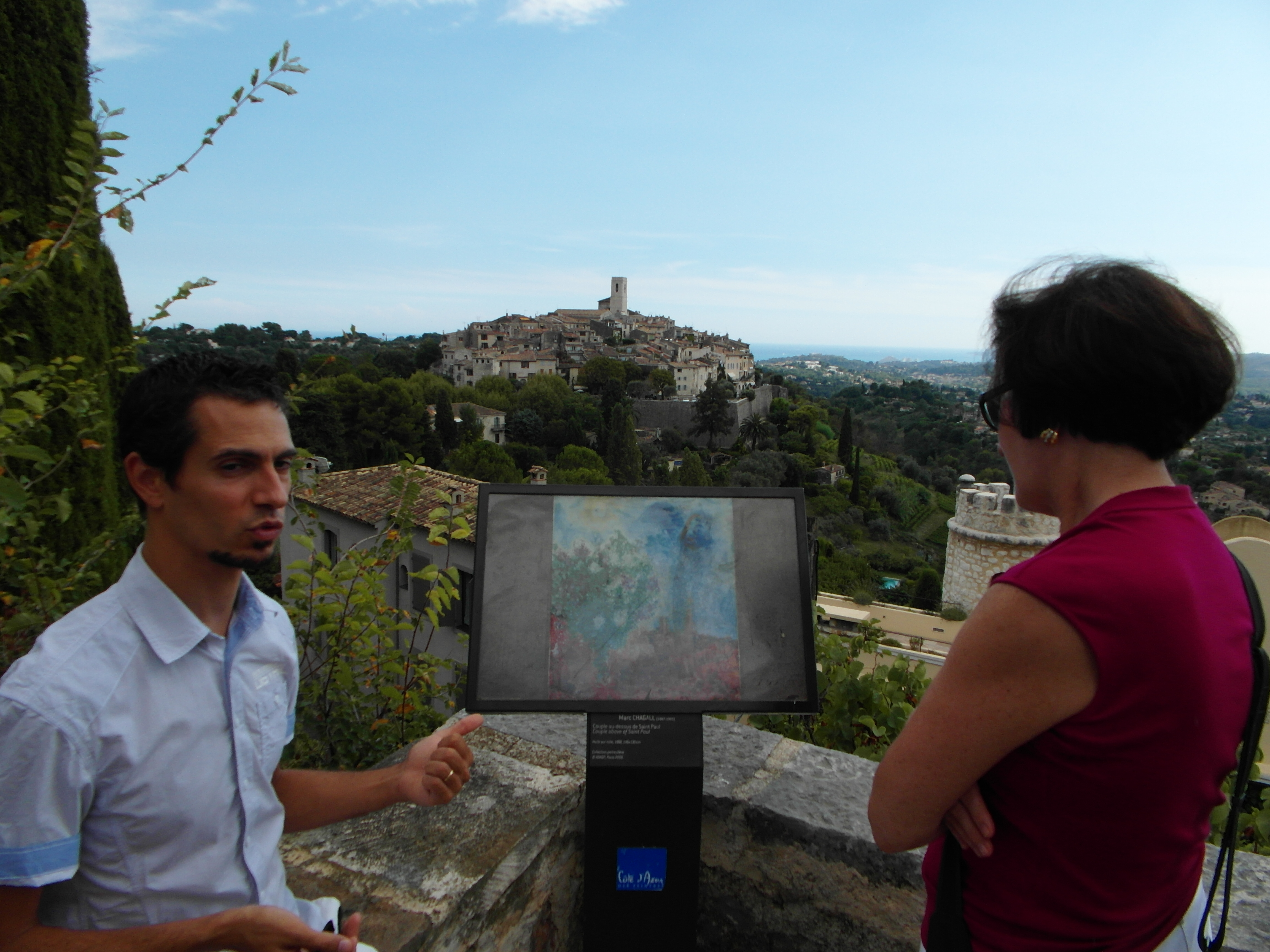
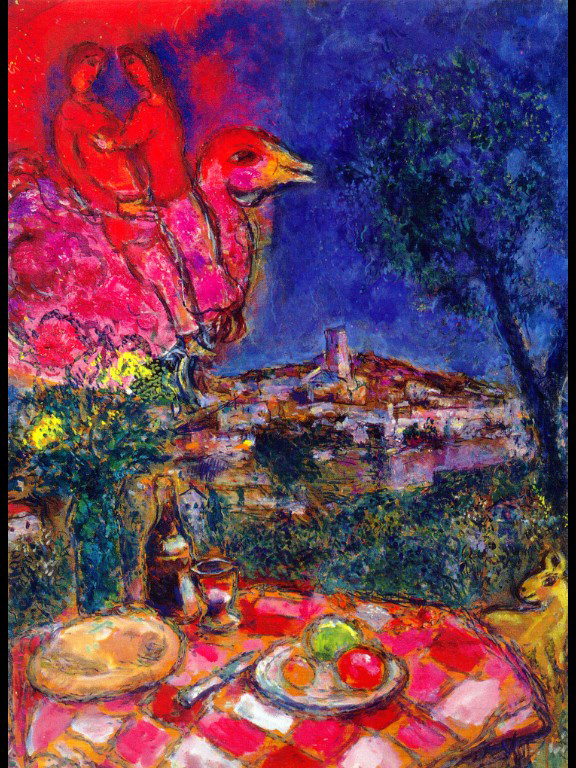
Marc Chagall painting shown where drawn in Saint-Paul-de-Vence

Chagall is noted for saying “I thank destiny for bringing me to the shores of the Mediterranean”.He had lived nearby in Vence since 1948 after he returned from the United States; he had been attracted to the area by Aime and Marguerite Maeght, who were his art dealers in Paris (as well as for Henri Matisse, Braque, Léger, Miró, Alexander Calder et Alberto Giacometti). Aime and Marguerite Maeght (pronounced like “mag”) had taken refuge in Vence during the second world war after a good friend of theirs, Jean Moulin, head of the French resistance, was arrested by the Gestapo. Today’s Fondation Maeght is a world famous museum in Saint-Paul-de-Vence.

An unexpected bonus, during our tour, was a stop at a chapel which an artist was in the process of completely decorating with wall paintings.

Our guide, Christophe, was extremely erudite and we thoroughly enjoyed being taken to the various spots where Chagall painted and hearing about each painting and the fabulous life of this great artist. Chagall went through various periods during his tumultuous life, but the theme of his paintings while in Saint-Paul-de-Vence seemed to be all about love, and they are marvelous pieces of art.

laid-table-with-view-of-saint-paul-de-vance-1968

BonVoyageurs Tips:

*Take the 400 bus to Saint-Paul-de-Vence from the first stop, Albert 1er, so that you don’t have to worry about getting a seat on the bus. Today, the bus was standing room only as of the third stop on the route.

*Ask for a tour at the small tourist office right at the entrance to the walled city of Saint-Paul-de-Vence. If a tour is not already scheduled, they will schedule one for you; and the cost of 5 euros per person won’t break your bank!

Art & Gastronomy … The finale of Renoir’s life and the debut of Escoffier’s

SAM_0805

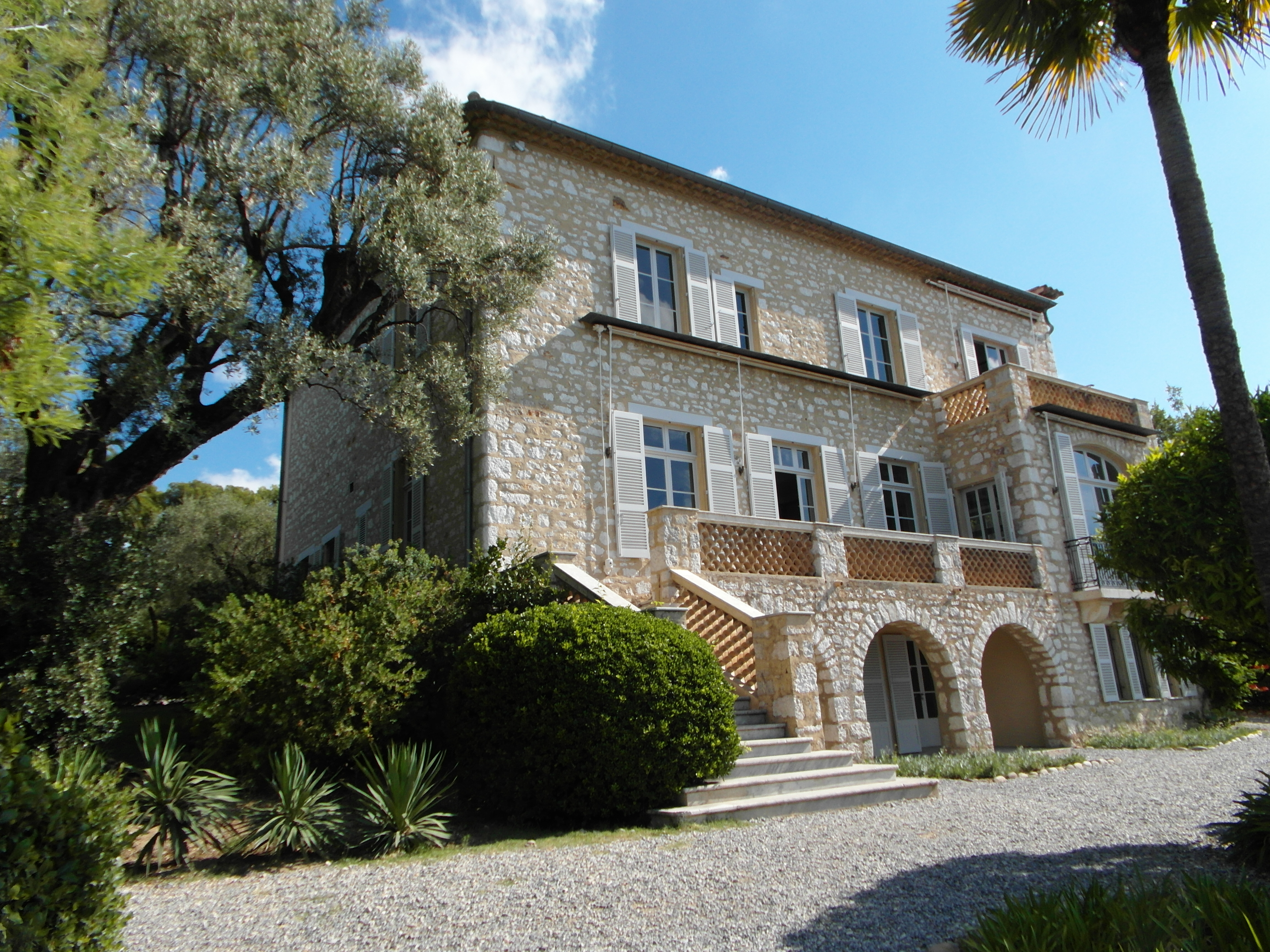
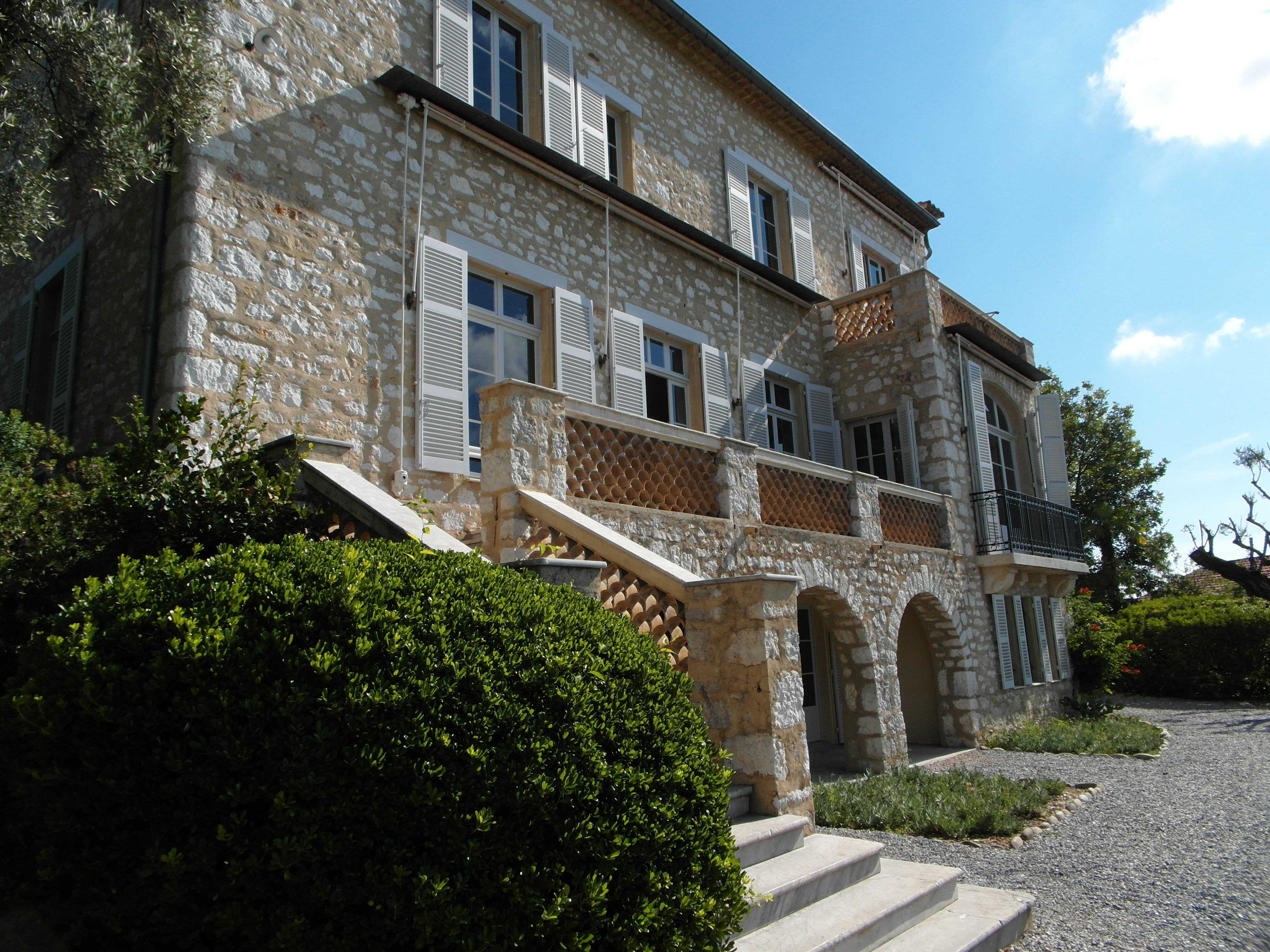
Musee Renoir and his home for the last 12 years of his life in Cagnes sur Mer

Both Renoir and Escoffier practiced their art from an early age throughout the sunset of their years. Both worked passionately at their craft with an intense joie de vivre, were innovators in their professions, gained recognition at a relatively young age and fame before their death, and both had intimate connections to the region of Nice.

Born in Limoges to a working-class family, Renoir received his early training as a painter while drawing and painting on fine china in a porcelain factory, and critical acclaim at the age of 33 when 6 of his paintings were hung in the first Impressionist exhibition in 1874. Sadly, he developed the crippling illness of rheumatoid arthritis in his early 50’s, and finally in 1907, he moved to the warmer climate of the Cote d’Azure which was most suitable for his illness.

SAM_0813

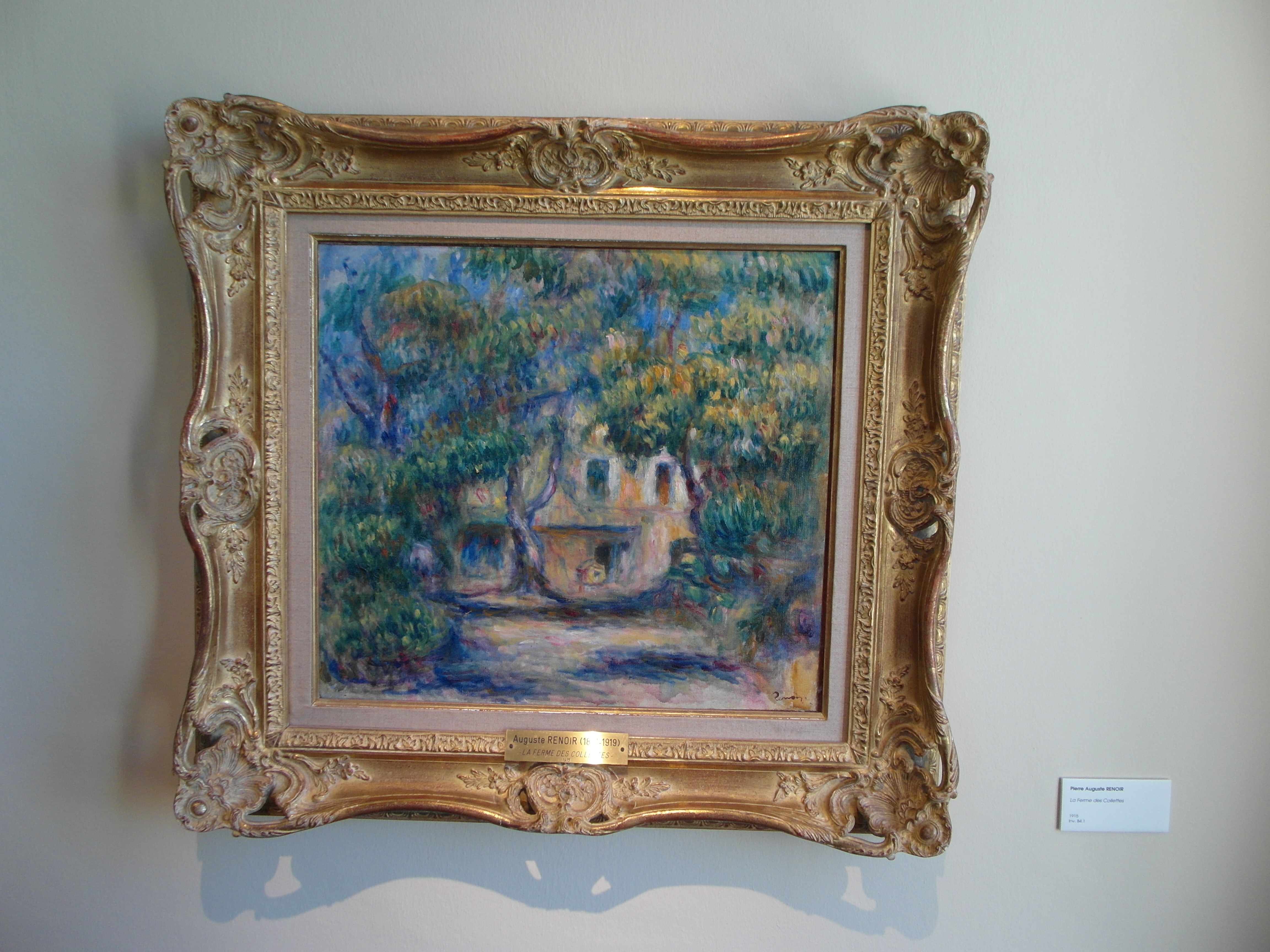
Renoir’s painting of his beloved Les Collettes

He purchased Les Collettes. a farm on the edge of the charming village of Cagnes-sur-Mer with an utterly magnificent view of the Mediterranean and the glorious sunshine made famous by his colleagues such as Van Gogh, Cezanne, Matisse, and Chagall. It has been said Les Collettes was to Renoir what Giverny was to Monet.

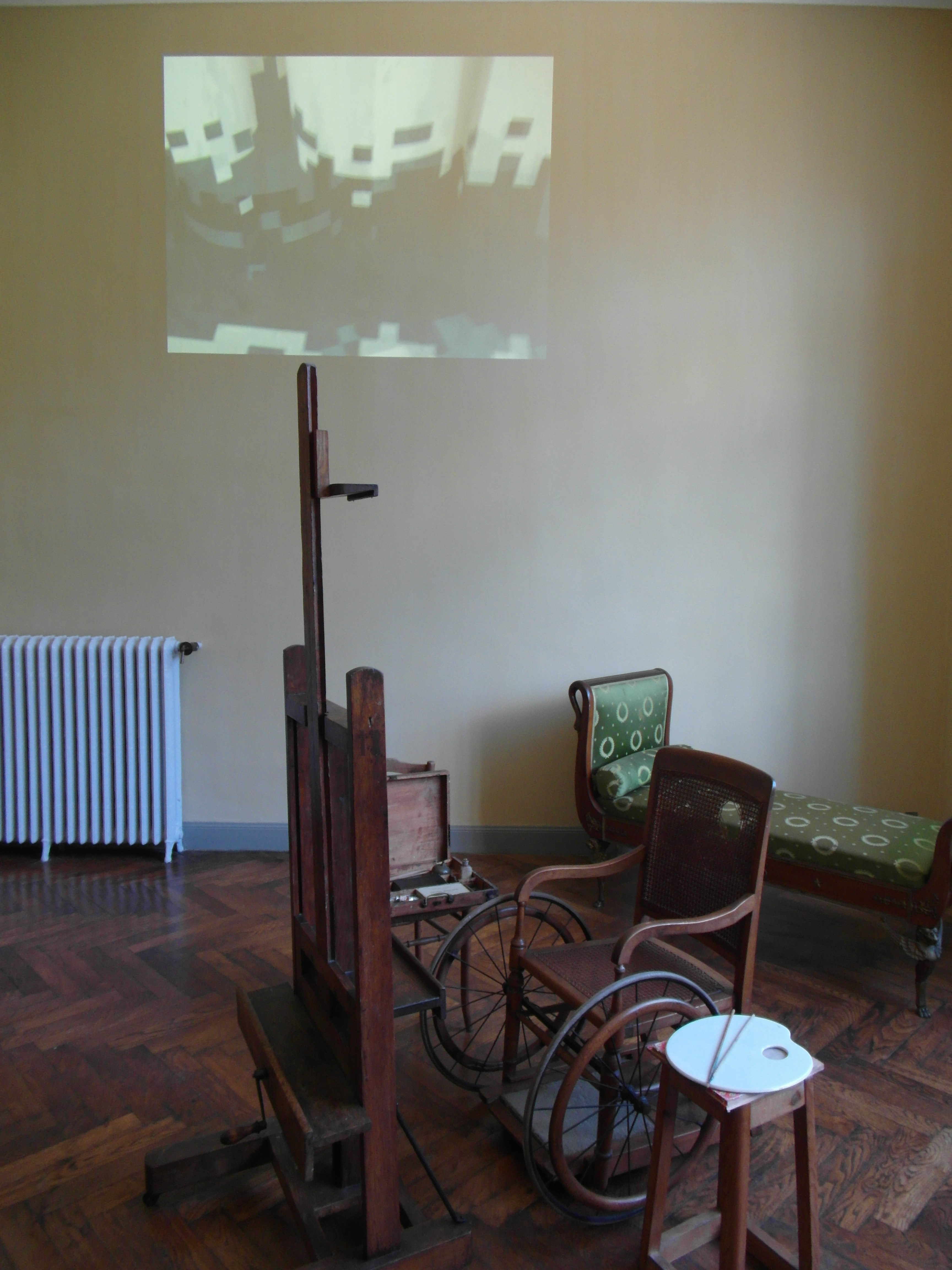
For the next 12 years, despite crippling, unbearable pain from his arthritis which relegated him to a wheelchair and necessitated his painting with a brush tied to his hand at the end of his life, Renoir practiced his art with vigor and innovation, adapting his style of painting to his failing eyesight as well as to his failing mobility. This period of Renoir’s work is characterized by looser, more fluid brushwork to dissolve outlines and detail, and hence more impressionistic and at times slightly abstract work.

SAM_0812

Renoir’s atelier with his wheelchair

Seeing the custom made wheelchair and the apparatus constructed to enable Renoir to move up and down in order to work on large canvases was very revealing. So was his continued focus on painting voluptuous women. Although Renoir mourned the death of his beloved wife, Aline Victorine Charigot, who had served as a model for his renowned Le Dejeuner des Canotiers (“Luncheon of the Boating Party”), he never lost his love of the female body. His lifelong devotion to his work rewarded him with the honor of seeing his paintings hanging alongside those of the old masters in the Louvres in 1919. He passed away shortly thereafter.

SAM_0811

Some of my favorite paintings of Renoir at Les Collettes

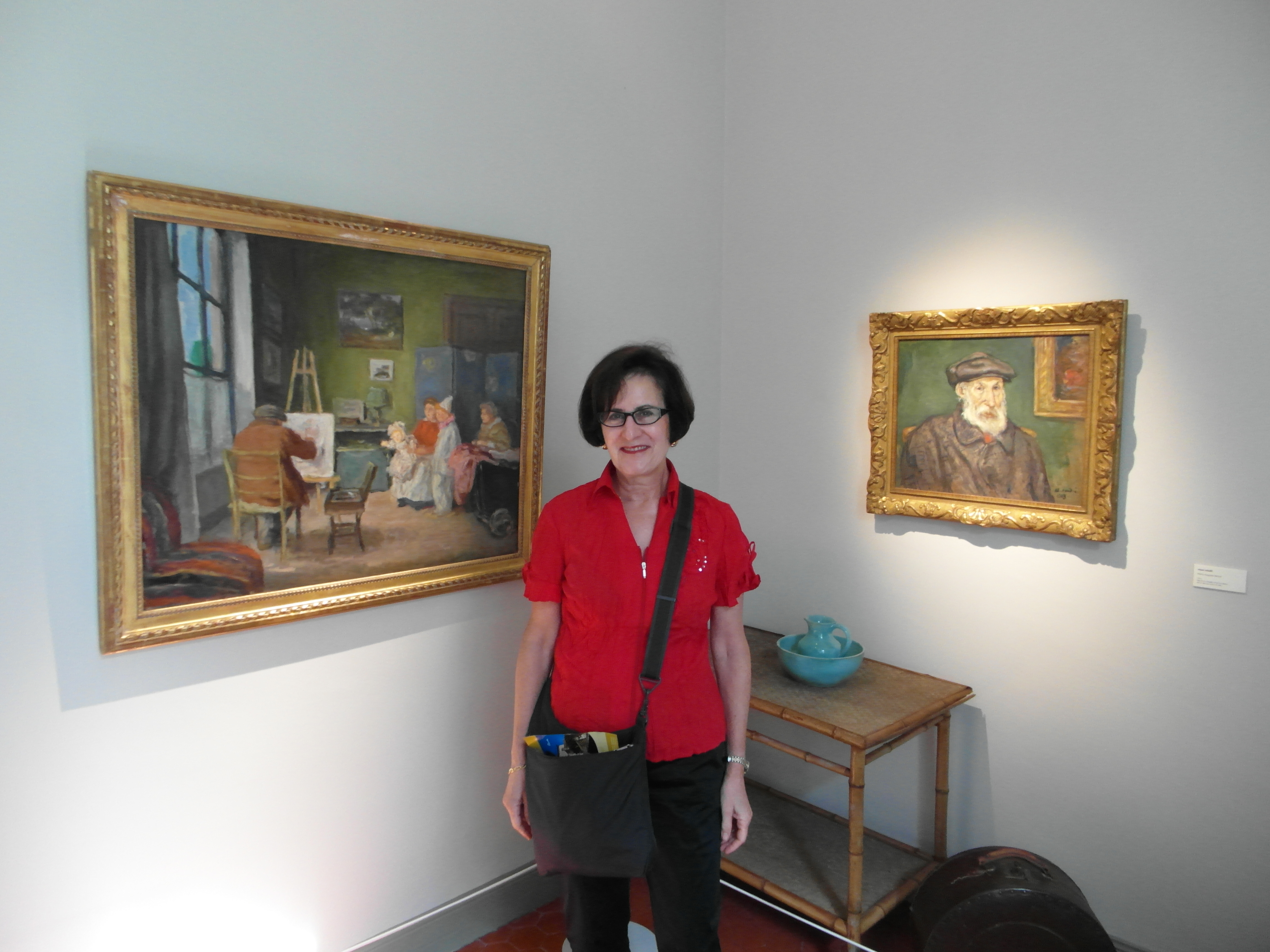
Les Collettes has been transformed into the Musée Renoir. While unfortunately it houses few of Renoir’s most famous works, it provides the backdrop for understanding the personality behind the man who produced several thousand works of art over this lifetime and whose work is beloved world-wide.

SAM_0835

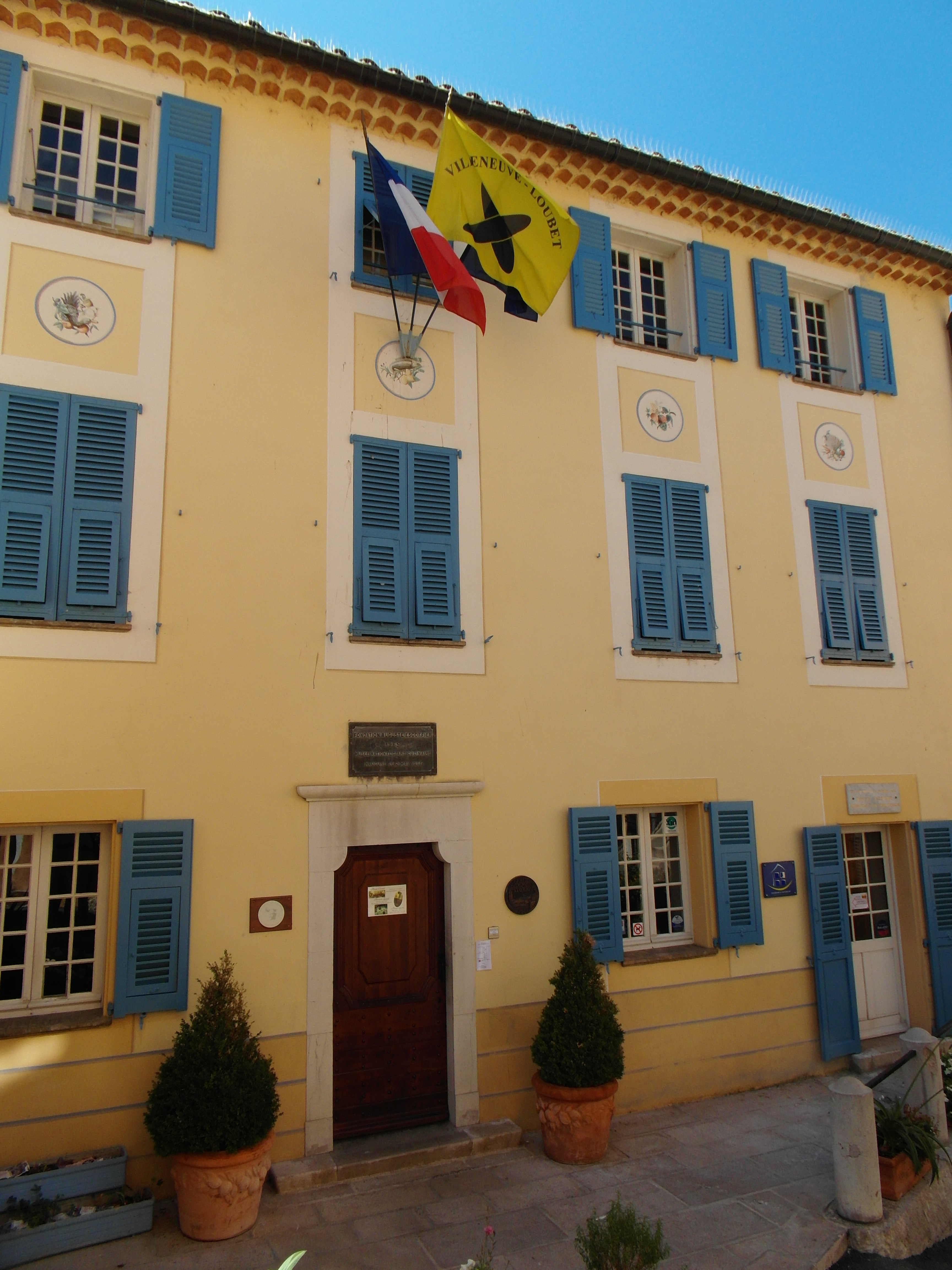
Musee National de l’Art Culinaire Auguste Escoffier in Villeneuve-Loubet

From the home of one grand master, we moved onto the village of Villeneuve-Loubet to visit the childhood home of another, Auguste Escoffier, a prolific culinary author and the founder of French haute cuisine who helped put the classic techniques and recipes of French cuisine on the world map. Escoffier’s childhood home has been transformed into the Musée Escoffier which we decided to visit after having lunch.

SAM_0840

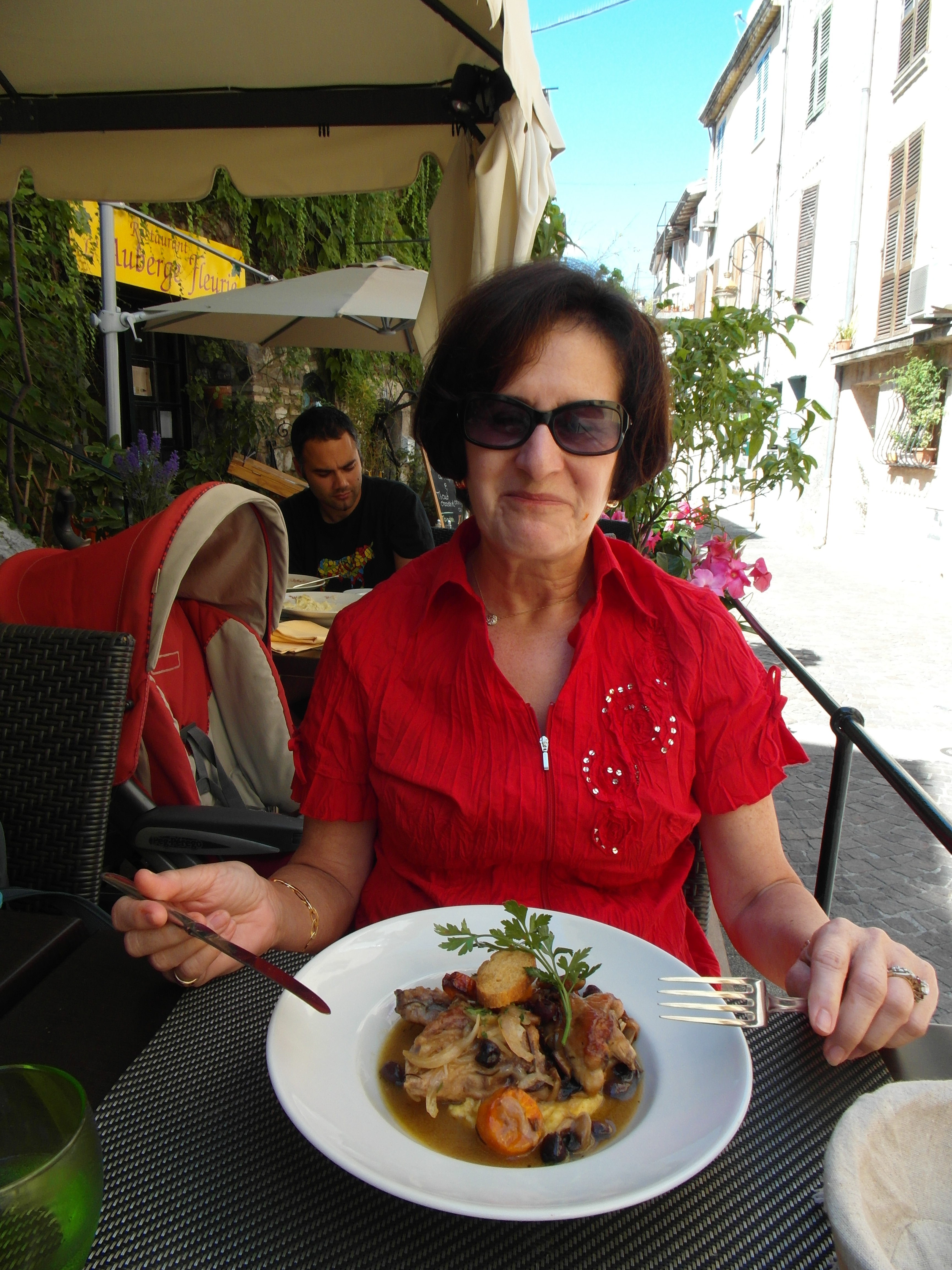
Me enjoying the Fricassee de Lapin

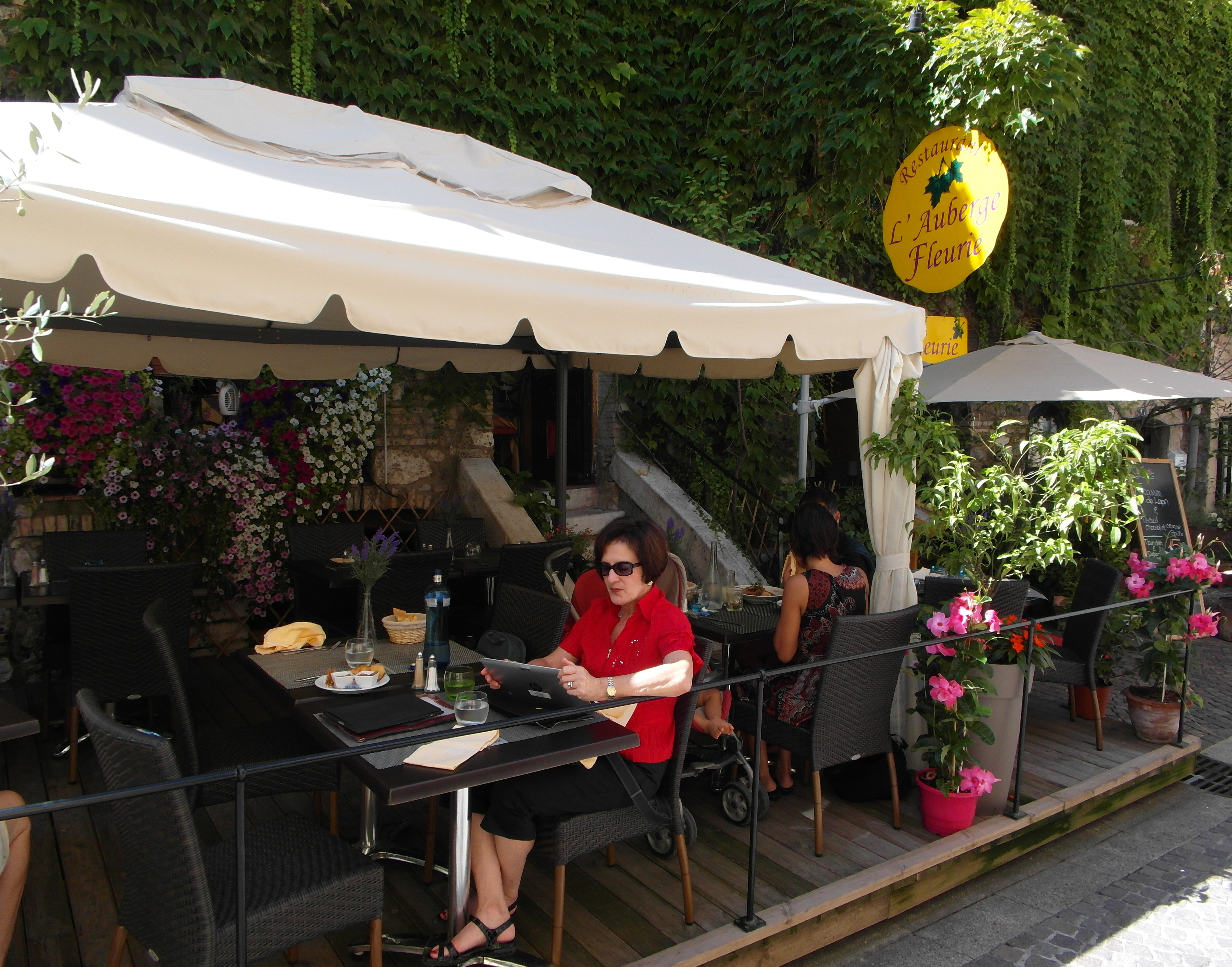
Just down the street was a charming restaurant, L’Auberge Fleurie, which attracted our attention with its menu du jour. We sat outside on the terasse and ordered a Salade du Marché as an entrée prior to the “menu” which offered a Fricassée de Lapin (“rabbit stew”) and a Chocolat Fondant (cake) à l’Orange. We expected simple food in this old town which seemed to still be in the 20th century, and were frankly delighted well beyond our expectations with the taste, quality and presentation of the food. We were still savoring the meal long after it was over, so we weren’t too surprised to learn at ­­the museum later that the chef of this petit restaurant had been trained at the Ritz-Escoffier School of French Gastronomy. How à propos !

SAM_0852

Escoffier trained and inspired many world famous chefs

Auguste Escoffier, considered to be the first celebrity chef of the 20th century, elevated the work of a “cook” to that of a “profession” by introducing organized discipline and specific techniques to modern kitchen management. Born in 1846, Escoffier spent the first 18 years of his life in this charmingly refurbished home decorated in old Provençal style which the Fondation Escoffier now manages as the Musée National de l’Art Culinaire Auguste Escoffier. It was here in this home that his love for cooking developed as he watched his grandmother cook over the fire in the family fireplace.

SAM_0845

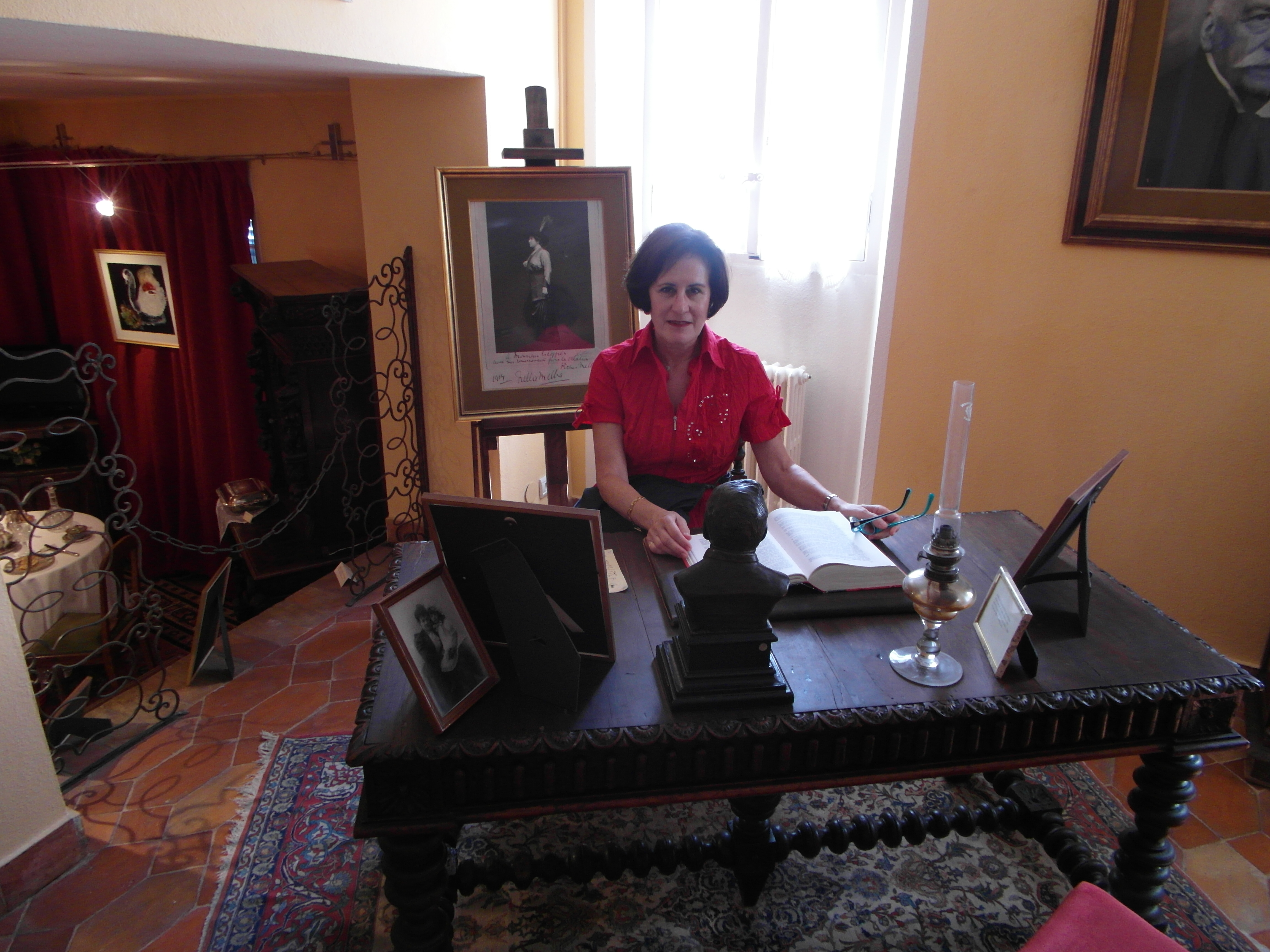
Seated at the desk of the King of Chefs and the Chef of Kings

The museum collection includes many handwritten recipes and letters by Escoffier, photos of him at the Savoy where he invented Peche Melba, at the Ritz in Paris, and at the Carlton in London. It houses many of Escoffier’s cooking implements, including many designed by him, as well as Escoffier’s desk and chair, menus written by him or inspired by him, menus from great chefs he taught and inspired, a room full of chocolate statues created by great chefs trained by him, and many other heirlooms of the history of French cuisine, including how Escoffier elevated it into an art and a science. A pilgrimage there is just as satisfying for a true lover of French cuisine, if not more so, as a pilgrimage to the exhibit on Julia Child at the Smithsonian’s Museum of American History.

Musee Renoir and Musee National de l’Art Culinaire Auguste Escoffier

SAM_0815

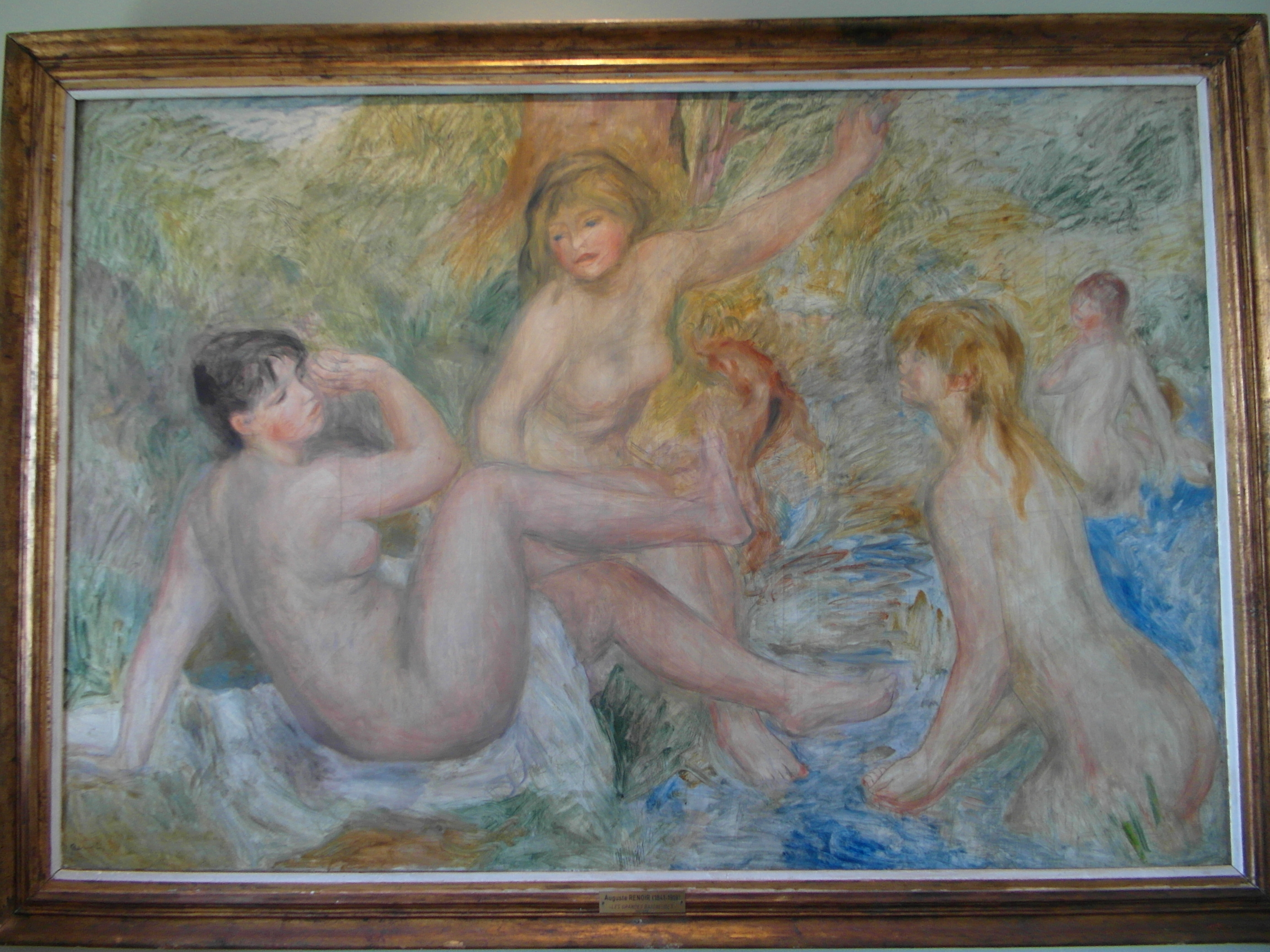
Les Grandes Baigneuses de Pierre-Auguste Renoir

SAM_0817Highlights of the day

*Musee Renoir

Luncheon of the Boating Party, by Pierre-Auguste Renoir, is one of my favorite paintings in the whole world, because of the way it stirs in one feelings of beauty and feelings of la joie de vivre. That painting, luckily, is housed near us at the Phillips Collection in Dupont Circle.

In addition, the recent movie Renoir, which we saw last March at the Avalon Theatre, introduced us to the last few years of Renoir’s life, which he spent at his farm in Les Collettes, in Cagnes-sur-Mer on the outskirts of Nice, now a museum.

SAM_0806

Musee Renoir (formerly la ferme Les Collettes) at Cagnes-sur-Mer

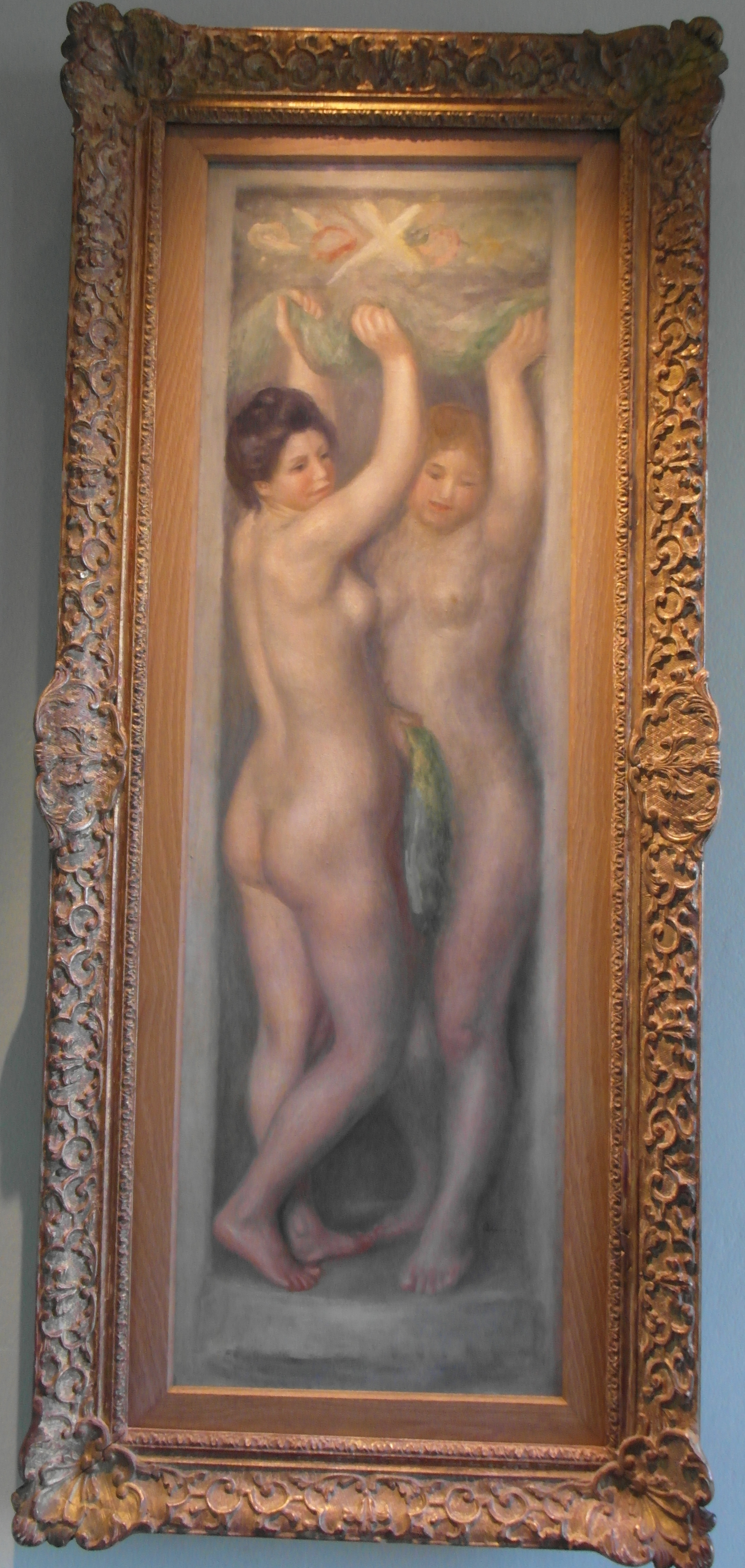
Visiting the Musee Renoir was a treat, particularly since it just reopened a couple of weeks ago after extensive renovations. I was however disappointed that the annex building was not visitable. The two atelier rooms in the main house were the most interesting for me. From the main house, there are great views of the Mediterranean coast as well as of the hilltop village of Hauts-de-Cagnes. The grounds are just as I imagined them from the movie, and we also enjoyed the dozen or so original Renoir paintings on display.

*Musee National de l’Art Culinaire Auguste Escoffier

The museum is located in Villeneuve-Loubet, in the house where Escoffier was born and where he spent the first 18 years of his life. It feels a little bit like a pilgrimage to visit this temple to the King of Chefs and Chef to the Kings, and it is well worth it.

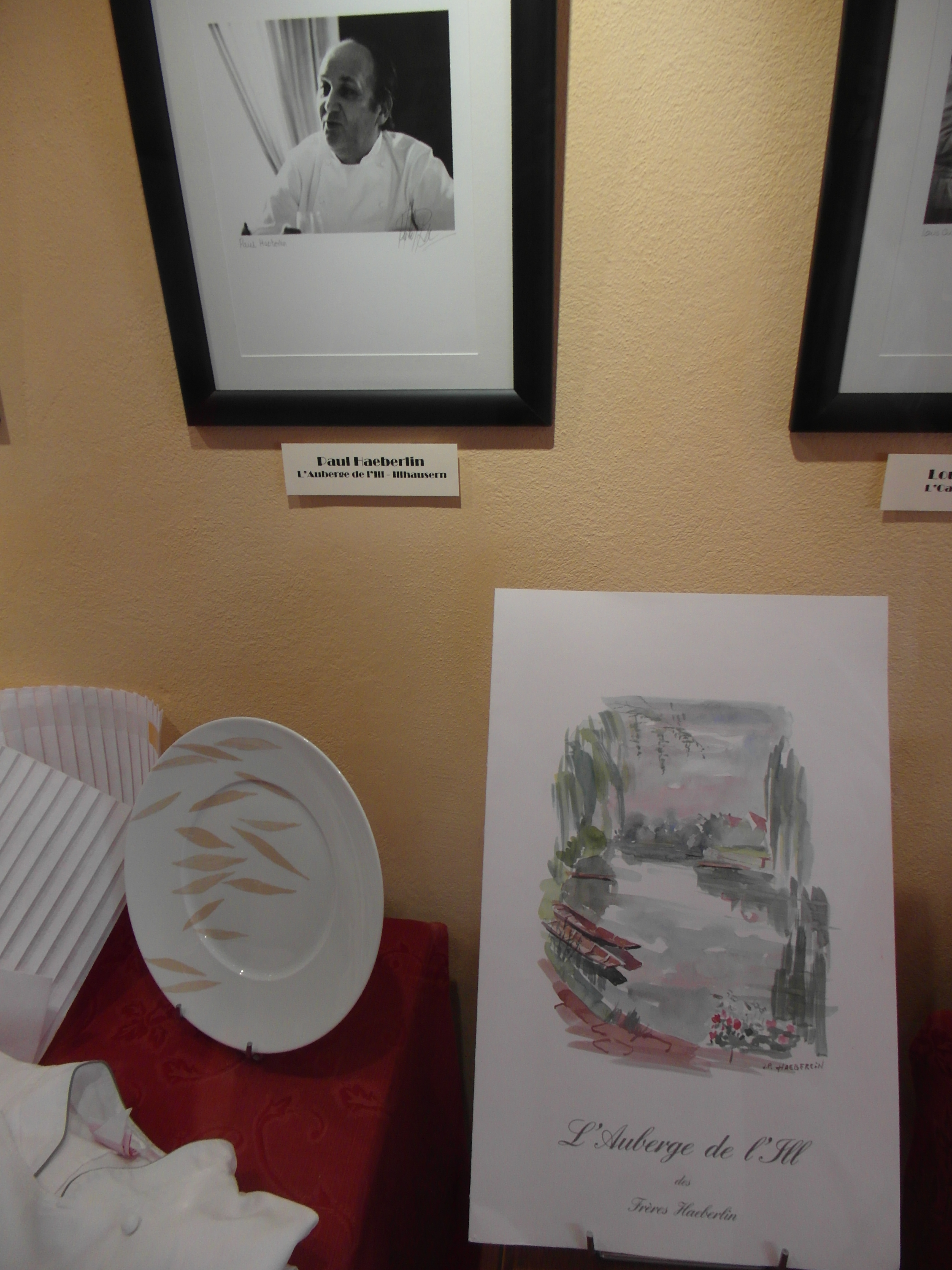
One gets a good sense of his life and accomplishments. In addition, one gets a good overview of the history of French cooking and where it stands today. I was particularly pleased to see that the l’Auberge de l’Ill in Illhausern, one of our favorite restaurants in the whole world, was well represented in a display honoring today’s top chefs.

The history of the Peach Melba, created by Escoffier to thank the opera singer Nellie Melba, is featured prominently, and we were served a Peach Melba dessert at the end of our tour to enjoy at a table in their little courtyard.

*Rental and use of the electric car sharing service Auto Bleue to drive to Cagnes-sur-Mer, Hauts-de-Cagnes, Villeneuve-Loubet and Antibes. This was my first time driving an electric car, a Peugeot IOn (no big deal), and my first time using a car sharing service (to my knowledge, Nice is the first city to offer an electric car sharing system). At the end of the day, I was wondering why everybody is not using something so convenient and easy to use.

However, to be fair, I did struggle a bit with the GPS system in the car; the less important details are that the screen is too small and the blue direction line is very hard to see, the more important detail is that the verbal directions are given after the turn road has been passed. I was puzzled at the beginning to hear directions like “in 300 meters, turn right on rue Dalpozzo” just as we were passing that street! Nevertheless, in time, we adjusted well to each other and made it safely back.

A great advantage of Auto Bleue is that you return the vehicle to the same parking spot where you took the vehicle, and that spot is saved for you. You can therefore return the car at any time of day or night and be assured of a specific parking space. This is an invaluable feature for day rentals as compared to regular car rental companies.

SAM_0833

The narrow streets of Villeneuve-Loubet

*Scenic driving tour of the perched village of Hauts-de-Cagnes and unplanned driving tour of the hilltop village of Villeneuve-Loubet. Because the main road to our destination was closed due to construction work, I ended up hopelessly lost, having a hard time figuring out a way to drive out of the hilltop village, and driving aimlessly thru very narrow steep roads (see photo above), even at one time ending up in the village’s very pretty but dead end (yes, pun intended) hill cemetery. When finally the GPS system asked me to make a hairpin turn into what looked like a three foot wide alley headed down as steeply as a ski jump, I just parked the car where it was and we walked down the hill. It was lunchtime and I was sure we would find both a place to eat and someone to help us figure out how to get out of town. Fortunately for all our friends and family who might be interested in our eventual return home, we found both quite easily.

SAM_0839

L’Auberge Fleurie in Villeneuve-Loubet

*Delightful lunch at l’Auberge Fleurie in Villeneuve-Loubet. This was the first restaurant we saw on our way down the hill, and it just happened to be located within sight of the Escoffier museum we were trying to reach. In addition, the chef at l’Auberge Fleurie was a graduate of the Escoffier cuisine school. The main dish of the menu of the day was a fricassee de lapin with polenta (fricassee of fresh rabbit with polenta and Nice olives) which turned out to be superbly delicious and flavorful, another local specialty which we will remember fondly.

SAM_0859

Blue Beach restaurant on the beach in Nice

*Salade Nicoise dinner on the beach at sunset time at the Blue Beach restaurant in front of the Negresco in perfect 75 degree weather.

Eze ~ Gastronomy on the Top of a Cliff!

SAM_0758

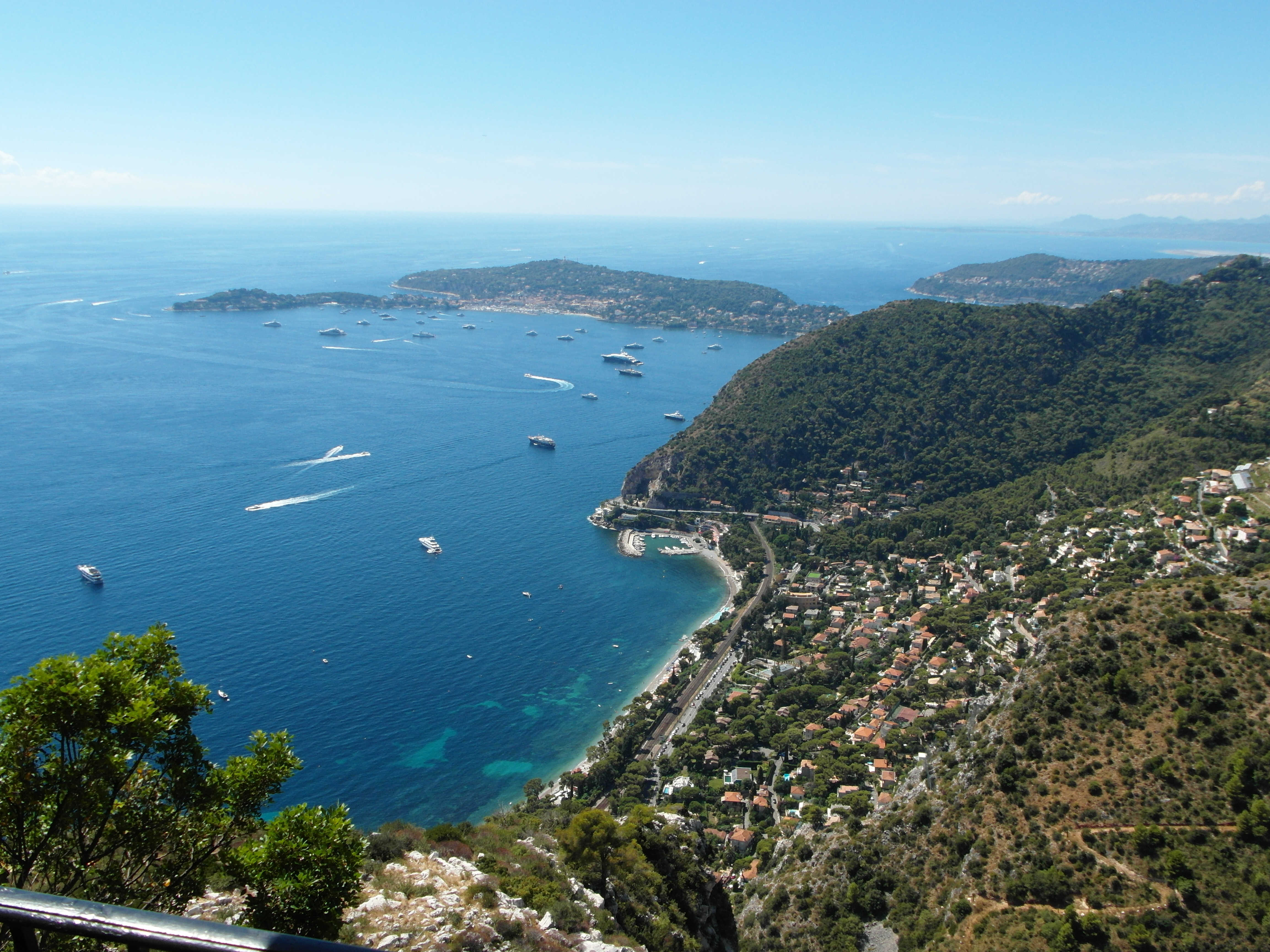
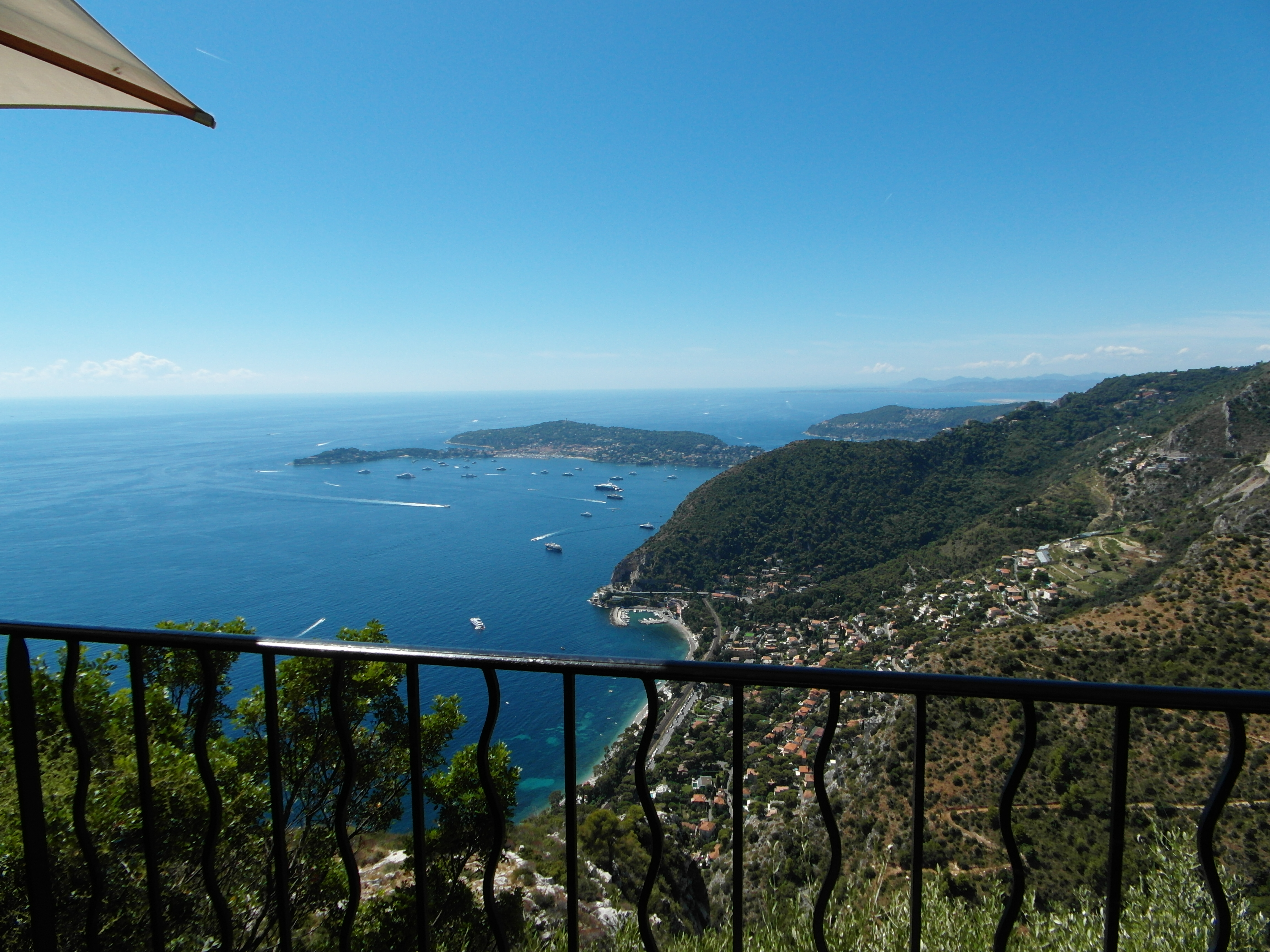
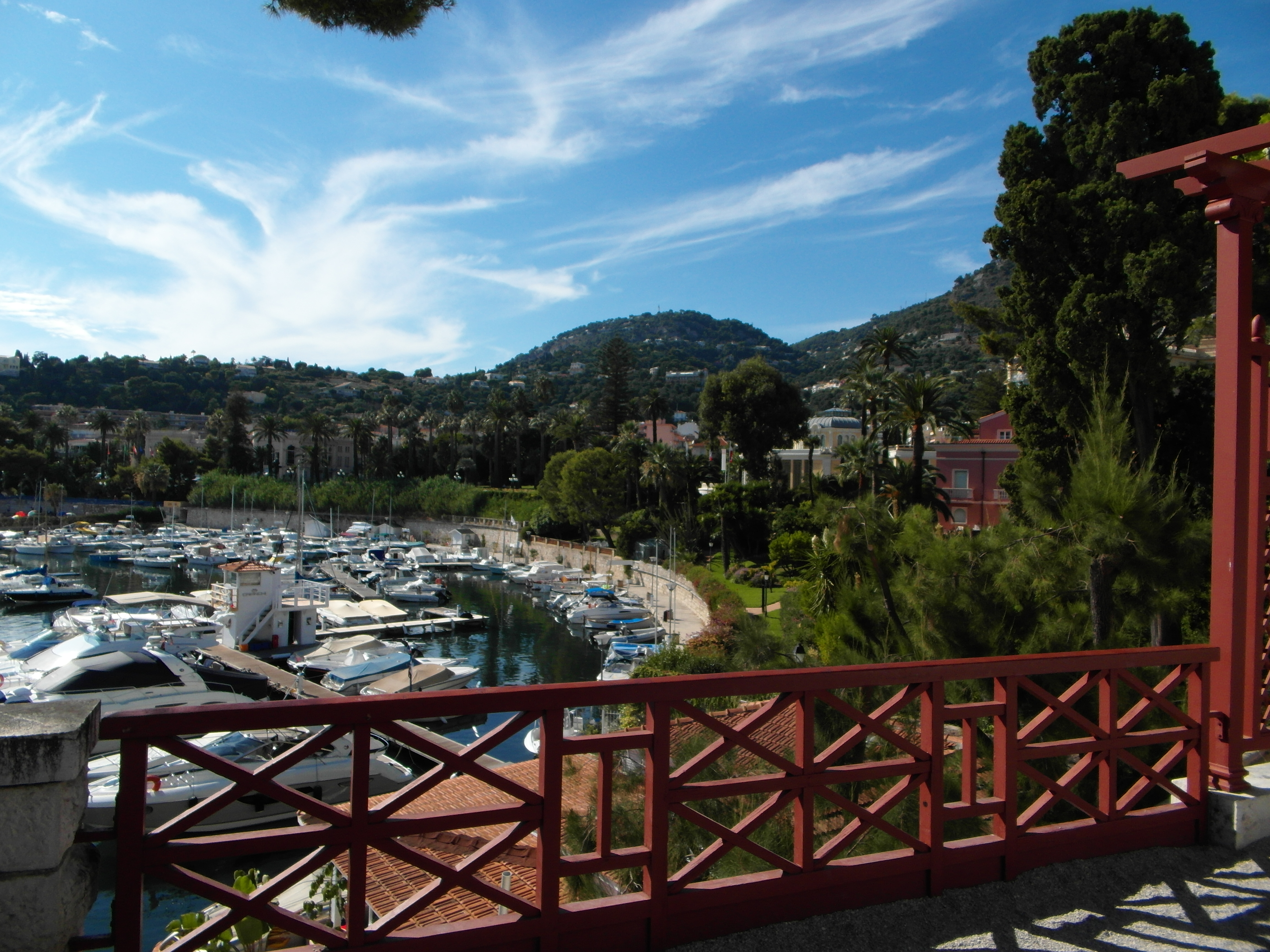
View of Beaulieu-sur-Mer, the bay of Villefranche-sur-Mer and Cap Ferrat

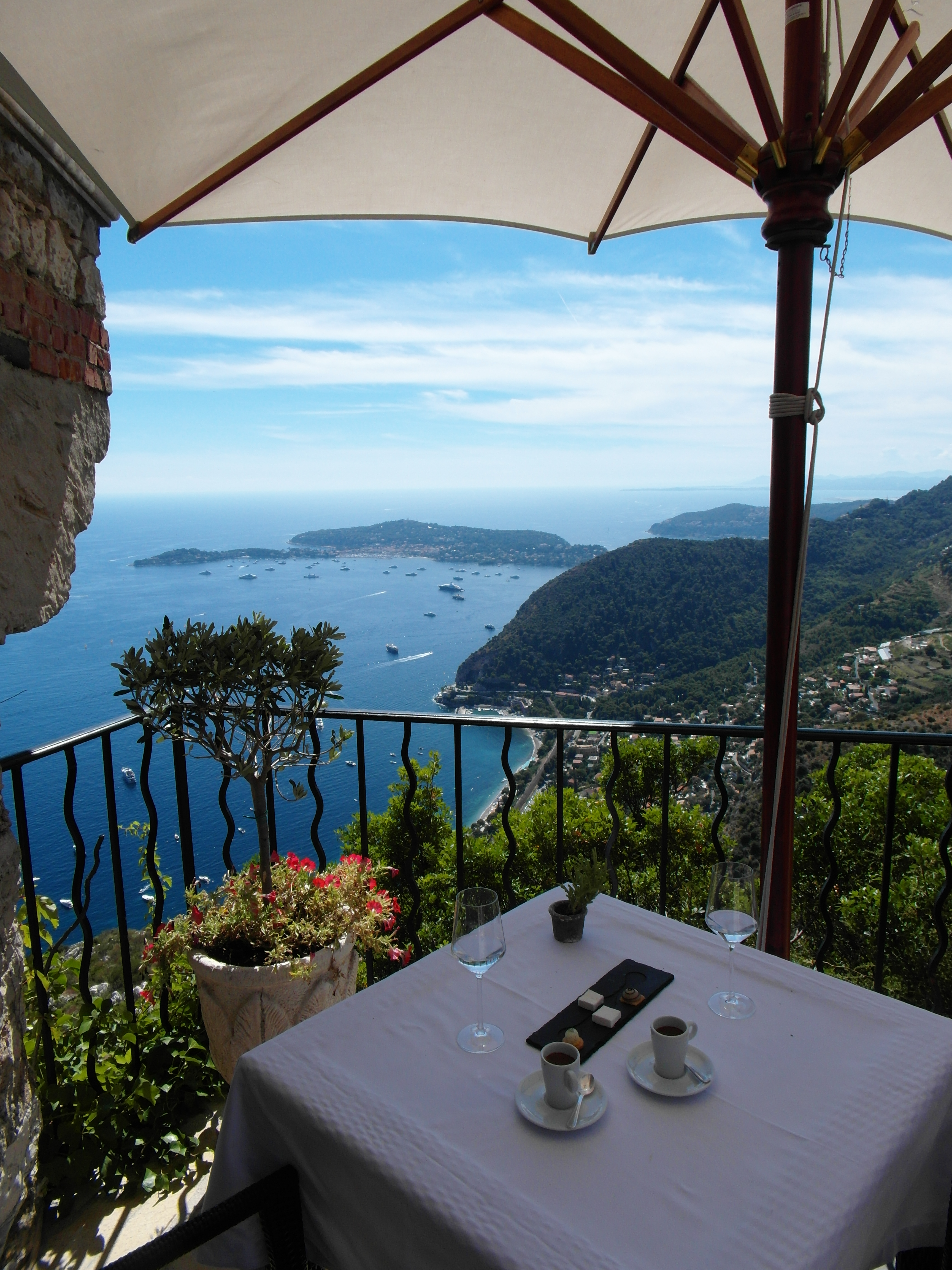
Eze, one of the most spectacular of France’s imposing “Villages Perchés” has a principal attraction other than its breath-taking 360 degree views … the Michelin- starred restaurant, Chateau Eza, named for the charming hotel in which it resides. Naturally, this restaurant’s reputation for excellent cuisine combined with the views was irresistible. So on our third full day we found ourselves on the bus … mesmerized by the views … as we winded our way up to the base of Eze. The rest of the climb up the steep, narrow streets to the top of this Medieval village was by foot, but so absorbed were we in enjoying the views that we hardly minded the steep climb.

So what is “gastronomy”? I like to think of it as the art and science of cuisine, preparing food with the best quality ingredients – regional produce is often the preference — using time-honored techniques, tasting as you go (a chef must have refined taste buds), and producing with significant expertise a nutritious work of art, as beautiful to look at as it is to taste and savor.

photo 3

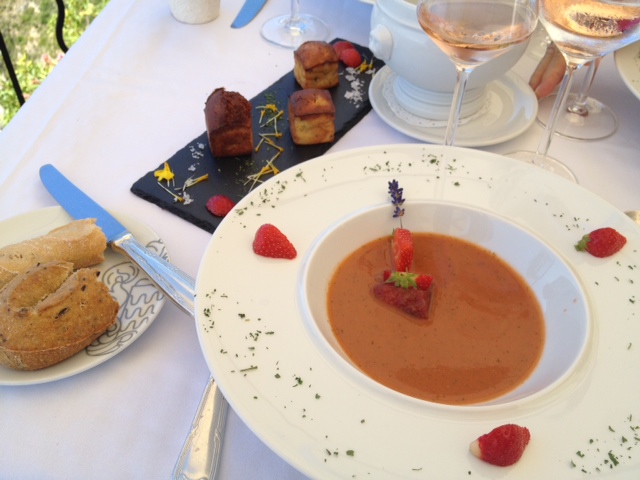
Watermelon & Strawberry Gazpacho with a touch of Coriander

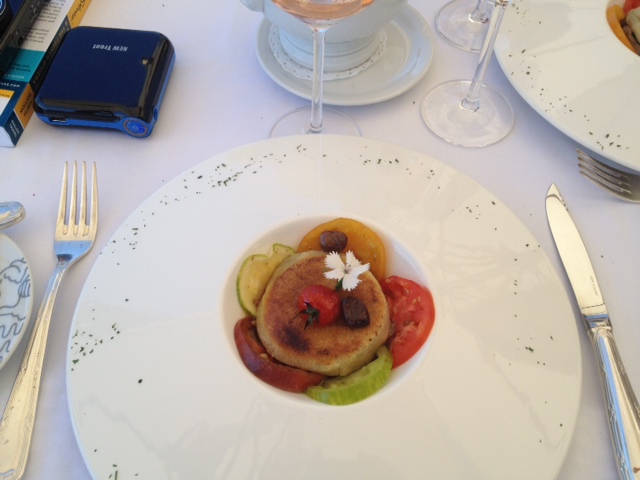
Along with their à la carte menu, the Chateau Eza offers two different menus du jour. We selected the more extensive one which they very aptly call the “Menu du Prince”. Voilà the menu which we enjoyed with a very satisfying Côtes de Provence Rosé …

Amuse-Bouche of Salsify cooked in Truffled Veal Jus with Spinach
Watermelon & Strawberry Gazpacho with a touch of Coriander
accompanied by a lightly peppered Artichoke Muffin
Small casserole of White Beans from Paimpol, local Heirloom Tomatoes & Herbs, flavored with Bacon Confit
Filet of local Veal under Crust with Nicoise Olives & Tomatoes
Mille-feuilles with crusty Pastry & Lemon Custard, Lavender Ice Cream
Garnish of Raspberries & Raspberry Coulis
Sweet Indulgences of the Chef

photo(1)

Filet of local Veal under Crust with Nicoise Olives & Tomatoes

A truly memorable meal which enchanted our taste buds, was highlighted with extraordinary views of the Mediterranean sea, Beaulieu-sur-Mer, Cap d’Antibes, Cap Ferrat and Nice … in a magical hilltop setting perched at the edge of the cliff.

Eze le Village ~ Lunch with a view of paradise

SAM_0765

Events of the day

*Cafe au Lait on beautiful Place Garibaldi in Nice

*Scenic bus drive along the Nice harbor and up the mountains to the perched village of Eze

*Unforgettable lunch at Chateau Eza at the top of Eze

*Walk thru the narrow steep ancient stone streets of Eze Le Village

*Wild bus ride down to Eze-bord-de-Mer and Beaulieu-sur-Mer

*Visit of the stunningly fascinating Villa Kerylos, a Greek style mansion built in Beaulieu-sur-Mer by Theodore Reinach, a wealthy parisian banker whose wife was a cousin of Maurice Ephrussi (villa Ephrussi de Rothschild). Gustave Eiffel, of Eiffel Tower fame, lived next door.

*Wonderful at-home French dinner of salads, cheeses and pate, and of course French baguette.

*Nice celebration commemorating the Liberation of Nice by American troops on August 28th, 1944

SAM_0757

Highlights of the day

*Memorable lunch on the terrasse at the Michelin-starred Chateau Eza, a five star hotel which used to be the summer residence of the Swedish royal family in Eze. Amazing panoramic views of the riviera and the mega yachts in the harbor of Beaulieu-sur-Mer combined with an exceptionally creative five course lunch menu to make for an out of this world experience.

*Totally wild bus ride down the very curvy roads of the mountain at breakneck speed with a nonchalant only-one-hand-on-the-wheel driver seemingly accelerating at every hairpin turn. The highlight is the fact that we survived.

*Visit of Beaulieu-sur-Mer. The town’s beauty, classy understated wealth and sophisticated charm so reminded me of the fictional village of Beaumont sur Mer in the 1988 movie Dirty Rotten Scoundrels that, at every turn, I expected Michael Caine to appear, wearing a blue sports jacket and white pants, and a twinkle in the eye.

SAM_0796

Discovery of the day

Did you know that ravioli were invented in Nice, and remain a big specialty of the Nice cuisine?

BonVoyageurs Tips

*Feel perfectly comfortable at the bus stops to go to the front of the line or anywhere else along the line where you see a space wide enough to fit a thin bamboo pole. In fact, be suspicious if the line does look like a line; it must be made up entirely of foreigners. The French have no qualm about filling all the gaps since they know that there are only a few available seats on the incoming bus; they will go to the front of the line (or create a new line in front of the existing line) if there is any space that will allow it.

*It is not necessary to buy bus tickets in advance, or to have exact change. The bus driver has a till and will make change if you wish to buy your ticket on board.

*If you are using a bus ticket pass, such as the 10-ticket card we were using today, be aware that you need to validate the card as many times as the number of people you are paying for on the first bus, but you should validate the card only once on the connections. Validating the card more than once then may mean that you trip will cost you more than one euro per person.

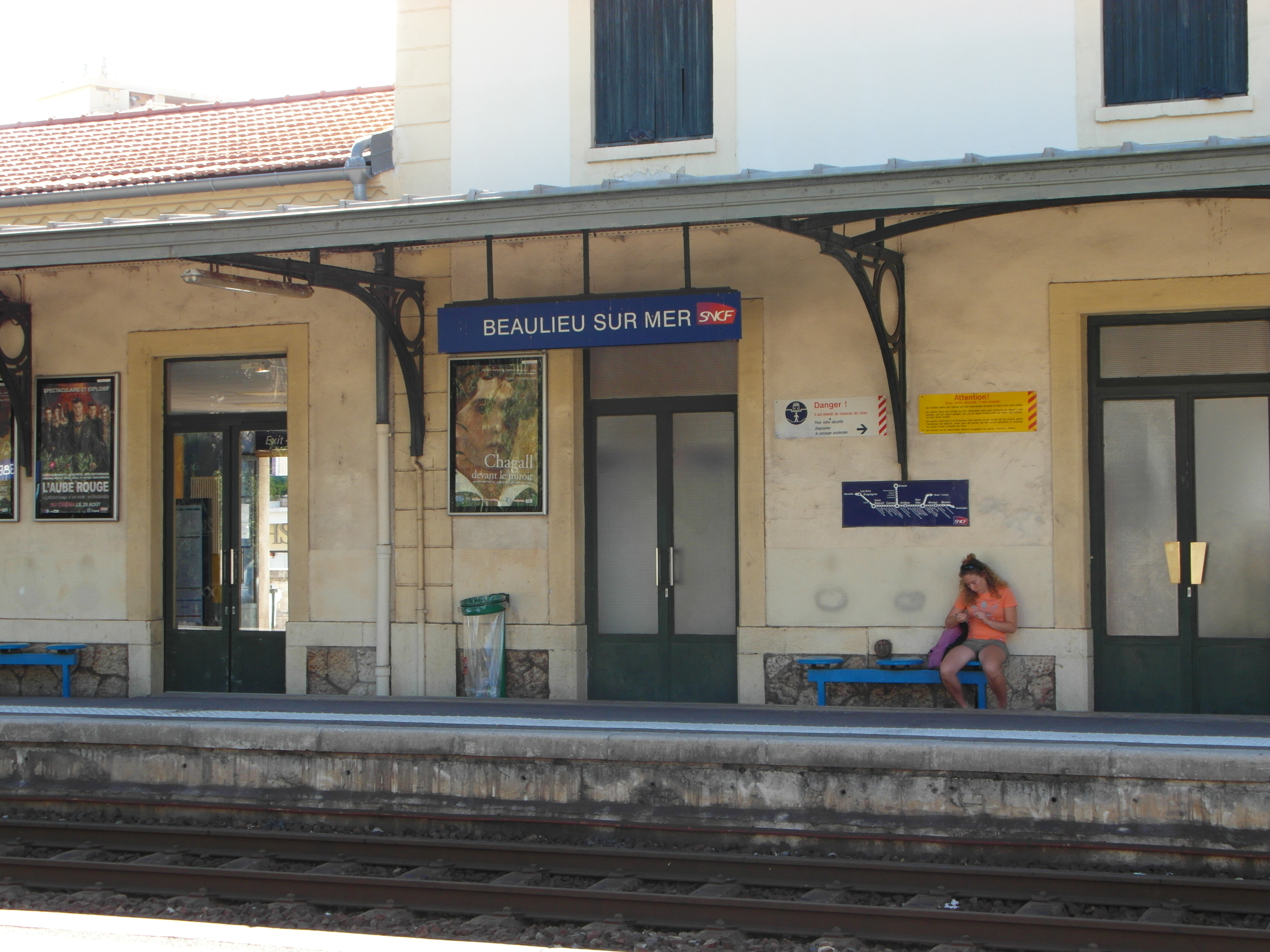
*On the French Riviera, feel free to ask for help on the bus or on the train. We have found the locals to be amazingly helpful and friendly. At the main bus stop in Nice, where we took the bus to Eze, the local municipality has a man standing by the bus stop all morning every day simply to assist tourists with the transit system. He answered all of my questions in a very helpful manner. And so did the “chef de gare” (station chief) at the train station in Beaulieu-sur-Mer, after we unexpectedly decided to get back to Nice by train rather than by bus.

SAM_0799

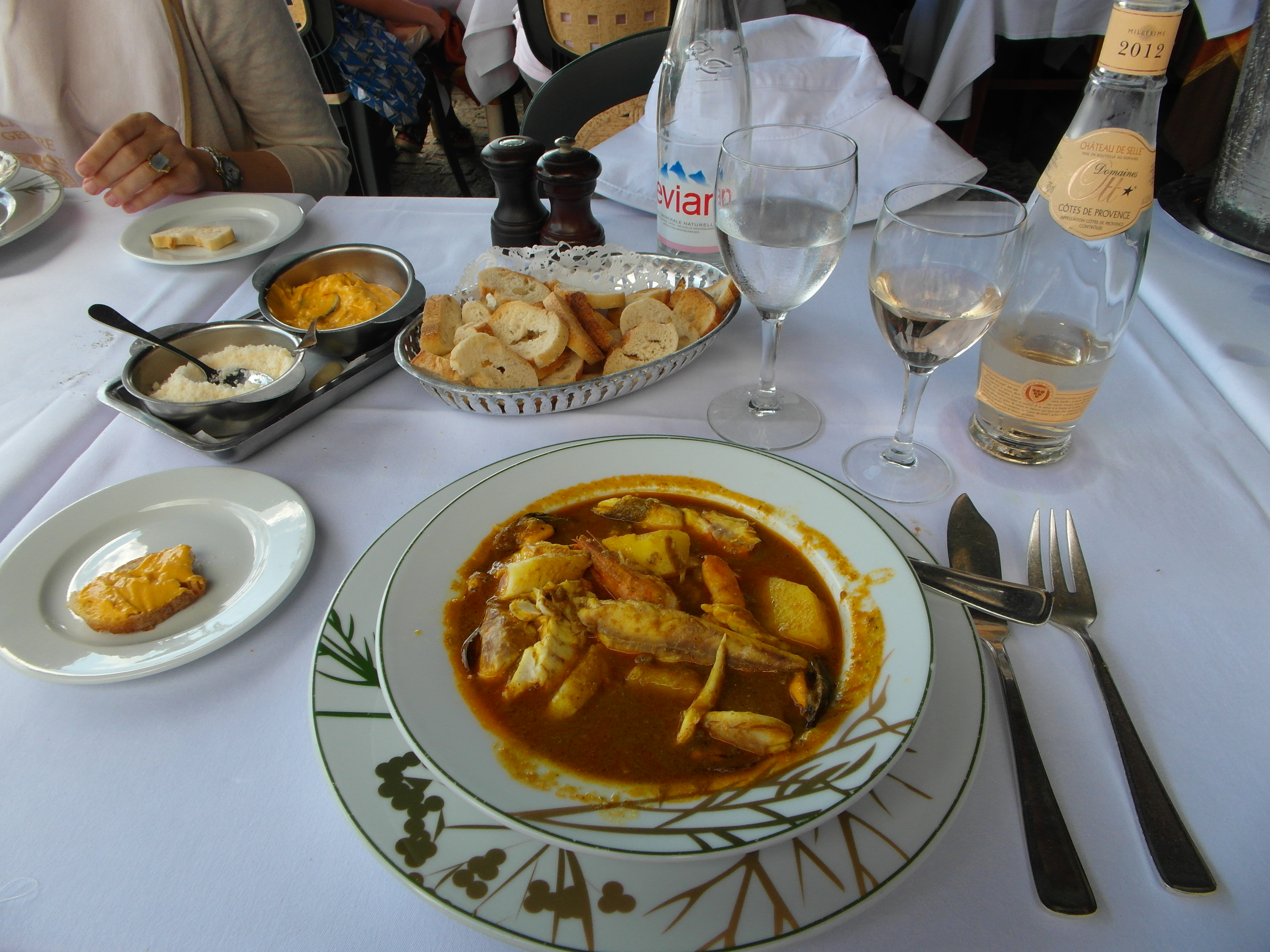
Villefranche-sur-Mer ~ Bouillabaisse anyone ?

Why would you go to France … for the culture? the beauty? the outdoor activities? the entertainment? the shopping? the food? Yes, all of the above. As for us, while we strive to plan our touring around the cultural sights, somehow our taste buds take priority these days and they steer our course. So not too surprisingly, our first destination once we settled into our home base of Nice was a trip specifically planned to partake of the bouillabaisse at La Mere Germaine. This elegant restaurant, situated on the water’s edge in Villefranche-sur-Mer which is located just east of Nice, is reputed to be one of the top restaurants on the Cote d’Azur for bouillabaisse and it did not disappoint. The chef prepared special side salads (not on the menu) for us as entrées, which were followed by the main event … the bouillabaisse. The broth was divine, the Mediterranean fish fresh, tender and perfectly prepared, and the rouille, a garlicky red pepper sauce which you spread on garlic-rubbed croûtes or simply stir into your bouillabaisse broth, was the perfect complement. For dessert we shared an exquisite chocolate soufflé made to order by the restaurant’s in-house patissier. Accompanied by a well-chilled bottle of Provencal rosé, the meal was enhanced by top-notch service from our waiter, French music in the background, and a commanding seaside view over both the water full of impressive yachts and the steep hillside dotted with elegant homes.

Settlements in Villefranche date back to prehistoric times, but the village is particularly known for its medieval streets. So after lunch, we took a challenging walk up and down the city streets and stopped to look at Rue Obscure (Dark Street), a passage way under the harbor front houses that dates back to 1260. Did we walk off the multitude of calories that we ingested at lunch? Doubtful, but fueled by the bouillabaisse, we had a fascinating time trying.

Villefranche-sur-Mer ~ Idyllic and upscale

SAM_0708

The main events of our day:

*Day trip to the delightful town of Villefranche-sur-Mer

*Taking the train to and from Villefranche

*Having a bouillabaisse lunch at La Mere Germaine

The highlights:

SAM_0724

SAM_0729

*Definitely the meal at La Mere Germaine was outstanding. It was not simply that the bouillabaisse itself was superb, but the rest of the meal (including an out of this world chocolate souffle prepared by the house chef patissier), the ambiance, the service, the views make one want to relish the experience for as long as possible.

*The scenic views at Villefranche are extraordinary, both from the harbor and from the charming small hilly walkways of the old town. The town is built on a hillside at the mouth of a relatively small but deep water bay and overlooks the neighboring coastline of Saint-Jean-Cap-Ferrat and Cap Ferrat.

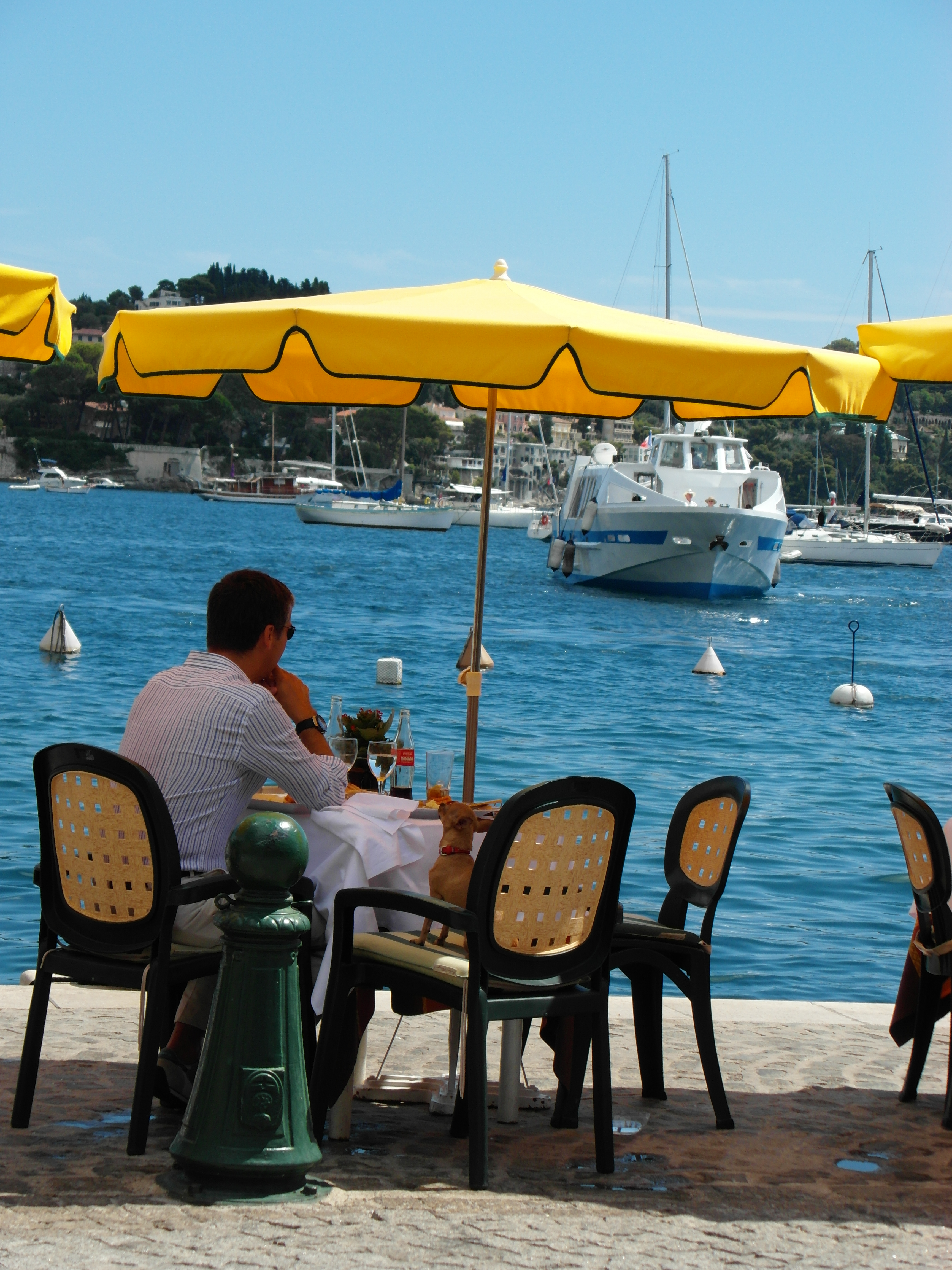
*This place is upscale. Seeing the mega yachts pull into harbor, or the Ferraris arrive at La Mere Germaine, or watching the house which Madonna rented last week for her vacation here right in front of you on the other side of the water, or knowing that what was Bill Gates’ villa, the most expensive house in the world, is just up the hill behind you, does make an impression, which the chihuahua on the chair at the lunch table (see photo above) only reinforces.

Traveling Tips:

*Use the SNCF/TER iphone app, which will give you in an instant all the upcoming train departures to your desired destination as well as real time traffic and delay updates; this will help avoid having to wait at the train station, which has no seating area, since platform numbers are not announced until twenty minutes before departure and noone is allowed into the track areas until then.

*There is a wonderful walkway between the Villefranche train station and the old town and harbor, offering splendid views and an easy commute.

*Don’t go to Villefranche on a Tuesday or a Friday; that is when the cruise ships come in and lay anchor in the bay, and, more importantly, absorb all the resources of the town. For example, no boat rides out of Villefranche on those days because they are all committed to the cruise ships.

Nice, France ~ My kind of town!

SAM_0696

Nice is my kind of town! One day in Nice was enough to sell me on the city. A boulangerie with unbelievably fresh croissants and pains au chocolat as well as a small grocery store with all our needs within a two minute walk of our apartment; there are boulangeries and epiceries everywhere. The seven-kilometer long Promenade des Anglais is a very wide stretch of paved walkway along the beach in downtown Nice and we found delightful to walk it; an ocean breeze helps make the very hot sun (even though it was only 77 degrees) more tolerable. The beach is covered with sunbathers and swimmers; the town seems to be filled with vacationers and seems to be well equipped to deal with them. Just inside from the main road along the beach, long streets, full of bistros, pizzerias, trattorias, brasseries, cafes, restaurants by the dozens, each with their specialty, and all within a few minutes walk. For lunch, we opted for Le Safari restaurant located along the main market square Cours Saleya, where we experienced four Nice specialties, farcis nicois, salade nicoise, spaghetti aux fruits de mer, and linguini au pistou. The tiny mussels in the spaghetti dish - sweet, flavorful and plentiful — were the highlight of the meal.

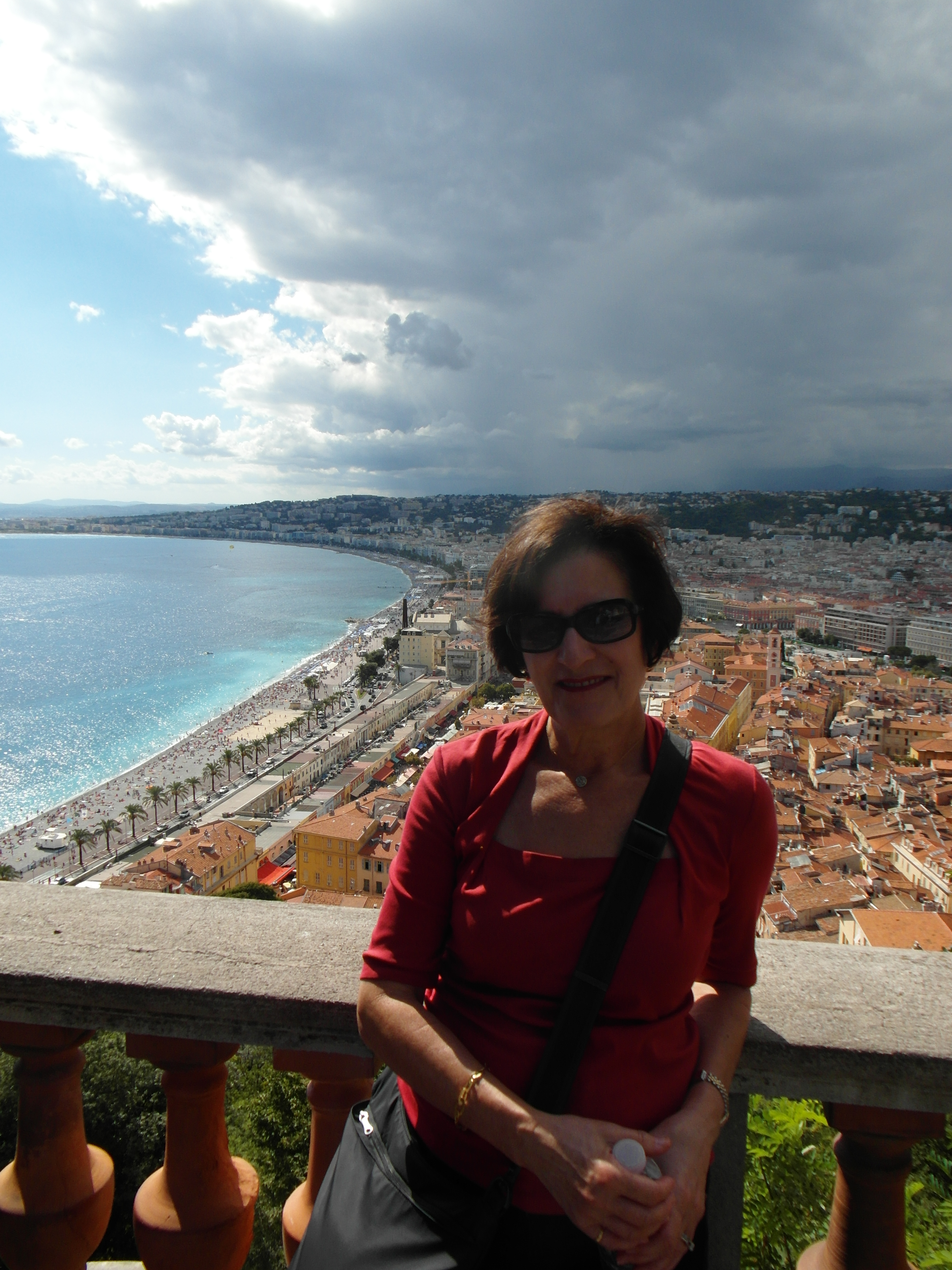
There is a small touristic train which brings people to the top of the castle hill overlooking the city, and the view from there is phenomenal. Don’t be misled by the ominous clouds in the picture above; we had a whole day of very warm sun and those clouds disappeared as quickly as they showed up (which is in some ways unfortunate, since we spent a good deal of time hunting for shade).

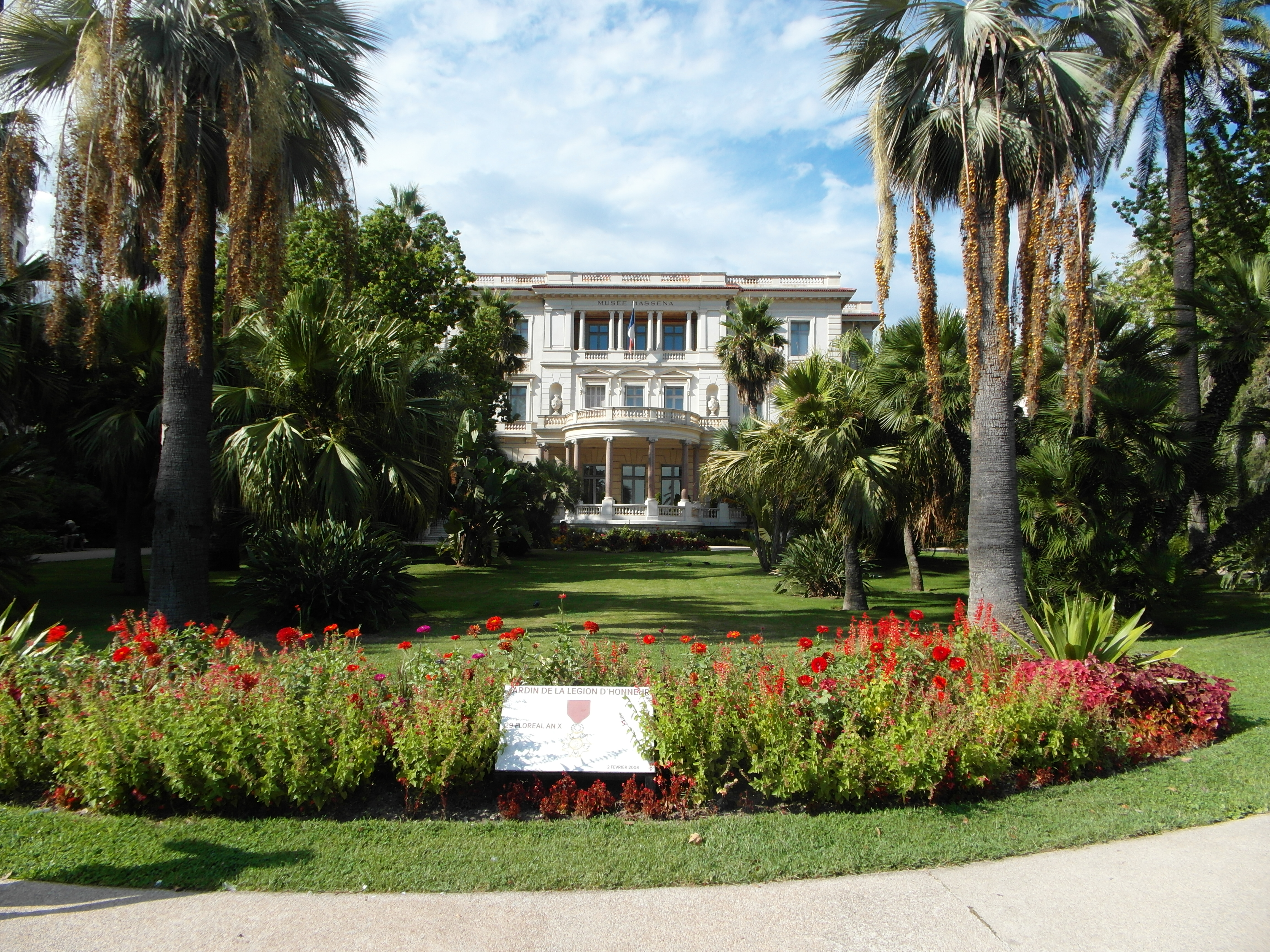
We visited the Palais MassenaSAM_0707, which aims to present a history of the city. It was holding a special exhibition called “Un Ete pour Matisse” (A summer for Matisse). While the building is a beautiful mansion (Massena was a top general for Napoleon, born in Nice), both Lynn and I agreed that its visit is entirely unmemorable.

For a day intended to be a day of recuperation from jet lag as well as a day of several errands (would you believe bus tickets to go anywhere on the Riviera cost me one euro each), we ended up walking pretty much the whole downtown area, visiting the castle hill and the Massena museum, having lunch in the old town and dinner at a trattoria near the sea (where Lynn raved about her branzino fish platter).

Nice is a very walkable city and my kind of town!

Nice, France ~ Never on Sunday?

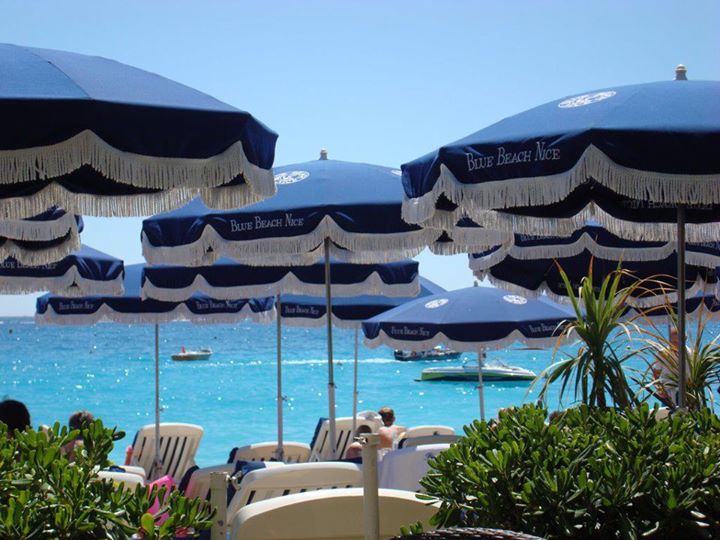
blue beachInternational travel during weekends can often be very relaxing and hassle-free, with both airports and planes operating at much less than capacity. In fact, as we were going thru Washington Dulles Airport yesterday (a Saturday), I was reflecting to myself on how great an airport this was, from a passenger’s perspective, compared to most other airports around the world (and I’ve been thru many of them regularly over the years). One does not get the sense of being crowded at Dulles; there is that feeling of space, of room to spare, which is partially due to the architecture of the buildings and also due to excellent organization and capacity planning. The whole process of checking in, going through passport control and security, transfer to the terminal, access to the executive lounges, boarding, etc… is efficient, smoooth, painless (unlike so many other airports).
Today we landed at London’s Heathrow Airport, collected our luggage, caught a National Express transfer bus to Gatwick Airport, and had a wonderfully refreshing shower and breakfast at the British Airways lounge in the north terminal before boarding our flight to Nice. It all went very smoothly and without any delay or incident, remarkably so. True to form, it was raining and cold in London when we landed and during our fifty-minute bus ride to Gatwick; I assume the Brits simply wanted to make sure we knew we were in the UK.
Well, the French wanted to make sure we knew we had arrived on the French Riviera when we landed in Nice, cause they greeted us with blue skies, blue seas and a warm sun. The last ten minutes of the flight offered us a spectacular aerial view of the French riviera coast, going west to east towards the Nice airport. The number of sailboats and powerboats underway all along the coast was nothing short of amazing. Quite a nice way to arrive.
However, we were arriving in France on a Sunday afternoon, and that simple fact had triggered all sorts of memories for me, and not my favorite ones. When my wife and I moved to France for the first time, back in 1974, we arrived in Besancon, the capital of the eastern province of Franche Comte in the Jura, on a Sunday afternoon. We were booked in the hotel Frantel, rated then as the best hotel in town, with a top location along the Doubs river and providing a fabulous view of the city. That hotel does not exist under that name anymore; I believe it is now called the Mercure Besancon Parc Micaud hotel, part of the Accor hotel chain. We were scheduled to stay at the hotel for a month or so until our belongings arrived from the States and until we were able to move into the apartment which was waiting for us. After we had checked in and settled into our room, we went down to the hotel restaurant to have dinner only to find out that the hotel restaurant was closed, the one and only restaurant in the hotel. I went over to the reception desk to obtain more information. Well, as I was told, it was Sunday and the hotel restaurant closed on Sundays, and oh, by the way, so did room service. I was puzzled; what did hotel guests do on Sundays in order to eat if both the hotel restaurant and room service are unavailable? Did they all go out to other restaurants in the city? Actually, so I was told, restaurants in the city also closed on Sundays! A suggestion was made that I might try to see if the restaurant at the casino next door was open. So we hopped into our car and drove over to the casino. Nope, that was also closed. How about a fast food restaurant of some sort? No luck there either, since there were absolutely no fast food restaurants in the city of Besancon in 1974, not one. Surely there must be some place to get food to eat, I said to my wife as I started driving around the city looking for a place, any place, that was open. Finally, after an hour or so of driving through Besancon, and that means it was already around 9pm, I came across a place which was open. It turned out to be a bar of some sort, but they did have a couple of sandwiches and food platters amid their offering, so we ate our dinner there.
The next day, still amazed at that experience, I related the story to my new work colleagues at the office. They were curious to know where I had been able to find food on a Sunday; I told them that the restaurant or bar was called the Kronenbourg.
You must have gotten the name wrong, they said, there is no such restaurant or bar in town. It was there in big bold letters in bright neon colors, I replied. My colleagues started smiling and laughing before explaining to me that what I had seen was the name of a beer sold at that location. Kronenbourg is the name of an Alsatian beer (which has become better known since then, and now appears on many bright neon signs all over Besancon), not a restaurant name. To this day, I don’t know the name of the place where we ate!
Ever since that fateful Sunday, I have been a bit leery of arriving in France on a Sunday, and that was the case today when we showed up in Nice. I had done some prior checking as part of my trip planning and I knew that grocery stores were closed on Sundays (a few are open on Sunday mornings) so I was already expecting that our first grocery shopping would occur on Monday. I also knew that most restaurants were closed on Sundays; this left room for hope, since I had read about a few places which supposedly would be open. And the world had changed since 1974, I kept saying to myself, fast food not only had arrived in France, it was doing very well and fast expanding if you will forgive the play on words. Would the Nice McDonald’s be open on Sunday evening? I wondered. And if it were open, was that what I wanted to do for my first meal on the French Riviera?
Being cautious and prudent, we had decided to pre-eat our dinner at the British Airways lounge in Gatwick; it was noontime there, not dinner time, but our jet-lagged and over-fed tired bodies did not know the difference. The lunch spread in the lounge was enticing, with, among many offerings, a warm tasty tomato soup and a salad bar that included quiches and bean salads. Afterwards, I thought, our stomachs would be able to handle the starvation of a Sunday evening in Nice.
Actually, I am not being totally honest here. For several weeks now, I had put together a plan for our first Sunday evening dinner in Nice, and it consisted of taking the five minute walk down to the beach from our rental apartment. There are five beach restaurants along the world-famous Promenade des Anglais beach in central Nice; my research indicated that the best one was Blue Beach, located right in front of the best hotel in Nice, the Negresco Hotel. Blue Beach happened to be open on Sundays and to be located about a five minute walk away. I already imagined myself eating a salade nicoise or a spaghetti aux fruits de mer on the beach with the sun setting on the sparkling Mediterranean sea and the Promenade des Anglais behind us; I had verified that sunset would be at 8pm today, perfect timing since that is about the time when dinner starts getting served in southern France. Sounds like a great plan, doesn’t it?
Well, guess what was waiting for us when we boarded our London to Nice flight? A charming stewardess who immediately said: Mrs. Gagnon, I see that you ordered a special low sodium meal, and Mr. Gagnon, I see that you ordered a special seafood meal!

Pure Enjoyment!

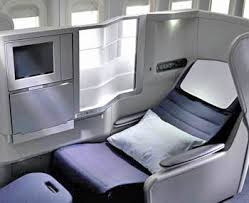
imagesSoon after we settled into our comfy business class alcove seats on the British Airways 747 flight to London, a smiling stewardess handed me the flight’s menu, titled in large letters “Pure Enjoyment”. How appropriate a description, I thought, both for my current state of mind as well as my hopes for this trip to the French Riviera.

For more than 40 years, British Airways has been my favorite way to fly over the Atlantic ocean. I don’t receive the same level of attention I used to get when I had British Airways Premier status, in the good old days. The Premier status was not listed in the published frequent flier tiers, because it was a uniquely special level given by invitation only to the select few who spent more time with British Airways than with their wives. Back then, a British Airways representative would be waiting for me at the exit door of the plane so as to escort me to my next flight, not through the terminal, but via a British Airways car waiting by the plane. Sometimes, I would be invited to sit in the cockpit with the pilots for either take-offs or landings; I used to particularly enjoy the landings at the old, now mothballed, Hong Kong airport in Kowloon. If a flight was fully booked, someone would get bumped off in order to make room for me. Ahh, those were the good old days of flying (unless you were the person who got bumped in order to make room for me). Of course, I flew around the globe every month for my work, more than 25,000 air miles, month after month, year after year, so I had a lot of frequent flier miles, in the millions, and my company paid enough money to British Airways so that they should indeed take good care of me.

They may well still be the best over the Atlantic. I am not sure, because I don’t fly as much as I used to, so I have fewer opportunities to try other airlines; I try to fly British Airways any chance I get. But we did fly United Airlines and Lufthansa over the Atlantic in June of this year, which gave me a chance to compare, and I have to say that, while the Lufthansa business class seems to have improved a great deal and United seems to be worse than ever, both airlines fall way short of the standard set by British Airways.

But is British Airways living up to its own standards? Hiccups sometimes happen, as seems to be the case already on this flight (I am typing these words an hour or so into the flight). Our issue started with the “Pure Enjoyment” menu I mentioned at the start of this post. I was drooling over the dinner menu choices, hesitating between the lasagna, the crab or the beef, before finally settling on the beef because the crab platter, otherwise divine, came with a chipotle sauce. Speaking more generally, I think it is regrettable that all the kitchens around Washington, many good restaurants, and now even the British Airways kitchen at Dulles, seem to be staffed with Hispanics who want to inject Mexican food into everything I eat! I have lived in Mexico for almost five years in the gastronomic capital of the country, Puebla, so I consider myself reasonably fluent when it comes to Mexican food. I do not rank Mexican food among the best cuisines of the world and I particularly don’t want chiles, cilantro or chipotle in my food! In fact, I don’t want to eat Mexican food unless I go to a Mexican food restaurant (and I rarely want to do that). Anyway, I decided to go with the fillet of beef in the pure enjoyment menu.

Soon after, the stewardess came to take our order, … or so we thought. Mrs. Gagnon, she said, I see that you have ordered a special low sodium meal, and Mr. Gagnon, I see that you have ordered a special seafood meal. I was about to respond that I had done nothing of the sort, when I decided to think about it a little more. Meanwhile, Lynn was telling the stewardess that she did not want a low sodium meal; she had eaten a low sodium meal on the last British Airways flight we took to Africa and she thought the food was tasteless. I put two and two together, and figured out that the special meals we had ordered for our previous flight to Africa, something we had done merely as an experiment, were now part of our permanent British Airways profiles! Unless I remember to correct this when I get home, we are doomed to low sodium and seafood meals for the remainder of our British Airways flights.

I turned to Lynn and said: “I’ll be happy to take your low sodium meal and you can have my seafood platter, if you would prefer that”. No, Lynn answered ever so kindly, I do not want to take your seafood platter away. I turned to the stewardess, who was patiently waiting for some sort of decision; “What is the seafood platter?” Salmon and pasta, she replied. Oh great, I said, Lynn, would you not like salmon and pasta? Again, Lynn turned me down: “Enjoy the salmon and the pasta, you love both.” She then turned to the stewardess: What is the low sodium meal tonight?

Oh, replied the stewardess, it’s the same meal, the low sodium meal platter is salmon and pasta, just like the seafood special meal. The low sodium meal and the seafood meals are one and the same! I smiled to myself; do I dare ask what’s on the beef platter?

Pure enjoyment!

Barberousse and the woman who saved Nice!

seguraneWe will be taking off for London in a few hours, on our way to Nice.

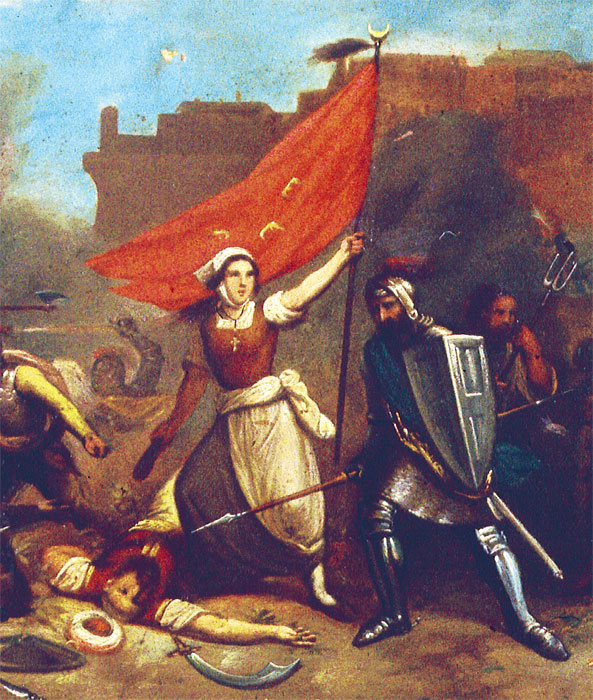
The hero of Nice is a woman named Caterina Segurana, or Catherine Segurane as she is now referred to in this French city. But back in 1543, Nice was part of Savoie, to the chagrin of Francois 1er, the king of France. He made an alliance with the Ottoman Turks in order to fight his great enemy Charles Quint and ordered that Nice be conquered. A French-Turkish army and fleet, under the command of the notorious Barberousse (Red Beard), attacked Nice from the land and the sea.

On August 15th 1543, a date which will live forever in the memory of all self-respecting Nicois, the Turkish army attacked. A Turkish soldier planted the Ottoman flag on the top of a fortification. An irate Catherine Segurane, a poor clothes washer, ran up and beat the Turkish soldier over the head with her clothes beater and took the flag away. She then is said to have turned around, lifted her skirts, bent down and shown her bare behind to the Turkish army, a gesture of defiance which apparently raised the morale of the Nicois troops to such a degree that the attack was repelled. Others suggest that she also or perhaps instead simply bared her chest to the invading troops.

That is why the people of Nice have erected statues, named streets and bus stops, and hold annual celebrations and parades in the honor of their savior, Caterina Segurana!

La Baie des Anges: Deux legendes et une histoire de poisson (Two Legends and a Fish Story)

Bay des Anges

First, I need to clarify that I did not write the story below but copied and pasted it from a website. All credits apparently should go to a Margo Lestz, who lives in London and has a second home in Nice, and writes a very interesting blog called Riviera Ramblings: http://blogs.angloinfo.com/riviera-ramblings/

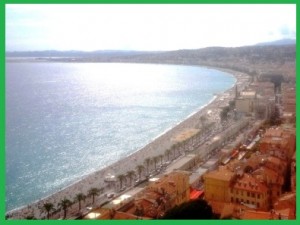
La Baie des Anges (Bay of Angels) is the bay in which Nice is located. Here’s what Margo wrote:

How the “Baie des Anges” (Bay of Angels) got its name:

Legend No. 1: Adam and Eve

Many rich and famous tourists visit Nice every year, but according to a legend, the first visitors were actually Adam and Eve – yes, the ones from the Bible.

They lost their home… As the story goes, after they were kicked out of Paradise for being naughty, they were standing outside the locked gates looking at their new hostile surroundings. Everywhere was barren and inhospitable. They had no idea where to go or what to do.

Led by angels… Then they heard the sound of rustling wings, looked up to see a band of angels flying overhead and motioning to them. As they watched, the angels flew across the waters and hovered over a certain spot. They were showing the couple a glorious bay, in front of a land that was as lush and beautiful as the Eden they could no longer enter.

And where do you think that bay was? Right here on the French Riviera. According to some, that is how the lovely bay which fronts Nice got its name, the “Baie des Anges” (Bay of Angels).

Same legend, different city… Menton, a city just down the coast from Nice, also claims this legend, with one addition. Apparently when Eve left the Garden of Eden she took a lemon with her. She was looking for a place worthy of the lovely fruit and when she saw Menton she left the lemon there. Menton is known for its lemons and has a wonderful lemon festival every year.
Adam-and-Eve-Nice-02-resized-575x249

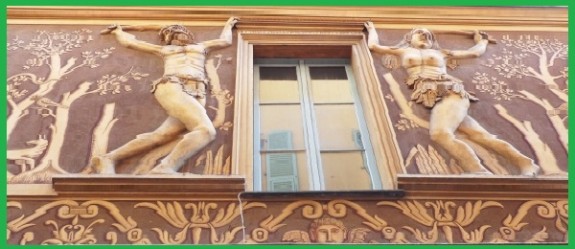
Adam and Eve’s house (Maison d’Adam et Eve) in the Old Town

Where did they live?… Well, I can’t say for sure if Adam and Eve settled in Menton or in Nice, but my theory is this: First, they visited Menton, thought it was beautiful, left the lemon and then saw that Nice was even more beautiful and made it their home.

Why do I think this? Well, for one thing, their house is still standing in the Old Town of Nice. It has a magnificent carved frieze depicting the first couple sporting their fig leaves. They each have some sort of club and it looks like they might be having a domestic quarrel. It is called “La Maison d‘Adam et Eve” (Adam and Eve’s house) and is at No. 8, rue de la Poissonnerie where the street meets Cours Saleya. This house is dated 1584 (ok, so maybe the first couple didn’t really live there). Some say that this club-toting couple represents the original owners of the house who were known for their arguments. Whatever it is meant to symbolise, it is a lovely bit of decoration and easy to miss if you are not looking for it.

Legend No. 2: Sainte Réparate
ST-RPA~1

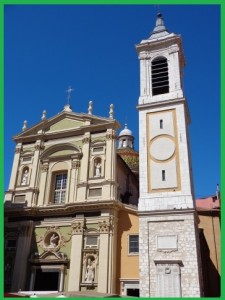
St Réparate Cathedral, Place Rossetti in the Old Town

If the first legend is a bit too far-fetched for you, how about this one: It has to do with a 15 year old Christian girl from Caesarea, Israel who was a victim of Roman persecution in the year 250.

Killed by the Romans… They tried to burn her at the stake but it started to rain and put out the fire. Then they forced her to drink boiling tar but that didn’t do the job either. Finally they cut off her head and put her body in a little boat which they set adrift on the Mediterranean Sea.

She arrives in Nice… The angels guided the boat into the same bay where they had guided Adam and Eve all those years before. The bones of Sainte Réparate are in the cathedral in the Old Town which bears her name in Place Rossetti. But wait a minute…according to the Cathedral history, her bones arrived in 1060. So, was the poor girl adrift at sea for 800 years? I don’t know, but this is another theory for why the bay is called the “Baie des Anges” (Bay of Angels).
Angel-Shark-300x150

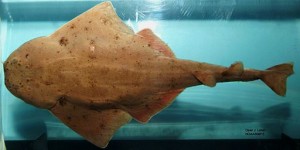
Angel Shark

A fish story

If the above two legends don’t suit you, how about a fish story? At one time the bay had many angel sharks in it. But don’t worry, the angel shark is a relatively harmless shark with fins shaped like wings and they are no longer found in these waters. When the fishermen saw these winged sea creatures they must have thought they resembled angels. There you have it, the third possible explanation for the name, “Baie des Anges” (Bay of Angels).

So did the name come from heavenly angels or underwater angels? Who knows? Personally, I prefer the first legend. It is more romantic (and less violent). What about you? Which one is your favourite?
Insalata di Nizza or Salade Nicoise?

renoir2_wide-1369cf772993e75ef515e18ae2419e71deab5a16-s6-c30

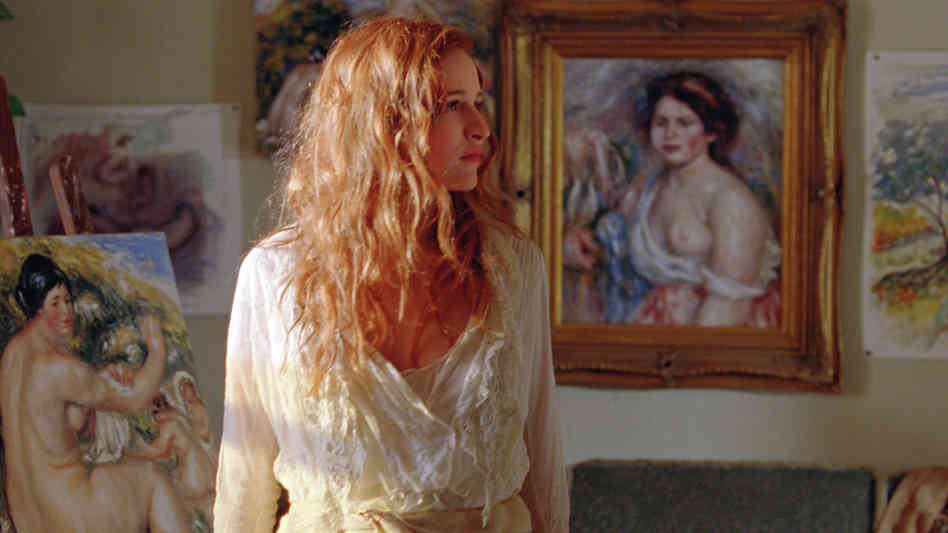
Christa Theret as Andree Heuschling in the movie Renoir

I should be ready soon to make a list of our touring priorities and determine what will need to be cut. Meanwhile, I keep finding tidbits of interesting information of relevance to our trip. Here are a few examples of the things I take note of:

1. Nancy a le torticollis (Nancy has a stiff neck): I have been looking forward to having a bouillabaisse at La Mere Germaine on the port of Villefranche sur Mer. In looking up the story of La Mere Germaine, I was and am intrigued by her connection with the officers and sailors of the US Sixth Fleet, who were regular visitors and who put up a plaque in her honor outside the restaurant. A book has been written about her as the “mother of the sixth fleet”! Why would the sixth fleet, which is based in Napoli, visit Villefranche sur Mer? Well, it turns out that the bay of Villefranche is a very deep water bay which can accommodate large ships such as the warships of the US Navy; this also explains why nowadays large cruise ships tend to throw anchor in the bay of Villefranche as one of their stops on the Mediterranean. But there is more.
Did you know that a couple of months after D-Day, on August 15th 1944, there was another Allied Forces landing, this time on the beaches of the French Riviera? I wonder, how did the beautiful topless bathers on the beaches of the Riviera react to the sight of an army of soldiers coming out of the water? It was August after all. I felt the need to find out more.

The operation had been named Operation Dragoon by Churchill, who was opposed to it, saying that he had been “dragooned”, forced into it. Churchill had wanted a landing further east in Italy in order to head straight north and get to Berlin before the Soviets did. However, a weak Eisenhower was unable to resist the fit thrown by General de Gaulle, who threatened to pull out the French Forces (made out largely of Pieds-Noirs from North Africa) if the landing did not occur in France so as to head north and liberate France first. I just can’t imagine how the idea of a small number of North African French forces could prove so threatening to Eisenhower, until I realize that the decision might have had more to do with the attraction of the beautiful topless beaches of the Riviera than to global military considerations. Naturally, General de Gaulle would not think of going anywhere else on a nice warm summer day; the mere thought of landing as a conqueror on a beach full of gorgeous women has got to be irresistible to generals and sailors alike. Think about it; the end of the war and the whole cold war period might have been totally different if Eisenhower had listened to Churchill and landed in say Serbia.

On August 14th 1944, the BBC broadcast the code signal “Nancy a le torticollis” (Nancy has a stiff neck) to tell the resistance forces of the impending invasion the next day. The invasion force, largely American forces but with some British and about 10% made up of French troops, took about two weeks to gain full control of the French Riviera. Nice, which as you may recall had been handed over to Italy by the Germans, fell on August 28th 1944. That is why we now say “salade nicoise” and not “insalata di nizza”!

2. Andree Heuschling: Did you have a chance to see the movie “Renoir“, which was released in the USA last March? It relates to the last few years of Pierre-Auguste Renoir‘s life at his farm “Les Collettes” in Cagnes sur Mer. The farm has since become the Musee Renoir and has recently reopened after a two-year renovation period. Central to the movie is the story of Andree Heuschling, usually called DeeDee, who became a model for Renoir in 1915 at the age of fifteen. Her beauty and charm motivated Renoir to keep painting, which he did until his death in 1919. DeeDee later married Renoir’s son, Jean Renoir, who apparently was quite indecisive but became a filmmaker at her urging. He starred DeeDee in fifteen movies, mostly silent movies, under the screenname Catherine Hessling. I look forward to visiting the Musee Renoir in a couple of weeks and admiring the (nude?) paintings of Andree Heuschling by Pierre Auguste Renoir. :)

3. Auto Bleue: Yesterday, I wrote my blog about French public transport on the French Riviera. Since then, I have discovered that it gets even better than I thought. Since 2011, they have a system of electric car sharing rental in operation, called Auto Bleue, with more than 50 stations in and around Nice. There is a station just a couple of hundred feet from our rental apartment. Similar to the bike rental services one sees in all large cities nowadays, one just reserves a car by internet or by phone and simply picks it up at one of the stations and returns it to the station when finished. The rates are quite reasonable and all inclusive. The cars are Peugeot 4-seater electric cars with a 100km range, so good enough for anywhere we want to go on the French Riviera (Cannes for example, which is our furthest point west, is only about 30 km west of Nice). I hope I get a chance to try this out, and if it works out, that could be our way to get to the Musee Escoffier and the Musee Renoir, or we could simply try it out on the Grande Corniche on the way to Monaco (after I check the brakes; I don’t want to have the same fate as Princess Grace).

4. SNCF by phone: did you know that the French railway company, SNCF, operates an English language phone service whereby you can get information as well as reserve and pay for your train ride by phone? It is available from 7am to 10pm every day.

5. Brigitte Bardot: Did you know that Brigitte Bardot, who lives in St-Tropez as you may already be aware of, has been taken to court and fined five times for writing that the Muslims are invading France and ruining the French way of life?

6. Le Festin des Baguettes (The Feast of the Baguettes): While checking on events happening during our stay on the Riviera, I came across the Festins des Baguettes in Peille, held on the first sunday of September. The article mentioned a Bal des Baguettes and women hitting their chosen men with baguettes. I was wondering if I had found the origin of the omnipresent French baguette bread, although I was puzzled by the idea of a beautiful woman hitting me with a baguette. It actually sounds like a lot of fun, doesn’t it? Well, in reality, we are talking here about a different type of baguette. Baguette in the French language can also mean a wand. Ever since the fourteenth century, when a young shepherd used a wand to find water for a very dry town, Peille, a town in the hills not far from Nice, has been celebrating the Festin des Baguettes (Feast of the Baguettes) every year on the first sunday in september. Oh well, strike that one out!

The marvel of French public transport

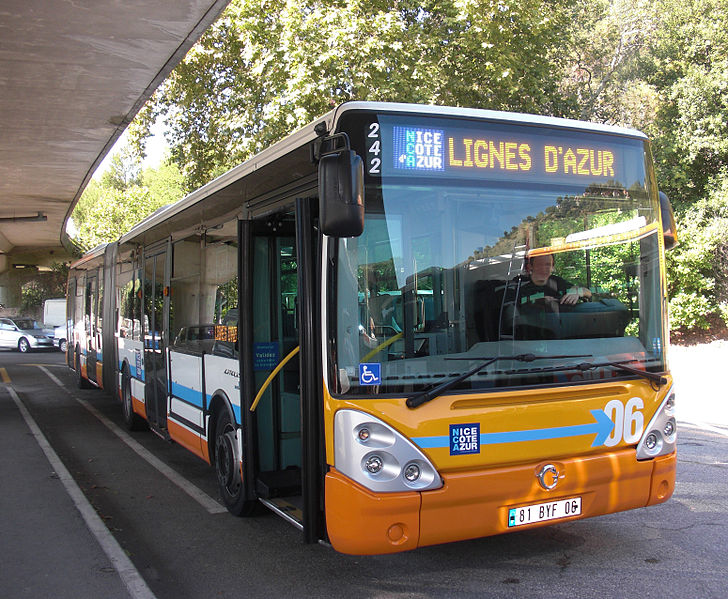
aphoto34852As I am planning our movements around the French Riviera, I keep being impressed by French public transport, whether bus or train. We have come to know and like the high speed TGV train service between Paris and the rest of France and Europe offered by the SNCF, but I am now discovering how fantastic the public transport service is along the French Riviera. Not only does it turn out to be the most convenient way to get from one place to another, it is also by far the cheapest, and quite often the fastest as well. The Nice Train station will be about a ten minute walk from our apartment, and several bus stops will be a couple of blocks from our digs on rue Marechal Joffre. Buses run frequently to all destinations on our target list. The Lignes d’Azur bus line website has downloadable schedules for all of their lines and routes, and I have put all of the relevant ones on my iphone, ipad and laptop. Both the train and bus companies also have several mobile apps, providing real time GPS-based info on itineraries and the next available departures, etc… That should come in handy during our trip.

For our visits to towns along the coast, the regional train TER (part of the SNCF)is usually the best way to go. We have Cannes at the western end of our area, and Menton at the eastern end, next to the Italian border. So traveling to Cannes, Cagnes, Antibes, Juan Les Pins, Beaulieu sur Mer, Monaco, Menton, etc… should probably be done by train. For example, relative to our home base in Nice, there are several trains going to and from Cannes every hour, taking about 30 minutes to get to the Cannes train station, and that will cost us the sum of about US$5 per person! If that sounds like too much, one can always take the Lignes D’Azur bus, which costs about $2 to go anywhere on its network on the Riviera; the bus from Nice to Cannes takes about one and a half hours. To get to and from Menton on the eastern side, there is a train every half hour which also takes about half an hour to get there; because it is a less frequented destination, the cost is higher, a mind boggling US$7.

Generally, from what I am reading, the sightseeing rule seems to be to take the train to go west of Nice, and to take the bus to go east of Nice. The reason is that the bus going east of Nice follows a gorgeous road along the Mediterranean coast and thus provides some great sightseeing. The Nice-Monaco-Menton 100 bus line is a great tour in itself if one can afford the time; it runs just about every ten minutes, and takes 45 minutes to get to Monaco, one and a half hour to get to Menton. Unless reduced by a multiple ticket card of some sort, the individual ticket is always 1.50 euros (about US$2). By comparison, the train to Monaco, one every half hour or so, takes only 22 minutes and costs about US$4. One difference between the train and the bus is that you can reserve and buy your ticket in advance (and usually even your seat assignment) for the train, but not for the bus.

To reach the destinations which are not directly along the coast, but in the countryside or up the hills, the bus will be the only way to go. That will be the case for our trip to La Colombe d’Or in Saint-Paul-de-Vence, or to Chateau Eza in the famous perched village of Eze, east of Nice. We may also choose the bus for our visits to the Musee Renoir in Cagnes and the Musee Escoffier in Villeneuve Loubet, simply because the bus stops are closer to those destinations than the train station. In most cases, the train station is extremely convenient for walking tours since it is located right in the center of town, near the old parts of the town and the port; consequently, one just walks out from the station into the main pedestrian center of town.

We always have the option to rent a car for a day (with door to door delivery and pick up service), but it just seems right now to be totally unnecessary, and actually less practical than public transport. We will soon find out, and my travel blog, BonVoyageurs.com, will broadcast our findings.

La Petite Maison

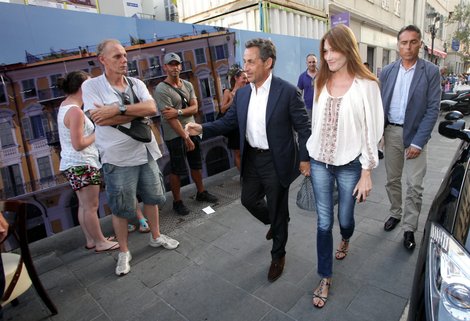
COUPLE -SARKOZY ET COUPLE DE JORDANIELe roi de Jordanie et son épouse, Rania, avaient invité, ce mardi le couple Sarkozy à un dîner entre amis à Nice. En se rendant à “La petite Maison”, Carla et Nicolas Sarkozy, n’ont pas pu éviter un mini-bain de foule aux abords du Vieux-Nice. The king of Jordan and his wife, Rania, invited Mr. and Mme Sarkozy to a dinner between friends in Nice last Tuesday. While making their way to “La Petite Maison”, Carla and Nicolas Sarkozy could not avoid enjoying the admiration of the crowds near Old Nice.

This article in the Nice Matin newspaper made me feel a bit more comfortable about walking the streets of Nice. It certainly made me want to check out the restaurant “La Petite Maison”, which is about a ten minute walk from the apartment we will be renting. From the photos in the newspaper, it appears that the restaurant has a nice outside terrace. La Petite Maison is one of those restaurants with branches in expensive cities around the world, in this case Paris, London, Cannes, Dubai and Beirut. So far, I have been unable to find on the internet the menu for the main restaurant in Nice; that is unusual.

This is my first posting on my new website, bonvoyageurs.com. My previous blog website, blog.com, had been having technical difficulties these past few days, which had hampered my ability to post blogs. My blogs did not show the photos I had uploaded. Last year, I had to move away from blogger.com because the Chinese were blocking access to it.

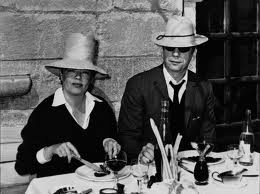
Yves Montand and Simone Signoret at La Colombe d’Or in Saint-Paul-de-Vence

Montand

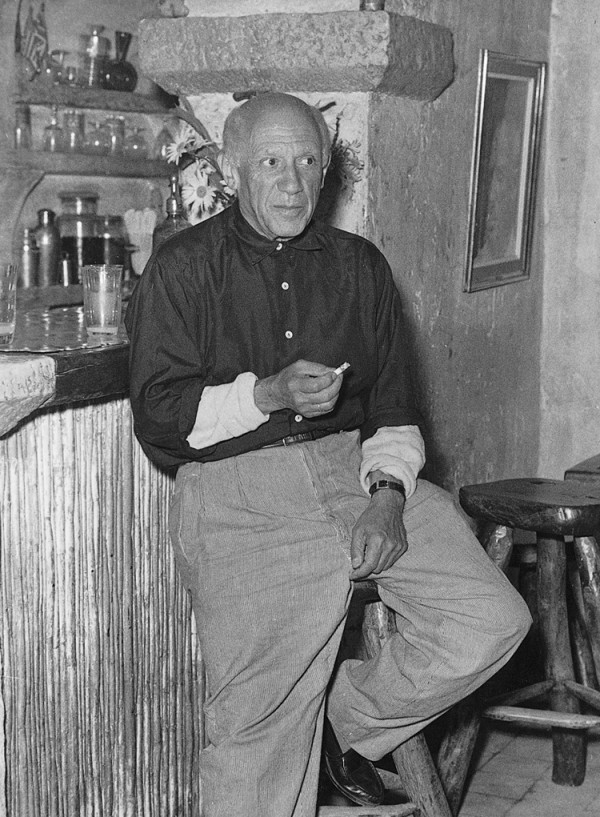
Picasso at La Colombe d’Or in Saint-Paul-de-Vence

Picasso

Where joie de vivre meets art de vivre!

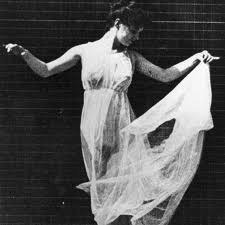
Isadora-Duncan-1I have been compelled to make another lunch reservation, this time at La Colombe d’Or in Saint Paul de Vence (I wonder if Anne-Marie has been there yet). This is not because the only thing I do on a vacation is eat lunch; it is because (1) the only way to see the amazing artwork owned and displayed by this hotel/restaurant is to either stay or eat there, and (2) there is a fascinating history associated with this place.

The founder of this hotel/restaurant in 1920 was a Paul Roux, who happened to like art, and his café in Saint Paul de Vence quickly became a hangout for artists, after Modigliani, Bonnard and Signac started meeting there. Picasso, Matisse, Miro, Leger, Braque, Chagall, Calder, Buffet, Dufy, Utrillo, etc… are all reputed to have been regulars, who sometimes paid for their meals with artwork, paintings, sculptures and/or drawings, thus creating a priceless legacy. The reputation of La Colombe d’Or only served to attract other artists, movie stars and other famous people to the place. Hemingway and later John Houston were regulars at the bar. The signature book of La Colombe d’Or is filled with drawings, artwork and signatures from famous people who continue to make a pilgrimage to La Colombe d’Or.

Two historical incidents seem to be frequently mentioned. The first relate to a jealous row between F Scott and Zelda Fitzgerald over the Russian ballerina Isodora Duncan. Gerald and Sara Murphy were having dinner at La Colombe d’Or with the Fitzgeralds when F Scott Fitzgerald spotted the beautiful Isadora Duncan at a nearby table. Gerald Murphy got up to make the introductions and before you know it, F Scott Fitzgerald was at Isadora’s feet (the stories seem to vary as to whether he knelt down or sat down at her feet). Zelda, furious at all this, got up onto their dinner table, which was next to a ten foot ravine, and simply threw herself off the table into the ravine, resulting in bleeding and bruises and probably more.

Like a magnet the Art Hotel attracted the greatest film directors, actors, singers and writers of the day: Renoir, Prevert, Chaplin, Truffaut, Signoret, Piaf, Montand and Deitrich. It became one the most famous celebrity salons in the South of France. The second incident relate to Yves Montand who apparently met Simone Signoret at La Colombe d’Or, which explains why they later married there in Saint Paul de Vence. Today, nothing has changed. The likes of Michael Caine, Bono, Roger Moore, Richard Attenborough, Elton John, Madonna, etc… can be sighted lunching at a table on the terrace.

As for the food, I am told not to miss the famous hors d’oeuvres (appetizers). I know that F Scott Fitzgerald did not go to La Colombe d’Or for the food; he is said no to have cared much for French or Provencal food and simply asked for a club sandwich in every restaurant.

I just found out that there is a guide to the restaurants of Nice as well the rest of the French Riviera. It is called Guide Gantie and is available at guidegantie.com. A welcome addition to Michelin and Trip Advisor. I also found out that there’s a Musee Auguste Escoffier in Villeneuve Loubet, not far from the Musee Renoir in Cagnes. The king of chefs and the chef to kings, as he is referred to, may deserve a visit; something else to investigate. The list of places to visit in the Nice area is getting too long; I am going to have to prioritize and cut. One outing that will not be cut is the bouillabaisse at La Mere Germaine on the port in Villefranche, one of the few places on the French Riviera which serves the “real” bouillabaisse, prepared the old fashioned way (check the recipe on the website, just reading it is mouth watering).

L’Oisivete me fatigue! (Idleness tires me!)

vueext_0Whenever we rent an apartment in a large city somewhere in the world or stay for an extended period , as we have done a number of times so far in Paris, London, Rome, Florence, Buenos Aires, etc.., we try to divide our touring up by sections and dedicate a whole day to each part of town or suburb. That is also the plan for our upcoming trip to Nice, and my initial look at all there is to see and do in the region is that, if I am not careful in my planning, we will run out of days!

Between Cannes and San Remo, each of which will warrant a day, and Nice itself, which warrants at least three days, I should normally have to reserve at least a day each for Antibes, Juan les Pins, Saint Paul de Vence, Villefranche sur Mer, Saint Jean Cap Ferrat, Eze, Beaulieu sur Mer, Menton, and Monaco, all of which are within one hour at most from our Nice apartment. That’s already fourteen days! When do I have time to simply waste the day strolling on the Promenade des Anglais and putting my feet up on the beach? And what about my idea of making a little side trip to Corsica, since Nice is a port for several ferries going to and from Ajaccio, Calvi and other ports in Corsica?

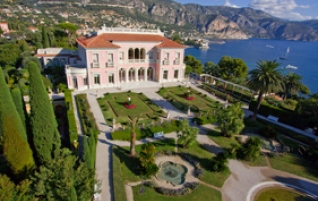
Take Saint Jean Cap Ferrat, for example. Set on a beautiful peninsula in the eastern suburbs of Nice, it would usually justify a nice walk all around the peninsula to take in the incomparable sea views. It should be said that the price of real estate in this area is by far the most expensive anywhere in the world, several times the price per square meter one can find in New York, London, Paris or Tokyo. Since I could not manage to get an invitation to either Bill Gates’ villa or King Fahd’s small palace nearby, Lynn certainly will insist on visiting the Villa Ephrussi de Rothschild, one of the most magnificent villas on the Cote d’Azur. Built at the beginning of the twentieth century on the narrowest part of the Cap Ferrat peninsula, the villa and its gardens occupy a large piece of land with incomparable views of the Mediterranean.

Beatrice Ephrussi de Rothschild, who was the heir to the vast fortune of her extremely rich banker father Baron Alphonse de Rothschild, fell in love with the area after she visited Villa Kerylos nearby in what is now Beaulieu sur Mer, a Grecian style villa being built by her husband’s cousin, Theodore Reinach. Later separated from her philanderous and gambling addicted Russian banker husband Maurice Ephrussi, the Baroness divided her time every year between Deauville, Paris and Monaco, and also traveled the world to build up her art collection of great masters. She had her own private zoo on the property, raised horses, and was not only a good tennis player but even joined a flying club. She apparently knew how to throw a party; the poet Andre de Fouquieres wrote: “I remember, in particular, one summer night, when we had the privilege to see, in her gardens, which drew from her mansion across to the sea, and bathed in moonlight, Anna Pavlova dancing to the Chopin nocturnes.”

After her death in 1934, she bequeathed the Villa Ephrussi property to the Academie des Beaux Arts of France for use as a museum, which explains why we are able to visit this beautiful property.

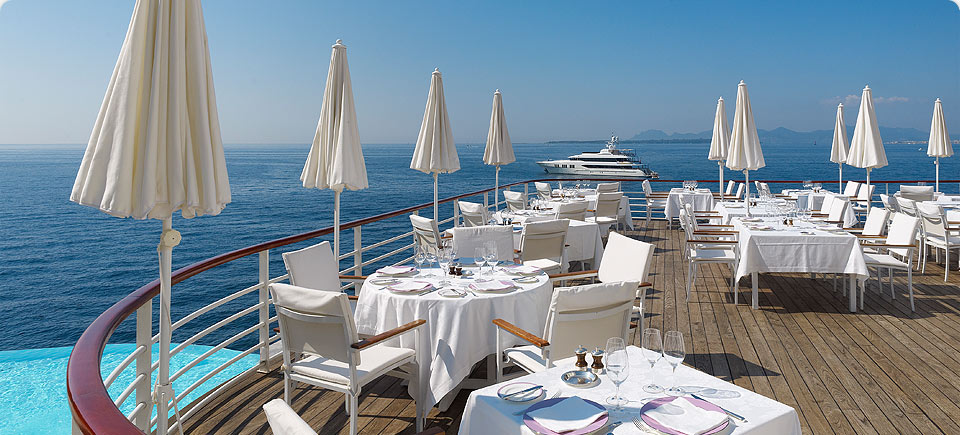
The villa has a tea room and lunch restaurant in a fabulous circular domed room with floor to ceiling windows as well as a terrace overlooking the Mediterranean, which is most certainly where I will plan to have lunch that day. I probably need to call tomorrow and make a reservation. .

But where should we head to after lunch? How about Villa Santo Sospir and the Grand Hotel du Cap Ferrat, both located in Cap Ferrat?

Villa Santo Sospir is so named because her owner was the well heeled Brazilian born Francine Weisweiller, who moved to France and who was to become an early patron for both Yves Saint Laurent and Jean Cocteau. The villa itself has become known in French as “La Villa Tatouee”, the tattoed villa, because of what Jean Cocteau did to it.

When Jean Cocteau, a very well known French multi-talented artist, poet, novelist, filmmaker, etc… made a film out of his book “Les Enfants Terribles”, the principal actress in the film, Nicole Stephane (real name: Nicole de Rothschild), introduced Cocteau to her friend Francine Weisweiller, and the two of them hit it off immediately. Francine invited Cocteau to spend a week at her villa in Cap Ferrat.

A couple of days later, Cocteau, who is reputed to have said “L’oisivete me fatigue et me desseche” (Idleness tires me and dries me up), started decorating the walls and doors of the villa with frescoes and other art and apparently did not stop until the whole place, including the floors, were covered with his art.

One aspect of Jean Cocteau’s life is of particular interest to me. Jean Cocteau was very much bi-sexual and is well known for his affairs with famous women and famous men alike. What I did not know until a few days ago was that his lover for many years was none other than Jean Marais! Yes, the Jean Marais. Ok, you don’t remember? Well, when I was a little boy and watched with excitement the French swashbuckling movies of seventeenth or eighteenth century musketeers or other heroes fighting with panache the evildoers (usually the English), Jean Marais was the principal actor and hero in many of those movies. I was not aware that he was gay, not that it makes any difference. Le Bossu (The Hunchback) is a movie from those days that I still remember fondly.

Unfortunately, I have an issue with Jean Cocteau, and that may well make me very reluctant to pay a visit to Villa Santo Sospir. Jean Cocteau was vocally and loudly pro-Hitler during the second world war, even going as far as complaining that the French people were being “disrespectful” towards the Fuehrer! Do I really want to lend any support to such a person by the simple act of visiting Villa Santo Sospir? A moral dilemma I shall have to mull over.

The issue with the Grand Hotel du Cap Ferrat is of a different order. Set at the southernmost extremity of the Cap Ferrat peninsula, the hotel has commanding views not only of the Mediterranean but also on the west side it offers fabulous panoramic views of all of Nice and the bay of Angels. Being in the best location in the best real estate area in the world comes with a price tag for the guests. Just for fun, I checked what the room prices were for the period we were going to be in the area; the cheapest room was about $2,500 per night! We could simply just go eat there, right? Well, yes we could if we were willing to pay $250 for lasagna. This is one I don’t need to mull over; we will walk around it or find something else to do. After all, I already knew as a child that “l’oisivete est la mere de tous les vices” (Idleness is the mother of all vices).

La Cuisine Nissarde: Best of Provence and Italy

cuisine-nissardeWhen one thinks of Nice, one immediately thinks of Salade Nicoise, that refreshing summer day salad which seems to always include tuna, anchovies, hard boiled eggs, olives, corn, boiled potatoes and green beans. As I prepare for our trip, I am discovering, much to my delight, that there is a lot more to the cuisine of Nice than salade nicoise. But before I get into the details of my findings, I do need to mention that the salade nicoise, as we know it, may not be the real salade nicoise after all.

Le Cercle de la Capelina d’Or is a committee of people from Nice set up to defend the honor of the real authentic salade nicoise. Approved ingredients include tomatoes, hard boiled eggs, salted anchovies, tuna, onions, basel and olives from Nice, with garlic, salt and olive oil. In season, beans, artichokes, hearts of celery and/or green pepper may be added. But it is blasphemy to include potatoes and green beans, and even more heretical to add corn to the mix. It was apparently the renowned chef Auguste Escoffier, the pope of French cooking, who committed the sin of adding potatoes and green beans to the recipe for salade nicoise. The committee is quick to point out that Escoffier, whom we all thought came from Nice, is actually not a local, since his neighborhood of Villeneuve-Loubet is separated from the center of Nice by a small river!

I was quite unaware that the region of Nice has its own cuisine, called cuisine nissarde. I was even more ignorant of the fact that the people of Nice had their own language (which explains why they say nissarde instead of nicoise), still spoken and written a bit around town. This all comes from the fact that Nice, up until 1860, was part of Italy not France. The whole French Riviera, starting past Antibes eastward was until then part of the Italian Riviera. During the seventeenth, eighteenth and nineteenth centuries, the ownership of Nice shifted back and forth between French and Italian lords, kings or emperors. In 1860, the Italians gave the region of Nice to France as a reward for France’s support of the second war of Italian independence against the Austrian empire; this was supported by a referendum held among the local population. Giuseppe Garibaldi, one of the founders of modern Italy, was opposed to the cession and claimed that the referendum had been rigged by the French. Italian nationalists ever since have laid claims to the region. And that is why, during the second world war, Nice was briefly given back to Italy by the Germans and was run by Italy during 1942 and 1943. I did not know that; no wonder the people of Nice would want their own language!

Not surprisingly, given that the ownership of Nice went back and forth between Provence and Italy, the impact of all this history is that the cuisine of the region is a blend of the cuisine of Provence and the cuisine of Italy. Since those two cuisines happen to be individually among my favorite foods in the world, I am in seventh heaven and eager to discover the many unique dishes of the region. Here are some of the most famous ones: Salade Nicoise, Ratatouille Nicoise, Daube Nicoise, Raviolis Nicoise, Gnocchi Nicoise, Farcis Nicoise, Ganses Nicoise, Sardines Farcies a la Nicoise, Pan Bagnat, Poche de Veau Farcie, Tian de Courgettes, Pissaladiere, Tarte de Blette, Beignets aux Pommes, Socca, Stockfish. So much to learn and to enjoy! And I can drown all that great food with the local wine, called Bellet wine, grown in the hills behind the city for centuries.

The cuisine seems to be based in large part on fresh vegetables, seafood and pasta. I can’t think of a better combination. I am overjoyed at the possibility of being able to buy freshly made pasta when I go out to get the morning baguette, croissants and pains aux chocolat. Actually I expect we will be eating our main meals out most if not all of the time. Fortunately, many restaurants in the region claim to respect the tradition of the cuisine nissarde and I have time to go through the list to pick my favorites. I was looking at some of the menus and they are indeed appetizing.

So I have a lot of work yet in store to prepare for the trip. Checking out the recipes of the cuisine nissarde dishes, checking out the restaurants and their menus, learning about the Bellet wine and its vineyards. Spaghetti aux fruits de mer, here I come!

Lunch at the Hotel Cap Eden Roc in Antibes

restaurant-eden-roc-terrasseI have asked for a lunch reservation at the Hotel du Cap Eden Roc in Antibes. Yes, the beautiful restaurant terrace overlooking the Mediterranean where a simple starter salad like a Salade Nicoise will cost you US$80. Visiting this hotel for its phenomenal position on the Cote d’Azur and its gastronomic excellence might be reasons enough for the well heeled, and they have indeed done so. But why would we go there for lunch?

Well, for one thing, staying there is nowadays quite costly, with the cheapest room going for about US$1,000 per night. But we do need to go there because of the historical significance of this hotel and its importance in the world of art and literature.

Started as a writer’s retreat in 1870, Villa Soleil was transformed into Hotel Cap Eden Roc by Antoine Sella at the turn of the twentieth century. Initially open only during the winter months, which was when the English and Russian aristocracies used to visit the French Riviera until the first world war, the hotel started to open some rooms for the summer when Gerald and Sara Murphy wanted to visit Cole Porter who was renting a villa nearby and convinced Antoine Sella to keep a small staff and a floor open. Gerald Murphy had been a schoolmate of Cole Porter at Yale and is even said to bear some responsibility for encouraging Cole Porter to write and sing songs.

By the time they descended on the Cote d’Azur, the Murphys had become close friends of Pablo Picasso in Paris. Gerald loved Picasso’s art, and Picasso loved Gerald’s wife, Sara, who is said to have become his muse. The Murphys invited Picasso down to Antibes and he agreed, coming with his young beautiful Russian wife of the time. The Murphys were also friends of F Scott and Zelda Fitzgerald, and the Fitzgeralds also came down to the Riviera. F Scott Fitzgerald, who apparently liked to test the sexuality of his friends, had fixed up Gerald with a young South American man, Eduardo Velasquez, who had just been ejected from England for having had an affair with a male member of the royal family.

F Scott Fitzgerald wrote The Great Gatsby in Antibes, and also a couple of years later, he wrote Tender is the Night, which was published in 1930. Gerald and Sara Murphy are the models for Dick and Nicole Diver in that book.

George Bernard Shaw also returned for many years at the Hotel Cap Eden Roc. The Duke and Duchess of Windsor were married at the hotel after he abdicated the throne in England.

After the war, Picasso rented or bought the Grimaldi castle nearby in Antibes and came to eat frequently at the hotel. The Chateau Grimaldi is now the Picasso Museum in Antibes, and that is why our plan is to visit the museum in the morning and then have lunch on the terrace at the Hotel Cap Eden Roc.

Marc Chagall was also a frequent customer of the hotel.

Since that time, the hotel has received the most important guests in the world, from Eisenhower to Churchill, from Kennedy to Madonna, etc…

That is why I have made a lunch reservation at the Hotel Cap Eden Roc for Wednesday September 4th at 1pm.

Follow

Get every new post delivered to your Inbox.

Join 17,895 other followers

%d bloggers like this: