Monthly Archives: February 2014
CULINARY SPOTLIGHT: Six Course Nepalese Dinner in Kathmandu
Imagine a palatial hotel recently restored to its 13th century glory, full of priceless antiques from bygone civilizations, with service and elegance to match in the heart of exotic Kathmandu. Now imagine the hotel’s signature restaurant where you leave your shoes as you enter, and walk into another century and another world. The bold red and black décor of the dining room is stunning and the ambiance offers a very old-world Nepalese dining experience, from the authentic low-rise, over-sized chairs, to the flickering candlelight and traditional Nepali music playing softly in the background. You would be at the extraordinarily unique Krishnarpan Restaurant in Dwarika’s Hotel at an elevation of 4,600 feet, in the shadow of Mt. Everest. Simply awesome.
So now that you have a sense of the dramatic backdrop, do I have you salivating yet? The food prepared at Krishnarpan in the traditional Nepalese manner was delicious, all of it. I need to emphasize that the portions were not those of a tasting menu, which presented a daunting challenge in the face of most gracious waitresses who so very much wanted to please and were concerned, when we did not finish each and everything, that it was not to our liking. While Nepali cuisine bears many similarities to that of India, such as the essential inclusion of rice and dal (lentils) with dinner, in general, Nepali food is not as spicy and fiery as Indian food so often is.
The menu du jour was printed in both Nepalese and English on hand-made menus with our names personalized according to our passports. Pampering and personal touches are the hallmark of the Dwarika and they do it well. Here is the English version of our extraordinarily memorable meal …
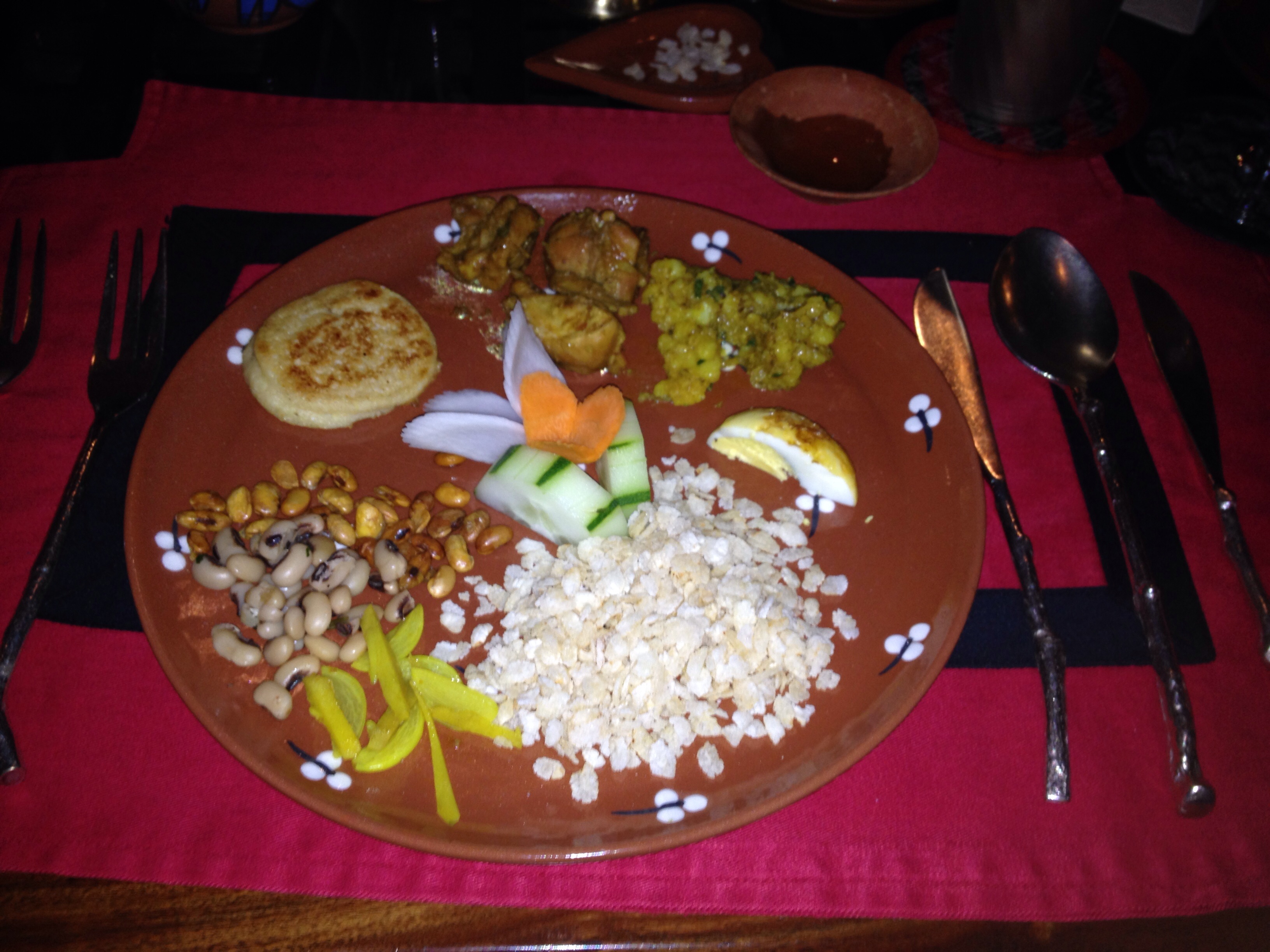
First Course: Assortment of Hors D’Oeuvres served during religious ceremonies
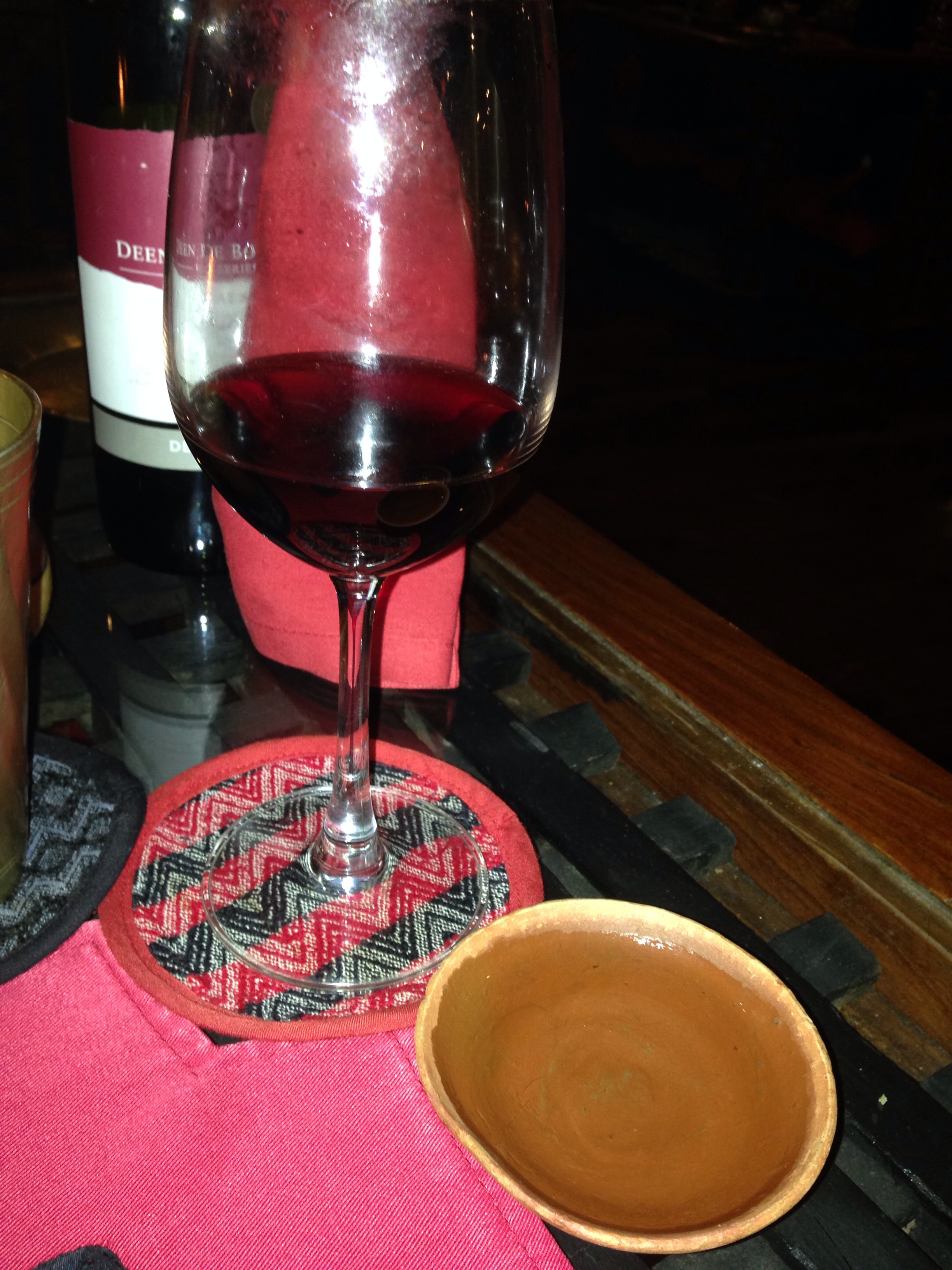
A very fortified Rice Wine is a traditional offering with the meal, and we ordered a spicy Shiraz as well
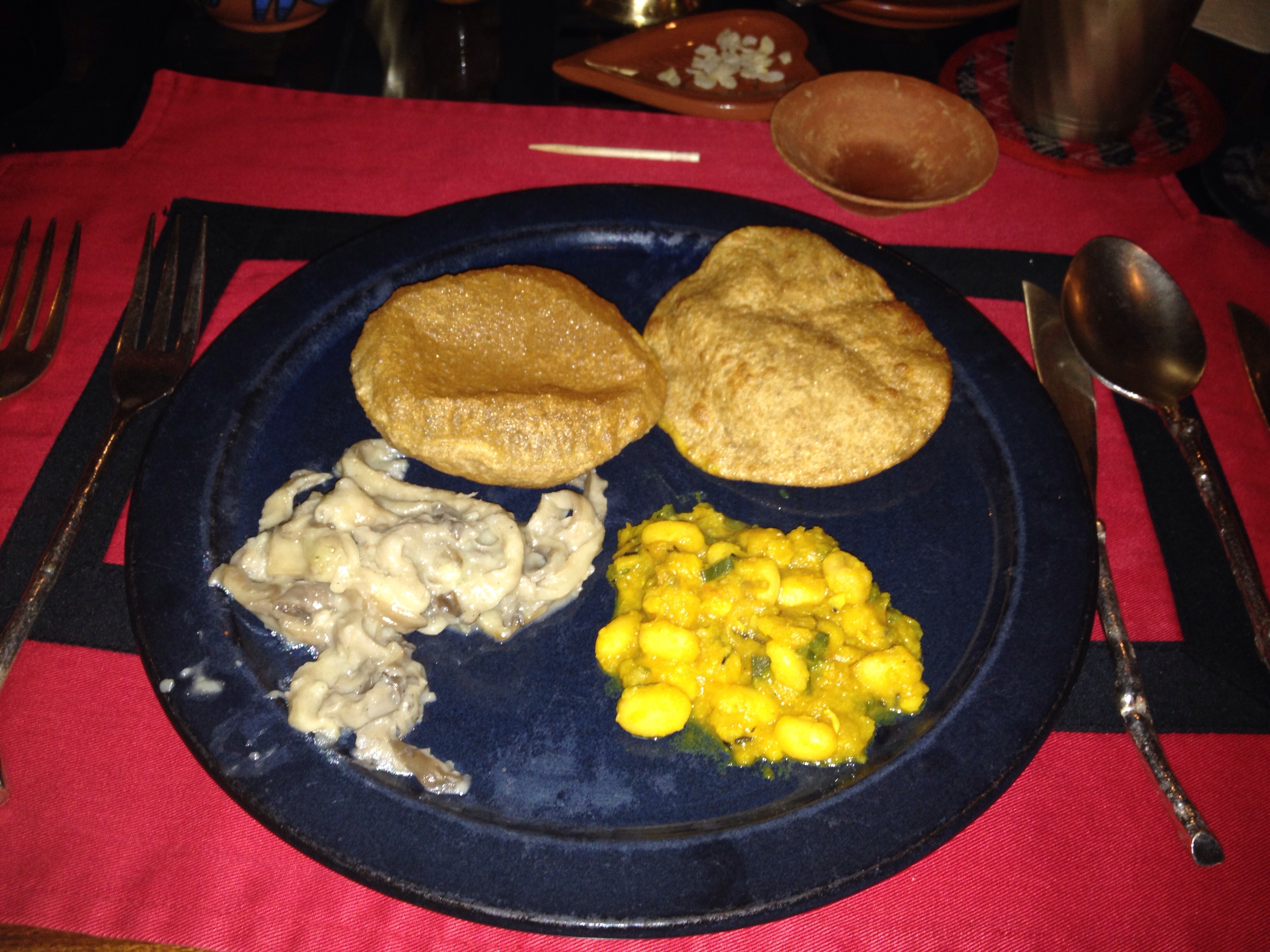
Second Course: Roasted Mushrooms marinated with Fresh Cream, Deep Fried Soft Fine Flour Bread, Organic Kidney Beans Curry
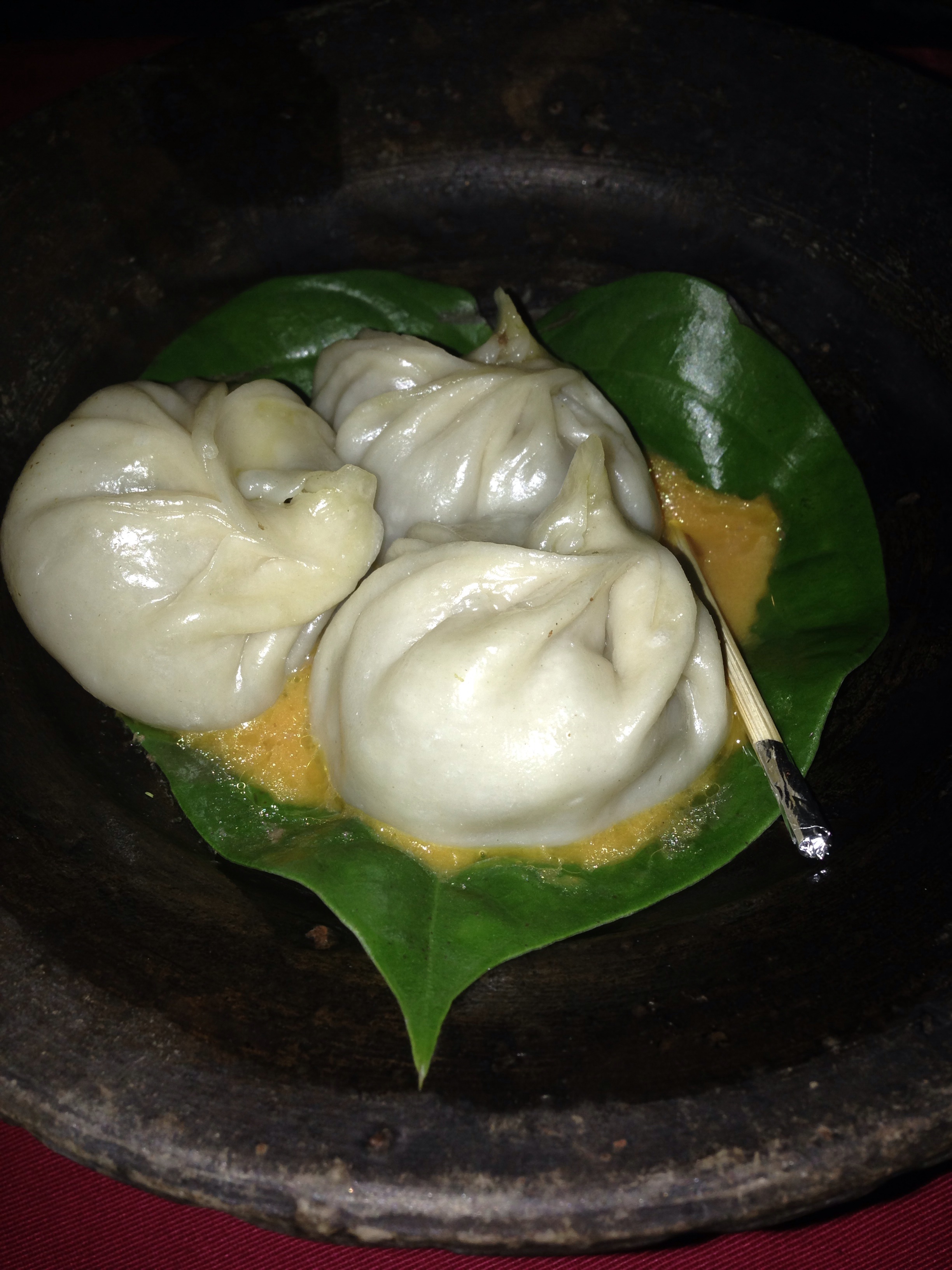
Third Course: Traditional Nepali minced Wild Boar Dumplings served with home-made Chutney
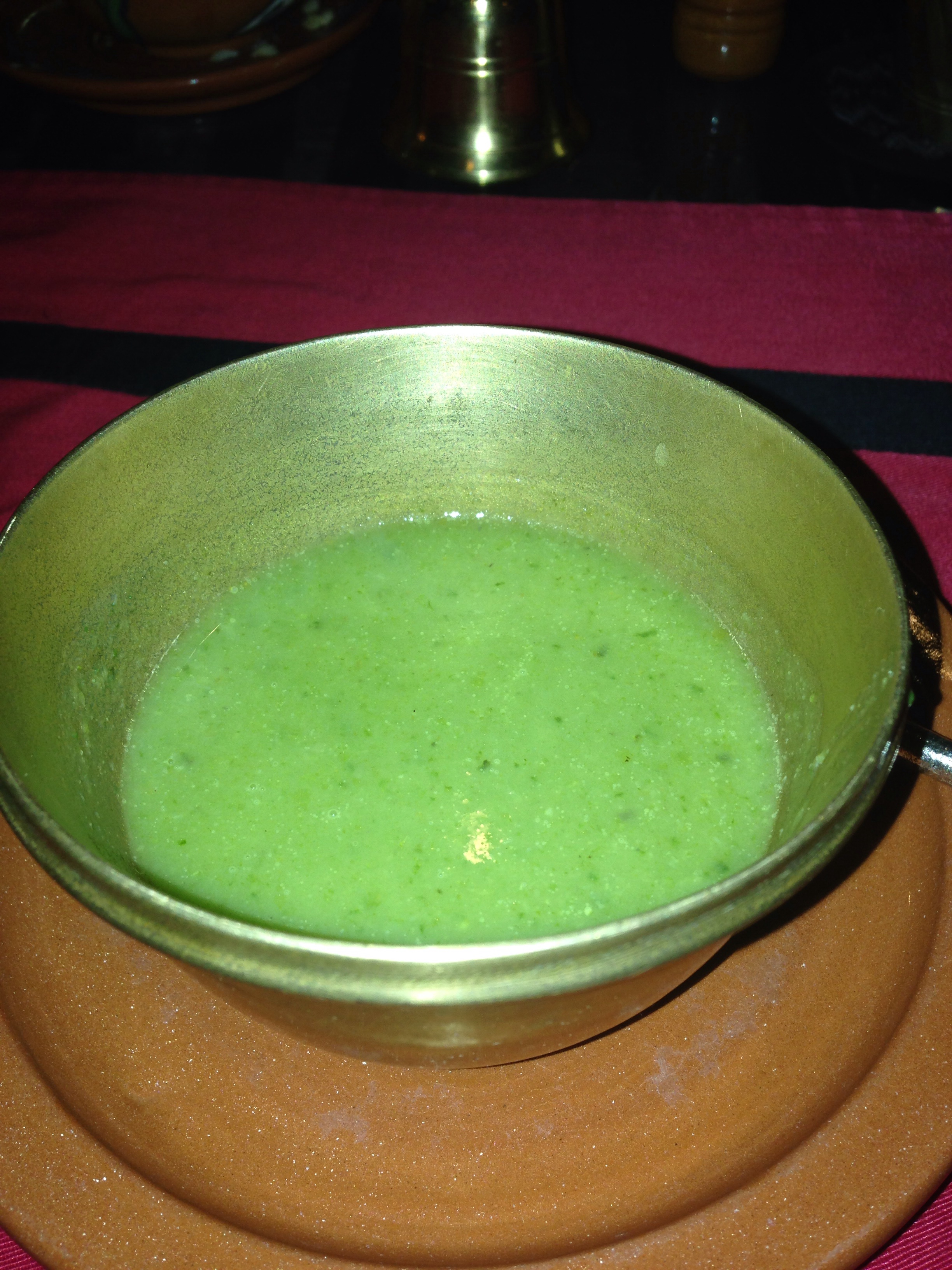
Fourth Course: Mixed Vegetable Soup with Nepali Spices
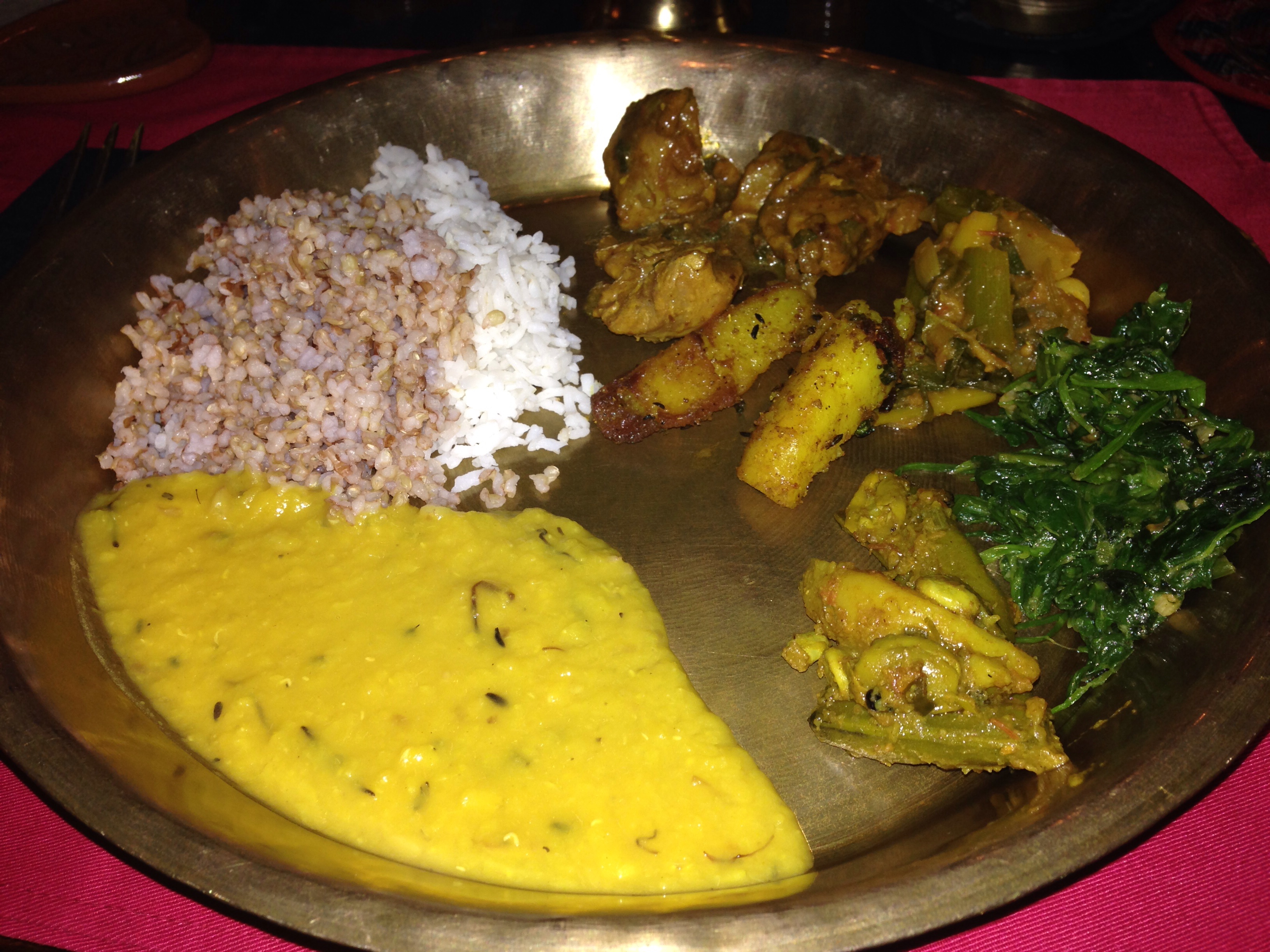
Fifth Course: Steamed Organic Rice, Organic Lentils flash fried with Himalayan Herbs, Sauteed Organic Spinach with Nepali Spices, Radish and Garlic Gravy, Bitter-Gourd Pickle, Homemade Hug-Plum Pickle
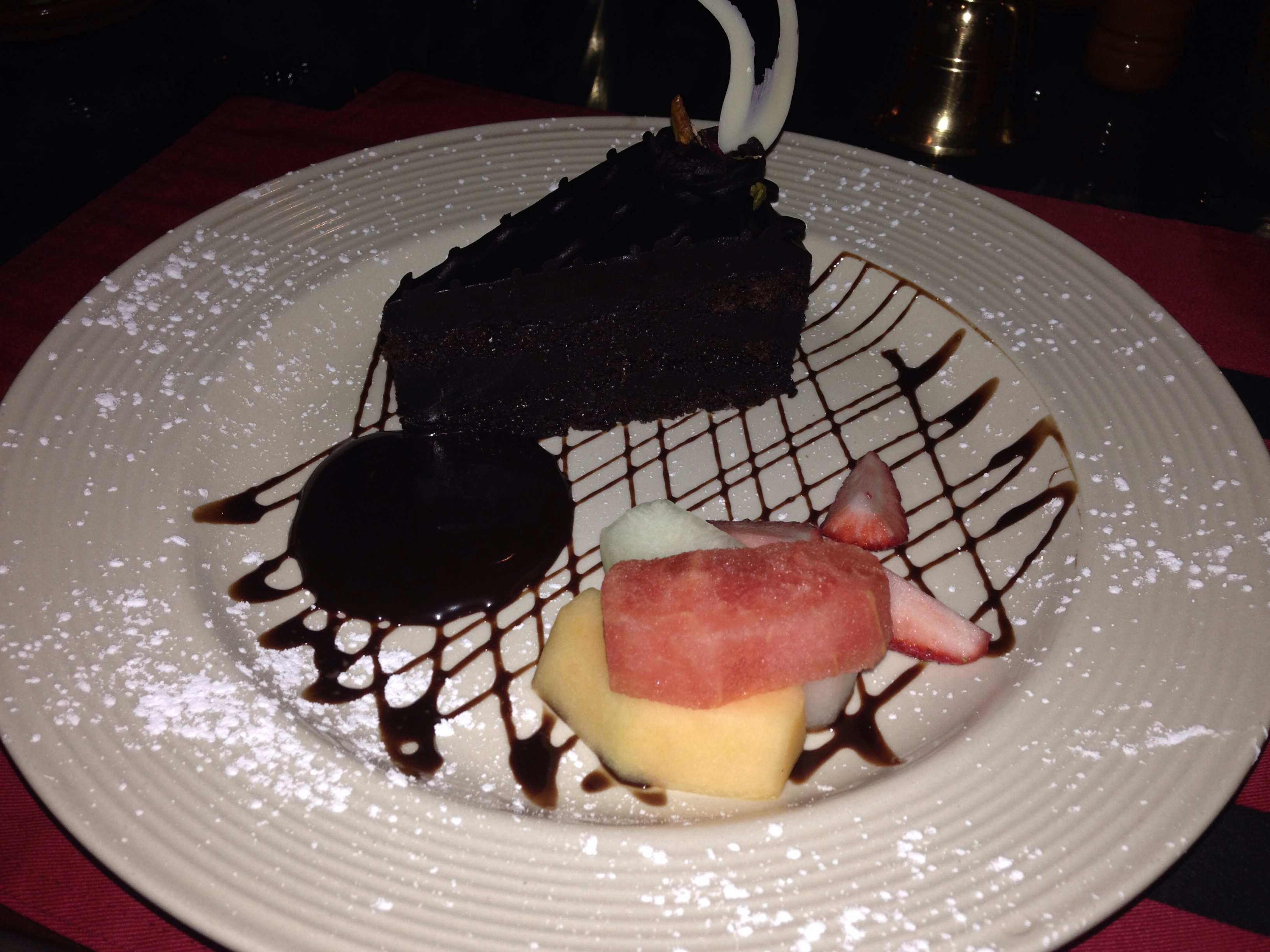
Sixth Course: Dark Chocolate Cake with Dark Chocolate Sauce
The entire meal is served harmoniously, one course flows after another, so that you have enough time to appreciate the course you have just eaten before the next one arrives. The produce is all organic, and most comes from the Dwarika’s own garden. Dinner concludes with coffee and tea, including fresh mint tea with mint from their garden. We chose mint and ginger tea which was sublime. Dessert, it should be noted, according to the menu was supposed to be Fresh Yoghurt flavored with Cinnamon sweetened with Honey, Nepali Pumpkin Pudding, Cut Fresh Fruit - but we opted for the divine chocolate cake we had had the night before when we all of a sudden got a craving for chocolate and called room service for our chocolate fix (actually, I negotiated this change from the fixed menu prior to confirming our reservation at the Krishnarpan but this is all hush-hush).
Aside from the chocolate cake, our favorites from this 6 course menu were the second, third and fourth courses. The organic kidney bean curry was light with layers of flavor, the bread was also extremely light and full of flavor, the wild boar dumplings rivaled any we had eaten in China’s best restaurants, and the soup, comprised primarily of pureed green vegetables with the hint of sweetness from the corn was memorable.
But “memorable” describes the whole evening. When in Kathmandu, make sure to have dinner at Krishnarpan, and come with a hearty appetite!
The Royal Kumari or Living Goddess of Kathmandu
Across from the Royal Palace of Durbar Square in downtown Kathmandu stands a smaller but well decorated house called Kumari Ghar, the House of the Kumari.
It would be easy to simply walk by and focus instead on the pagodas, shikarahs and temples vying for attention a few feet away around the square, but that would be a mistake. You would be missing out on a meeting with the Royal Kumari, the living goddess of Kathmandu, revered by millions.
At the entrance to the house, a few women are selling postcards bearing a photograph of the living goddess residing in that house. Our guide explains that, while we will meet the living goddess, we will not be allowed to take any photographs of her, hence the postcards.
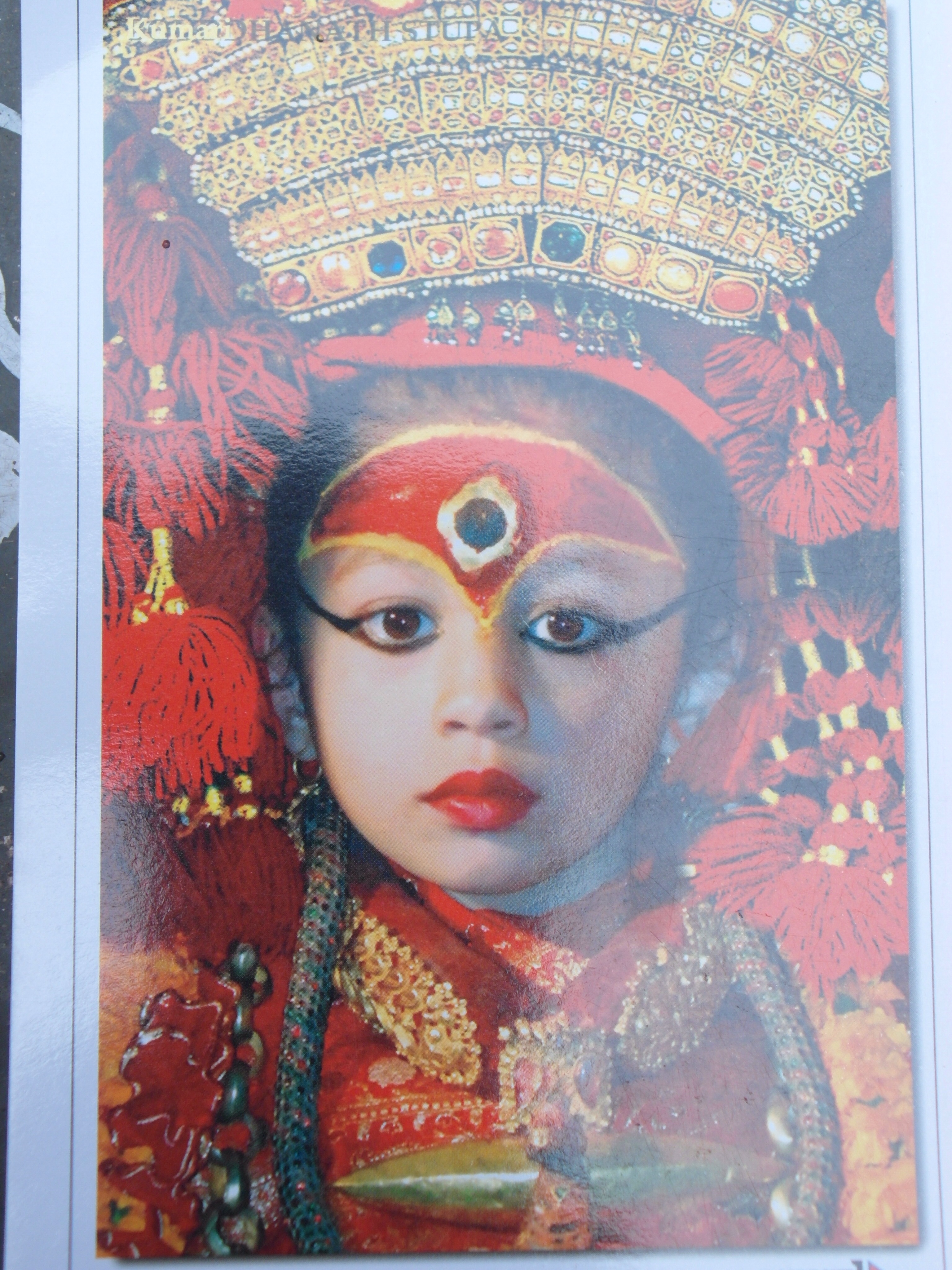
The living goddess is a young pre-pubescent Nepalese girl who is essentially confined to living in that house until she reaches puberty. While in that house, she is truly a living goddess and revered as such by the Nepalese people.
Once she reaches puberty, the living goddess will be replaced by a new Kumari and will be allowed to go back home with a lifetime stipend from the government of Nepal.
A panel of old wise men selects the living goddess from a field of candidates according to a long established torturous process. A candidate must be very beautiful, having to meet a set of 32 physical traits defining beauty.
All the candidates pass a series of tests ( dark rooms, severed animal heads, etc… ) aimed in part at scaring the hell out of the young four-year olds in an effort to flesh out the best candidate.
Once anointed, the new living goddess has to move into the Kumari Ghar and remain there until puberty.
Foreigners are only allowed to see her from the inner courtyard of the house as she peers down from a window on the third floor. She will come to the window upon request (with the expectation of a donation into the conveniently located donation box), stare at you for a few seconds and then disappear quickly back into the dark.
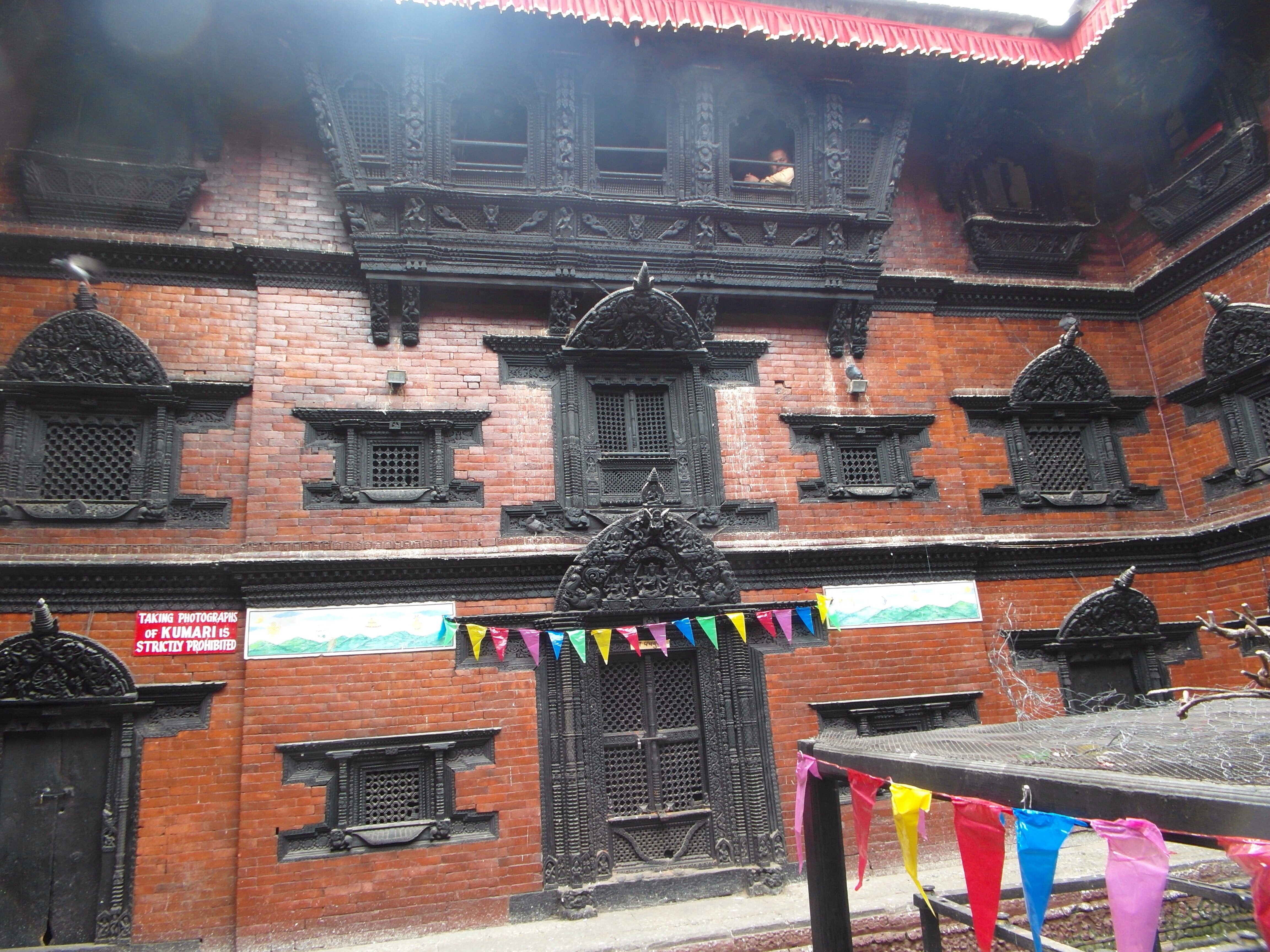
Nepalese people, however, can walk up the stairs into the inner sanctum and meet the living goddess face to face. Our guide explained that the living goddess will place a red dot on the forehead of those she meets in this way.
If the living goddess blinks while doing so, you will go to jail. If she cries, you will die. If she is steady and calm, you will meet with good fortune.
The living goddess is always dressed in red and gold, with very elaborate make-up.
Five times a year or so, on the date of important festivals, she will leave the house on a giant decorated chariot stored right next to the house.
When in Nepal, please go meet the Royal Kumari, the living goddess of Kathmandu.
Climbing Mount Everest the hard way!
Touring Kathmandu and Patan yesterday was surprisingly interesting and exotic. However, the main purpose of our trip to Nepal was to go up Mount Everest. Since Kathmandu is already at an elevation of 4,600 feet, we only had another 25,000 feet or so to climb to reach the summit.
I had been warned to be prepared for bitter cold, and I had four layers of protection when I left my hotel room to meet the guide at the scheduled time of 5:50am. Masesh is an interesting young man, who loves trekking and mountain climbing. When I had asked him why he did not drink coffee or tea, he had an unusual response: “My father is a farmer and we have a cow in our home, so we drink milk”. Makes sense, I thought.
The local news are headlining the increased security measures being taken by Nepal around Mount Everest because of scuffles between the many climbers who are making the trek up the mountain. Climbing Mount Everest is not as hard as it used to be, thanks to very well defined tracks and oxygen masks, and hordes of people are crowding those tracks.
Nowadays, the most terrifying thing about climbing Mount Everest, from what I have read, is the first leg of the trip, the landing at the LukLa airport, built on the side of a cliff at an altitude of about 9,200 feet, and the beginning stage of all climbs of Mount Everest.
Masesh is late showing up, and I am getting concerned that we will miss our flight. When he finally shows up, he explains that he had been trying to find out if the flight was going to take off as all of Kathmandu is enveloped in a dense fog. We decide to take our chances and leave for the airport.
The domestic terminal of Kathmandu airport is a sight to behold. I would not be surprised if the building predates the first flight of the Wright brothers. Looking around the terminal at the scruffy crowd around me, I was expecting Indiana Jones to appear at any moment. We had gone through numerous security checks to get to the boarding gate area, yet nobody had questioned the electronics in my pockets: American cell phone, Indian cell phone, Nepal cell phone, mobile hotspot, battery charger, ipad, camera, etc…
By 7:30am, there was still no information available on our 6:30am flight, despite the numerous airport and airline personnel standing around sipping coffee and pretending to be gainfully employed. An announcement came on the loudspeaker system: “All passengers flying to @$#%^$% on $%#$&%^$, please URGENTLY %$#$%$#$%!”.
Finally, at about 8am, the sad news came. A test flight had taken off and gone up towards the mountain only to turn back because of the fog. All flights were cancelled for the day. We would have to try again the next day.
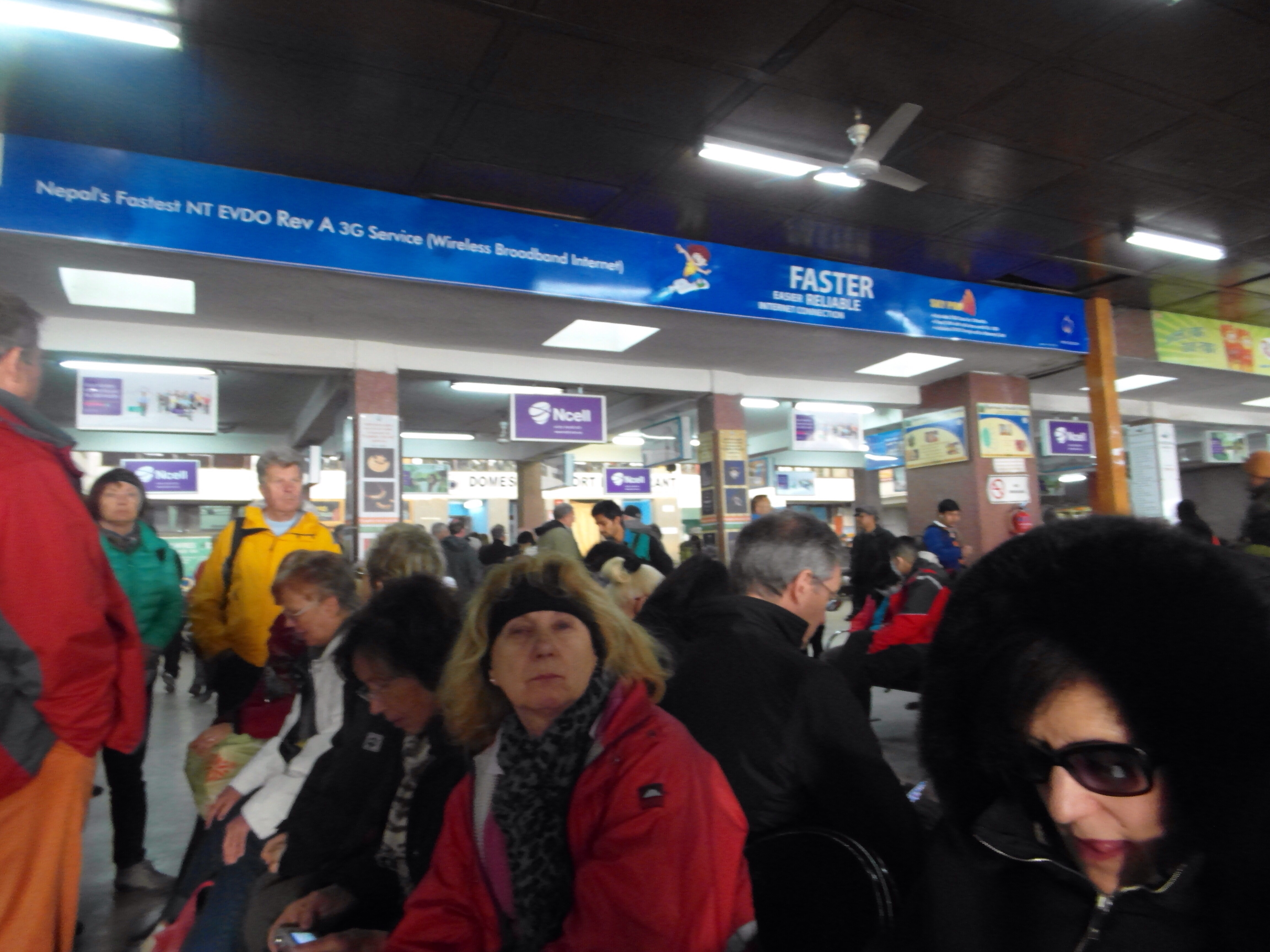
We repeated the same routine the next morning, and again sailed through all the security checks and found ourselves comfortable seats in the boarding area of the windowless cold-as-an-icebox terminal. “All flights are a go this morning”, we were told when we arrived at the airport. The weather forecast called for a sunny day, all day long.
However, nature continued to interfere. At about 7am, we were able to find out that our 6:30am flight would not take off on time. At 8am, we were informed that the airport was closed down because of the fog but that it would reopen half an hour later and the flight would then leave.
At 8:30am, the news was that we would get the all clear at 9am. At 9am, our flight was cancelled for “visibility” reasons. Outside, the cloudless sky was clear and blue.
Clearly climbing Mount Everest was going to be a lot harder than I thought!
The Freaks of Kathmandu
In the center of Kathmandu, the capital of Nepal, lies the city’s main square, Durbar Square. The King’s Palace is here, now a museum since Nepal became a democracy in 2006.
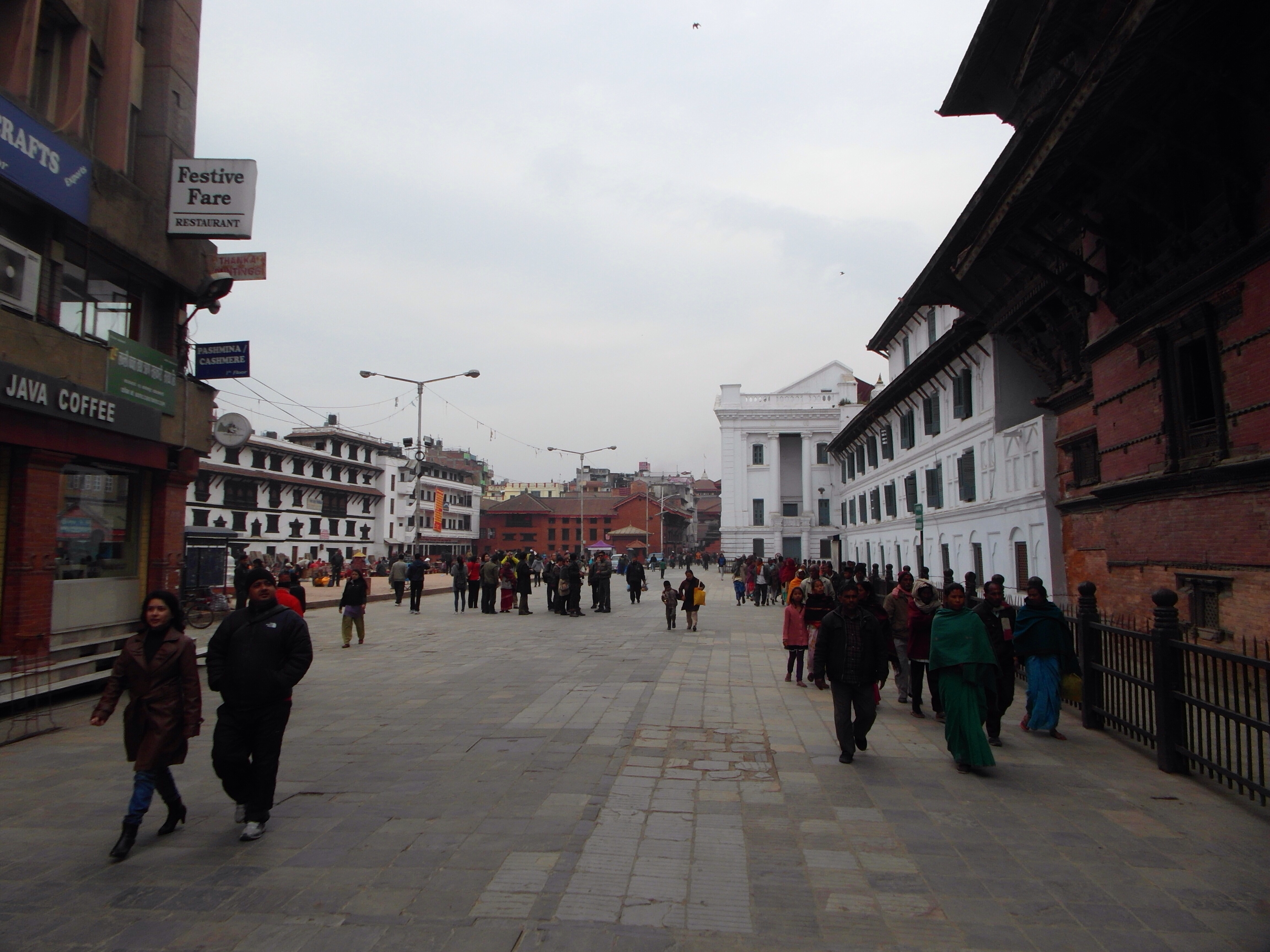
Dozens of pagodas and shikaras are scattered around the palace area, each one with its own centuries-old story to tell.
Our guide pointed to one specific elevated pagoda and said: “That’s the Hippie Temple”.
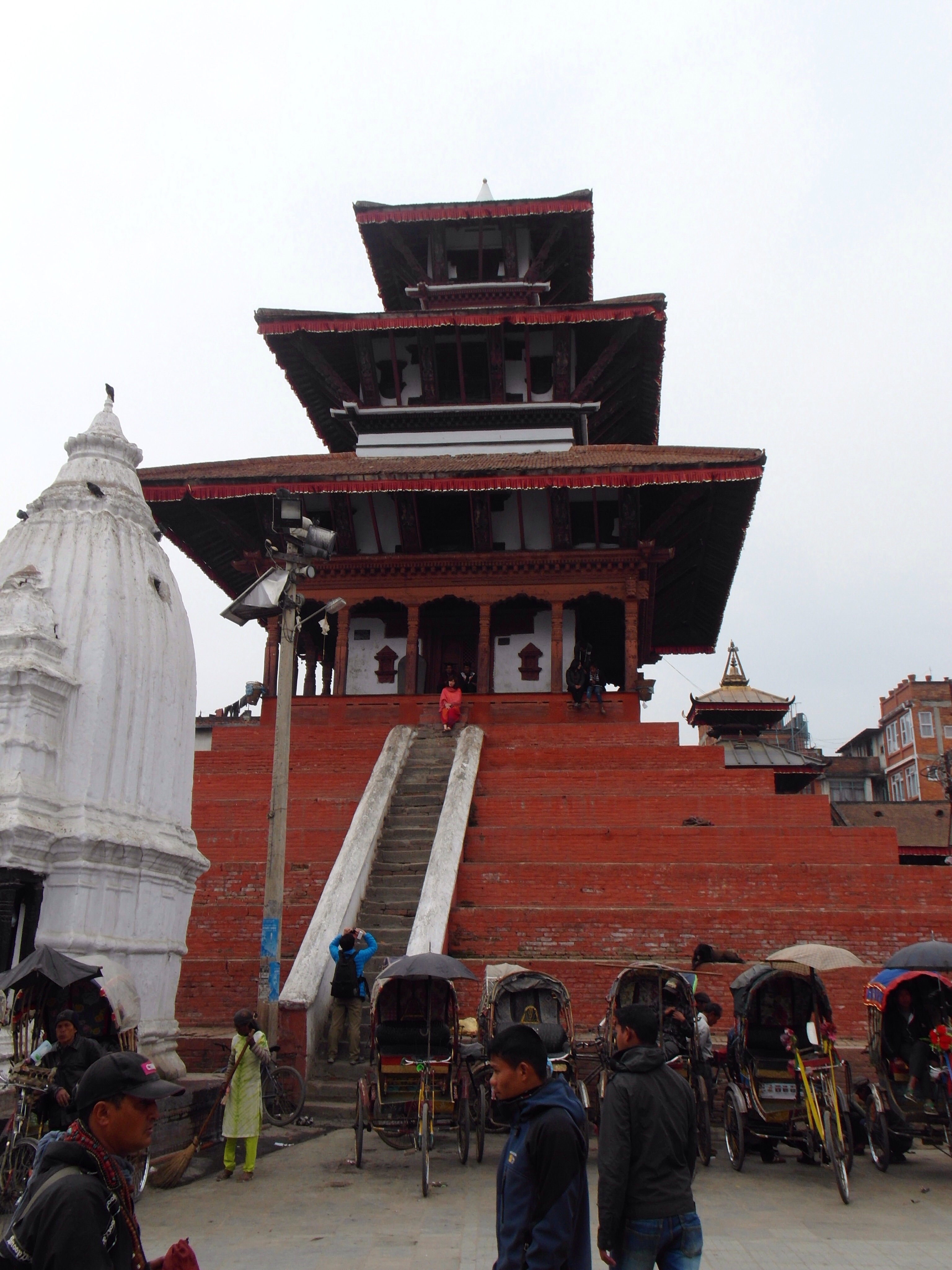
He explained that, during the 60s and 70s, hippies used to hang out on the steps of that pagoda, strutting their guitars while high on drugs.
They came to Nepal in droves in those days because of the government-sponsored hashish and marijuana stores.
“They lived on what we now call Freak Street”. our guide continued. “Let’s go have a look at it”.
There it was, just off the square on the south side, Freak Street.
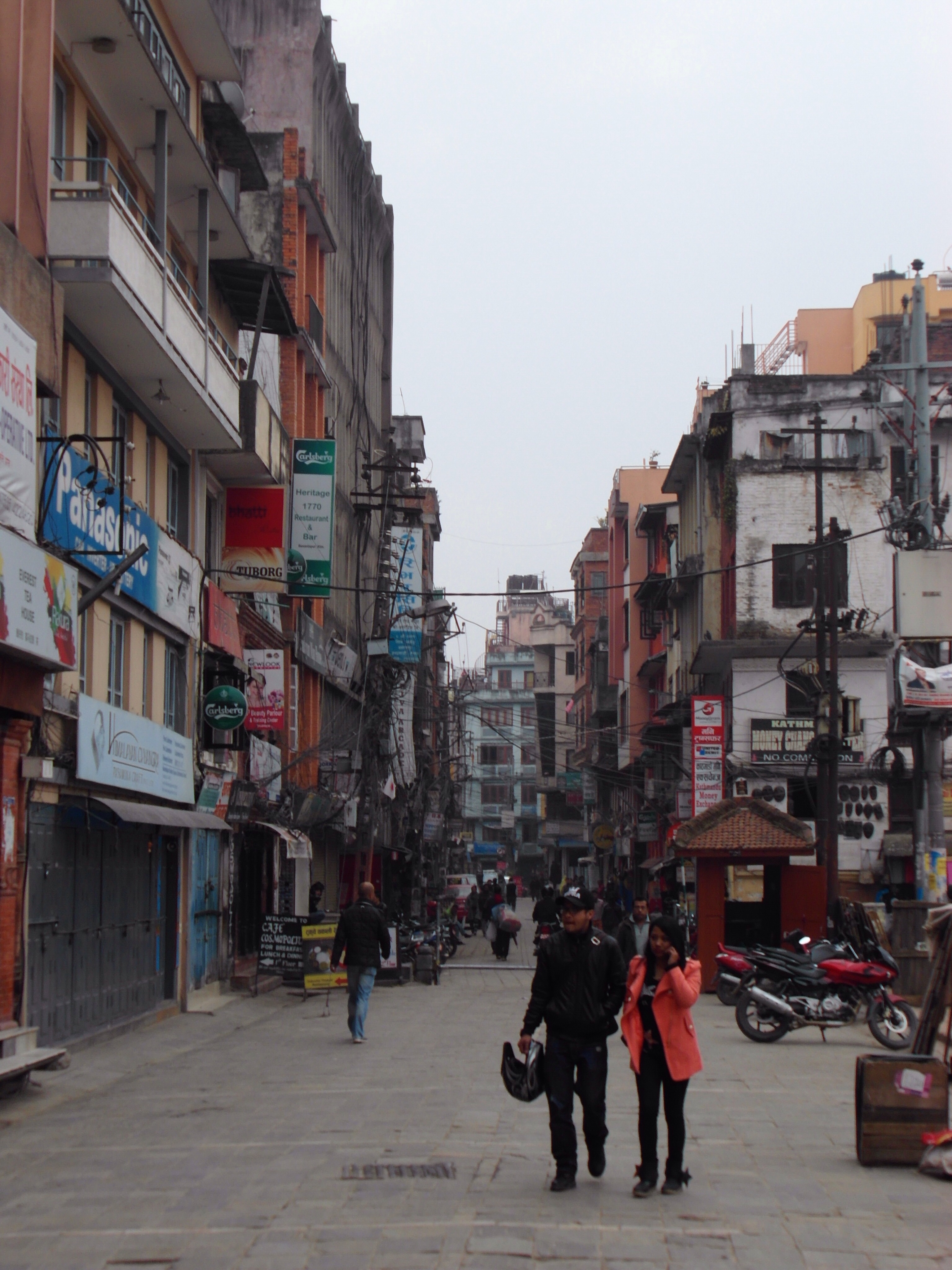
Buses transported hippies directly from the airport to the hashish stores of Freak Street.
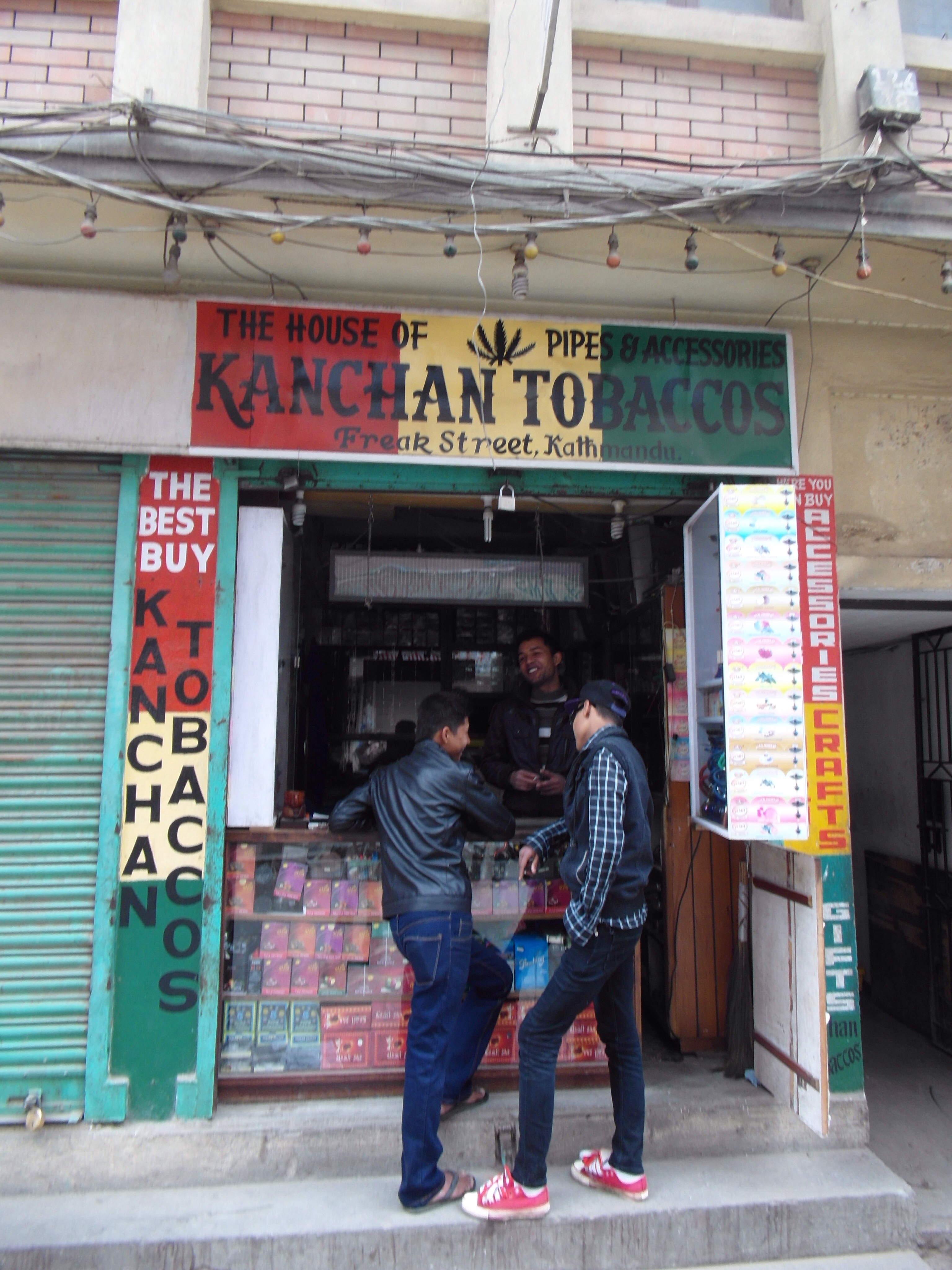
The availability of drugs and the exotic world of Kathmandu appealed to the hippies.
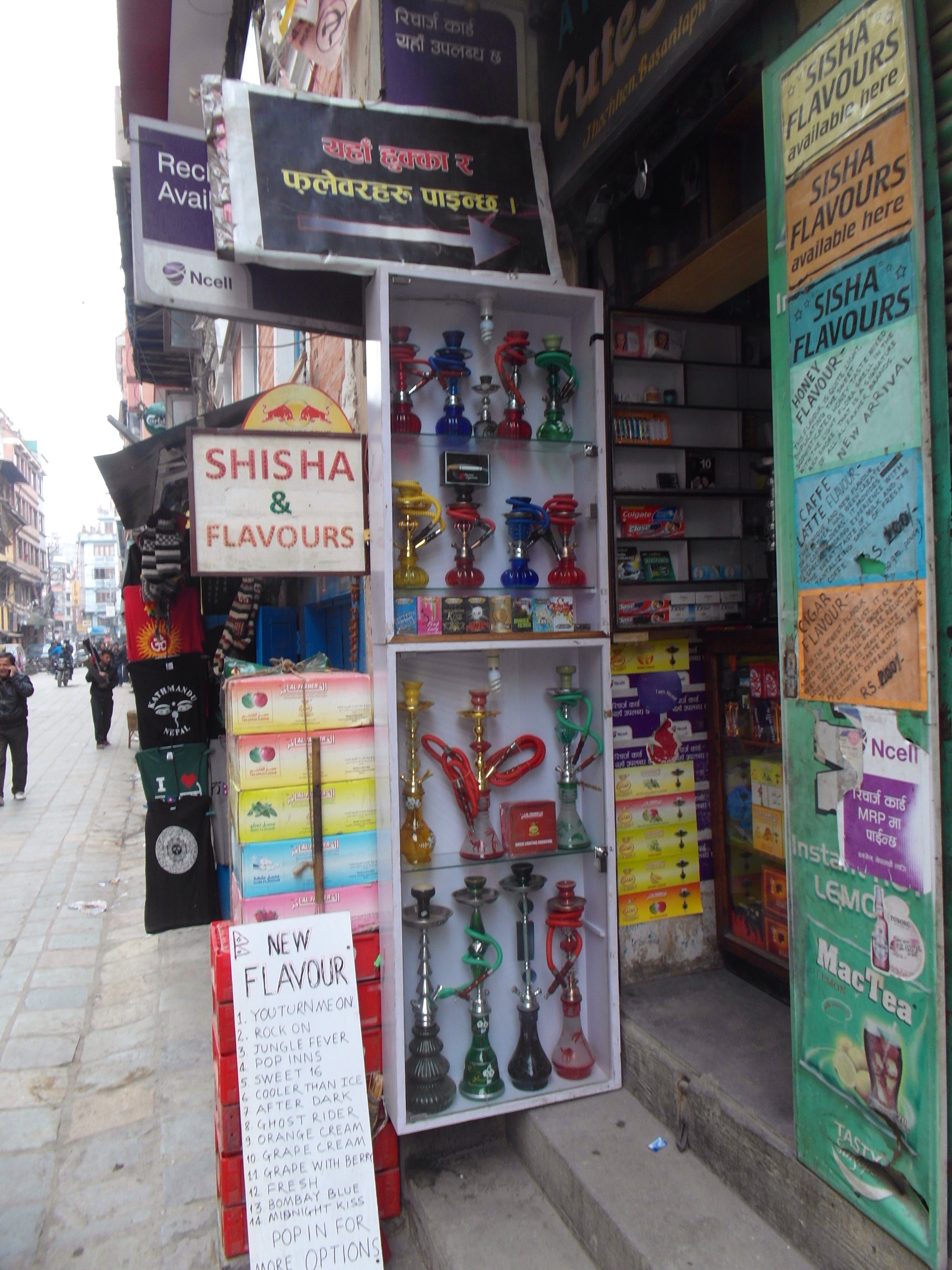
The government of Nepal eventually decided during the 70s to crack down on the hippie tourism trade.
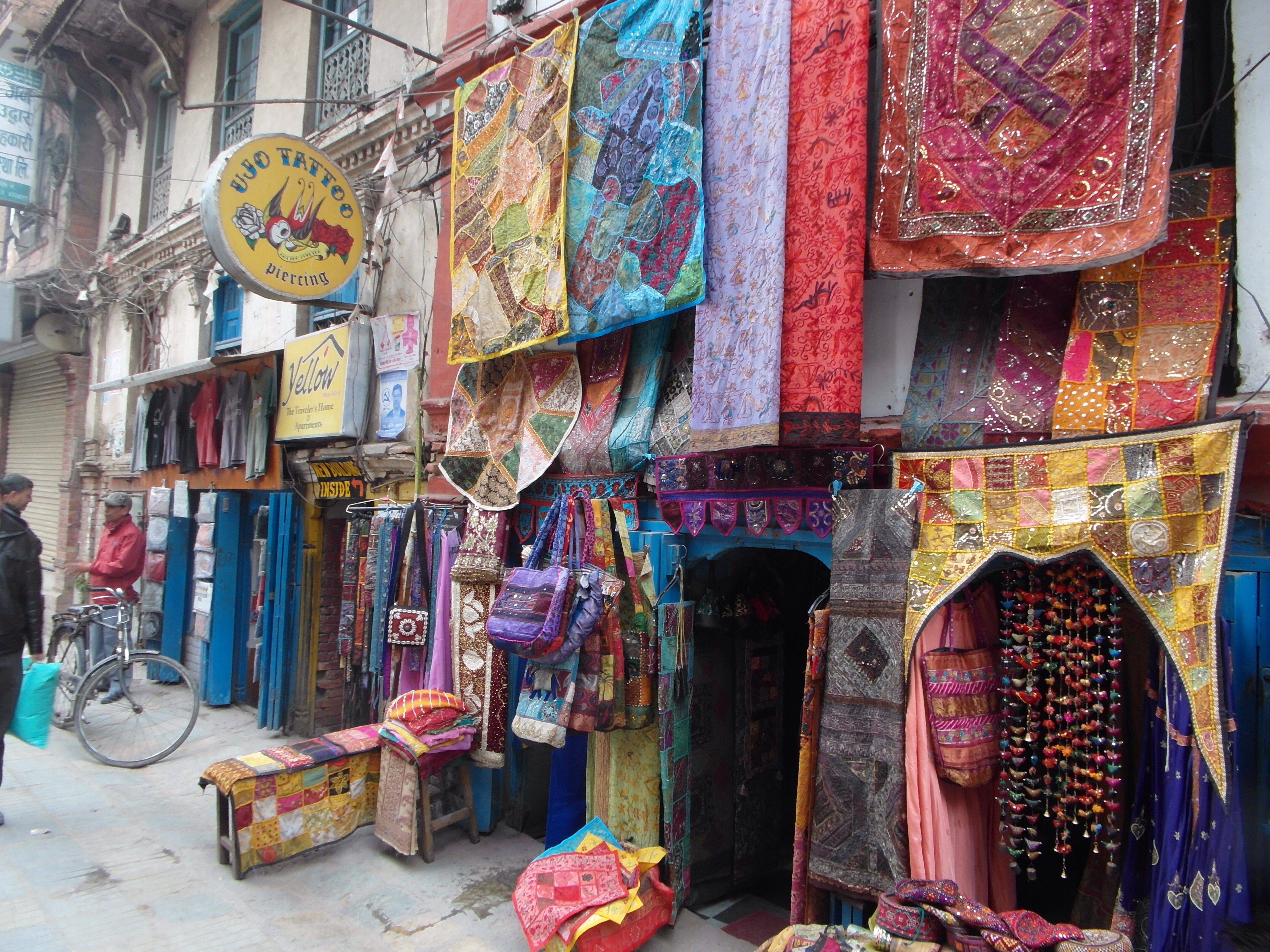
Freak Street still houses several stores from that era.
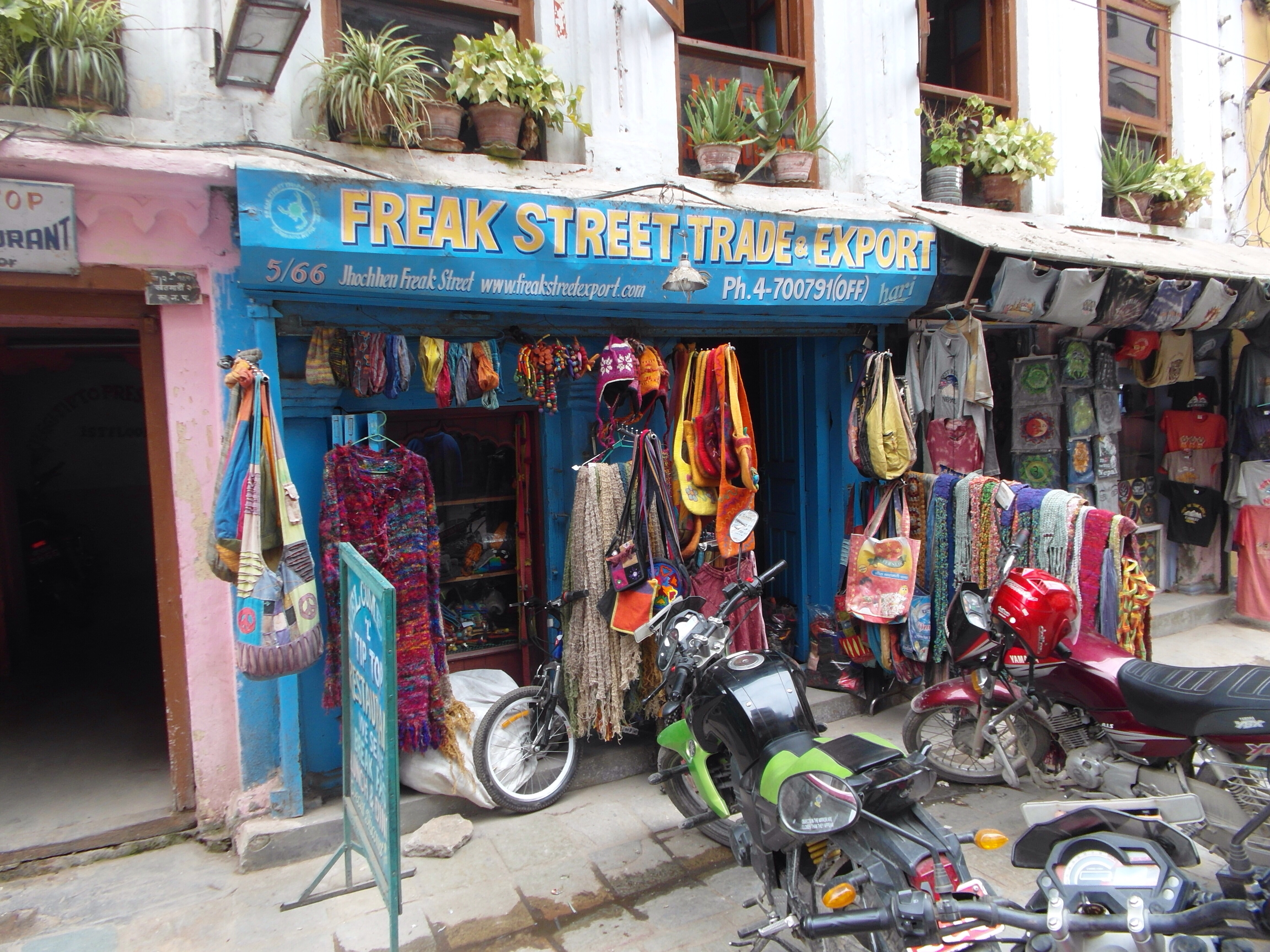
But backpackers and trekkers, as well as a few old timers like us, have replaced the hippies and are now crowding Durban Square, clicking away in all directions with our digital cameras.
Welcome to Shangri La!
The Master Weavers of Mughal Town
Every Indian girl, I am told, dreams of getting married in a Varanasi-woven silk saree. The art of weaving silk is a centuries-old tradition in Varanasi, passed on from generation to generation among the Moslem Ansari (“helpers”).
The Ansari weavers are clustered together in close quarters in the moslem district of Vanarasi, which is referred to as “Mughal Town” because the weaving trade in Varanasi dates back to the time of the Mughal Empire in the thirteenth century.
Threatened by the declining use of sarees in India and by increasing flows of cheap foreign imitations, the master weavers of Mughal Town persevere with their high quality hand-woven silk products.
As you enter the narrow alleys of Mughal Town, the tickety-tack rythmic and unceasing noise of working looms quickly fills your ears from all directions. Hundreds of looms are at work at the same time.
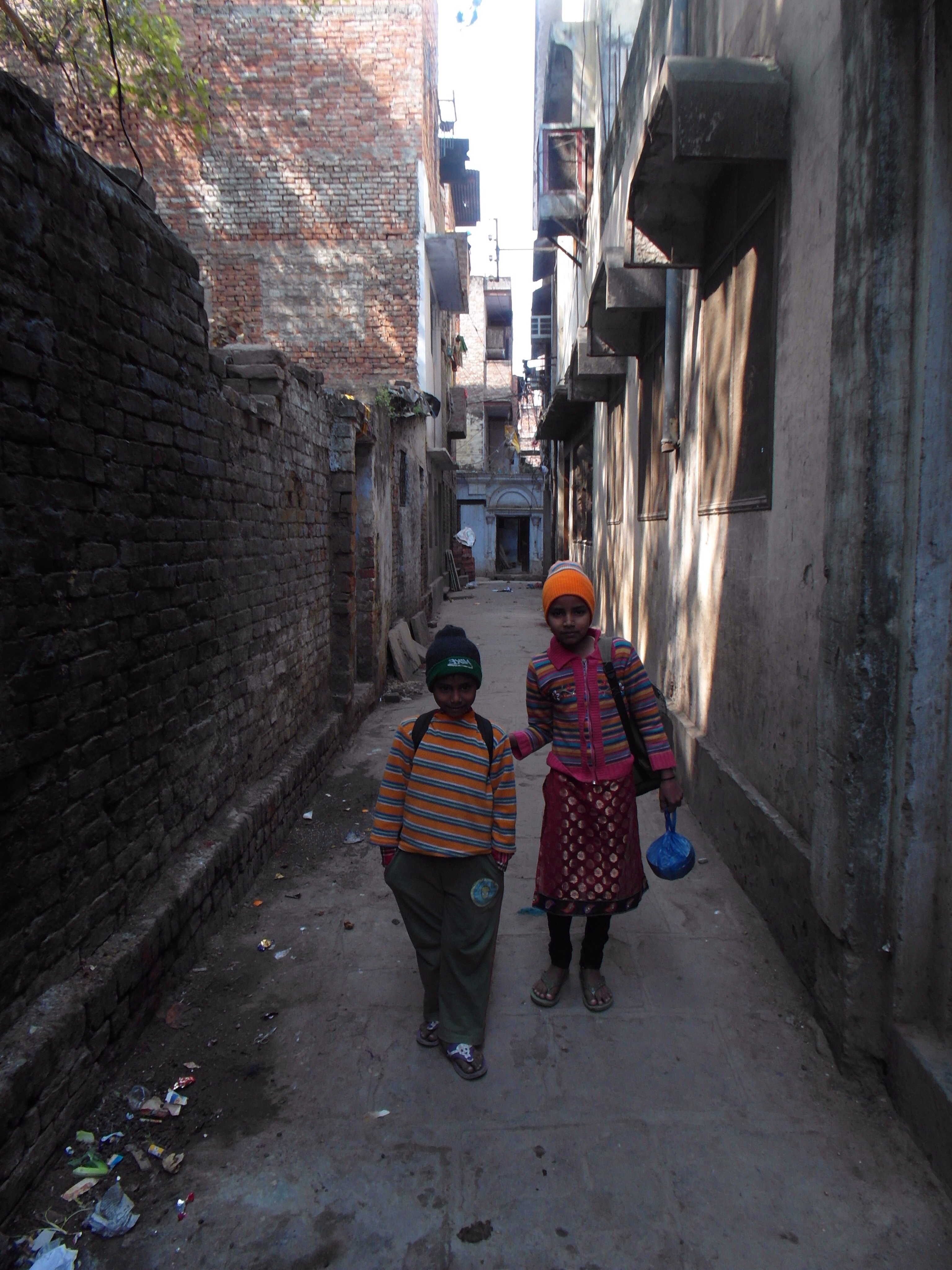
You can see many of these looms from the street simply by peeking through the bar windows of the houses you walk by. The weavers are friendly and frequently invite you to enter their cramped dimly lit workshops and witness the looms at work.

The design for each piece of work is programmed onto a cardboard card by hand in an age-old process.
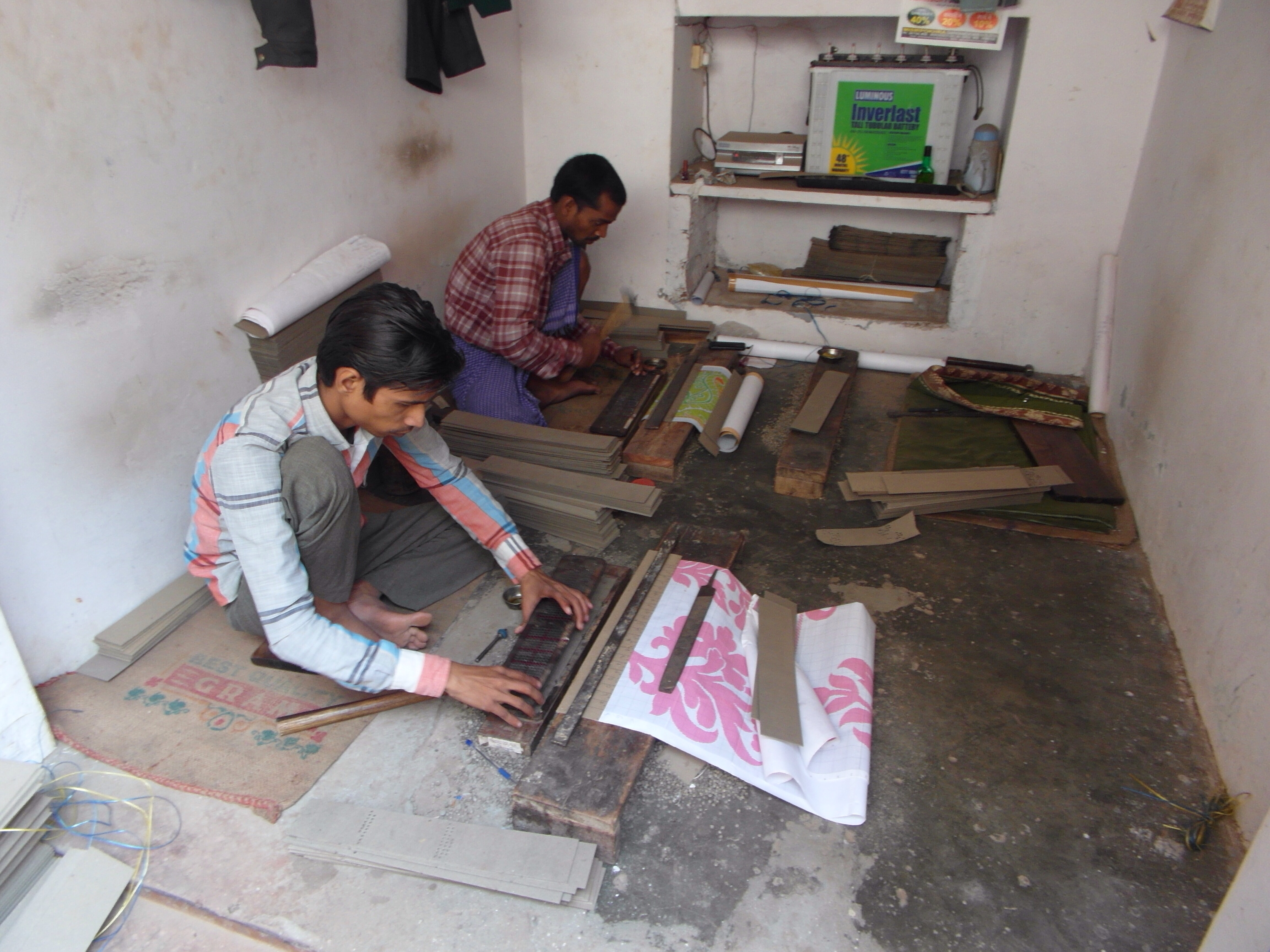
After weaving on the loom some of the fabric is passed on to specialist shops for the addition of glass beads …
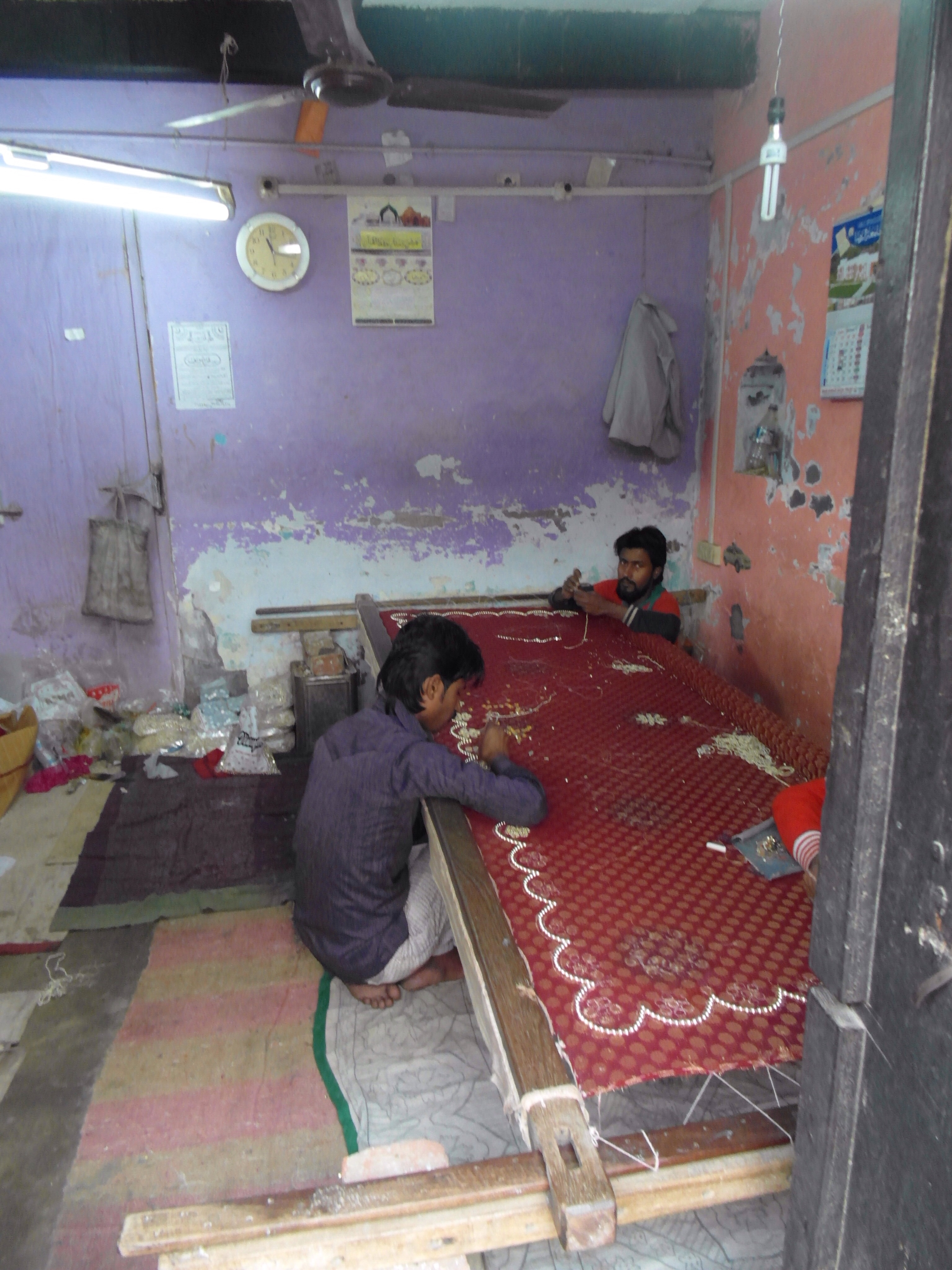
or of more expensive stones …
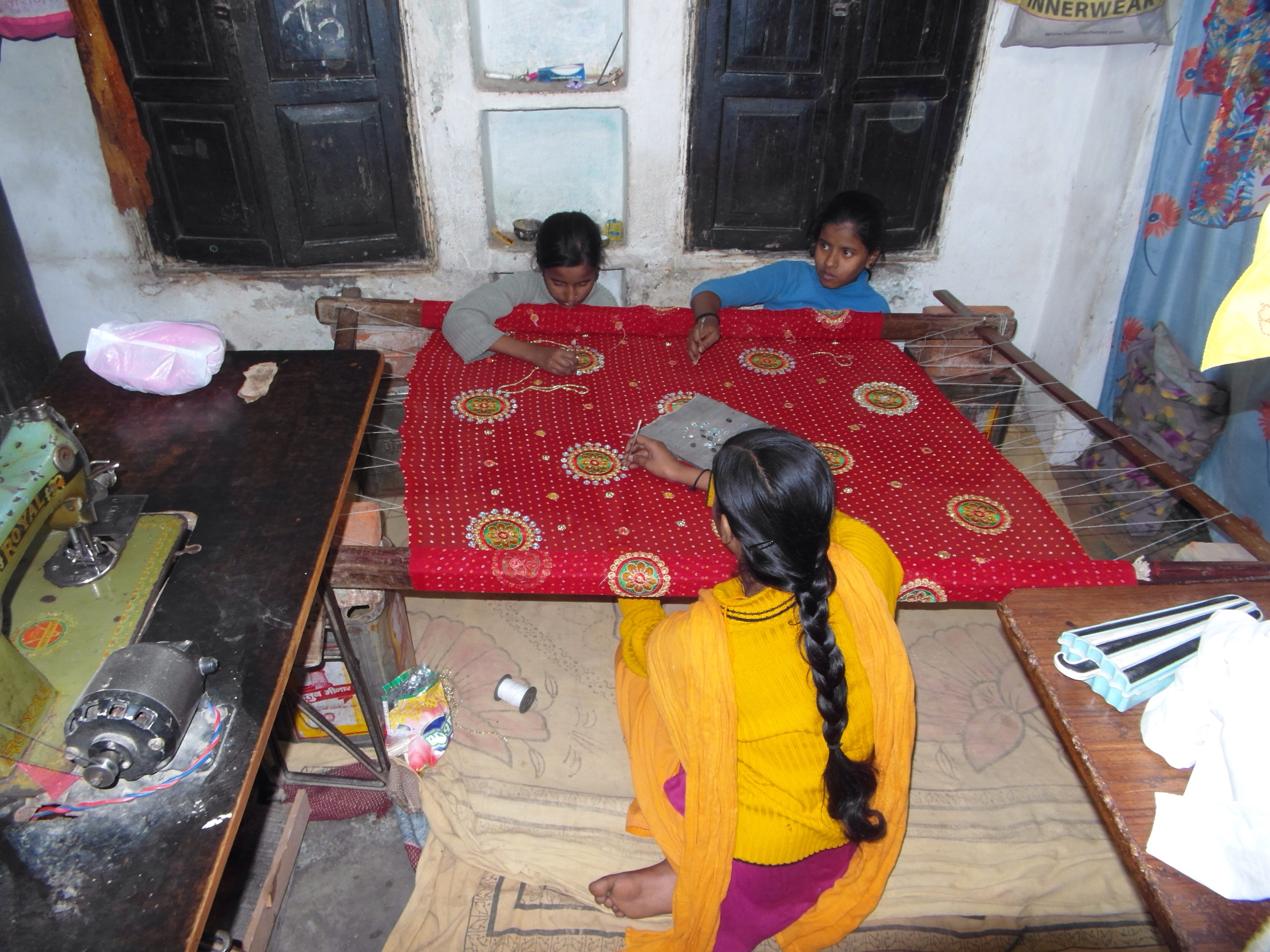
or for refined embroidery work.
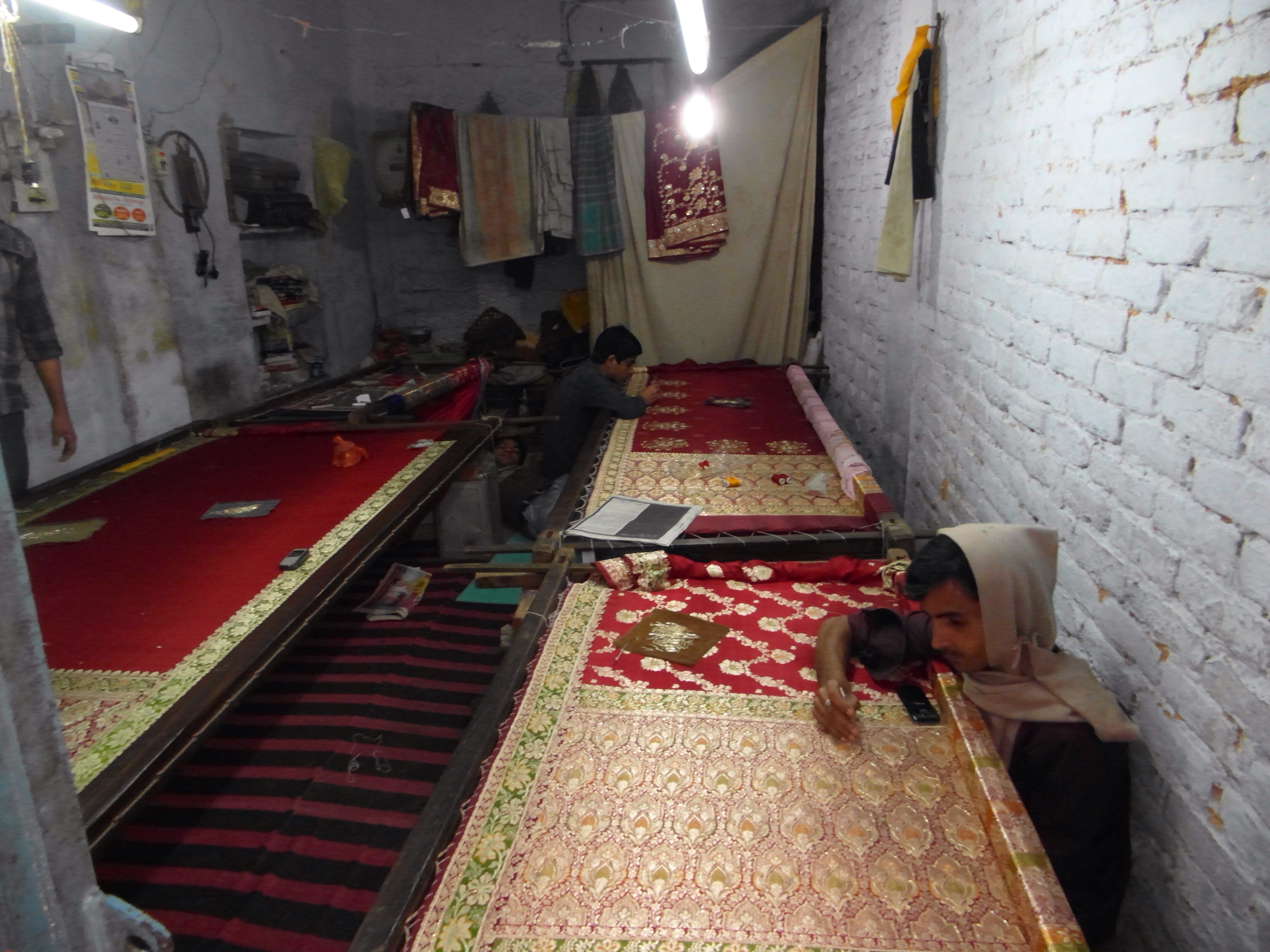
Much of the work is custom made for weddings, but a store in the neighborhood offers a very wide selection of hand-woven silk products at very reasonable prices (bargaining is expected).
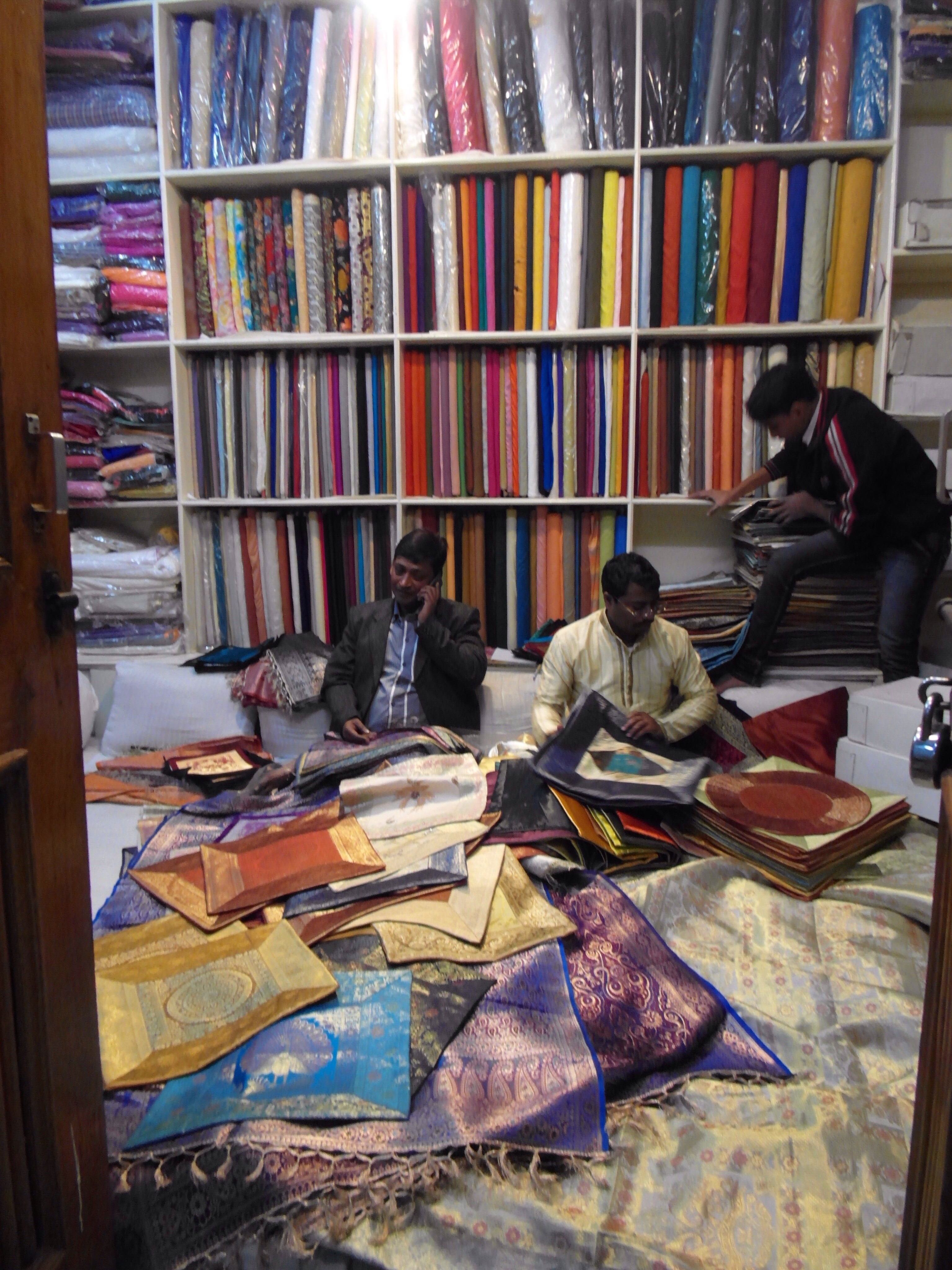
When in Varanasi, do not fail to walk the streets of Mughal Town and immerse yourself in the beautiful art of silk weaving.
The Colorful Ghats of Varanasi
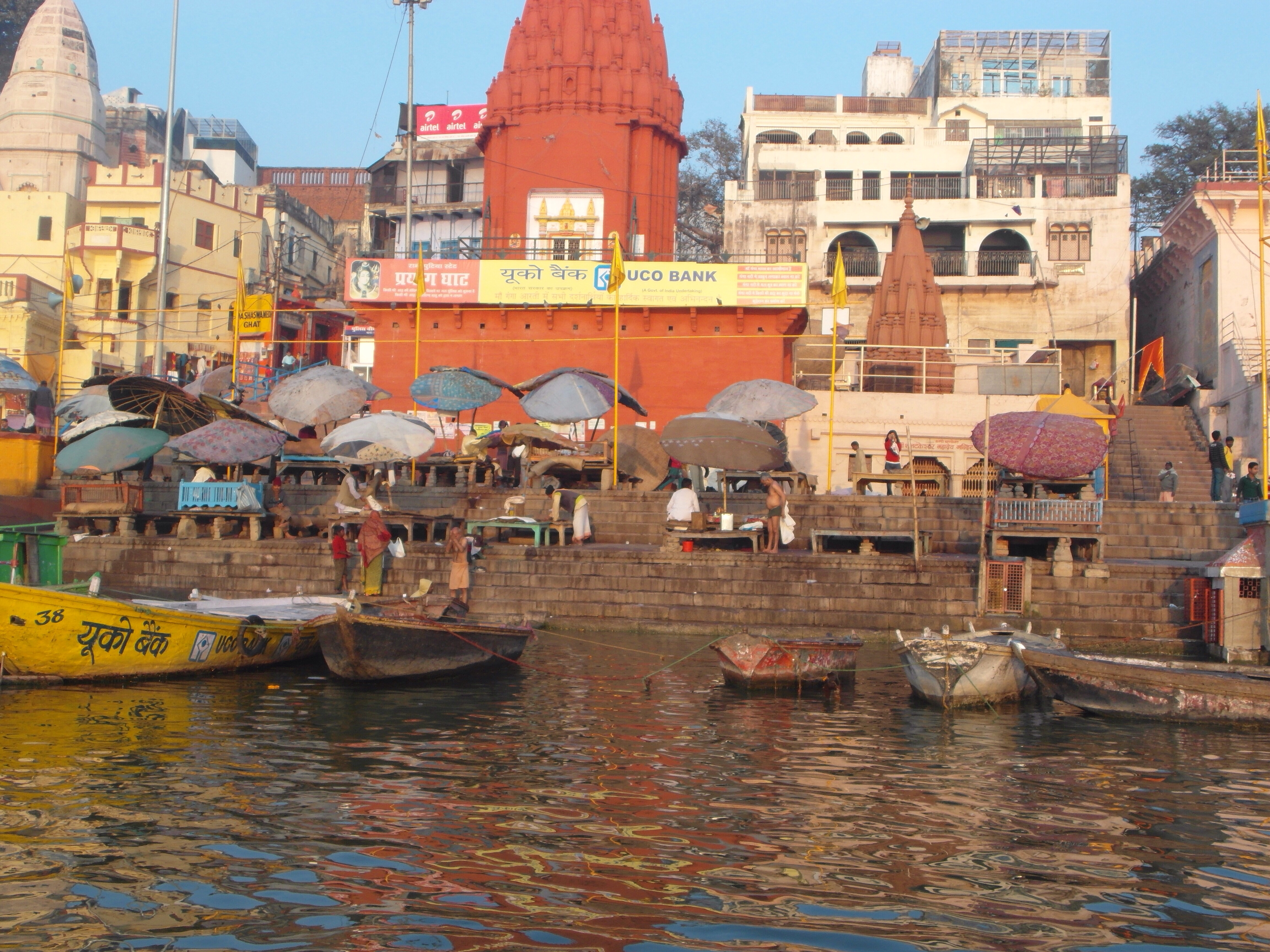
On the western shore of the Ganges river, between the Varuna river on the north side and the Asi river on the south side, lies one of the world’s most colorful and fascinating stretch of real estate, the ghats of Varanasi. Varanasi is one of the oldest cities on earth and the holiest city in the Hindu religion.
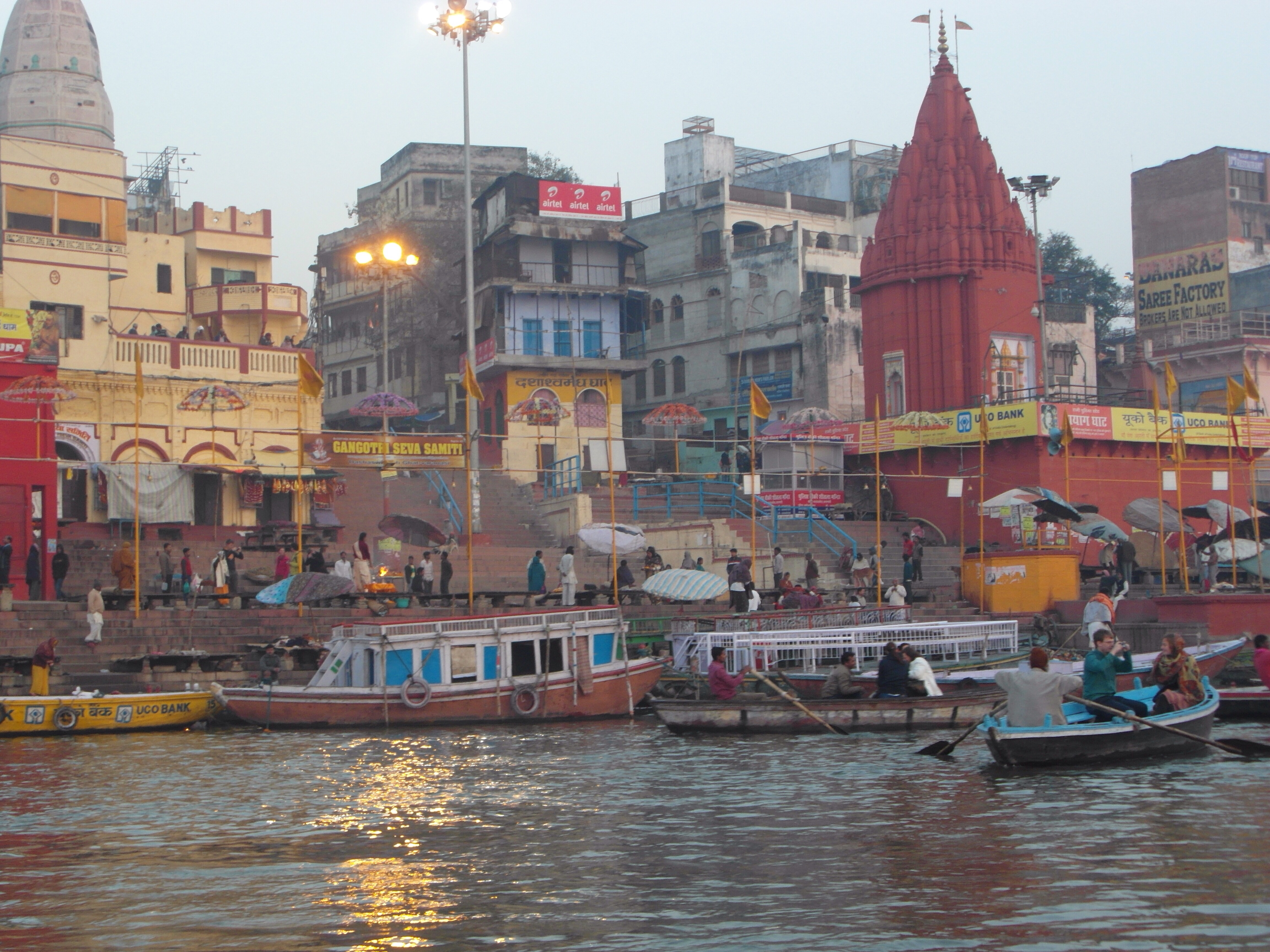
Ghats are sets of steps leading down to the river’s edge. According to our guide, there are 365 ghats between the Varuna and the Asi rivers, a distance of about two and a half miles. Our focus is on the 100 or so ghats lined up next to each other along the Ganges in the center of Varanasi.
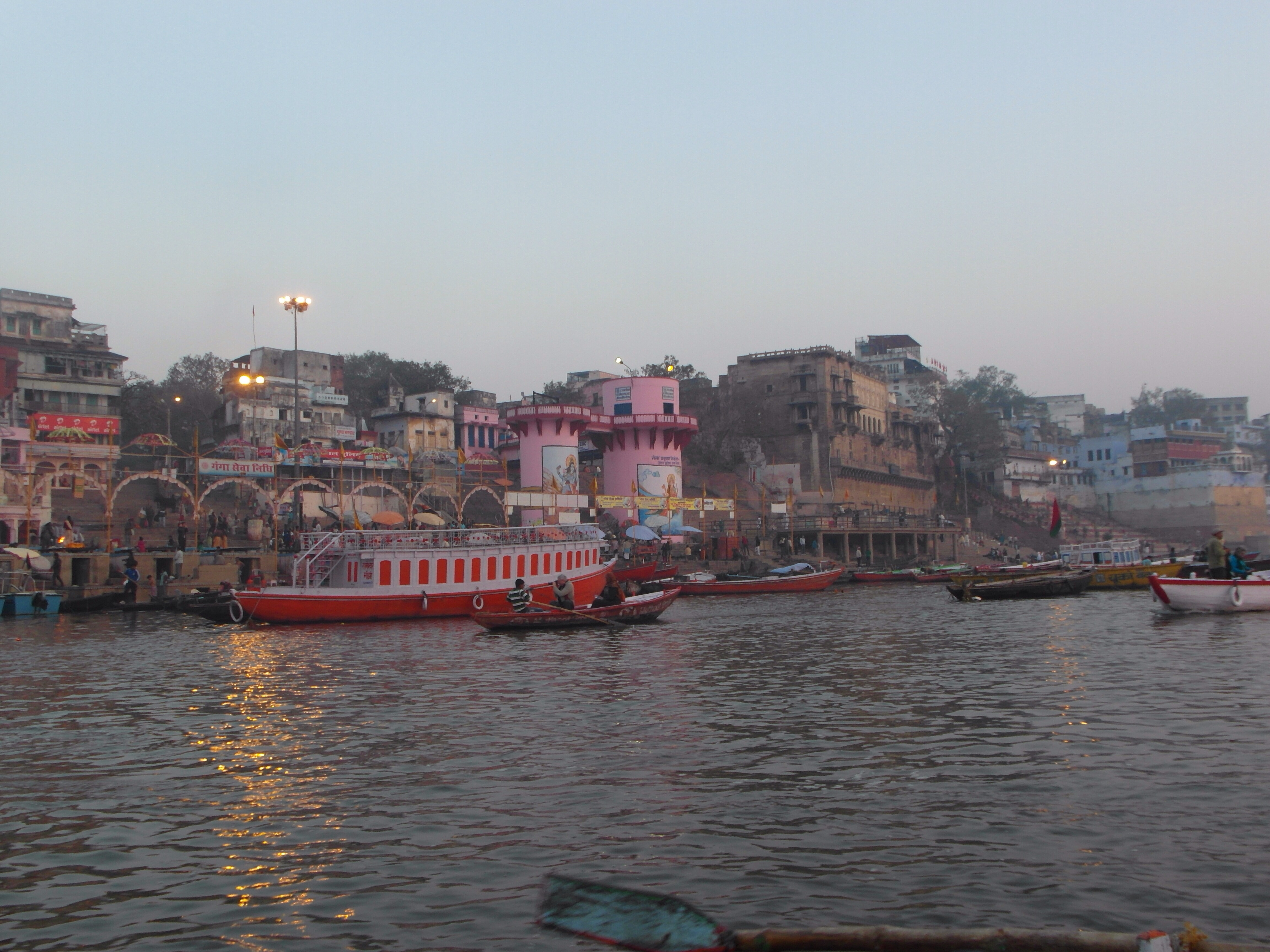
Each ghat is from about 30 feet to 100 feet wide, and a very eclectic array of structures have been built on top of the ghats in the past two hundred years or so, ranging from simple guest houses to elaborate palaces.
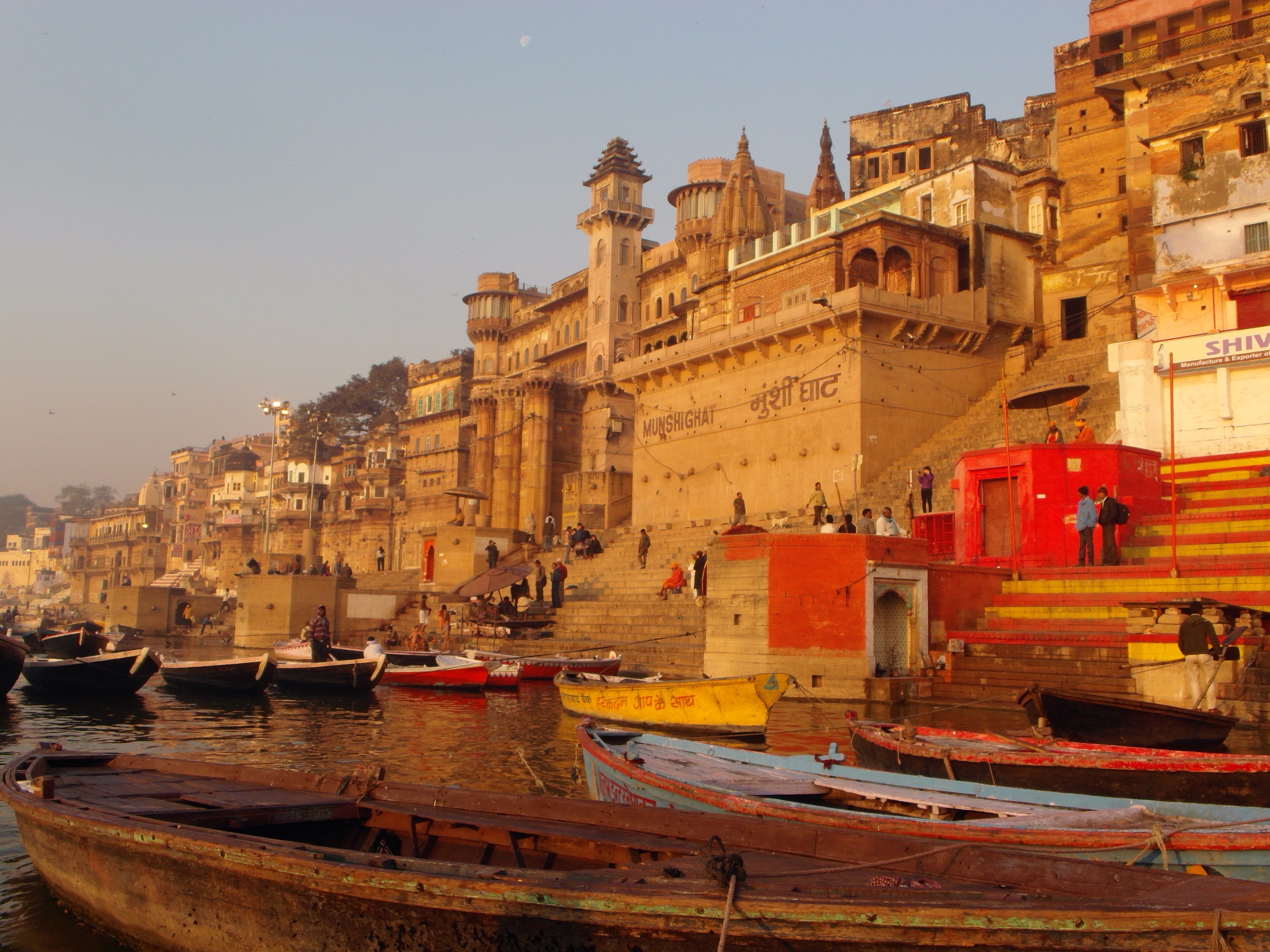
The best way to experience the ghats of Varanasi is by a boat ride along the river at sunrise or at sunset. Each ghat has a name and a story, and our guide, who seemed to know them all, explained each one as we went by.
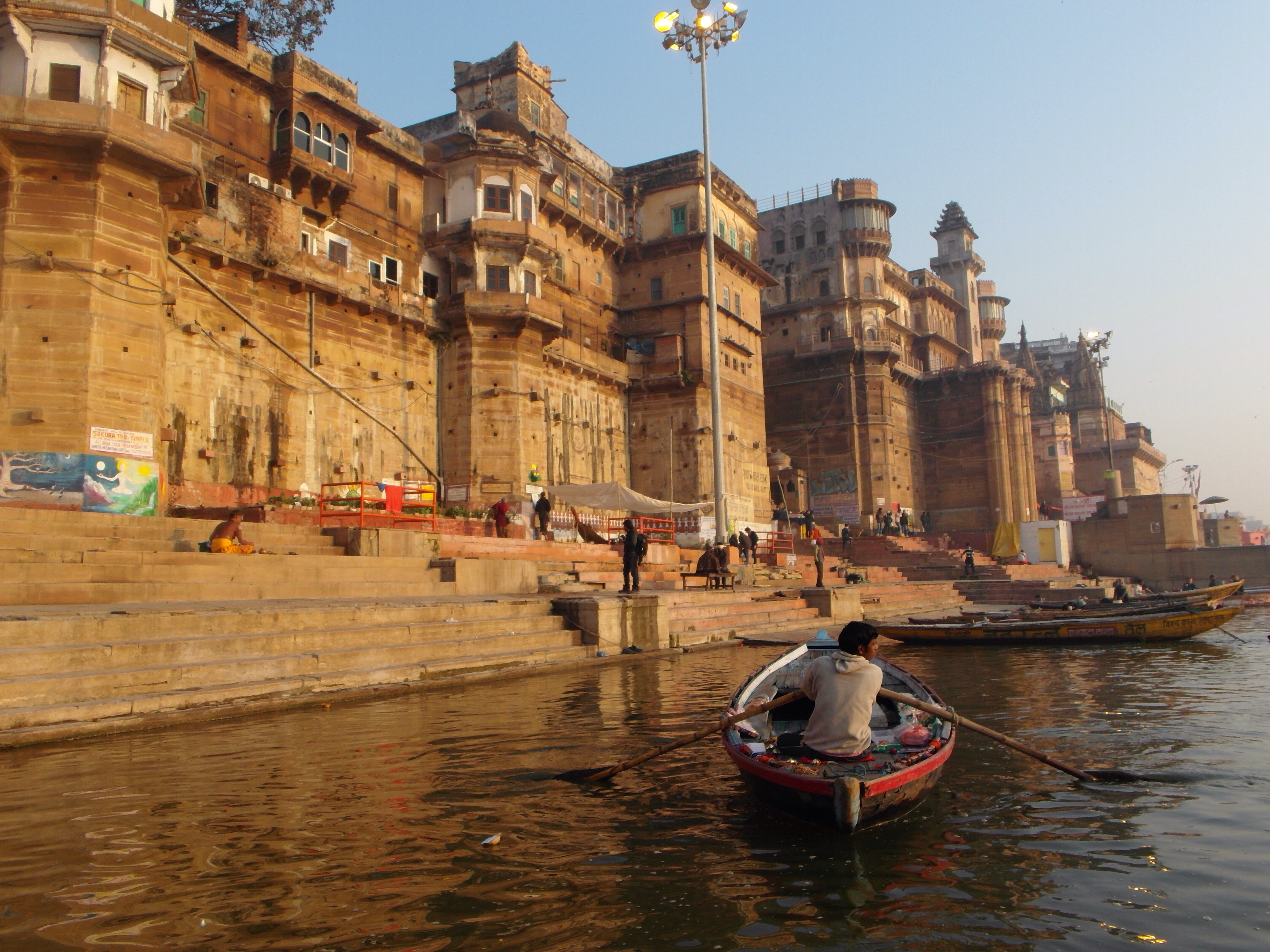
Many of the ghats have been built up by various kings and maharajahs of India. Some are guest houses for visiting pilgrims from various countries, some are ashrams, at least one is for followers of Hare Krishna, etc… The ghats are tradable private properties, as evidenced by the recent purchase of a ghat by a hotel chain. They are redoing the inside of the structure but are obligated to keep the river facade unchanged.
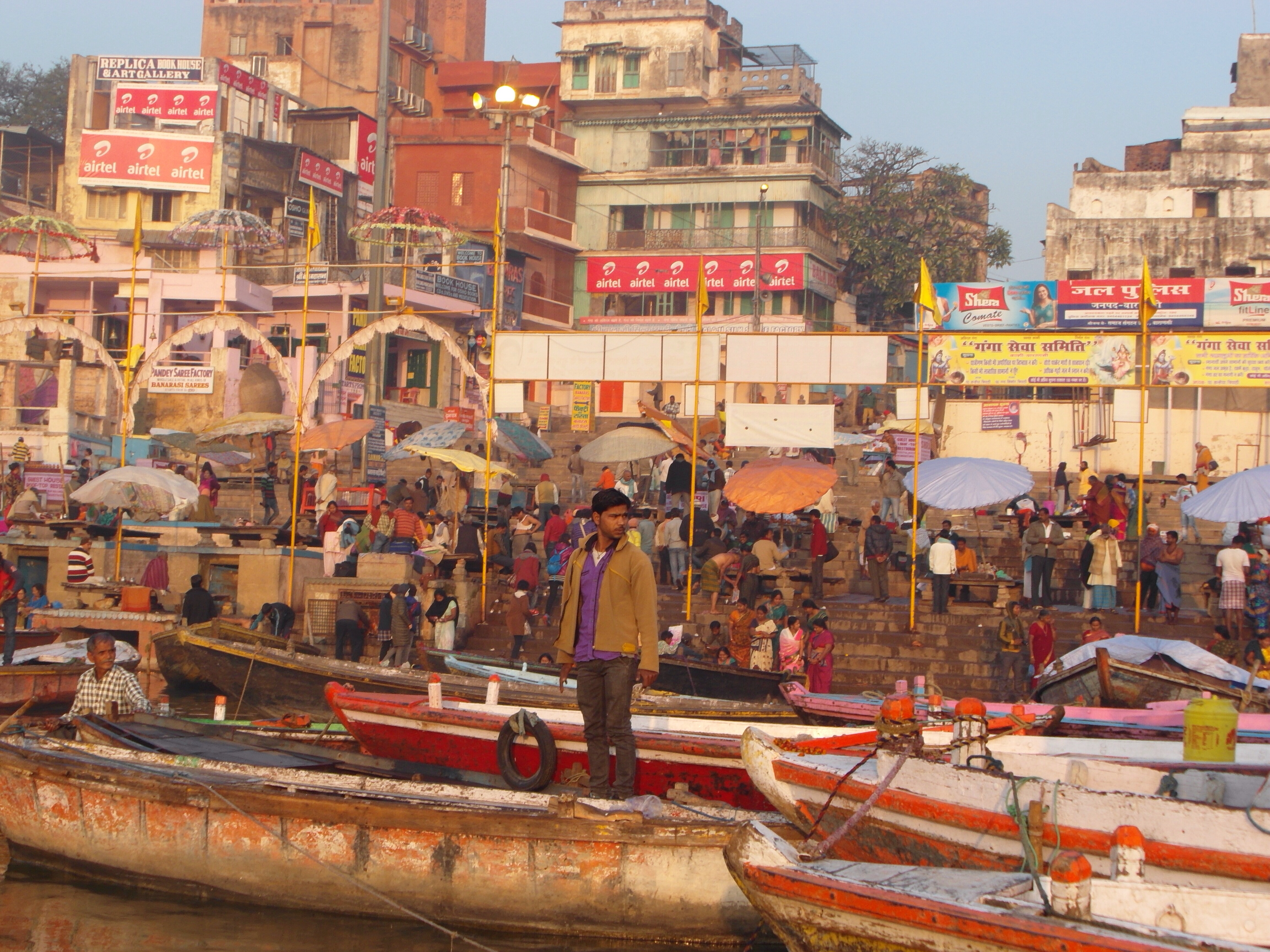
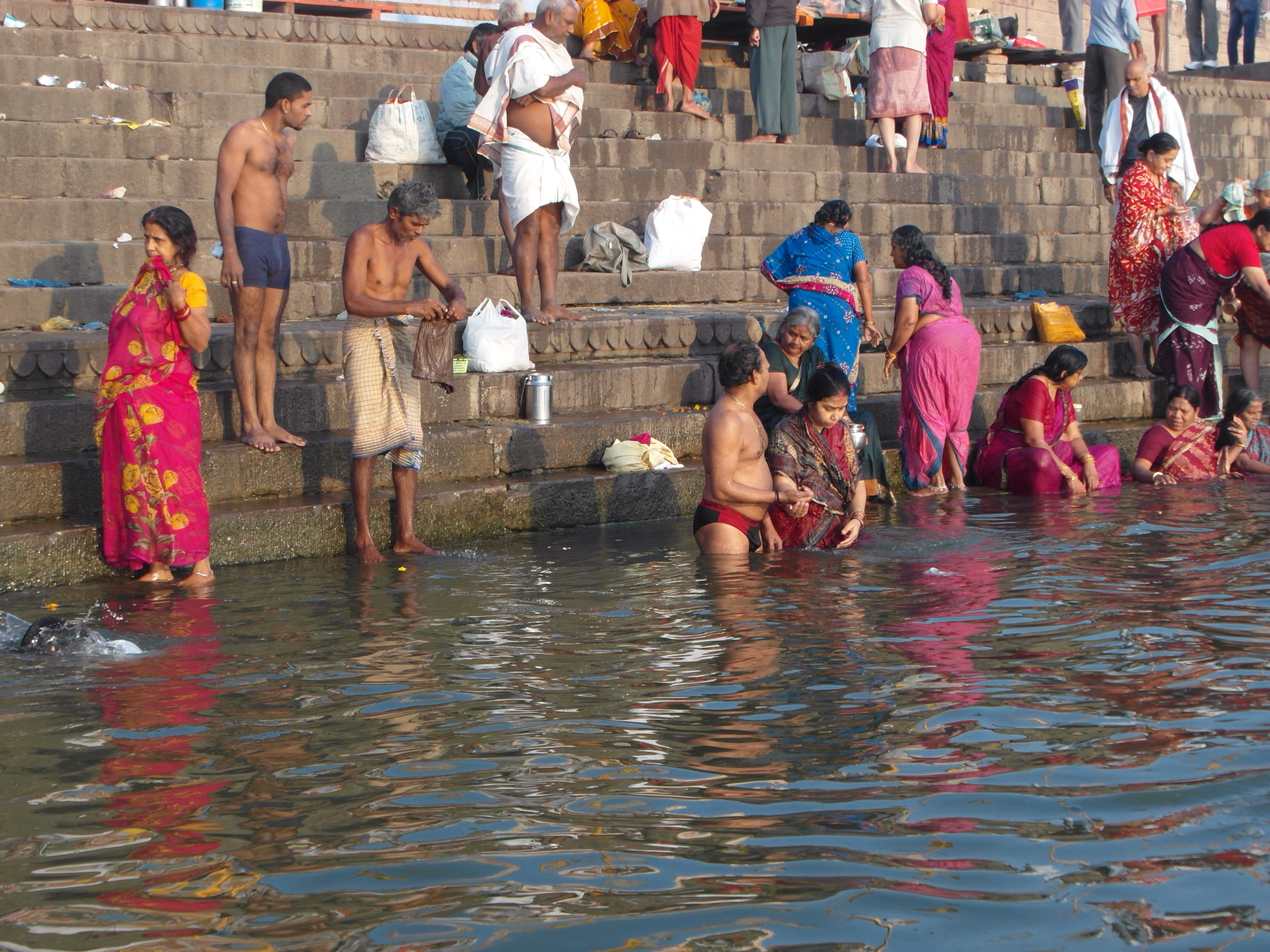
Ghats are used for religious purposes by the Hindus Bathing in the Ganges follows thousand years old rituals.
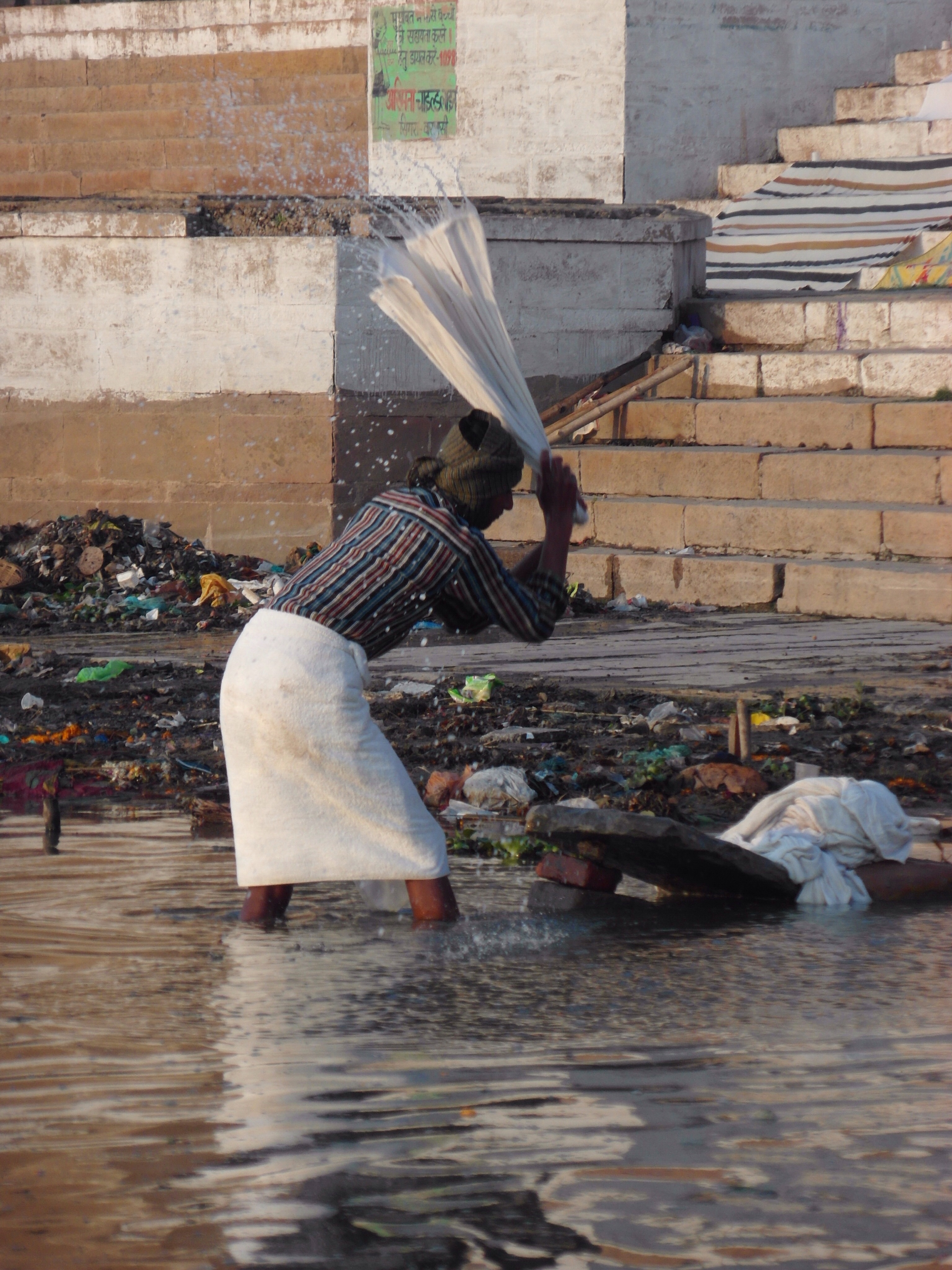
Some ghats are used for clothes washing.
Two ghats are dedicated to the burning of dead people and the throwing of their ashes into the Ganges river.
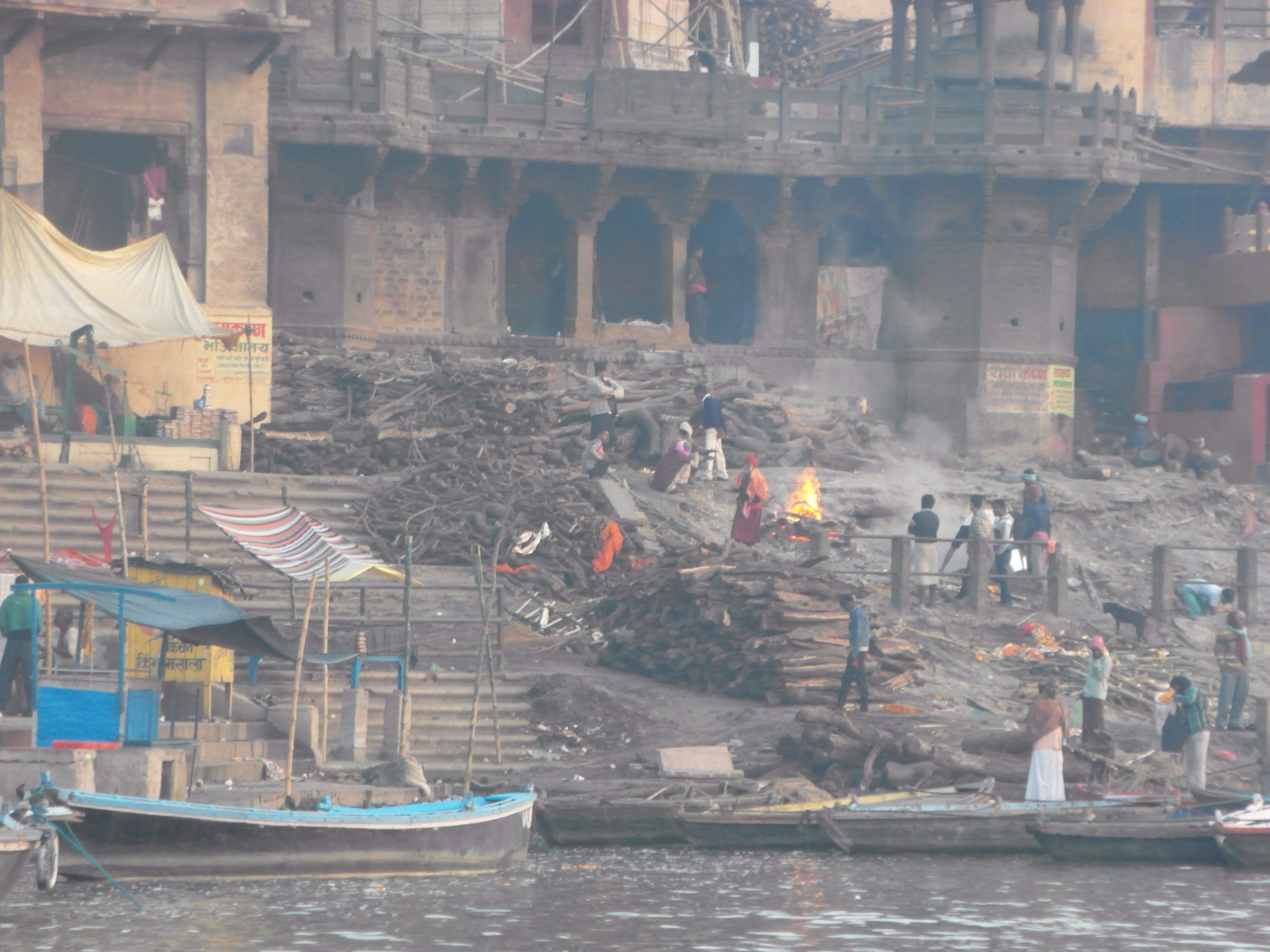
An amazing and memorable sight!
CULTURAL SPOTLIGHT: Mumbai, the future of India, at least for the men!
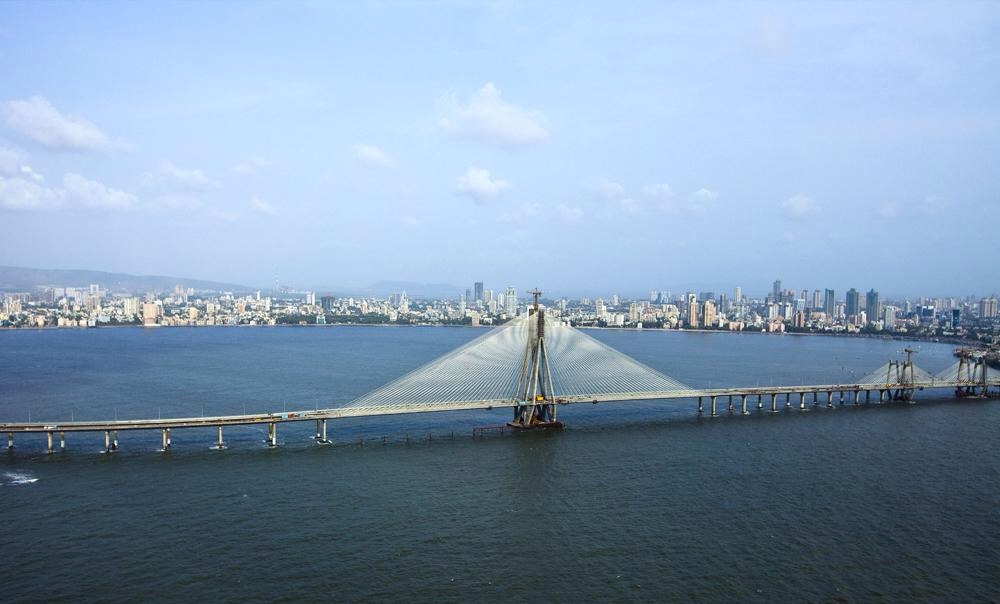
Rajiv Gandhi Sea Link and the skyline of Mumbai
Even before we landed, the majestic skyline overlooking the Arabian sea made a powerful statement – Mumbai is one of the world’s financial and business capitals. Surely, it would be forward-focused on the future.
I wasn’t surprised when we drove by the architecturally stunning Rajiv Ghandi sea link (bridge) reflecting the modernity of Mumbai. Nor was it surprising that tuk tuks and other small vehicles are not permitted in the heart of the city, and that we would not be encountering cows, goats and bulls wandering around alongside the traffic. This was indeed a 21st century city, focusing on progress and growth, welcoming international businessmen and hungry for power and economic development.
However, Ladies be aware … when I said “businessmen”, I was not using the term in a generic sense. Ghandi may have succeeded in liberating his beloved India from the rule of the British, but he did not succeed in his goal of establishing equality for all his people. Centuries-old traditions die hard, especially when they are related to the primary religion of a country. Approximately 80% of the Indian population are Hindus, most of whom still believe in the caste system and still follow the tradition of arranged marriages. I pondered upon this as our very erudite guide brought us around the city, where we saw mainly men working and walking about, and while our guide explained the beauty of the “dhabbawallah home-cooked lunchbox delivery system” which is designed to bring freshly cooked food from the wife at home to the husband working in the city. Clearly, the women’s role – even in the modern city of Mumbai — is in the home while the husband is out working. And this was as true in the flower markets of Mumbai as it was in the vegetable markets, the dhobi ghats (laundry washing services), and the hotel restaurants or cleaning staff where men predominated.
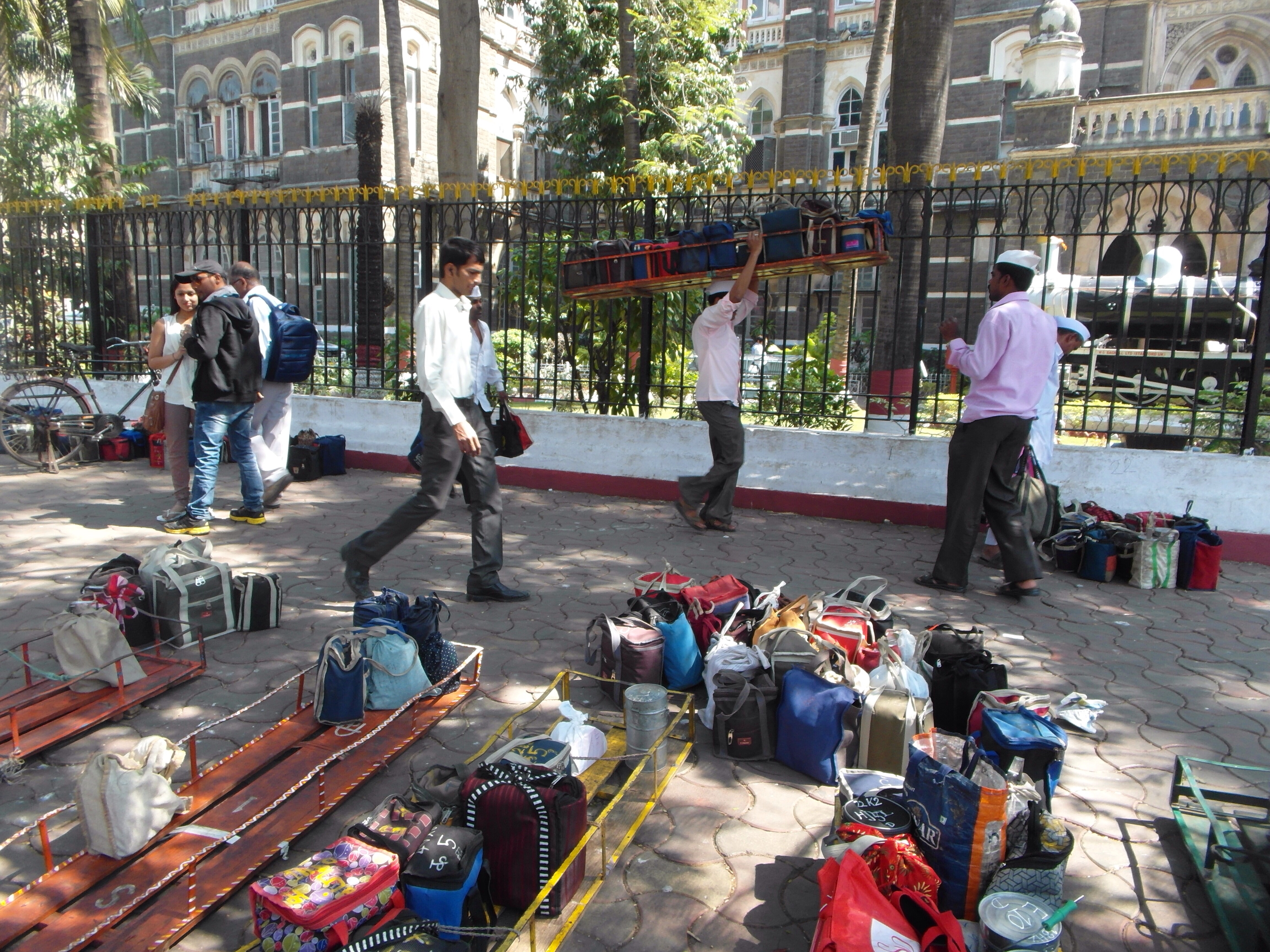
Dhabbawallas deliver home-cooked food in central Mumbai
While there are, of course, exceptions to these generalities and very successful and impressive professional women do work in India, India ‘s philosophy of life still leads to a primarily male-dominated society, something which extends even to Security check-in at Mumbai’s airport. Not only are women not allowed to go through the same lines as men, but there are 3 lines exclusively for men and only one solitary, very slow-moving one for women.
When I discovered that the young woman behind me shared my indignation, I walked up to the front of the line. Not too surprisingly, nobody was working. Finally the “man” in charge appeared. I told him that this slow-moving line was discrimination, that I wanted to be with my husband, and that I would miss my plane at the ridiculously slow rate the line was moving. He insisted I stay in the “ladies’” line (undoubtedly because of the personal body checks ) but that I just put my things on the conveyor belt and go through. The women around me supported my efforts to label this treatment “discrimination” and graciously encouraged me to go through ahead of them. Despite my efforts to rally them to complain, complacency ruled … or was it “tradition”?
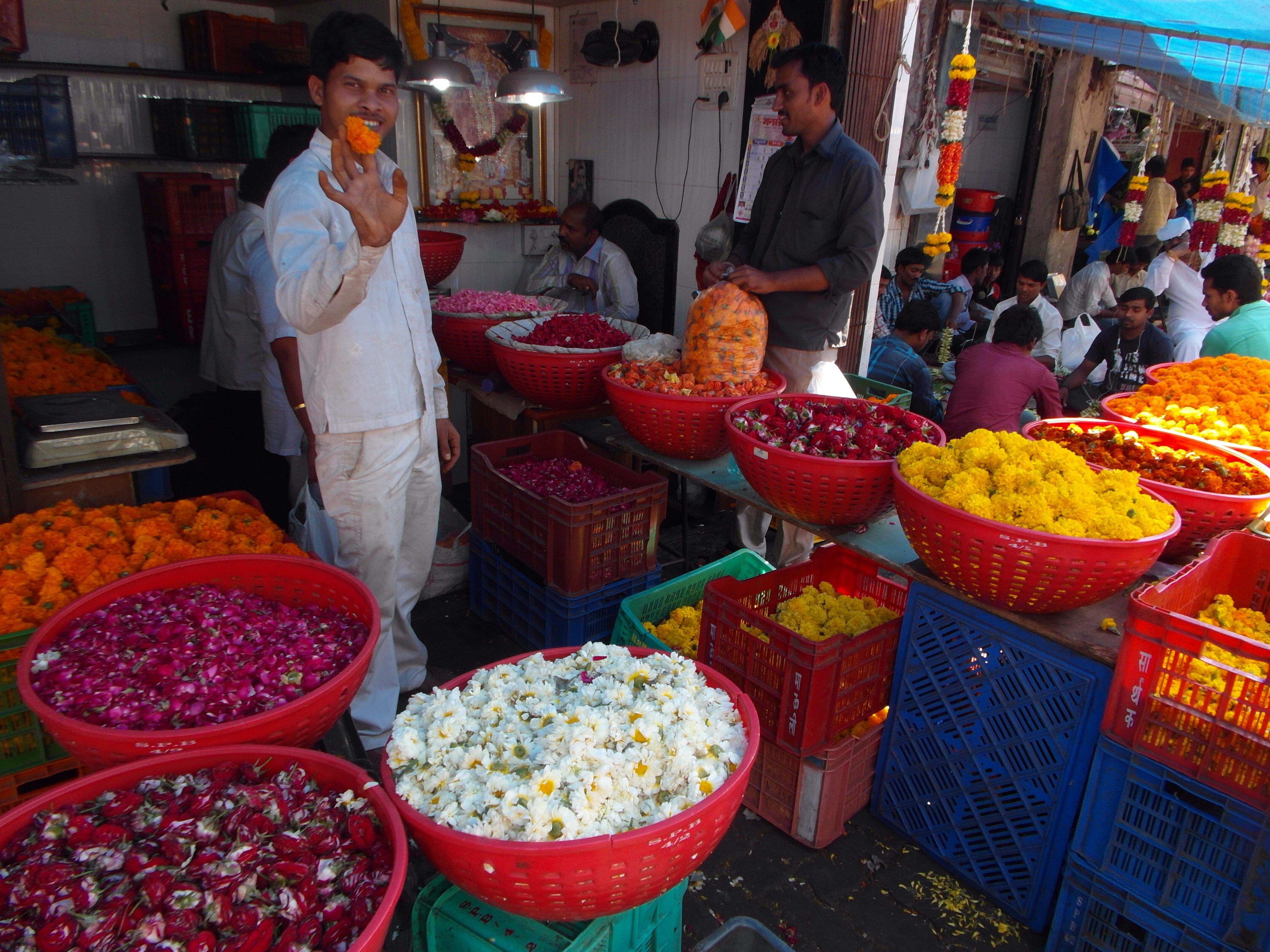
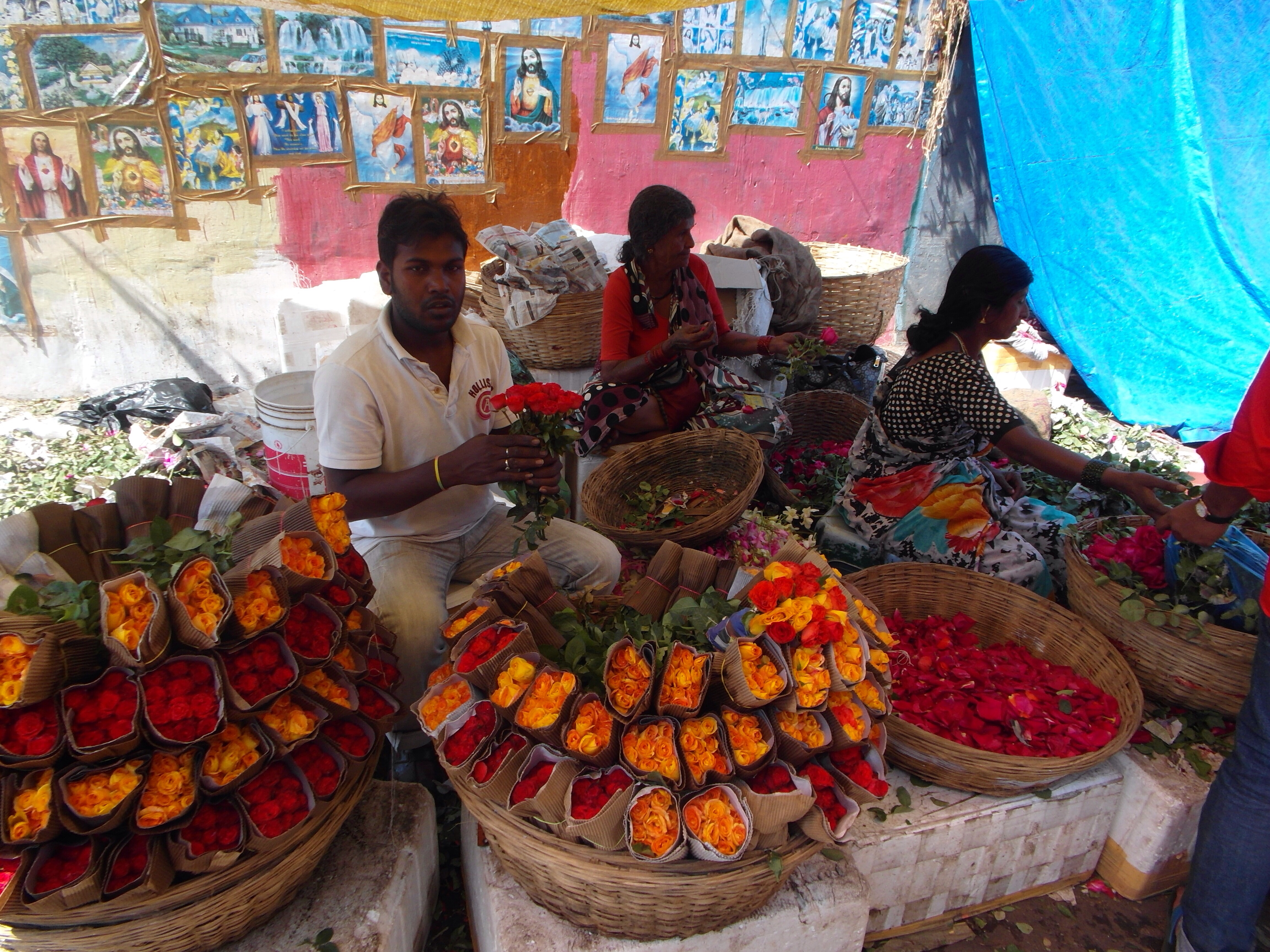
Workers in the flower market are predominantly male
For Mumbai and, indeed all of India, to truly come into its own in the 21st century, Ghandi’s principles of “equality” for all peoples and for women need to be realized.
A Royal Welcome at the Taj Nadesar Palace in Varanasi, Uttar Pradesh, India
The Taj Nadesar Palace Hotel is a property owned by the maharajah of Varanasi and managed by Taj Hotels.
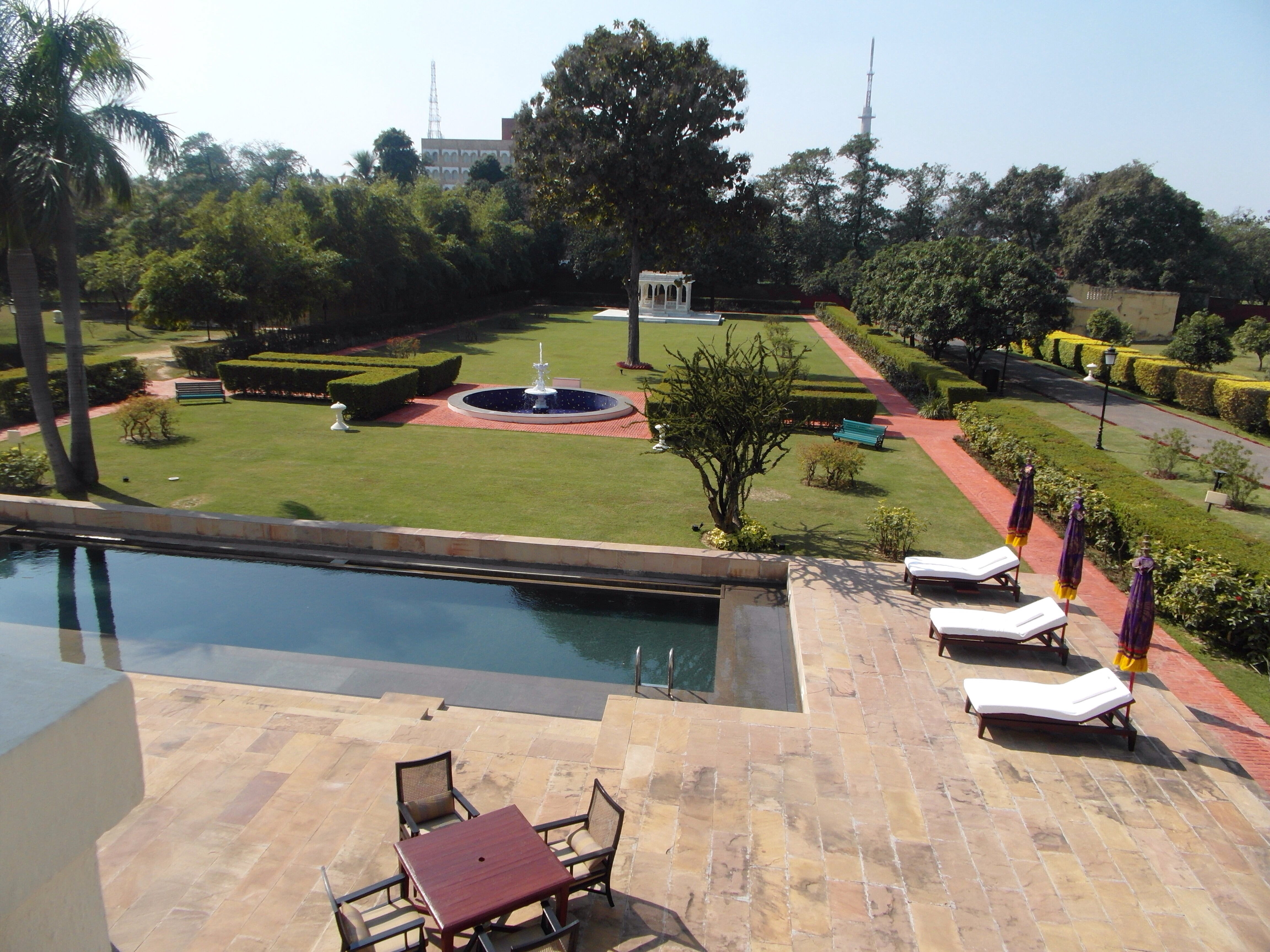
There are only ten suites in this luxurious hotel. Ours happens to be the Queen Elizabeth Suite, so named because that is where Queen Elizabeth and Prince Philip stayed on February 25th and 26th 1961. Framed photographs of the royal couple at the hotel and of the royal signatures on the hotel ledger adorn the walls of the suite.
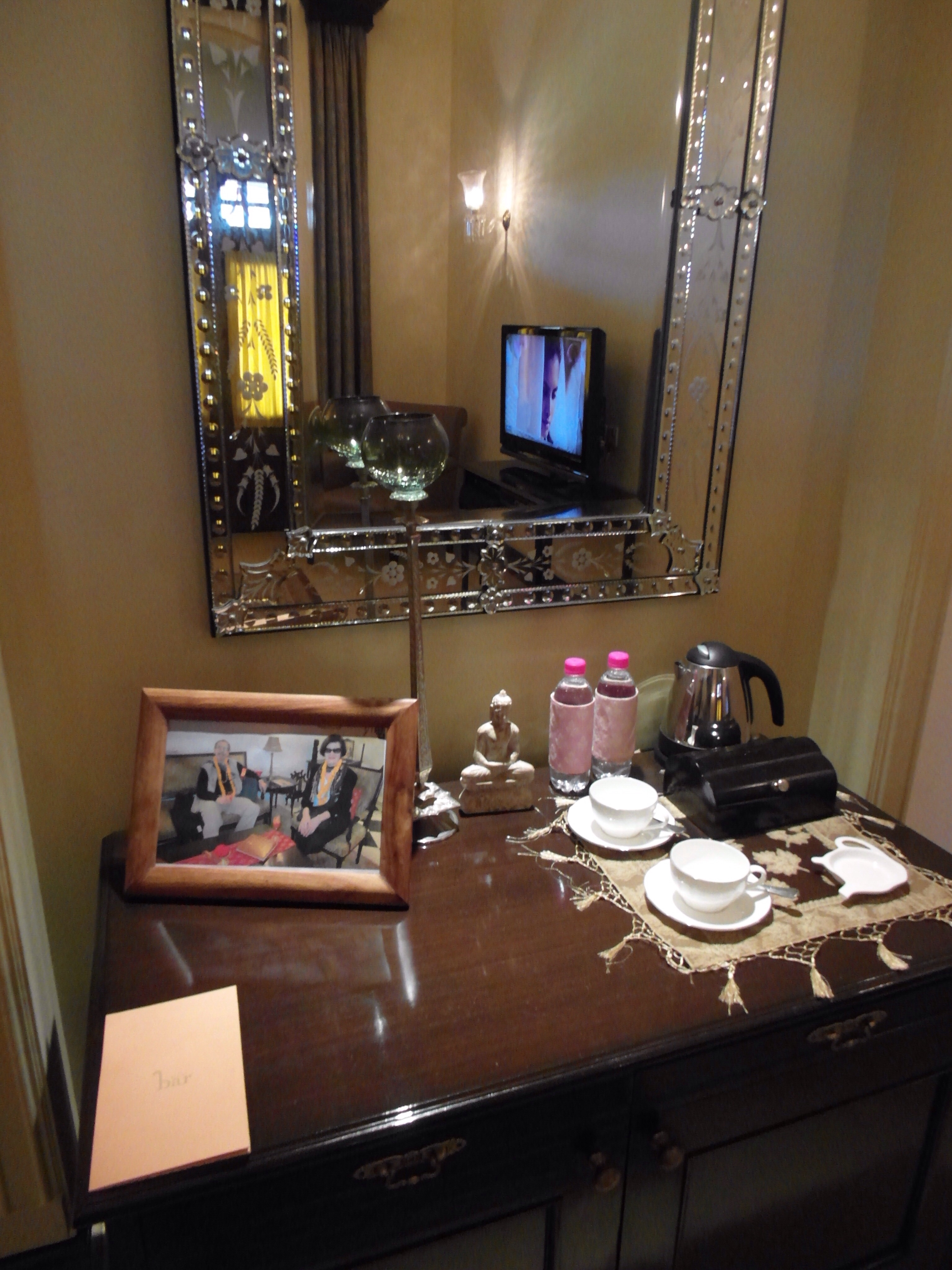
A photograph of us was taken as we arrived at the hotel and went through an elaborate welcome ceremony. When we entered our suite a few minutes later, that same photograph, enlarged and framed, was sitting on a credenza of the living room in our suite.
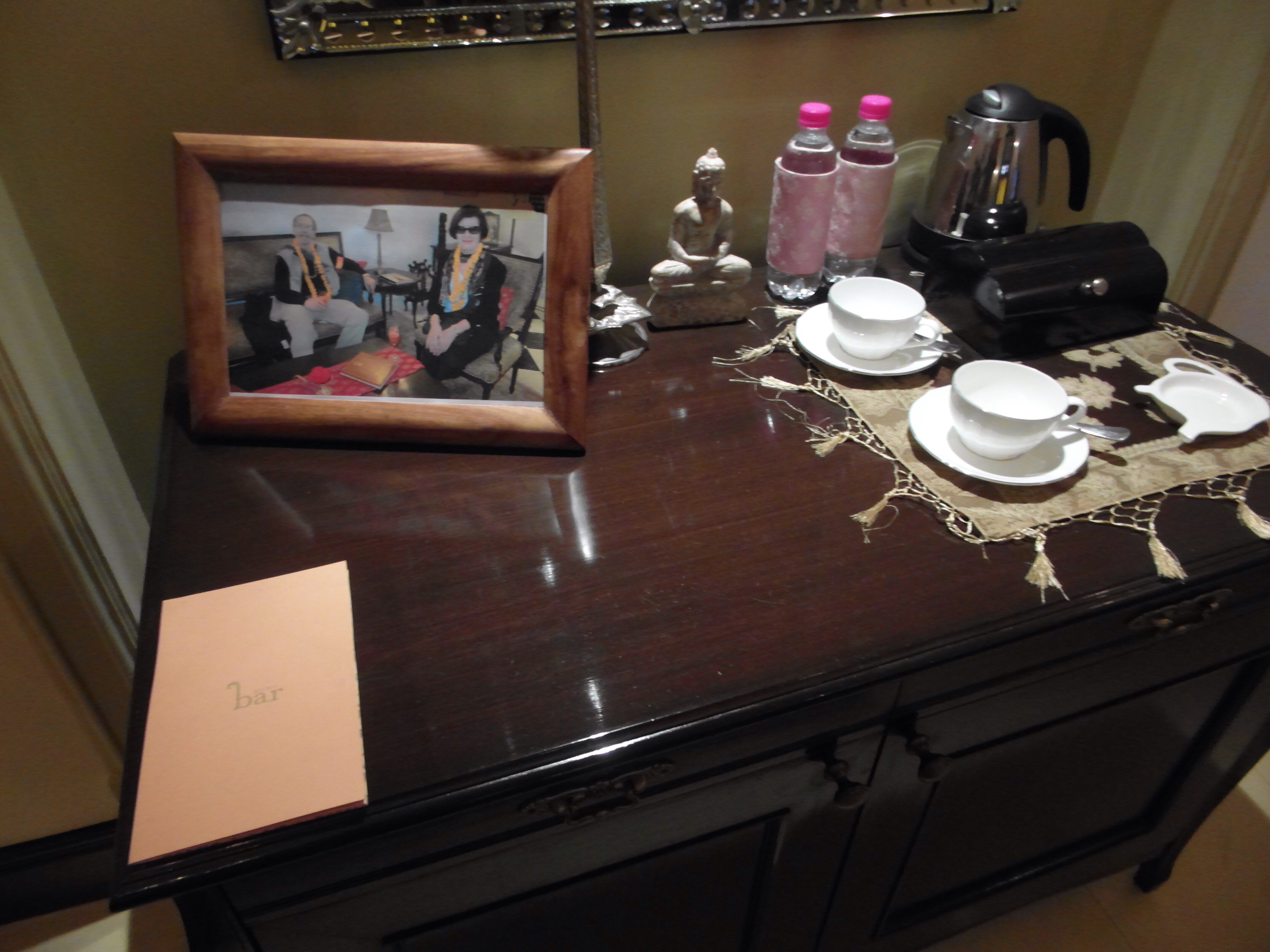
Now that’s a royal welcome!
Mumbai, the Vibrant Heart of Today’s India
The heavily visited cities of the Golden Triangle - Delhi, Jaipur, Agra - highlight the glories of India’s past with their forts, mausoleums and other centuries-old monuments. However, for a real sense of today’s India, head to Mumbai.
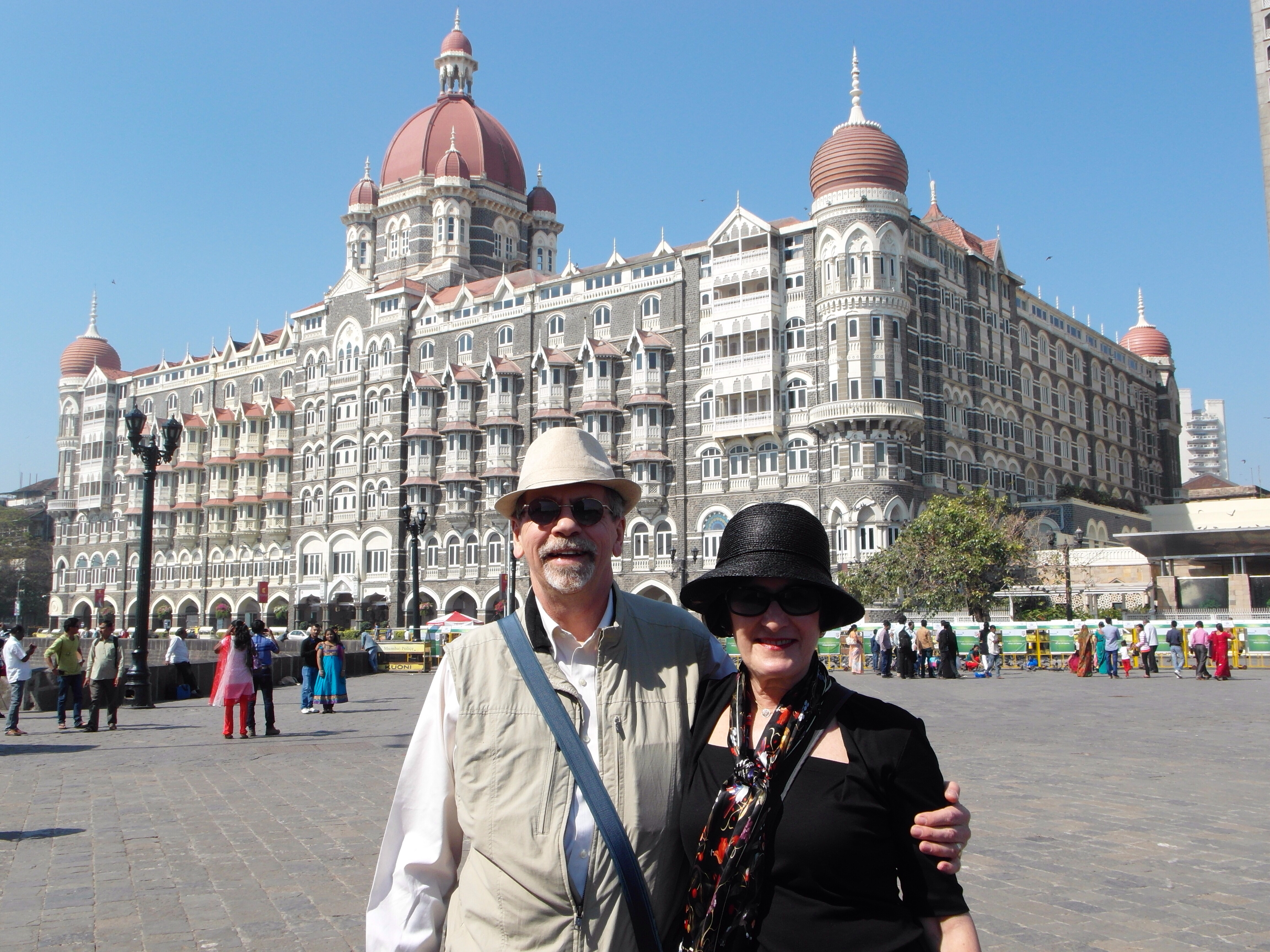
Mumbai is the commercial and entertainment capital of India. This metropolitan area of about 21 million people is one of the ten largest in the world and accounts for 25% of India’s industrial production, 70% of its maritime trade, 70% of its capital transactions.
The seven islands which constitute Mumbai (the name of a local goddess) were originally occupied by villages of fishermen. The Portuguese were given Mumbai by the sultanate of Gujarat not too long after the Portuguese fleet broke up the monopoly of the spice route by winning the battle of Diu in 1506. The Portuguese called it Bom Baim (Good Bay), which later became anglicized as Bombay.
When Prince Charles of England married a Portuguese princess in 1661, Bombay was given to England as part of her dowry, and much of downtown Mumbai reflects the British architecture and rule which lasted until 1947. Mumbai is a melting pot of people from all parts of India and is a delight to explore for all its wonders.
We started our first day at the Sassoon fishing dock, buzzing with activity as the fishing boats were unloading their catches. Baskets of all types of fish, large and small, were being uploaded from the holds to the top of the piers in a smoothly operating human chain which ended at the weighing stations.
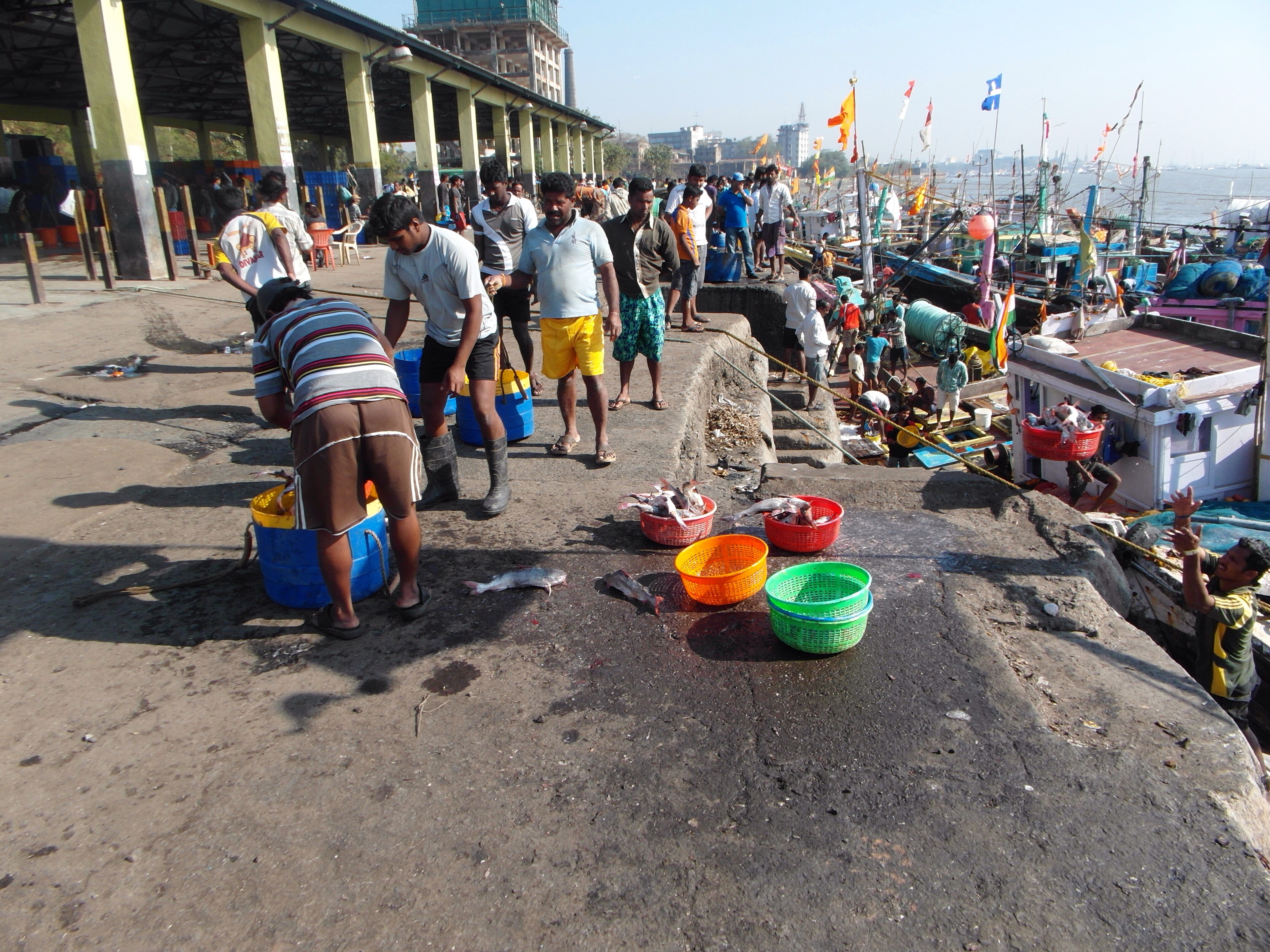
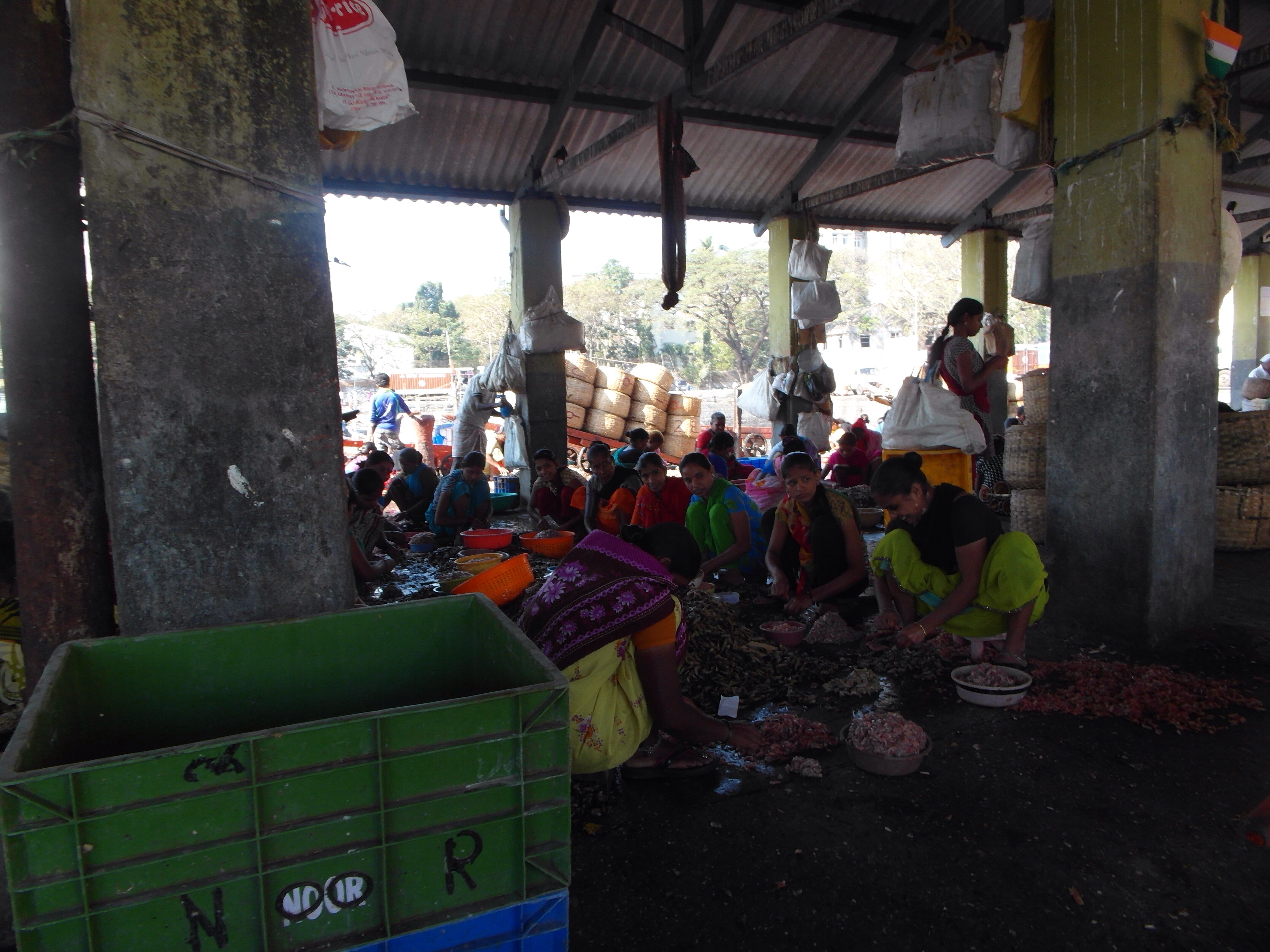
Hundreds of women were peeling and sorting the shrimp catch of the day, under the watchful eyes of idle men who were refusing to allow photos to be taken.
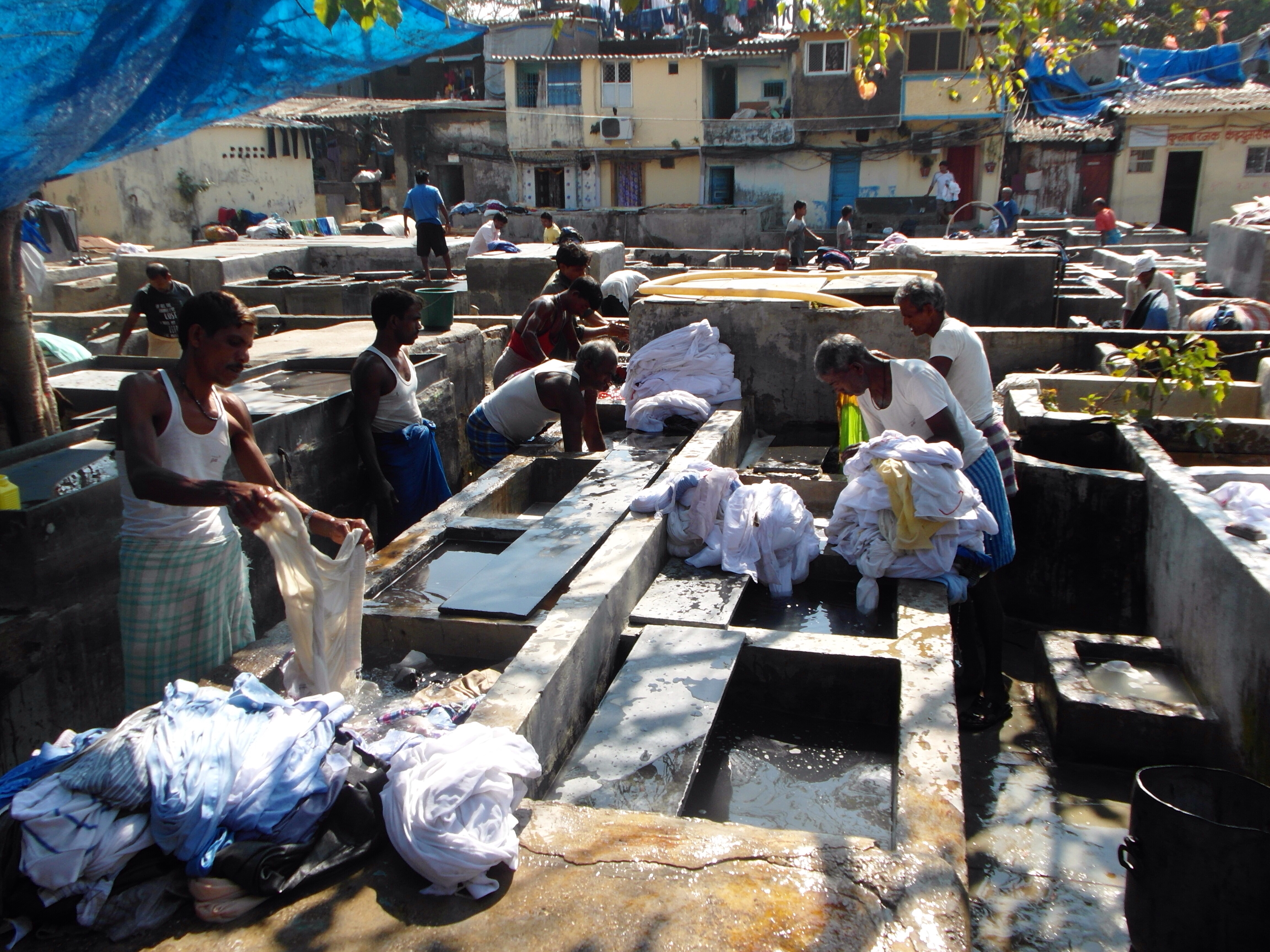
We then went to the Dhobi Ghat of Cobala to watch the Mumbai clothes washers in action. Dirty clothes are collected from a dwelling in the morning, brought to the Dhobi Ghat where they are washed, dried, ironed and then returned to their owners in a day or two. The cost for a two-piece garment is about 40 rupees, or about 66 US cents.
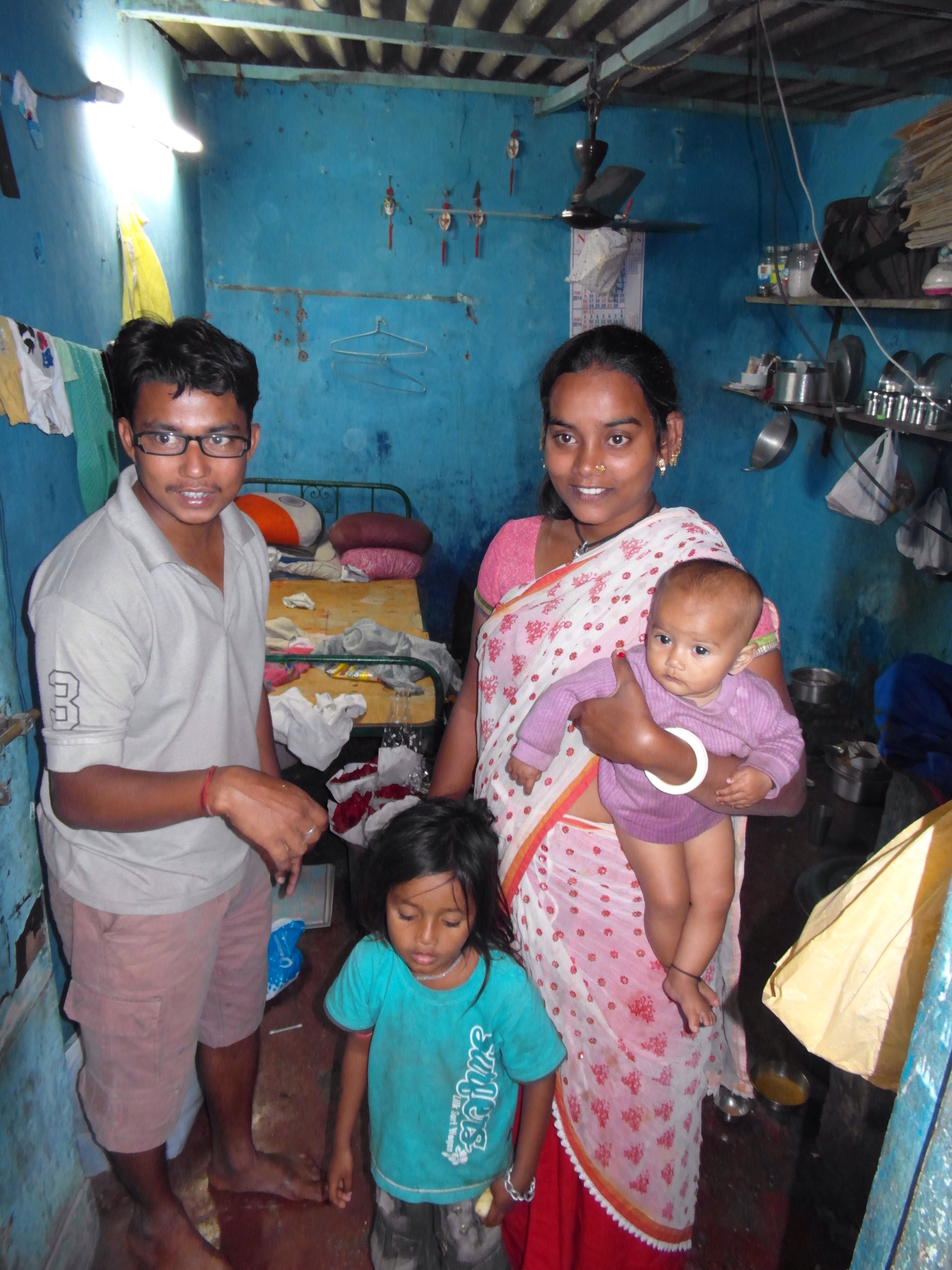
The Bharatratna Ambedkar Nagat neighborhood, or “Chawls”, was our next stop. Whole families live in one room in tight proximity with their neighbors in the rooms around them. The streets are very narrow alleys which leave no room for privacy. There are fewer and fewer of these neighborhoods in central Mumbai as they are rapidly being replaced by high rise buildings in this fast growing city.
The friendliness of the people of Mumbai continues to amaze. Time and again, we were invited to enter the home of a family and offered a cup of tea.
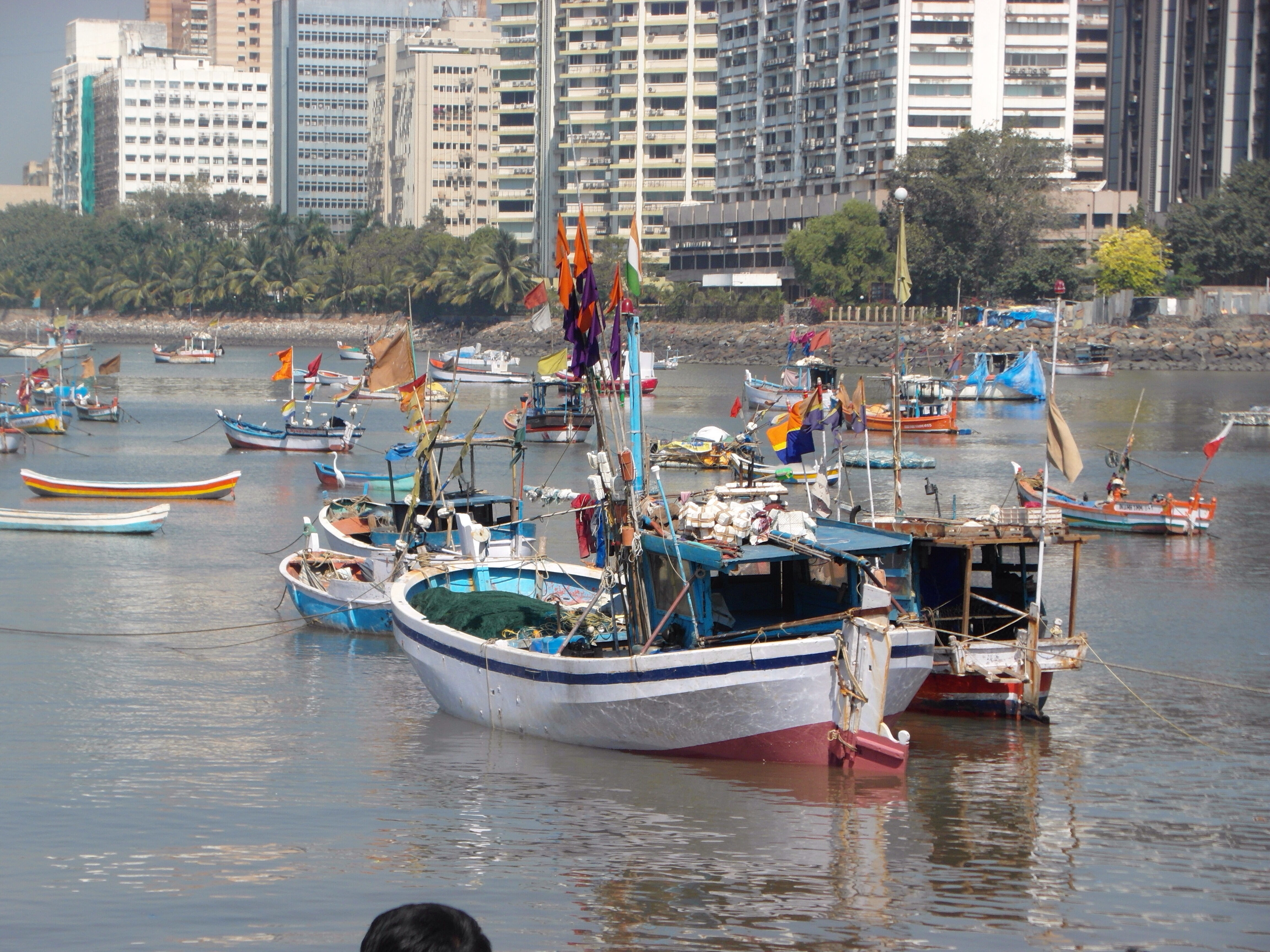
We stopped at Macchimar Colony in Colaba, behind Nariman Point, to have a look at the small fishing harbor where the Pakistani terrorists landed in 2008 to perform their horrific killing spree across downtown Mumbai.
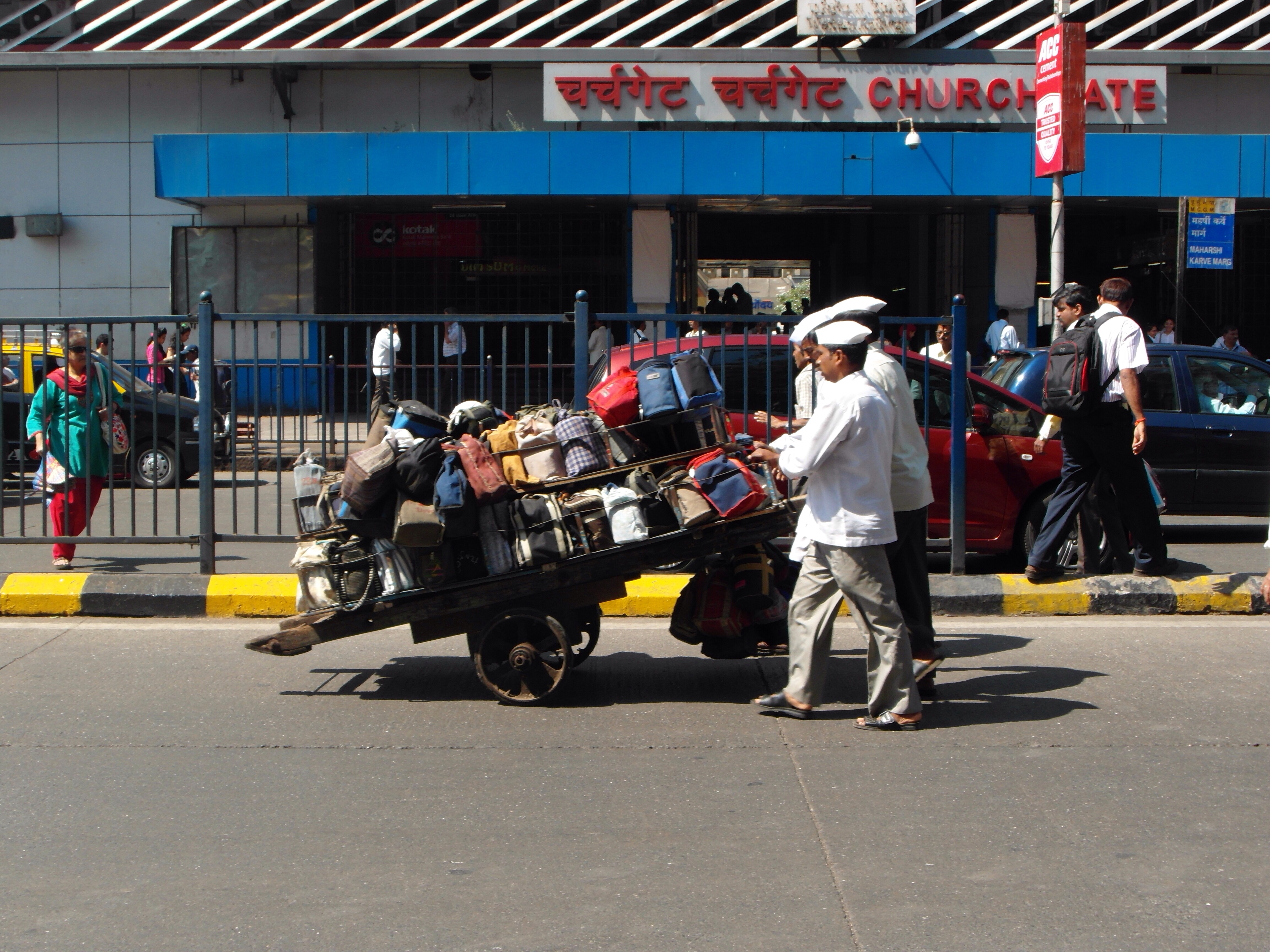
We later went to the Churchgate train station, one of the two main train stations in downtown Mumbai. While Churchgate handles the western railway system, Victoria Terminus on the eastern side of Mumbai handles the central railway system and is said to be the busiest train station in the world.
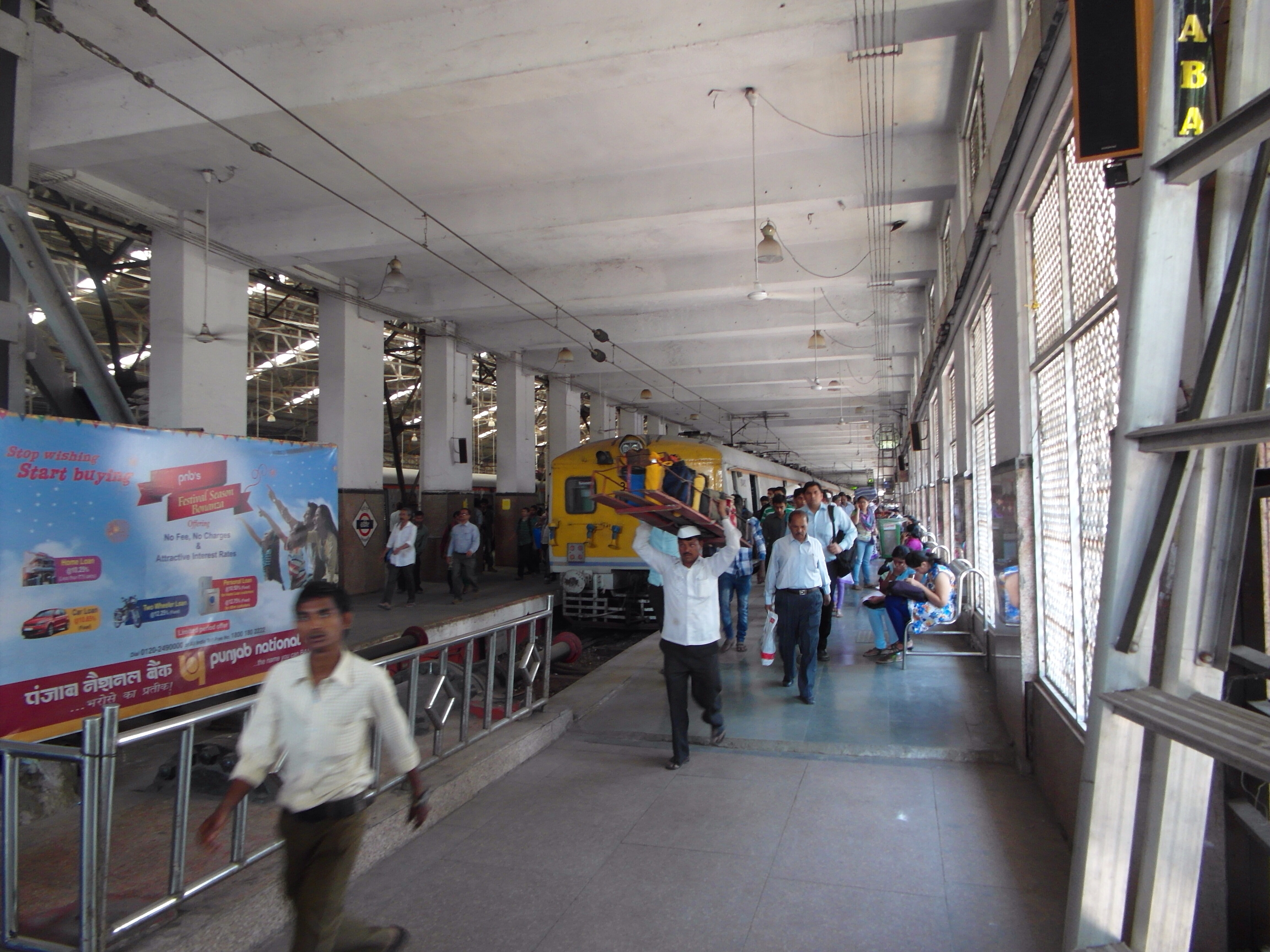
We were there to witness the arrival of the Dhabawallas, the unique lunch box delivery men of Mumbai. Every day, more than 200,000 lunch boxes are delivered from suburban homes to offices in central Mumbai, with the empty lunch box returned to its source by 4pm. The price? 40 rupees per lunch box (US0.75).
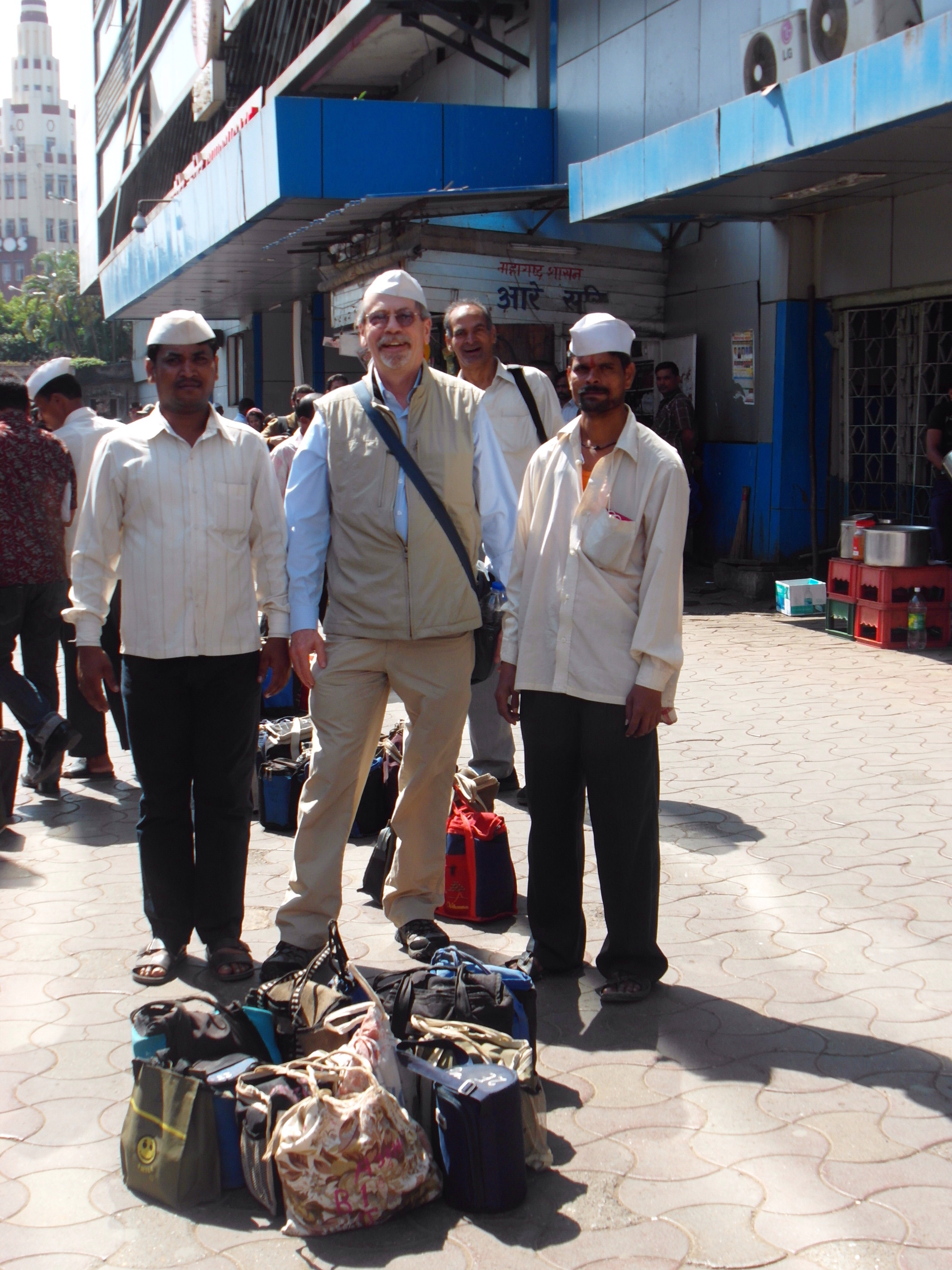
Started by British officers who did not want to eat local food but wanted instead to eat a lunch prepared by their wives, this tradition of home-cooked lunches has become a well-oiled system which has continued to evolve and grow and is amazingly efficient.
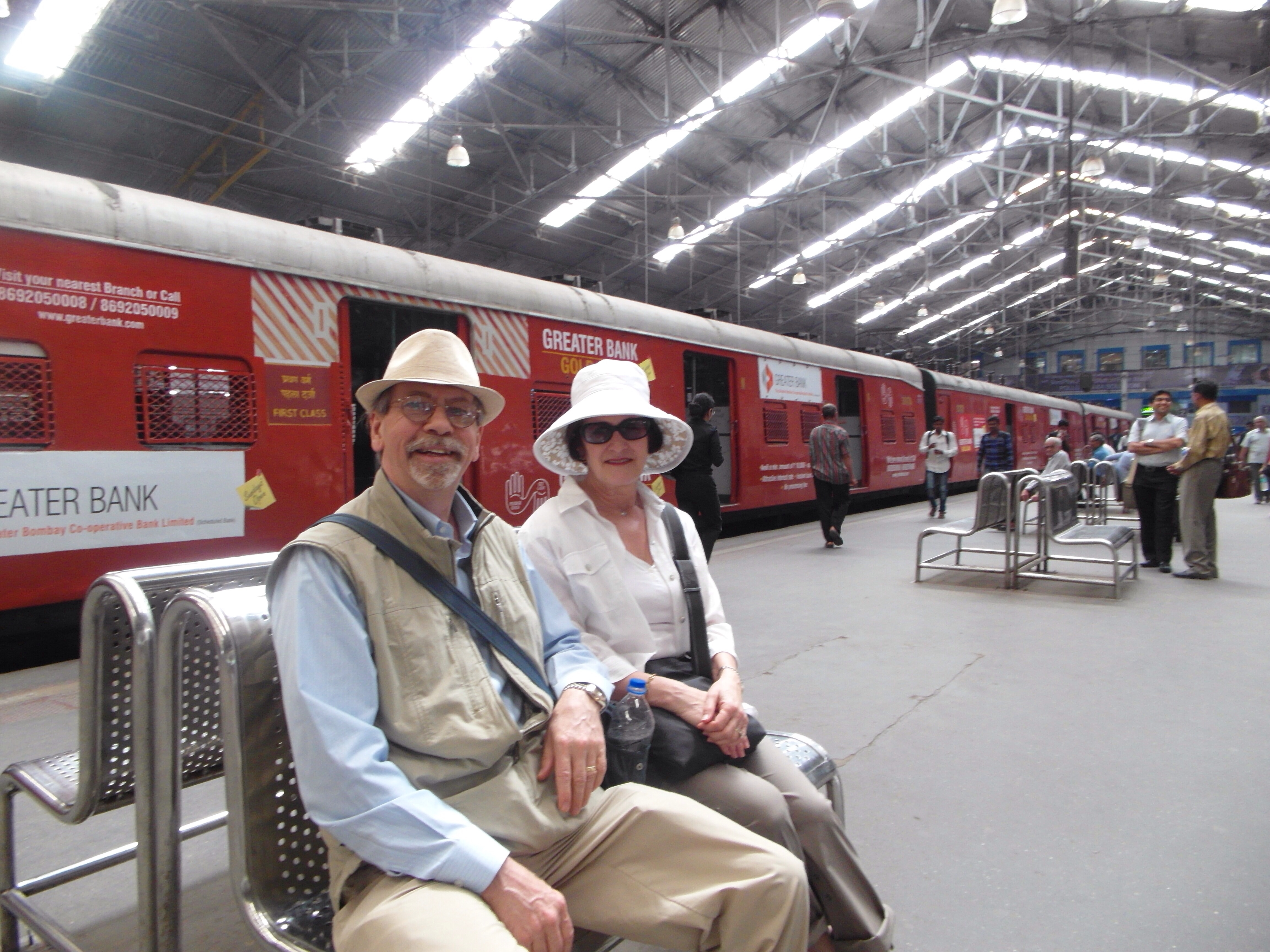
Taking the train while in India is an experience in itself and we hopped on one of the suburban trains which arrive and leave Churchgate station every four minutes. A regular ticket costs 5 rupees or about 8 US cents, a first class ticket is 45 rupees or about 75 US cents. The difference? wooden seat versus vinyl upholstered seats. Women have their own segregated cars.
Our destination was the northern part of town called Mahla Laxmi, home to the largest Dhobi Ghat in Mumbai.

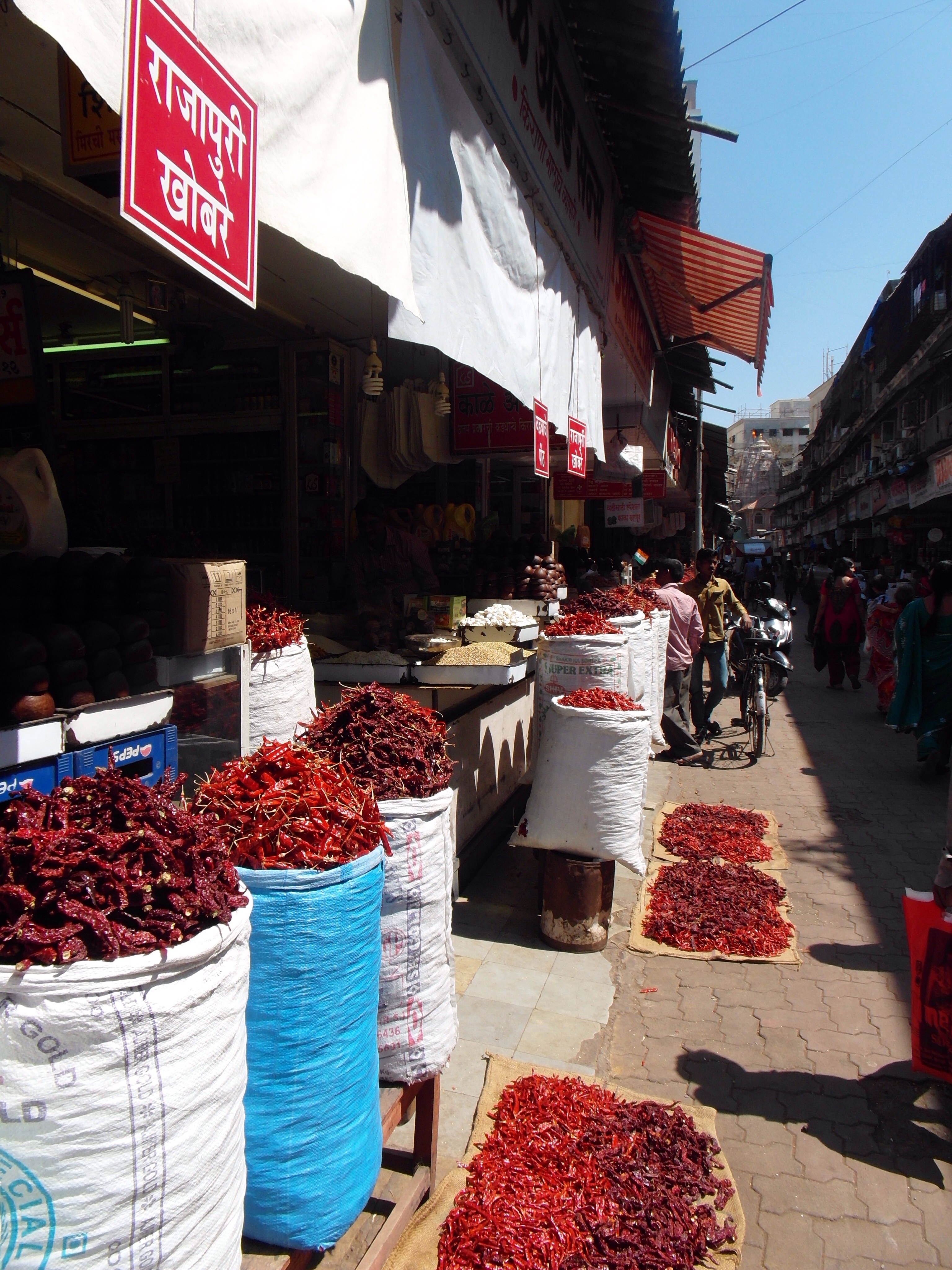
Also in the Mahla Laxmi area is the spice market. Not only is there a colorful display of all types of spices in the market, but several shops will prepare on the spot your own mix of spices and grind it into a powder called a masala as you wait.
We went from the smell of spices to the smell of flowers at he flower market, our last stop before lunch (admittedly a late lunch). Want 2,000 fresh flower garlands for your wedding tomorrow? No problem. Teams of people are ready to assemble them for you.
The facets of Mumbai and of India itself covered here are but a fraction of the attractions of this magnificent city.
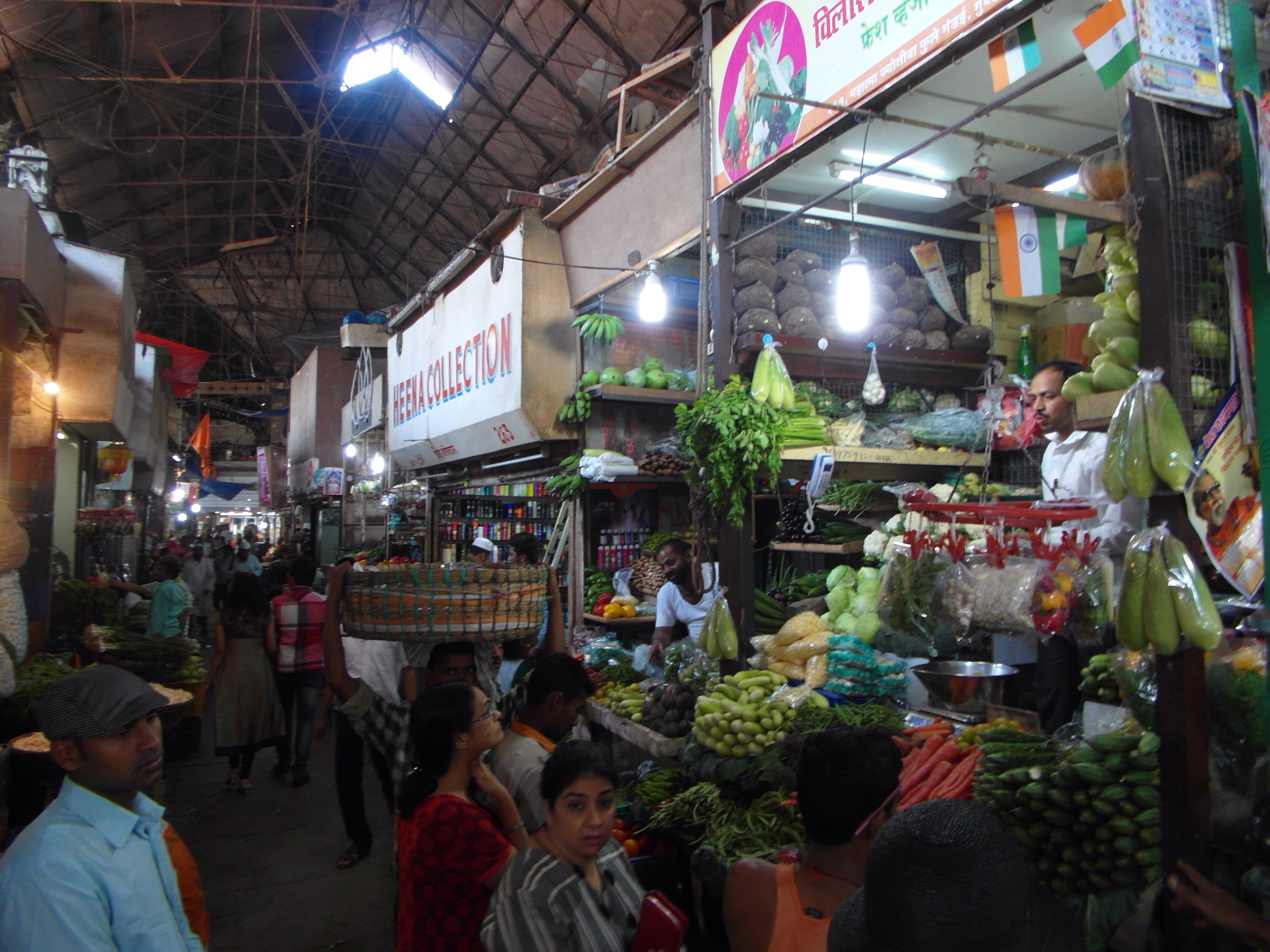
Crawford Market in downtown Mumbai
Mumbai is a vibrant and fascinating metropolis, the true heart of India.
SAVVY TIPS: Romantic Dinner at Jagmandir Island Palace in Udaipur, Rajasthan, India
Magical moments are what creates memorable vacations. Unfortunately, guidebooks don’t always help you discover the magic of a place.
Enchanting Udaipur has the feel and charm of a resort town combined with the intrigue of a city steeped in history. The old city around the City Palace is filled with handicraft and other tourist shops, a cut above the norm. Throughout the day, boats carry tourists around picturesque Lake Pichola or ferry them to and from the luxury hotels of the area.
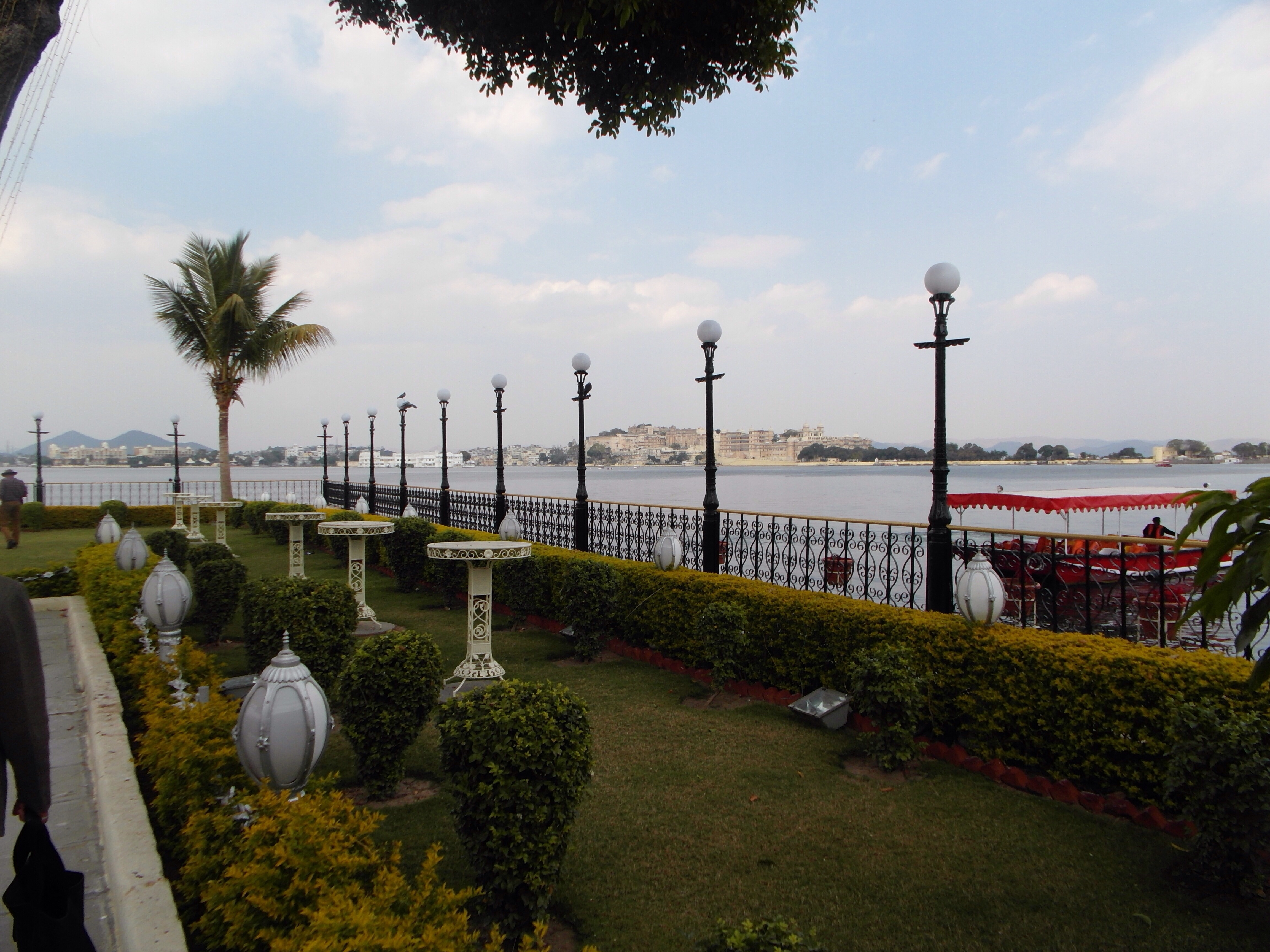
The arrival in recent years of the Oberoi Udaivillas and the Leela Palace hotels have only enhanced what was already a very scenic town around Lake Pichola. Some travel books have referred to Udaipur as the Venice of India. The setting is actually more reminiscent of Lac Leman in Geneva, or Lake Como in Italy.
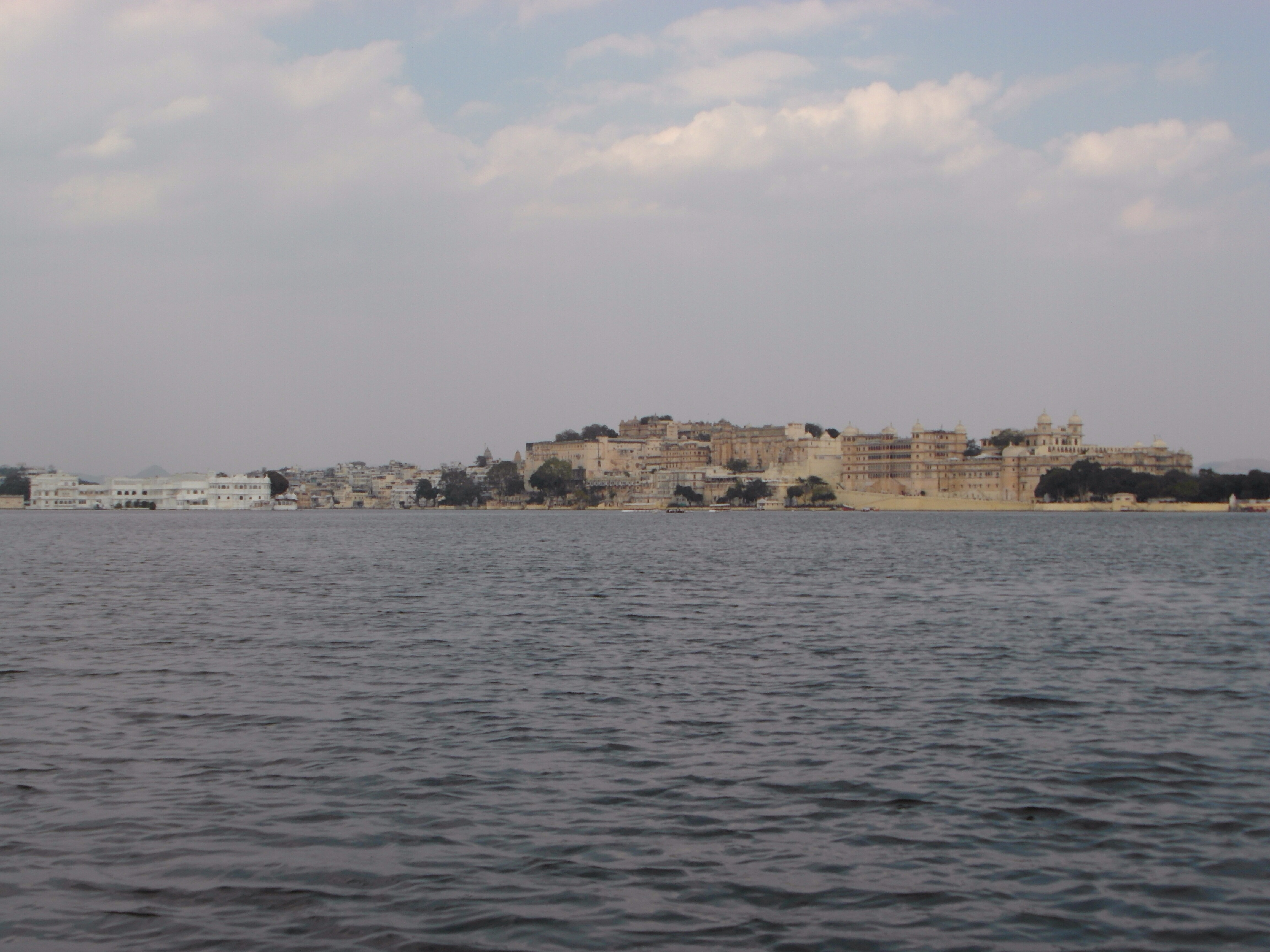
Udaipur is unique in several significant respects. As the locals claim at every opportunity, it is the only city in India which was never conquered, not by the Mughals, nor by the British. Udaipur is the proud home of the Mewar warrior clan of the Rajputs. In deference to their unbeaten rivals, the Mughals bestowed upon the king of Udaipur the title “Maharana”, a step above the “Maharajah” title of other kings, the only king to receive such an honor in all of India.
The filming of the James Bond movie Octopussy in 1983 made Udaipur and the Lake Palace Hotel famous with the result that tourism has been the mainstay of the city of 500,000 inhabitants ever since. The huge City Palace, main residence of the Maharana of Udaipur ever since the town was founded and built up progressively by a succession of monarchs, dominates the skyline of Udaipur. It is the most interesting palace we have visited so far during this trip to India.
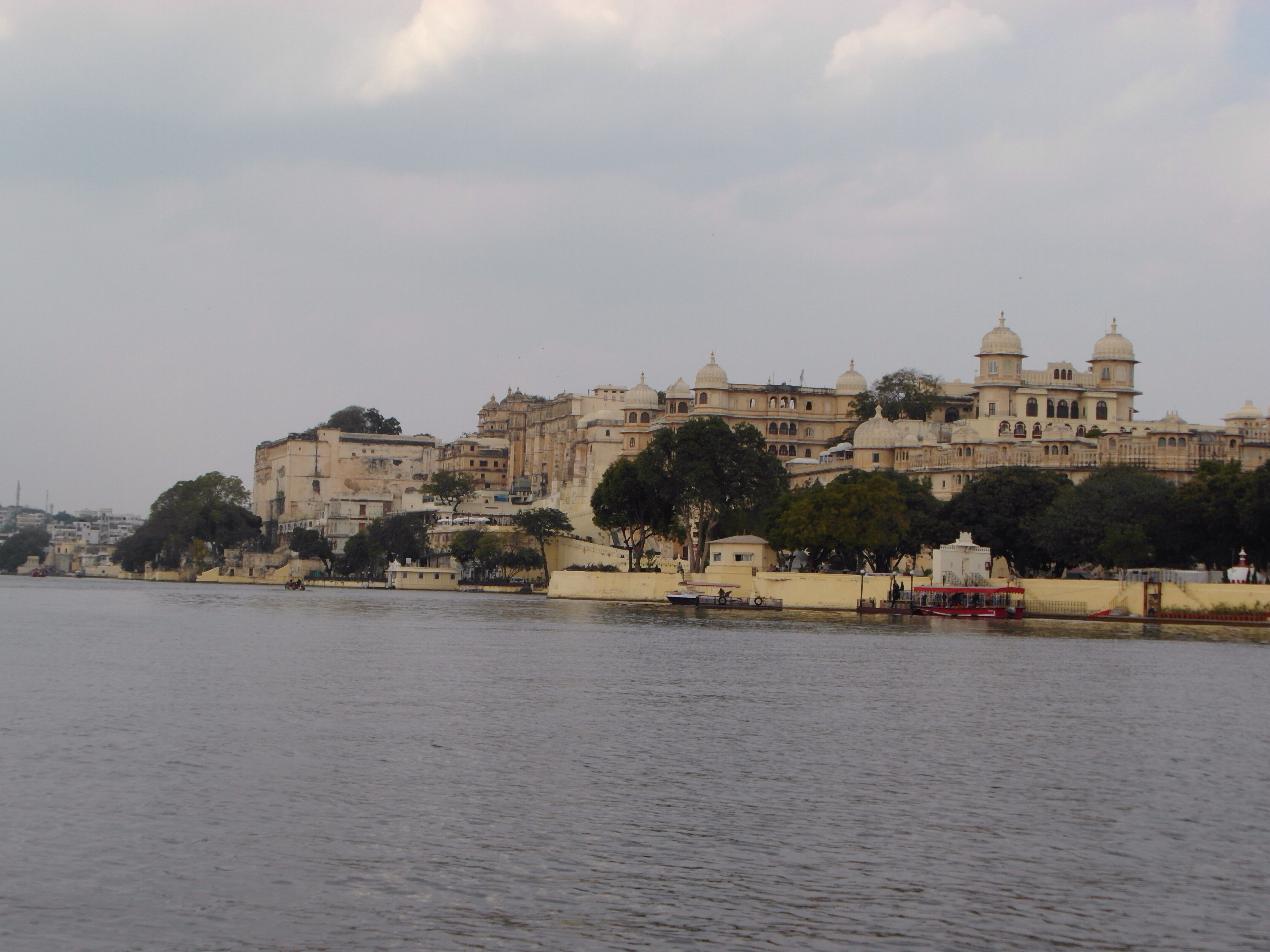
Like all the ex-kings of India seem to have done, the maharana has transformed several of his properties into luxury hotels, and he currently owns five five-star hotels in Udaipur, notably the white marble Lake Palace Hotel, an island by itself on the northern end of the lake.
We stayed at the Shiv Niwas Palace hotel, another luxury property of the Maharana, located within the City Palace itself. It provided us with easy walking access to most of the city’s offerings. History buffs will be interested to know that the Shiv Niwas Palace hotel used to be the residence of the Maharana’s guests, and hosted Queen Elizabeth when she visited; it is also where Roger Moore stayed during the filming of Octopussy.
The highlight of our stay in Udaipur was definitely the boat ride and banquet dinner on Jagmandir Island, another luxury property of the Maharana located on the southern end of Lake Pichola, one with great historical significance. The Maharana of Udaipur, in the early seventeenth century, gave shelter to Shah Jahan, who was then accompanied by Mumtaz Mahal, as he was fleeing from the wrath of his father, the Mughal emperor. According to the locals, Shah Jahan gained his inspiration for the Taj Mahal, later built for his beloved Mumtaz Maha in Agra, from his stay at Jagmandir Island.
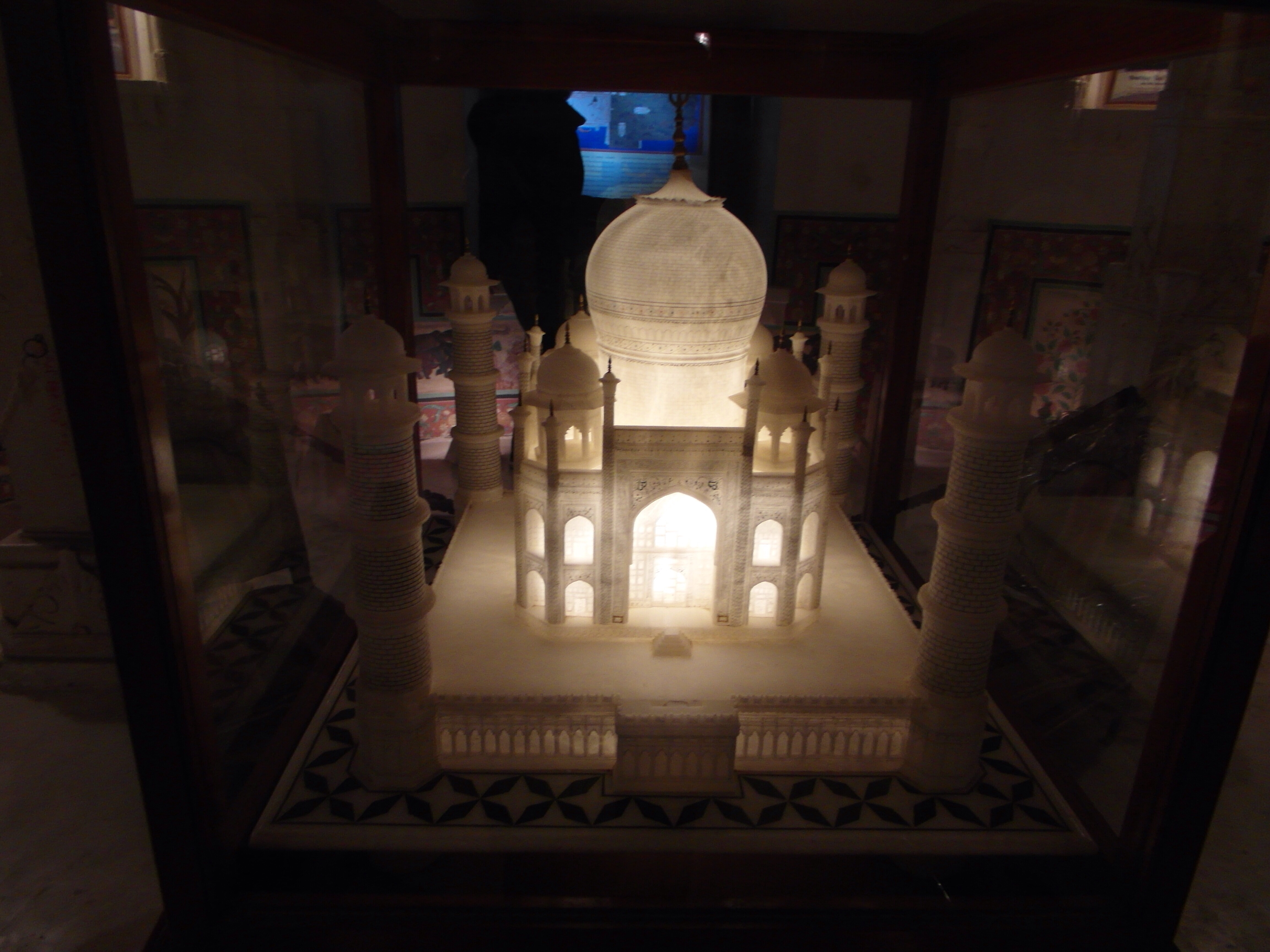
Jagmandir does have a selected number of hotel suites to offer, but the whole island is basically set up to host dinners, parties and weddings on a grand scale. In the evening, all of Jagmandir is enchantingly illuminated and is a truly magnificent sight.
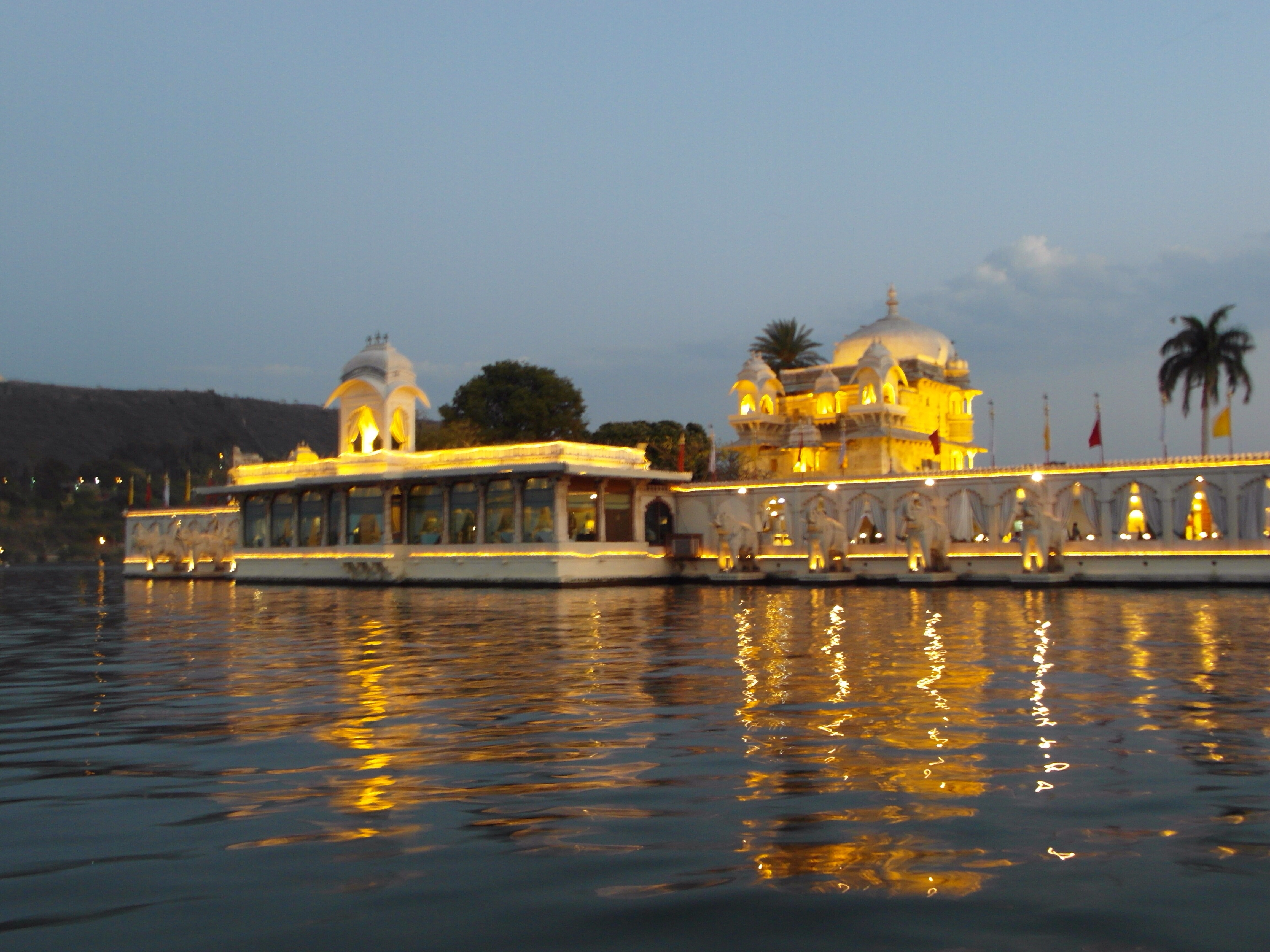
Our fabulous Indian tour operator, GeTs Holidays, which has provided us with outstanding service and attention so far, let us in on what may be the least publicized but most delightful experience in Udaipur, a banquet dinner at Jagmandir Island Palace.
Being guests of the Shiv Niwas Palace hotel, we receive complimentary golf cart service to and from the jetty where the boat takes us to Jagmandir Island, and in doing so, gives us a fantastic sightseeing ride across Lake Pichola.
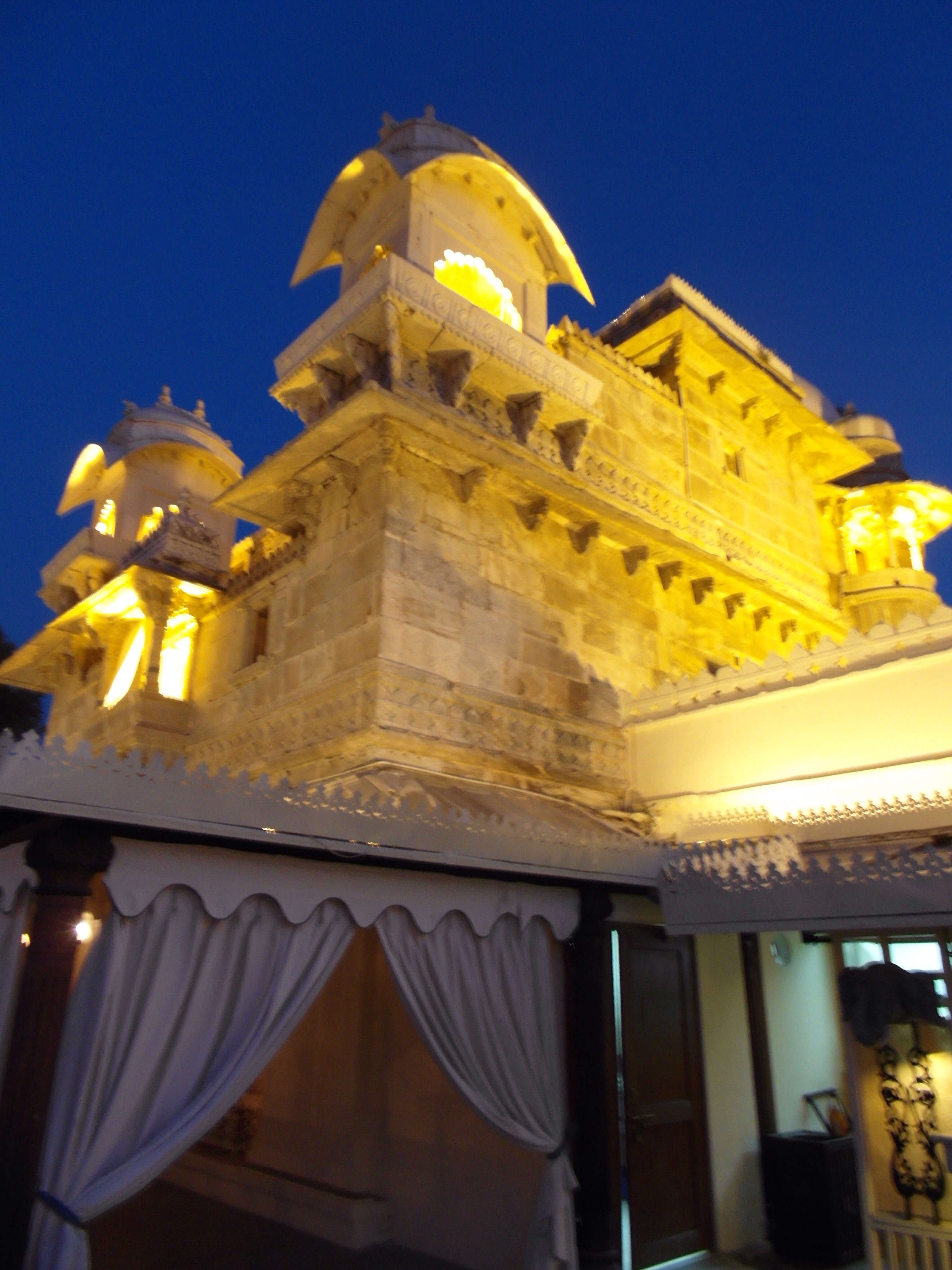
Prior to sitting down at our corner table overlooking the waters of Lake Pichola and the lights of the city, we are given a tour of Jagmandir, which includes a museum relating the history of this four-hundred year old island and the history of Shah Jahan’s stay.
What followed once we sat down was an absolutely memorable banquet of Indian food, consisting of a fixed price set menu of four courses, with the appetizer and main courses each including several different dishes. Overwhelmed by the beauty of the setting, I let go of any reservations I had about eating Indian food and I ate all of the dishes offered, well almost …
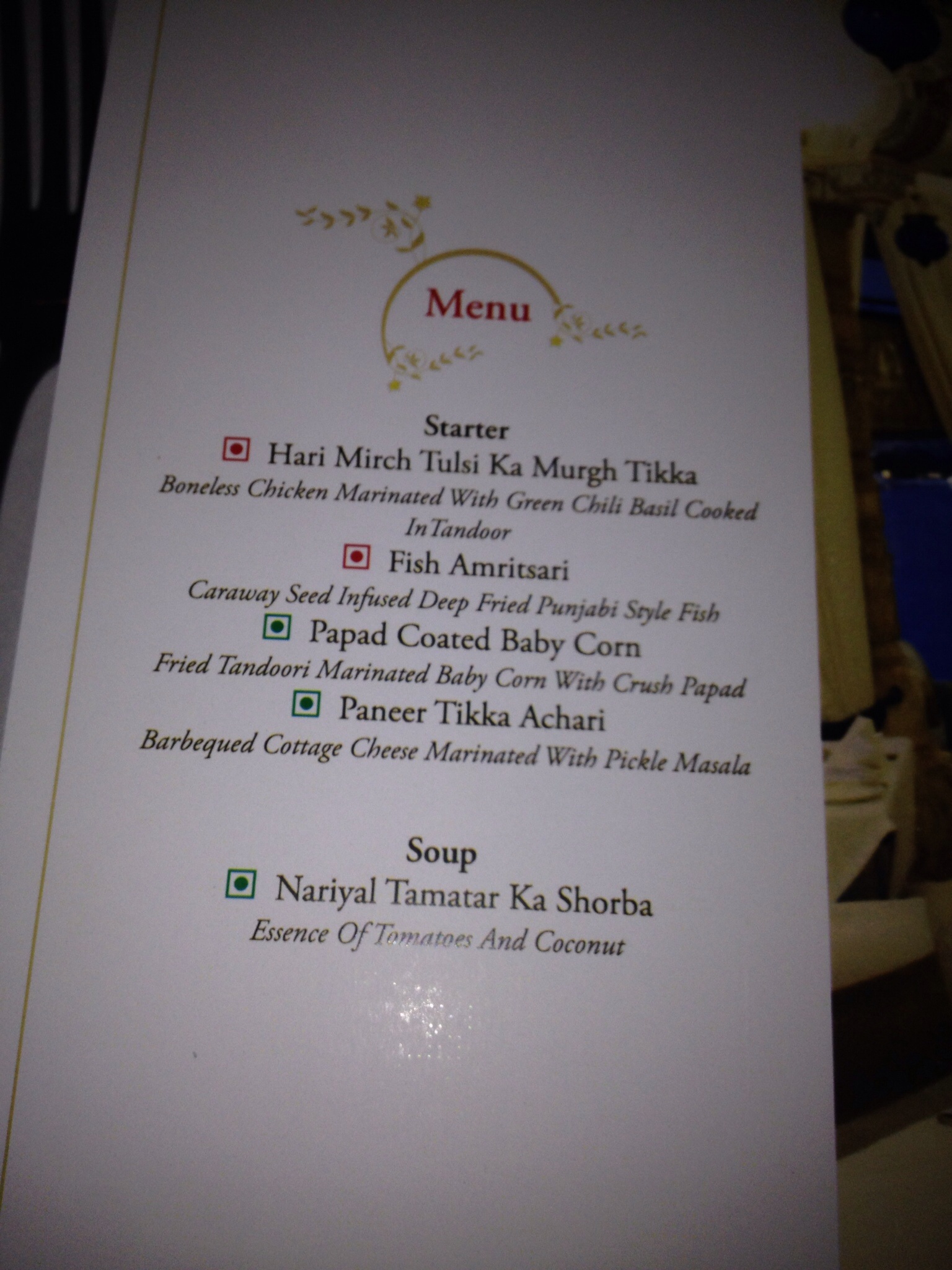
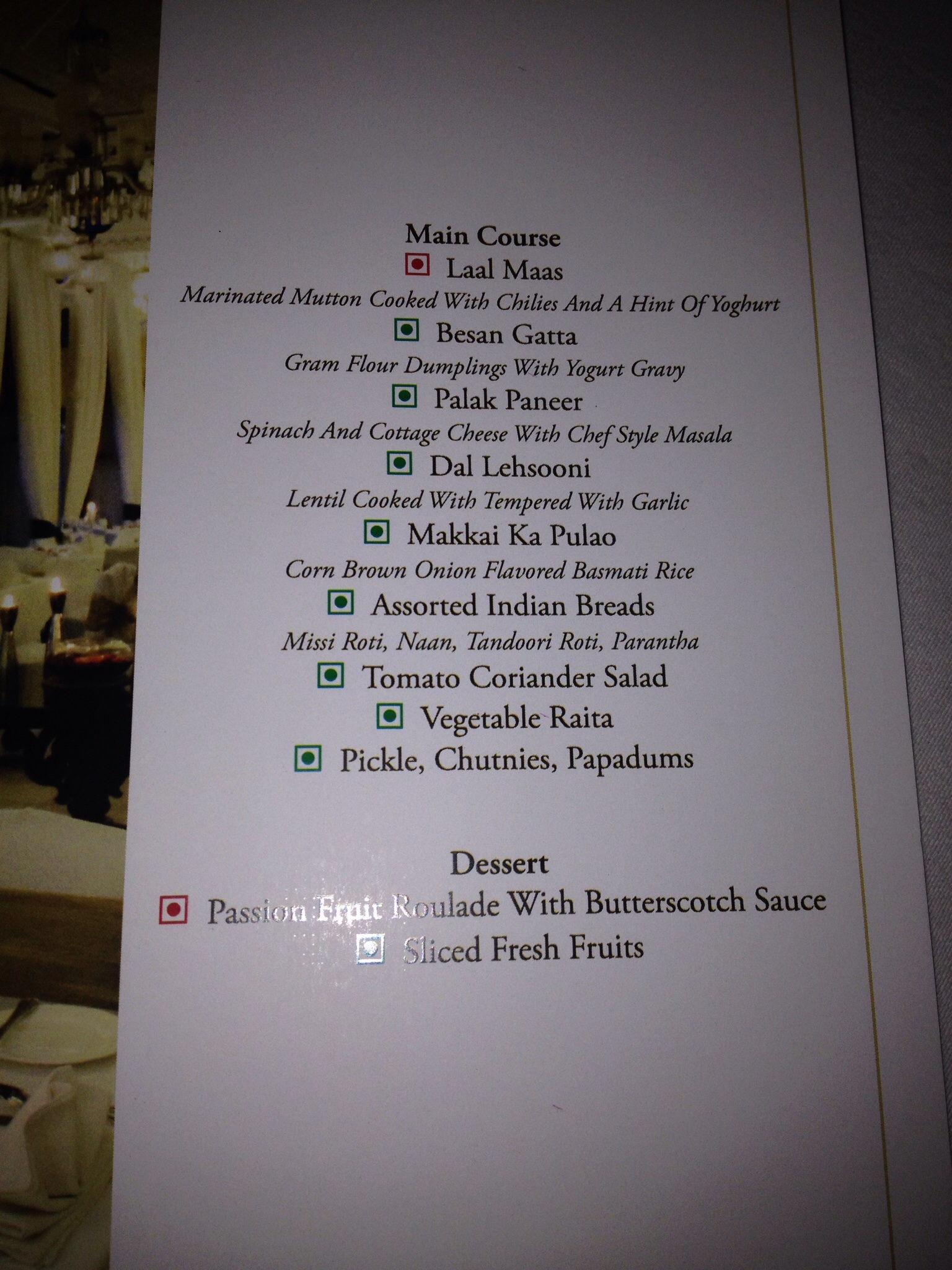
The service was extraordinary as the waiter patiently went over each dish with us, and kept refilling our plates with whatever item we had just eaten. The art of counterbalancing the spiciness of a dish with the sweetness of another, such as yoghurt, was a new skill he taught us. We ate everything and found nothing to be too spicy for my rather delicate stomach.
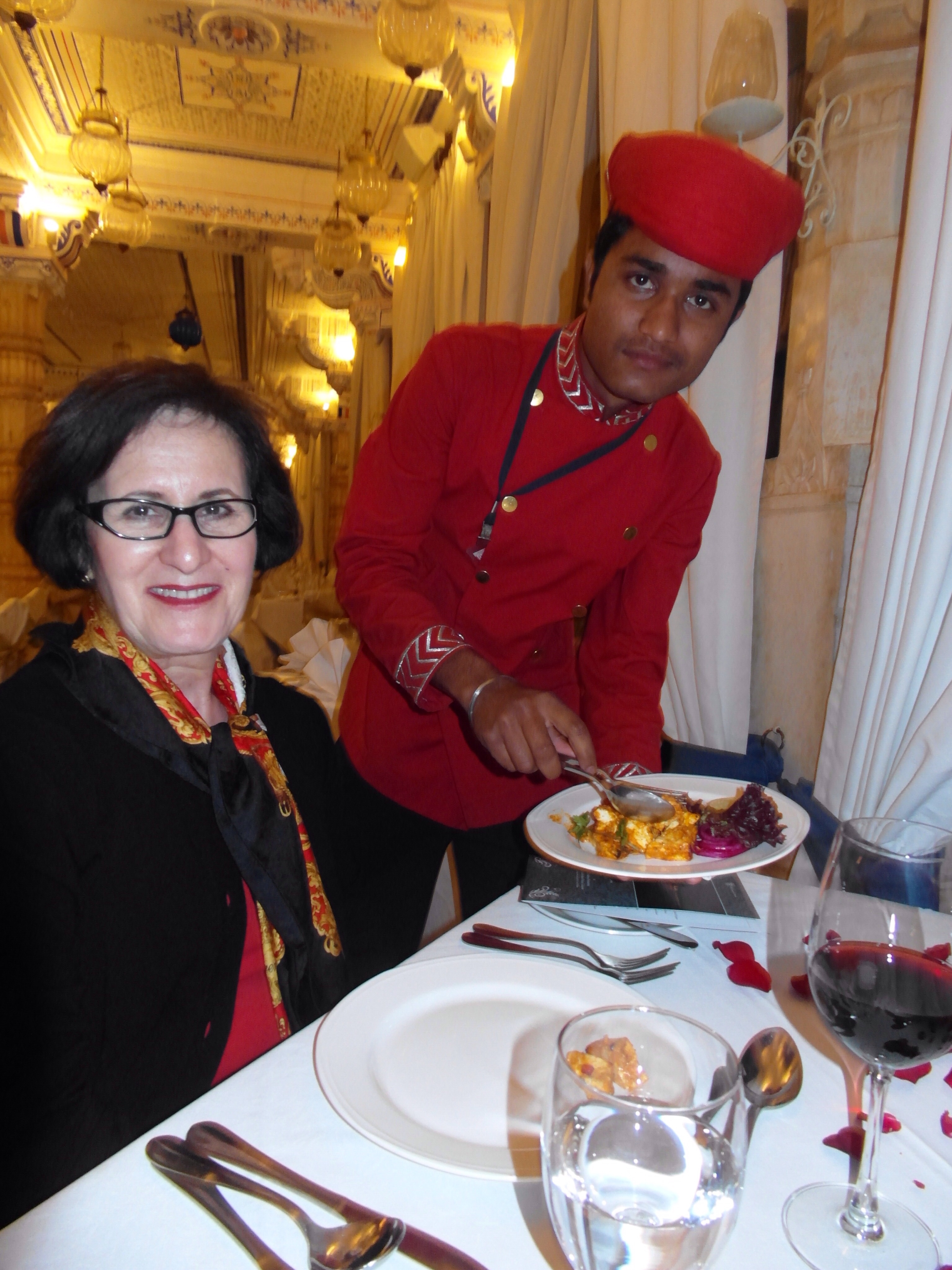
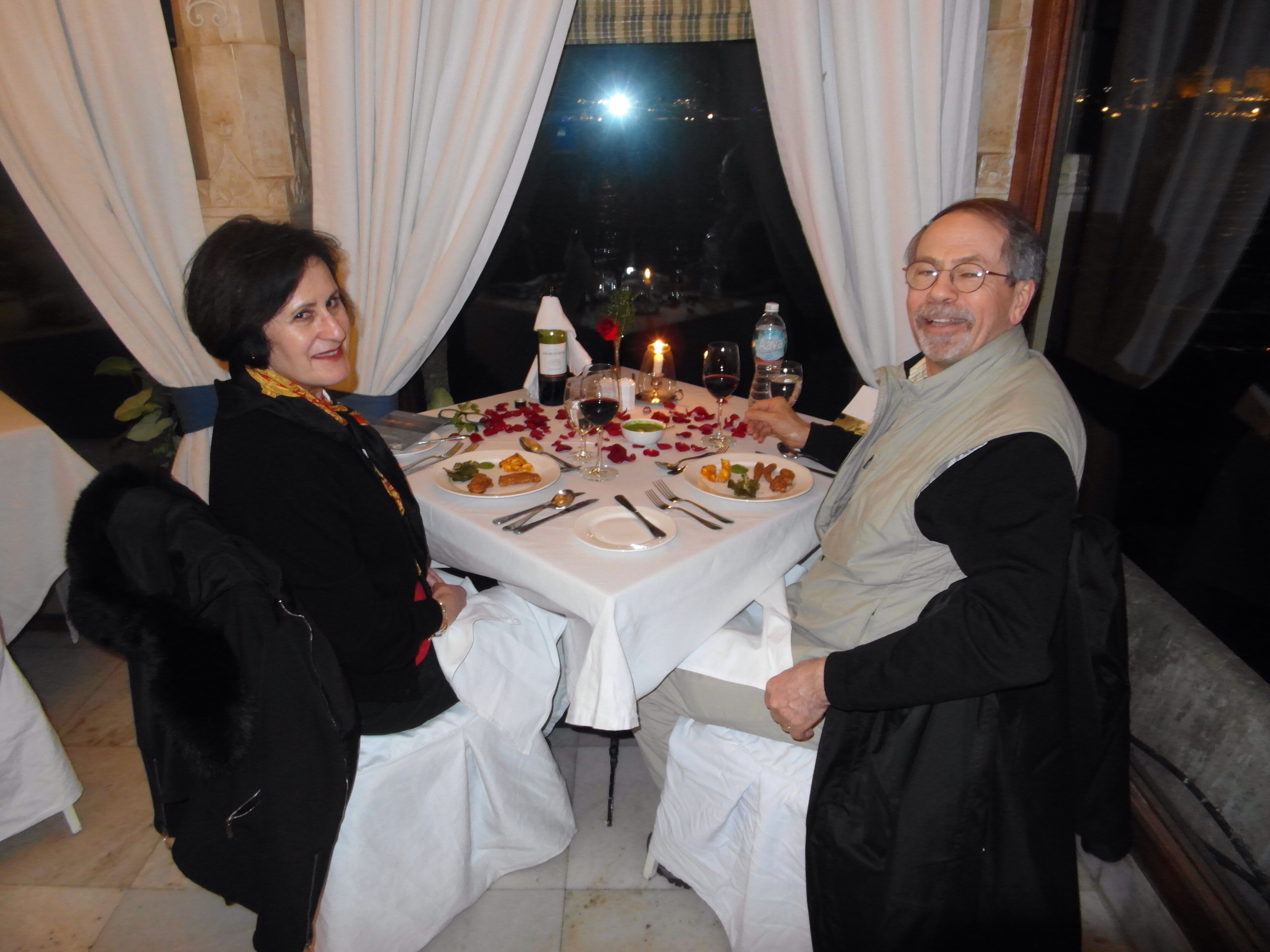
At the end of the meal, the boat took us back to the mainland where a hotel golf cart was waiting to take us back to our suite at the Shiv Niwas Palace Hotel.
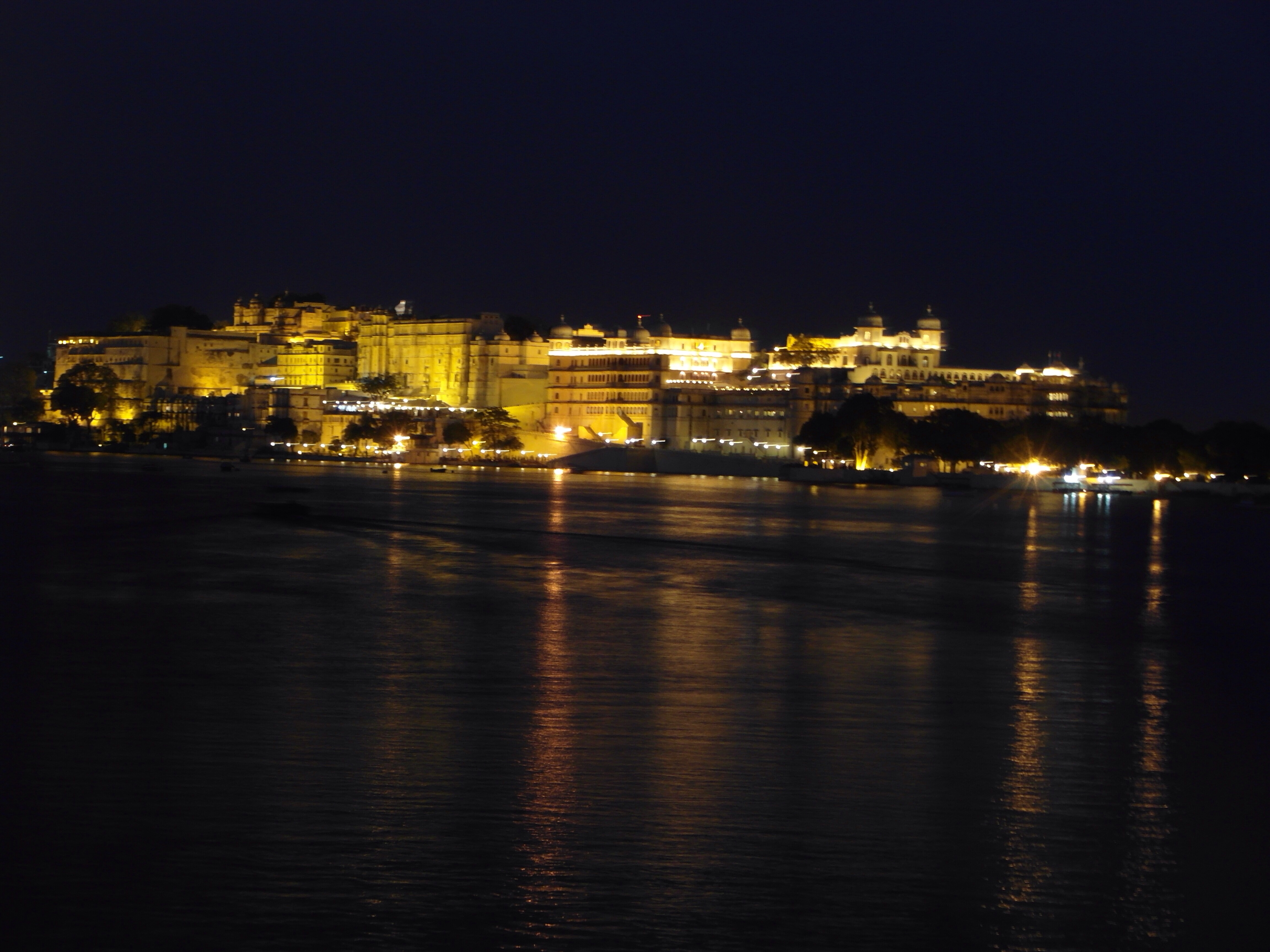
A perfect ending to an enchanting evening at Jagmandir Island Palace, the highlight of our stay in Udaipur.
In Search of a Big Cat
With CNN’s recent citing of Ranthambore National Park as India’s best park for “scenic tiger photos”, I was optimistic. We would actually get to see this majestic cat whose numbers are seriously dwindling. Or maybe we would have the privilege of encountering the famously reclusive leopard. Ranthambore is not in the traditional tourist golden triangle circuit, but it didn’t matter – I wanted to follow in the footsteps of the Maharajahs of Jaipur and see a big cat.
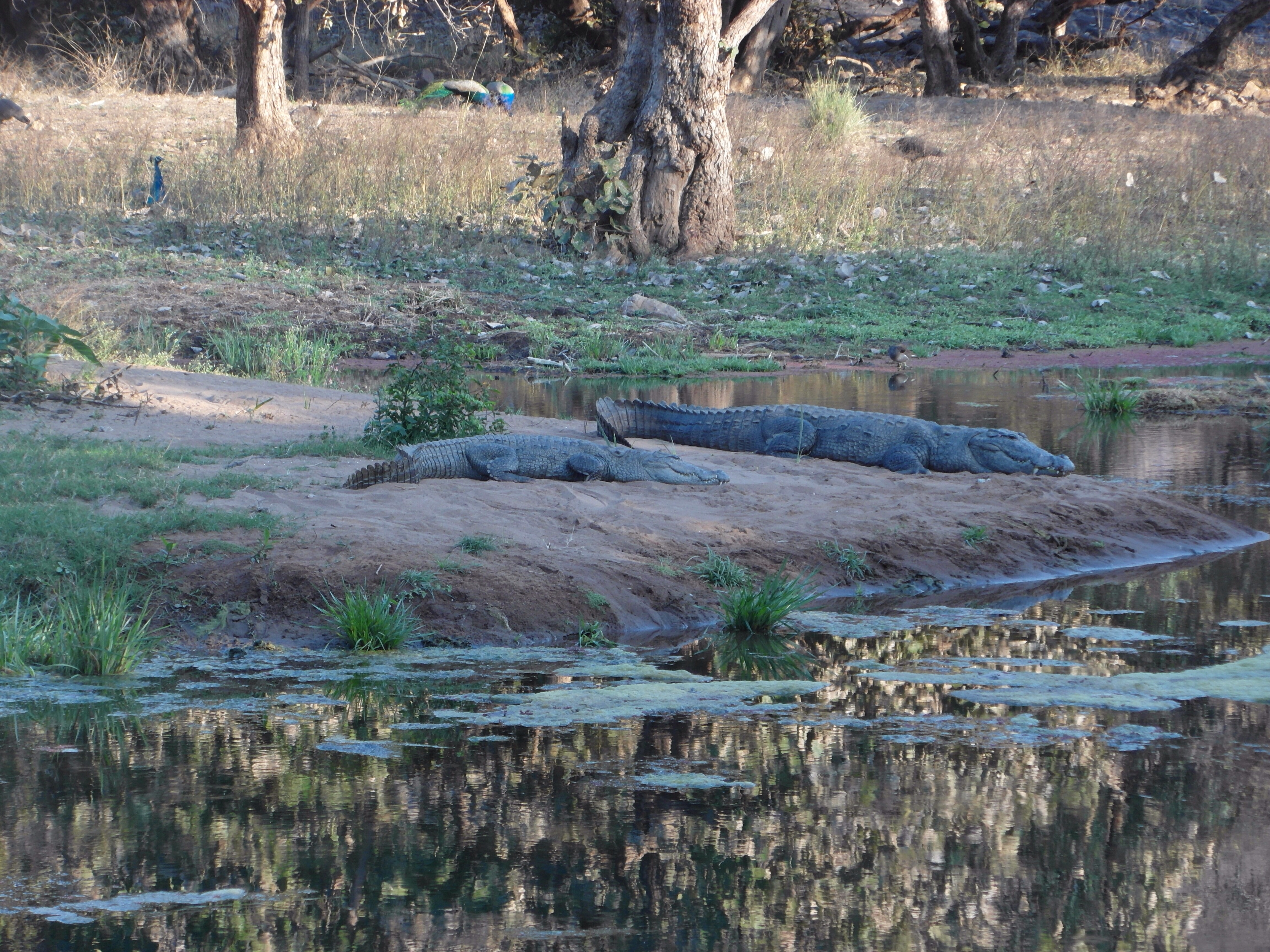
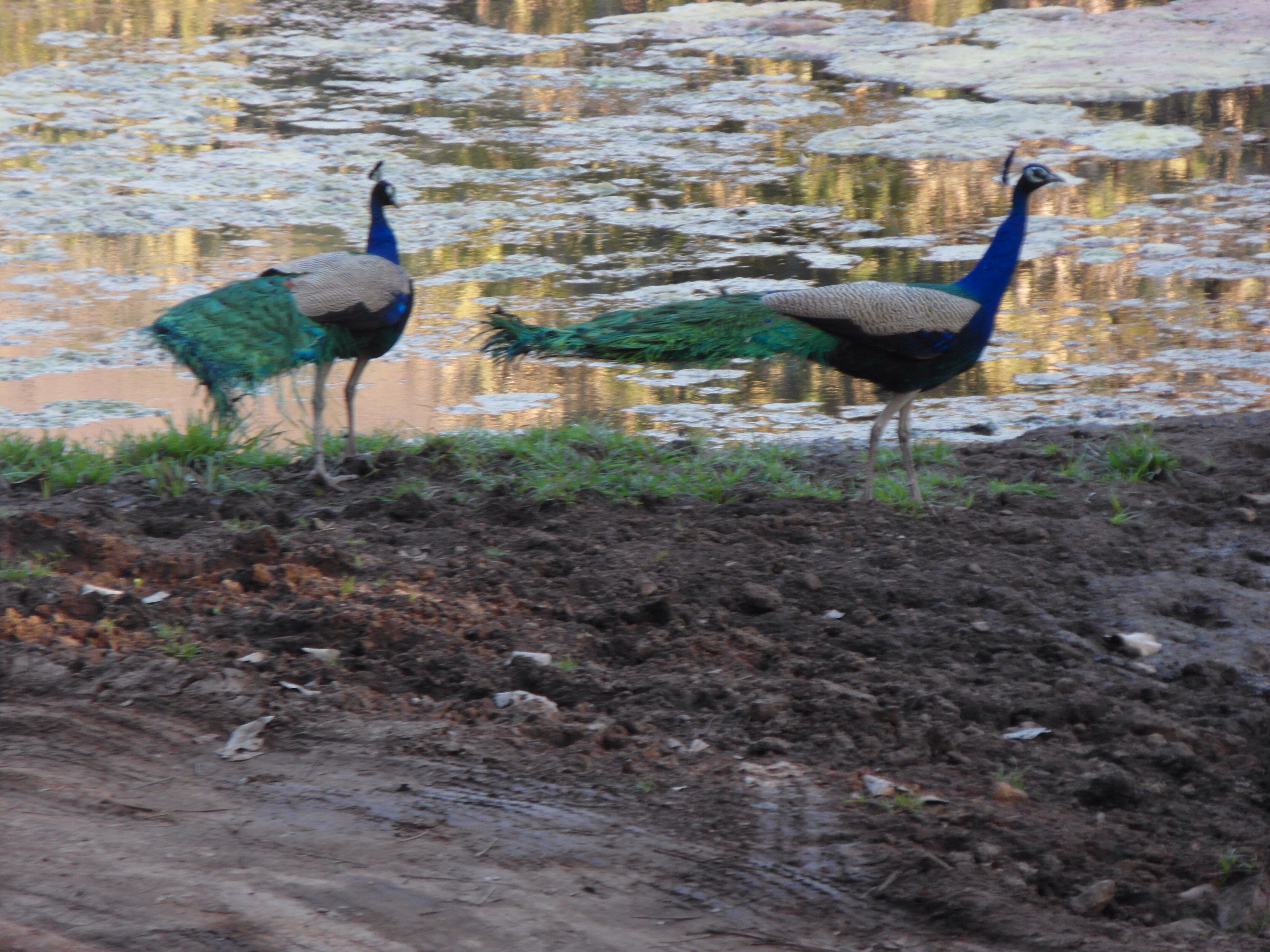
What I hadn’t realized, however, is that the park is divided into 9 zones, and that visitors are randomly assigned in their jeep only to one zone per visit. Some of the zones are more scenic than others, some have lakes with crocodiles while others do not, but of greatest significance to us is that zones #2 and 4 are the most renowned for “tiger sightings”. The luck of the draw is now the 21st century way of life for tourists who come to India for big game vs for the Taj Mahal.

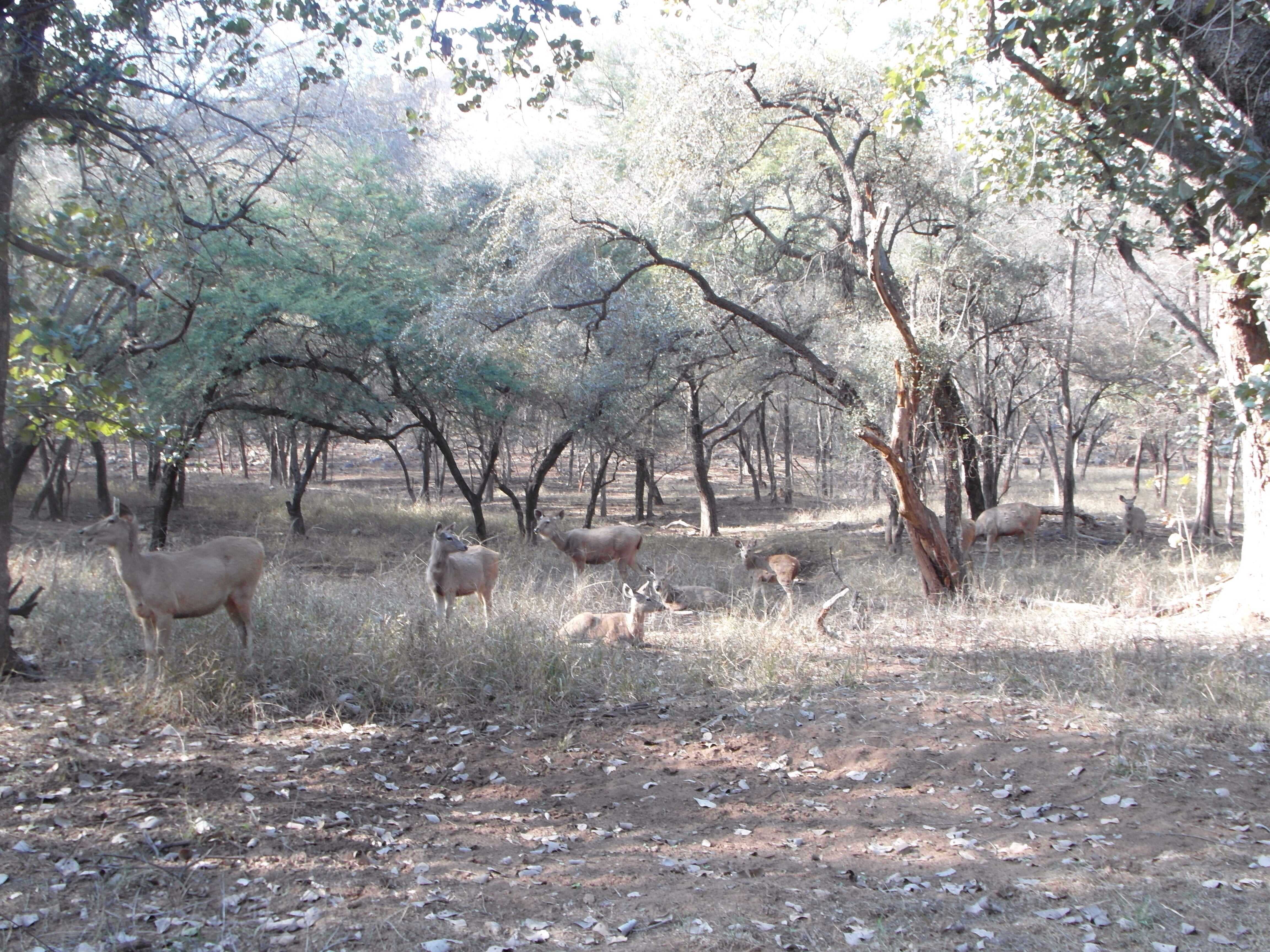
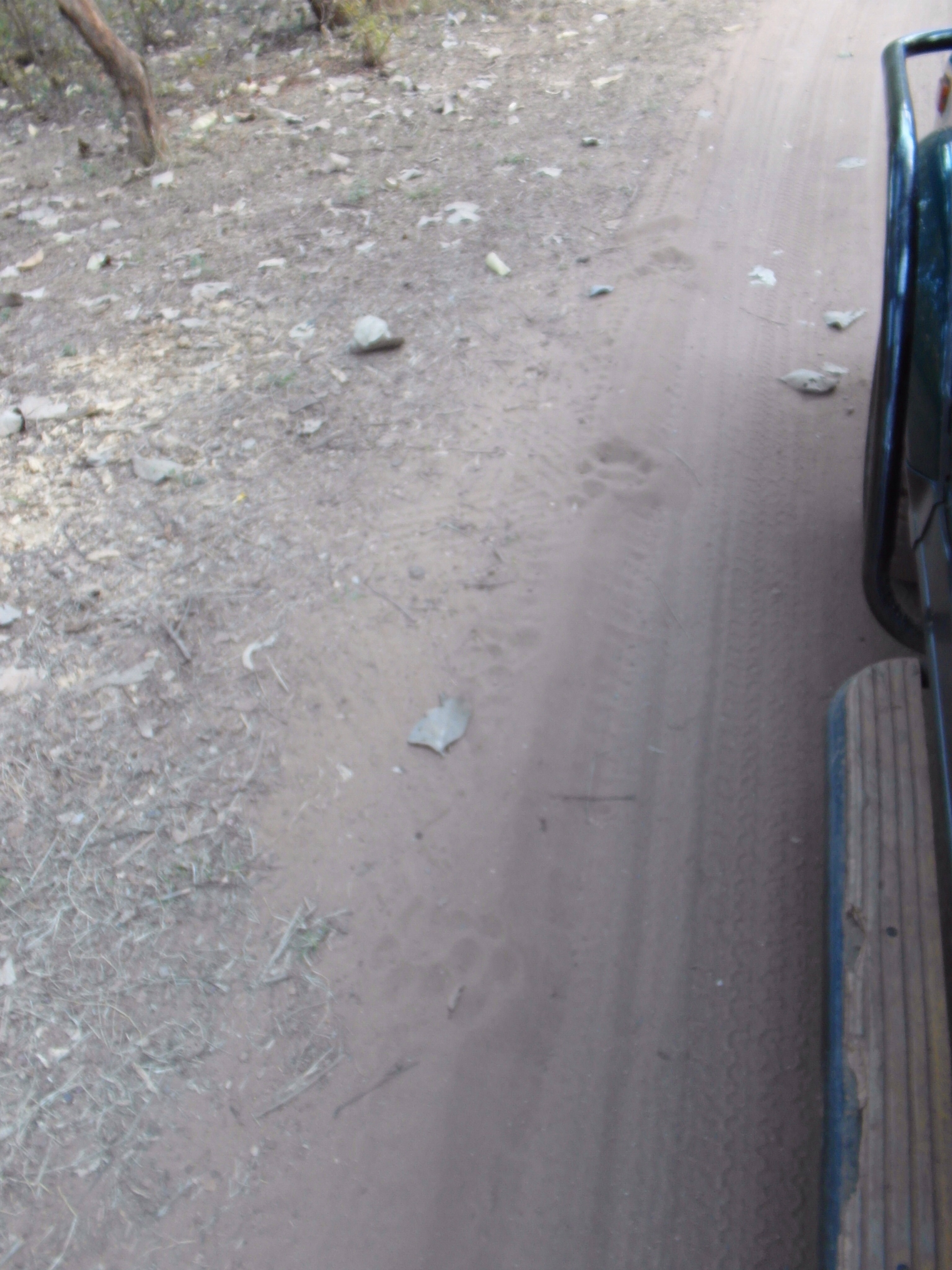
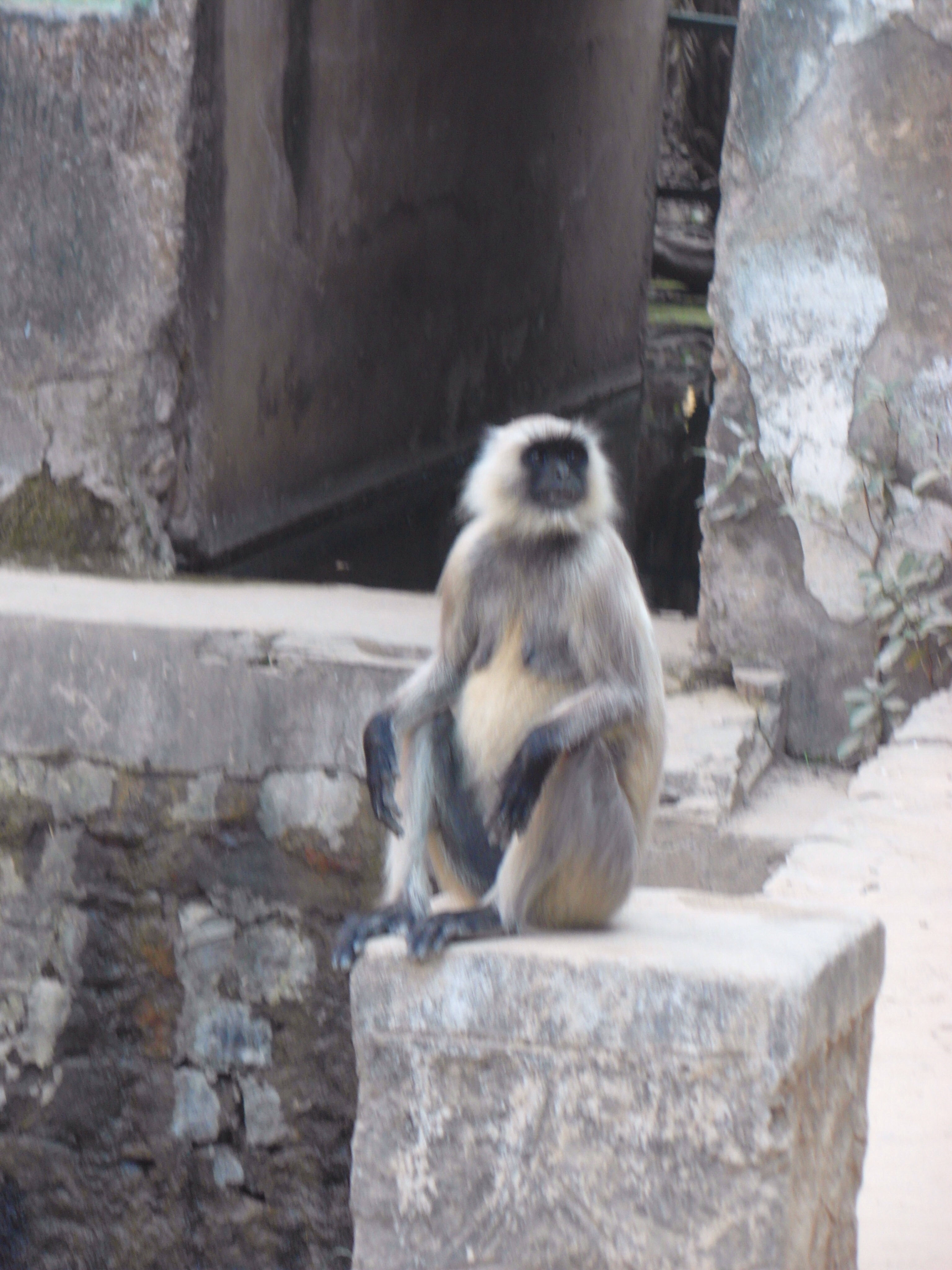
We were delighted when our guide announced that we would be in zone 2 for our first game ride. Zone 2 is magnificent and rich with wildlife. We repeatedly saw peacocks, monkeys, all types of deer – including the famous bluebull-, antelope, birds, crocodiles, hyenas, mongoose, even a few snakes (who are usually hibernating this time of year), and we listened repeatedly for the warning call that a cat was on the prowl. However, 3-1/2 hours went by and although we did see tiger paw prints at the edge of the dirt road, we didn’t spot one tiger. Still, we left the park that afternoon in the spirit of “tomorrow is another day”.
But when our guide arrived the next morning to announce we would be in zone 6, our optimism quickly faded. Much more arid than zone 2 and with far fewer animals, our ride in zone 6 was an enjoyable outing in a bumpy open-air jeep with scenic views (make sure to pack long underwear if you come during the high tourist season November through March), and sightings of friendly herds of deer, scavengers such as jackals and many species of birds. But there were no cats anywhere in sight.
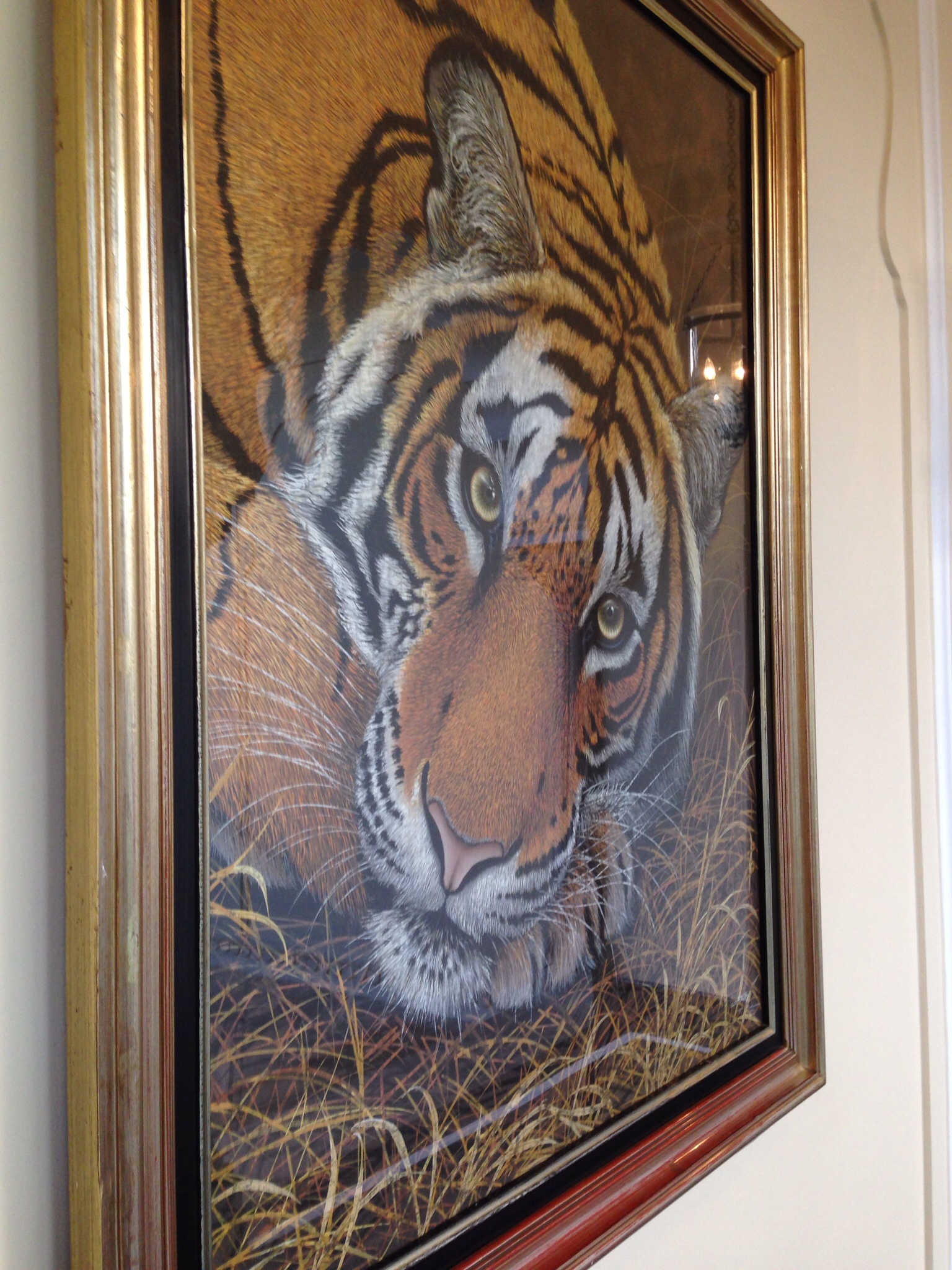
So now what? It just so happened that India’s award-winning wildlife photographer and painter was coming to speak and demonstrate his art after breakfast at the Oberoi Vanyavilas (Oberoi “Forest Villas”) where we were staying. M.D. Parashar is famous for his tiger paintings and lampblack or “soot art” work. Born and raised in Ranthambore, he has a special attachment to the big cats and his love for them is clearly evident in his work which impressively hangs in many famous locations, from the residence of the Prime Minister of India to the White House.
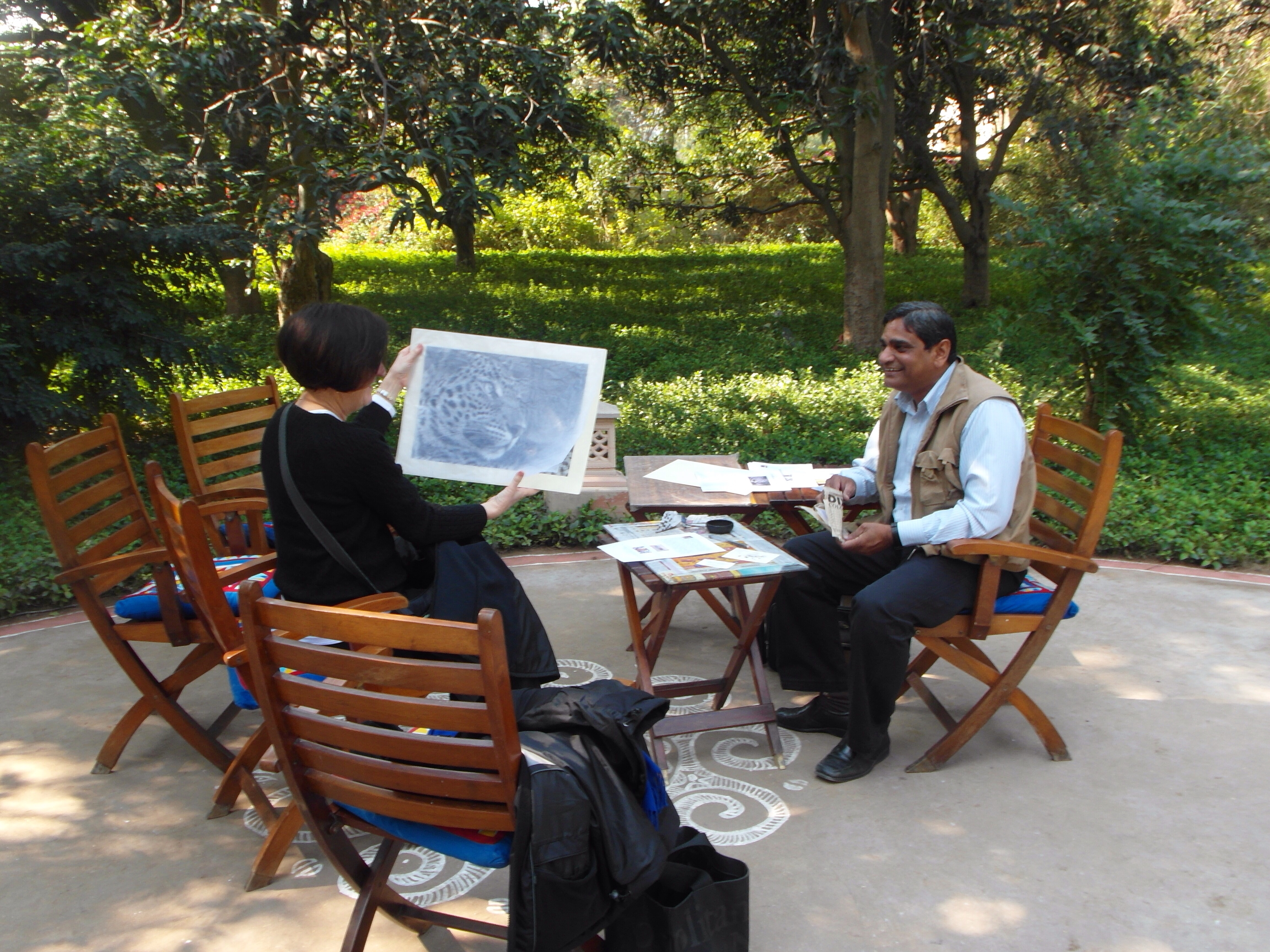
Parashar’s illustrated talk about his recently developed technique of “soot art” was extremely impressive. And it just so happened that he had a completed piece of soot art with him, a drawing of Lawli whom he nursed back to health when she arrived at his home at the age of 3 months with an injury to her leg. After she regained her health, Parashar had her released back into the park where she is now 6 years old and living happily. But during her convalescence, Parashar clearly had the time to study Lawli and fall in love with her.
So our search for a “cat” in Ranthambore was fulfilled. A magnificent love portrait of Lawli will hang in our home and will remind us always of the land of the Maharajahs of Jaipur.
CULINARY SPOTLIGHT: A Traditional Southern Indian Breakfast
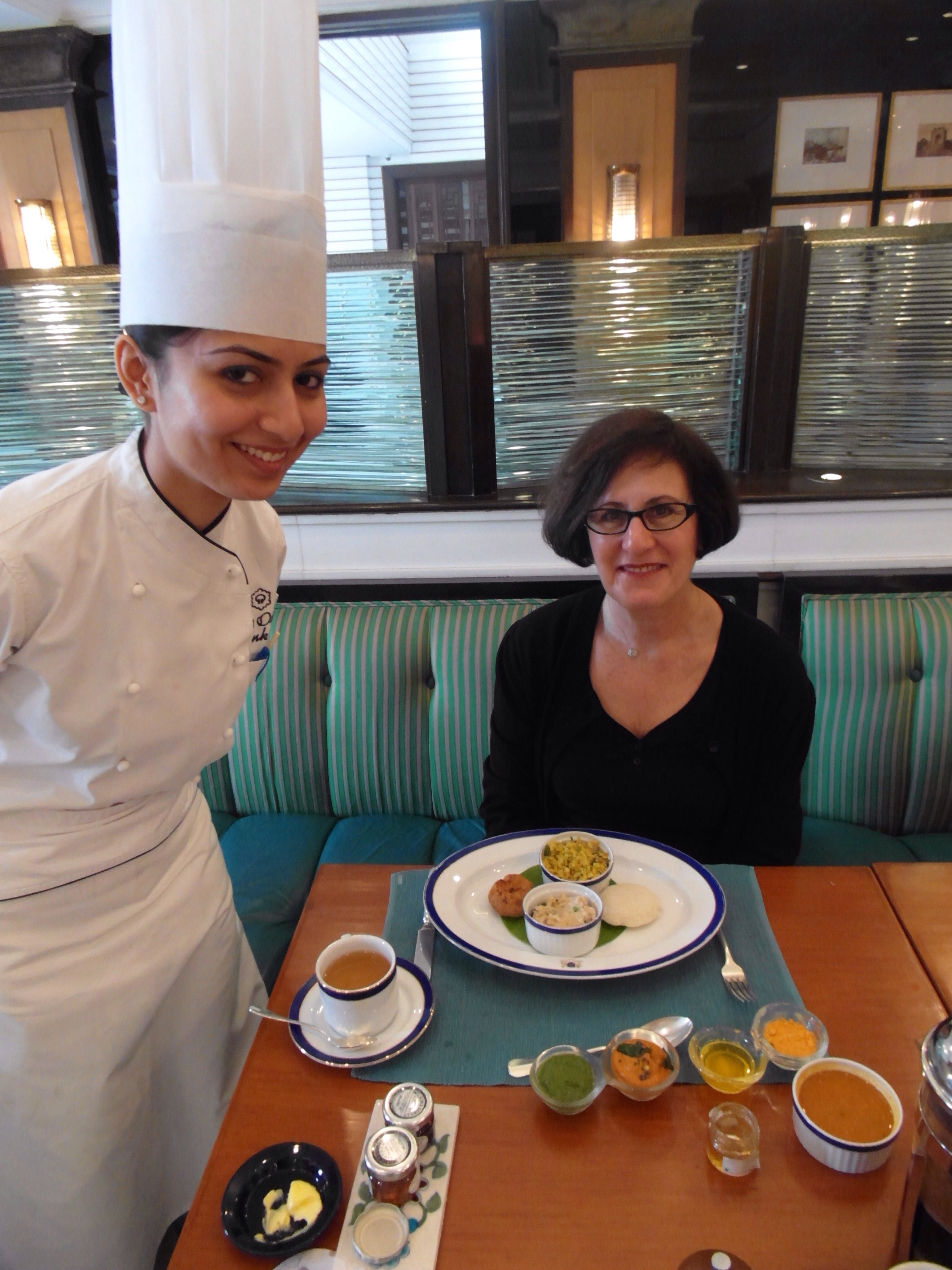
Chef Ankita and her breakfast for Lynn - Oberoi Amarvilas, Agra, Uttar Pradesh, India
“What can I do, Madam, to make you happy?” asked the young and very charming female chef our first night at the Oberoi Amarvilas (“Eternal Villas”) in Agra. I had told our waiter a moment ago that I had not enjoyed the chicken curry he had recommended. Before I could say much of anything, dessert was going to be complimentary and she was going to prepare a special “Indian breakfast” just for me. Hmm … I’m a bit fussy about my breakfast, and as I was pondering the next morning whether I should just play it safe and take a traditional “western” breakfast from the buffet, there she was with her charming smile telling me that my specially prepared breakfast would be brought to me shortly.
The food was delivered by the waiter with a flourish, but Ankita Sood, the Chef, was not far behind. She told me she had prepared a traditional “Southern Indian” vegetarian breakfast and began to explain each item. When I realized that I would never remember all those strange-sounding names, I asked her if she would email them to me – which she did right after departing from the table. But first, the charming Ankita posed with me for a photo along with the food she had so expertly and caringly prepared.
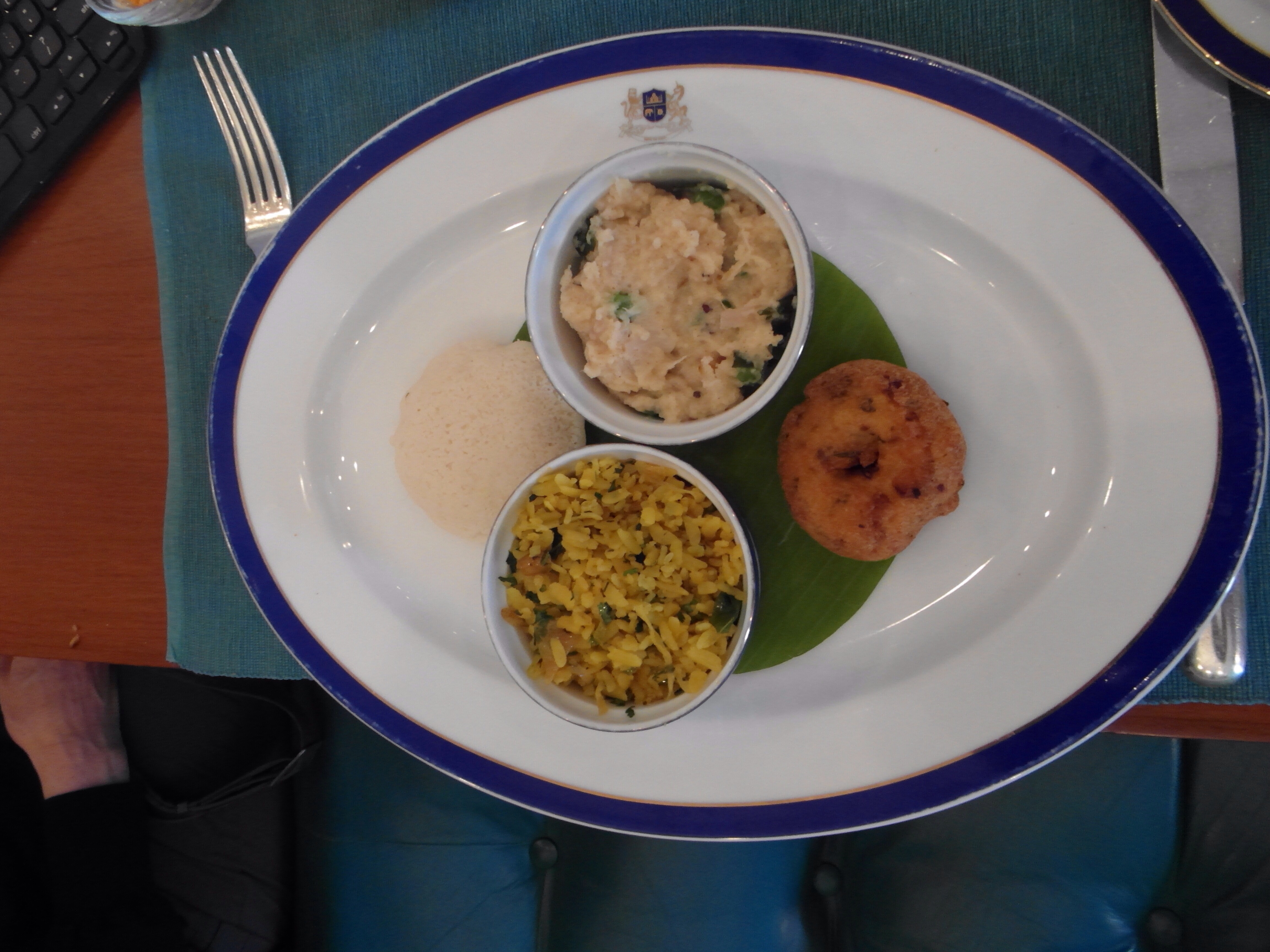
Vada, Poha, Idli and Upma
In the photo above of the platter with 4 items, a going clockwise from 3 o’clock is “Vada” (a deep fried dumpling of rice and lentils), “Poha” (flattened rice with peanuts and curry leaf), Idli” (steamed rice dumpling), and “Upma” (semolina and vegetable pudding). While I enjoyed each one of these unique dishes, my favorite was the Poha followed by the Vada, the Upma – which reminded me a bit of oatmeal -, and the Idli, which clearly needed some condiments to spice it up. The accoutrements included “Sambhar”, a lentil stew with vegetables, “Gunpowder”, a condiment made with broiled spices and lentils served with clarified butter, and some rather spicy chutneys. I loved the Sambhar and used it to flavor the Idli and the Upma. The Gunpowder was aptly named – a bit too fiery for me first thing in the morning, and the chutneys I enjoyed in moderation with the Vada.
When I had finished my South Indian tasting breakfast, I reflected upon the experience. The bad taste from the chicken curry the night before was erased, magically replaced by the visual, aromatic and culinary appeal of what can only be described as the most unusual and interesting breakfast I have ever eaten. Would I eat it again? With pleasure!
A Tribute to the admirable Sikhs!
I knew next to nothing about Sikhs, the word simply making me think of men wearing turbans on their head. But after learning a bit about Sikhism and visiting the Gurdwara Bangla Sahib Sikh temple in New Delhi, I have come to have nothing but admiration for the Sikhs, their history and their philosophy of life.
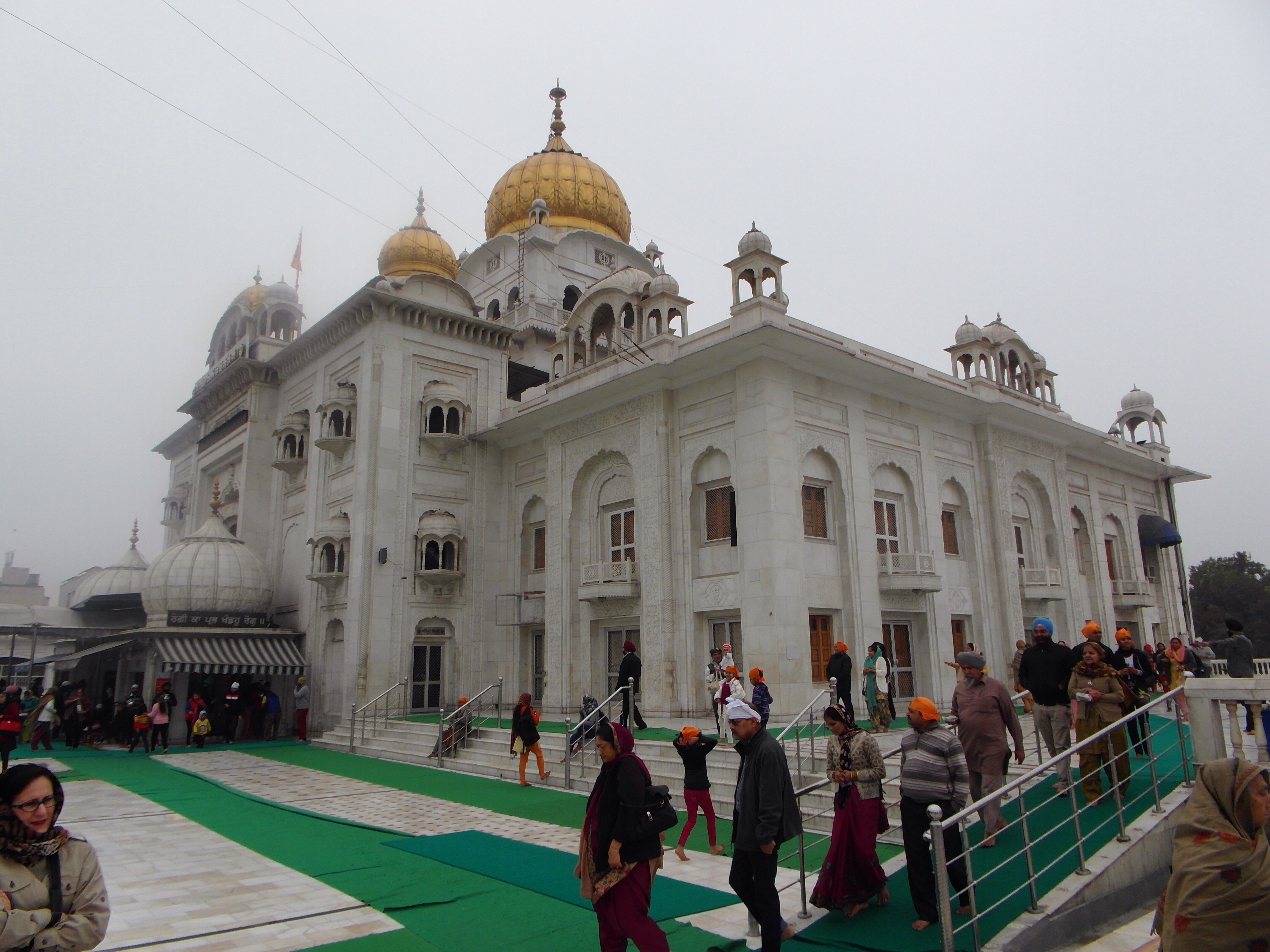
Gurdwara Bangla Sahib in New Delhi, India
Sikhism is an offshoot of Hinduism started in the 16th century to promote the concept of the equality of all people, irrespective of religion, caste, age, color, gender, creed or race. That alone was enough to get my attention and my respect.
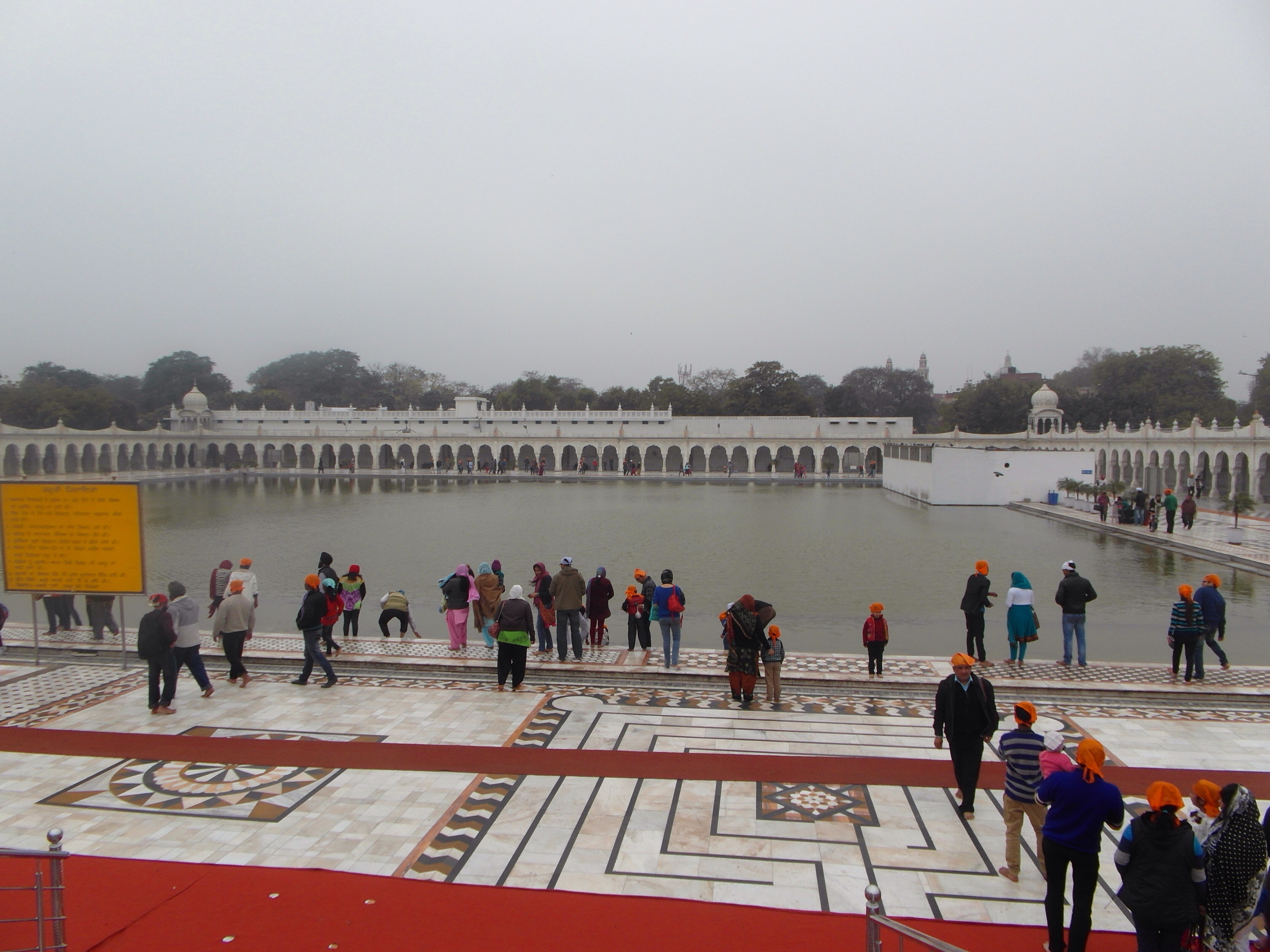
Knowing that the Sikhs fought hard against the Mughal Empire’s efforts to coerce everyone to convert to Islam only increased my respect for these courageous people.
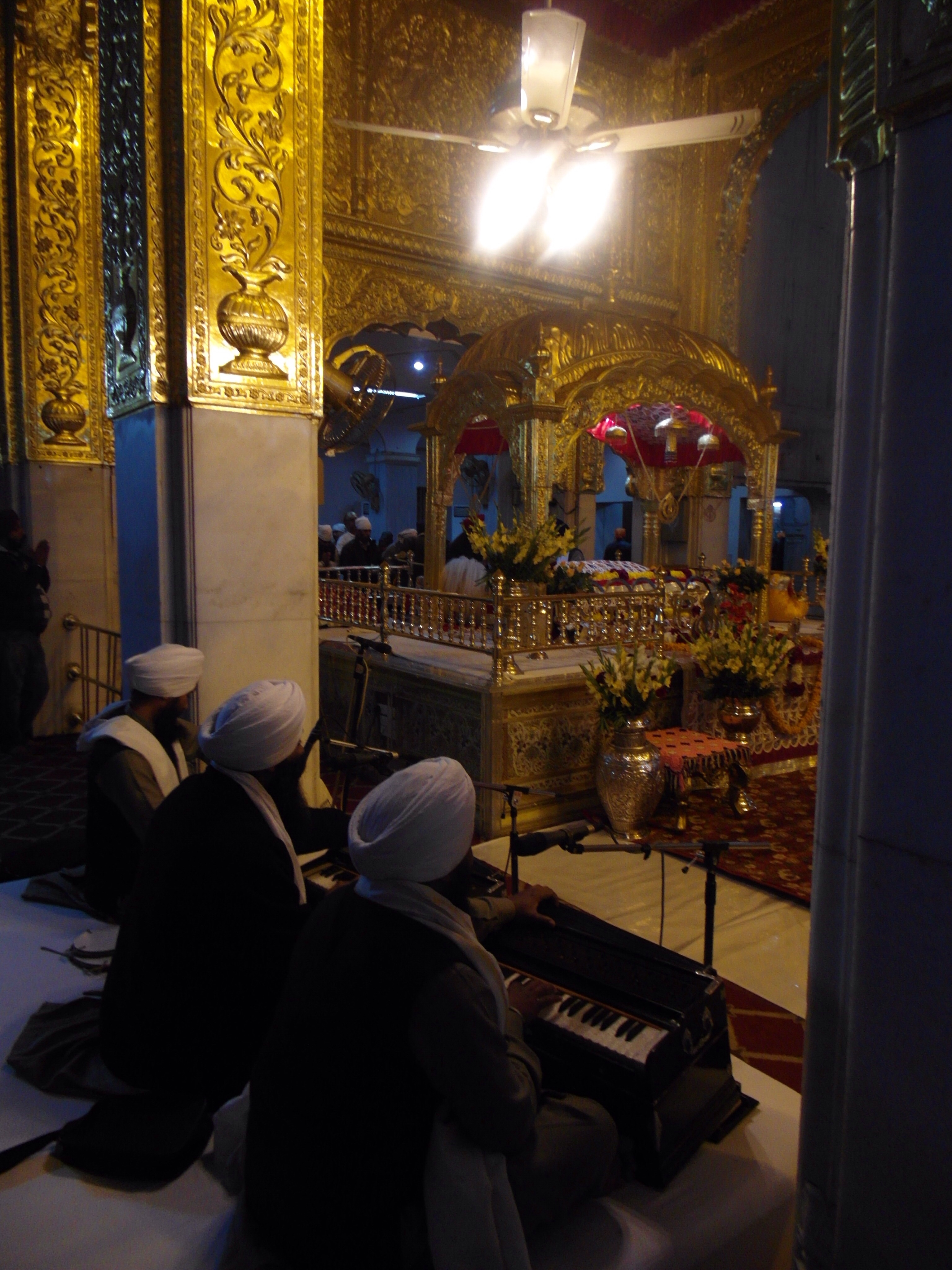
I can’t say that I understand all the issues surrounding the political disputes over Punjab between the Indian government and the Sikhs. In my opinion, there should be a way to marry the need to preserve the unity of India with the Sikhs’ aspirations for a state of their own.
In any event, the Sikhs’ philosophy of tolerance and compassion finds its expression in the “langar” kitchens of the Sikh temples.
As incredible as it may seem, the Sikhs offer a meal to anyone who wants one without restrictions of any kind at each of their temples. It is a vegetarian meal suitable for all who come. All you need to do is show up and sit down among the thousands who come every day for a full hot meal.
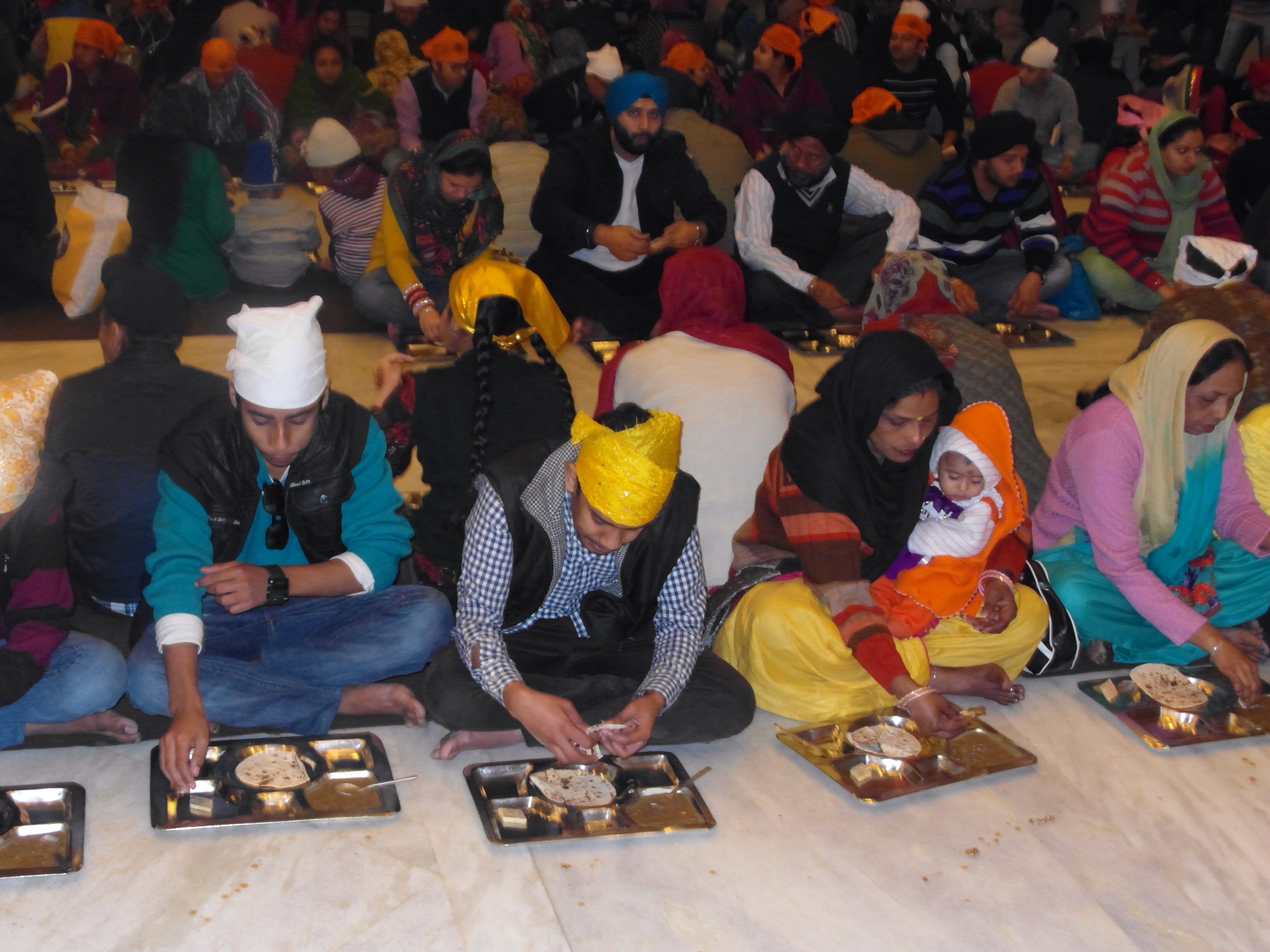
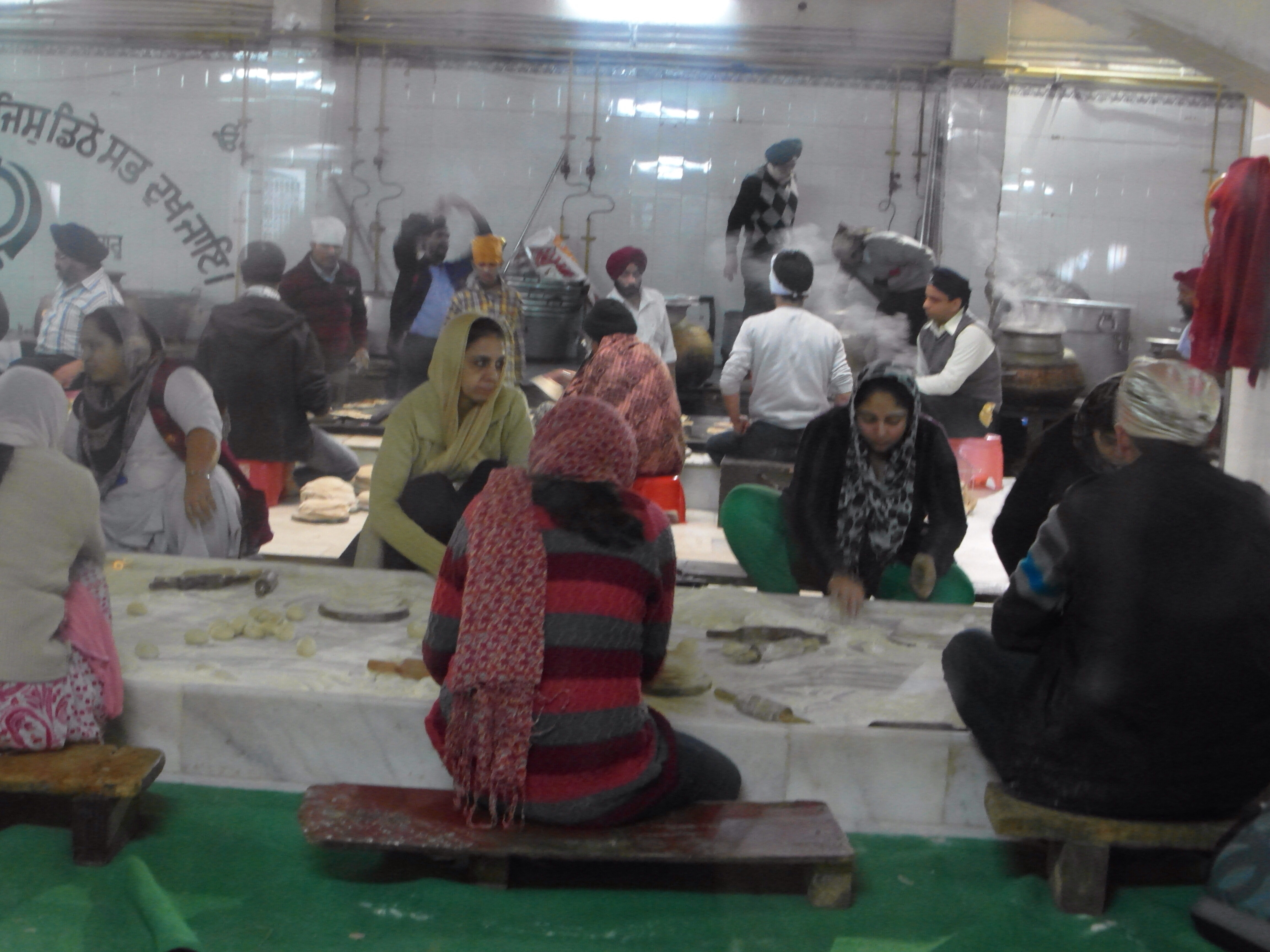
Volunteers staff the kitchens where the meals are prepared.
How can you not admire the compassion of these admirable people!
Savvy Tips: Full Moolight tour of the Taj Mahal on Valentine’s Day
The Taj Mahal in Agra is open to visitors from sunrise to sunset. However, five times a month, the Taj Mahal opens its doors at night to a select few, the 400 people who have pre-booked one of the eight available “Moonlight Tours”, so called because they occur solely on the night of full moonlight and the two preceding as well as the two following nights. Fifty people are randomly assigned to each of the eight half-hour tours, which can only be purchased the day before on a first come first serve basis.
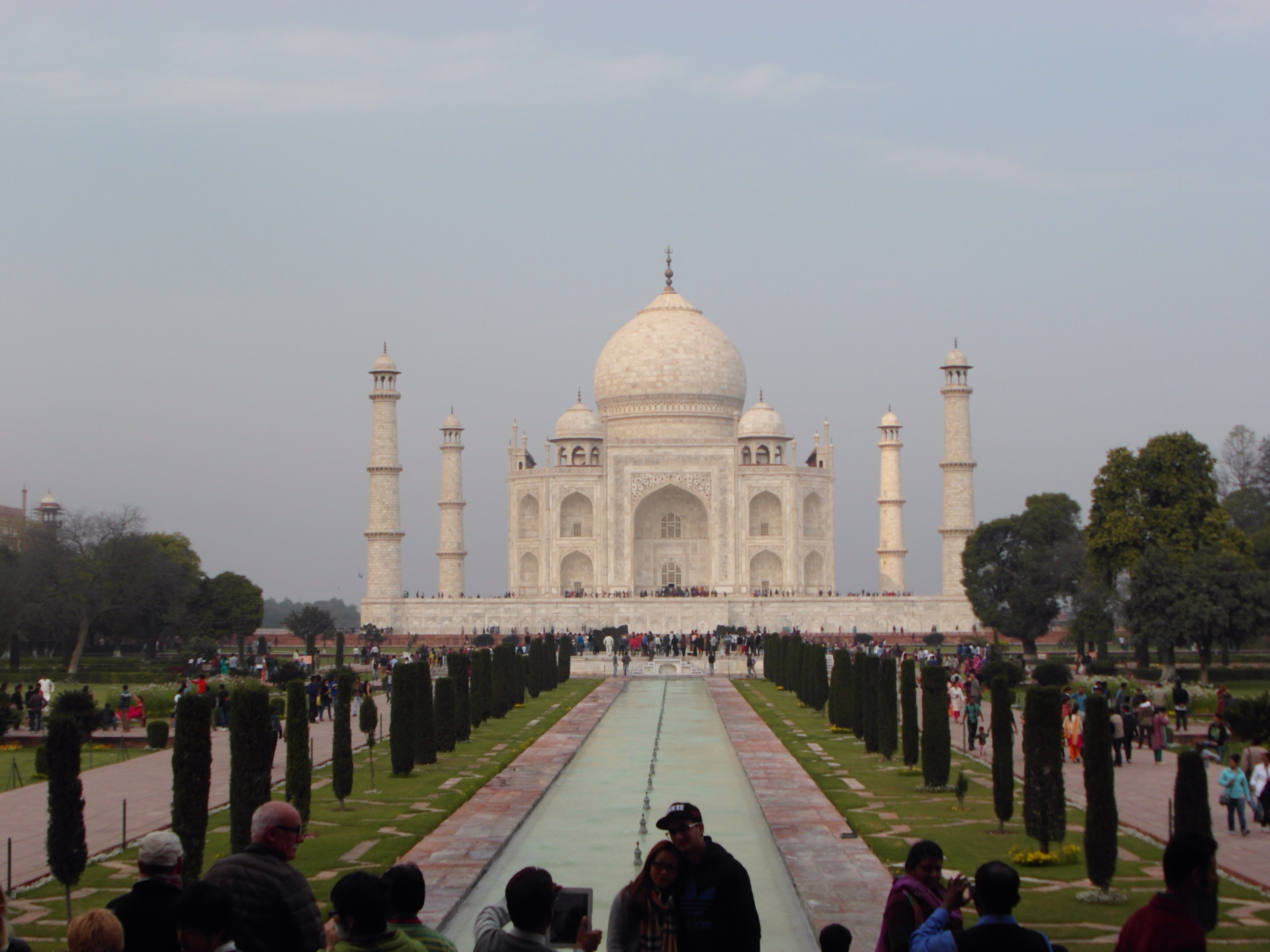
It just happens this year that Valentines’s Day, February 14th, falls on a day of full moonlight in Agra so we were able to plan our India trip in such a way as to be in Agra on that day. I could not think of a better activity on Valentine’s day than a full moonlight tour of the Taj Mahal, can you?
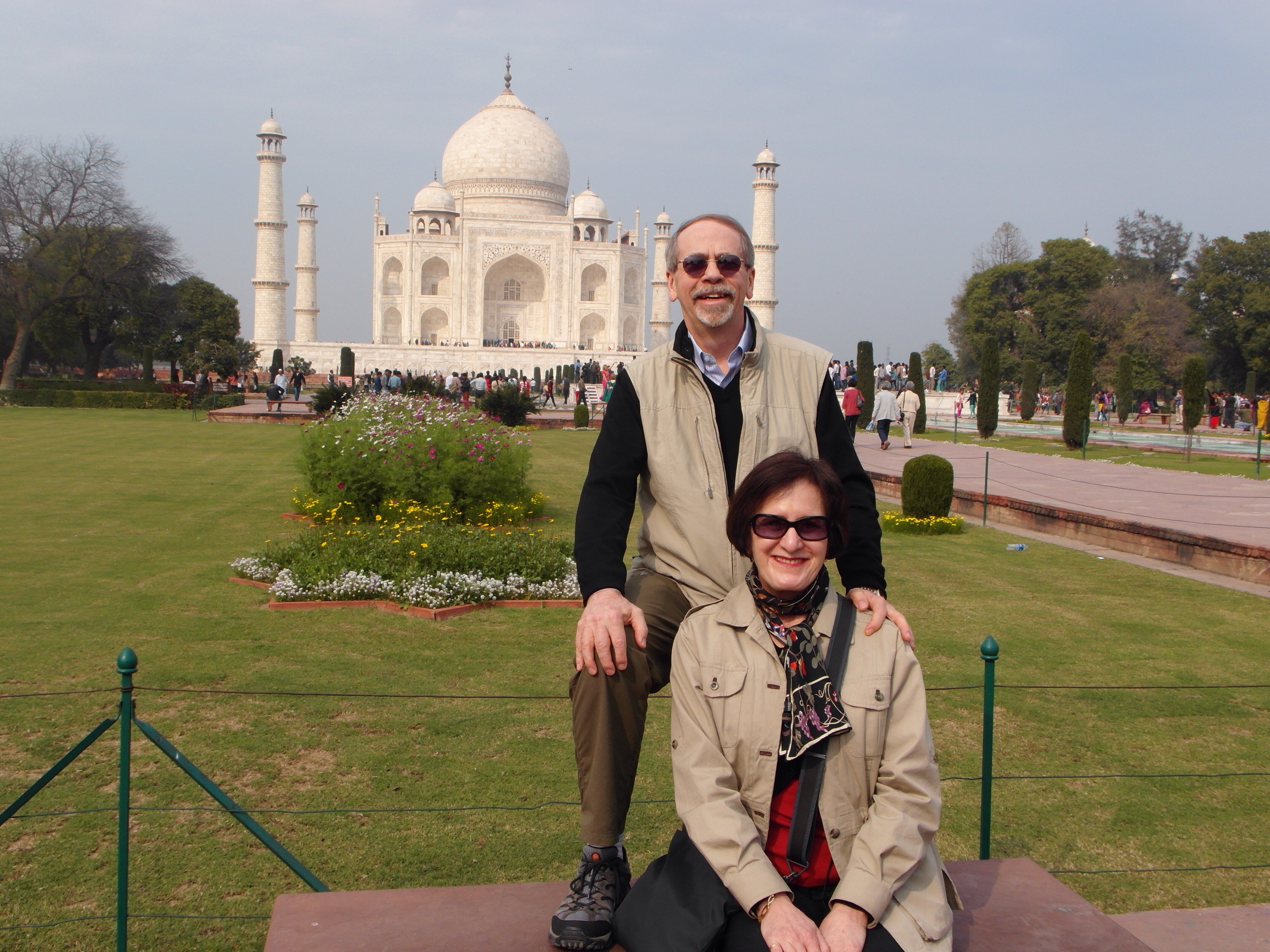
Our guide had purchased our tickets for the Moonlight tour on our behalf, and we found out upon arrival that we had been assigned the 9:30pm to 10pm slot. We might otherwise have been concerned about going out at night in the darkness of Agra but our hotel, the Oberoi Amarvilas, offers the very unique feature of providing drivers with golf carts for door to door service to and from the Taj Mahal. Knowing that the cart and the driver will be waiting at the exit is reassuring.
By the way, another unbeatable reason to stay at the Oberoi Amarvilas is that every room has a direct view of the Taj Mahal, and that is why we had booked a room with a balcony so that we could enjoy this Wonder of the World throughout the day.
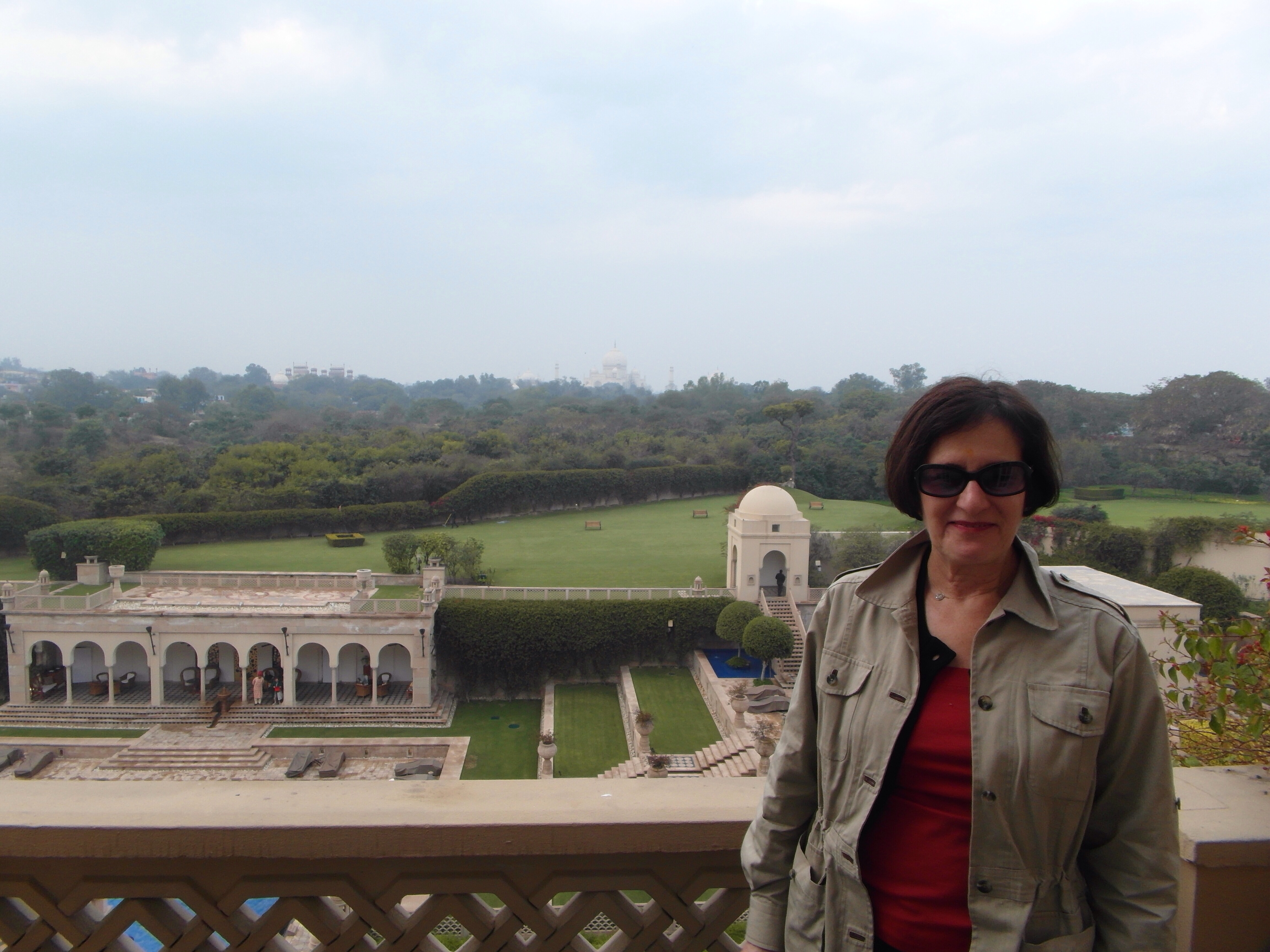
A further benefit you might enjoy by staying at the Oberoi Amarvilas would be to wake up to the sight of a large monkey quietly sitting on the railing of your room balcony, as happened to us this morning.
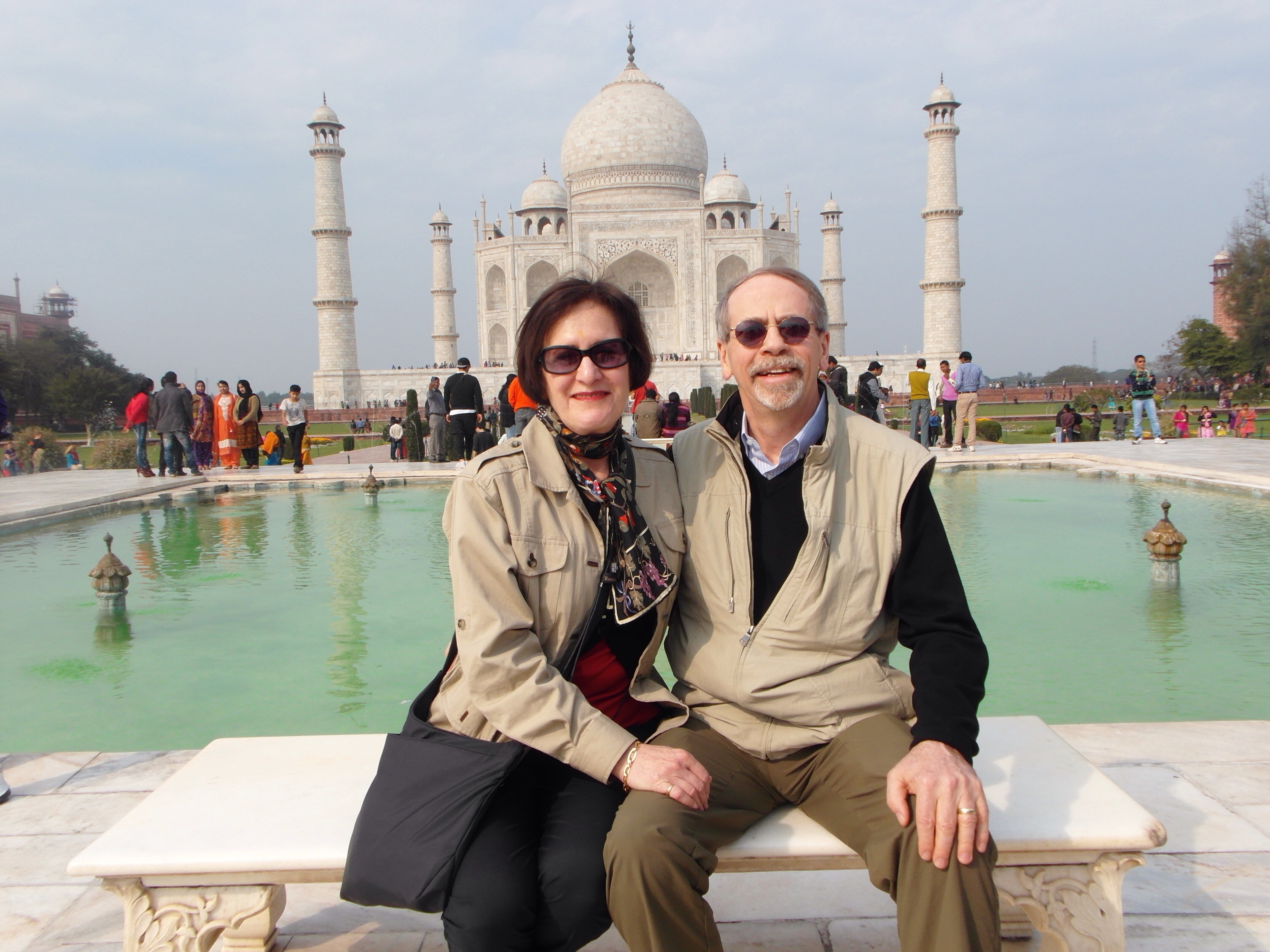
There is a very high level of security around the Taj Mahal. From the moment we entered the grounds of the Taj Mahal until we left, our group of 50 people was at all times escorted front and back by heavily armed soldiers. We had to go through four different security checks before we were allowed to proceed. At the first checkpoint, we found out that nothing (only a slight exaggeration) that we were carrying was allowed for the moonlight tour, no electronics of any kind, no cable or cord, no dangerous pointed objects such as pens or umbrellas, no threatening items like lipstick or cream. Thankfully, our tour guide who was escorting us to and from the tour offered to hold everything we owned until our return. PS In fairness to the security people, we were able to see some of the damage which people had tone to the Taj Mahal with their pointed objects or their markers, so we really did not mind the precautions.
The Moonlight tour is really a viewing tour, as it essentially consists in being allowed to view the Taj Mahal from just inside the Royal Gate for thirty minutes or so. It is one of those times when I wish that I had better photography skills. The mausoleum is not lit at night, except for the one spot of light coming from the bronze lamp, inlaid with silver and gold, which hangs above the tomb of Muntaz Mahal.
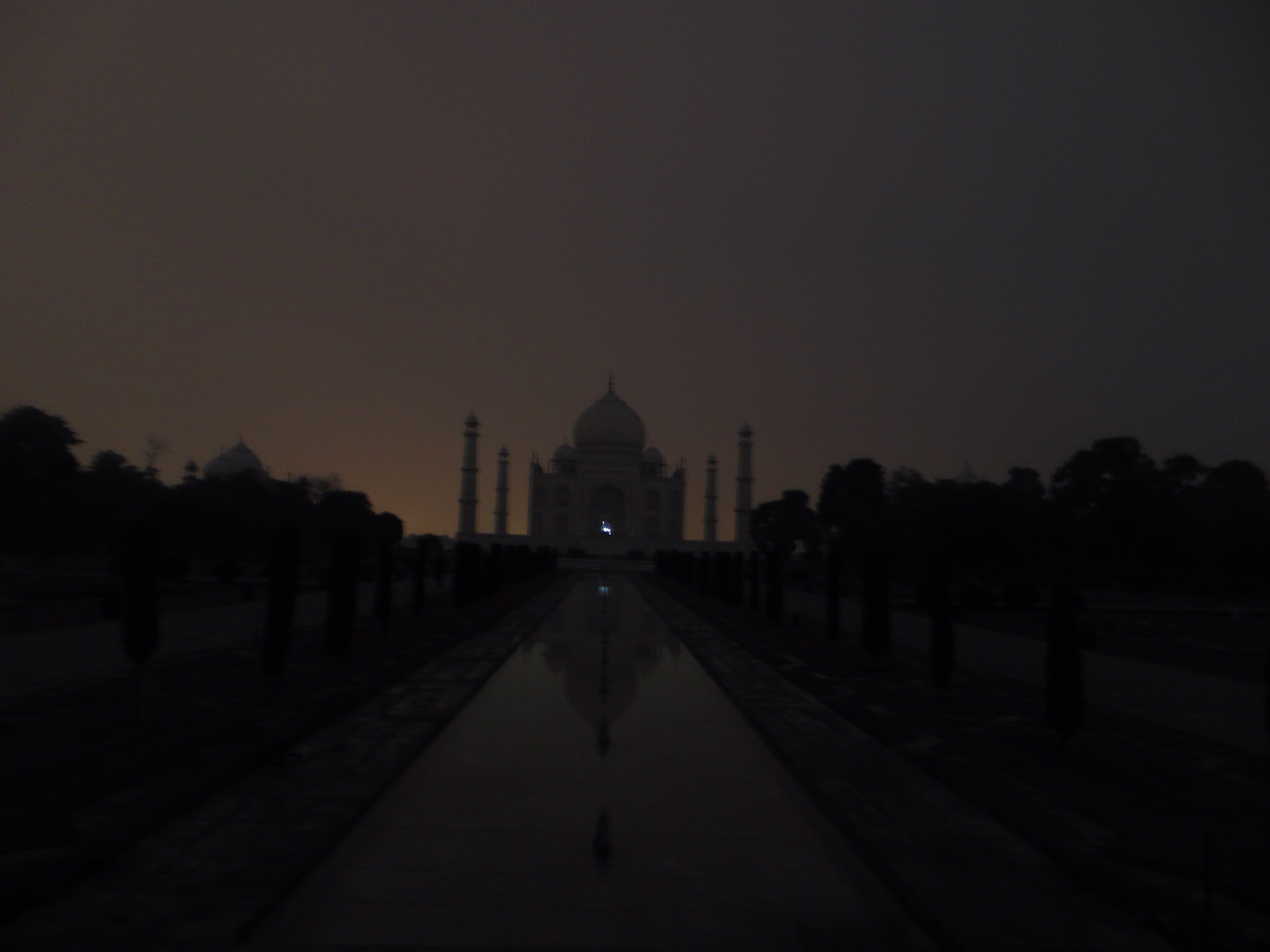
The full moon was only visible at times because of the passing clouds. Nevertheless, the thirty minutes flew by too quickly, and we exited just as the next group of 50 lucky people was preparing to enter.
So next time you plan a trip to Agra, check the full moonlight day for your month of travel! Another savvy tip from BonVoyageurs.
Battielal and the Ranthambore Tiger Reserve in Sawai Madhopur, Rajasthan, India
Battielal was our naturalist guide for our game drives through the Ranthambore Tiger Reserve in Sawai Madhopur, a town located about 100 miles southeast of Jaipur, reached by way of a four-hour hair-raising, constantly bumpy but most interesting drive.
Until 1971, the year Indira Gandhi brought about a constitutional amendment which took away most of the rights and properties of the former kings, the 400 square kilometers of what is now the Ranthambore Tiger Reserve was the private hunting reserve of the maharajah of Jaipur.
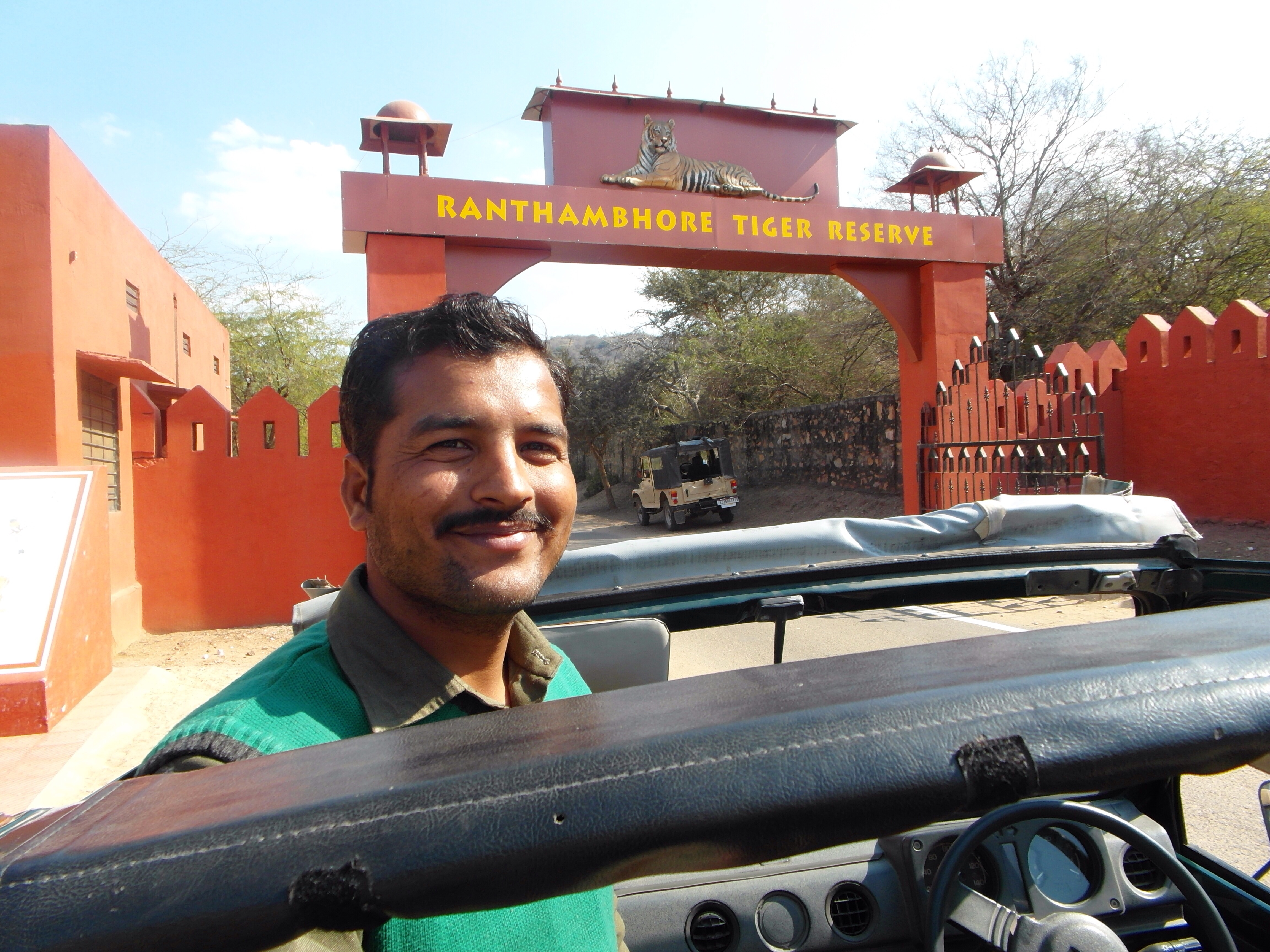
Our guide Battielal at the entrance to Ranthambore Tiger Reserve
Battielal is a good looking young man who was born around the time of the changeover in a village located within the reserve. There were 22 villages within the reserve when the government took over the property in 1972 and asked all the villagers to relocate outside the reserve, promising jobs and housing if they did so.
Ten villages, whose villagers did not initially agree to move, are still located inside the Tiger Reserve. After realizing that the government had not fulfilled its promises to those who did relocate, they have decided to take a firm stand against moving.
Battielal lived in one of those villages. He was eventually asked to come into a government office for a job interview. “What type of job do you want?” he was asked. “I’ll do anything you want” he replied. “What can you do?”, he was asked, “Can you drive?” “No? OK, then can you speak English?” “No? Hmmm.”
Battielal was sent to a two-week evaluation program, at the end of which it was decided that he would become a naturalist and a guide, which he did.
He is now married, a marriage arranged by his mother, which is fine with him because, as he says, mothers know you best and know what’s best for you. Battielal and his wife have a five-year old son, and it is because of him that Battielal rented a place in Sawai Madhopur and moved his family there from the village in the Tiger Reserve. He wanted his son to go to school and enrolled him in a private school. Private Catholic schools are best, he says, because they are very strict and you have to learn; they also teach English, which the public schools do not do.
His son has a one hour school bus ride each way to and from school. He goes to school with a lunch that his mother has prepared for him; she also has prepared one for Battielal at the same time because she will leave home for work as soon as the school bus has picked up her son and she won’t be back home until 5pm when her son gets home from school. Battielal found her work in a crafts store aimed at tourists, where they have taught her how to make handicrafts.
Battielal speaks English well now. He has never traveled anywhere and dreams of going on an airplane some day. What he knows about the rest of the world is what he has learnt from his customers over the years. He knows Ranthambore Tiger Reserve inside out, so well that other guides now rely on him for guidance.
We are doing the rides in an open air six-passenger Indian “Maturi” jeep, although we have the whole vehicle to ourselves.
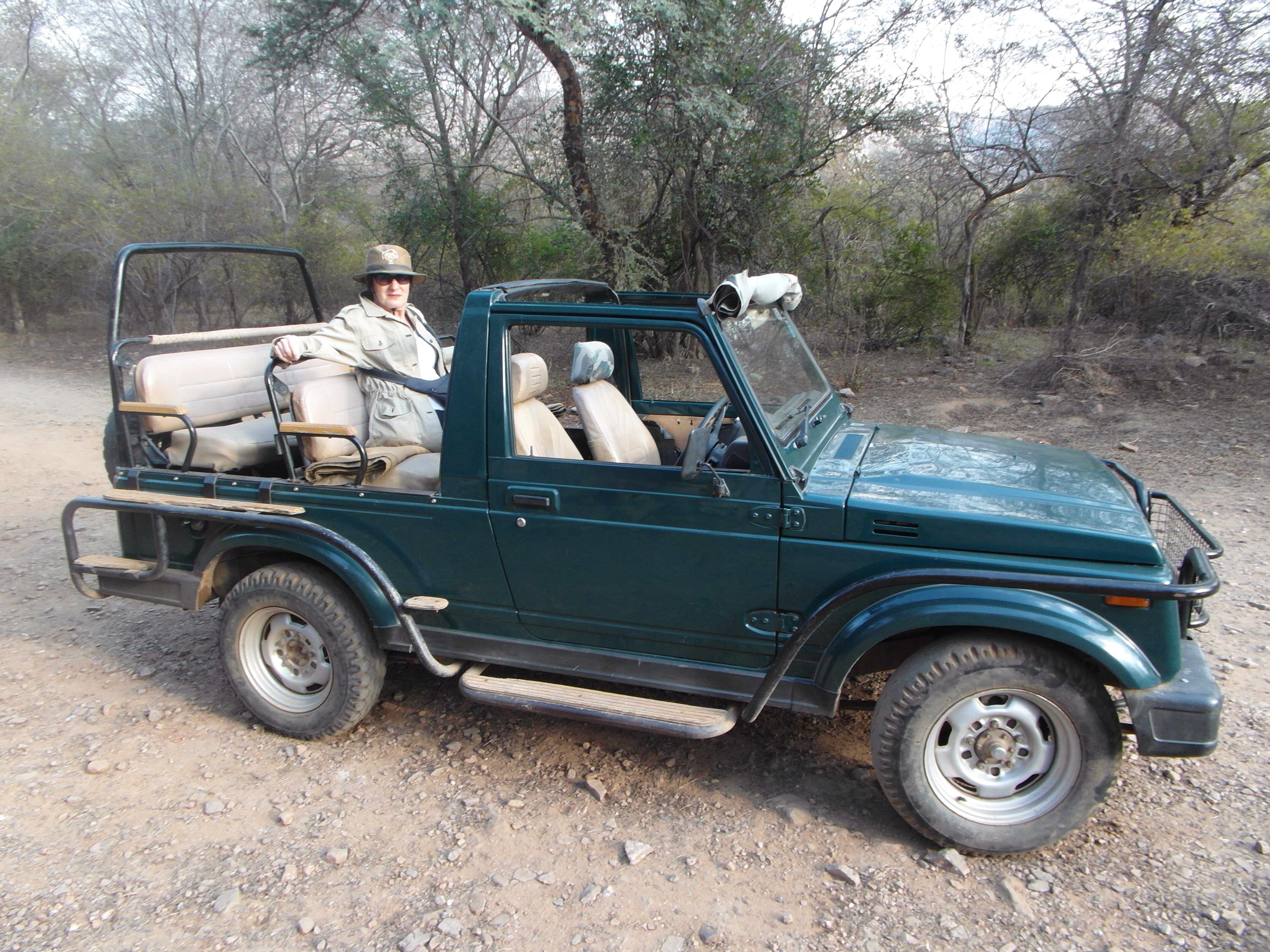
The government has divided the park into zones and randomly assigns zones to vehicles each day. A maximum of 24 “gypsies” (six-passenger jeeps), and 20 buses (twelve-passenger vehicles) are allowed in the reserve at any one time.
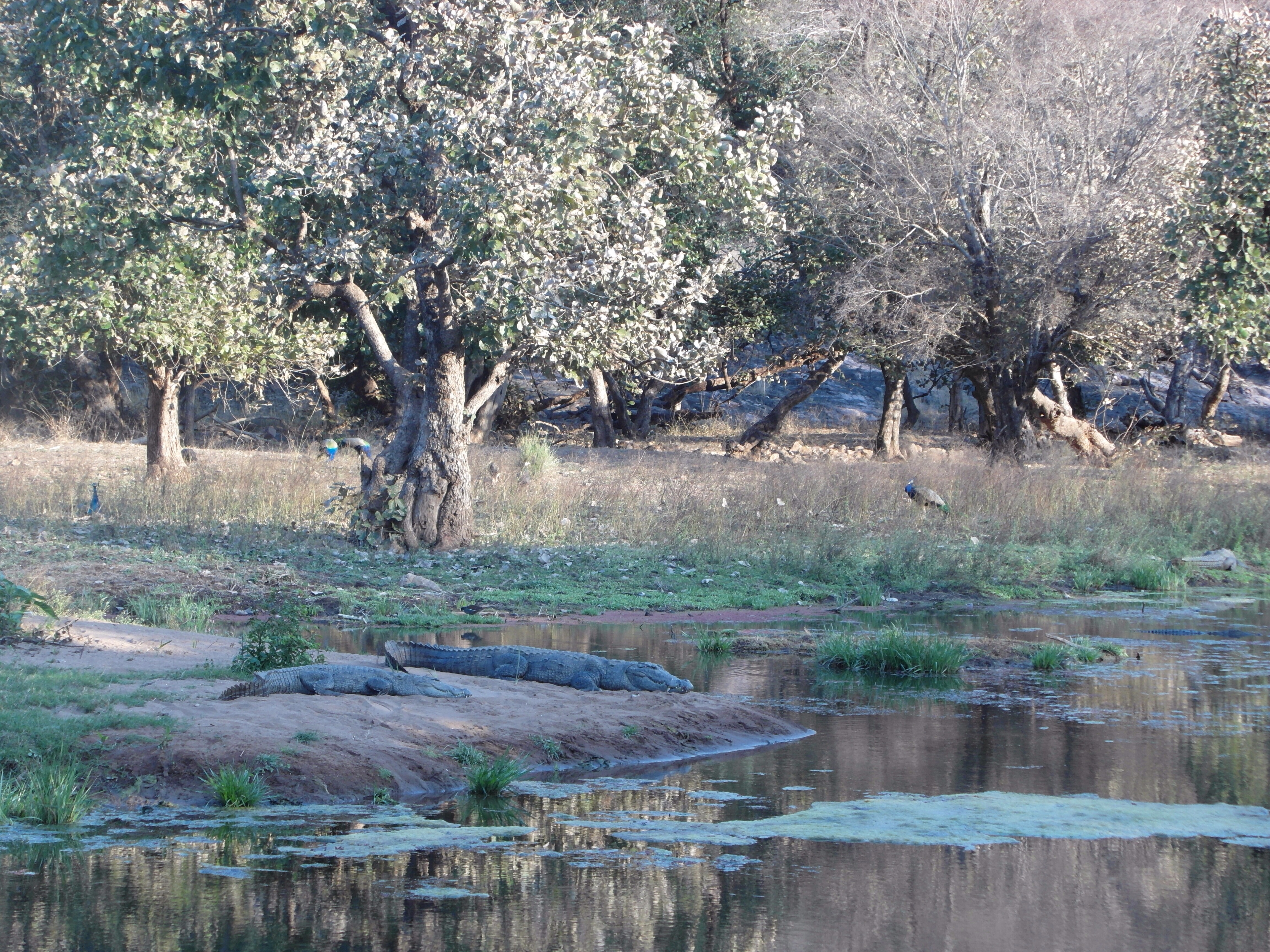
Crocodiles and peacocks at the Ranthambore Tiger Reserve
There are 55 tigers in the park right now and Battielal is determined to make sure we get to see one of them. He also makes sure that we don’t miss any of the breathtaking views the park has to offer.
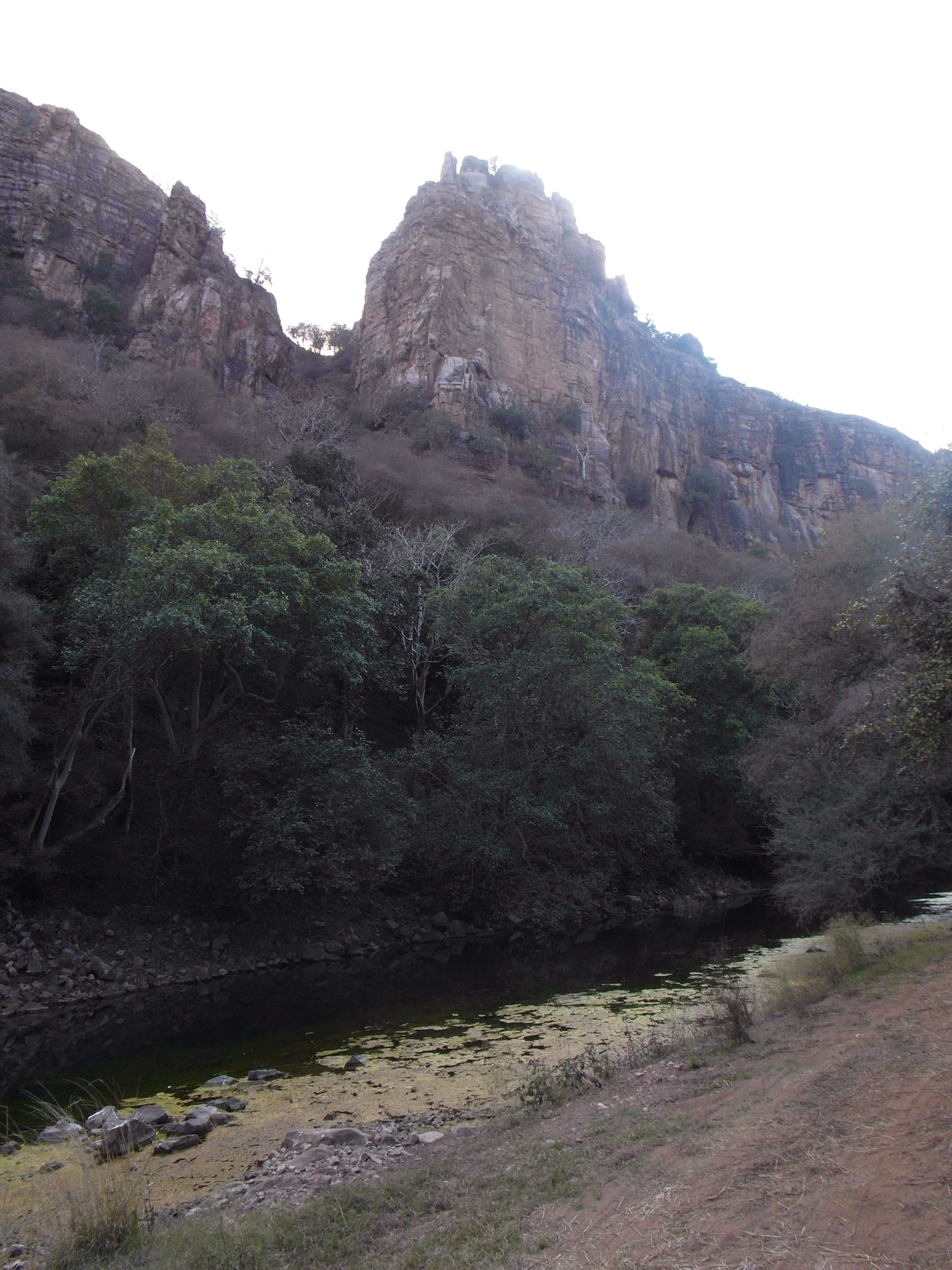
Whether we do encounter a tiger or not, we will have had the pleasure of getting to know Battielal, and through him, another fascinating facet of Indian life.
CULINARY SPOTLIGHT: Peacocks, Fenugreek and Blue Pottery
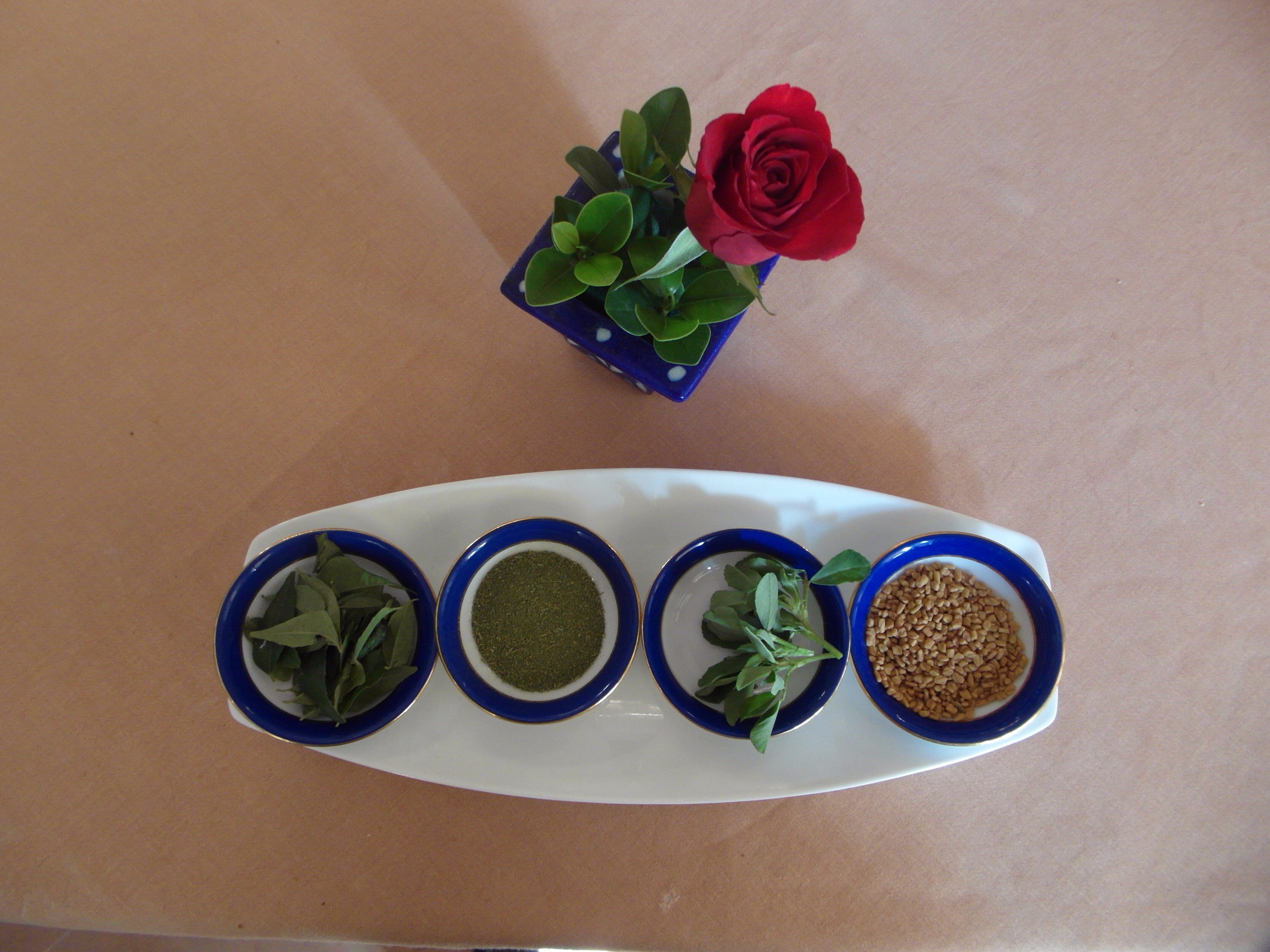
Fresh coriander, ground fresh fenugreek, fresh fenugreek and fenugreek seeds
In exotic Jaipur, I am having breakfast after a short but wondrous visit and am feeling adventurous. After all, we have surveyed the city from 2000+ feet above it in a sunrise hot air balloon ride, entered the courtyard of the magnificent Amber Palace dating from 1592 on top of an elephant just as royalty used to do in the days of kings and maharajahs, and encountered peacocks who appeared magically in the garden outside our hotel room just after I verbalized my desire to see some.
So to accompany the elegant “western-style” breakfast of scrambled eggs with smoked salmon which I ordered, I go up to the “Indian” side of the buffet table and take a generous serving of vermicelli. When I take my first bite of the vermicelli, there is a divine explosion of flavor in my mouth. I can taste the onions, garlic, tomatoes and chilies, but there is something else I don’t associate with vermicelli and can’t identify. I ask the chef when he comes by what the little flavorful seeds are that add such a punch to the dish. “Coriander seeds” is his reply, and then we chat a bit about Indian food, including “fenugreek” which I say interests me. He asks me to wait a brief moment.
To my delight, he returns with a tasting of fresh coriander (“cilantro”), ground fenugreek leaves, fresh fenugreek, and fenugreek seeds (see the photo above). But that is just the beginning … When I finish my tasting, he asks me to wait again for a moment, and then returns with the herbs and seeds, each in a sealed package along with the famous “blue pottery of Jaipur” which I had previously admired.
I have learned in Jaipur — be careful what you wish for, or it may become yours. Luckily, I only wished to “see” the peacocks, not to bring them home.
Hot air balloon, elephants and peacocks in the land of maharajahs - Jaipur, Rajasthan, India
The peacock is the national bird of India, and our hotel, the Oberoi Rajvilas in Jaipur, has several of them running around freely on the property. They are not only beautiful, even though it is early in the year and their annual “plumage” has not grown yet, but, as I found out quickly, they are quite chatty and do enjoy a good conversation, sometimes right outside the window of our ground level suite. Good thing we have an ample supply of ear plugs with us.
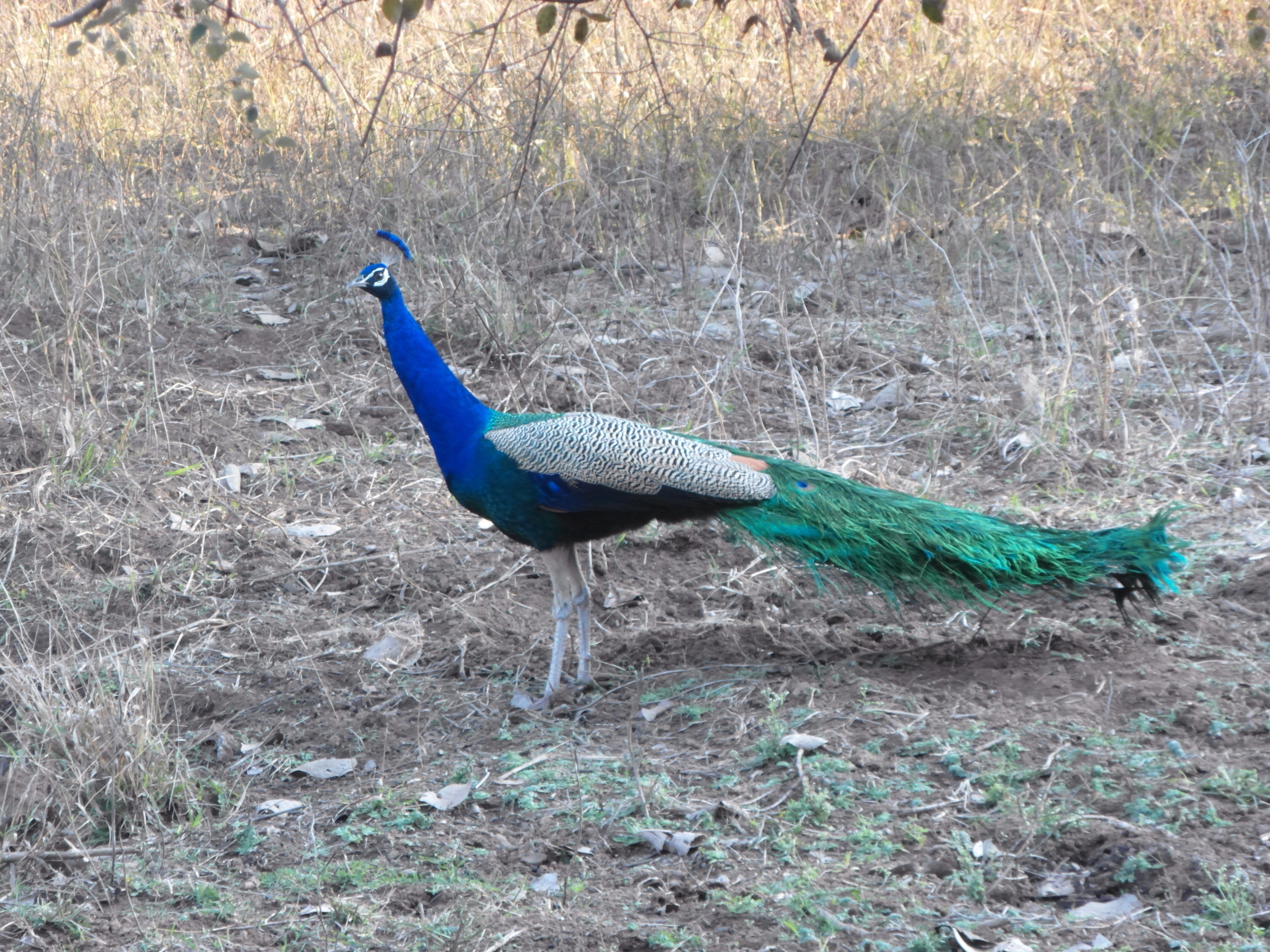
Peacock from Ranthambore Tiger Reserve in Sawai Madhopur, Rajasthan, India
Jaipur is the capital of the state of Rajasthan, the biggest state in India and a state which did not exist before the independence of India in 1947. The “land of the kings” (translation of Rajasthan) was put together as a state by the merger of 22 kingdoms of the Rajputs, historically a clan of famous warriors, as part of a negotiated deal to bring these legally independent states into the new India. More than 560 such kingdoms existed in India at the time of independence. As part of the deal made with all those kingdoms across India, the ruling families, the “maharajahs”, were allowed to keep their titles and property and moreover became entitled to receive an annual stipend from India commensurate with their status.
That arrangement lasted until 1971 when Indira Gandhi helped pass a constitutional amendment which abolished the titles, the stipends and most of the property rights of the former maharajahs, save for a few grand-fathered exceptions.
While the maharajahs of Rajasthan lived in incredible luxury, the same cannot be said of the rest of the population. The status of the women in Rajasthan was and is known to be an issue. We were able to see that for ourselves when I asked our guide why all the road construction crews we passed by were made up entirely of hard-working women being supervised by an idle man. Moreover, the literacy rate in the state, which stood at a hard-to-believe 8% at the time of independence (it has improved significantly since then), still stands below the average for the country.
Jaipur, called the “Pink City” since its inhabitants painted the town pink to welcome the Prince of Wales in 1878 and forgot to wash it off after he left (?), is an excellent city to admire the wealth of a maharajah.
Our first step was to get an “overview” (pun intended) of Jaipur by taking an early morning hot air balloon ride over the city. The balloon ride company was at least as professional as the one we had used to fly over the Serengeti in Tanzania, and our flight captain, a Spaniard with more than 17 years of experience, inspired total confidence as he maneuvered his balloon for more than an hour over the magnificent landscape of Jaipur.
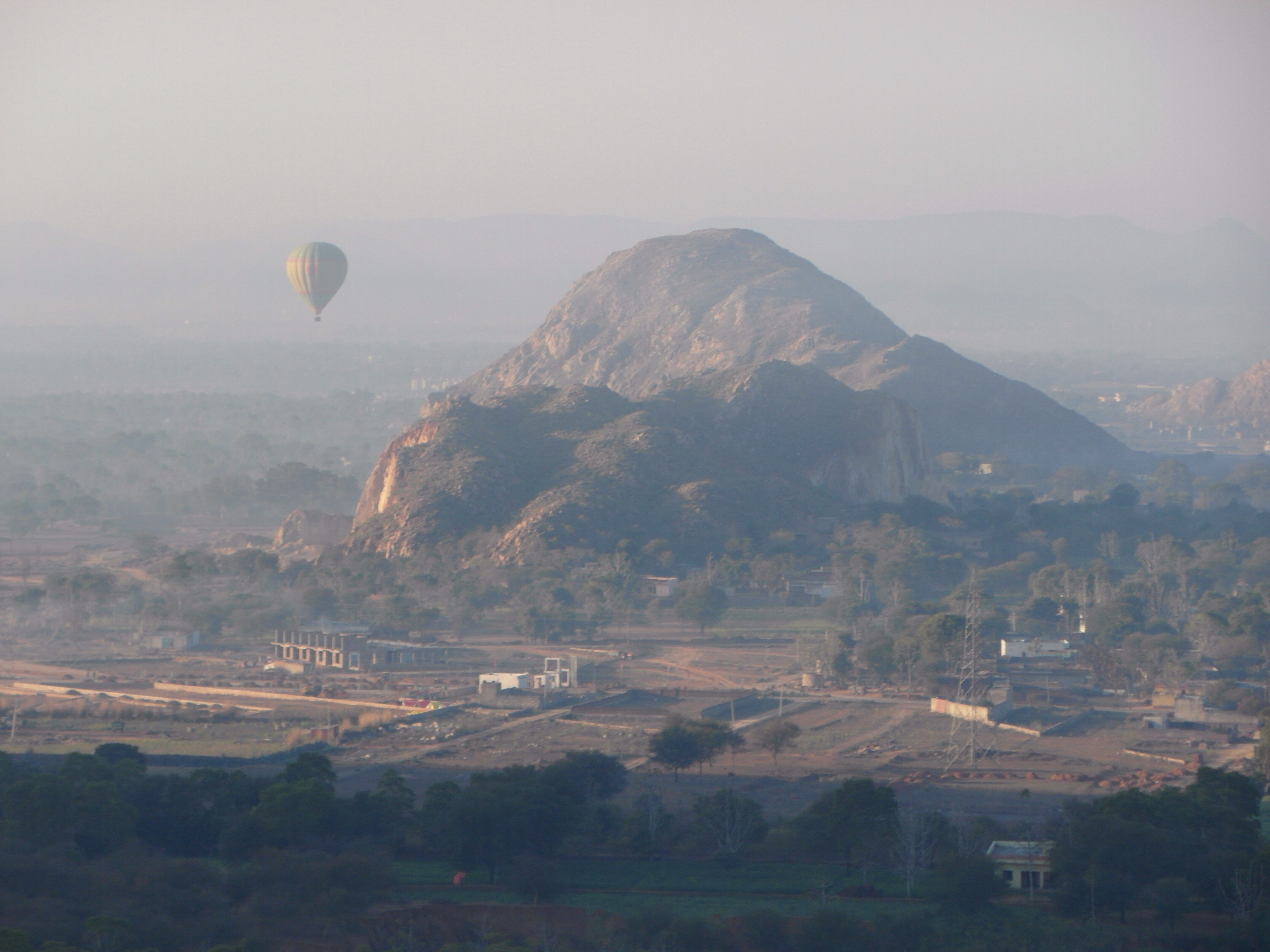
The balloon flight allowed us to get an unbeatable view of Amber fort and what I call the “Great Wall of India”, the protective ring of walls in the hills surrounding Amber Fort.
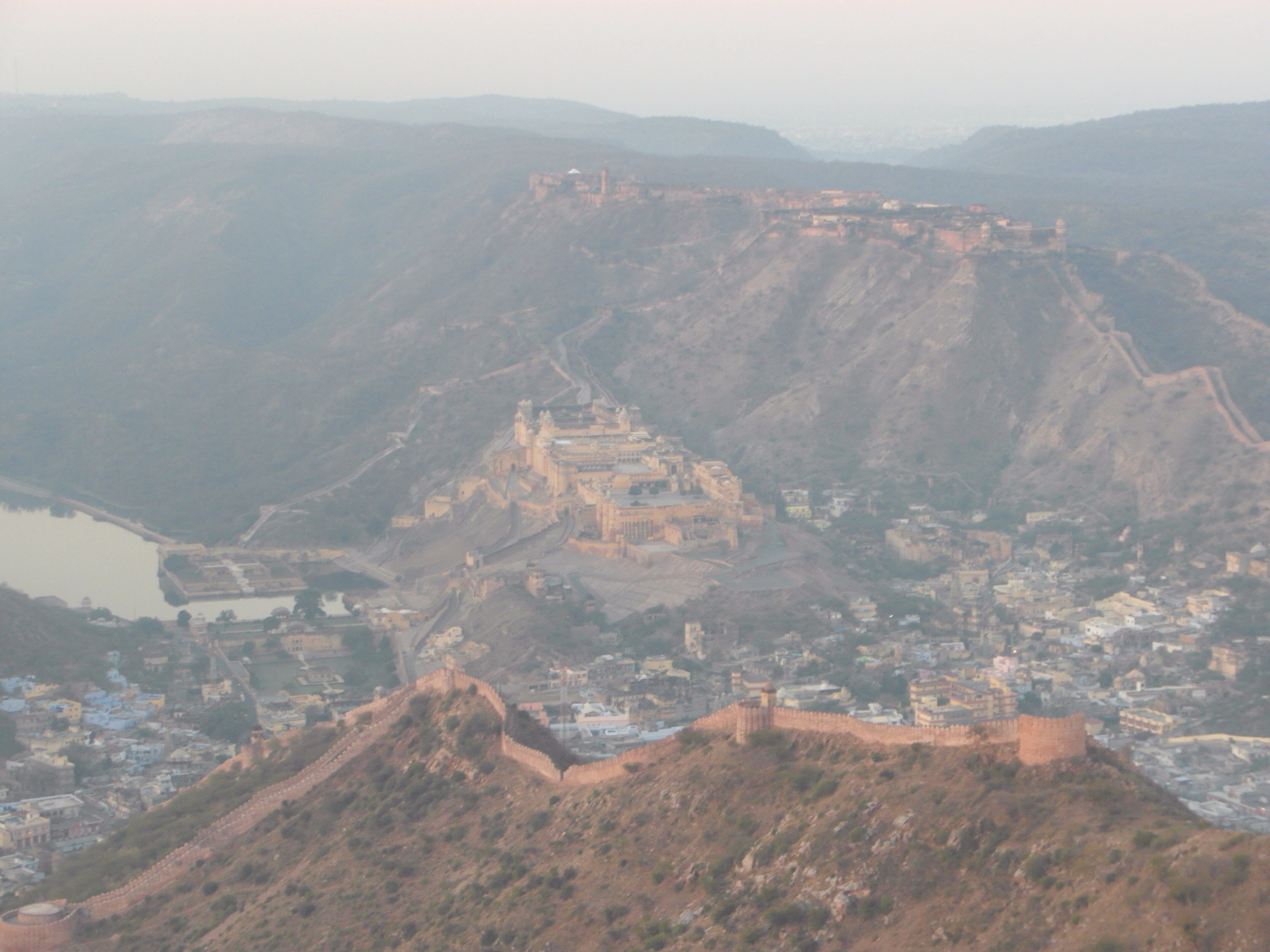
We went back to Amber Fort later that morning, using a totally different mode of transportation, an elephant.
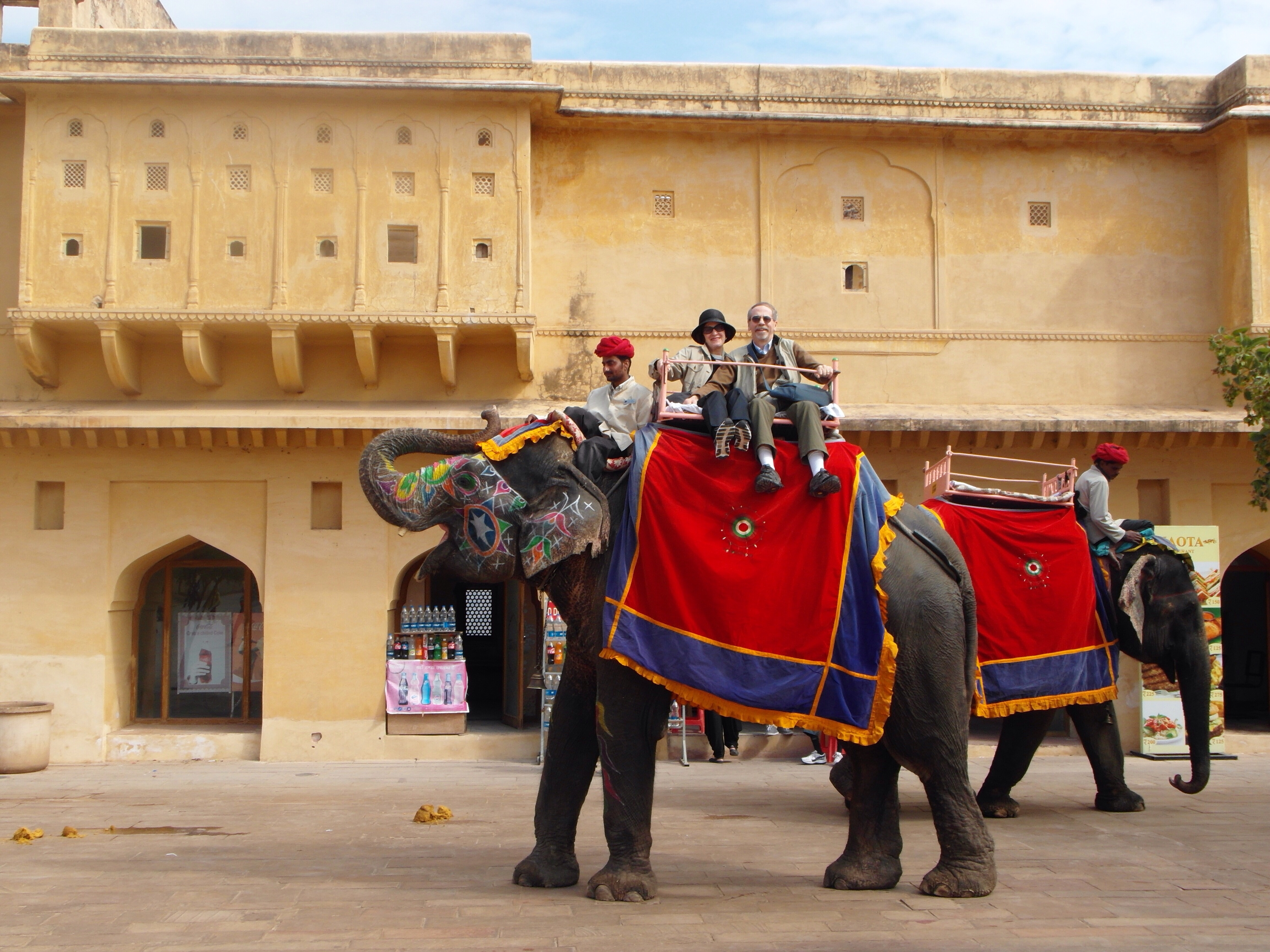
Amber Fort proved fascinating to visit to learn about the life of a ruler, who had actually started life as a slave, and the magnificent palace fortress he built for himself. The last major section of the fort, protected by eunuchs and accessible only to the king, is subdivided into 12 separate residential areas, one for each of the king’s 12 queens and each queen’s 12 attendants (concubines). Our guide informed us that, when the king entered that section, each of the 144 women had to retire to her bedroom and stay there until the “all clear” was sounded. Who had received the king’s favors was undeniably the subject of conversation and speculation for the rest of the day.
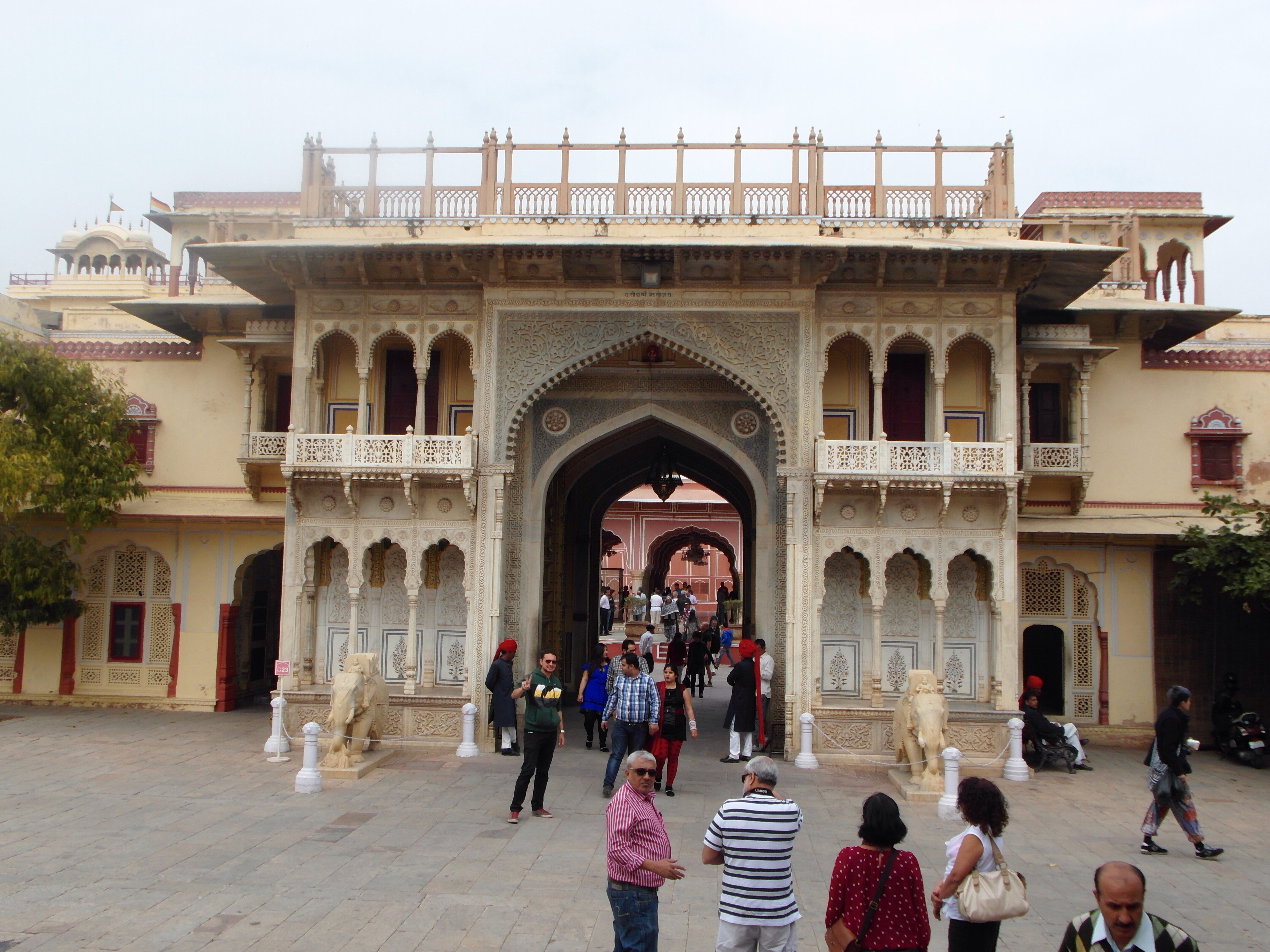
We next toured the opulent City Palace in the center of Jaipur, part of which is out of bounds to commoners like us as it is still used as a residence by the ex-royal family.
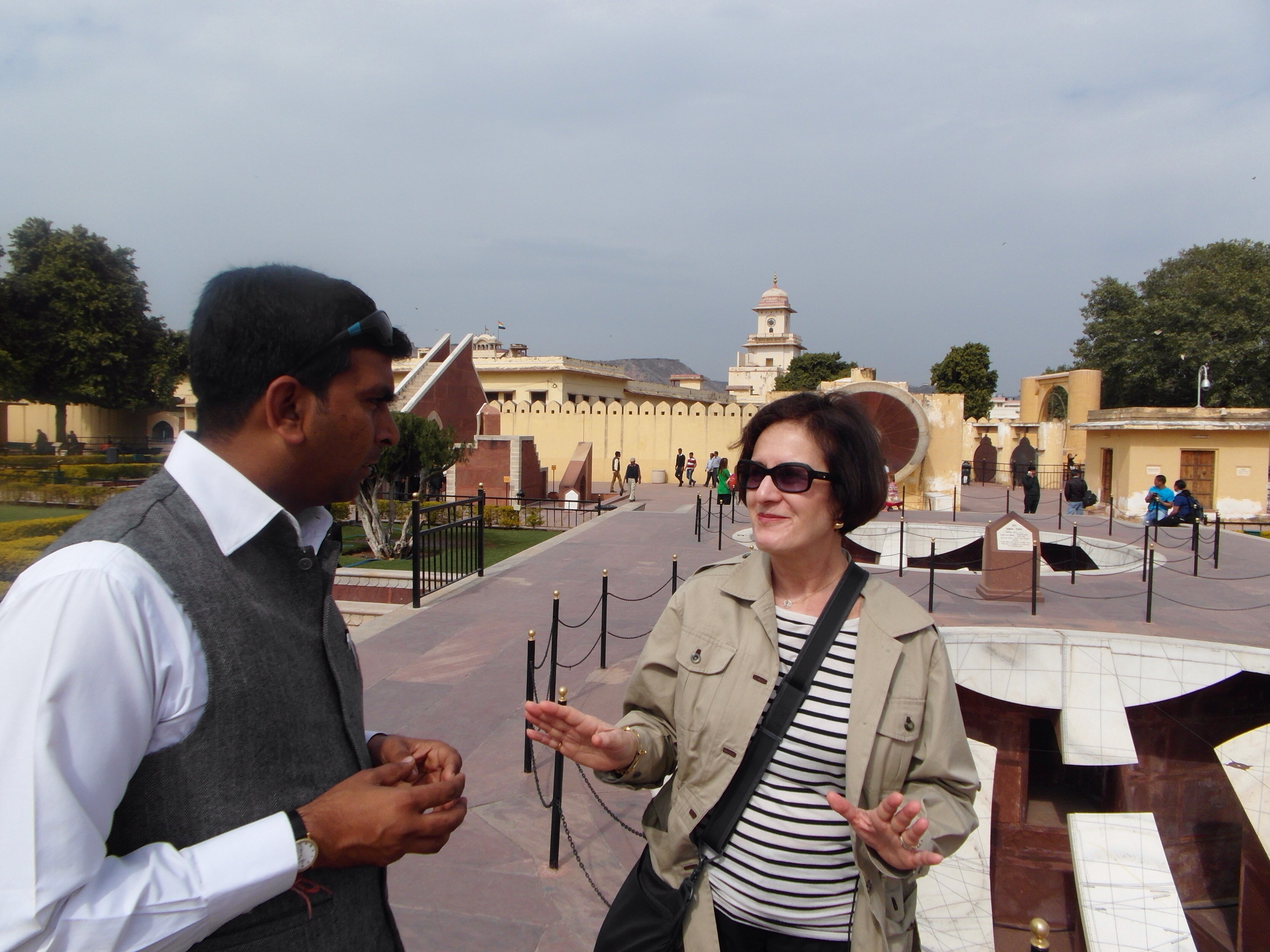
We also visited Jantar Mahar, the king’s impressive personal astronomical observatory.
To divert our minds from all this wealth, we ended the afternoon with an exhausting and fruitless search for the right thing to buy in the bazaars of Jaipur.
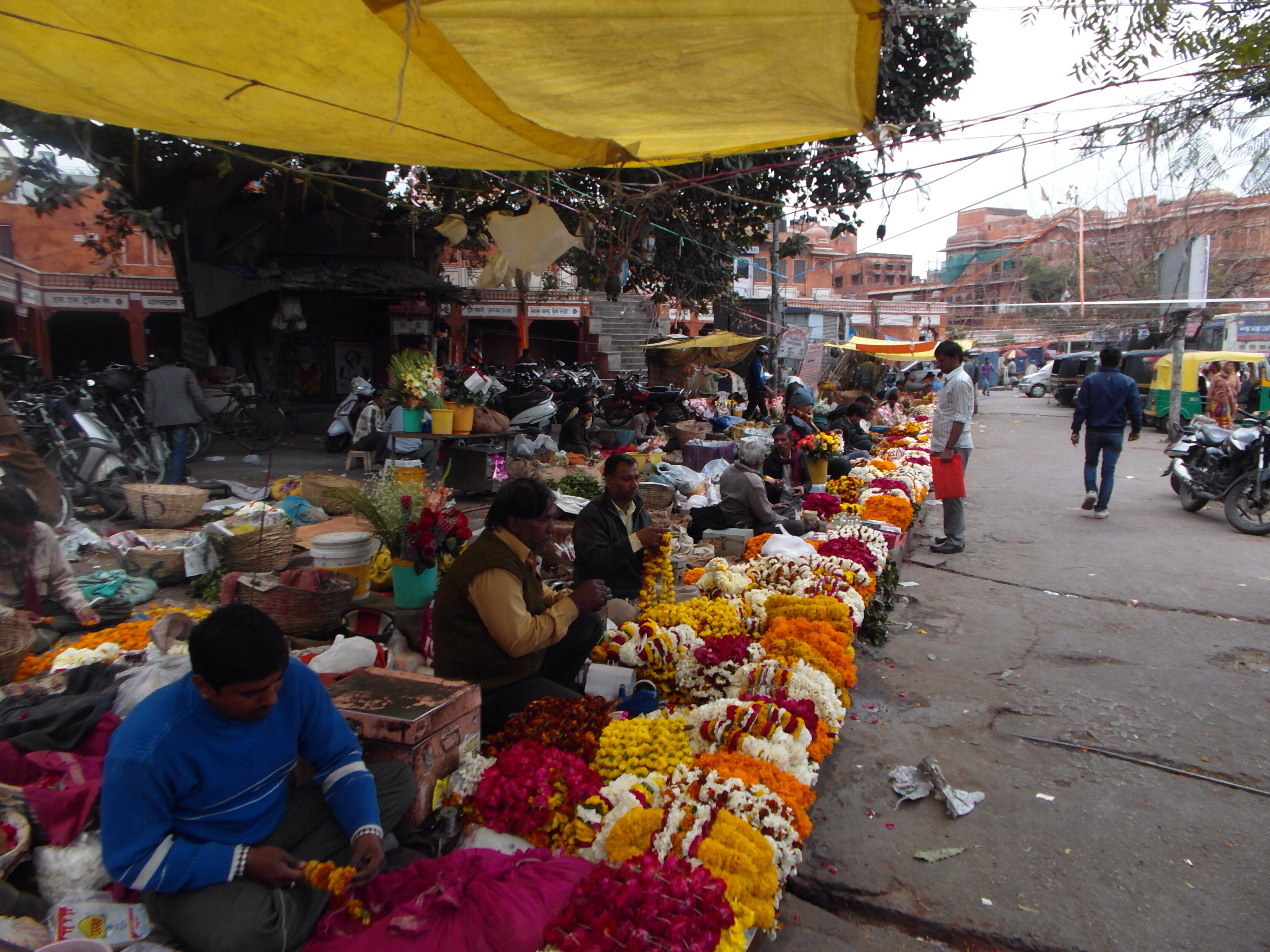
Another facet of India to add to our voyage of discovery.
The Gandhi paradox
We visited the Gandhi Smriti (Memorial) in the center of New Delhi, the house and garden where Gandhi lived the last month of his life and where he was assassinated on the 30th of January 1948.
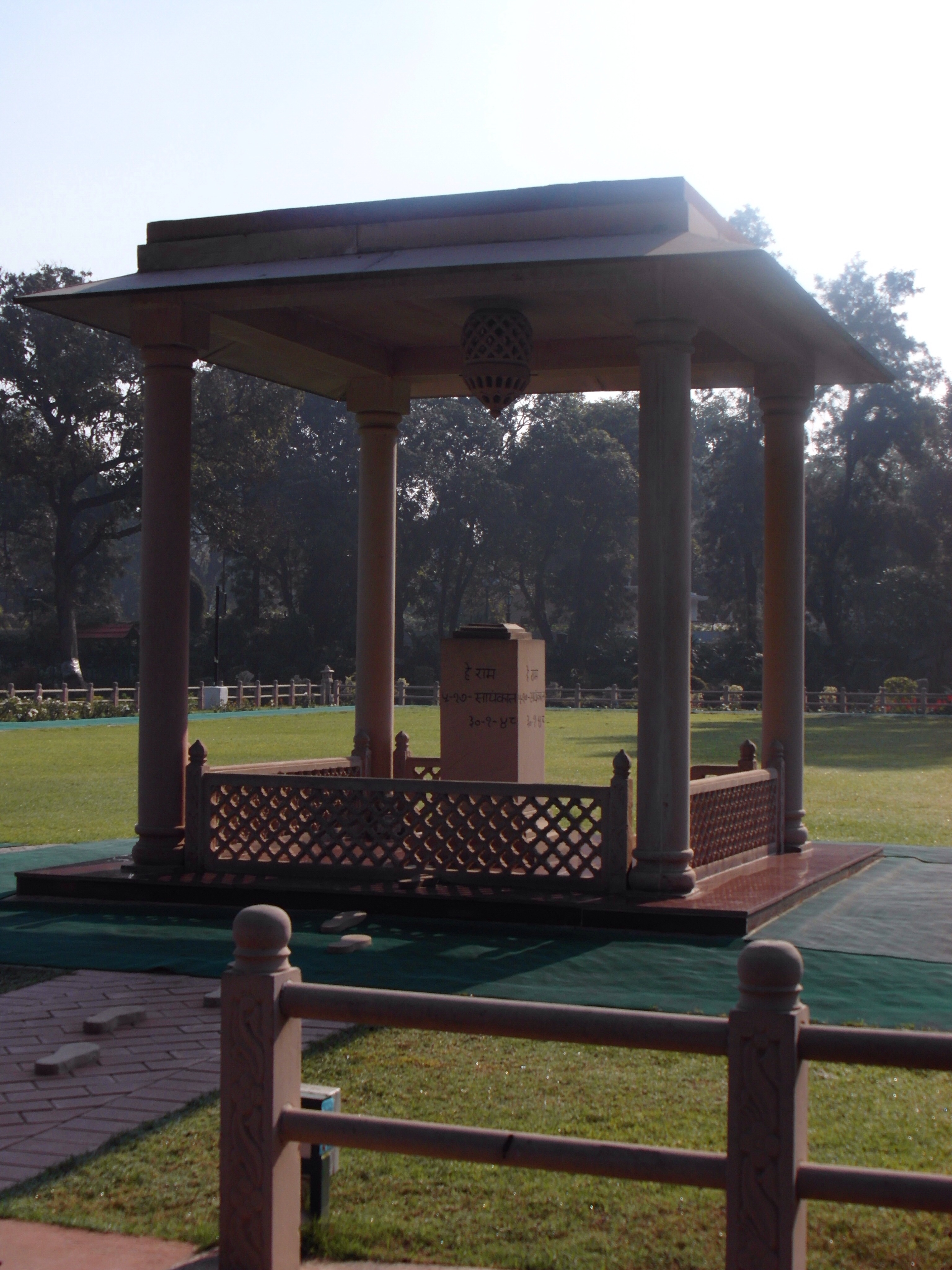
Even today, the Gandhi Smriti is a remarkably peaceful oasis in the middle of a bustling city. Our visit represented an opportunity to reflect upon the accomplishments of this simple yet great man. Through non-violent civil disobedience, Gandhi had been able to bring about the independence of India after more than a millennium of domination by foreign invaders.
The philosophy of non-violence goes back thousands of years in India. The concept of “ahimsa”, not hurting anyone in this world, is central to Hindu beliefs. Buddhism, an offshoot of Hinduism, even became the state religion in the third century BC.
But then came the Huns. Buddhist kings don’t make great warriors and don’t waste a lot of energy building strong armies. They were certainly no match for the Huns. And that is thought to be why Buddhism became essentially extinct in India a few centuries later.
Non-violence took a hit again in the eleventh century when the Moslem invasions started taking bigger and bigger chunks of the Indian subcontinent. First came the Turks, then the Afghans, and finally the Persians.
Delhi seems to be the ideal place to learn about this facet of the history of India. This is because Delhi is located in the north part of India which is where the Moslem invasions occurred, whereas other parts of India were never conquered by the Moslem invaders.
Moreover, a surprising number of monuments, tombs and other buildings still exist in Delhi for each of the empires which conquered this city, and, unlike Rome, each successive king built his city next to, rather than on top of the preceding one.
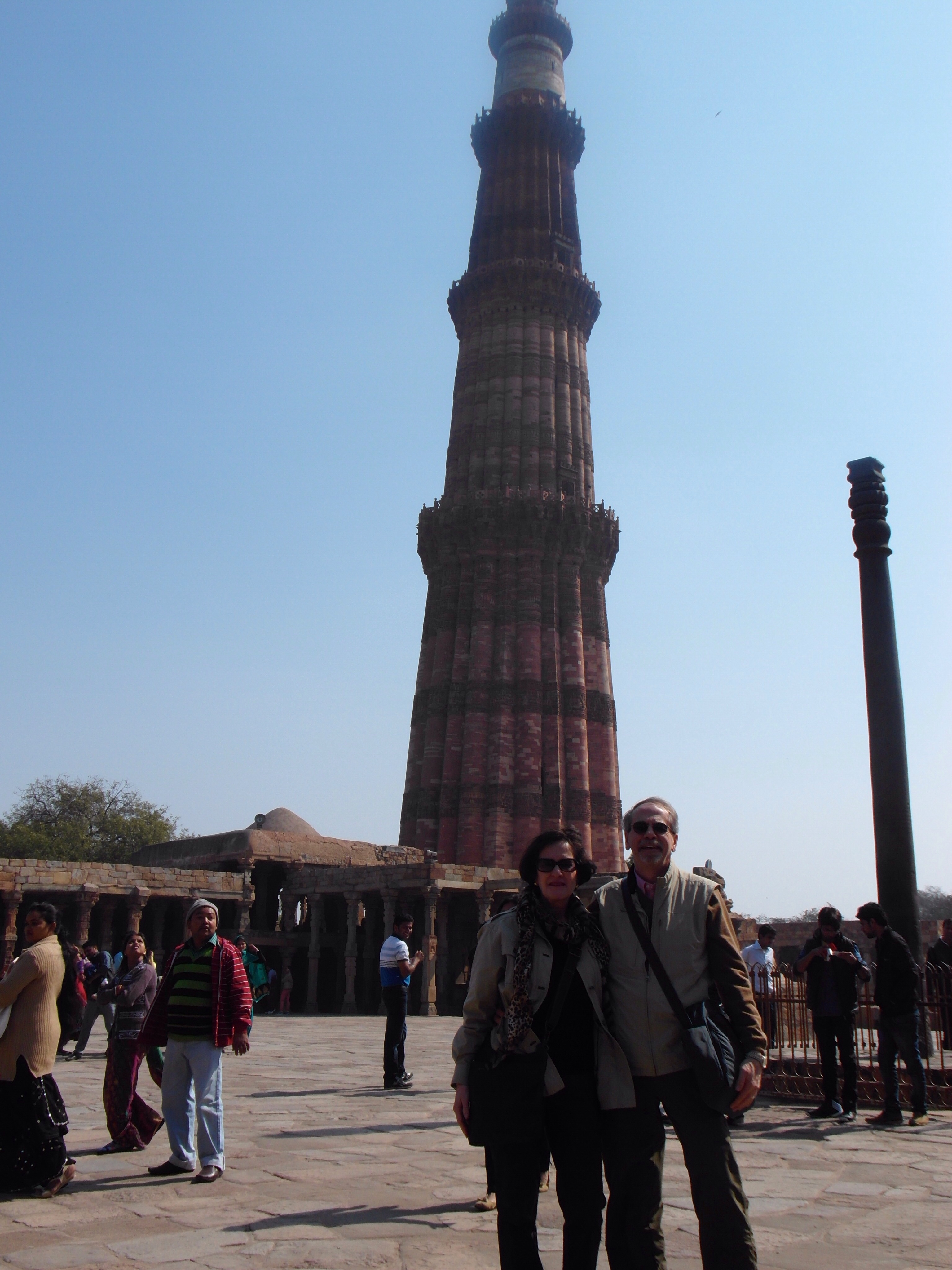
We visited Qutab Minar in the southern part of New Delhi, built in 1192 by the Turkish Sultan Aibak.
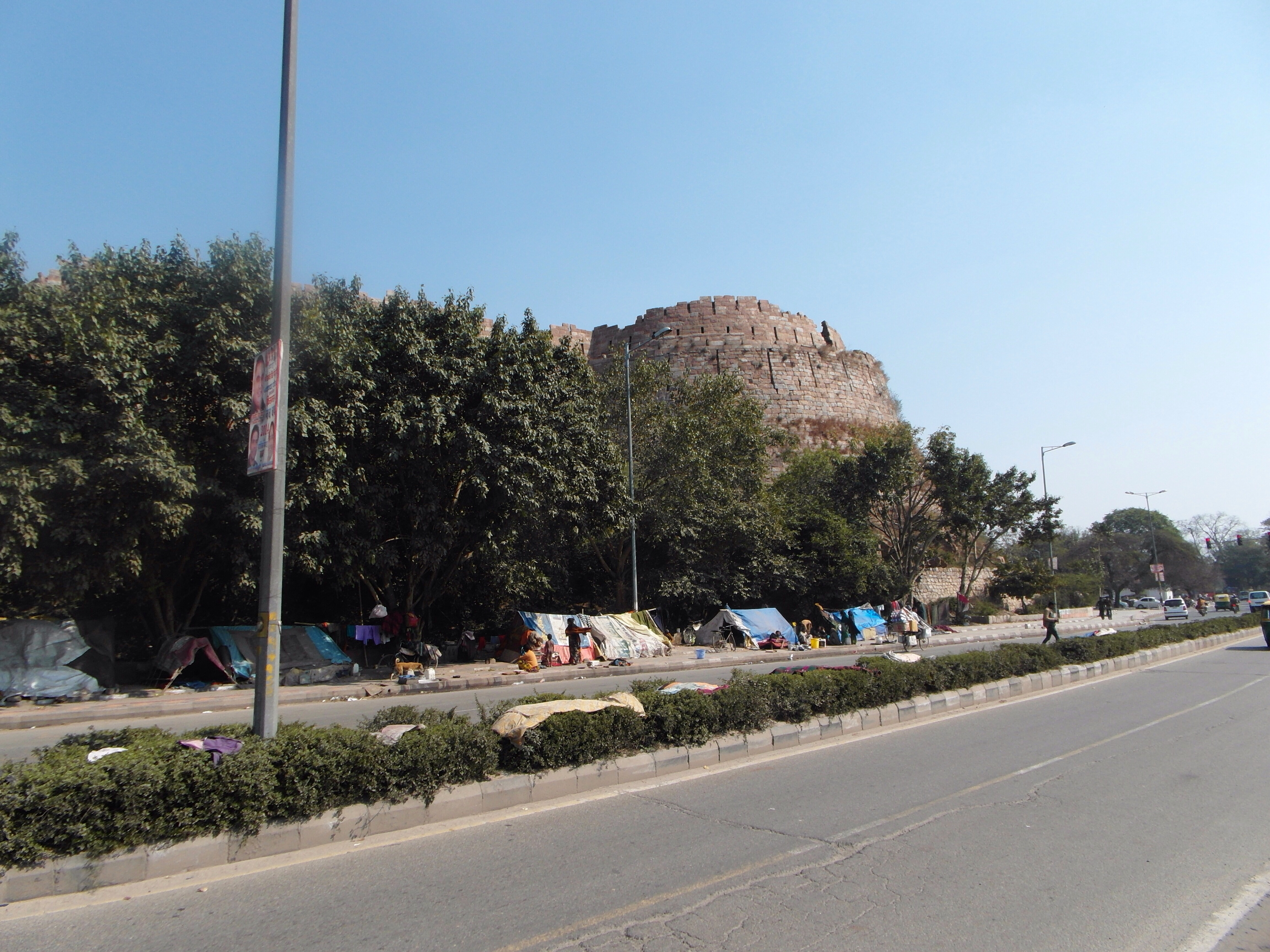
We also visited the fort of Tughlakabad, an immense walled city built in the 1320s by another Turkish Sultan of Delhi.
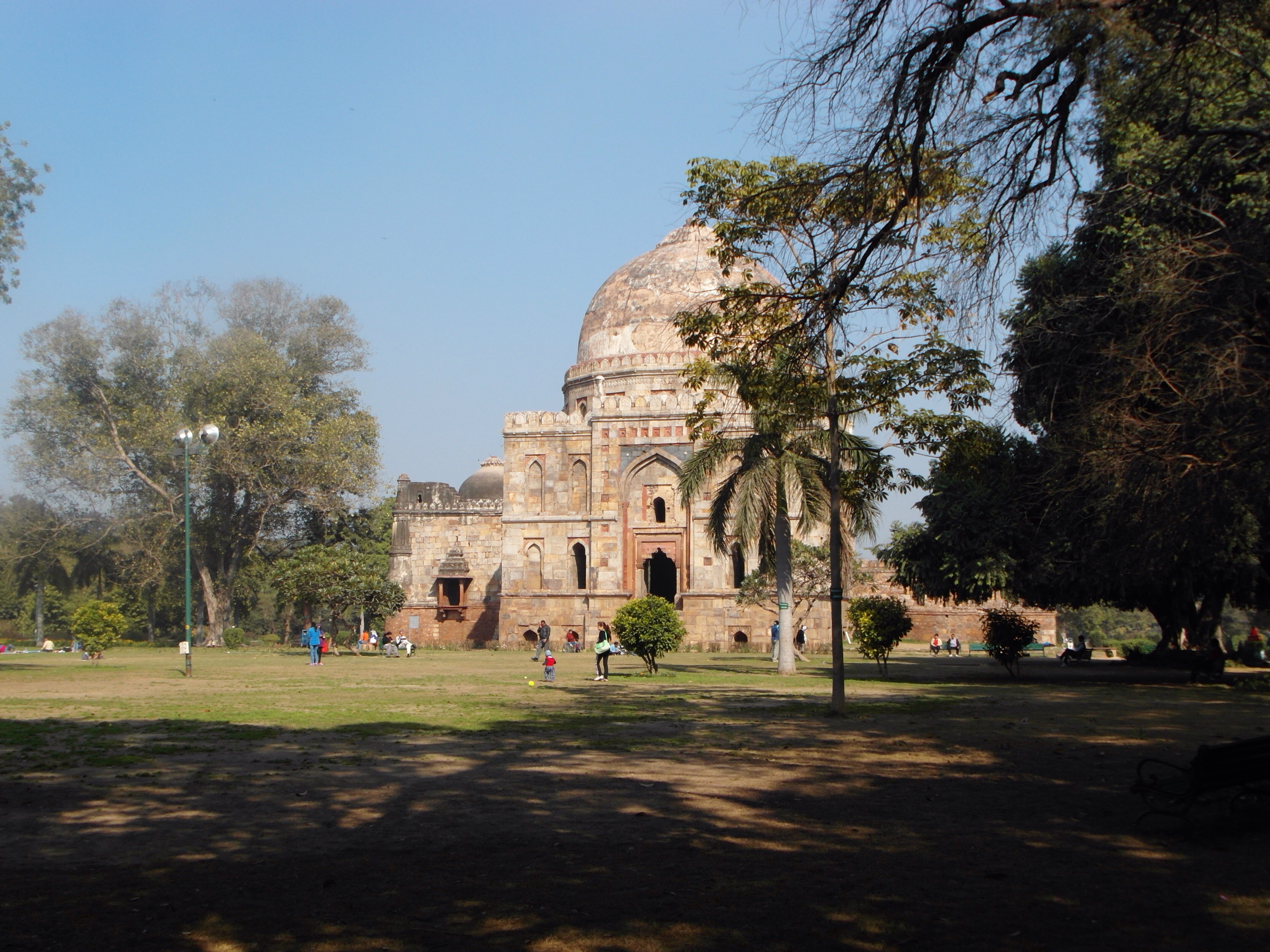
We walked through the Lodhi Gardens, named after the Afghan dynasty which conquered and ruled Delhi in the 15th century.
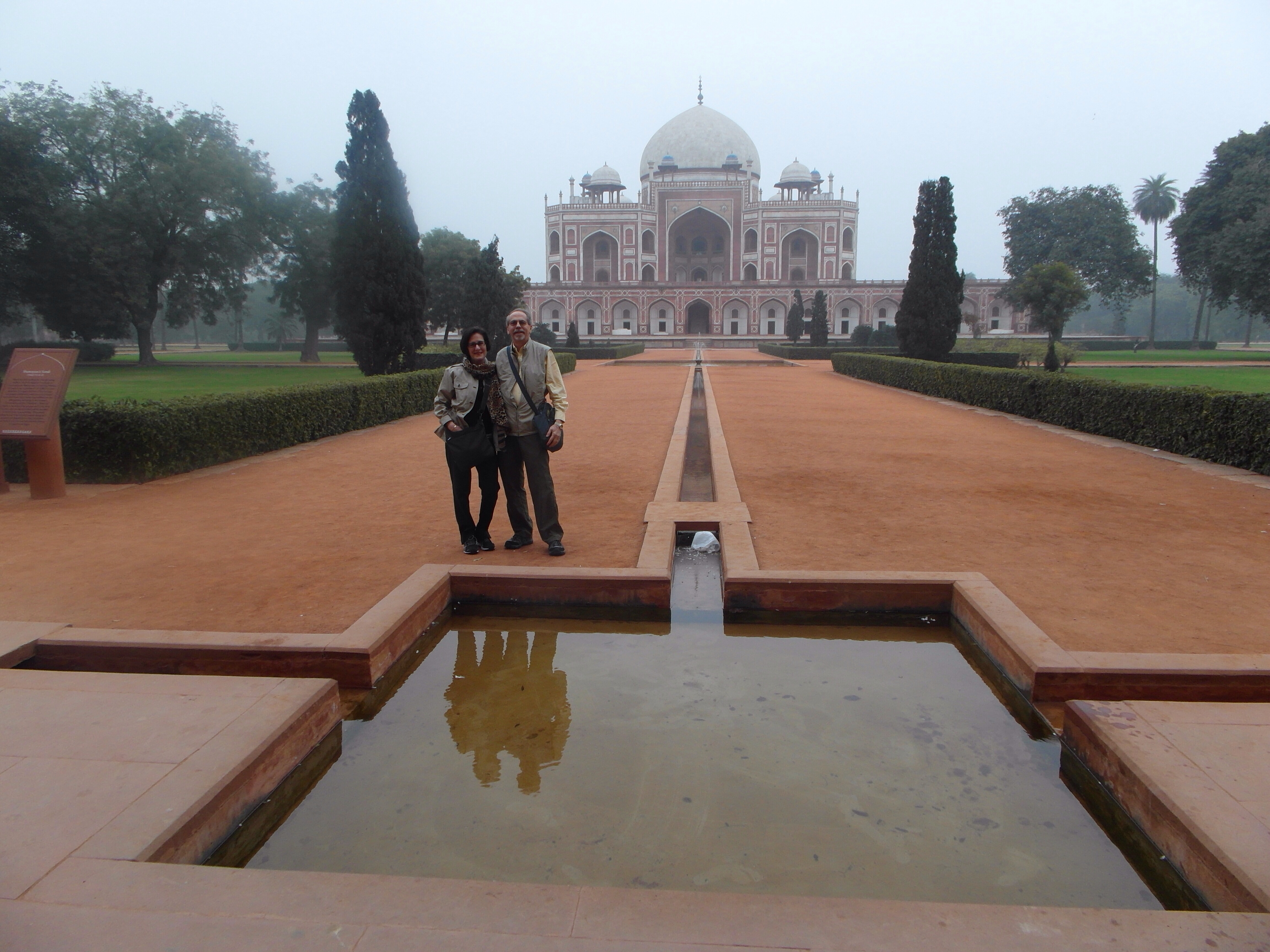
We toured Humayun’s Tomb, a fascinating, well preserved and well maintained historical site. Emperor Humayun, who ruled in the 16th century, was part of the Persian “Mughal Empire”, which ruled northern India for about 300 years.
The British Empire followed, and much of “New” Delhi, including most of the government buildings, were built during that period.
More than a thousand years of foreign domination, and what one could claim to be the failure of non-violence in the face of well armed and determined invaders.
And then came Gandhi!
Room service Maharajah-style : Oberoi Rajvilas, Jaipur, Rajasthan, India
When we ordered tea and toast from room service for delivery at 5am, little did we know that room service at the Oberoi Rajvilas in Jaipur is taken to a whole new level.
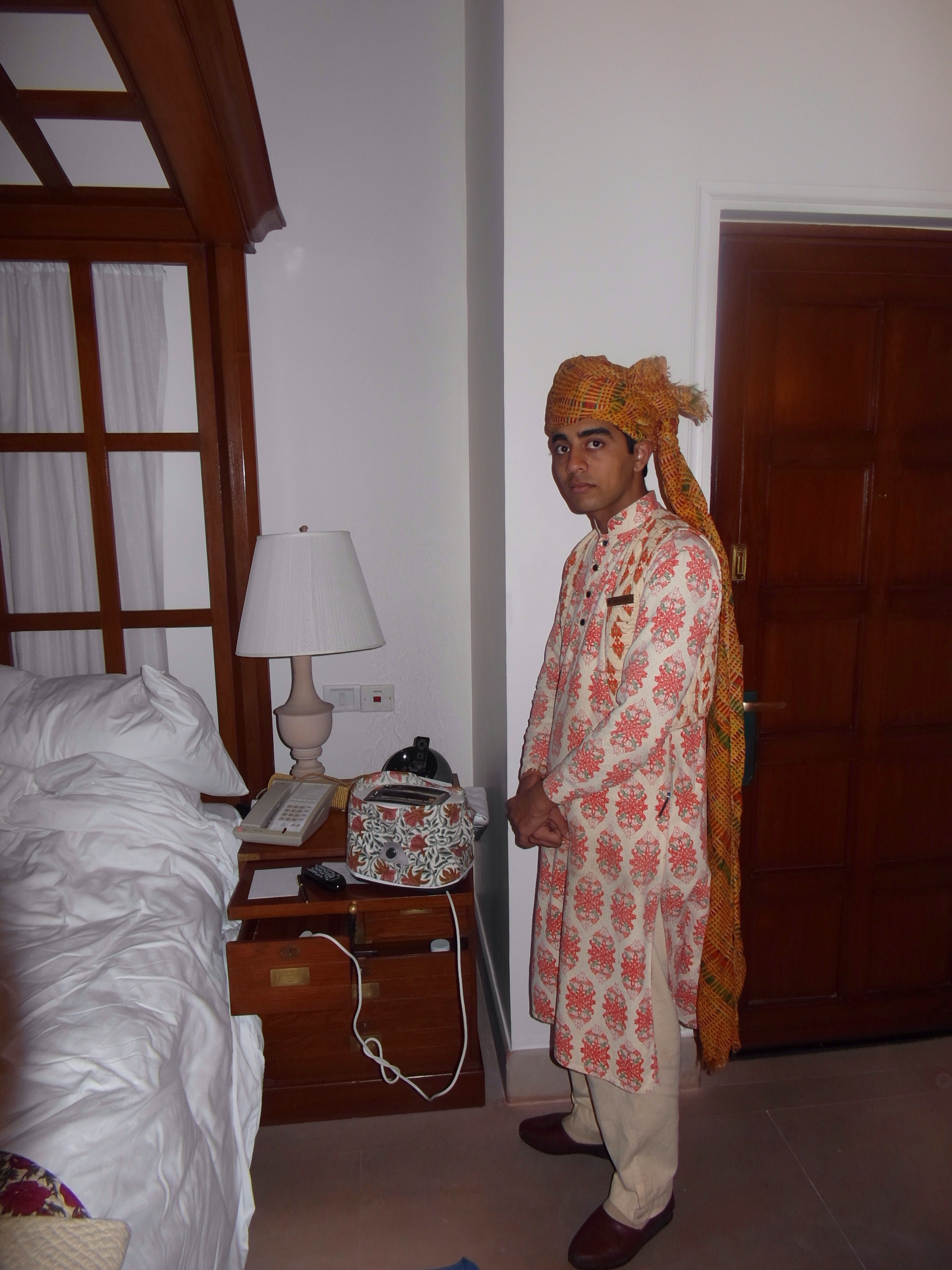
The waiter brought a toaster to the room and patiently toasted six pieces of bread to perfection before brewing our tea at the last moment in order to make sure the tea would be of the ideal strength.
Why room service at 5am? Because we are flying over Jaipur in a hot air balloon at sunrise, an experience which we will no doubt blog about at some point.
Perpetuating the best of colonial living in the heart of New Delhi: The Delhi Gymkhana Club
“You’ll get your dentures before your get a membership at the Delhi Gymkhana Club”, headlined a 2011 Times of India article about the Delhi Gymkhana Club. “That’s if you apply young”, the article went on, “It will be a 37-year wait if you apply now”. That’s the average number of years an applicant has to wait for membership!
Located in the very heart of New Delhi, next to the President’s House, the Delhi Gymkhana Club is the oldest sportings club in India. Created by the British as the Imperial Gymkhana Club, the ultra exclusive club of the senior political, administrative and military elite in India celebrated its centennial anniversary last year.
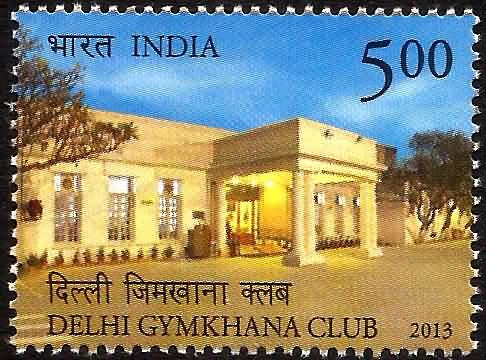
Occupying what may be the choiciest piece of real estate in India, the club boasts a number of sporting facilities, including 26 grass tennis courts and 7 clay courts, a library and reading room in its own separate building as well as extensive social and dining amenities for its members.
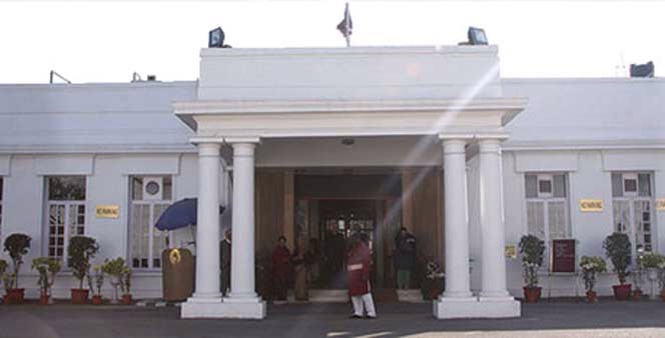
We have been invited to lunch at the Delhi Gymkhana Club on our first full day in India by longtime members of the club and personal friends, he a retired politician who served in parliament for a number of years and was formerly a senior member of the police service, she a retired senior member of the Indian administrative service.
We feel as if time has stood still as we enter the main building and are escorted to one of the bar areas for cocktails before lunch. There may have been renovations made to the club over the years, but one senses that nothing much has changed and the way of life of the first members of the club has been perpetuated to this day.
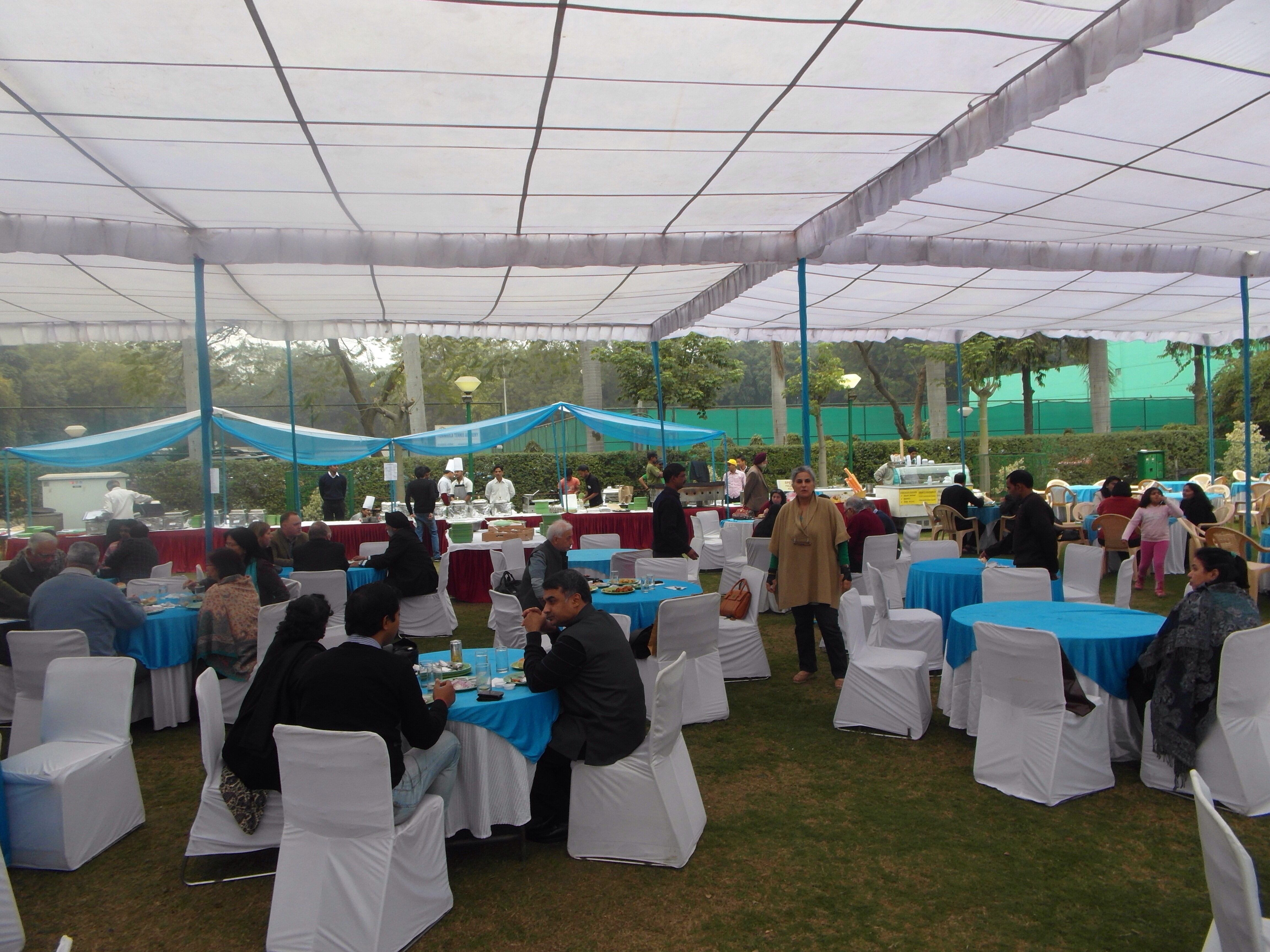
As one would undoubtedly expect in such a club, the bar area occupies the full length of the building with large windows overlooking the lawn outside, which has been transformed for today into an outside buffet lunch area. Unfortunately, yesterday’s blue sky and warm comfortable temperature have given way to a rather cool wind and cloudy skies.
Conversation was easy flowing and time went by quickly. Our hosts had met when they were both in training at what I understood to be the one and only training academy for all of India’s new recruits into the government bureaucracy, a huge facility in Northern India. At that time, they had both just successfully passed the public service commission exam; he was going to make a career in the police service, she in the administrative service (formerly called the civil service under the British rule).
But they were of a different caste, and her parents refused to agree to a marriage for that reason and refused to provide any dowry. They were unable to receive a traditional wedding, and had to settle for a civil ceremony.
The caste system is still completely ingrained into the Indian way of life, in spite of continuing efforts to eliminate it. There are hundreds if not thousands of castes in India and everyone finds out easily and quickly which caste you belong to, meaning you were born into. Apparently, one’s name is often enough to reveal one’s caste. Many types of applications and documents still ask for the caste of a person.
Engrossed in our conversation, which covered a wide range of subjects touching the Indian way of life as well as personal matters of interest to friends, we almost lost track of time but decided eventually that we should grab lunch before dinner came. The plan had been to eat inside in one of the various dining rooms with waiter service but we courageously opted to try out the lawn buffet instead.
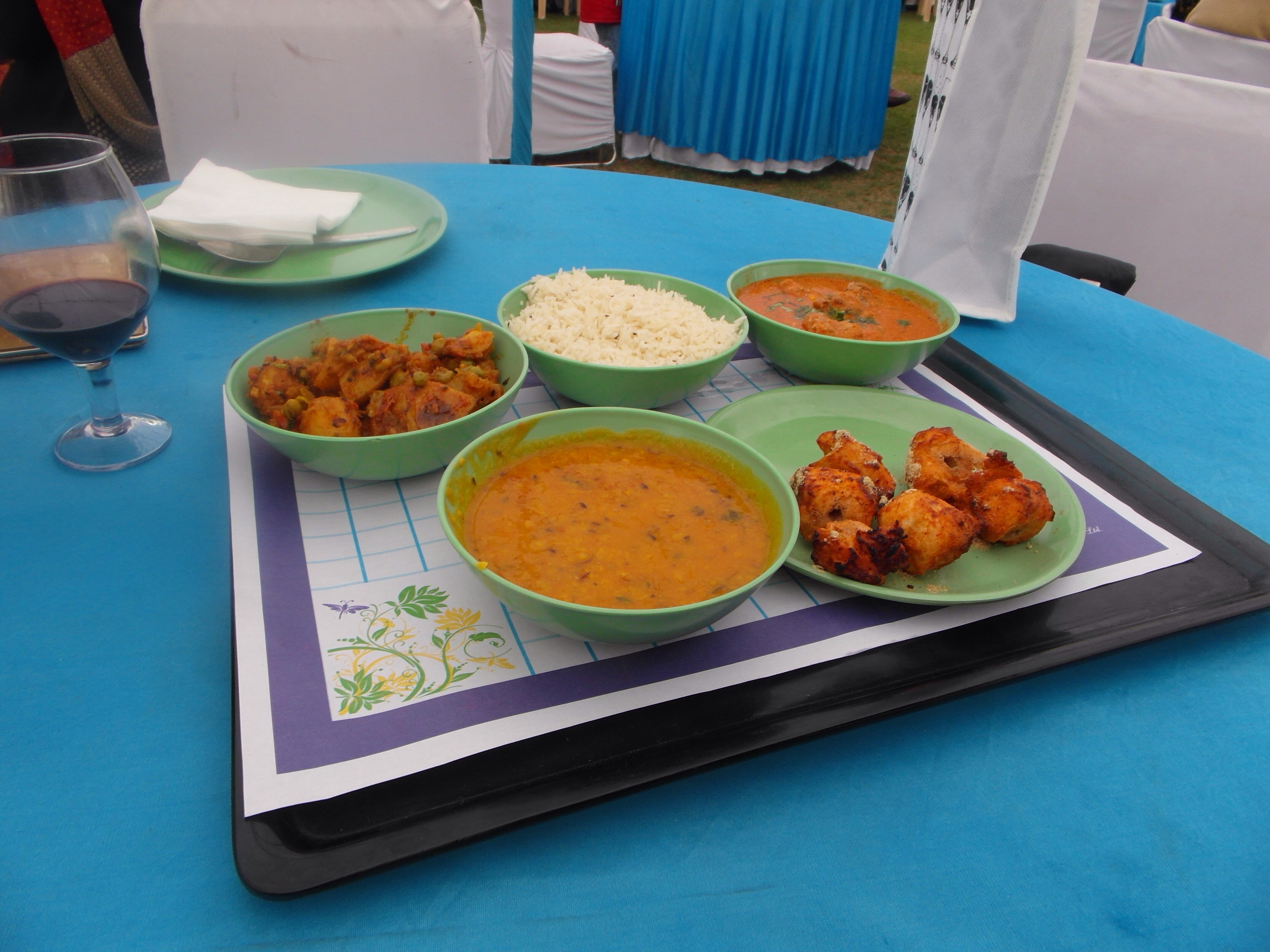
My determination to avoid local food for the first few days of our trip melted away after I walked the length of the buffet offerings, and I eventually decided to share with the rest of our table what turned out to be delicious and fresh Indian food: Dal Yellow, Chicken Tikka, Chicken Tandoori, Aloo Matar, rice and fresh Roti bread.
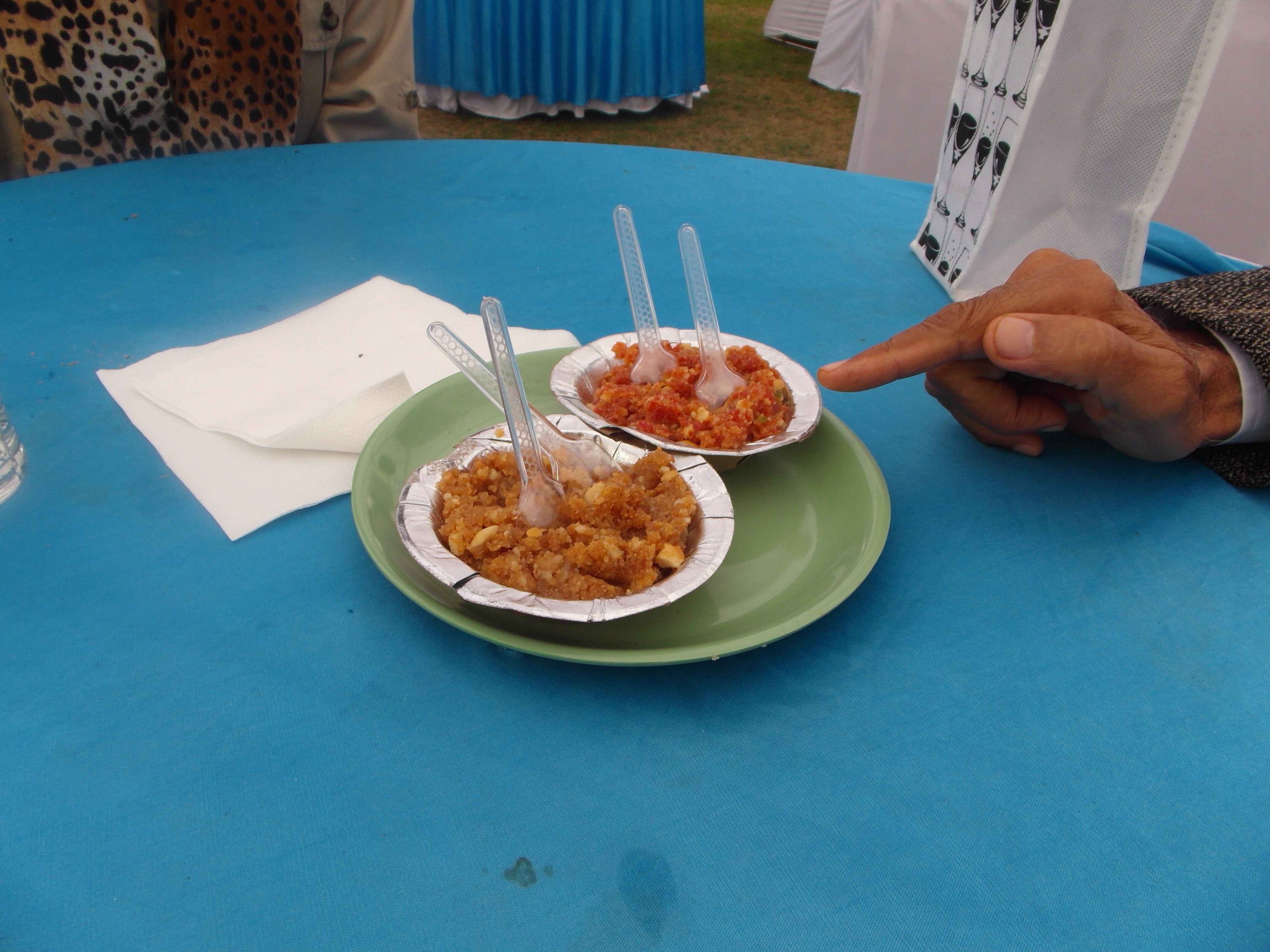
For dessert, we had a taste of two sweet dishes, Gajar Hawal (carrot dessert) and Dal Hawal (lentil dessert).
Sandwiched between a number of touring stops which will give me material for numerous future postings, our luncheon at the Delhi Gymkhana Club helped make our first full day in Delhi a memorable one. Thanks to our gracious hosts, we experienced yet another fascinating facet of life in India!
Where Bollywood meets Epcot: The Kingdom of Dreams in Gurgaon, India
For an unconventional twist to your vacation in India, consider a visit to the Kingdom of Dreams, the recently completed Disneyesque mega entertainment center in Gurgaon, about ten miles southwest of the Indira Gandhi International Airport of New Delhi.
Spending an afternoon at the Kingdom of Dreams represented for us an alternative way to fight off jet lag on our day of arrival in India.
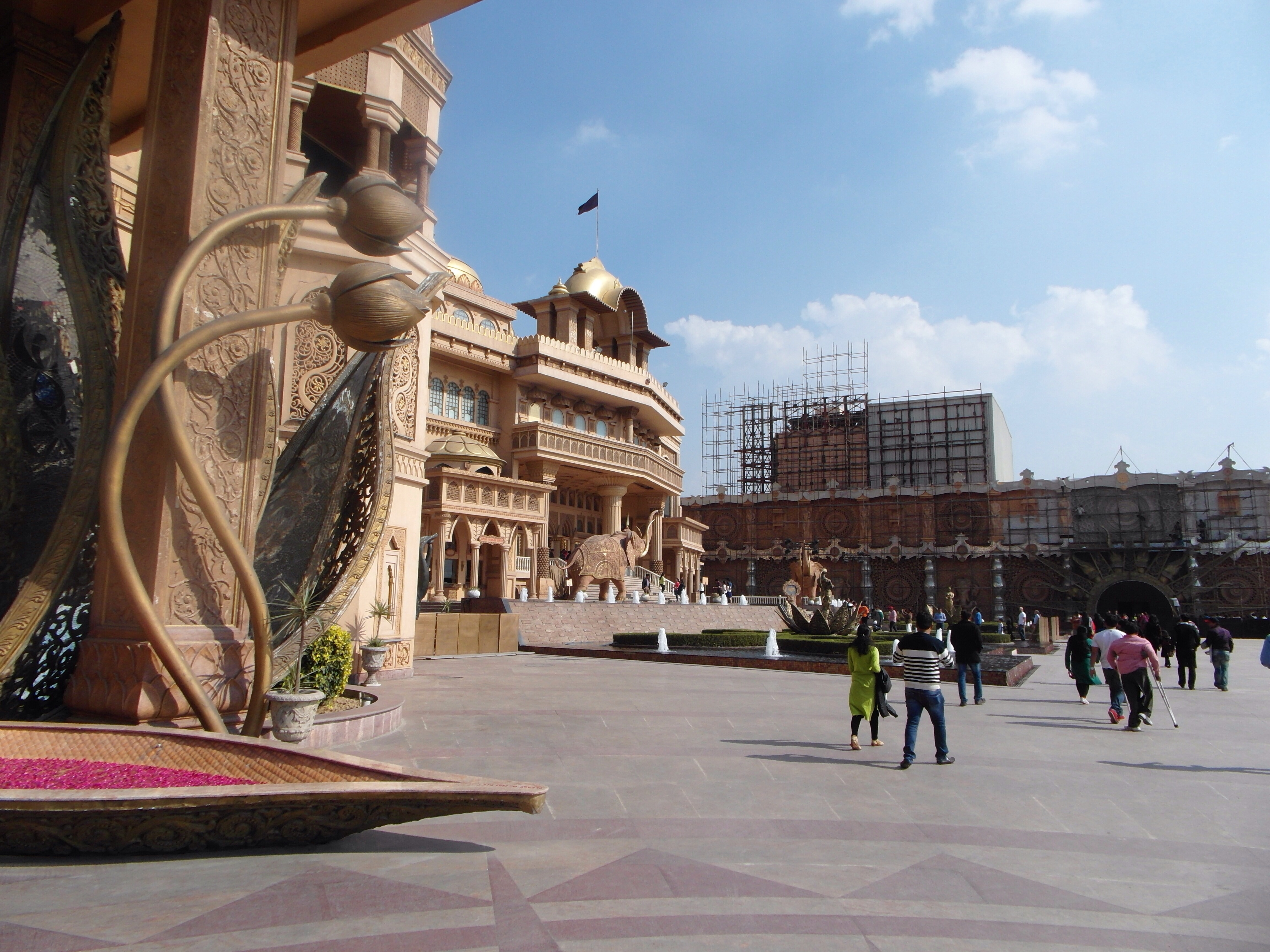
The Kingdom of Dreams in Gurgaon
We had woken up a few hours earlier to an energizing bright blue morning sky as our British Airways 747 was finishing its passage over the snow-capped mountains of Afghanistan and beginning its descent into the vast plains of the Indian subcontinent.
After initiating its approach towards the Delhi airport over Pakistan, the plane had crossed into India and landed just about on time at 9:20am and taxied at the gigantic and modern Terminal 3, where customs and baggage claim procedures went smoothly and quickly.
As expected, the representative of GeTs Holidays, our tour operator for this trip, was waiting for us outside the baggage claim area and he led us to the massive parking structure attached to the terminal to meet our driver and his perfectly clean and welcoming Toyota Innova vehicle.
Leis made of fresh Marigold flowers, a small bouquet of fresh roses as well as a welcome gift accompanied the warm welcome we received. Marigold flowers are used for good luck and for welcoming new things, said Vijendra, the company representative.
Cold bottles of Kinley water were on each side of our very comfortable seats. Interestingly, each bottle displays a large bold inscription: “Please crush bottle after use”, no doubt as a protective measure against those crafty Indians who refill used bottles of water and reseal them with glue before trying to resell the bottles as new and clean to unsuspecting customers.
Although delayed by bumper to bumper traffic, we enjoyed our ride from the airport to the Imperial Hotel, since it took us through the wide boulevards of New Delhi, through beautiful Shanti Path (Peace Road), the avenue of the embassies which ends at the President’s House, then along large avenues lined with government ministries and other important buildings with a fabulous view of the famous India Gate in the distance. In contrast with a capital city like Washington, the military is omnipresent in New Delhi and the central area is full of military bases and buildings right next to the government buildings.
The area around the Imperial Hotel is nothing but a mess, thanks to a huge construction site for the Delhi metro. But the interior of the hotel makes up for it with its colonial opulence and first class amenities. An unveventful check-in, a guided tour of the hotel and a quick shower later, we are on our way to the Kingdom of Heavens.
Vikram will be our driver for the next few days, as he will be with us in Delhi, Jaipur, Ranthambore and Agra. He is full of wit and good humor and we start learning some of his sayings, like “Good Horn, Good Brake, Good Luck” (apparently all that you need to drive in India).
Did you know that India has 22 official languages? Apparently, people from each state, of which there are 35, speak their own language as well as the common Hindi language. Vikram speaks Rajasthani at home and with people from his home state of Rajasthan, and speaks Hindi with people from other states.
The Kingdom of Dreams is located in Gurgaon, a city of about one and half million people which started to thrive after General Electric opened a software outsourcing office there in 1997. Now it is said that more than half of all Fortune 500 companies have a presence in Gurgaon and the city has one of the highest per capital income in the country.

Our first stop at the Kingdom of Dreams is the vast Nautanki theater, where we are to see the Bollywood musical comedy Jhumroo. We quickly find out that the level of acoustic technology in the theater is easily enough to burst your eardrums, but the boisterous crowd appears to love it. The show is said to include old Bollywood favorite songs (something I am unable to confirm, although I can attest to the music being lively and energetic) and the staging, with about 30 singers and dancers on stage and gigantic screens on each side, is colorful and spectacular. We are seated in huge comfortable armchairs in the VIP section, and seated next to a woman of Indian descent who lives in Connecticut who tells us that the stars of the show are famous Bollywood people.
Since the dialogue is in Hindi, we can’t really appreciate the plot of the musical and finally decide to leave after half an hour or so, if only to preserve what’s left of our hearing.
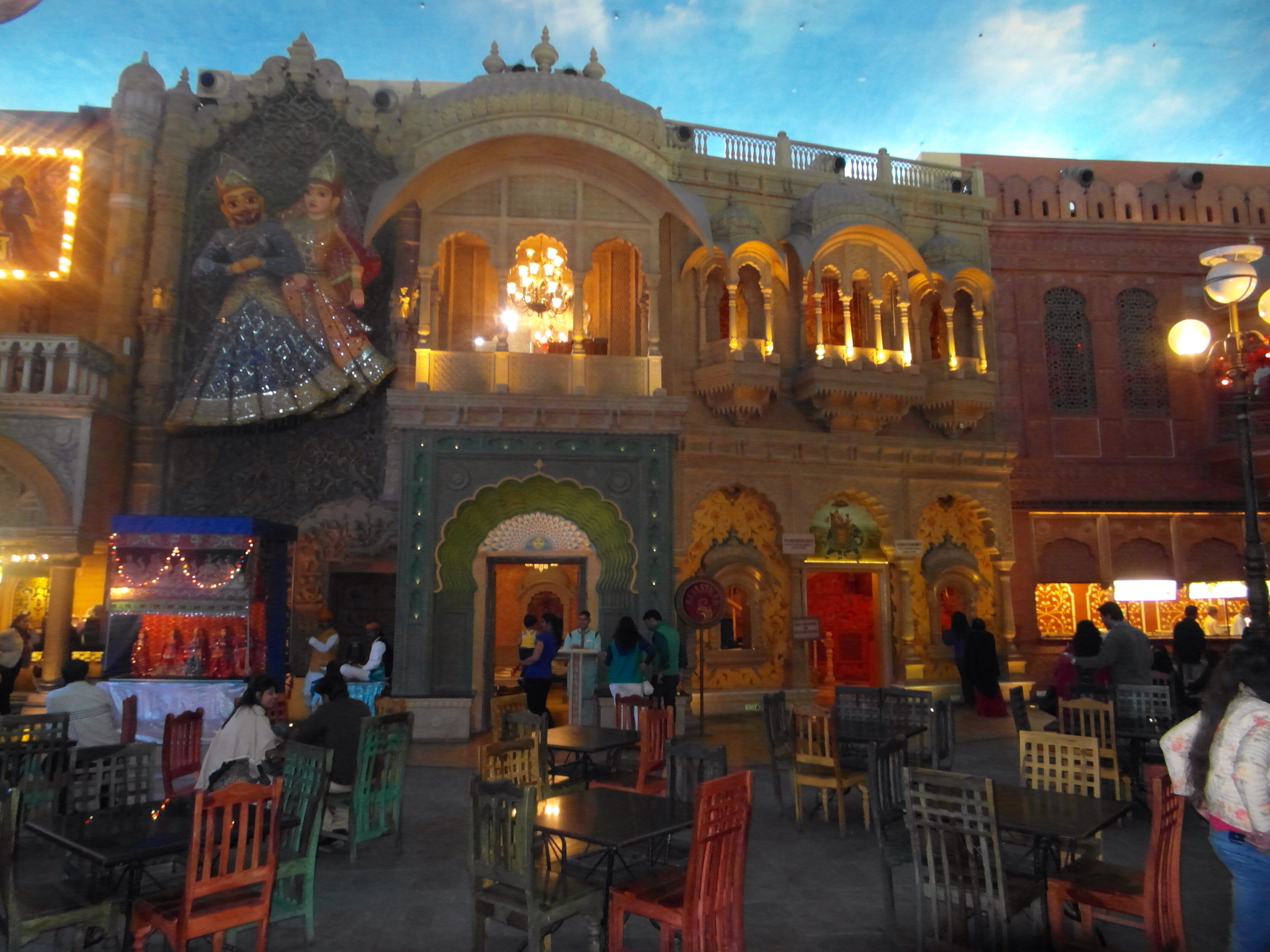
Along the Cultural Gully street at the Kingdom of Dreams in Gurgaon
We walk over to the Cultural Gully, an immense and tall building housing an interior “street” lined with structures from each of 14 different Indian states, all under a painted slightly clouded blue sky reminiscent of the Venetian Casino in Macau or in Las Vegas. Various entertainers are performing along the street. Each state has a restaurant or food counter with food from that state, as well as a store selling products from that region. The street ends at the Goa beach, or if you prefer, the kids’ sandbox.
Since this is our first day in India and believe that our stomachs need a few days to adjust to the local food, we decide to restrain ourselves and avoid eating any of the wide range of food available. Instead, we opted to return to the Imperial Hotel and feast for dinner at its reputed Italian restaurant, San Gimignano, which provided us with pretty near authentic Italian food, pampered service and soothing Italian music, a welcome contrast to the manic frenzy of the afternoon.
Clearly, the Kingdom of Dreams is an interesting new concept, of interest to families with children in particular. Our first look at what promises to be a myriad of different facets of India.