Category Archives: Other
Live the life of a Greek shipping magnate!
A stay at the Villa Galini Hotel in the Halkidiki region of northern Greece probably represents one of the very few opportunities you will ever have to live the life of a Greek shipping magnate. And that is because, before being turned into a hotel, Villa Galini was the residence of Yiannis Carras, a Greek shipping tycoon who lived there until his death in 1989.
In 1960, while sailing in the Halkidiki region of northern Greece aboard his yacht Carita, Yiannis Carras had fallen in love with the area and ended up buying a huge tract of land on the Sithonia peninsula, just south of the coastal town of Neos Marmaras. He named his new property Porto Carras.
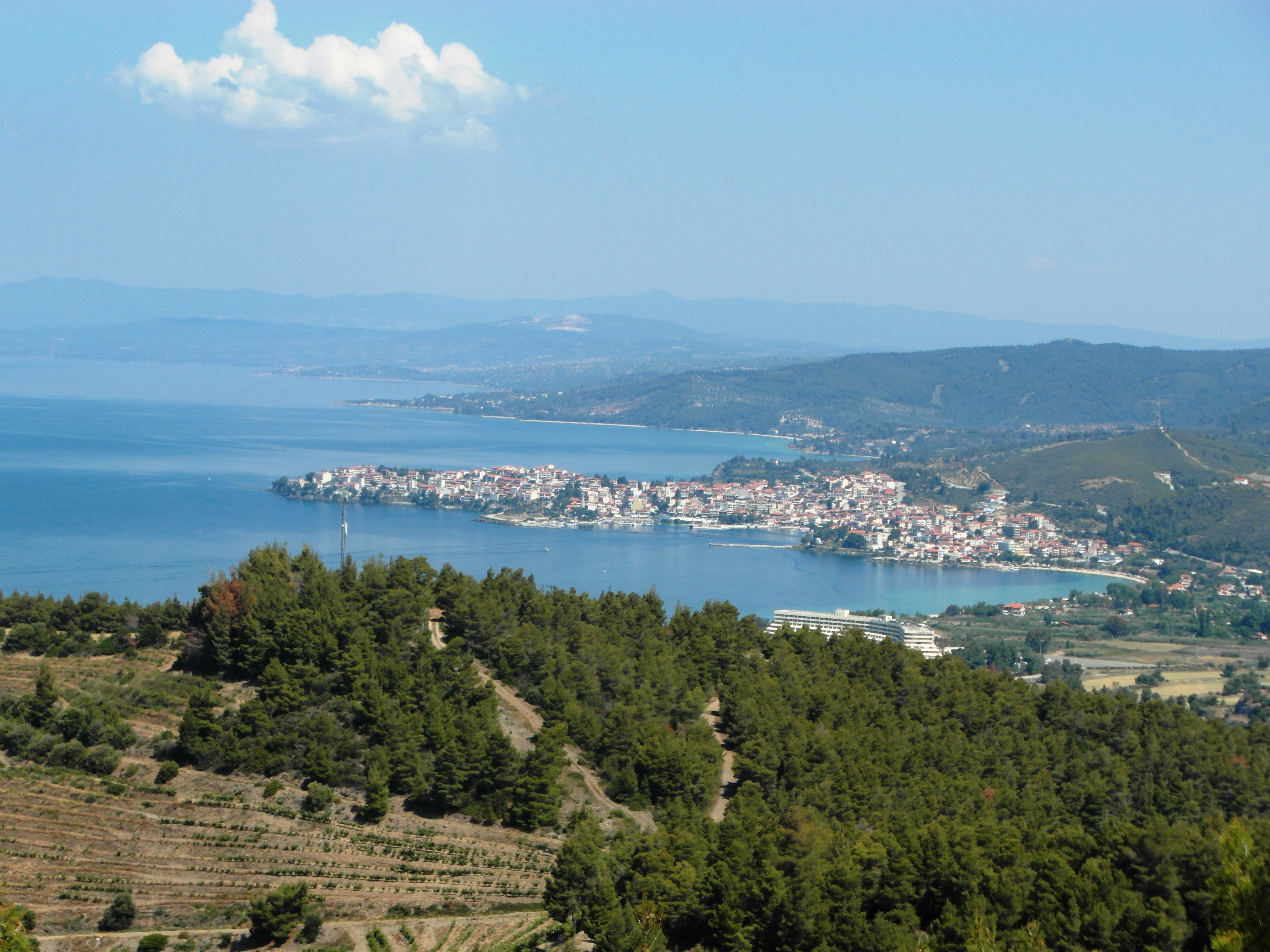
The Porto Carras vineyard and the town of Neos Marmaras viewed from a guest room balcony at Villa Galini
He also decided to build himself a new home on the high rocky cliff of Mount Meliton, at the center of his immense new property, on a spot offering eye-popping panoramic views of the coastline and the gulf of Toroneos. When it was finished at the end of the 70s, Villa Galini was celebrated in several magazines as one of the most beautiful buildings in Greece.
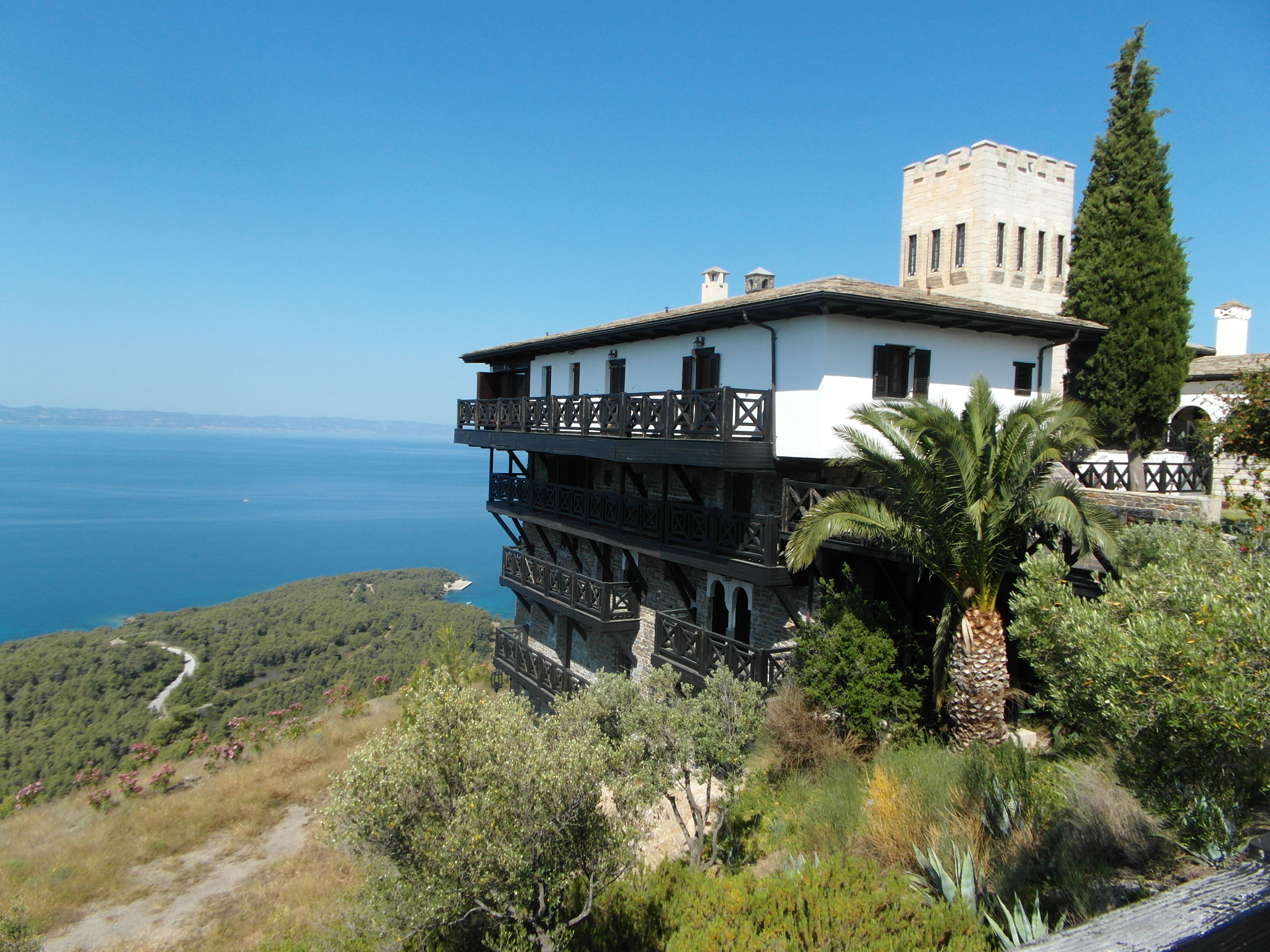
Villa Galini
The views are obviously the primary assets of Villa Galini, with windows and balconies spread throughout the three sides of the house protruding from the cliff. But the views are nowhere as phenomenal as outside on the immense terrace of the pool area. The blues of the pool, the sea and the sky seem to blend themselves into a feeling of infinity and bliss.
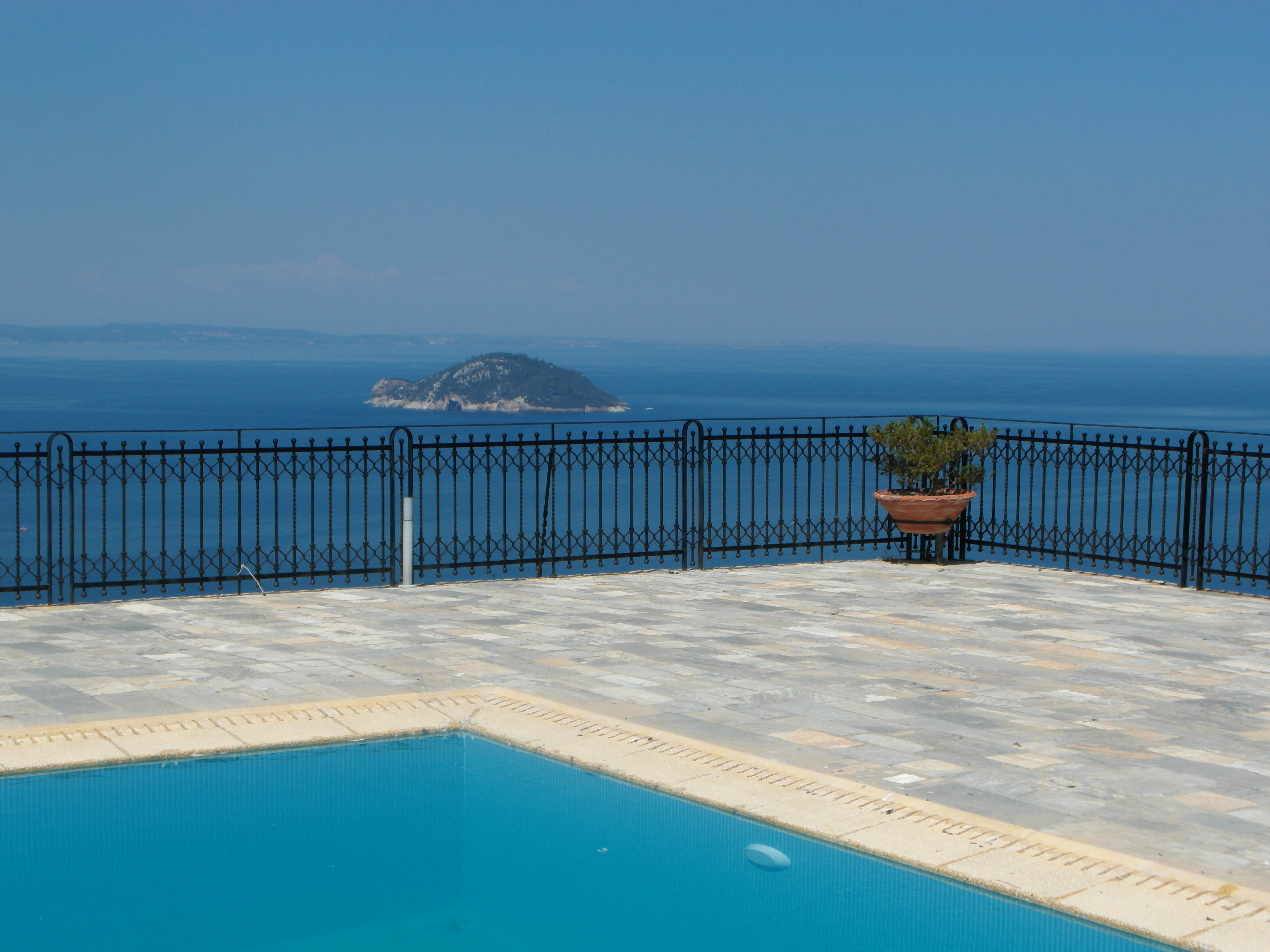
View of Turtle Island from the pool terrace at Villa Galini
There are large living areas both outside around a large central courtyard as well as inside in beautifully decorated rooms along the sea side of the mansion.
Lest you think that Villa Galini is just your average billionaire’s mountaintop mansion, featuring several floors of richly furnished guest rooms with views to die for, think again. It seems that Yiannis Carras had a lot of interesting friends and visitors at Villa Galini. Queen Juliana of Holland, Salvador Dali, the son of Aga Han, Rudolf Nureyev, President Francois Mitterrand of France, Konstantinos Karamanlis, Margot Fonteyn, Joan Baez, Fiona Von Thyssen, the Rockefellers, Prince Albert of Monaco, President Vladimir Putin, Valery Giscard d’Estaing to name a few.
Some simply left an autographed picture and you will see many of them throughout the house. My favorite is a picture of Yiannis Carras with Melina Mercouri.
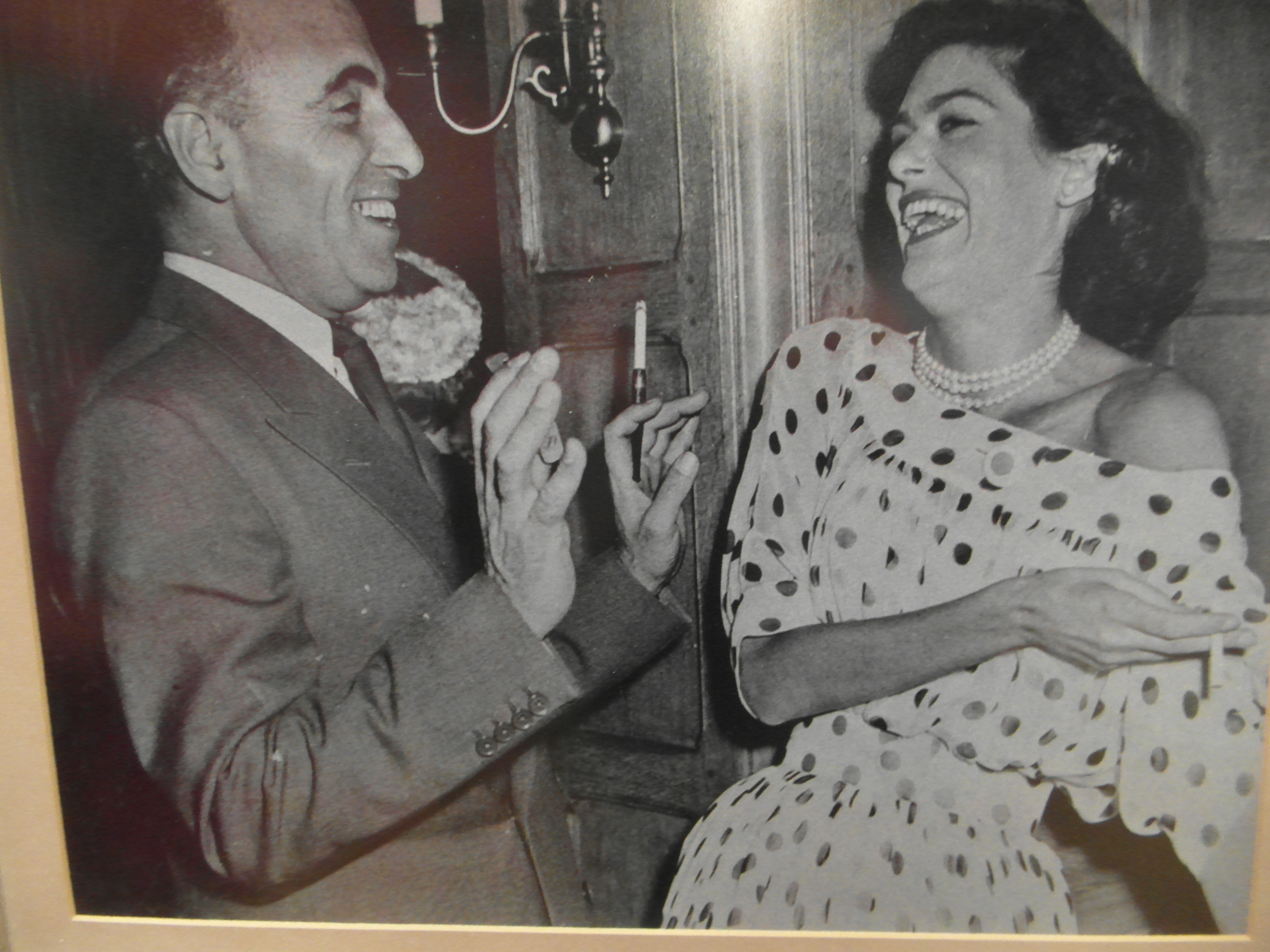
Picture of Greek shipping magnate Yiannis Carras and Melina Mercouri at Vila Galini
But others left their imprint in other ways. One of the guest rooms has a Salvador Dali bathroom, and there are a couple of impressive Dali sculptures in the courtyard.
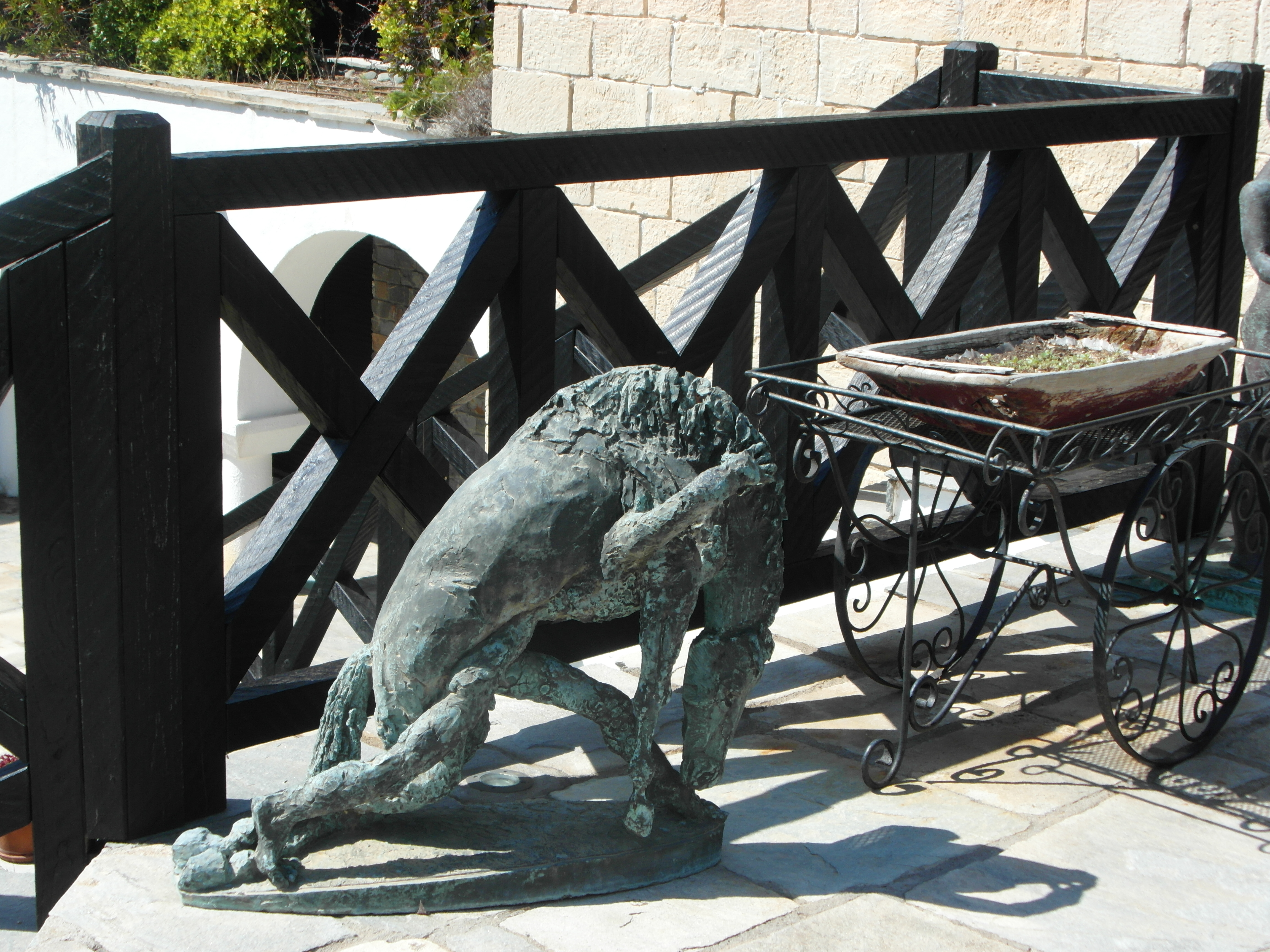
Salvador Dali sculpture in the central courtyard of Villa Galani
There is a magnificent colorful alcove room on the main floor by Yves Saint Laurent. And the music suite of the main living room features the piano of the famous Greek classical pianist, Gina Bachauer.
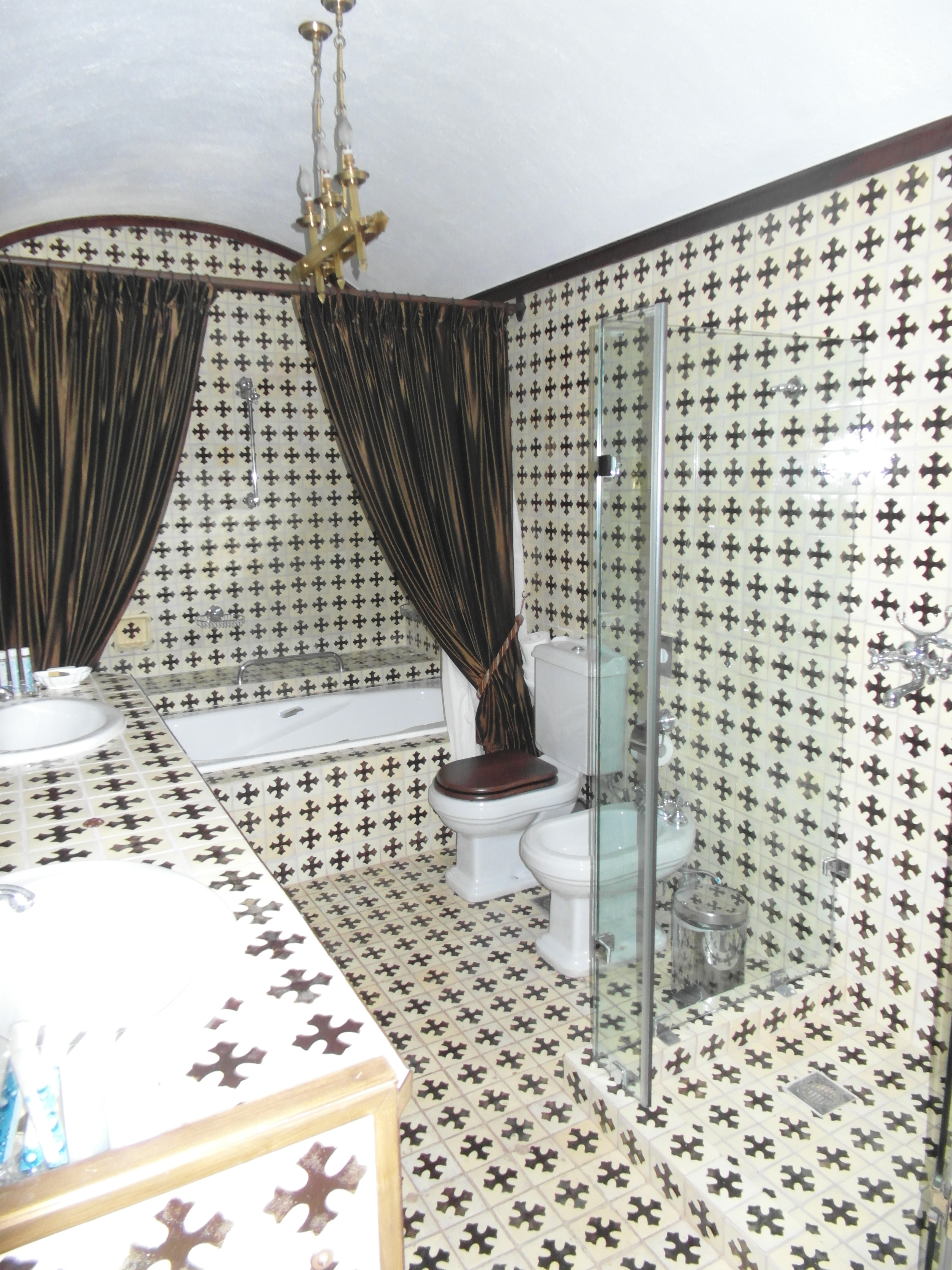
Guest bathroom designed by Salvador Dali at Villa Galini
Villa Galini has been transformed into a hotel which should appeal to all those interested in a totally unique, spectacular and memorable experience. Wedding planners as well as corporate executives in search of a first class locale for meetings, conferences or retreats should give Villa Galini serious consideration. Porto Carras includes three helipads and one the best private marinas in Greece for those who travel in style!
However, should you feel that Villa Galini Hotel is beyond the reach of your wallet, or you simply wish to stay further down the slopes of Mount Meliton, have no fear. Porto Carras is one of the most outstanding resorts in all of Greece. Within the boundaries of Porto Carras lie, in addition to Villa Galini, two five-star hotels, a luxurious casino, two thalassotherapy and spa centers, an olive grove of 45,000 trees and one of the best vineyards in Greece.
But would it not be fun to live the life of a Greek shipping magnate at Villa Galini, if only for a few days?
The autonomous polity of Mount Athos!
In 1960, Greek shipping magnate Yannis Carras, aboard his three-mast 58-meter schooner yacht Carita (later renamed Argonaftis), decided to cruise north to the Mount Athos peninsula of the Halkidiki region of Greece to celebrate the 1,000 year anniversary of the establishment of monasteries around Mount Athos,
I am instinctively intrigued by any anniversary which is worthy of a shipping magnate’s attention, but a millennium anniversary has to be something special and, although I had not heard of Mount Athos before in my Western ignorance of all things related to the Orthodox church, I decided that finding out more about Mount Athos might be worthwhile. Little did I know that I was in store for a real eye-opening voyage of discovery!
Named after the majestic mountain dominating its southern skyline, Mount Athos, the most easterly of the three finger-shaped peninsulas protruding south into the Aegean Sea, has been inhabited by christian monks as early as in the third century AD. Christians believed that the Virgin Mary had landed in Mount Athos with Apostle St John and that the land, referred to as the “Garden of the Virgin”, was sacred territory.
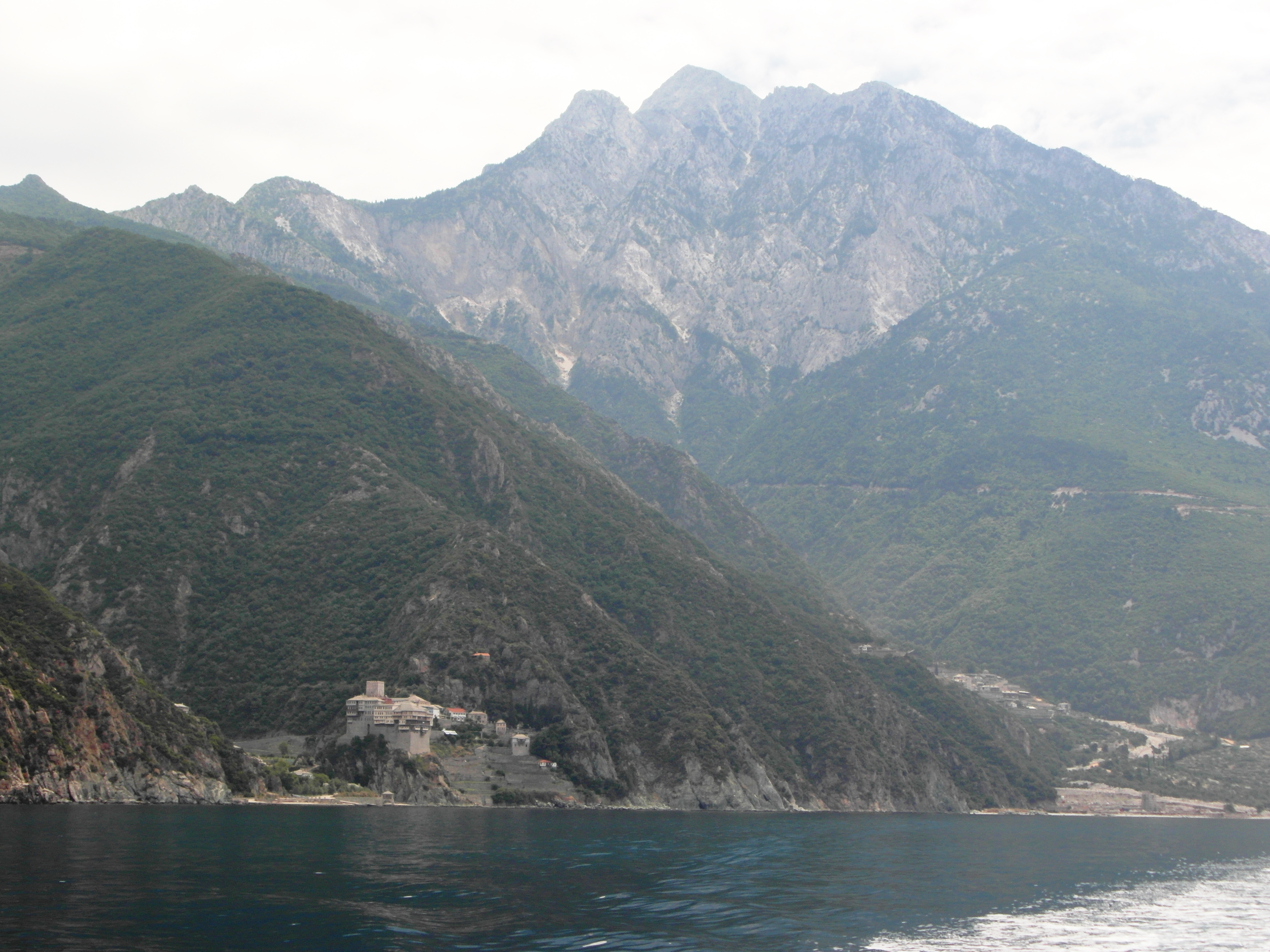
The Holy Mountain was formally set aside exclusively for monks and monasteries of the christian church by the Constantinople Emperor Basil I in 885 AD. During the ensuing one thousand years, monastic rule oversaw the establishment of as many as 180 monasteries on the peninsula, and amazingly survived the fall of the Roman Empire and Constantinople, the breakup of Christiandom into Catholic and Orthodox churches and even the conquest and five-hundred year rule of all of Greece by the Ottoman Empire.
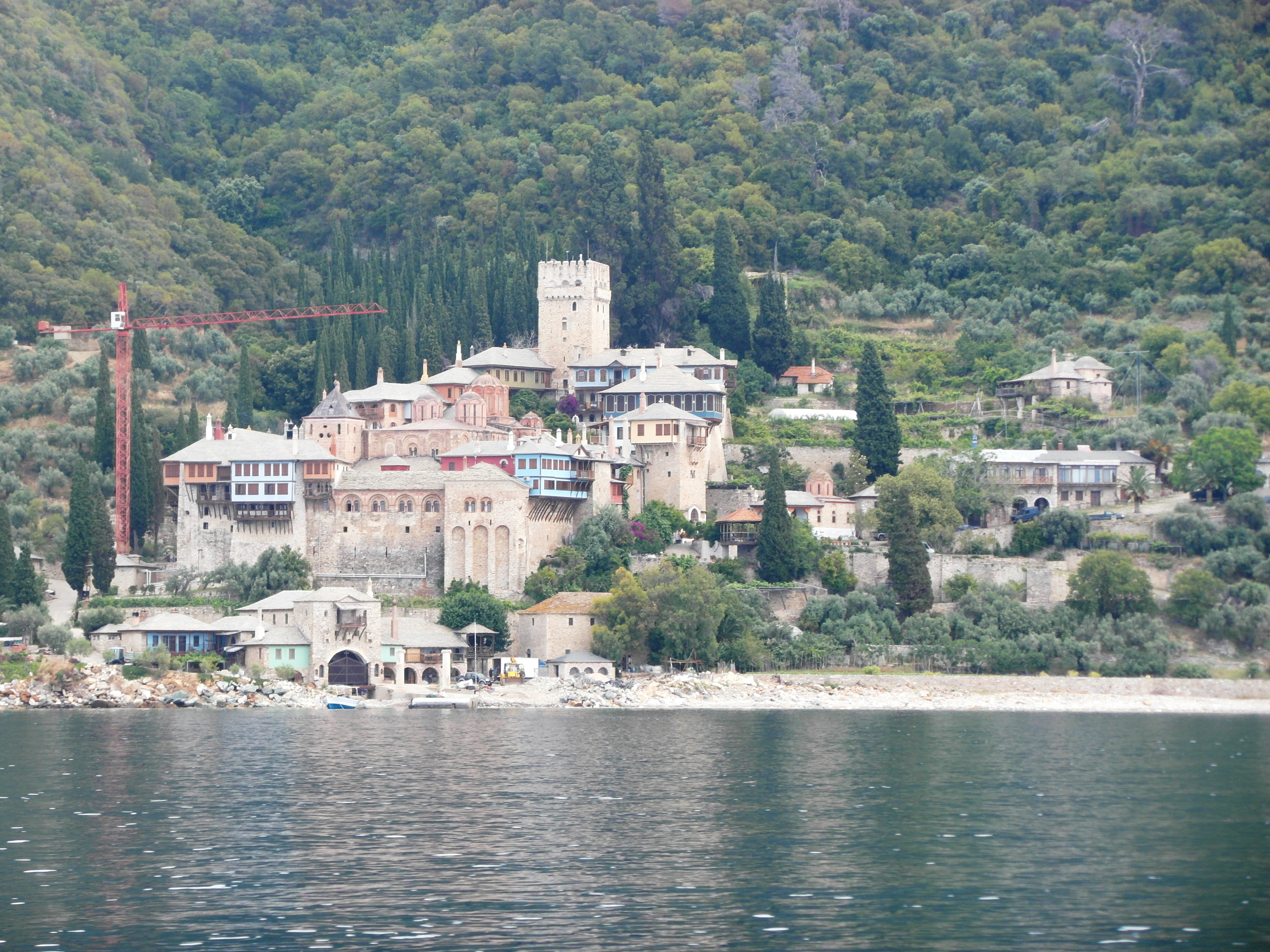
To this day, Mount Athos is for most practical purposes a separate “country”, with special autonomy and powers guaranteed under the Greek constitution as well as the European Union treaties, ever since the Mount Athos monks agreed, in the early part of the twentieth century, to negotiate their entry into the unified Greece following the fall of the Ottoman Empire. In a system largely unchanged since the eight century AD, the twenty Orthodox monasteries currently in Mount Athos by and large operate independently, under the umbrella of a “Holy Community” governing body.
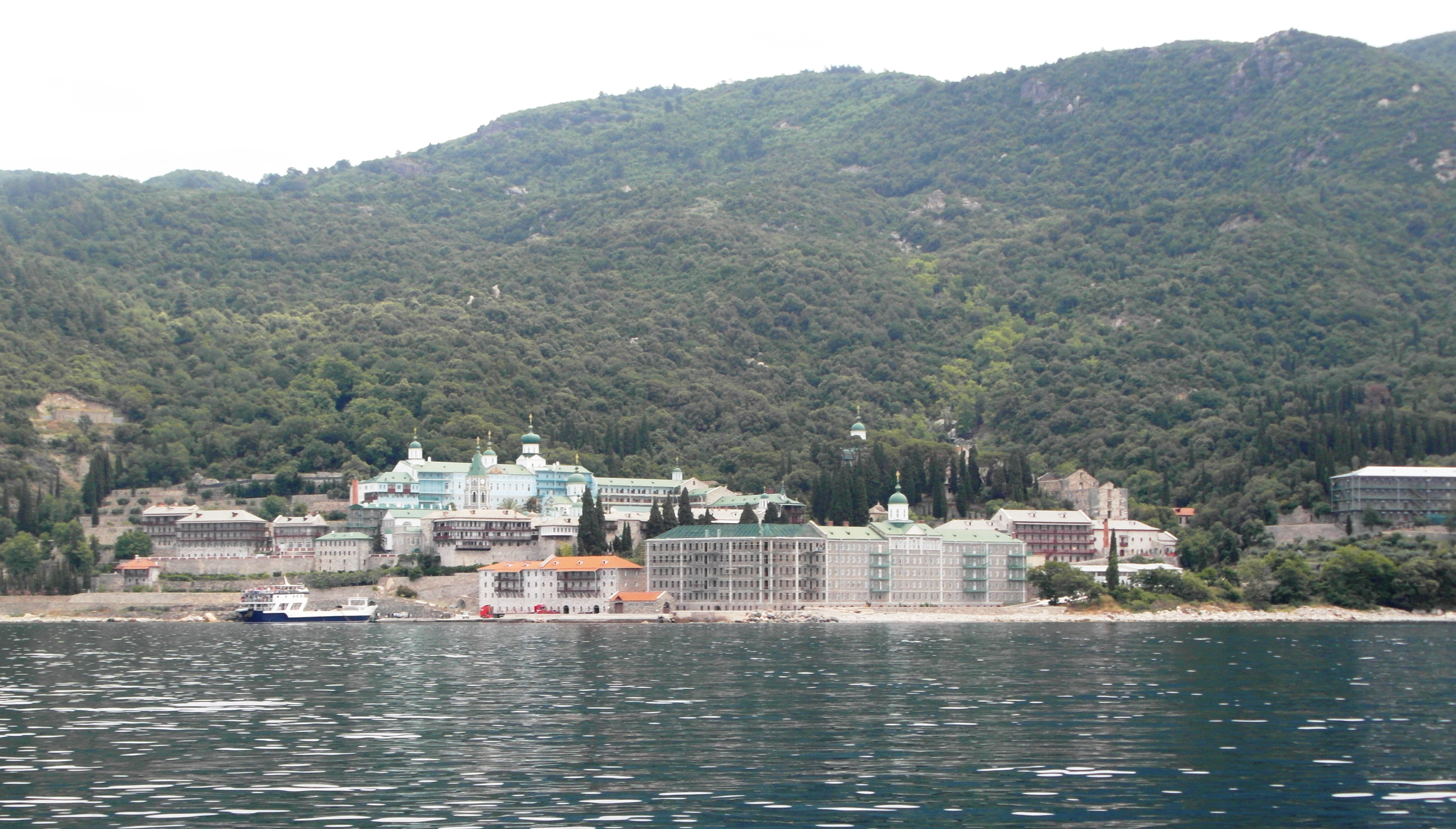
The representative of the government of Greece on the peninsula, technically the governor of the special region, is understandably referred to by some locals as the ambassador of Greece to Mount Athos! He resides in the “capital” of Mount Athos, the administrative town of Karyes.The equivalent of a frontier, near the northern end of the peninsula, prevents entry to all those who have not applied for and received a special written invitation to visit one or another of the monasteries. Save for orthodox monks, the number of entries is restricted to about 120 and the duration of the “visas” is usually less than three days. And only men need apply; this is one “country” where no women are allowed!
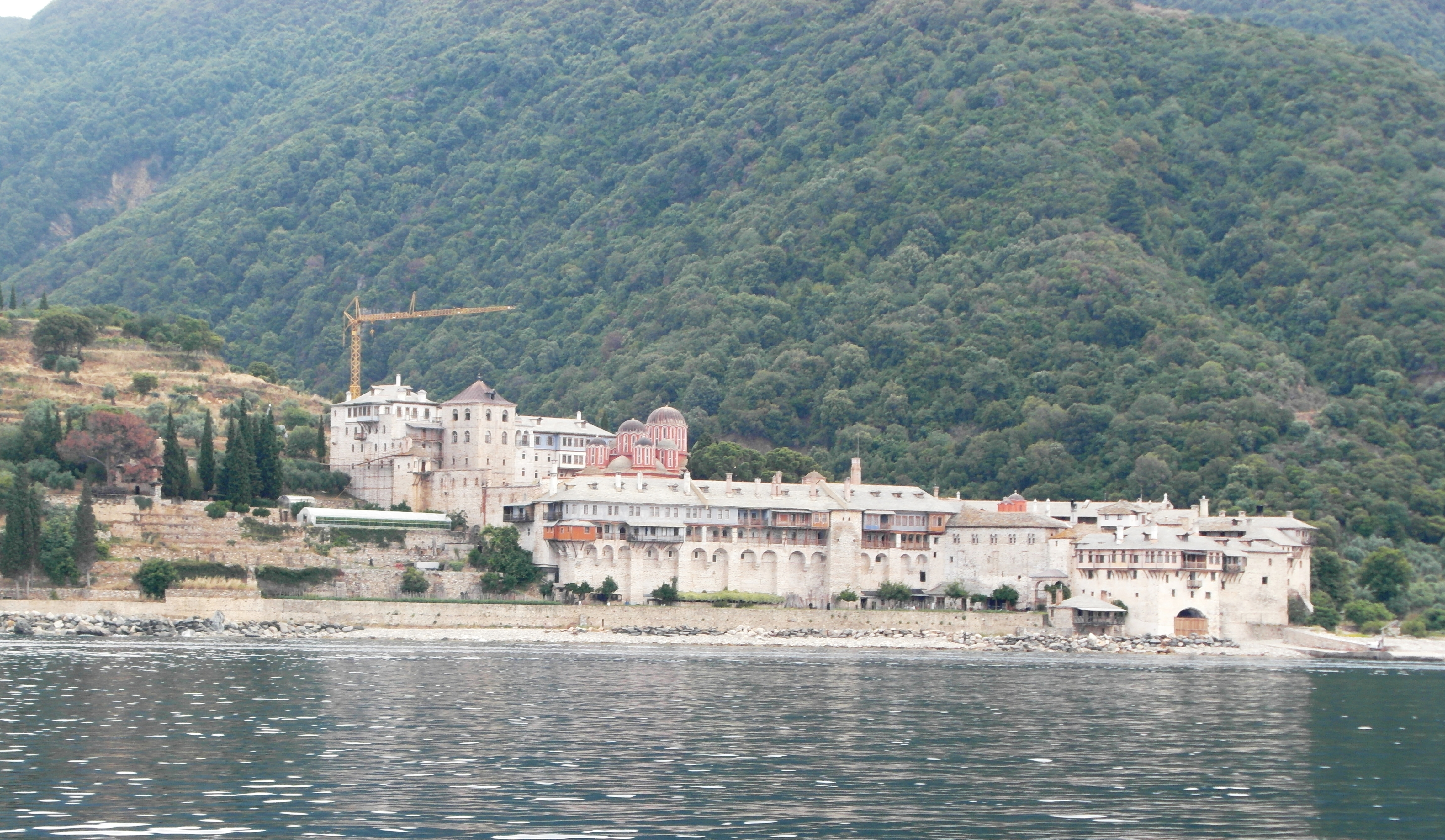
The Mount Athos peninsula holds very special historical, cultural and religious significance to all members of the Orthodox Church, whether they be part of the Russian, Serbian, or Greek Orthodox churches. Its monasteries were and are the repositories of the treasures of the Constantinople church which escaped the Ottoman conquest and have become the most sacred of pilgrimage sites for members of the Orthodox churches.
With entry into the Mount Athos peninsula so severely restricted, most visitors to the area simply tour Mount Athos by way of a boat cruise out of Ouranoupoli, the northern “border” town for Mount Athos, equipped with all the hotel, restaurant and souvenir shops tourists and pilgrims alike have come to expect.
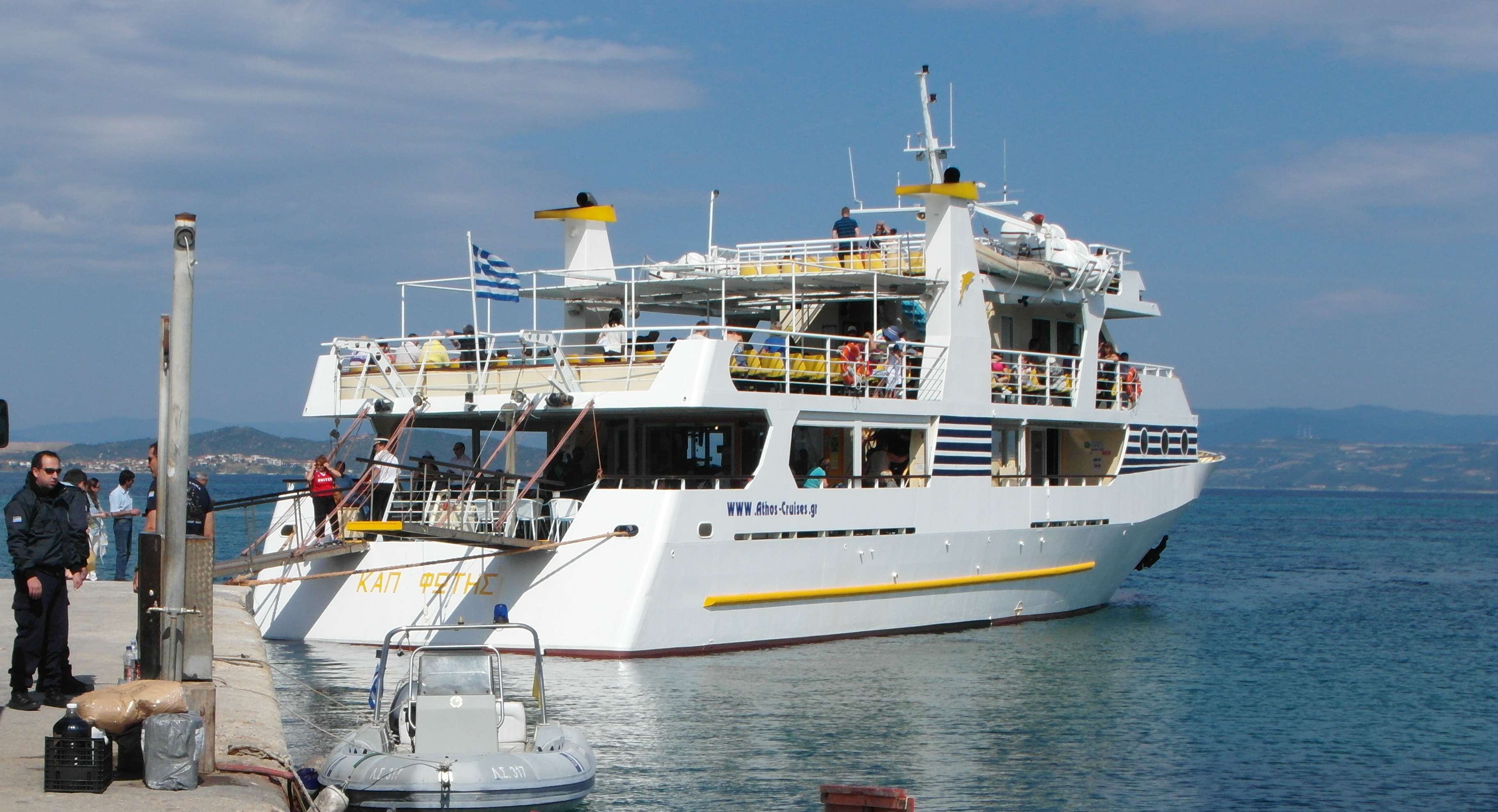
The daily half day morning or afternoon cruise offers visitors a fascinating and scenic three-hour ride along the deserted coast of the peninsula, with breath-taking views of several of the monasteries along the way, each clinging to the sharp cliffs of the peninsula in its own way.
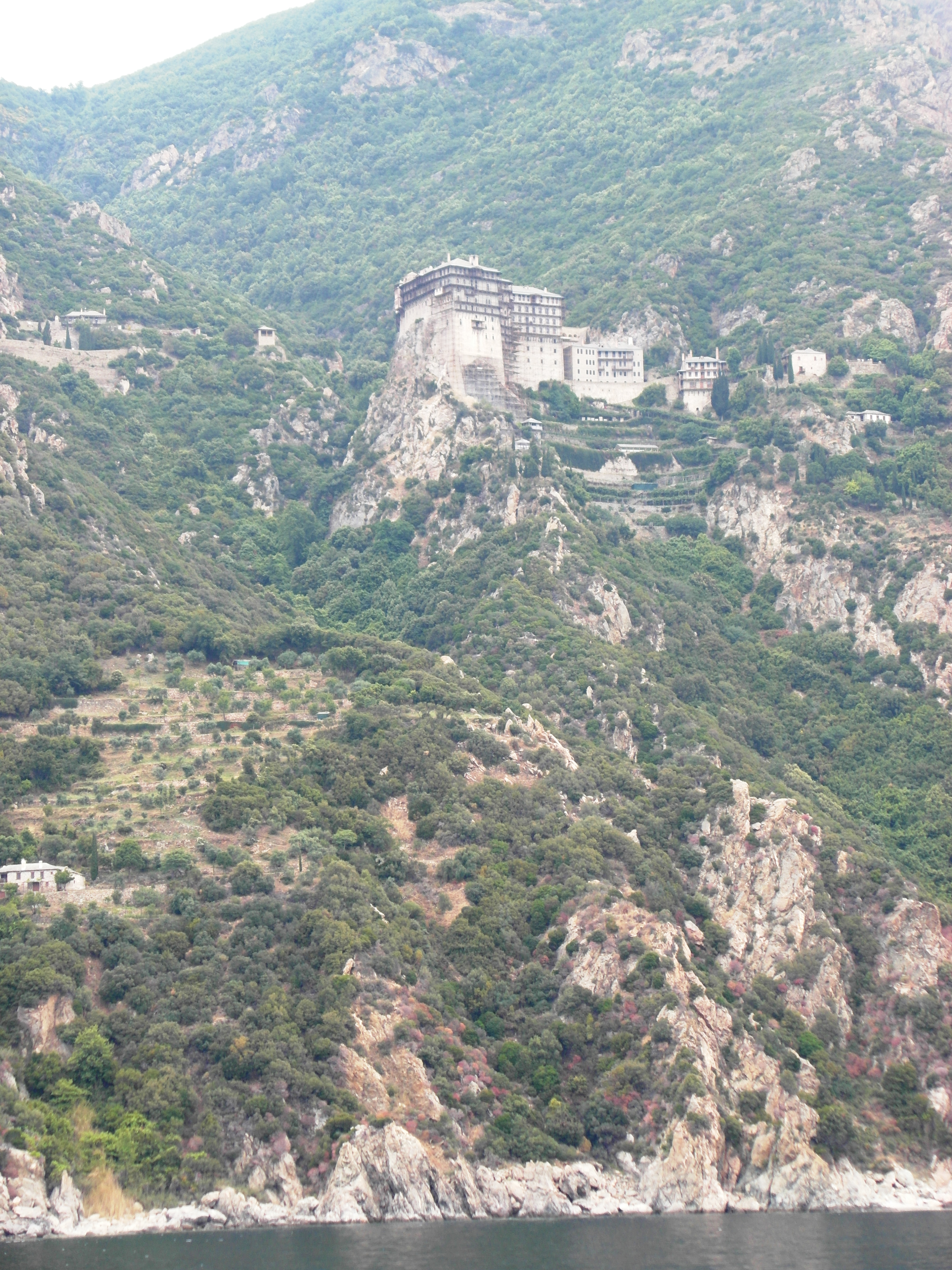
Towards the southern end of the peninsula, the landscape will start rising until the majestic 2,000 meter high Mount Athos takes over the scenery and leaves you breathless and in awe.
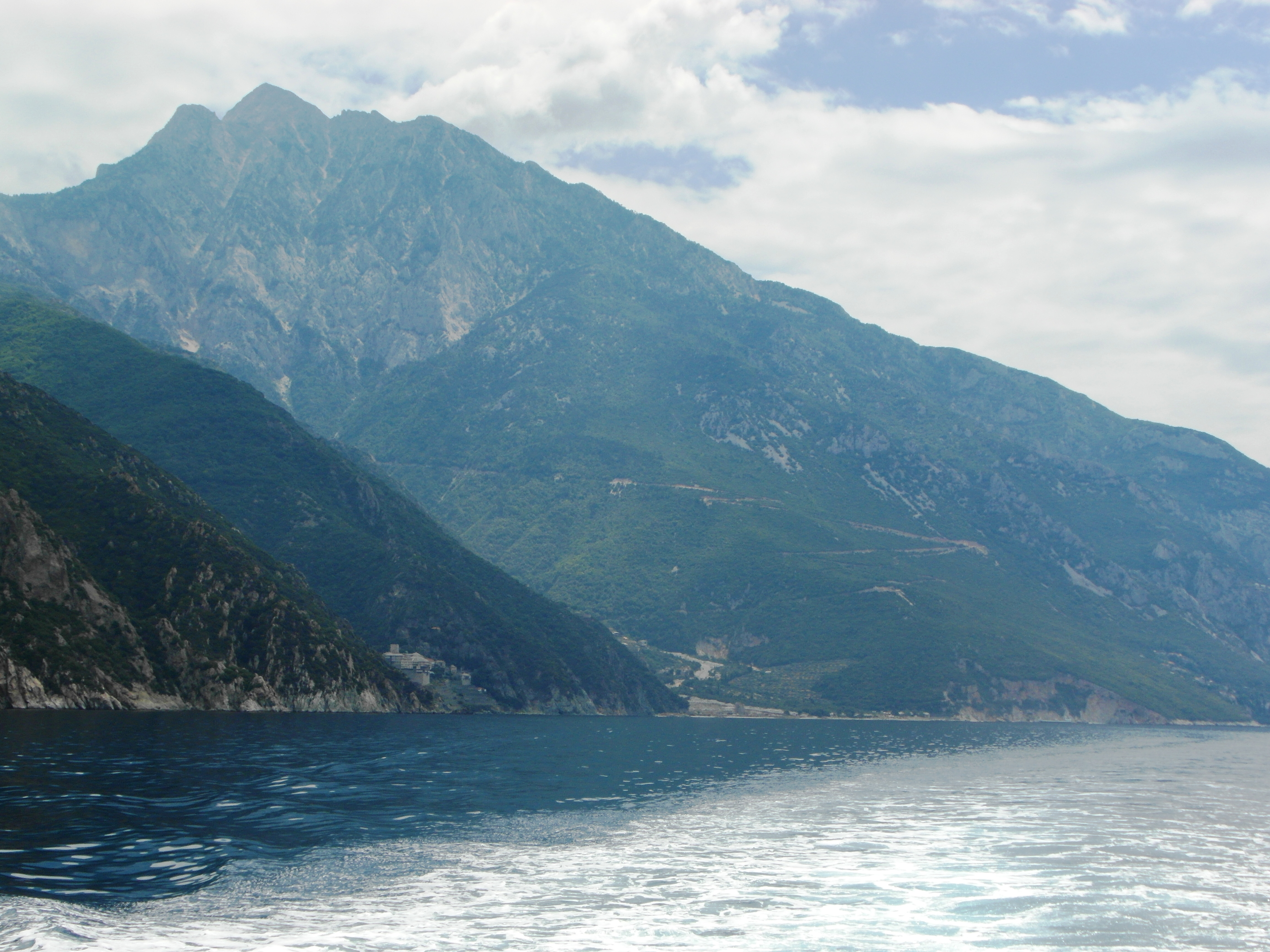
I understand better now why a Greek shipping magnate would want to celebrate the millennium anniversary of such a holy land by sailing north to the Halkidiki region, and I am glad that, in my own way, I have sailed the waters of Mount Athos.
Thessaloniki, formerly the Jerusalem of the Balkans
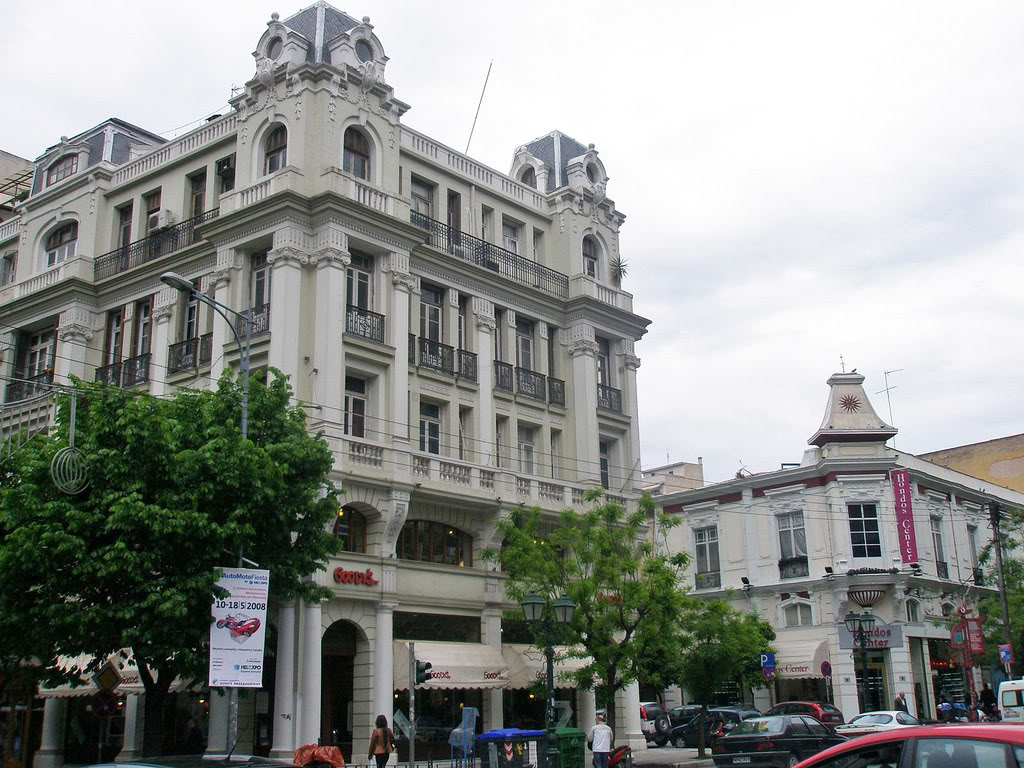
On the right: Banque d’Athenes building now the Jewish Museum of Thessaloniki
Thessaloniki, Greece is a city with a long history, which many nationalities have helped build over the centuries. The Greeks, the Turks, the Bulgarians, the Romans have all played major roles but one group whose major contribution is at risk of being overlooked, because relatively few traces remain of its presence, is the Jews of Thessaloniki.
Yet, barely one hundred years ago, Thessaloniki, the second largest city in Greece, was the “Jerusalem of the Balkans”, as it had been for the previous five hundred years or so.
In fact, the Jewish population of Thessaloniki is the oldest Jewish community in all of mainland Europe. Jewish people had inhabited Thessaloniki almost from the time of its founding in the third century BCE when it was named after Thessalonike, wife of the king of Macedonia and half-sister to Alexander the Great. The apostle Paul came to Thessaloniki in the first century AD to preach to the Jews of Thessaloniki.
The biggest and most significant change came in 1492, a year which most people associate with the discovery of America by Christopher Colombus, but which is also the year of the infamous Alhambra decree in Spain. It is in 1492 that the king and queen of Spain, Ferdinand of Aragon and Isabelle of Castille, passed a decree expelling from Spain all Jews who did not agree to convert to Christianity. Fourteen years earlier, those same two monarchs had created the Tribunal of the Holy Office of the Inquisition, the start of the infamous Spanish Inquisition.
In case you have ever wondered where the Jews expelled from Spain found refuge, the Ottoman empire and the city of Thessaloniki seem to have been the answer for at least 20,000 of them. They were Sephardic Jews who spoke Ladino, a mixture of Spanish and Hebrew comparable to the Yiddish language, a mixture of German and Hebrew, spoken by the Ashkenazi Jews of Germany and Eastern Europe. The Ottoman empire valued the contributions of the Jews to trade and commerce and provided them with a great deal of autonomy in Thessaloniki. The city prospered and Ladino, impressively enough, became the prevalent language of trade in the Adriatic Sea area for a long time. Thessaloniki was second only to Constantinople in size and importance to the Ottoman Empire. For much of the period between the early 1500s to the early 1900s, roughly 500 years, the majority of the population of Thessaloniki was Jewish. At the beginning of the twentieth century, 90,000 of the city’s 170,000 population was Jewish.
The fall of the Ottoman rule in 1912 quickly resulted in major upheavals for the Jewish population of Thessaloniki. A major fire burnt down the city in 1917 and made most of the Jewish population homeless as well as eradicated centuries of Jewish history and buildings. Many Jews left the city as a result. The arrival of a major influx of Greek refugees altered the population mix significantly and permanently. The coup de grace came from the Nazis during the second world war, when all but 1,900 of the 54,000 jews in pre-war Thessaloniki were sent to Polish death camps. Most of them died in the gas chambers of Auschwitz.
Today, Thessaloniki is no longer the Jerusalem of the Balkans, but the Jewish Museum of Thessaloniki, at 13 Agiou Mina Street in the city center, serves as a reminder of the major contribution of the Jews to the growth of the city. The museum is open from 11am to 2pm every day except Monday and Saturday, and 5pm to 8pm on Wednesday and Thursday.
Between New York and Washington, take the bus!
The distance between New York City and Washington DC is a mere 200 miles or so, but the area is one of the most densely populated in the United States and if you want to minimize travel time, cost or stress, you may want to pay attention to the logistics of getting from one city to the other. There is a myriad of options to select from for travel between the two cities, and more alternatives are cropping up every day, as I found out when we started planning for this week’s trip to New York from Washington.

The fact that our destination is downtown Manhattan quickly rules out the option of driving myself the four-hour ride to New York. The ride itself, through the crowded highways of Maryland, Delaware and New Jersey, demands the constant attention of the driver. In addition, I have no stomach for the hassle, cost and danger of parking my car in Manhattan. My wife and I prefer a less stressful mode of transportation!
Flying is of course an excellent option, as both New York and Washington are served by three major airports each (Newark, La Guardia and JFK for New York, Dulles, Reagan and BWI for Washington) and there are flights between the two cities throughout the day. Reagan is especially convenient for people leaving from downtown Washington, people like members of Congress, who can reach the airport in less than ten minutes. I happen to live in the suburbs, thirty minutes away from each of our three airports, so I have to factor that in. Add to that the facts that you are being asked to arrive at the airport a couple of hours ahead of flight time in order to go through check in and security, that you have to think about what you can or cannot bring with you on a flight, that upon arrival you will have to drive from the destination airport into Manhattan anyway, and the whole idea of flying those 200 miles becomes somewhat less attractive.
For those commuting from downtown Washington to downtown Manhattan, the train is one of the preferred modes of transportation. Both Union Station in Washington and Penn Station in New York City are major railway hubs, are both located in the downtown area, and have frequent and regular express train service between the two stations. Amtrak’s Acela Express train would certainly be one of my favorites way to reach New York, if we happened to live in downtown Washington but we live outside the city proper.
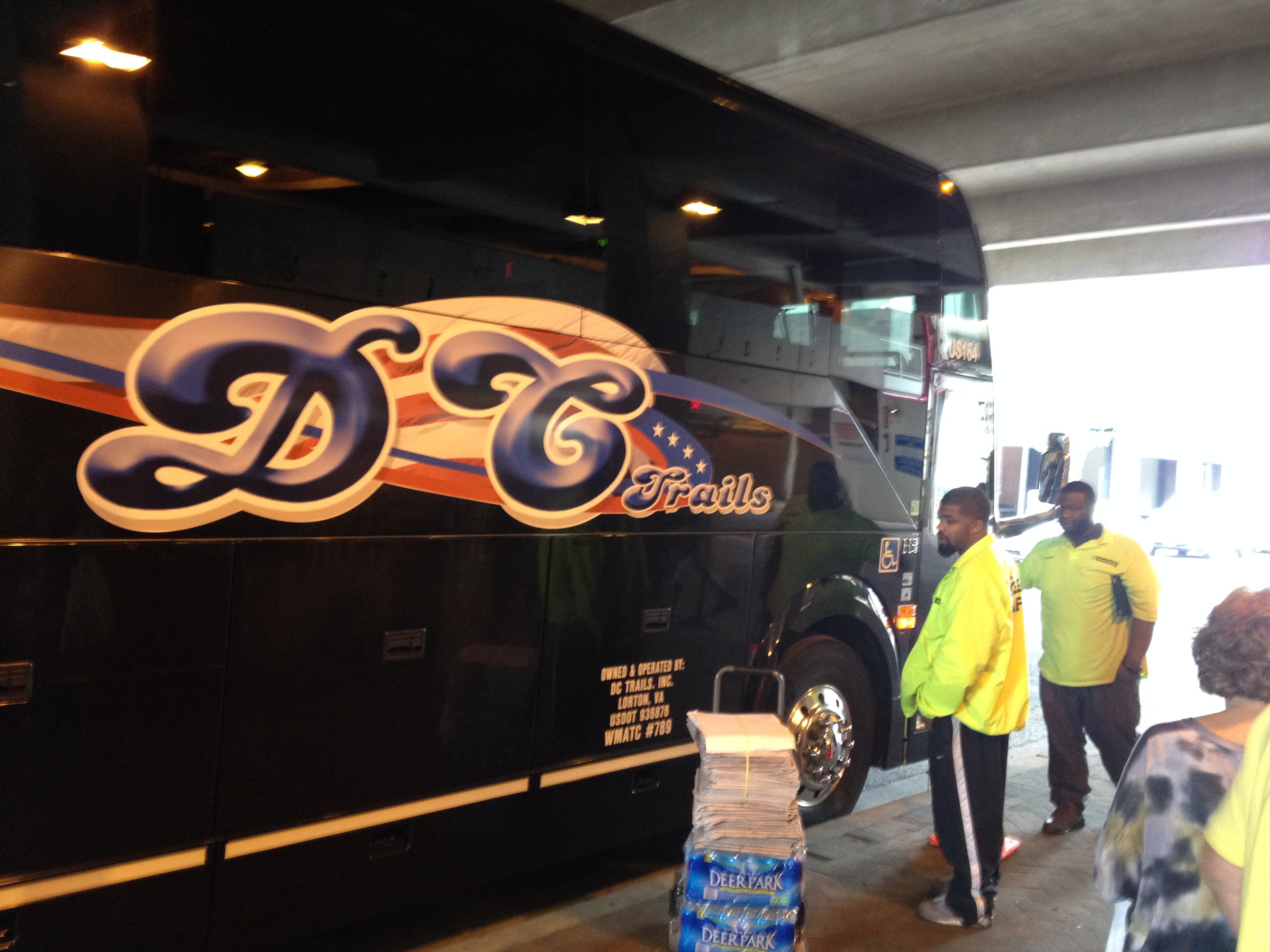
Which brings me to the best option for us, the bus. Not any bus, mind you. There are about a dozen bus lines providing direct bus service between Washington and New York City. I was flabbergasted to see that one bus line sells some seats everyday for the total price of $1 for the trip between New York and Washington. Unfortunately, that $1, or for that matter the $12 regular non-discounted price for that same seat, will not result in the same level of service we enjoyed on the French Riviera, where we were paying about 1 euro to travel anywhere on the Riviera in clean and modern buses.
Express intercity buses link the major cities of the northeast part of the United States, and the fares are low, very low, perhaps too low sometimes to allow for the necessary security and maintenance practices. I can’t help wondering how a company can afford to offer a $1 or $12 seat for a trip between Washington and New York , a distance far greater than the length of the French Riviera, and still provide a safe clean bus and competent driver. Reading the consumer reviews online did not inspire me with a great deal of confidence.
Fortunately, competition and demand have resulted in more luxurious bus options with only slightly higher fares. There are several bus lines, with prices around $25 to $30, which offer clean, modern buses, with conveniences such as guaranteed seating, free wi-fi, a bottle of water, a newspaper, etc… Some now even offer satellite tv. Three of those bus lines happen to have their departure point within a ten to fifteen minute drive from where I live.
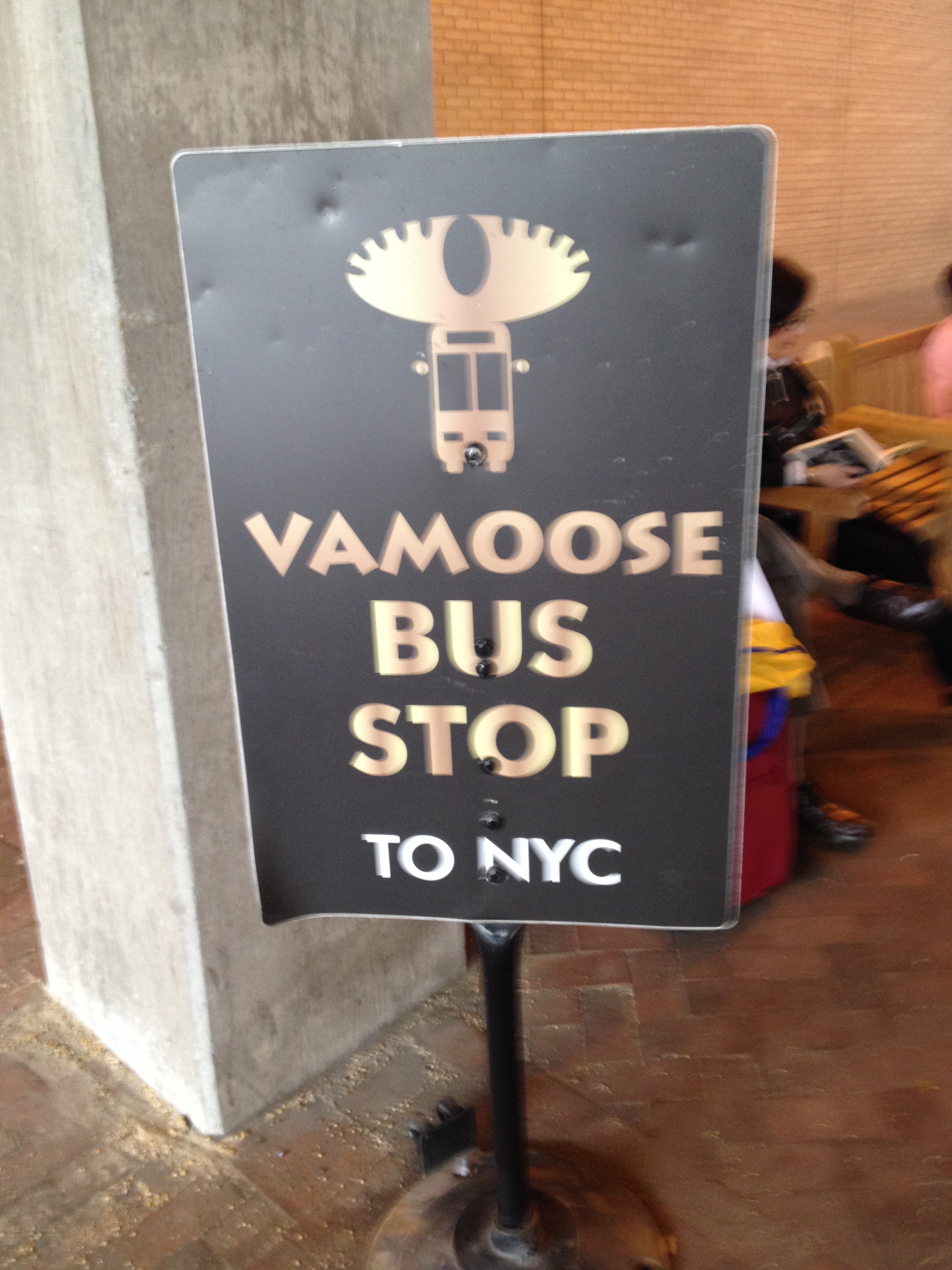
Of the three, Vamoose Gold is my favorite and that is the bus we are taking today to New York City. At $60, its price is by far the most expensive bus option, but far less than what the train or plane might cost you. The main advantage of the Vamoose Gold bus is the extra legroom it provides, which means not only a much more comfortable ride, but also many fewer seats, a much less crowded and therefore a much more peaceful and serene environment. There is free wi-fi, a tray table, a power outlet, a bottle of water, the daily newspaper and a reclining seat with a large headrest. And a very clean though small toilet.
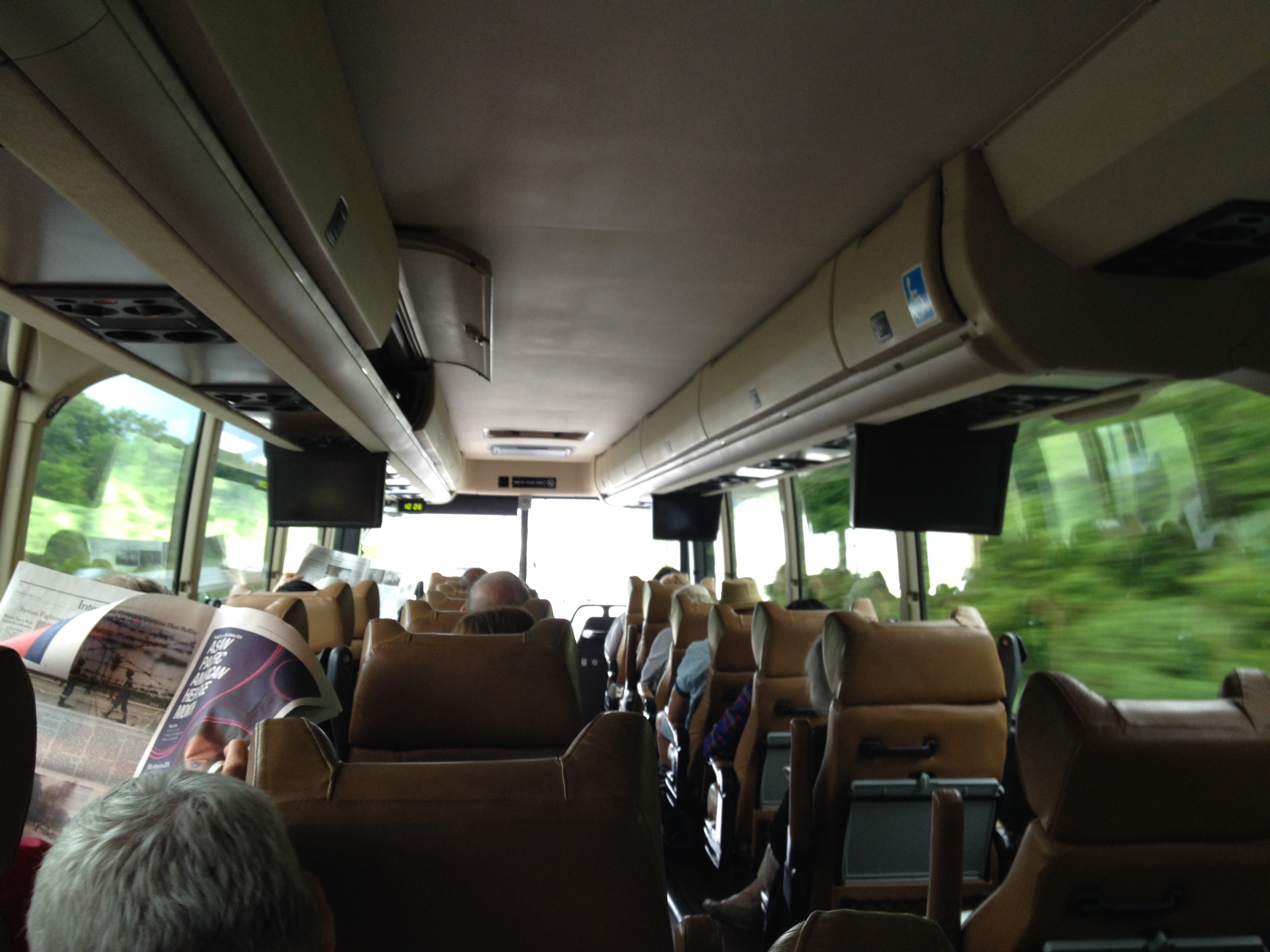
The trip is usually nonstop, directly from our departure point in Bethesda to Penn Station in downtown Manhattan, and takes about 4 and a half hours. I have all that time available to work or relax and know that I will arrive in New York City ready to roll!
But Vamoose Gold is getting increased competition and I need to get up to date on the latest offerings. Our return trip from New York to Washington will test one of the even more luxurious options recently introduced on the Washington to New York bus market.
Meanwhile, stay tuned to BonVoyageurs as we are about to arrive in New York and start our adventures in the footsteps of Woody Allen!
SAVVY TIPS: For a superb view of Florence in Italy, go shopping!
It only takes a bit of sunshine to inundate Firenze with tourists. Florence is one of the most visited cities in the wold, and rightly so given the wealth of its historical offerings and the charm of the city itself. Few tourist destinations have so much to offer in a relatively small area, and the fact that Firenze is essentially a walking city makes it all the more appealing. Cruise ships have made Firenze a major port of call for their Mediterranean cruises even though the city lies about 60 miles inland and passengers have to be bused in from Livorno. All this makes for very crowded streets and cafes in season.
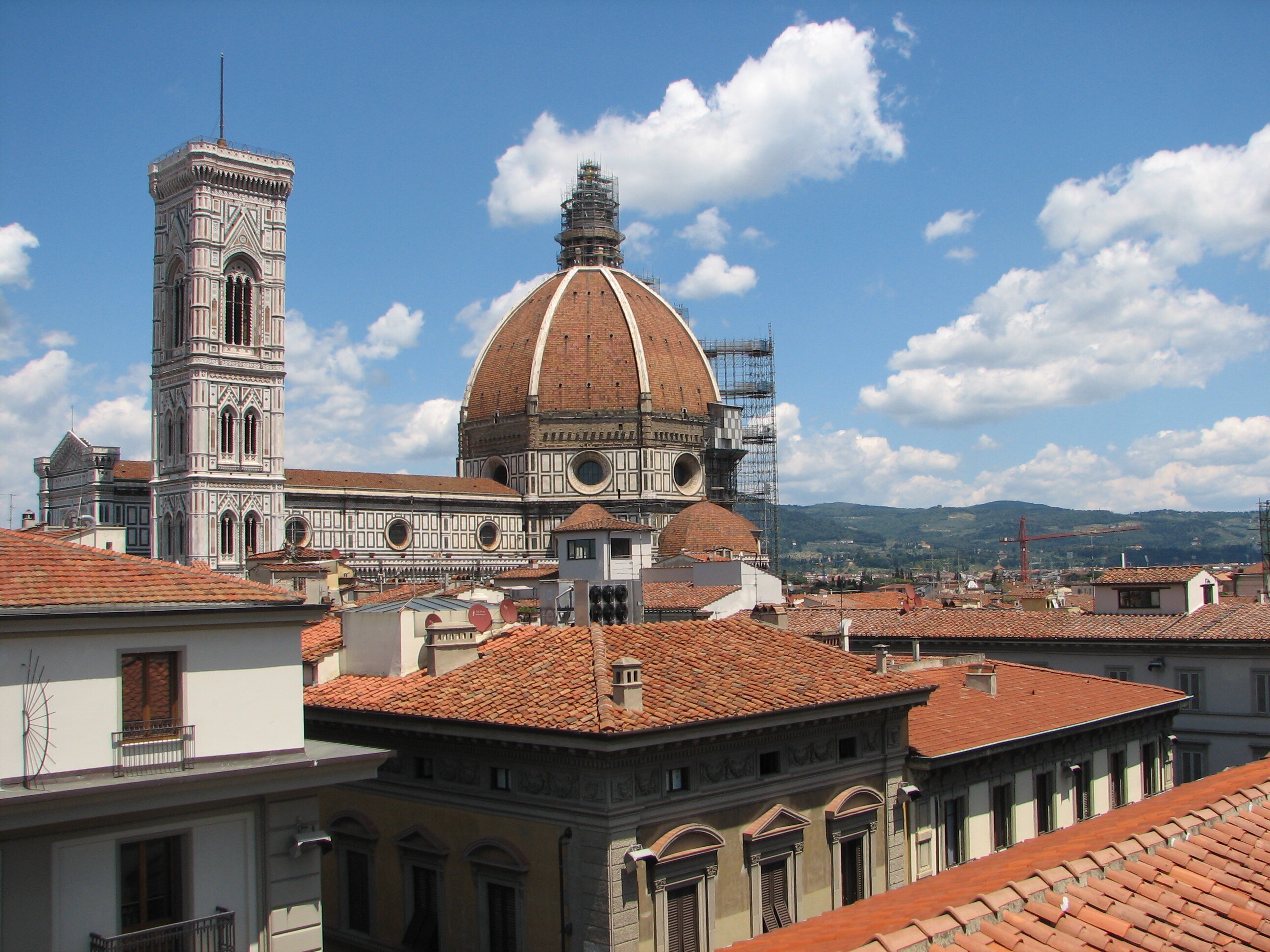
One of the ways to escape the crowds and get a superb view of Firenze at the same time is to head to Piazza della Republica, the major square in the center in the city. On one of its sides stands the La Rinascente department store. Simply go in and take the elevator to the top floor where La Rinascente operates an outdoor roof terrasse cafe called La Terrazza.
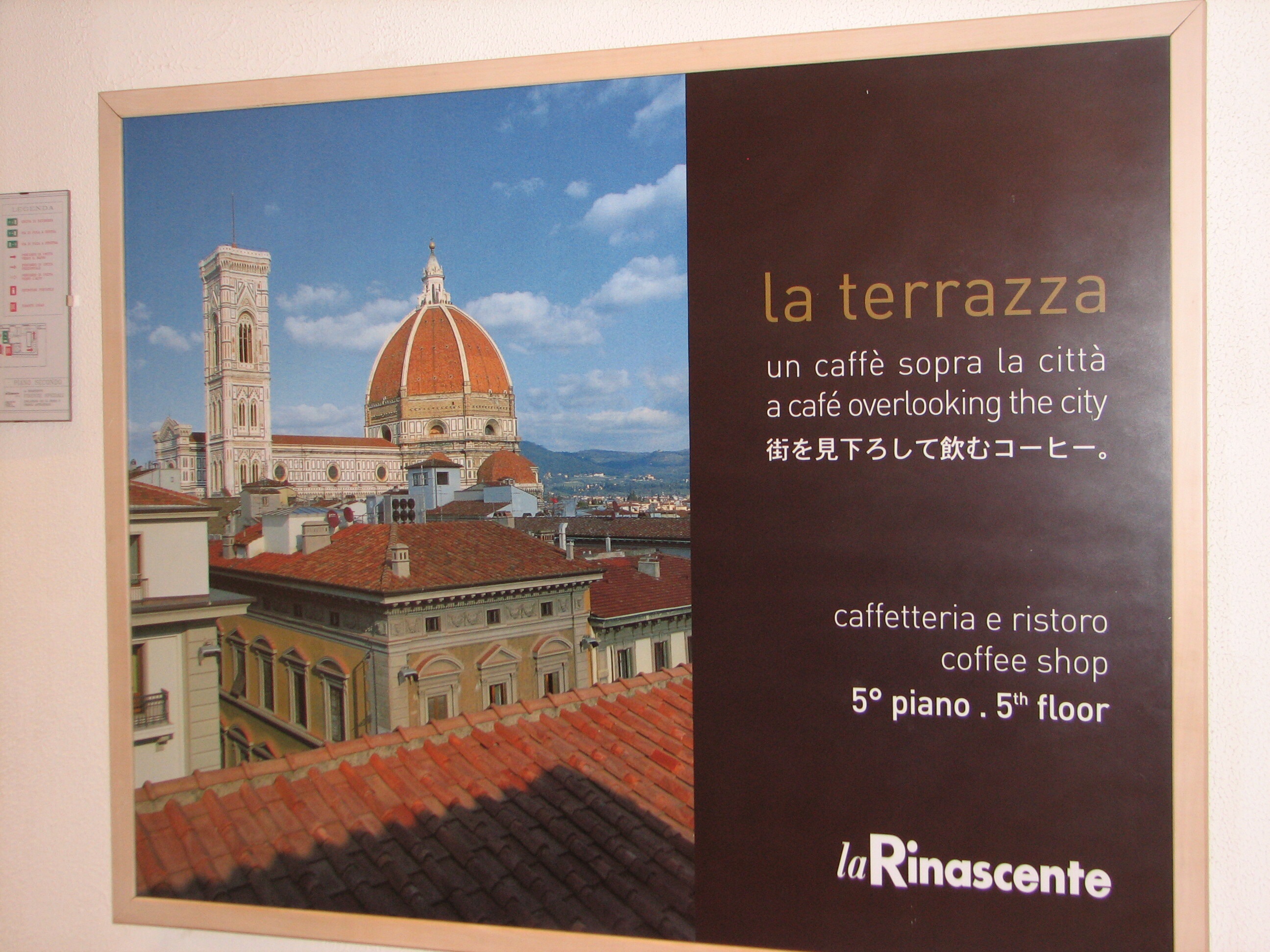
Et voila! Not only will you recuperate from crowd madness with a relaxing drink or snack, but you will at the same time savor an unparalleled view over the beautiful Duomo, the Campanile and the rooftops of the city of Firenze.
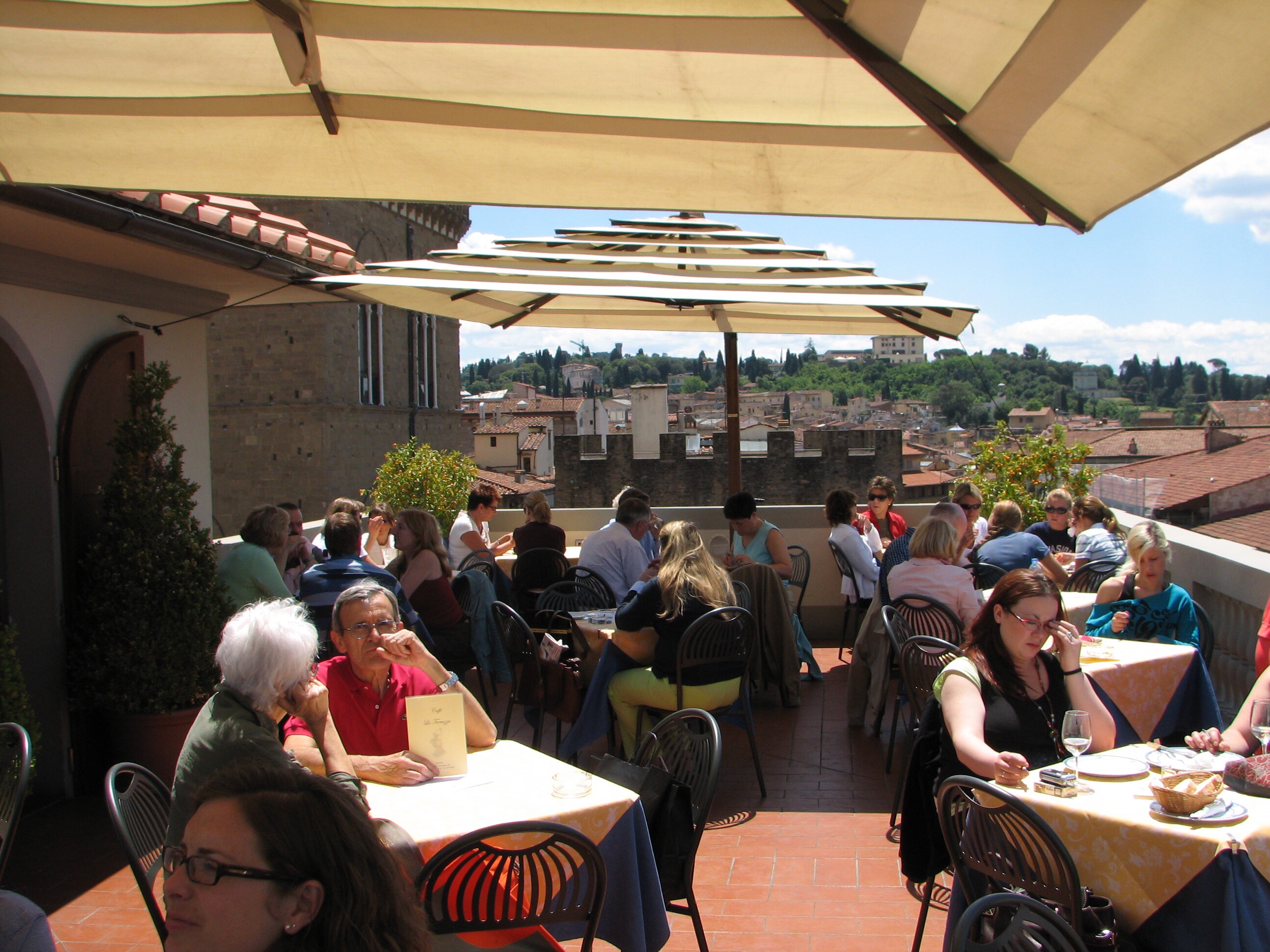
A word of warning though: more and more people are discovering the charm of La Terrazza so choose the time of your visit carefully.
Another savvy tip from BonVoyageurs!
Proud new member of the International Food Wine and Travel Writers Association!
I am pleased to share with you what the International Food Wine and Travel Writers Association posted on their website ifwtwa.org earlier today:
Welcome new member Denis Gagnon
Denis combines his passion for travel writing, languages and a long career of senior executive positions in international corporations – V.P. International Group for Sta-Rite Industries, Board Chairman and President of Nocchi Pompe, V.P. International for Kohler Plumbing to drop a few names. His day job has resulted in extensive travel and extended residencies abroad. His travel articles range from the Niceties of Nice to the Living Goddess of Kathmandu reflecting his varied perspectives and are found on his blog BonVoyageurs. Denis is a native of Quebec City but resides in Potomac, Maryland.
The IFWTWA Board of Directors extends a warm welcome to Denis
Hot air balloon, elephants and peacocks in the land of maharajahs - Jaipur, Rajasthan, India
The peacock is the national bird of India, and our hotel, the Oberoi Rajvilas in Jaipur, has several of them running around freely on the property. They are not only beautiful, even though it is early in the year and their annual “plumage” has not grown yet, but, as I found out quickly, they are quite chatty and do enjoy a good conversation, sometimes right outside the window of our ground level suite. Good thing we have an ample supply of ear plugs with us.
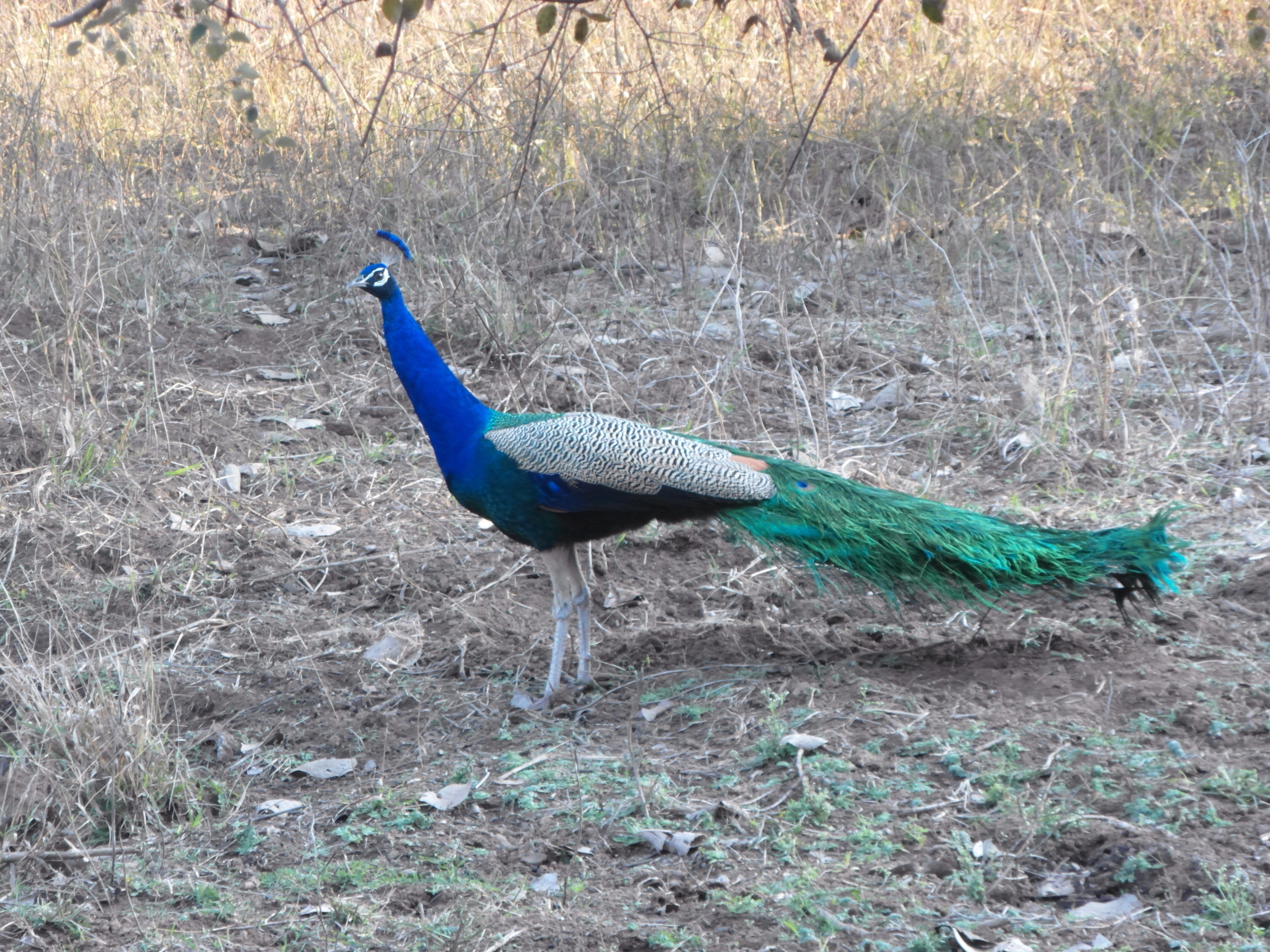
Peacock from Ranthambore Tiger Reserve in Sawai Madhopur, Rajasthan, India
Jaipur is the capital of the state of Rajasthan, the biggest state in India and a state which did not exist before the independence of India in 1947. The “land of the kings” (translation of Rajasthan) was put together as a state by the merger of 22 kingdoms of the Rajputs, historically a clan of famous warriors, as part of a negotiated deal to bring these legally independent states into the new India. More than 560 such kingdoms existed in India at the time of independence. As part of the deal made with all those kingdoms across India, the ruling families, the “maharajahs”, were allowed to keep their titles and property and moreover became entitled to receive an annual stipend from India commensurate with their status.
That arrangement lasted until 1971 when Indira Gandhi helped pass a constitutional amendment which abolished the titles, the stipends and most of the property rights of the former maharajahs, save for a few grand-fathered exceptions.
While the maharajahs of Rajasthan lived in incredible luxury, the same cannot be said of the rest of the population. The status of the women in Rajasthan was and is known to be an issue. We were able to see that for ourselves when I asked our guide why all the road construction crews we passed by were made up entirely of hard-working women being supervised by an idle man. Moreover, the literacy rate in the state, which stood at a hard-to-believe 8% at the time of independence (it has improved significantly since then), still stands below the average for the country.
Jaipur, called the “Pink City” since its inhabitants painted the town pink to welcome the Prince of Wales in 1878 and forgot to wash it off after he left (?), is an excellent city to admire the wealth of a maharajah.
Our first step was to get an “overview” (pun intended) of Jaipur by taking an early morning hot air balloon ride over the city. The balloon ride company was at least as professional as the one we had used to fly over the Serengeti in Tanzania, and our flight captain, a Spaniard with more than 17 years of experience, inspired total confidence as he maneuvered his balloon for more than an hour over the magnificent landscape of Jaipur.
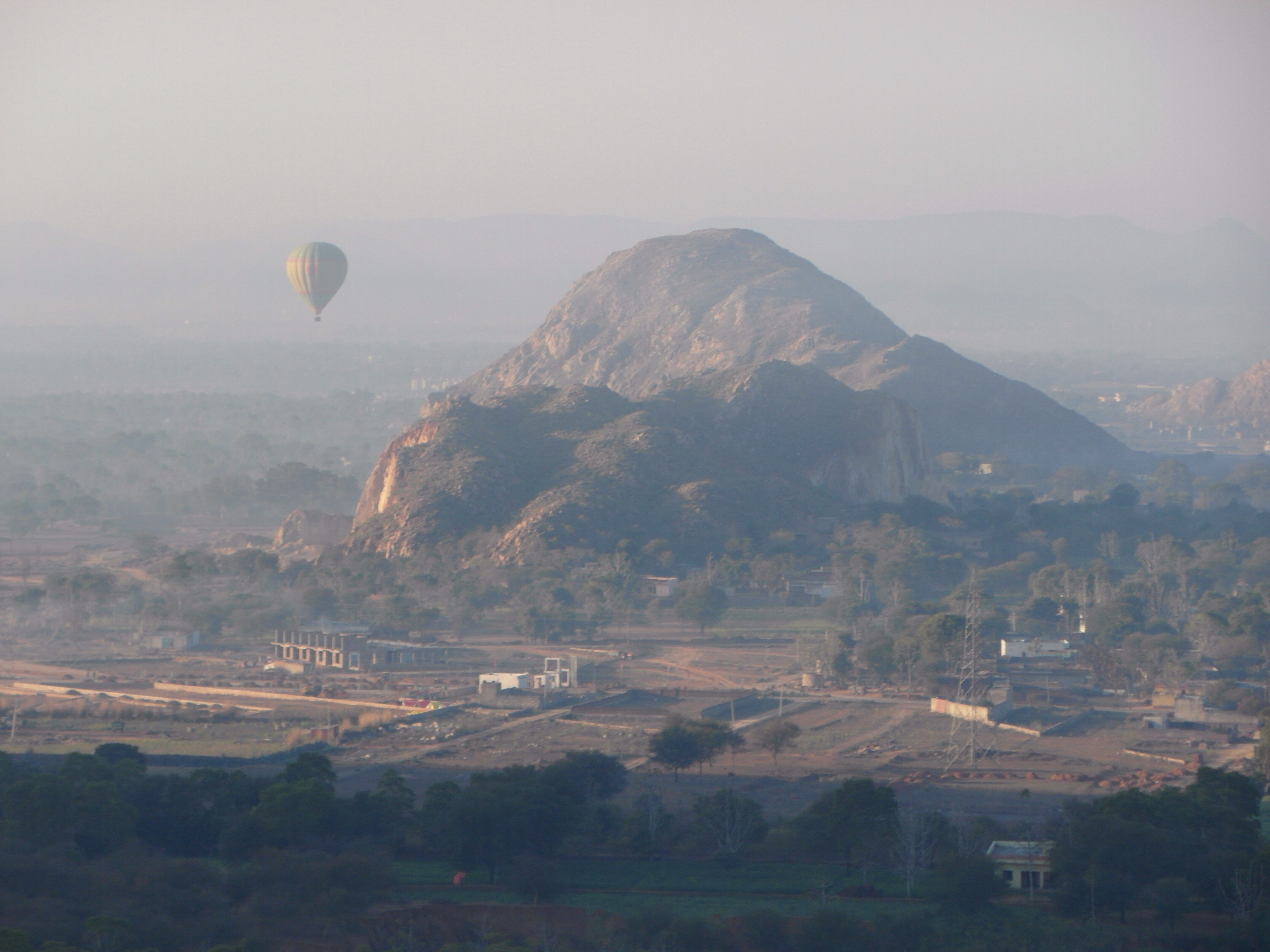
The balloon flight allowed us to get an unbeatable view of Amber fort and what I call the “Great Wall of India”, the protective ring of walls in the hills surrounding Amber Fort.
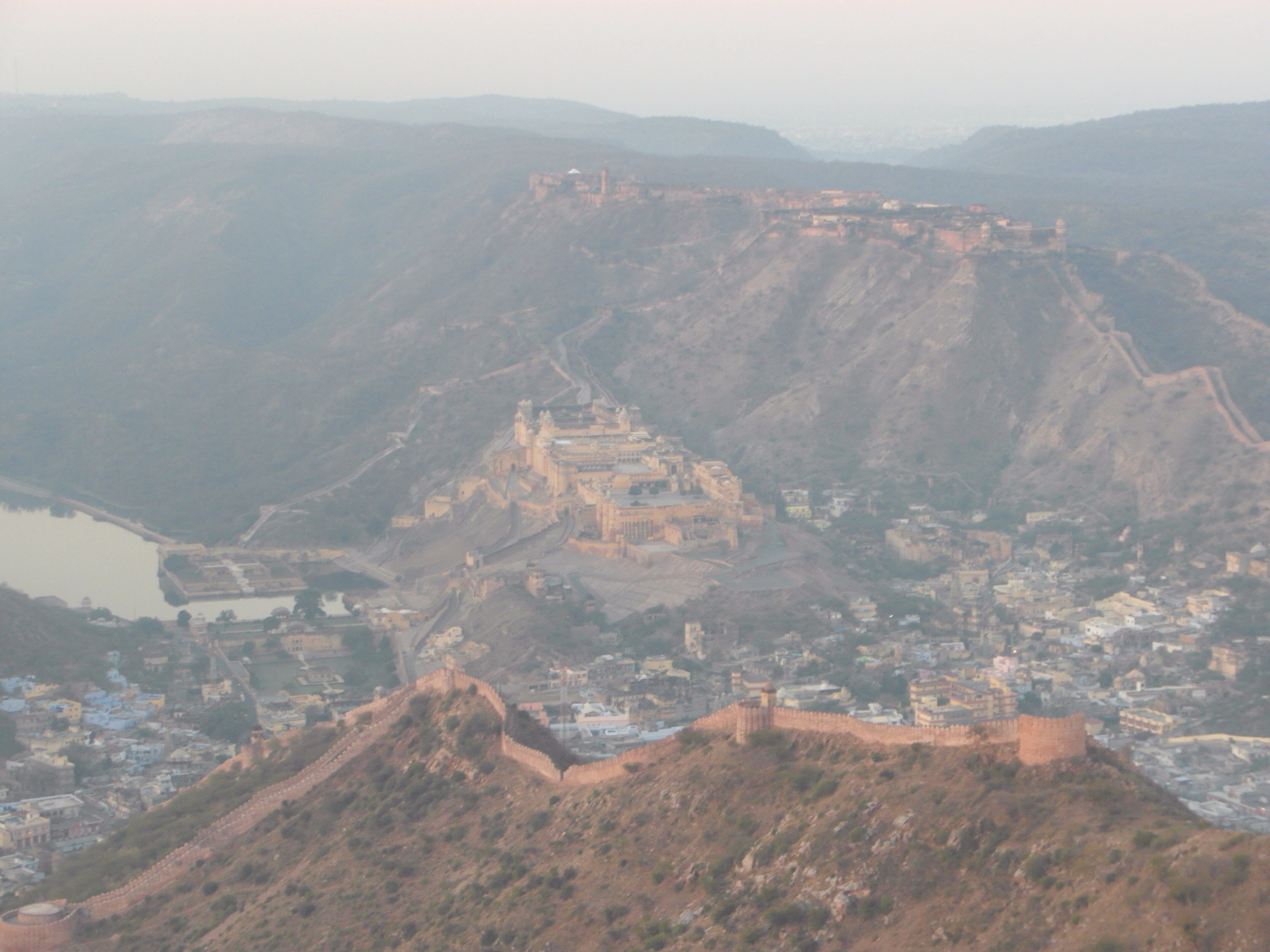
We went back to Amber Fort later that morning, using a totally different mode of transportation, an elephant.
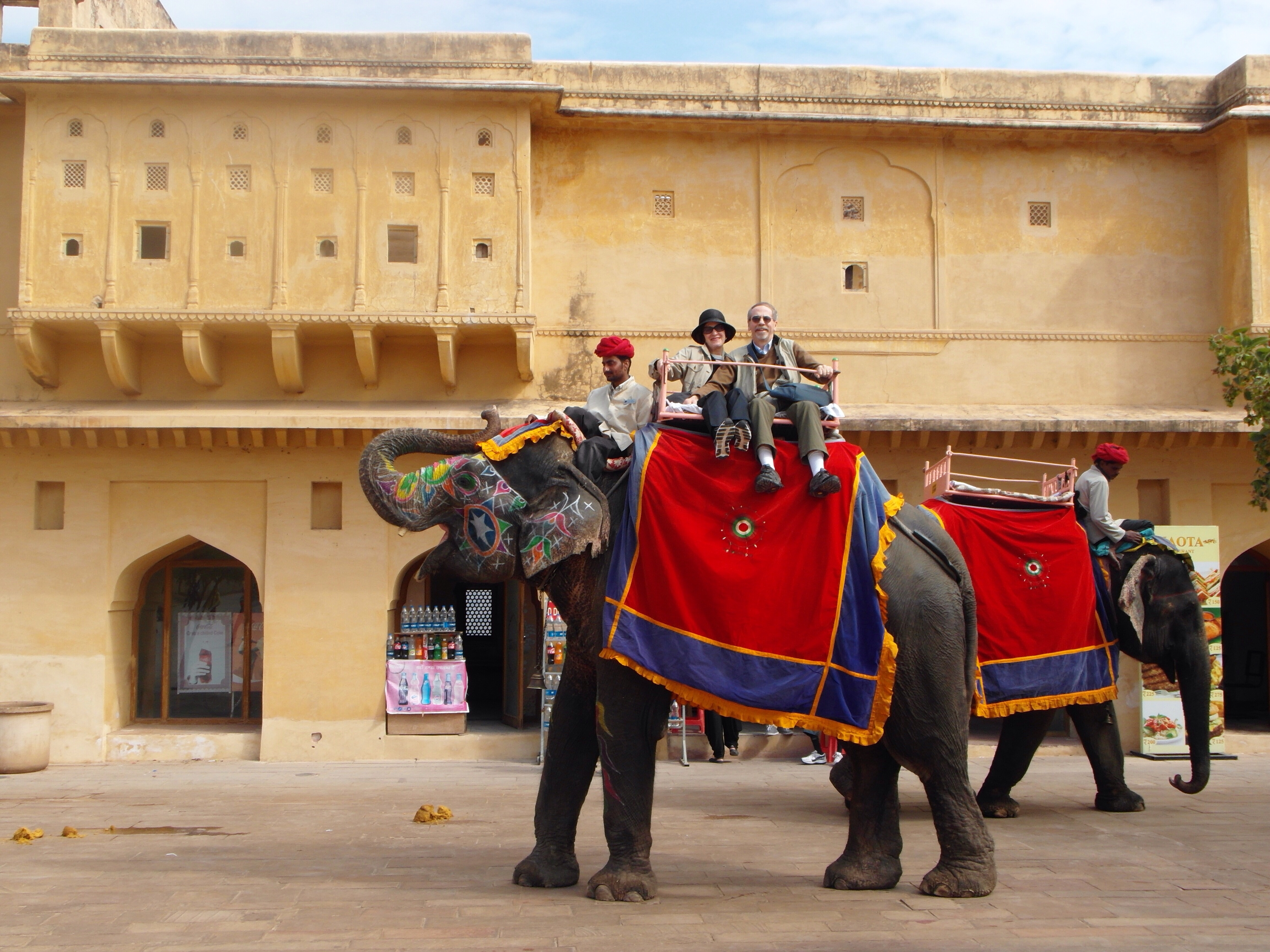
Amber Fort proved fascinating to visit to learn about the life of a ruler, who had actually started life as a slave, and the magnificent palace fortress he built for himself. The last major section of the fort, protected by eunuchs and accessible only to the king, is subdivided into 12 separate residential areas, one for each of the king’s 12 queens and each queen’s 12 attendants (concubines). Our guide informed us that, when the king entered that section, each of the 144 women had to retire to her bedroom and stay there until the “all clear” was sounded. Who had received the king’s favors was undeniably the subject of conversation and speculation for the rest of the day.
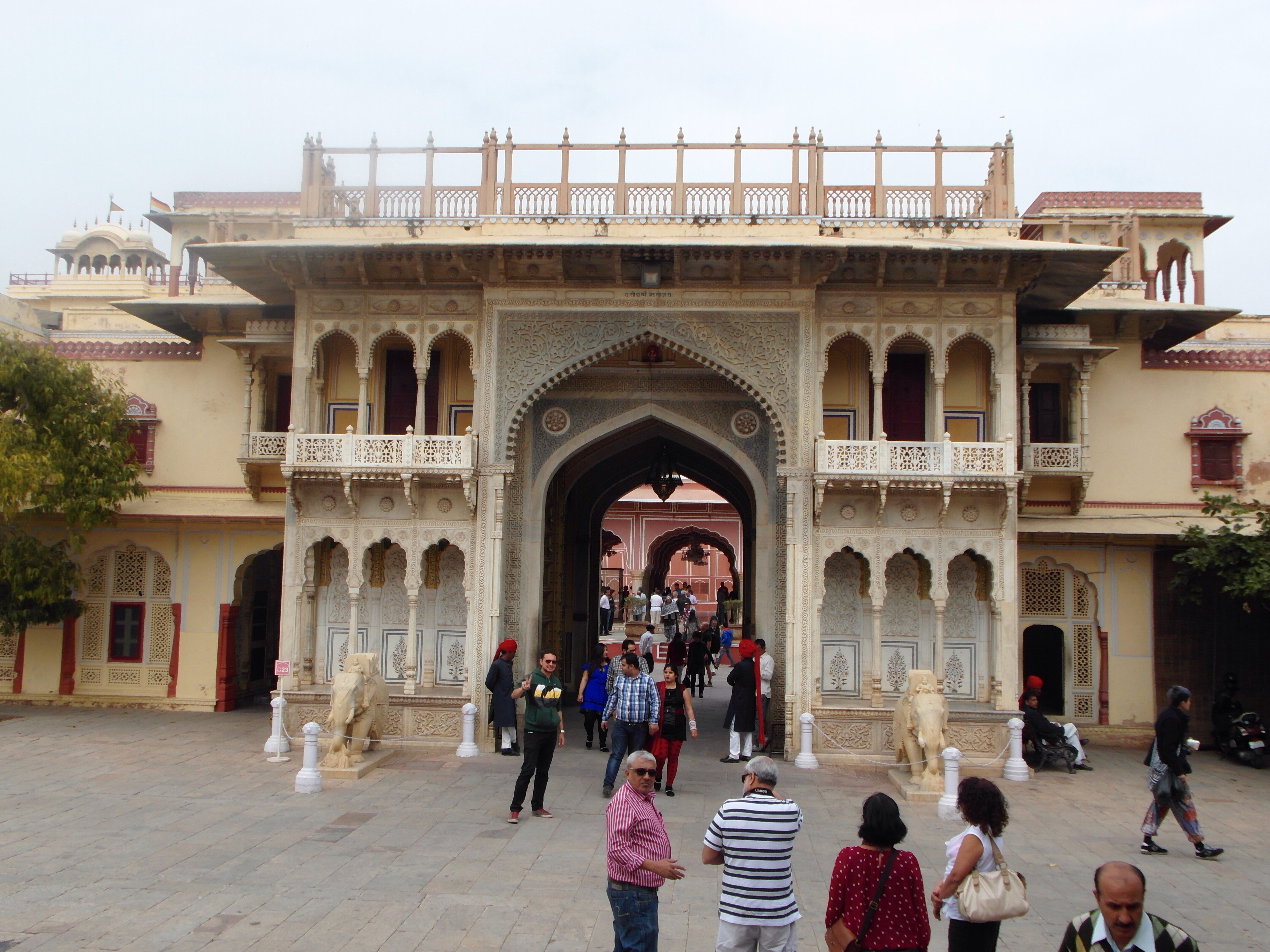
We next toured the opulent City Palace in the center of Jaipur, part of which is out of bounds to commoners like us as it is still used as a residence by the ex-royal family.
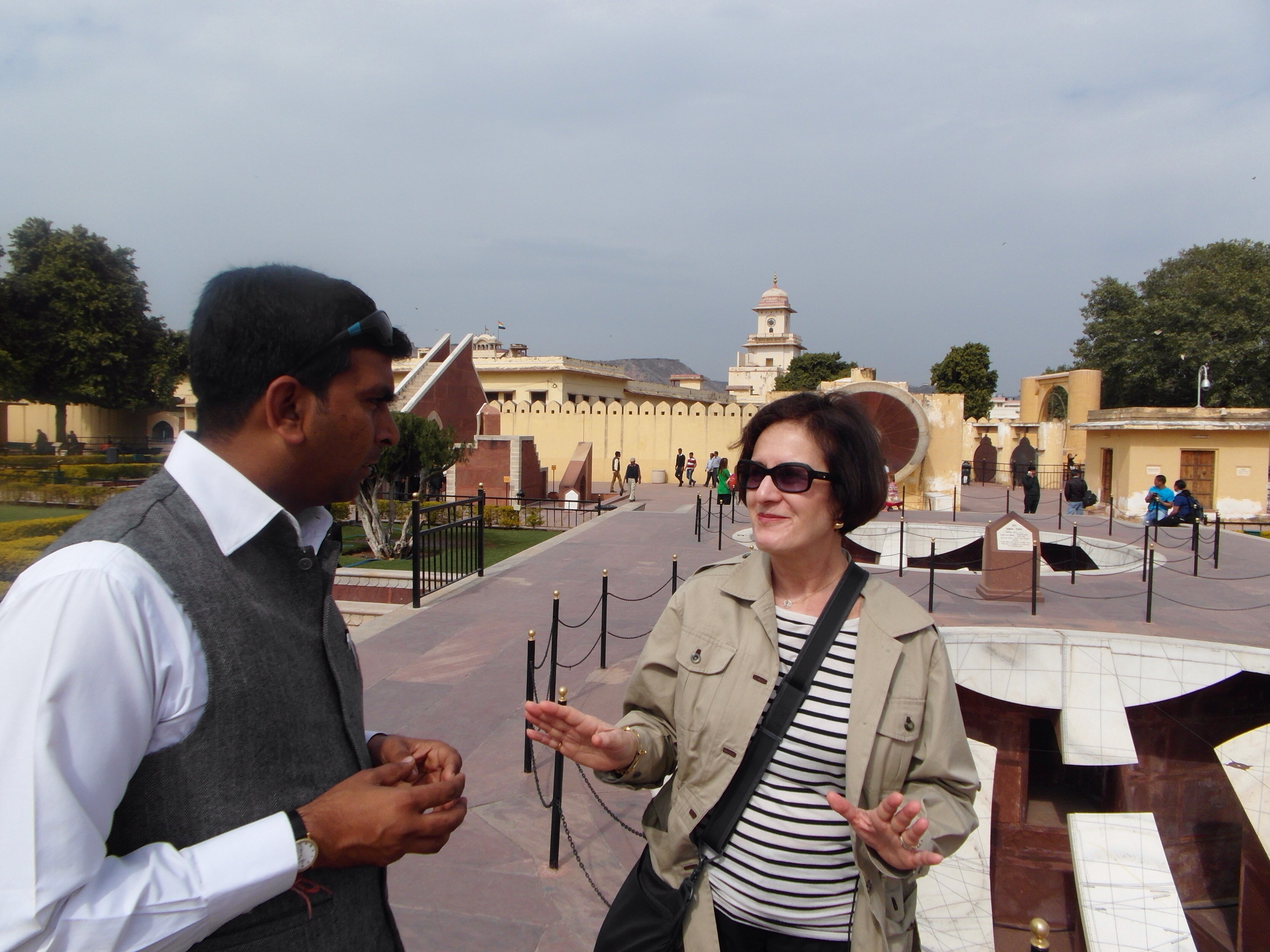
We also visited Jantar Mahar, the king’s impressive personal astronomical observatory.
To divert our minds from all this wealth, we ended the afternoon with an exhausting and fruitless search for the right thing to buy in the bazaars of Jaipur.
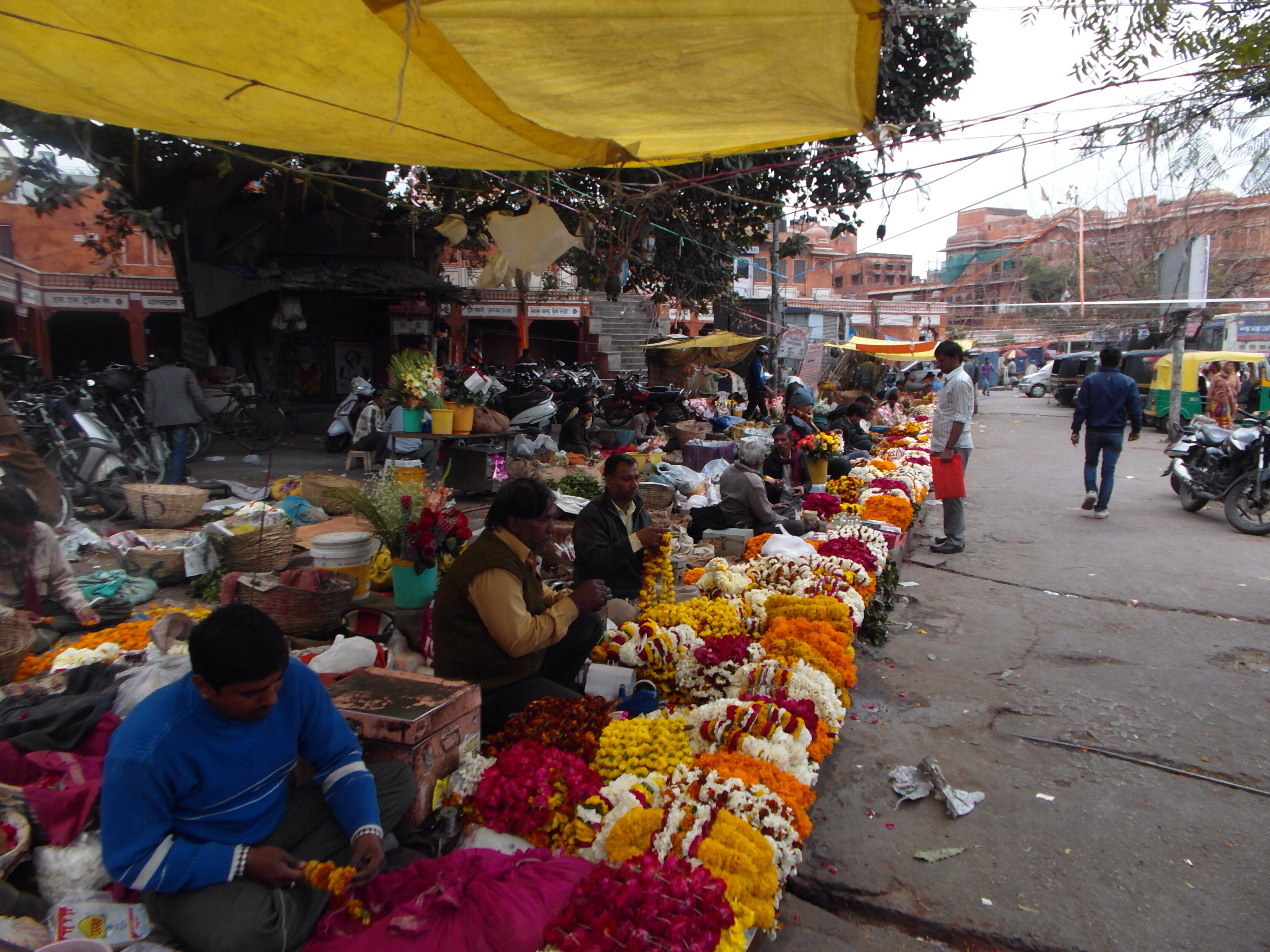
Another facet of India to add to our voyage of discovery.
Savvy Tips: Follow these 3 simple steps to safeguard your laptop data when you travel!
What kind of protection against data theft do you have when you travel with a laptop? Do you rely simply on a start-up password and a Windows (or Mac) password to guarantee the safety of your information? If so, you should know that laptop data can easily be accessed without having to power on the laptop or open the operating system.
In an earlier posting (BonVoyageurs.com), I detailed the US government’s legal right to confiscate the laptop of a traveler going through customs without the requirement for any justification other than a desire to inspect the contents of the laptop. While a backup of your data or cloud computing may resolve the issues created by the temporary loss of a laptop to customs agents, more is needed to protect against the possible theft or loss of the laptop while traveling.
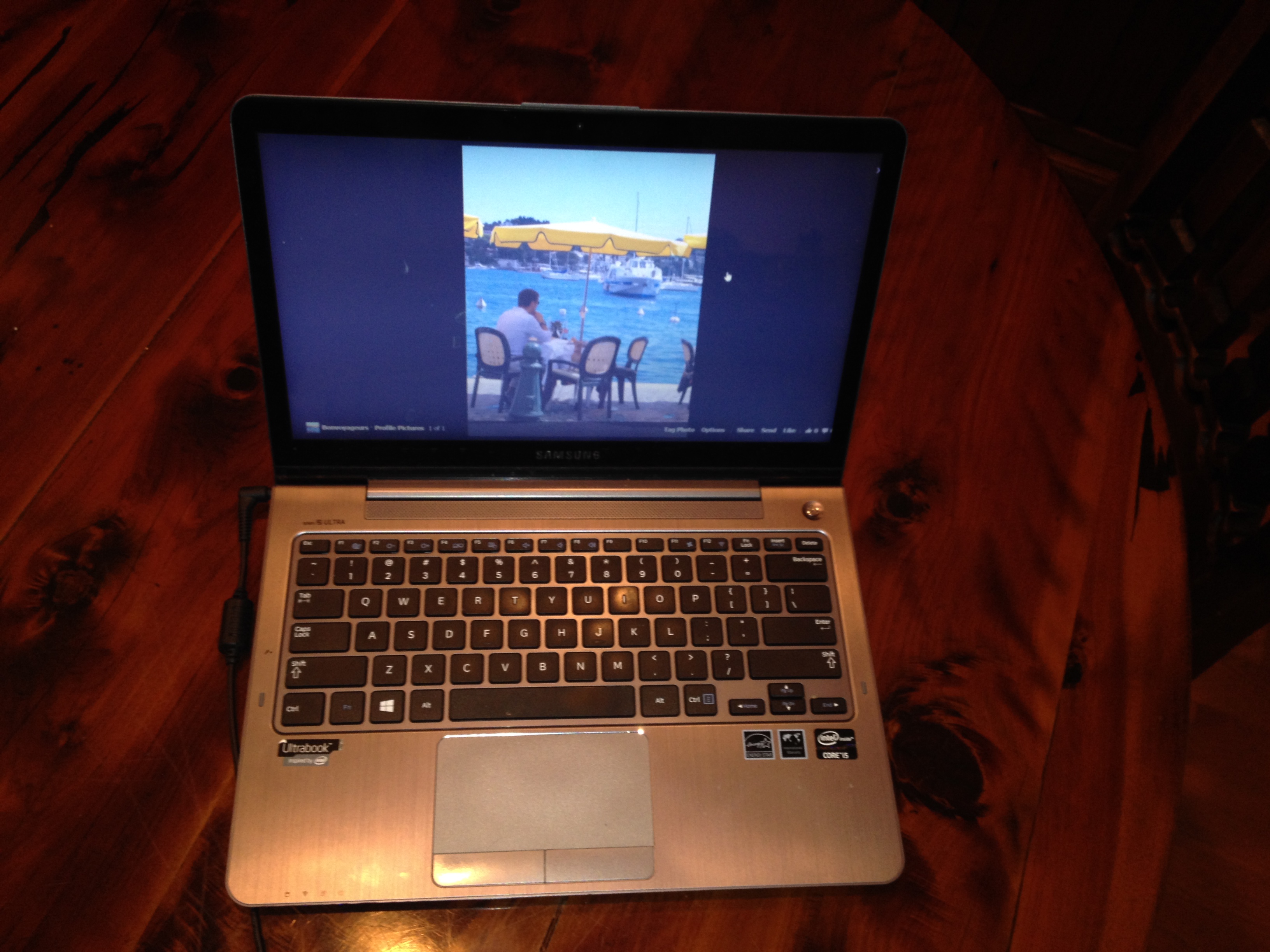
For the savvy traveler, there are simple solutions to this issue, simple steps anyone can follow to gain real protection. It is just a matter of knowing what those steps are and taking the few minutes necessary to execute them before traveling. Here are the three steps I recommend to protect the information on your laptop against theft.
1. Set a password for your hard drive!
Setting a password for the hard drive of the laptop is without a doubt the most important anti-theft protection available. Thieves can easily bypass the most sophisticated start-up or Windows passwords simply by taking the laptop’s hard drive out of the laptop and connecting it to another computer! This is not to minimize the importance of strong passwords for your laptop or operating system; but the place where those impenetrable passwords are really needed is your hard drive, where your data is located.
Thus the first step to take in safeguarding your laptop data is to safeguard the hard drive of your laptop with a password, something which can be easily done thru the BIOS setup utility of your laptop. If you are not familiar with this process, there are lots of websites on the internet with detailed information for your specific laptop model.
2. Create a truly strong password
You might be surprised to learn that a typical eight digit password containing letters, numbers and capital letters, characterized as strong by so many websites, can be decoded very quickly by a potential thief. The thief I am afraid of is not the NSA, which no doubt would find the task trivial and has far bigger endeavors to concern itself with; the thief I am concerned about is one of a legion of people who have an ordinary desktop computer equipped with easily available decrypting software. That thief can decode a typical eight-digit password on a laptop in less than an hour.
How does one create a truly strong password? My advice is to think of a phrase that is easily remembered and use the first letter or number of each word to create the password. An example might be the phrase “My father George came from a family of 9 children, 5 boys and 4 girls”, which would make the password MfGcfafo9c5ba4g. The reason for choosing a phrase is that it allows for the unintelligible password to be typed in very quickly as one recites the phrase in one’s mind. It is also imperative that the phrase be easily remembered, and consequently anyone with a fallible memory should select a phrase from a book or a poem or a song which could easily be looked up in case of need.
How long does the password need to be? It depends on the components of the password as well as your level of concern. Fortunately, Intel makes available a webpage, titled How Strong is Your Password, which will tell you immediately how strong a password of your choosing really is by letting you know the amount of time it would take a desktop computer equipped with decoding software to unlock your password. When I checked the example password MfGcfafo9c5ba4g on the Intel webpage, it informed me that it would take more than 317,000 years for a computer to decode that password. That will do fine for me, as I need a bit of time to adapt and adjust to the loss of my laptop data! By way of comparison, if I were to shorten that password to the first ten digits MfGcfafo9c, the result would be that it could be decoded in two months; reducing the password to the first eight digits MfGcfafo would mean that it could be decoded in 6 hours.
So step two is to create a truly strong password and set that password up to protect the hard drive of your laptop. Take that opportunity to strengthen your administrator, start-up and Windows passwords as well.
3. Power off the laptop when not in use!
To benefit from the protection afforded by a strong hard drive password, you need to try to ensure that your computer is not powered on when you lose it! That means powering it off when you are not using it. Yes, it takes a few seconds more to turn power off than if you simply close the laptop cover, but the difference in protection as well as peace of mind is enormous.
Three simple steps to protect your laptop data, another savvy tip from BonVoyageurs!
DELECTABLE TIDBIT: Where else would you learn to dance the tango but in Buenos Aires, Argentina!
Getting immersed in the fabulously nostalgic, romantic and captivating tango music and dance only requires a plane hop south to its roots in the Europeanesque city of Buenos Aires in Argentina.
As soon as we entered our executive suite at the Four Seasons Hotel Buenos Aires (formerly the Hyatt), we were welcomed by a large white and black chocolate statue of two tango dancers on a tray with a glass of chocolate liqueur and some cherries. When I was traveling extensively on business to South America many years ago, I thought of that hotel as the best hotel in Latin America. The hotel is located right behind the magnificent French embassy off one of the world’s widest boulevard, the Avenida del 9 de Julio. Newer and perhaps more luxurious hotels have since sprung up all over Latin America, but I knew that the incomparable service of the Four Seasons would suit us well during our stay in Buenos Aires.
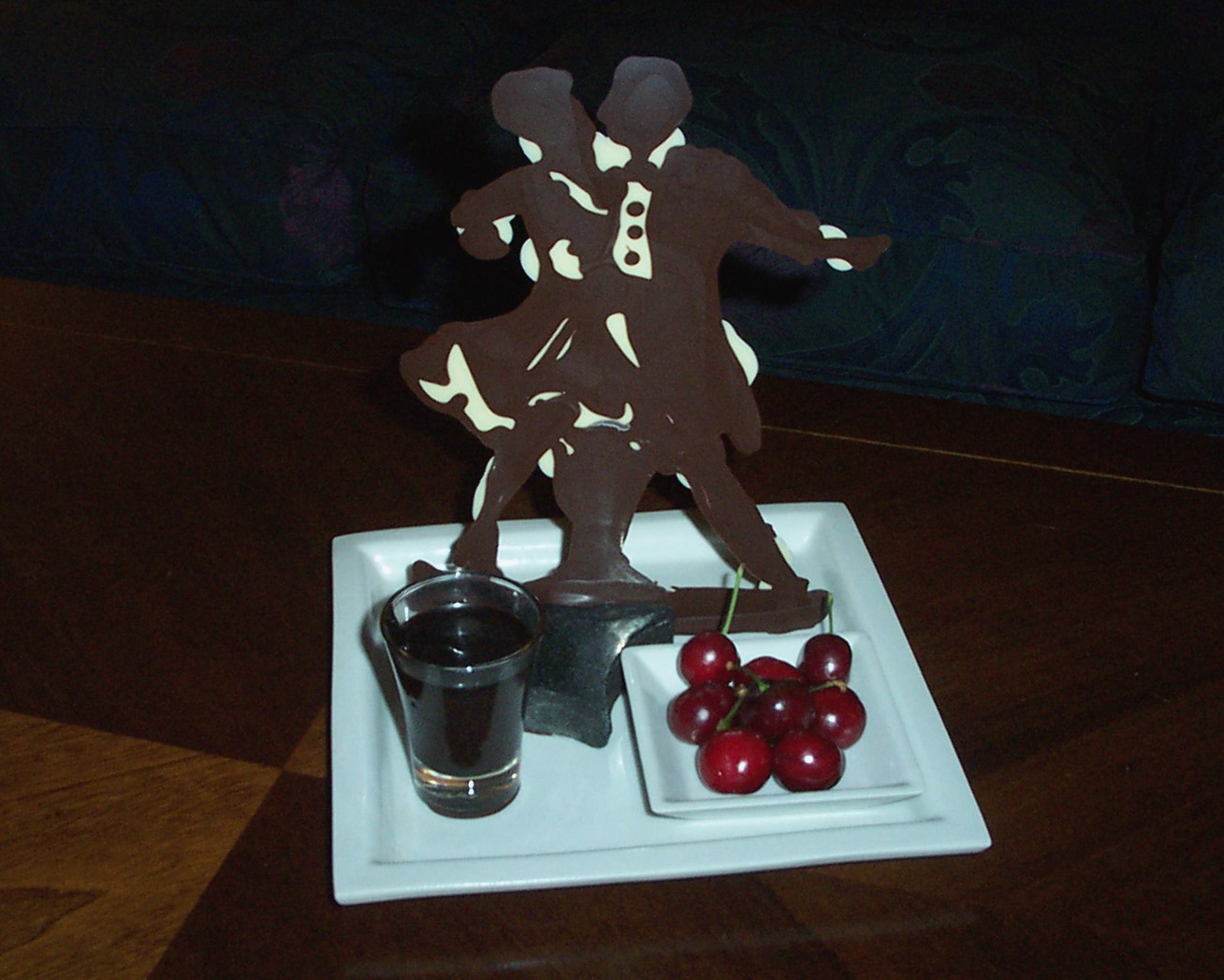
Welcome chocolate tango dancers at the Four Seasons Buenos Aires
If the chocolate tango dancer welcome was not sufficient to put us in the mood for tango, a walk through the neighborhoods of the captivating city of Buenos Aires, whether the Spanish colonial barrio of San Telmo or the incredibly colorful La Boca, would have reminded us at nearly every street corner that this city is the birthplace of tango. La Boca in particular offers tango music and tango dancing by street performers everywhere you turn; several lunch restaurants of the area are targeted at visiting tourists and include a tango dancing demonstration followed by professional dancers enticing spectators to the dance floor to dance the tango with them.
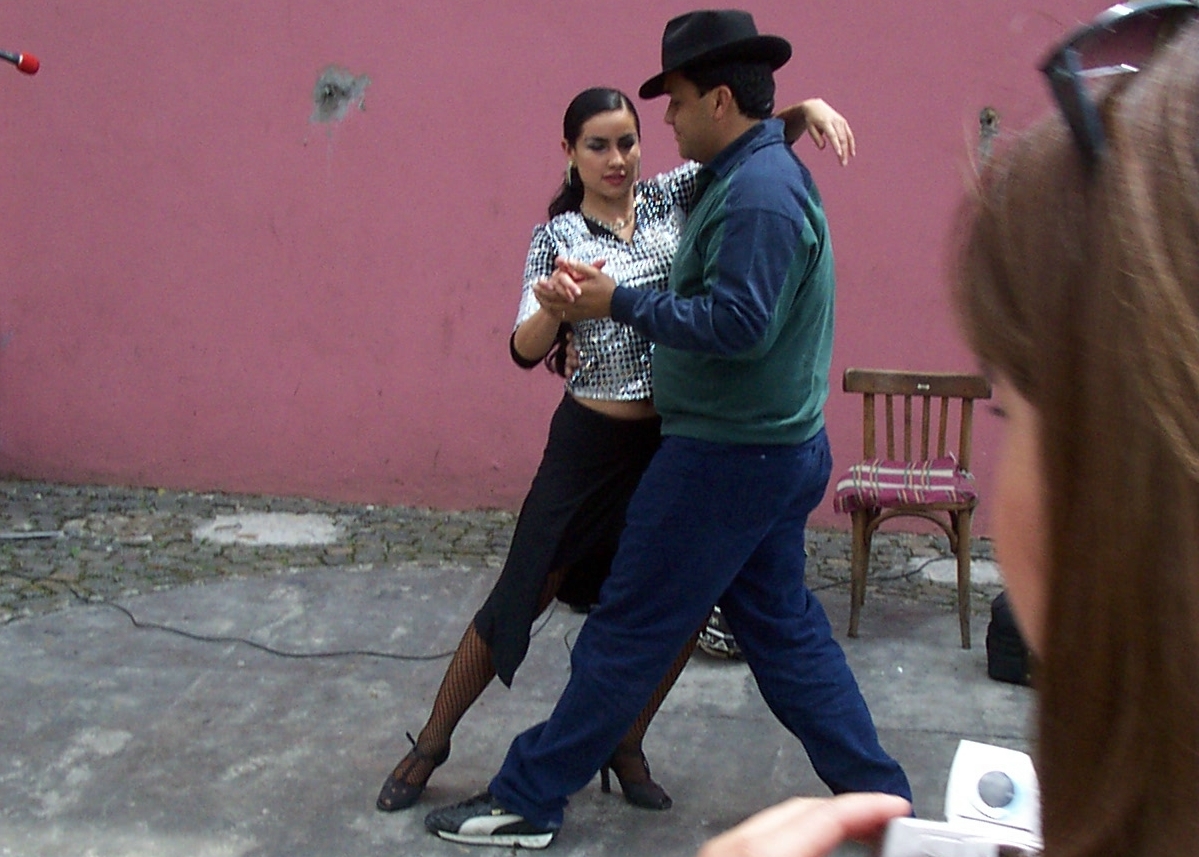
Street dancers performing a tango in La Boca
After the afternoon siesta (advisable if you wish to take advantage of the late nights of Buenos Aires), take in an evening at the Esquina Carlos Guardel for a dinner and tango show which will surely exceed your expectations, as it did ours. Carlos Guardel was Buenos Aires’ most famous tango singer and composer, who remains the most prominent figure in the history of tango. The Esquina Carlos Guardel theatre is European elegance with Buenos Aires charm. It was built in the barrio where Guardel grew up and is a magnificent tribute to him and the music and dance he loved so much. To our surprise, given the size of the place, the food was quite delicious, the service impeccable, the wine flowed, and the show presented a fascinating view of the history of tango, from song through dance, in 31 different tableaux and renditions. The 6-piece orchestra was on the upper level, the dancers and singers down below on the stage, the costumes were unbelievably beautiful and revealing, and our view from the mezzanine perfect. What’s more, we felt as if the singers were singing directly to us!
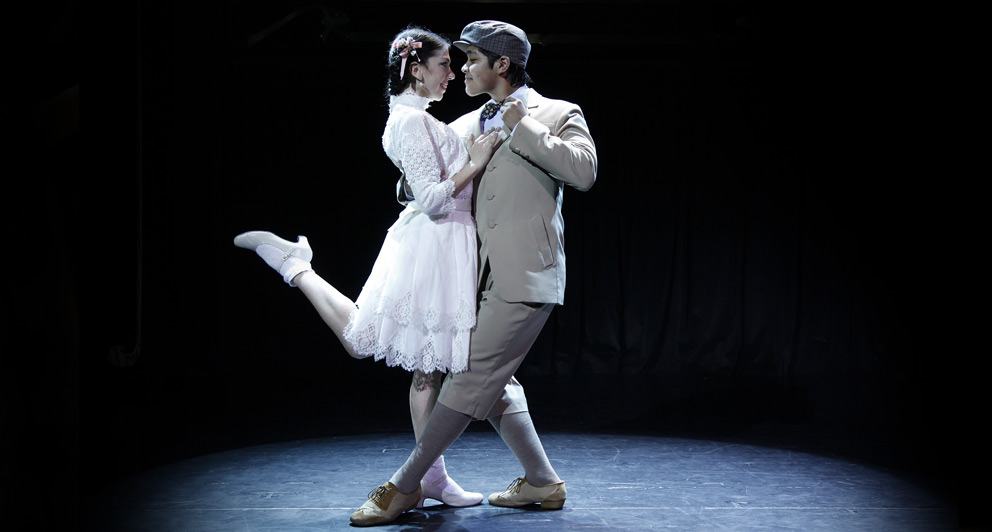
A tango dance at Esquina Carlos Guardel
Armed with a basic understanding of the history of tango and still awed by the Carlos Guardel tango show, you will almost be ready to take the plunge. If you love dancing and you love coffee (and even if you don’t), head to Cafe Tortoni, the most famous coffeehouse in Buenos Aires and one of the ten most beautiful cafes in the world. Cafe Tortoni dates back to 1858 when it was launched by a Frenchman who was inspired by the then illustrious cafe of the same name on Boulevard des Italiens in Paris (now defunct!). At night, every night, a section of Cafe Tortoni is curtained off and offers a tango music and dance performance evening which you should definitely not miss while in Buenos Aires.
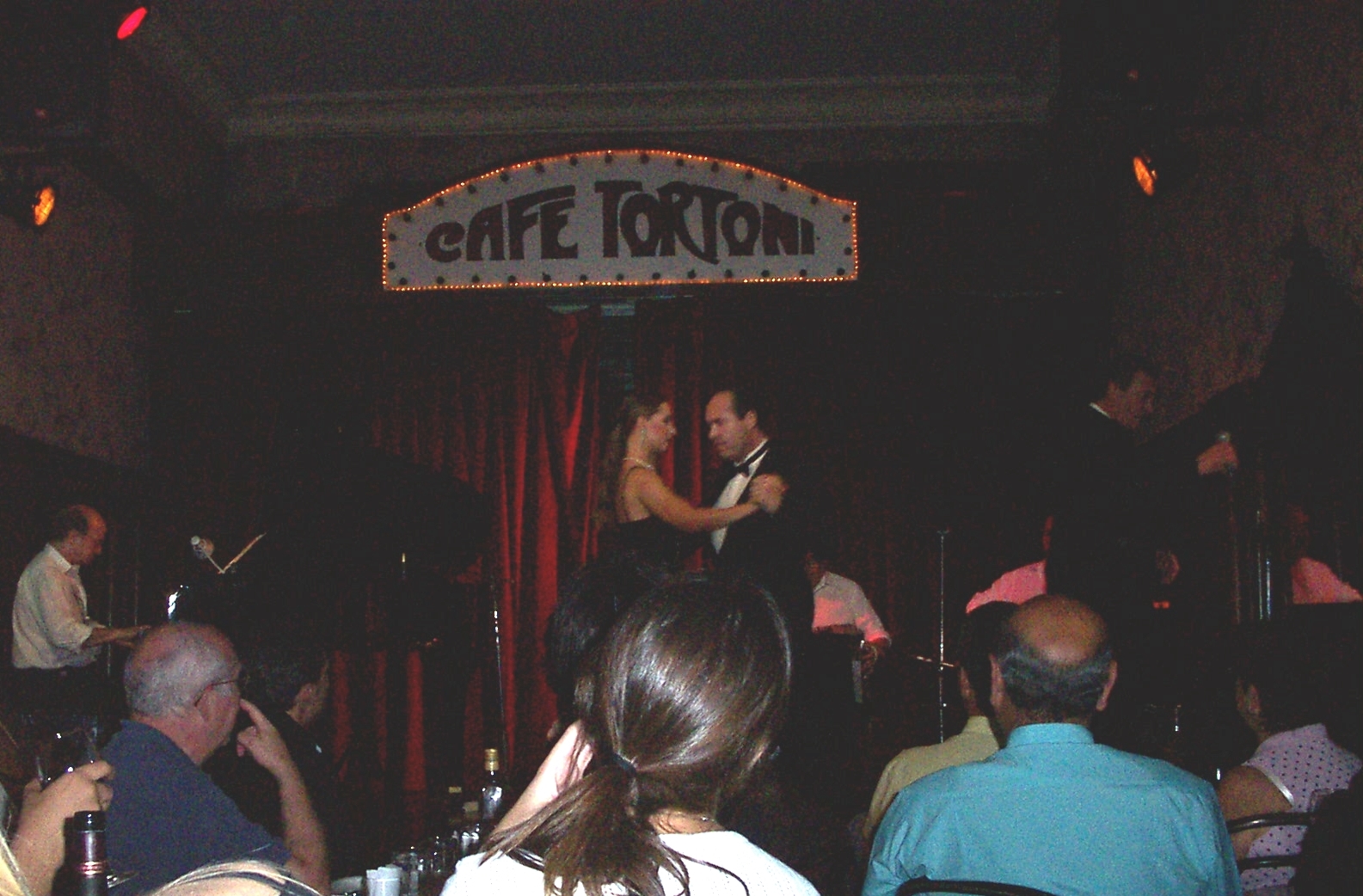
Tango music and dance at Cafe Tortoni in Buenos Aires
Ready to tango? It proved very easy to set up private tango lessons at the Four Seasons hotel, which made a beautiful large room with a parquet floor available to us in the mansion (an annex to the hotel where celebrities like Madonna stay, as she did when she came to Buenos Aires to film the movie Evita). The concierge already had a list of tango dancing instructors for us to interview. We recruited Natalia and Andres, two young charming portenos (which means “people from the port” and is the term used for the locals in Buenos Aires), who turned out to be very competent and patient teachers. They worked tirelessly, through several lessons, to get us to master some of the basic steps of this beautiful dance.
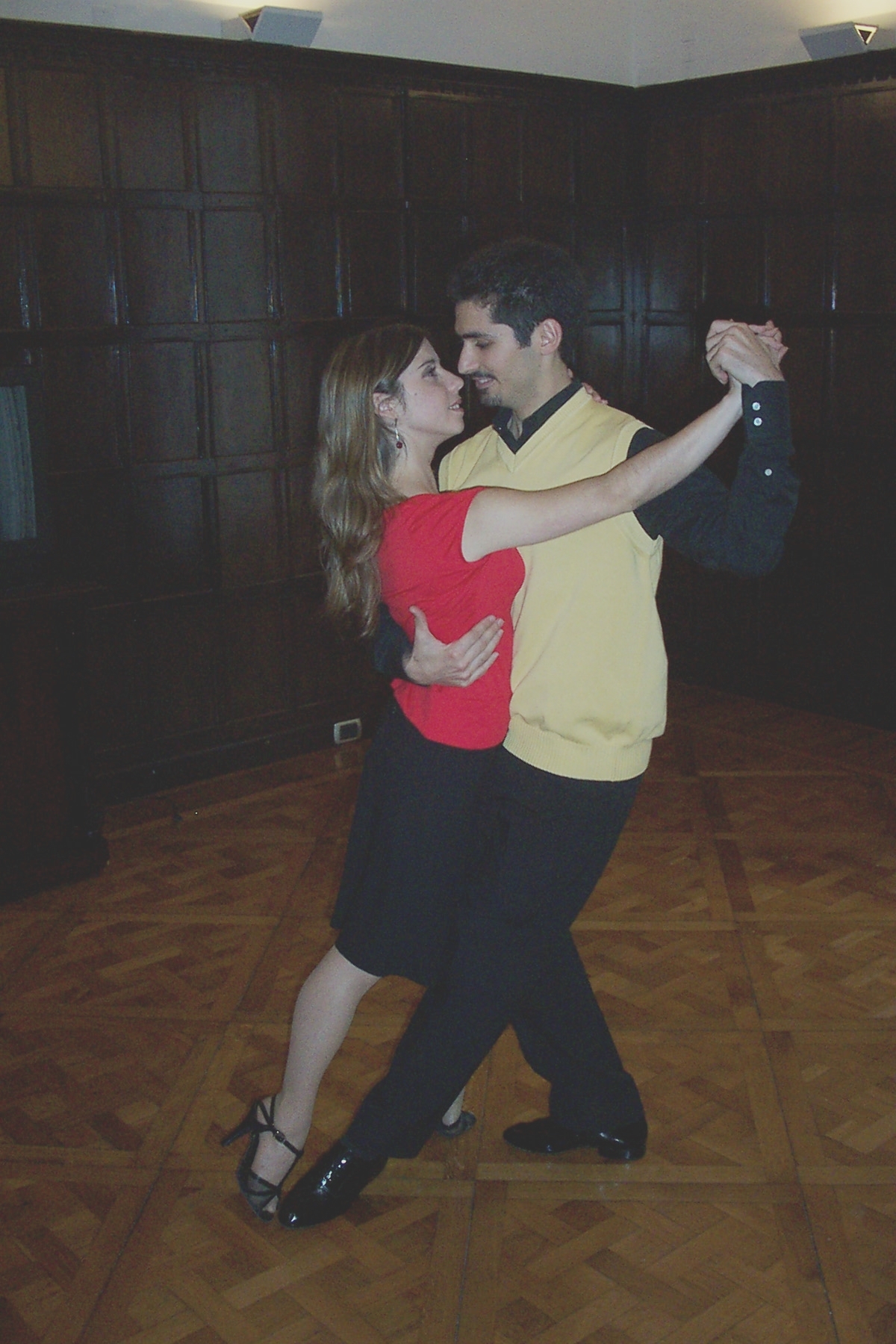
Natalia and Andres, our private tango instructors
It was now time to put our newly acquired skills to the test. Off we went to one of the most celebrated milongas (the name for places where tango is danced) in Buenos Aires, the Confiteria Ideal. This renowned milonga celebrated its 100th anniversary in 2012 and unfortunately, it showed. The building was sorely dilapidated and we could sense a previous elegance and charm, but that was long gone. The dance floor was huge, and most of the relatively few people there were on the floor enjoying their passion for tango regardless of the bright lighting and the sad surroundings.
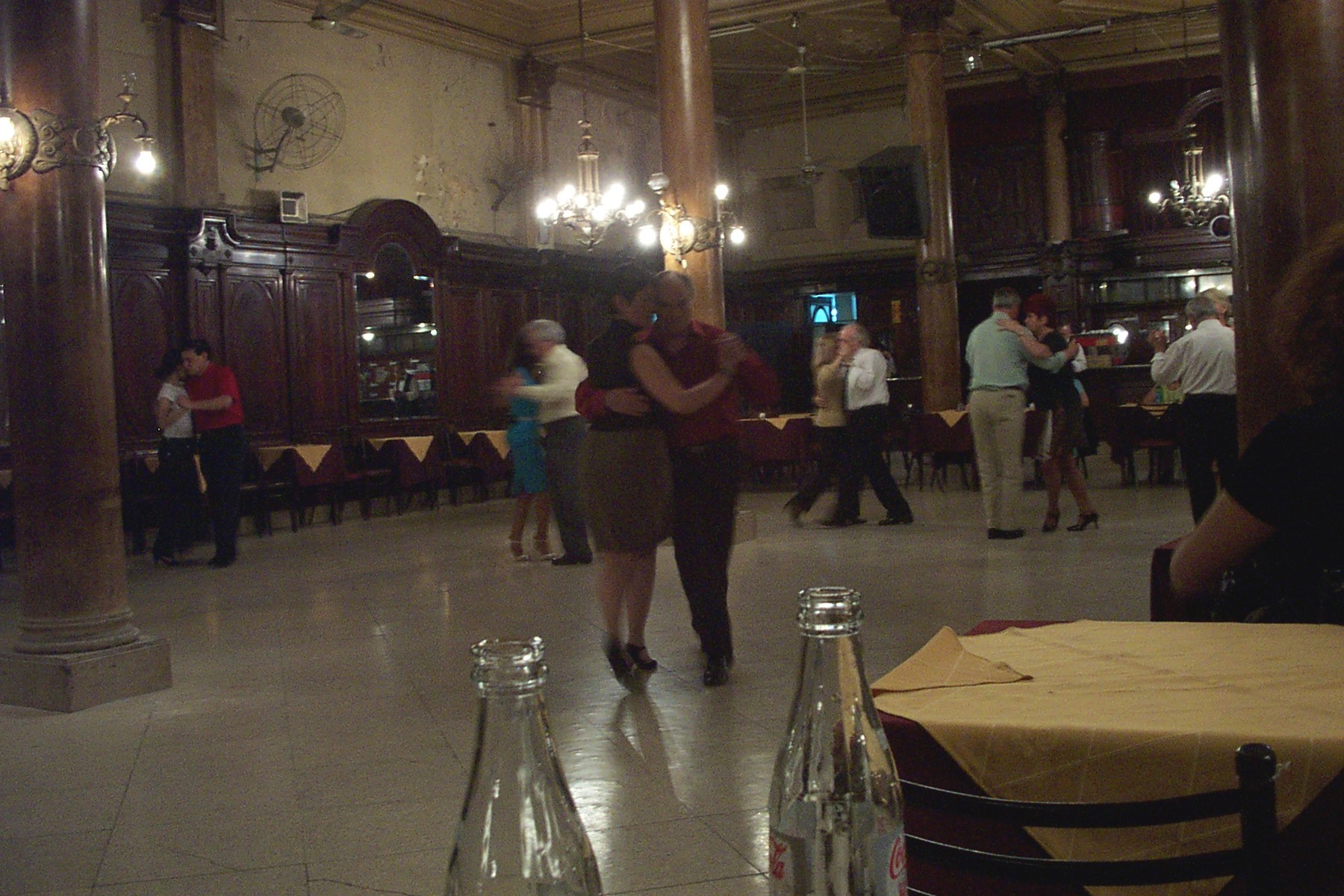
Milonga La Confiteria Ideal in Buenos Aires
It would seem that we had showed up at Confiteria Ideal a bit too early in the evening, because the atmosphere was totally different when we arrived at our second milonga well after midnight. Salon Canning in the Palermo neighborhood was a tad more upscale than Confiteria Ideal and also differed in that the very large dance floor was teeming with tango afficionados. We took the plunge and went around the dance floor several times with remarkable ease and increasing pleasure until at about 1:30am when we felt we had soaked in enough tango ambience for one night and way too much cigarette smoke, and decided to call it a day (night?).
While tourists watching the tango shows in Buenos Aires appeared to be of all ages, most of the portenos dancing tango at the milongas were either relatively young or relatively old. In other words, there seemed to be very few dancers from the “middle age” crowd. We were told that this reflected a revival of interest in tango following a period of decline. This is a good thing. It is far better for the young to be dancing, and dancing such a beautiful and complex dance, than drinking, bar-hopping or just partying until the wee hours of the morning. Tangoing the night away is as uplifting for the soul as it is fascinating to watch.
Happy dancing and safe travels from BonVoyageurs!
DELECTABLE TIDBIT: Where to enjoy a true Out of Africa experience - The Tarangire Safari Lodge in Tanzania
The Tarangire Safari Lodge in the Tarangire national park offers two features which you should not miss during any safari in Tanzania, two features which are unique and marvelous enough to make a huge difference to your safari experience.
Though it does not lack in comfort and amenities, the lodge is not the most luxurious accommodation in Tarangire or for that matter in Tanzania. In fact, all of the other nights during our 2012 safari were spent in more comfortable and certainly more luxurious lodges, permanent tents or mobile camps in the Serengeti, Ngorongoro and Lake Manyara parks. But the two nights we spent at the Tarangire Safari Lodge brought us our favorite and most memorable experiences, because this lodge offers two unique features: an open-air panoramic view to die for which you will remember forever, and animal encounters at close range which you cannot experience elsewhere (excluding of course viewing animals from the safety of your land rover).

A lioness in Tarangire national park in Tanzania
The Tarangire Safari Lodge consists of a number of semi-permanent tents lined up on each side of a central lodge building along the crest of a hill overlooking the Tarangire national park.
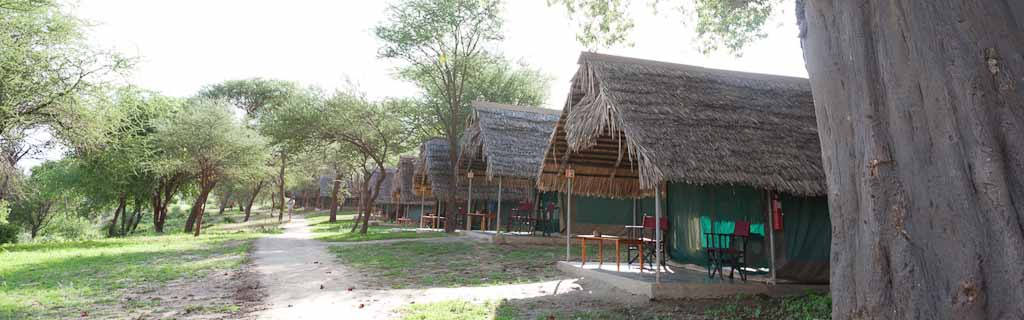
Tents at the Tarangire Safari Lodge in Tarangire national park in Tanzania
This arrangement provides each tent with a panoramic view of the park from an elevated position. Since the park in that area is sparsely wooded, the view of the animals living as nature intended in the valley below is unencumbered.
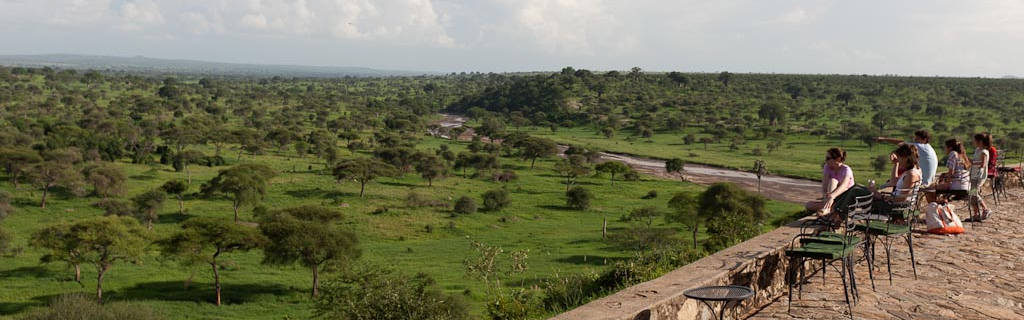
View of Tarangire national park from the Tarangire Safari Lodge
The views of the Ngorongoro crater from the hotels located on the crater’s top edge are breathtaking, but they do not begin to compare with the spectacle surrounding the Tarangire Safari Lodge. Sitting in front of your tent or the main lodge, perhaps enjoying a cocktail or simply relaxing, and admiring at leisure the elephants and other wild animals as they move around the valley is an unforgettable experience.
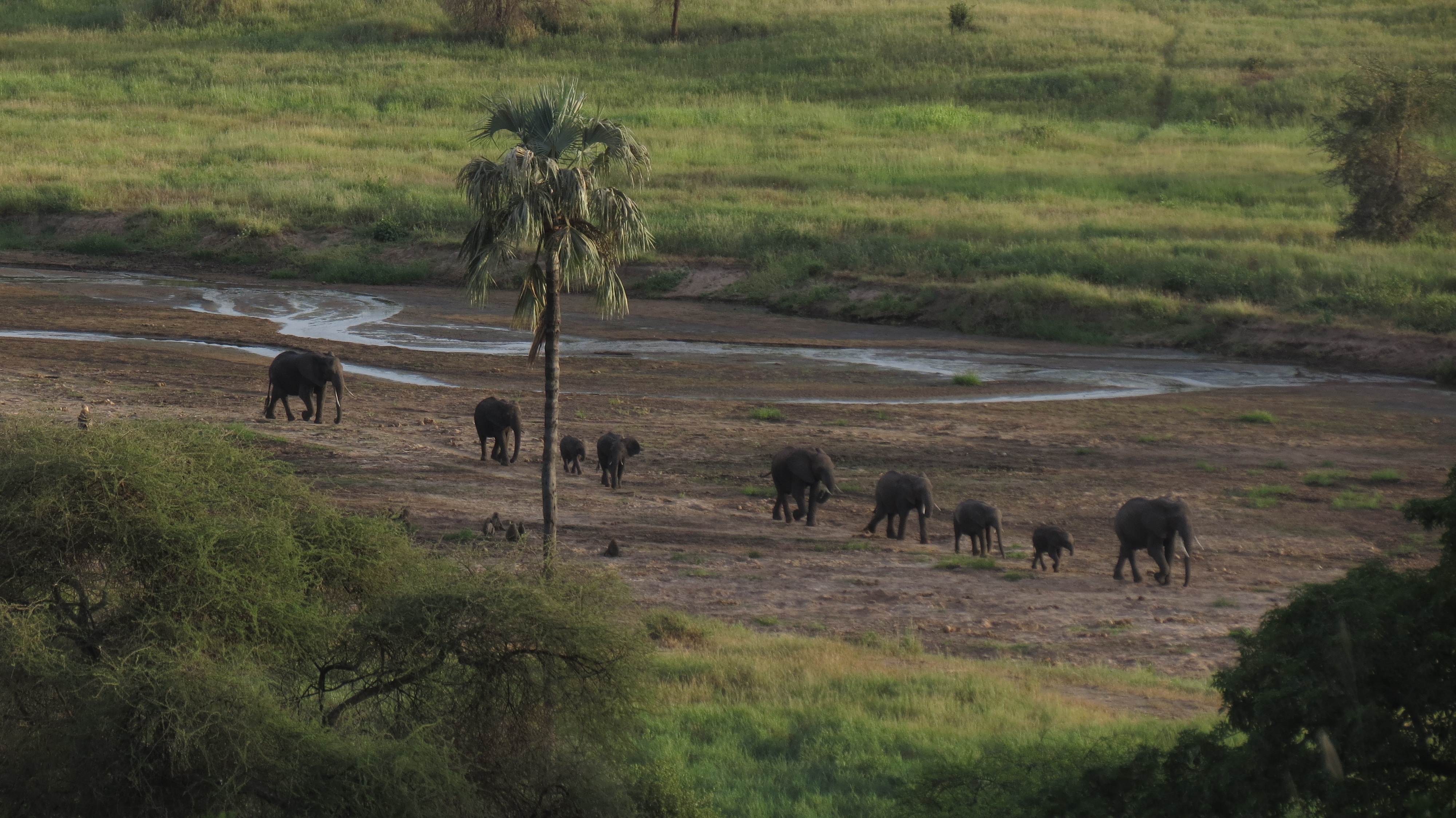
View from our tent at the Tarangire Safari Lodge
In addition to the incredibly awesome view, the lodge offers animal encounters which are equally awesome. During our brief stay, we were entertained by monkeys playing on the roof of our tent, greeted by friendly diks diks and gazelles coming up the hill to the front of our tent, woken up by elephants foraging right outside our tent in the middle of the night and looking straight at us from a few feet away, as well as surprised by a lion slowing walking between two tents in plain daylight, and the list goes on. I invite you to read my safari blog posting on BonVoyageurs.com for more details of our upfront and personal encounters.

A lioness and an elephant in Tarangire national park in Tanzania
If you are traveling with children, a word of caution is called for if there is any chance that you would be unable to keep them with you at all times. Because the lodge is in a location where wild and dangerous animals frequently cross, basic safety precautions are required, such as calling for a security guard to accompany you from the lodge to your tent. This is the type of precaution required not only at the Tarangire Safari Lodge but in general at safari lodgings located within the confines of the parks. An unfortunate but exceptional accident occurred at the Tarangire Safari Lodge back in 2009 which should not, however, diminish your interest in experiencing the delight of this lodge. Visitors enjoyed the regular visit of a leopard to the barbecue area of the main lodge, but it led to tragedy when a child went outside without supervision while his parents were eating dinner inside.
An African safari will leave you with vivid and extraordinary memories of the animals in their natural habitat. The delectable tidbit here is that, if you want a complete Out of Africa experience, you will consider booking a stay at the Tarangire Safari Lodge. Safe travels from BonVoyageurs!
DELECTABLE TIDBIT: How to get really close to the Giant Panda bears in Chengdu (Sichuan, China)
 The Chengdu Research Base of Giant Panda Breeding on the outskirts of Chengdu in the Sichuan province of China is one of the best locations in the world to get exposed to the giant pandas (called giant only to distinguish them from the smaller red pandas).
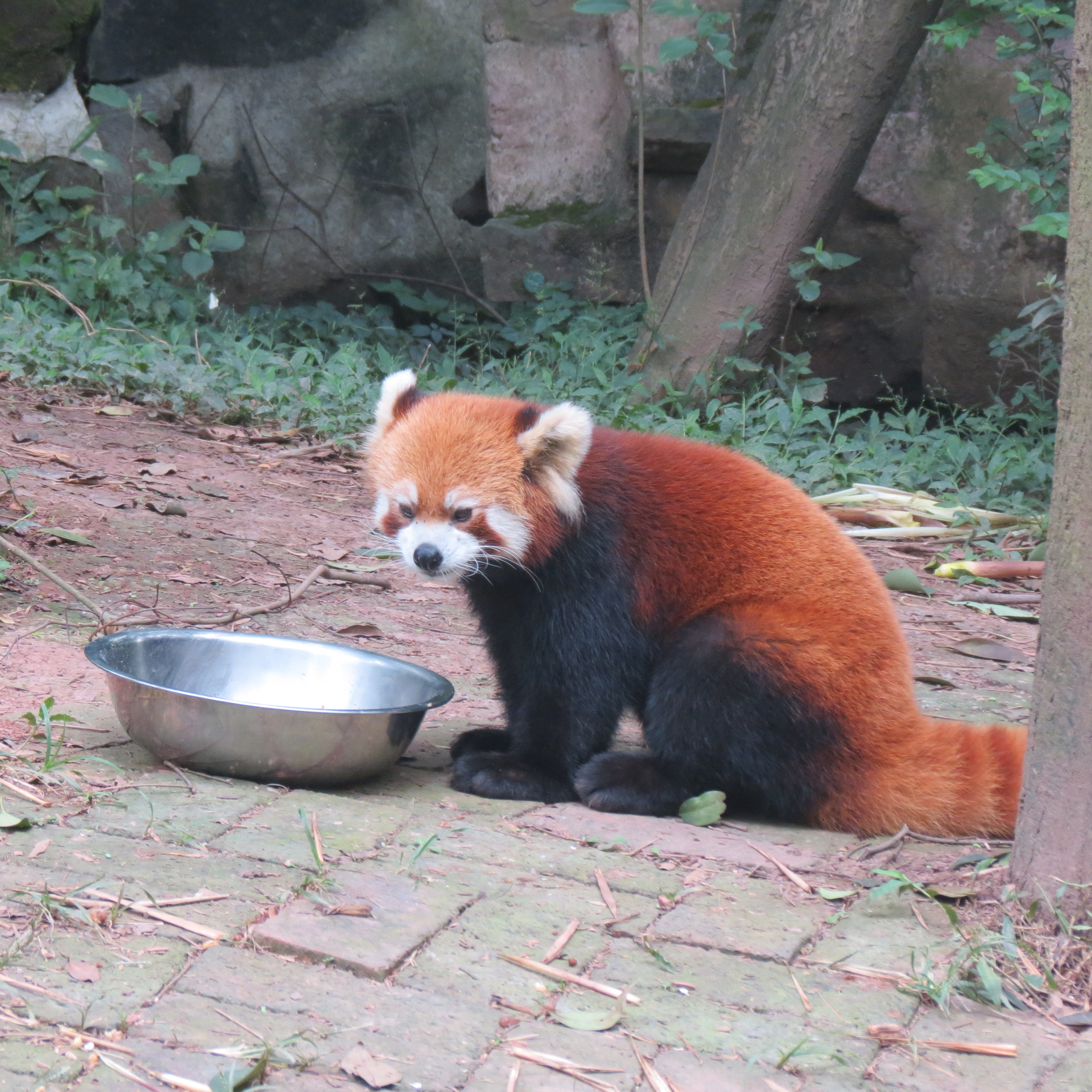
More than one million visitors per year visit the research center, which replicates the natural mountainous habitat of the pandas on almost 100 acres and houses between 50 and 75 pandas at any one time. Most visitors simply visit the research center as they would a zoo, walking along its hilly and wooded walkways trying to catch a glimpse of both giant pandas and red pandas at viewing points located throughout the very well maintained facility.
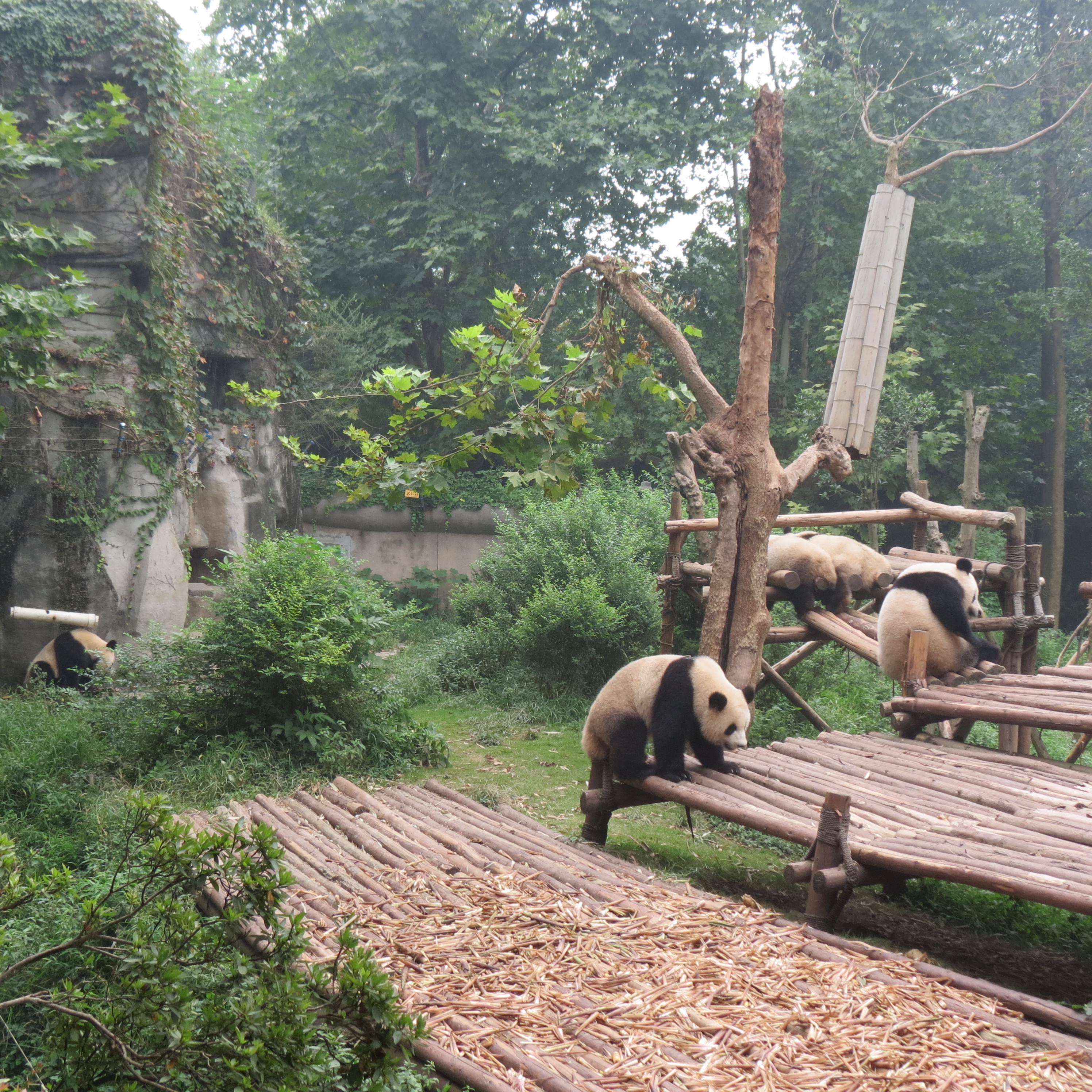
Only a handful of visitors seem to be aware that, for a nominal fee, they could have gotten a lot closer to the pandas. The delectable tidbit of the day: by registering in advance as a “panda keeper for a day” you can spend a whole morning in extremely close contact with pandas! You can even, by “donating” a more substantial amount ( anywhere from 1,000 to 2,000 yuan or approx. $160-330), get to hug and hold one of the younger pandas.

My blog posting of September 7th 2012 on BonVoyageurs.com details our adventures as “panda keeper for a day” when we visited the research center that day.
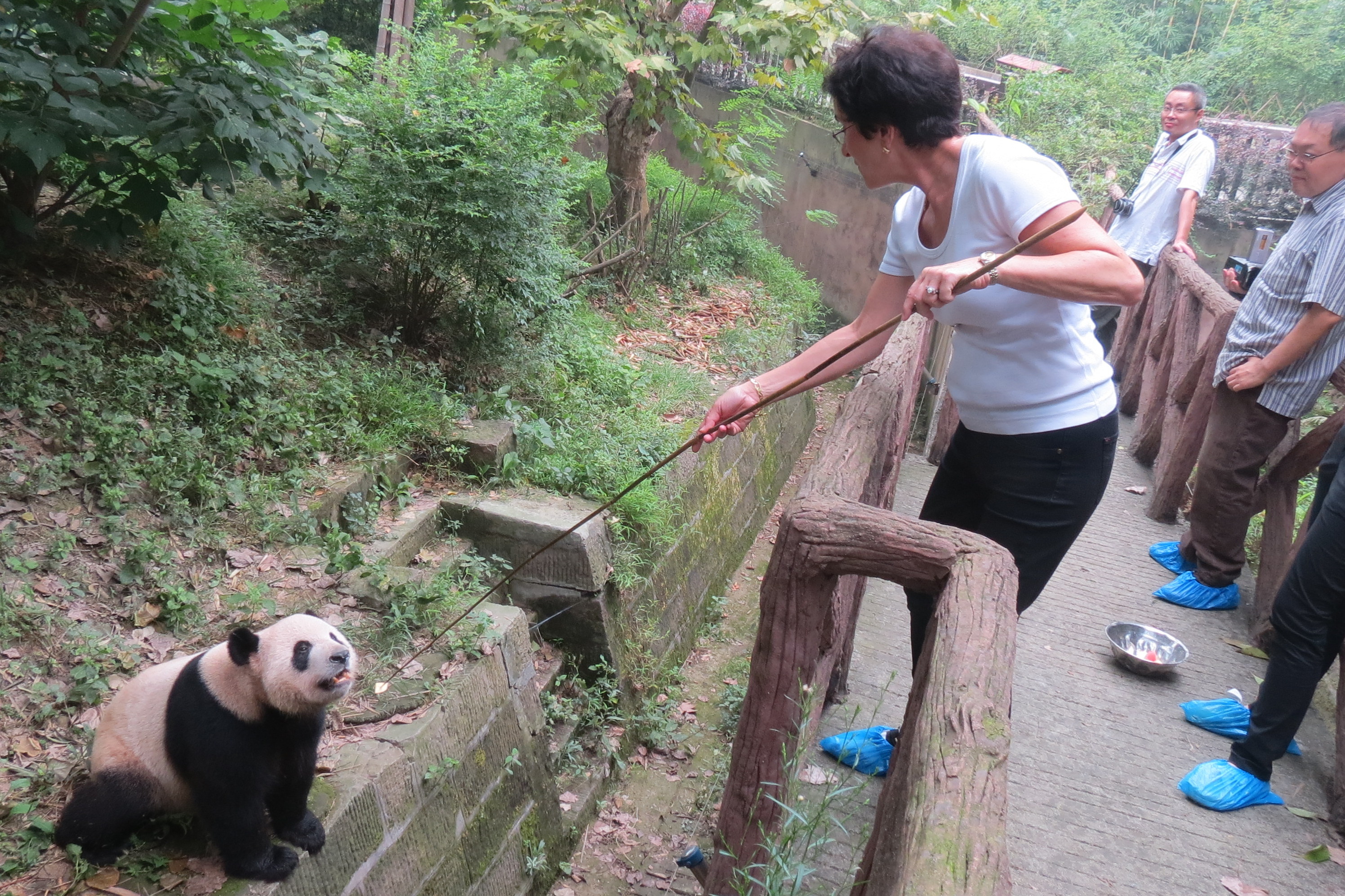
It was extremely educational to spend the morning with the real panda keeper, who was extremely pleased to share some of her extensive knowledge about the habits of these wonderful creatures. Getting to know each of the five pandas under our care on a first name basis, watching them closely, preparing their food and feeding them frequently was thrilling!
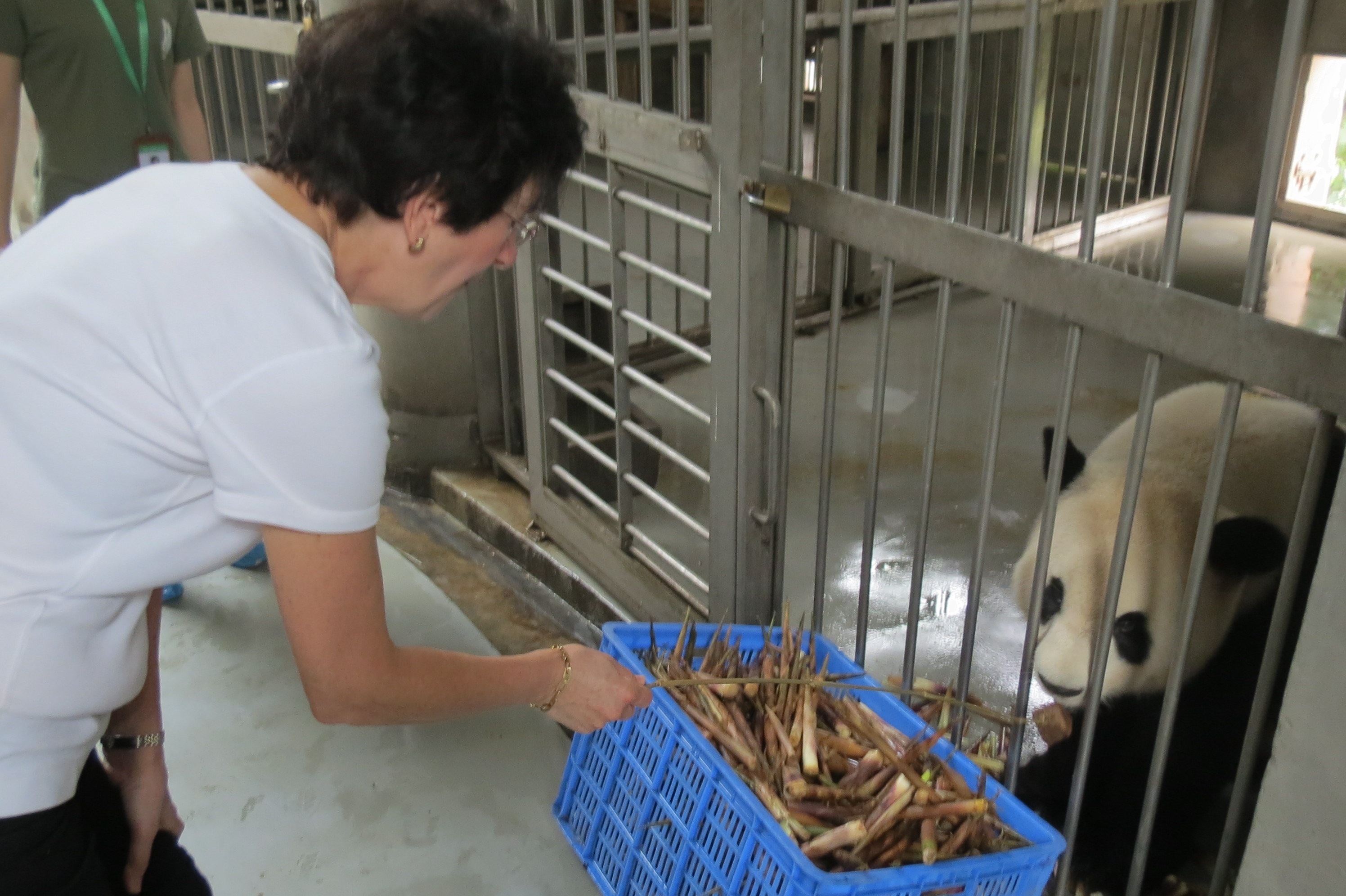
I encourage you to read the posting to find out more about our day as “Panda Keeper” and other interesting tidbits such as the role of “massage and stimulation” in the reproduction of pandas and the reason for the fences around the enclosures of the research center.
When you plan your next trip to China, please make sure to reserve in advance your spot as “panda keeper for a day”; it will be the experience of a lifetime. Safe travels from BonVoyageurs!
Can you guess where this photo was taken?
Hint: A spot visited by hordes of tourists every day in one of the most important cities in Europe.
Hint: The flag on top of that building is an anomaly. Can you guess what that flag is and what it is doing there?
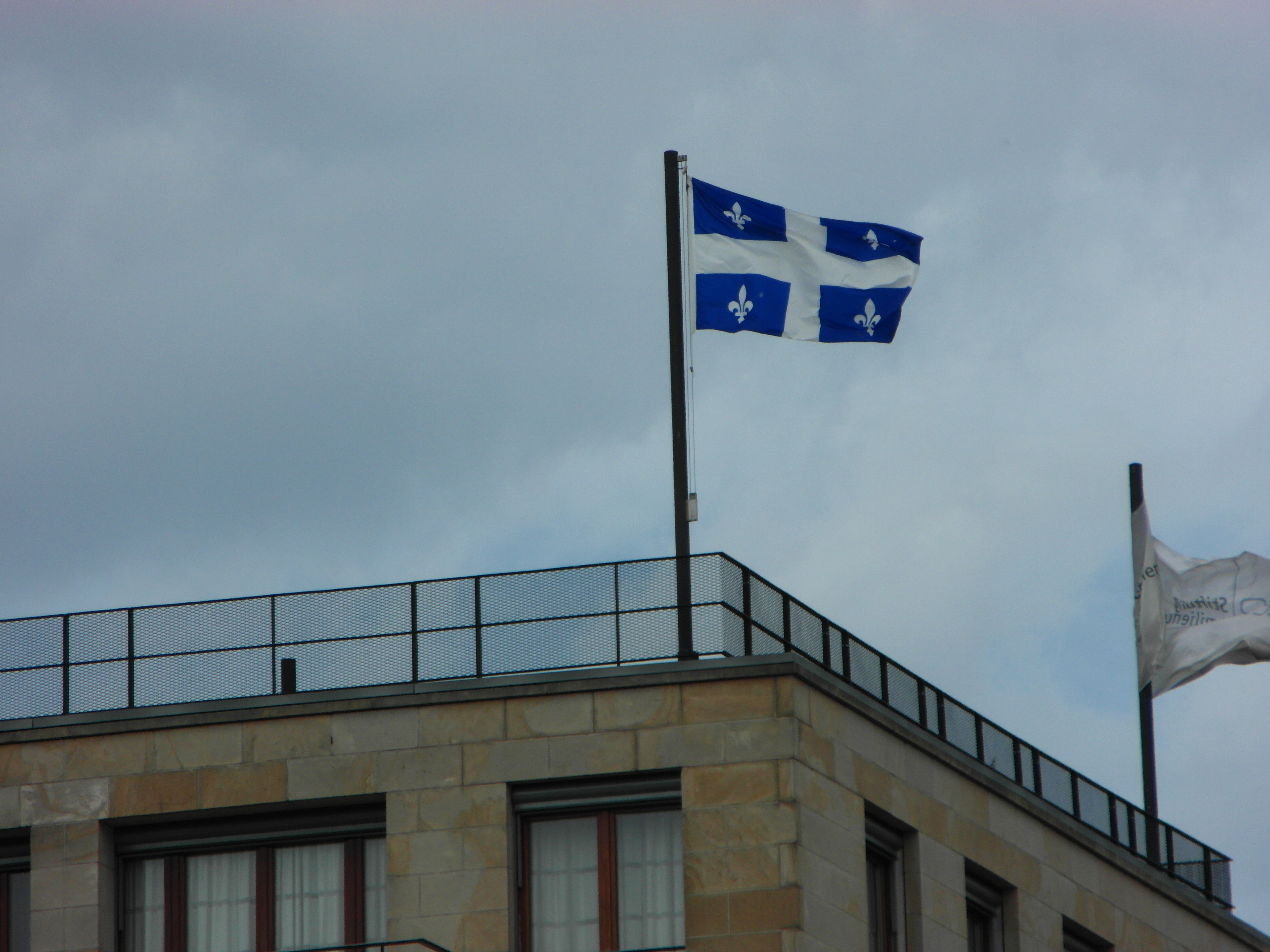
On June 16, 2013 we were in Berlin Germany. Like every tourist to Berlin, we visited the Brandenburg Gate, one of the most famous landmarks in Germany. When standing in Pariser Platz and looking up at the imposing Brandenburg Gate, you cannot avoid seeing within your line of sight both the Brandenburg Gate and the flag on top of the building immediately adjacent to the gate. But that flag is an anomaly, it has nothing to do with Germany. Fleurs de Lys on a flag usually means a French connection, and four fleurs de lys on a blue and white flag can only mean one thing … the flag of Quebec, initially founded as La Nouvelle France (The New France) in the “New World”. How amazing that the Quebec flag should be flying a few feet away from the Brandenburg Gate and right across the square from the US embassy in Berlin!
I have since found out that the building hosts the “Quebec Government Office” in Berlin. I can’t begin to guess how much that office is costing Quebec taxpayers, but I can assure you that it has maximum visibility.
Since when is New Year’s Day on January 1st?

The answer: January 1st, 1753. If you live in America or in any other country then part of the British Empire, 1753 was the first year where January 1st was celebrated as the first day of a new calendar year. The Calendar Act of 1751 was the British law which set 1752 as the year of transition from the Julian to the Gregorian calendar for England and its colonies. By that time, the rest of the Western world had already made the transition (although the French would have another go at a different calendar after the French revolution of 1789). Japan’s transition to the Gregorian calendar came much later in 1873, and China made the switch relatively recently in 1929.
Happy Lady Day! March 25th was until 1753 the first day of the new calendar year, and it was then referred to as “Lady Day”, not New Year’s Day. For instance, the day after March 24, 1751 was March 25, 1752. The day after December 31, 1751 was January 1, 1751! So everyone, from the Pilgrims to the early colonists to a young George Washington, were celebrating New Year’s Day as “Lady Day” on March 25th of every year.
Eleven days when absolutely nothing happened in America. What happened on say September 4th 1752? Absolutely nothing. The reason is that, in order to make the transition to the Gregorian calendar at that time, the day after September 2nd 1752 became September 14th 1752. All the eleven days in between, from September 3rd to September 13th, never existed. The next time you are asked to come up with a question at a trivia game, just ask “What day of the week was September 7th 1752?”
Tonight, raise your champagne glass to Alysius Lilius! Alysius Lilius, also known as Guido Lilio, is the man who came up with the calendar that we all use today around the world. Alysius Lilius was an Italian astronomer and philosopher from Ciro, in Calabria. The calendar he invented was proposed to and accepted by Pope Gregory XIII (hence the name Gregorian calendar), who first implemented the new calendar within the Catholic universe in 1582.
March 24th 1751 or April 5th 1752? Do you realize that people in England and its colonies were living on a different day, and for almost three months every year, a different year than people in say France or Spain? When the newspaper in England read March 24, 1751, for example, the Paris newspaper was dated April 5, 1752! No wonder the French and the English were regularly at war with each other — they could not even agree on what day it was!
Winterthur Museum ~ An easy day trip from Washington, New York City, Baltimore, Philadelphia …
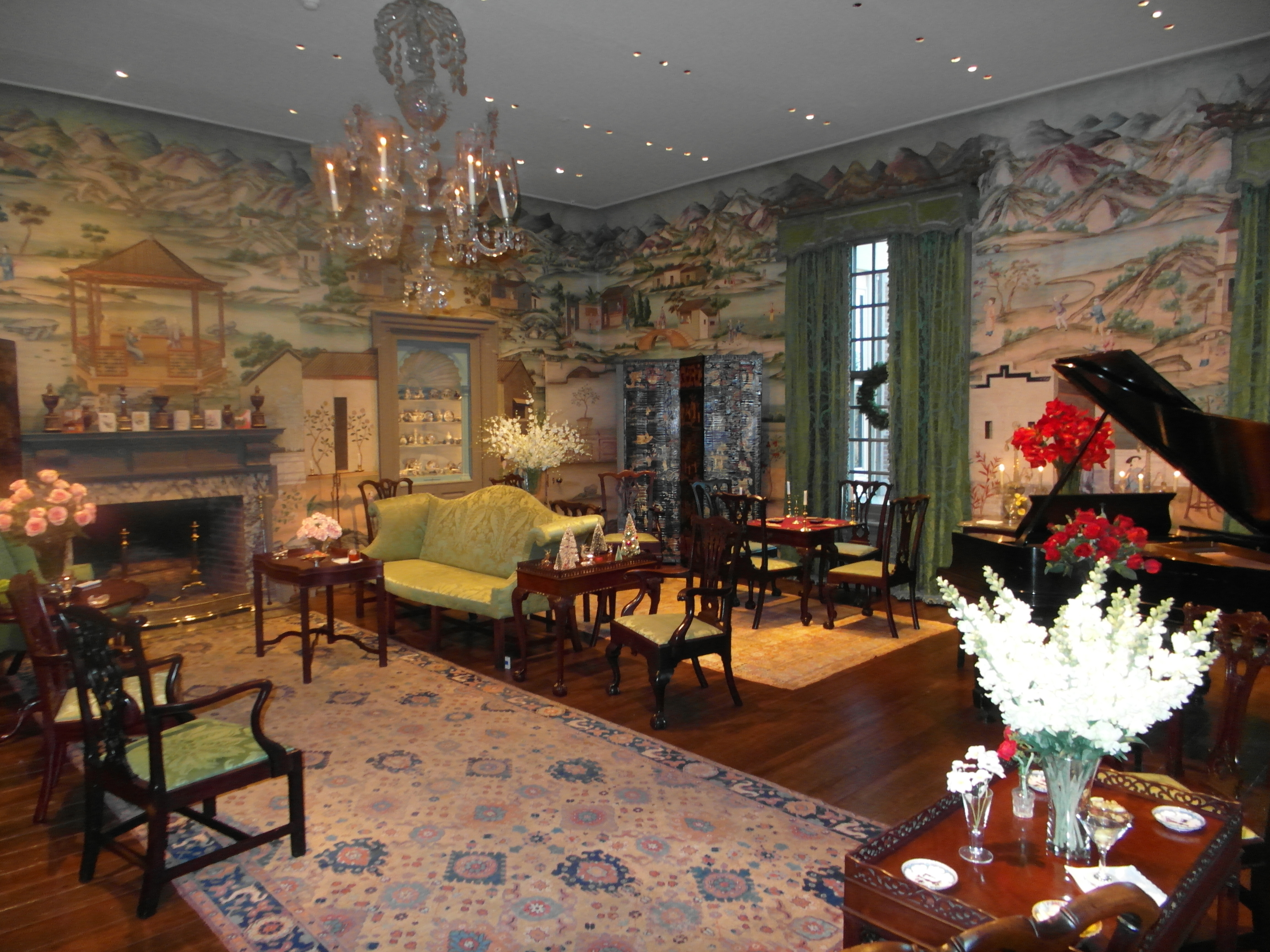
One of the 175 rooms in the Winterthur mansion
Winterthur Museum is the premier museum of American decorative arts and is an easy and worthwhile day trip year-round for people living in the Mid-Atlantic region.
Originally a 60-acre mansion and estate of the Dupont family located within a 1,000 acre preserve of rolling meadows and woodlands, Winterthur (named after the Swiss town of the same name) was transformed into a museum of more than 90,000 objects (furniture, ceramics, etc…) made or used in America between 1640 and 1860 by Henry Francis du Pont, who was born at Winterthur and lived there until his death in 1969. The main house contains more than 175 rooms, and there were at one time more than 90 buildings on the estate, including a farm which provided the food for the residing family, a golf course, tennis courts, multiple gardens, swimming pools, and even a pool with koi fish.
Access: The Winterthur Museum is less than an hour’s drive from Philadelphia, one hour from Baltimore, an easy two-hour drive from Washington DC, and only slightly more from New York City. It is located a few miles off the Route 52 exit (exit 7) of I-95 in Wilmington DE. There is a very large parking lot on the property, as well as a separate handicapped parking area next to the Visitors’ Center. Free trams make a continuous loop to carry visitors between the Visitors’ Center and the main mansion (museum) on the other side of a hill, although it is barely a five minute walk to make the trek by foot via a very well marked and paved walkway. Also departing from the Visitors’ Center, a separate free open-air tram provides a twenty-minute guided tour around the many gardens of the property at regular intervals.
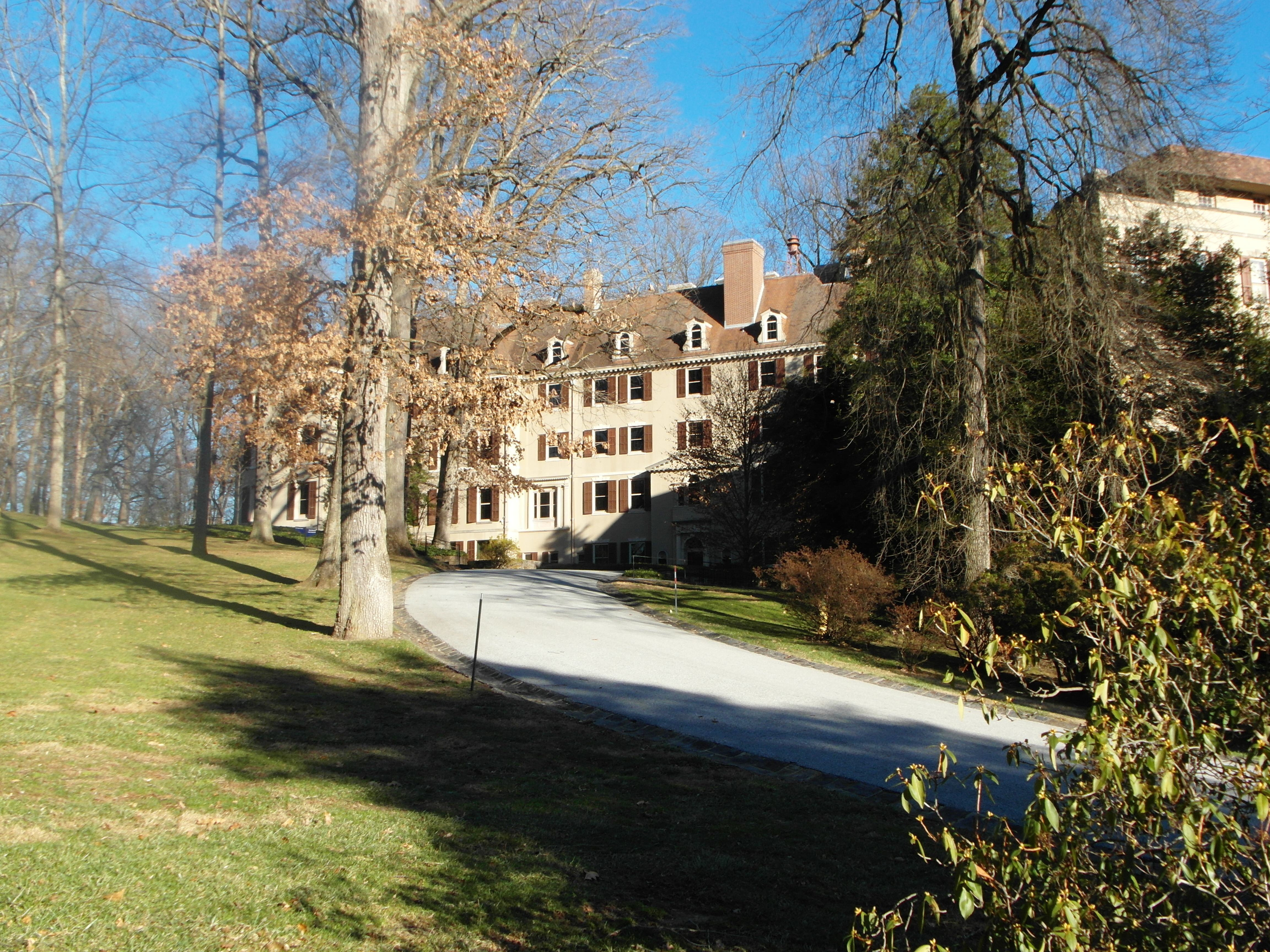
Winterthur Mansion
Tours: It is important to understand that you cannot visit the Winterthur mansion unless you are part of an organized tour. I was quite unaware of that when I showed up at the Visitors’ Center. I had, of course, visited the Winterthur Museum website prior to our trip, and read about the option of reserving one of various listed tours. However, my reaction was that I would prefer to get a feel for the place first and walk around those 175 rooms before committing to any specific tour. I was quite surprised, therefore, to learn that you can only enter the mansion as part of an organized tour group. Fortunately, we were still able to sign up for a “Yuletide” tour when we purchased our entrance tickets at the Visitors’ Center. To the basic $20 Winterthur entrance fee, one must add another $2 to cover the price of the one-hour tour.
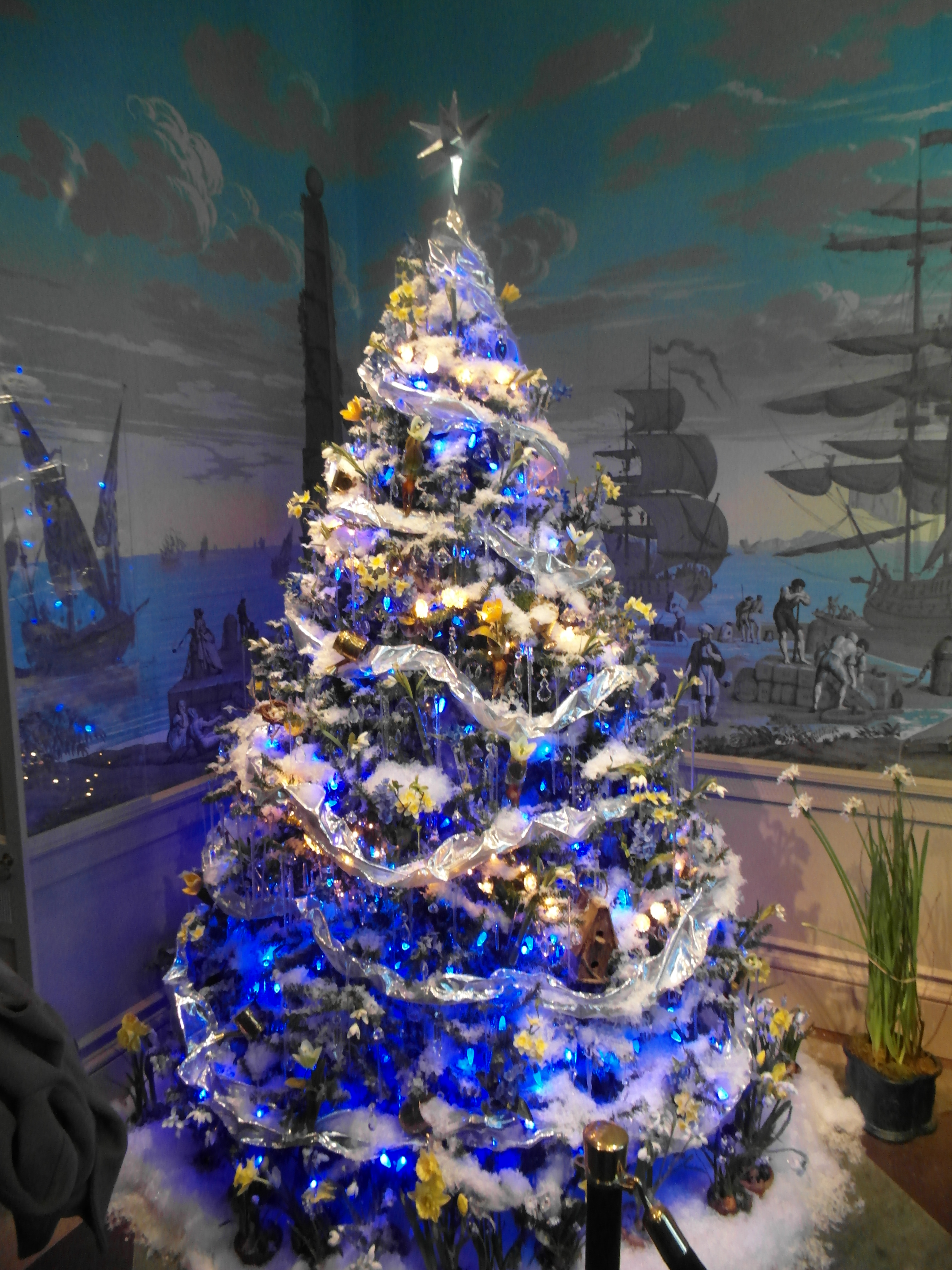
Visitors scheduled for the tour at our appointed time were divided up in groups of ten, and guided through a very precise route of approximately thirty rooms in the basement as well as on the fifth and sixth floors of the mansion.
Most of the rooms we toured on the upper floors were relatively small with low ceilings, particularly in comparison to the rooms at Biltmore and the Hearst Castle, two other famous American castles open for touring. However, every room was completely and very tastefully furnished, and exquisitely decorated for Christmas. Of particular note were the many different types of Christmas trees, from a giant twenty feet high majestic Christmas tree in the large solarium to the stunningly beautiful dried flower Christmas tree, the candy Christmas tree, and the very unique peony Christmas tree. Because this was a Yuletide tour, our guide spent most of her time talking about the Christmas decorations and what the Dupont family did at Christmas time. I would have loved to hear more about the incredible collection of furniture on display in all of those rooms (there are separate tours available which focus on the decorative arts in the mansion).
One comment our guide made about furniture related to the first major piece we saw as we began our tour, a Vermont cupboard displaying Staffordshire ceramics. Apparently it is when Henry Francis du Pont saw this pine cupboard in 1923 at the house of Electra Havemeyer Webb in Shelburne, Vermont (now the Shelburne Museum) that he was inspired to start collecting American decorative arts.
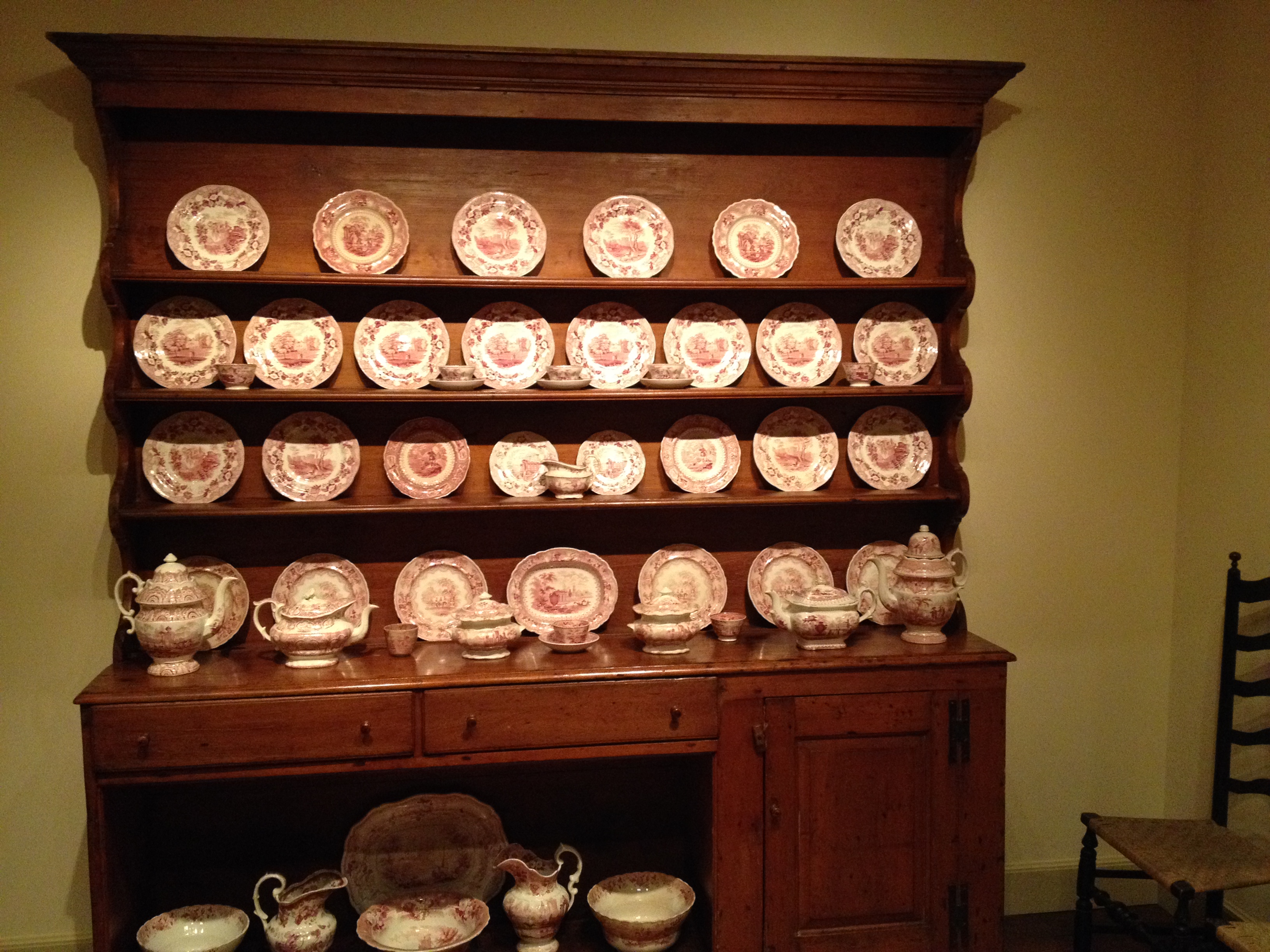
The pine cupboard and Staffordshire ceramics from Vermont
Another comment that our guide made related to the various ashtrays in the main living room. She mentioned that she had asked visiting schoolchildren what those objects were, and none of them knew that they were ashtrays, none of them even knew what an ashtray was! Times certainly have changed since I was a child.
It should be mentioned that, attached to the main mansion, is a relatively small T-shaped two-story gallery building displaying some of the objects of the collection as well as hosting current exhibitions. Access to this building is included in the basic price of the entrance ticket. The rotating exhibits in the galleries are presented attractively and in depth, and serve as an excellent prelude to touring the main building.
Clearly, there is a lot more to see at Winterthur than what we were exposed to during our one-hour tour of the mansion and our twenty minute guided ride around the gardens. Next time, we will return for a tour dedicated to the decorative arts of the main building and to see the gardens in bloom!