Blog Archives
DELECTABLE TIDBIT: Where else would you learn to dance the tango but in Buenos Aires, Argentina!
Getting immersed in the fabulously nostalgic, romantic and captivating tango music and dance only requires a plane hop south to its roots in the Europeanesque city of Buenos Aires in Argentina.
As soon as we entered our executive suite at the Four Seasons Hotel Buenos Aires (formerly the Hyatt), we were welcomed by a large white and black chocolate statue of two tango dancers on a tray with a glass of chocolate liqueur and some cherries. When I was traveling extensively on business to South America many years ago, I thought of that hotel as the best hotel in Latin America. The hotel is located right behind the magnificent French embassy off one of the world’s widest boulevard, the Avenida del 9 de Julio. Newer and perhaps more luxurious hotels have since sprung up all over Latin America, but I knew that the incomparable service of the Four Seasons would suit us well during our stay in Buenos Aires.
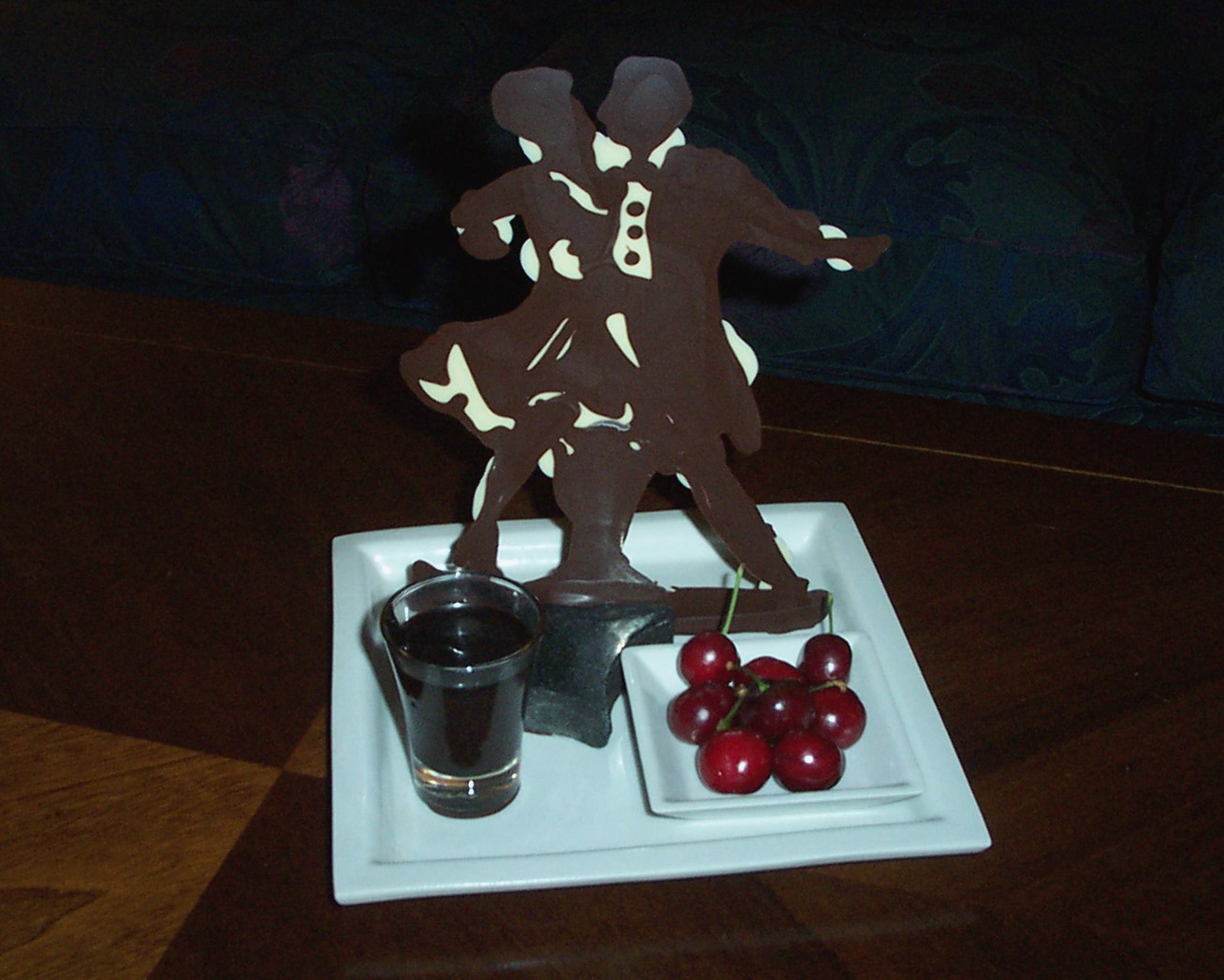
Welcome chocolate tango dancers at the Four Seasons Buenos Aires
If the chocolate tango dancer welcome was not sufficient to put us in the mood for tango, a walk through the neighborhoods of the captivating city of Buenos Aires, whether the Spanish colonial barrio of San Telmo or the incredibly colorful La Boca, would have reminded us at nearly every street corner that this city is the birthplace of tango. La Boca in particular offers tango music and tango dancing by street performers everywhere you turn; several lunch restaurants of the area are targeted at visiting tourists and include a tango dancing demonstration followed by professional dancers enticing spectators to the dance floor to dance the tango with them.
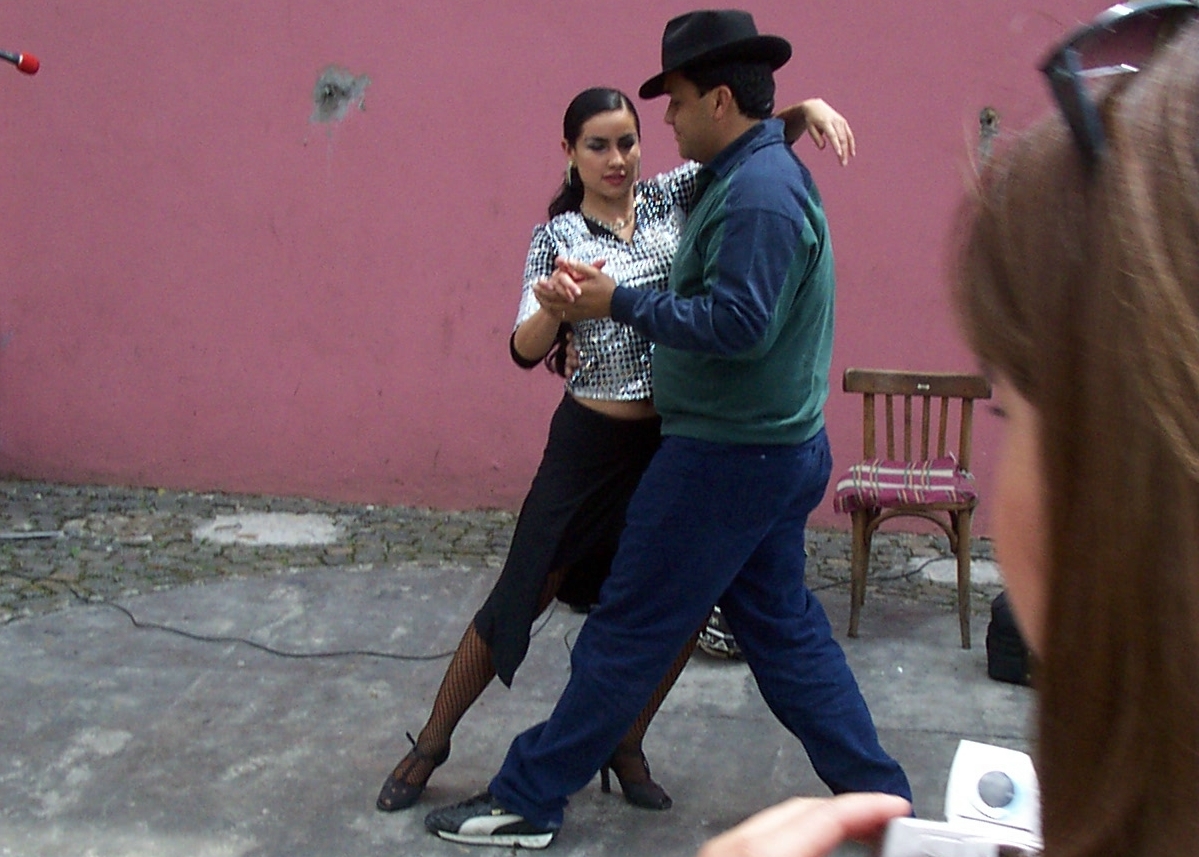
Street dancers performing a tango in La Boca
After the afternoon siesta (advisable if you wish to take advantage of the late nights of Buenos Aires), take in an evening at the Esquina Carlos Guardel for a dinner and tango show which will surely exceed your expectations, as it did ours. Carlos Guardel was Buenos Aires’ most famous tango singer and composer, who remains the most prominent figure in the history of tango. The Esquina Carlos Guardel theatre is European elegance with Buenos Aires charm. It was built in the barrio where Guardel grew up and is a magnificent tribute to him and the music and dance he loved so much. To our surprise, given the size of the place, the food was quite delicious, the service impeccable, the wine flowed, and the show presented a fascinating view of the history of tango, from song through dance, in 31 different tableaux and renditions. The 6-piece orchestra was on the upper level, the dancers and singers down below on the stage, the costumes were unbelievably beautiful and revealing, and our view from the mezzanine perfect. What’s more, we felt as if the singers were singing directly to us!
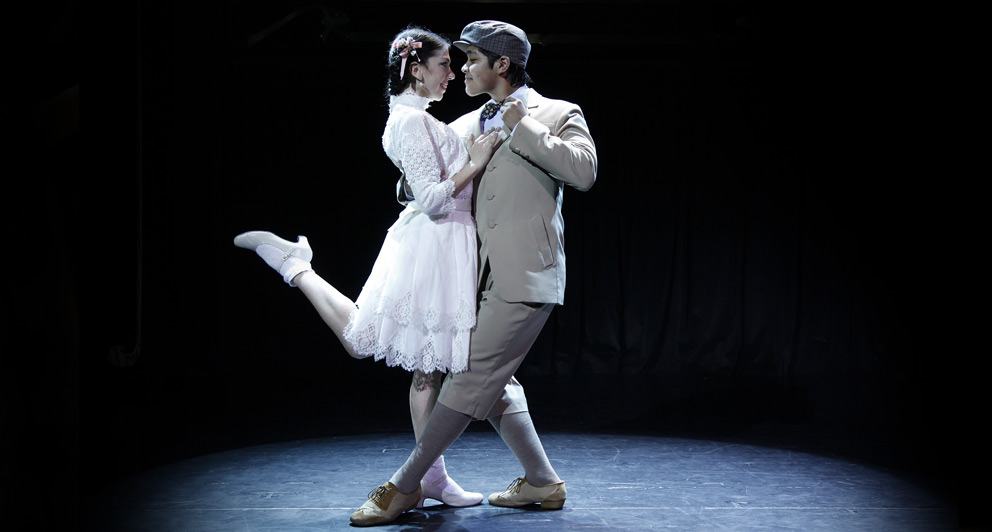
A tango dance at Esquina Carlos Guardel
Armed with a basic understanding of the history of tango and still awed by the Carlos Guardel tango show, you will almost be ready to take the plunge. If you love dancing and you love coffee (and even if you don’t), head to Cafe Tortoni, the most famous coffeehouse in Buenos Aires and one of the ten most beautiful cafes in the world. Cafe Tortoni dates back to 1858 when it was launched by a Frenchman who was inspired by the then illustrious cafe of the same name on Boulevard des Italiens in Paris (now defunct!). At night, every night, a section of Cafe Tortoni is curtained off and offers a tango music and dance performance evening which you should definitely not miss while in Buenos Aires.
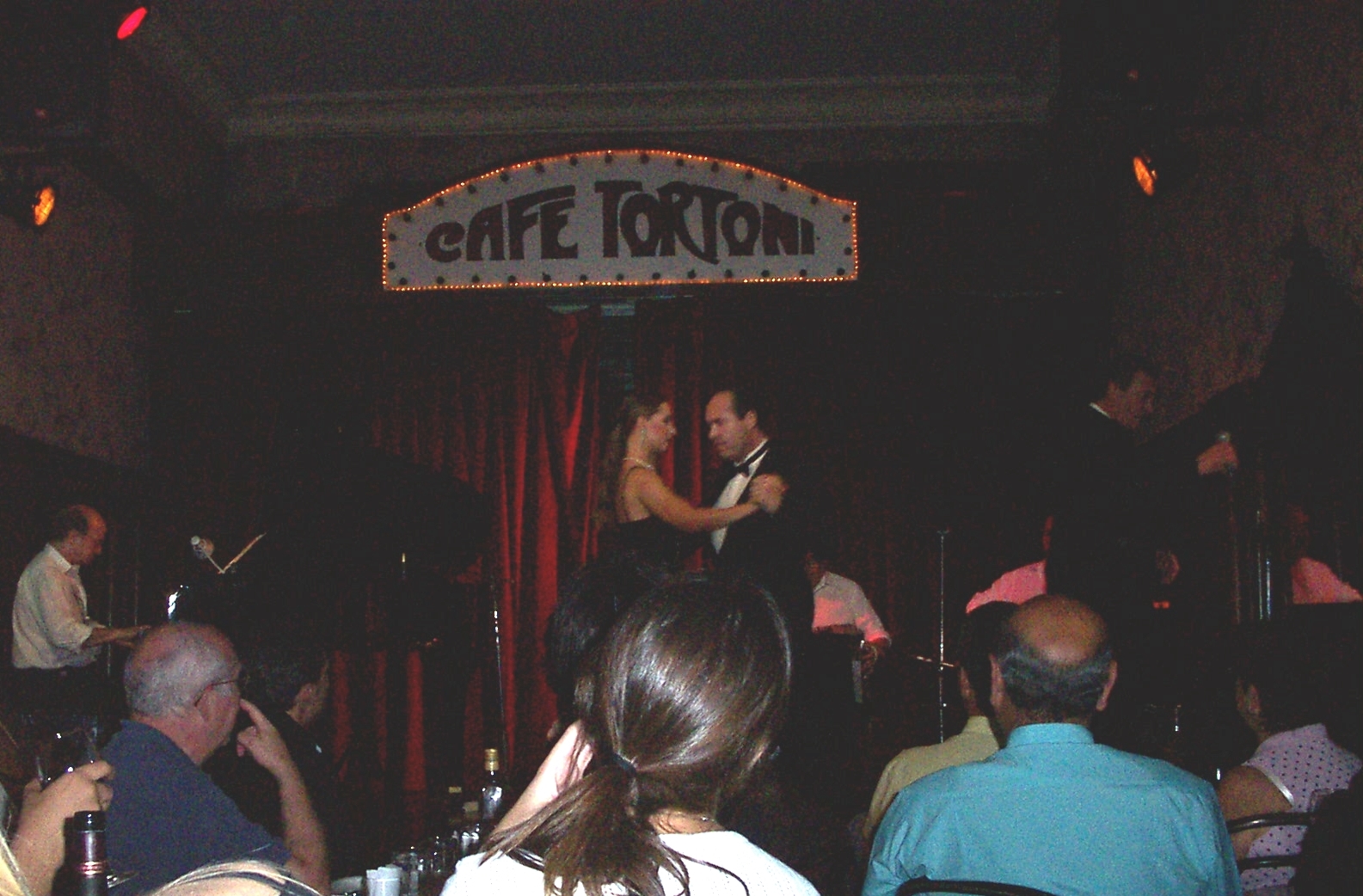
Tango music and dance at Cafe Tortoni in Buenos Aires
Ready to tango? It proved very easy to set up private tango lessons at the Four Seasons hotel, which made a beautiful large room with a parquet floor available to us in the mansion (an annex to the hotel where celebrities like Madonna stay, as she did when she came to Buenos Aires to film the movie Evita). The concierge already had a list of tango dancing instructors for us to interview. We recruited Natalia and Andres, two young charming portenos (which means “people from the port” and is the term used for the locals in Buenos Aires), who turned out to be very competent and patient teachers. They worked tirelessly, through several lessons, to get us to master some of the basic steps of this beautiful dance.
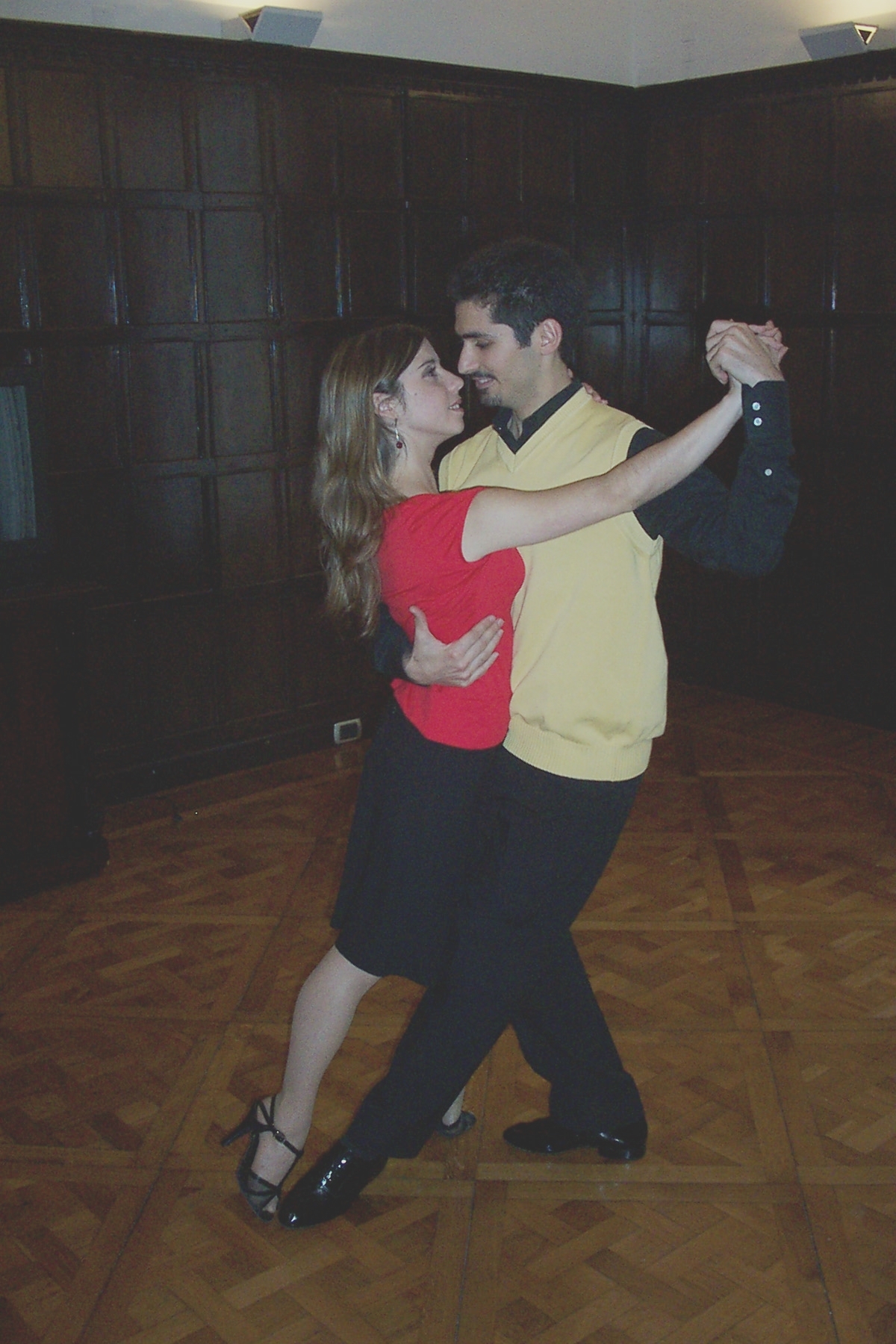
Natalia and Andres, our private tango instructors
It was now time to put our newly acquired skills to the test. Off we went to one of the most celebrated milongas (the name for places where tango is danced) in Buenos Aires, the Confiteria Ideal. This renowned milonga celebrated its 100th anniversary in 2012 and unfortunately, it showed. The building was sorely dilapidated and we could sense a previous elegance and charm, but that was long gone. The dance floor was huge, and most of the relatively few people there were on the floor enjoying their passion for tango regardless of the bright lighting and the sad surroundings.
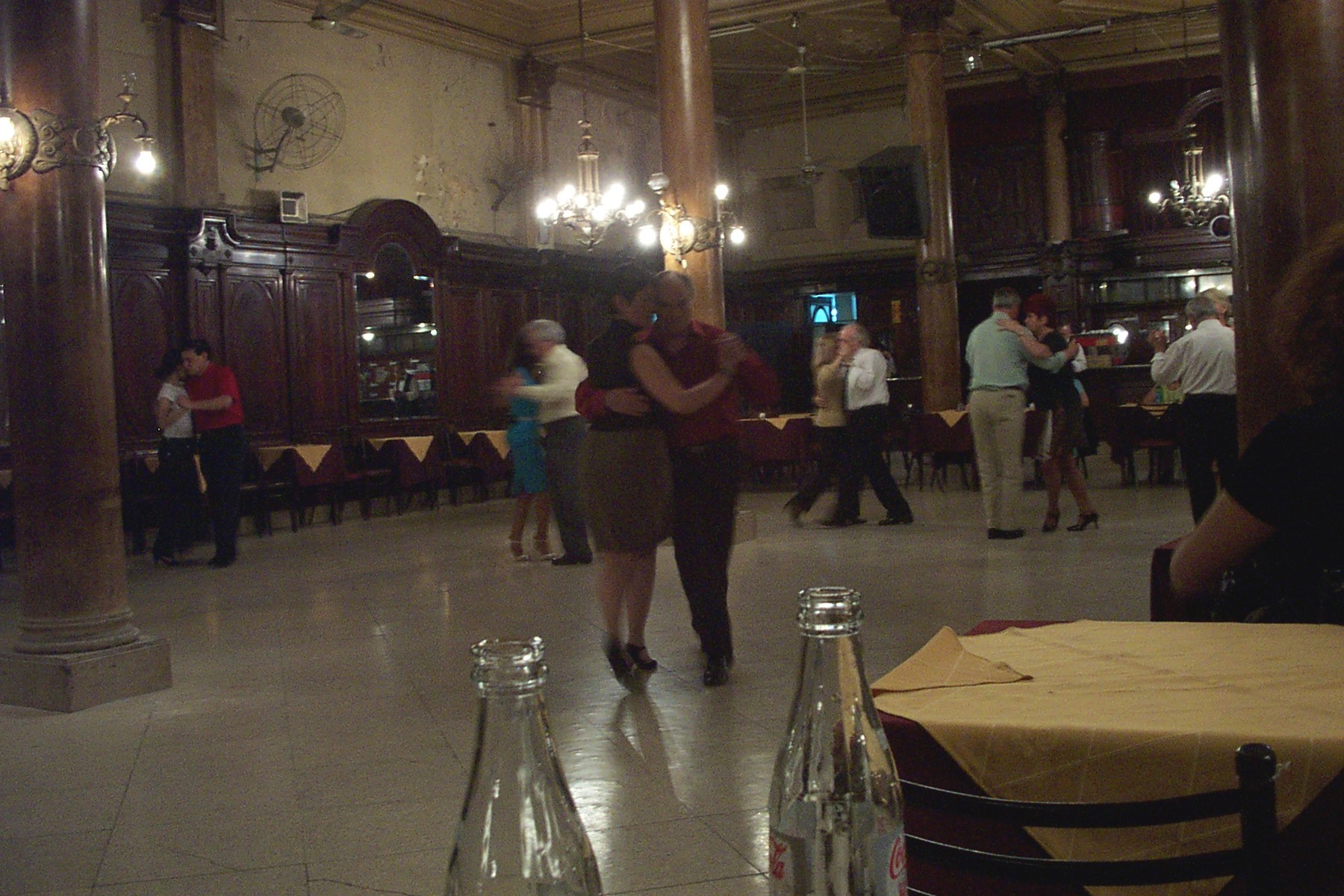
Milonga La Confiteria Ideal in Buenos Aires
It would seem that we had showed up at Confiteria Ideal a bit too early in the evening, because the atmosphere was totally different when we arrived at our second milonga well after midnight. Salon Canning in the Palermo neighborhood was a tad more upscale than Confiteria Ideal and also differed in that the very large dance floor was teeming with tango afficionados. We took the plunge and went around the dance floor several times with remarkable ease and increasing pleasure until at about 1:30am when we felt we had soaked in enough tango ambience for one night and way too much cigarette smoke, and decided to call it a day (night?).
While tourists watching the tango shows in Buenos Aires appeared to be of all ages, most of the portenos dancing tango at the milongas were either relatively young or relatively old. In other words, there seemed to be very few dancers from the “middle age” crowd. We were told that this reflected a revival of interest in tango following a period of decline. This is a good thing. It is far better for the young to be dancing, and dancing such a beautiful and complex dance, than drinking, bar-hopping or just partying until the wee hours of the morning. Tangoing the night away is as uplifting for the soul as it is fascinating to watch.
Happy dancing and safe travels from BonVoyageurs!