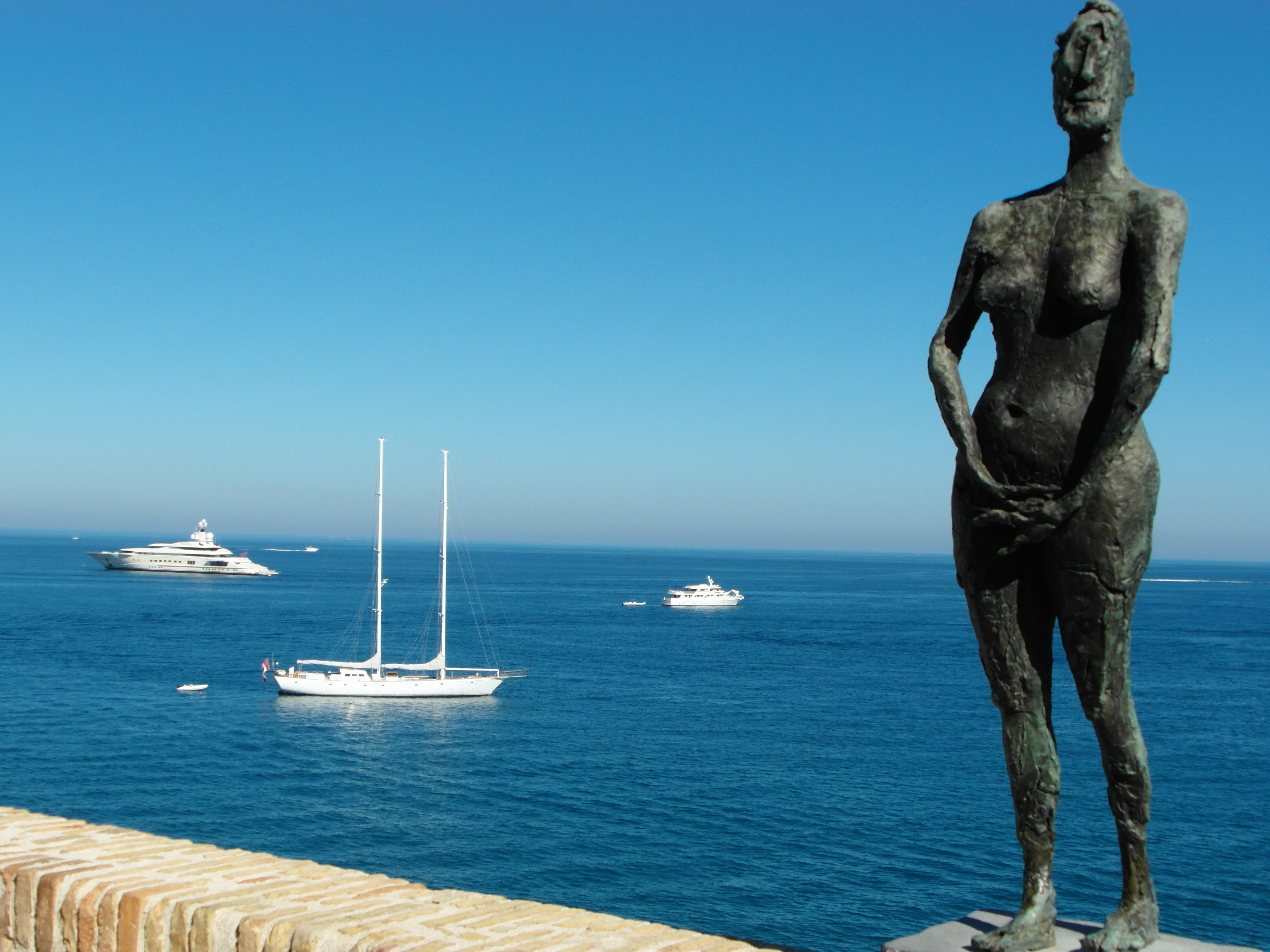
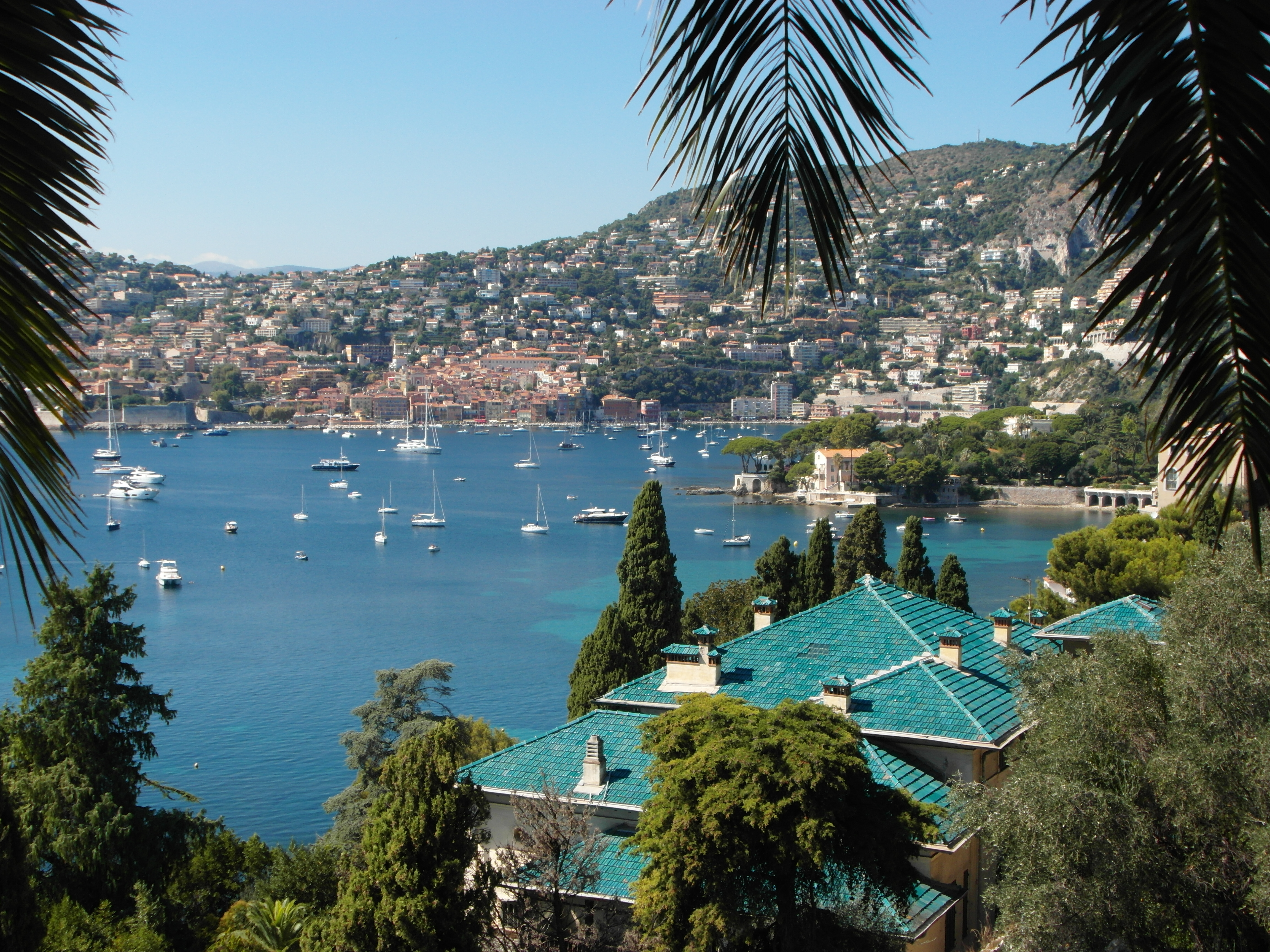
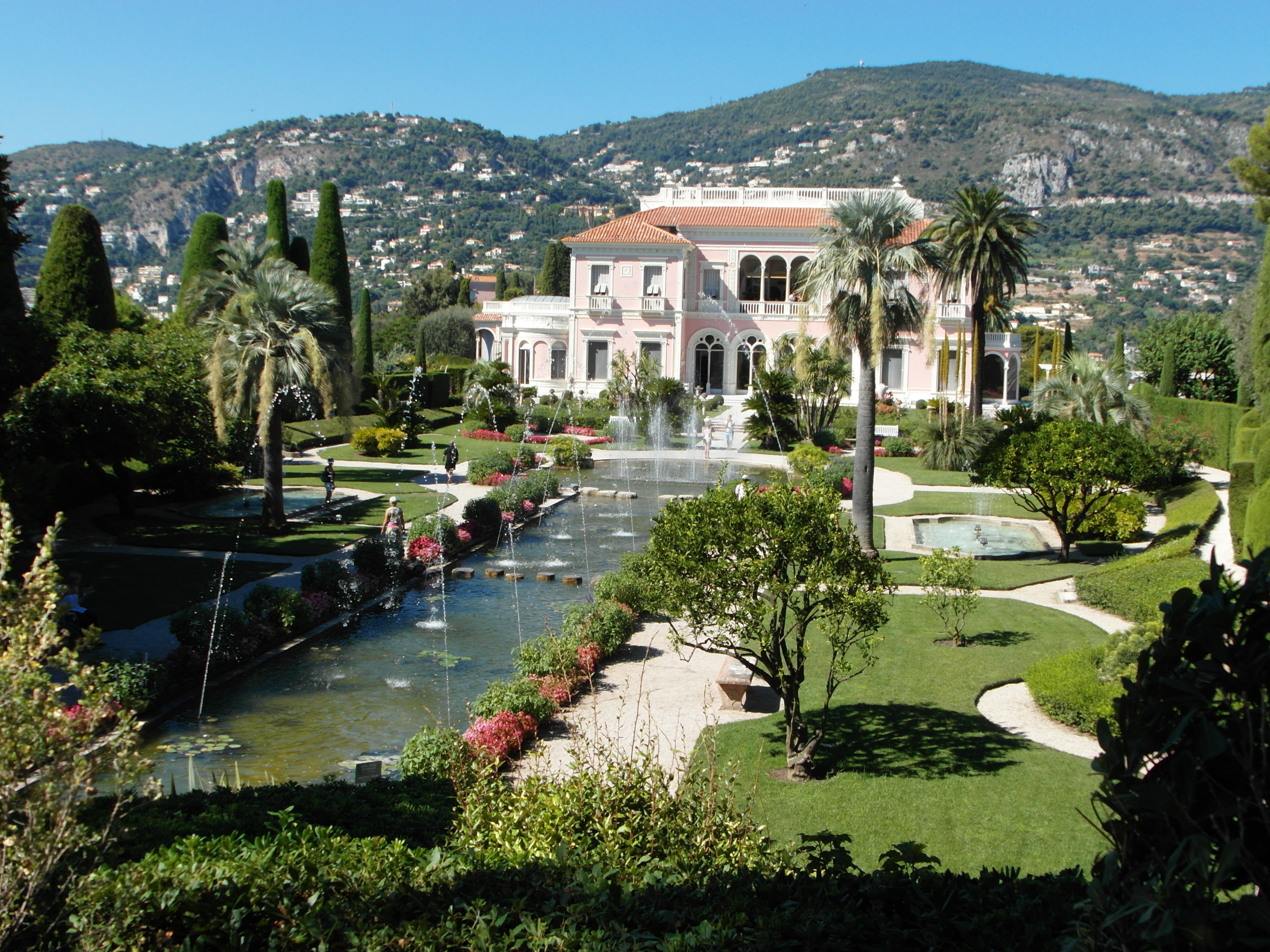
Blog Archives

Nice, France ~ The Niceties of Nice

SAM_1939

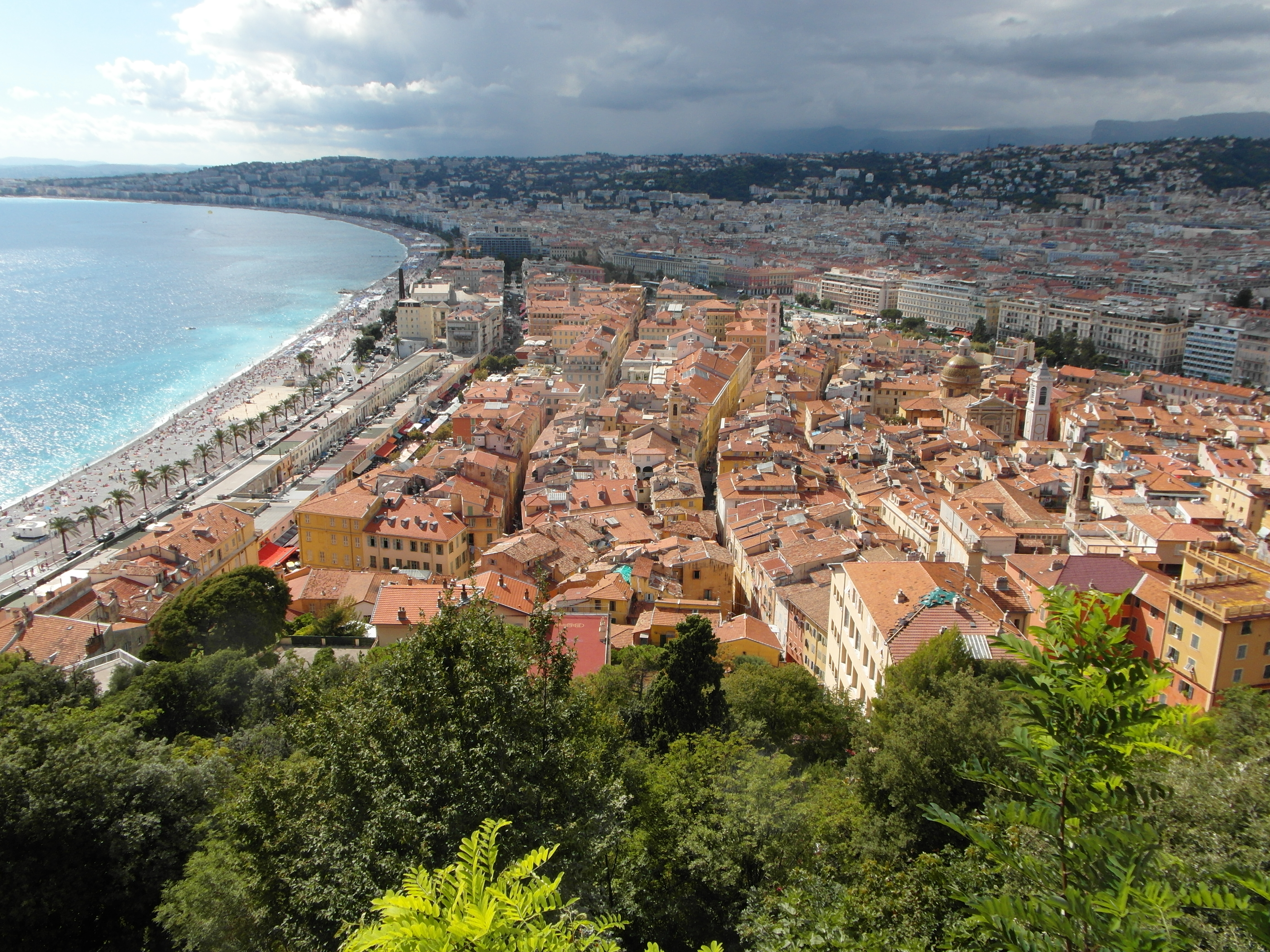
Nice on our last day before heading home. Another glorious day!

Tout simplement, Nice exceeded our expectations. We recommend it without reservation to anybody looking for a home base from which to visit France’s renowned Cote d’Azur, aka the French Riviera, or simply as a perfect beachside vacation on its own. Why? In essence, because of the quality and diversity of the facilities of the city, including transport, restaurants, private beaches and shops, the climate, and the very warm welcome Nice offers to tourists. Let me be more specific.

Nice embraces tourism. The second most popular tourist destination in France after Paris – which by the way is the #1 tourist destination in the world – Nice has welcomed Anglophones for several centuries and makes life for tourists and travelers, including those whose primary focus is business versus pleasure, very comfortable and pleasurable. We’ve lived in France, worked here, and traveled extensively throughout the country and I would venture to say that Nice is the place where we’ve found more English spoken than anywhere else we’ve been. Plus, the Mediterranean ambiance, with its charming mixture of French and Italian heritage and languages, is such that the pace of life is relaxed and the locals are friendly. Many are clearly enjoying life in this bit of paradise, and they want the foreigners coming to support their local economy to enjoy life with them.

SAM_0699

Nice offers a wide range of options for getting around, both inside the city limits of Nice, and to neighboring towns on the Cote d’Azur or a bit further to the Maritimes Alpes and Provence. Nice Cote d’Azur International airport, which is conveniently located less than 4 miles from the city center, is the 3rd largest airport in France. “Kiss and Fly” is its catch-phrase. The TGV (“Train grand vitesse”) arrives from Paris in 6 hours.

SAM_0798

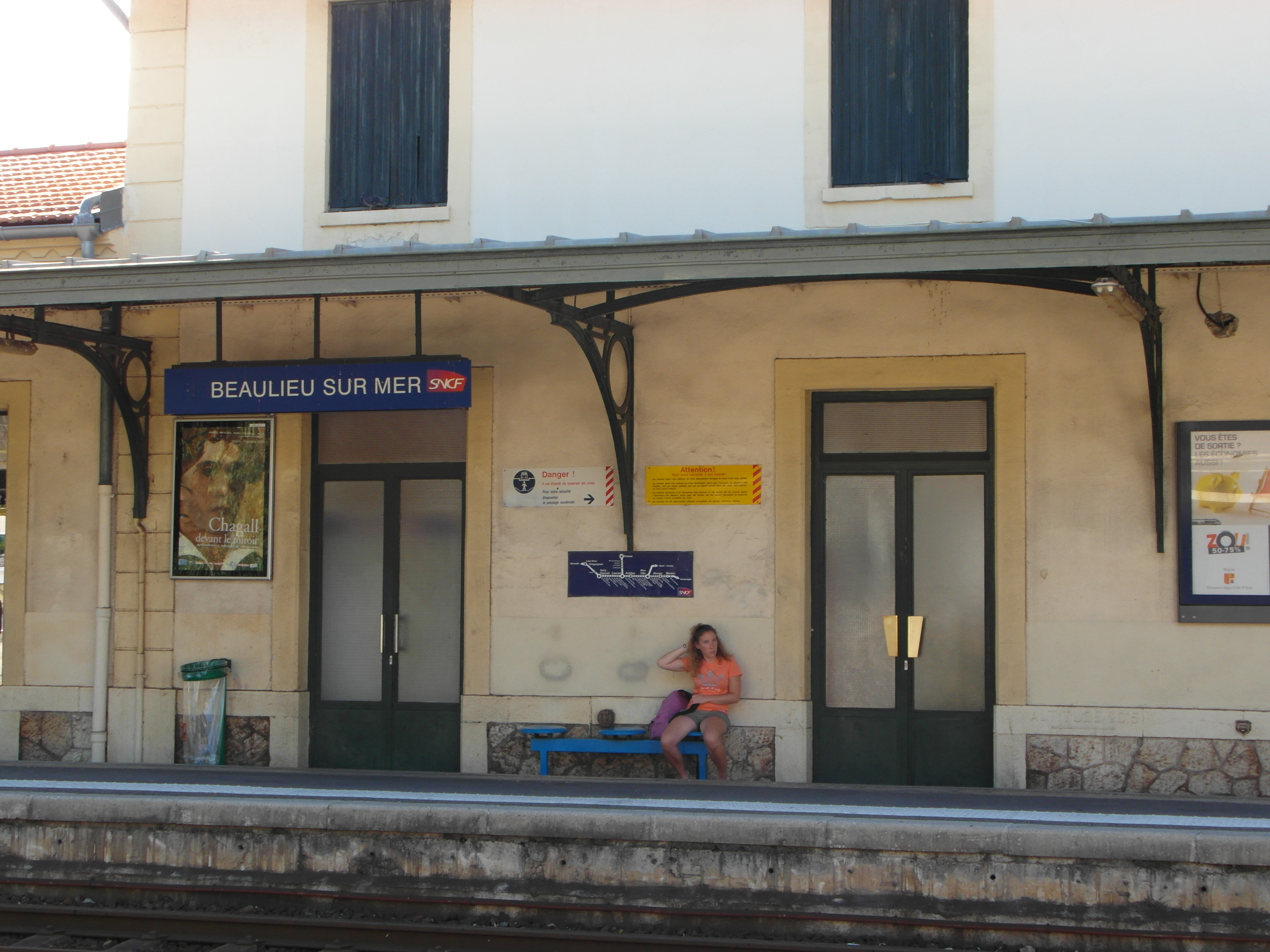
There is a wide selection of regional train service (“TER: Transport Express Regional”) from Nice to many other cities and towns, and the trains run frequently and pretty much on time … and sometimes, even a bit early (!) They are extremely comfortable, clean and well-managed, although the train stations themselves can be a bit disorganized and very crowded during rush hour. That being said, the central train station is very conveniently located just above the city center.

SAM_0861

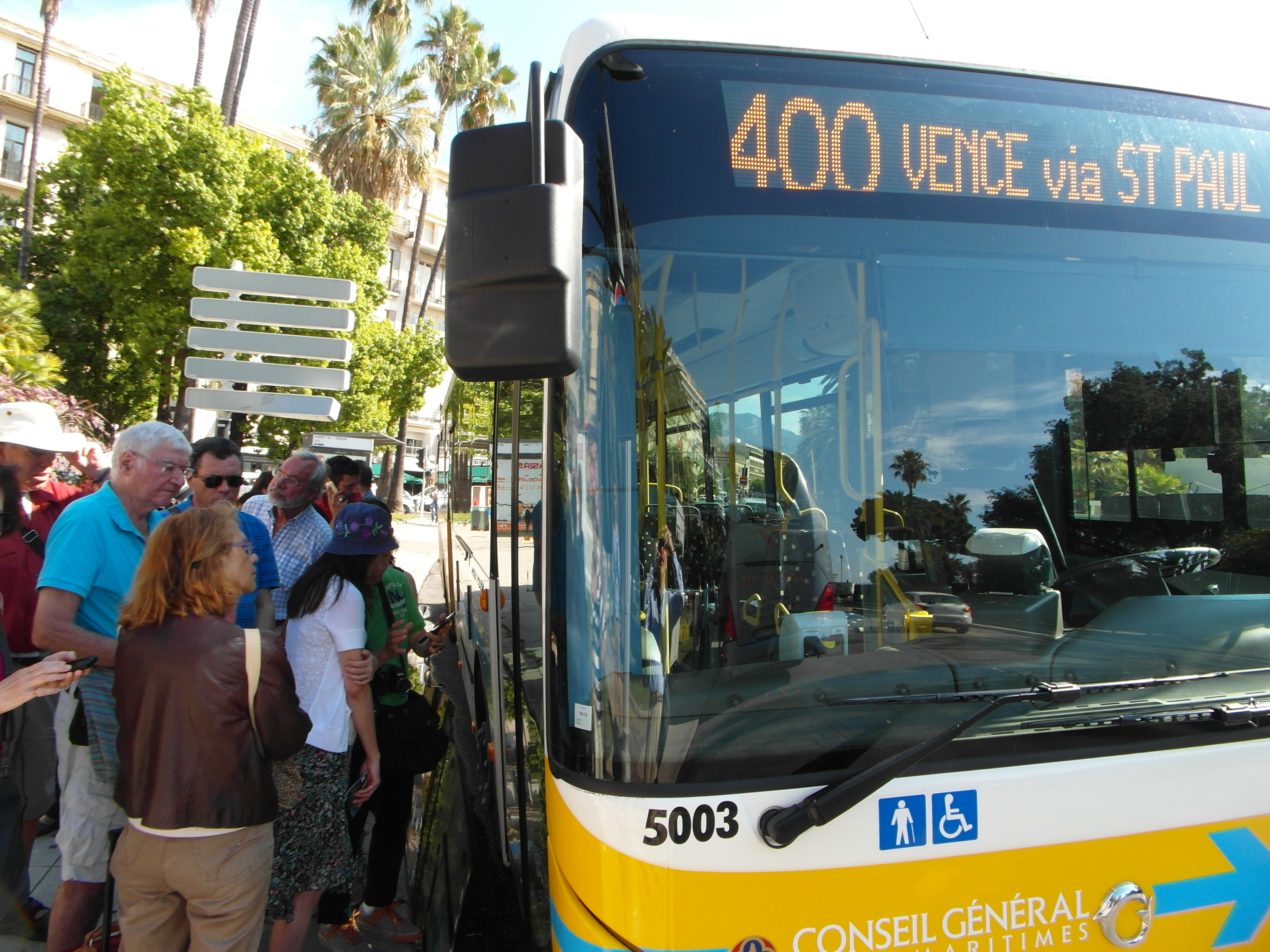
Buses run frequently, with many stops throughout the city of Nice, for both inter-city and intra-city travel. These two are well-managed, clean and easy to use. In fact, in some hot spots – such as the premier departure point for Monaco – the city of Nice employs someone to stand there, answer questions, and ensure that the foreign travelers manage to board the correct bus.

In 2007, the Tramway de Nice debuted its first of 3 scheduled high-tech inter-city trams.

SAM_1066

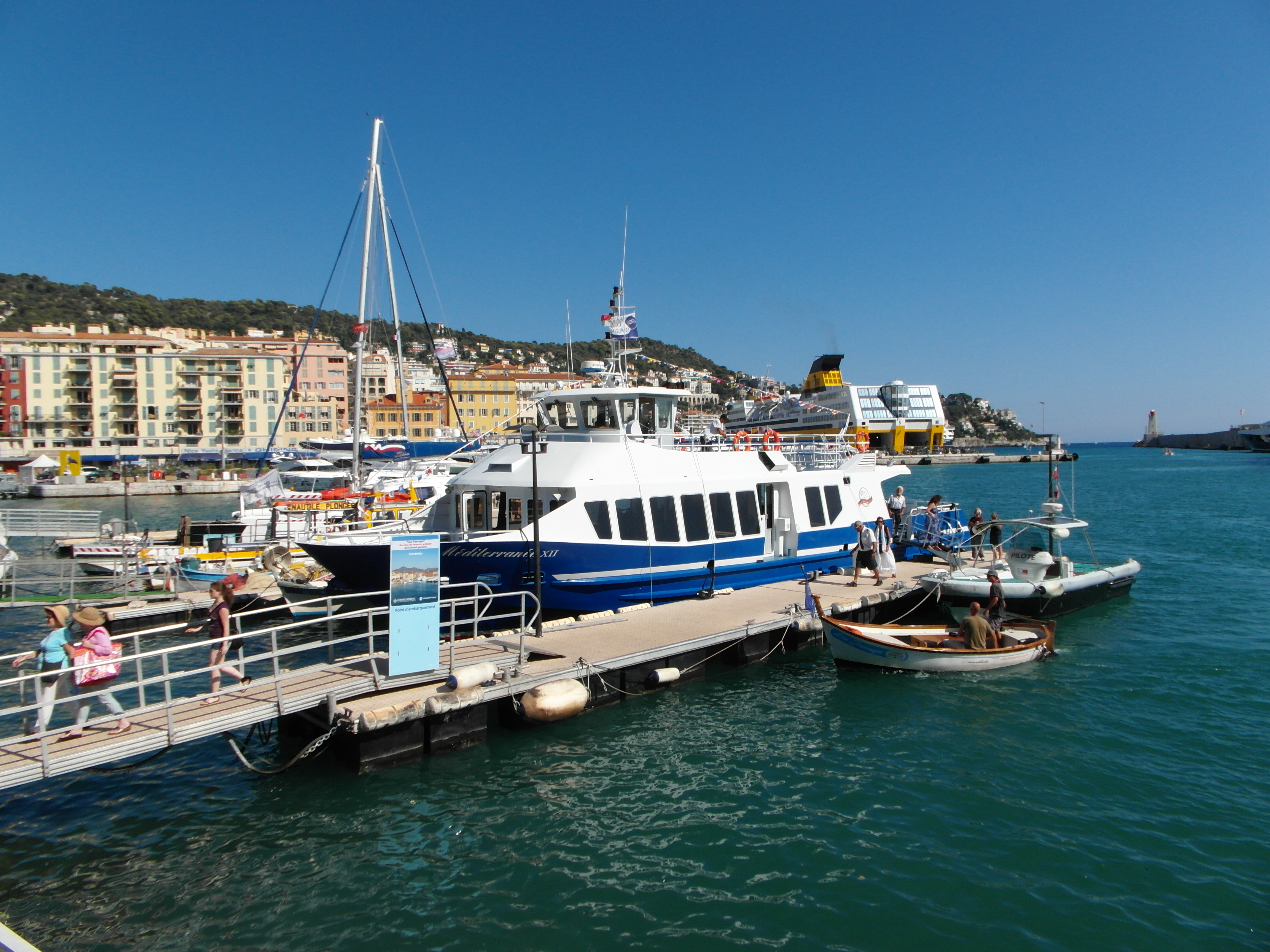
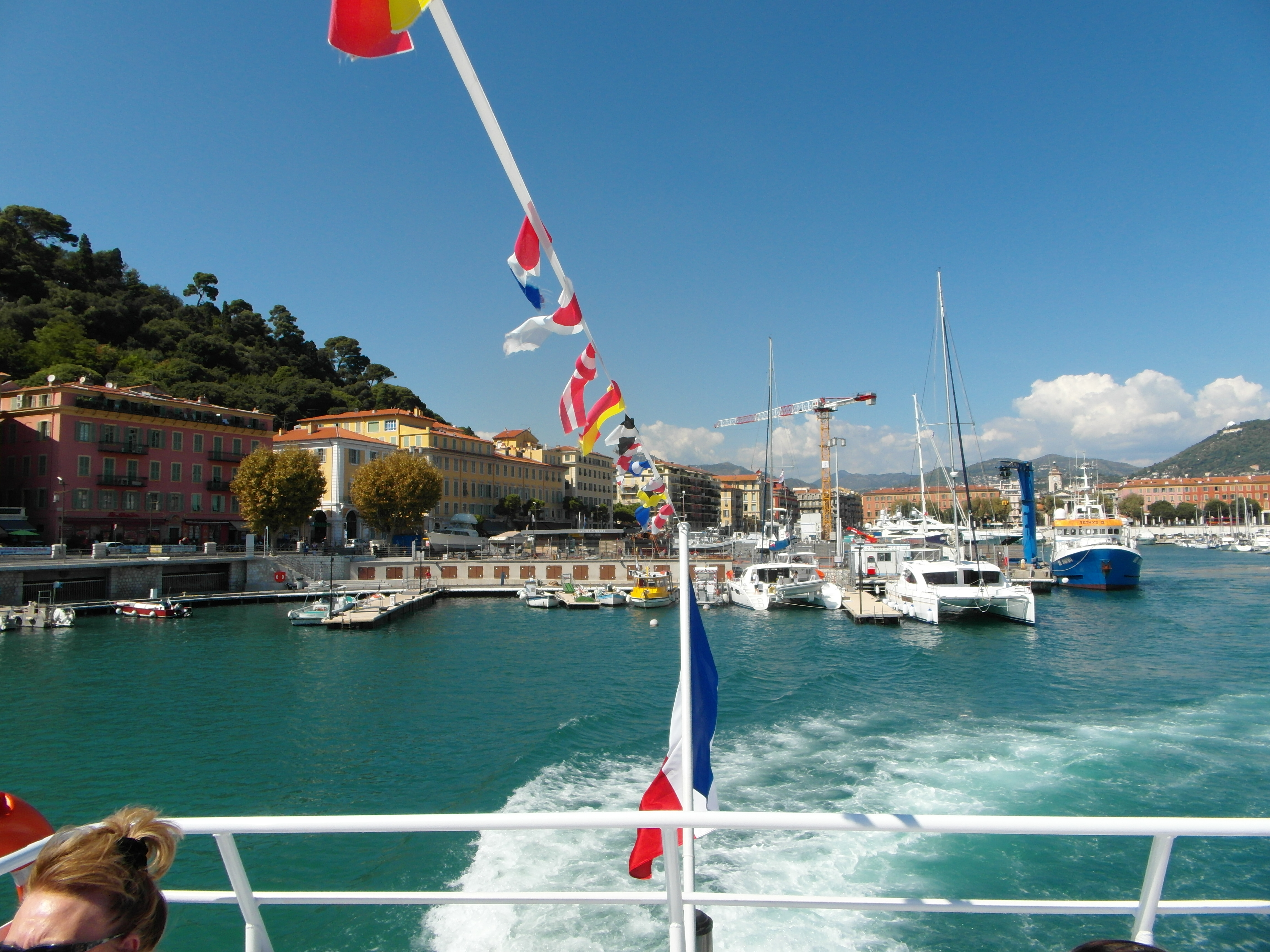
A favorite option for traveling from Nice to Cannes, St. Tropez and Monaco is by tour boat. The views and the narration of these views by the captain provide a stunning documented panorama as you travel.

SAM_0992

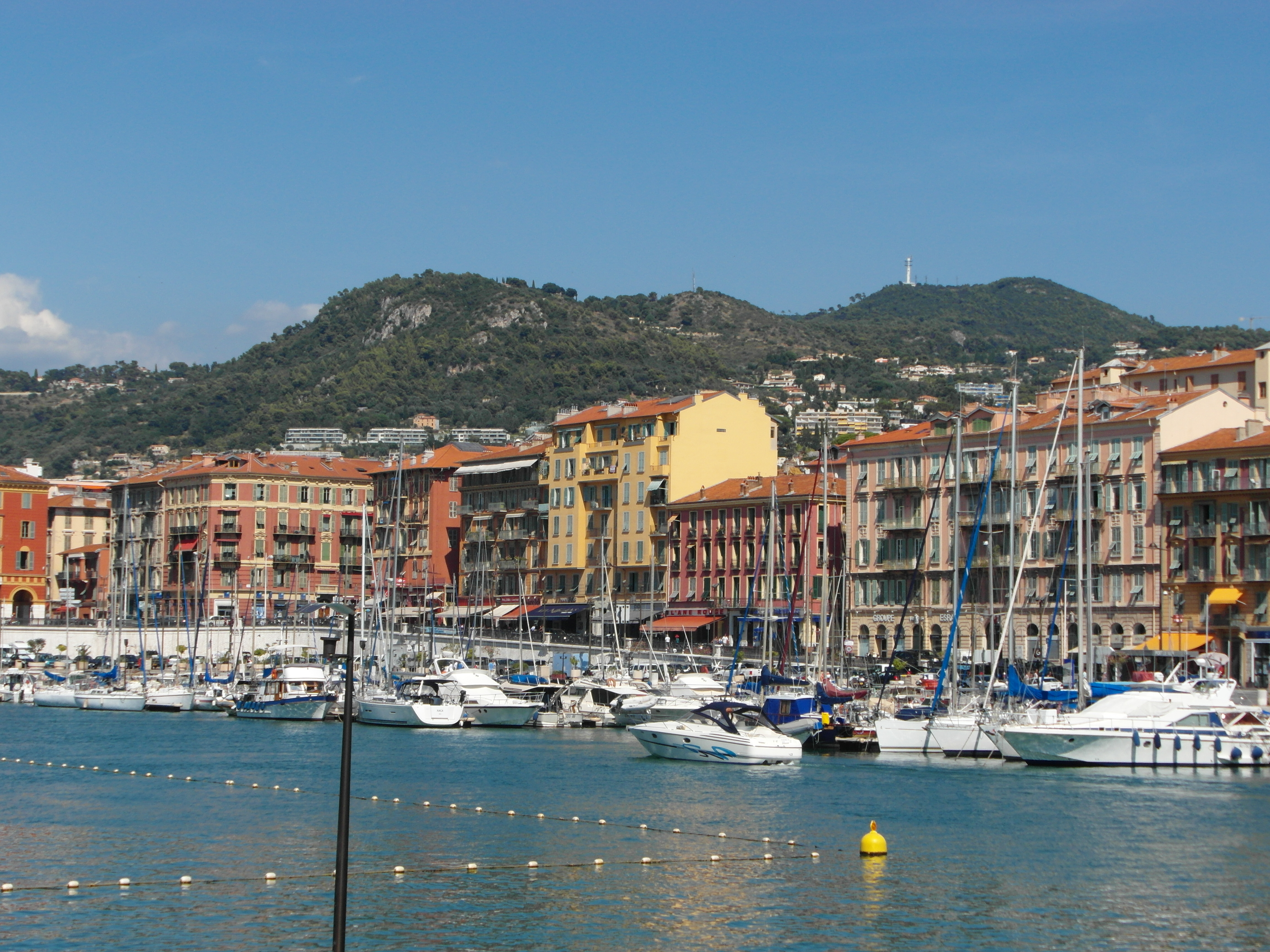
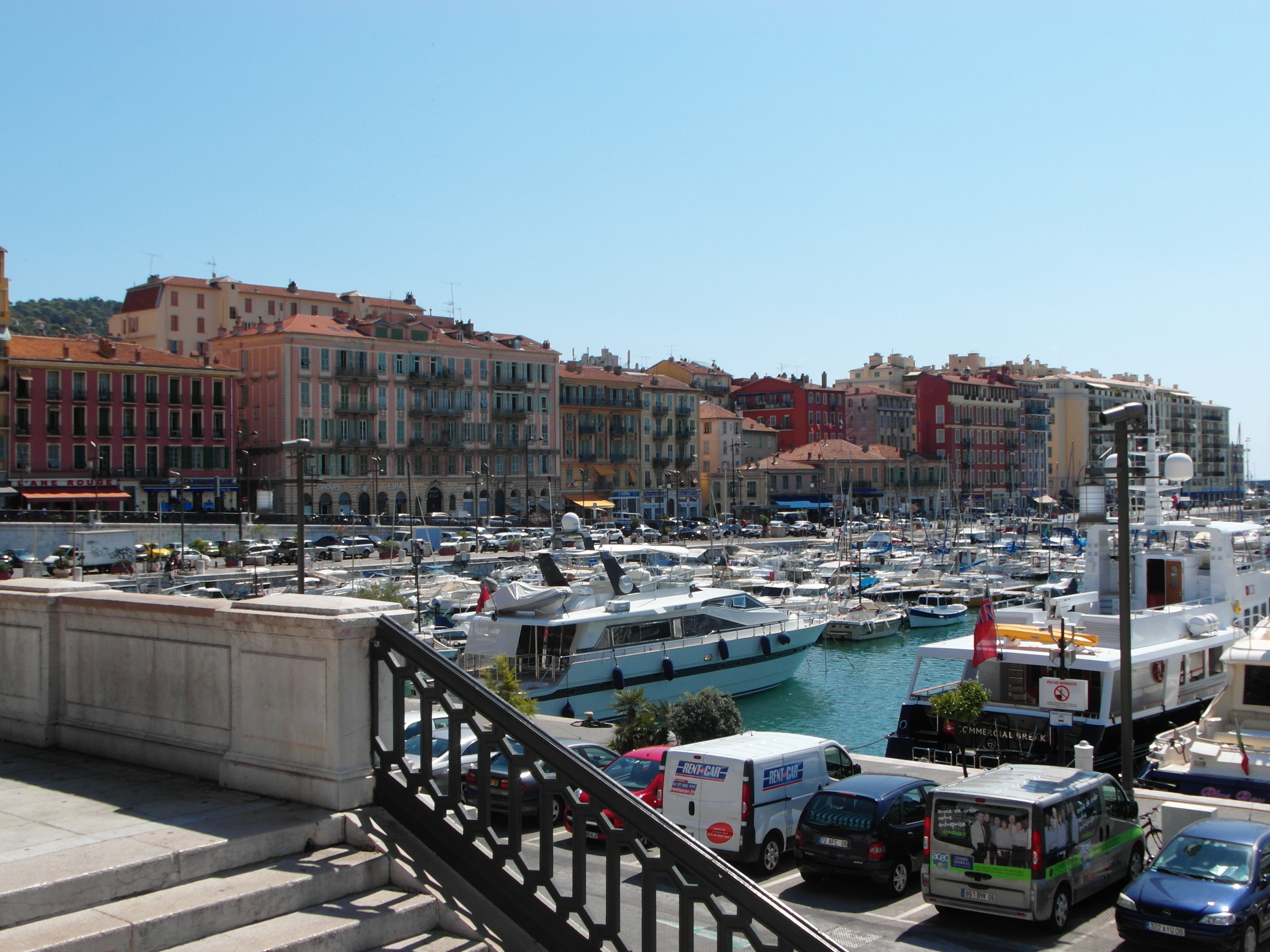
From Nice, the tour boats leave from the charming old port.

SAM_1119

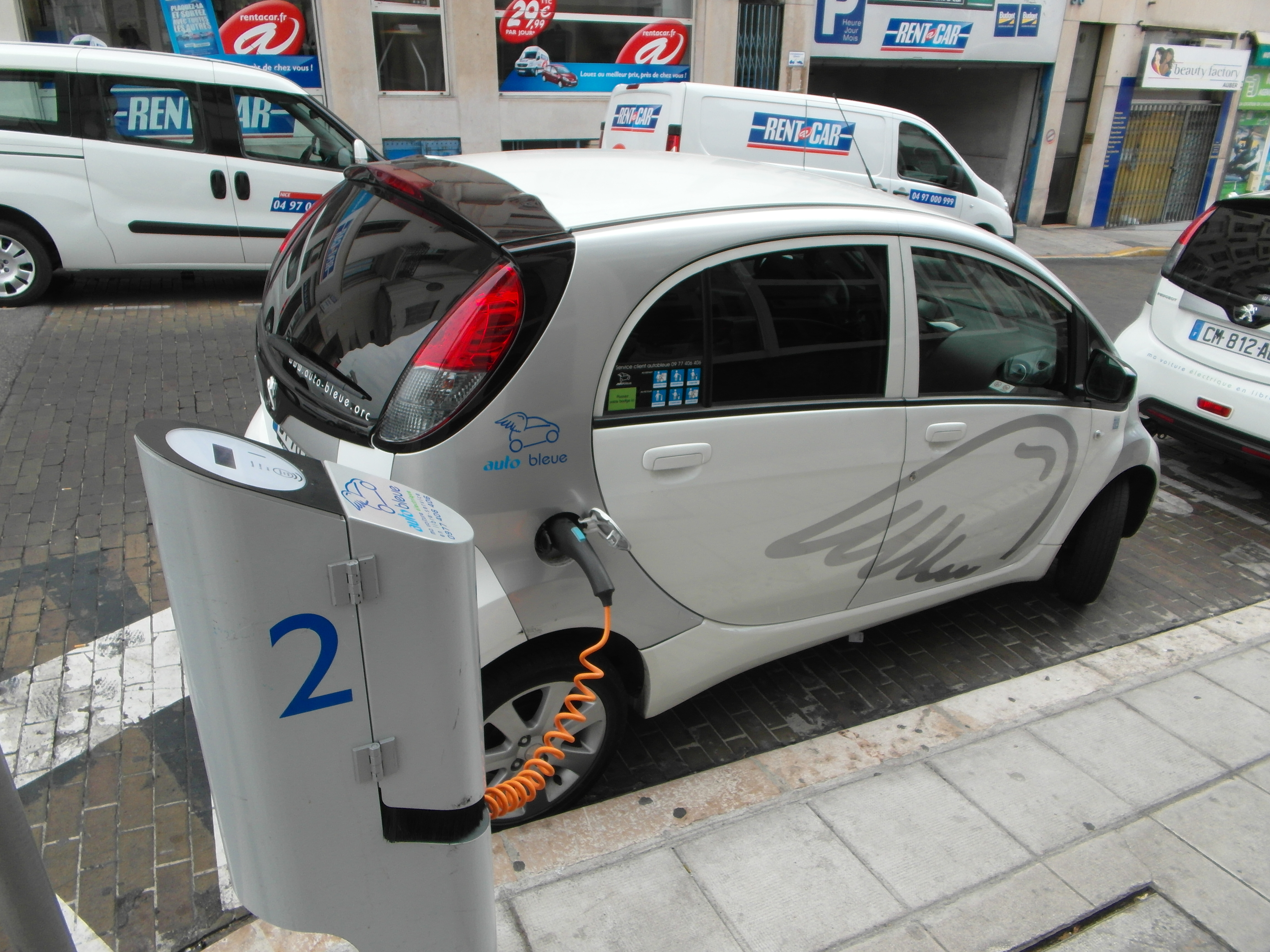
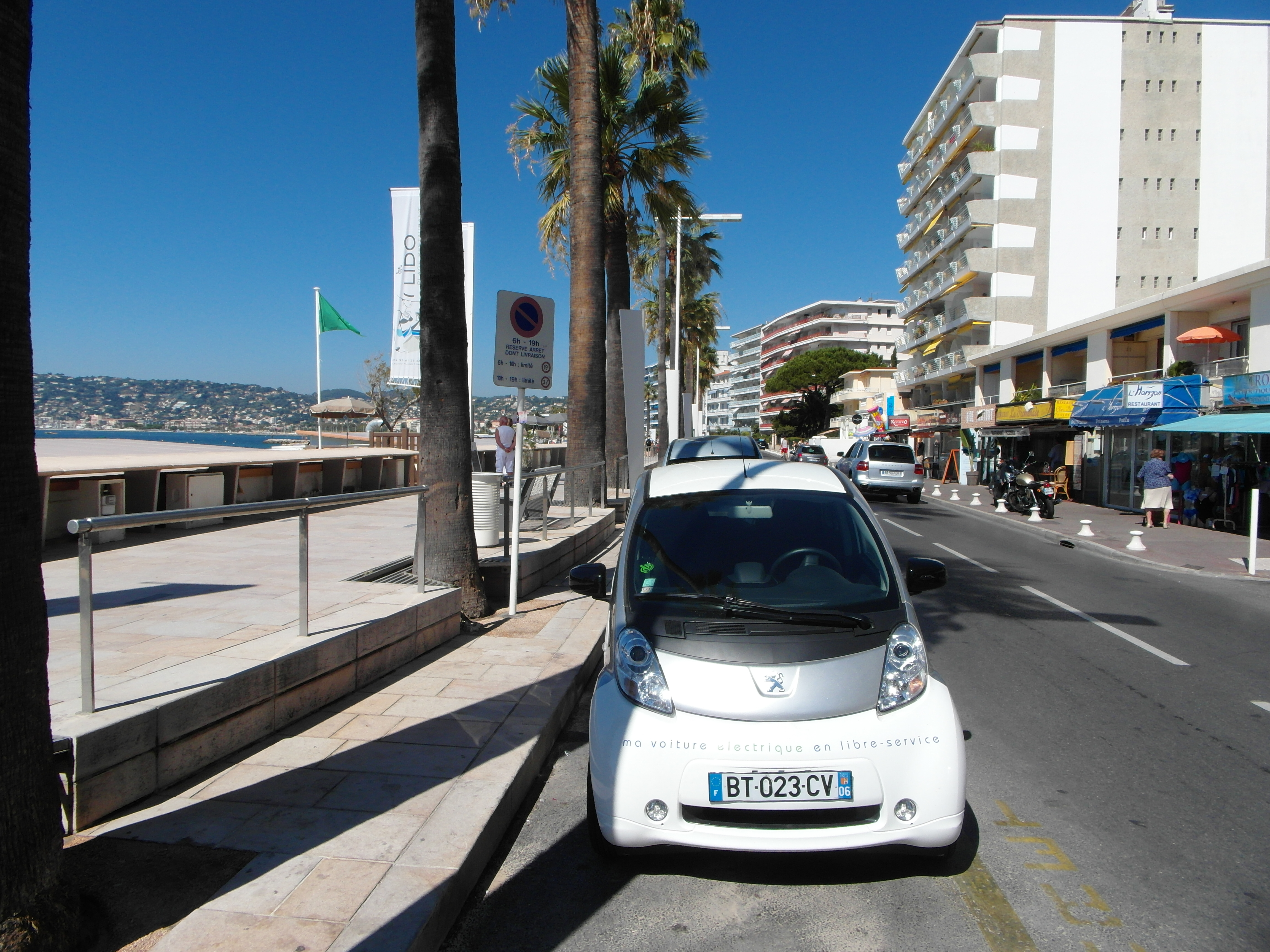
And if the public facilities don’t excite you, you can rent a rent an Auto Bleue Peugeot IOn electric car with its own parking space in the city and built-in GPS system – which will talk to you in British English — and a range of 100km (approximately 60 miles), or a standard rental car from one of the major car rental agencies located at the train station and elsewhere in Nice. Major autoroutes pass by Nice, connecting the city with the principal Cote d’Azur cities, so travel by car offers you both high-speed toll roads and scenic routes, both of which also offer you a heckuva lot of traffic. But if you are on vacation, you can simply go with the flow and enjoy the views if the traffic crawls along.

Finally, if you are not into public transportation and don’t want the hassle of driving yourself, then go to one of the taxi stands located throughout the city or call a taxi which should arrive within 5-10 minutes. They are quite a convenient but pricey option. Or hire a car and driver to take you anywhere you want to go. The latter, by the way, is our transport of choice to and from the Nice airport.

SAM_0953

Of course, walking can be a fabulous means of getting around within Nice … you get to walk off all the extra calories that you ingest from the irresistible French food and you get to really observe the French way of life, peer into the shops, converse with the locals, peek into the inner courtyards, and see life through the eyes of the locals.

SAM_1778

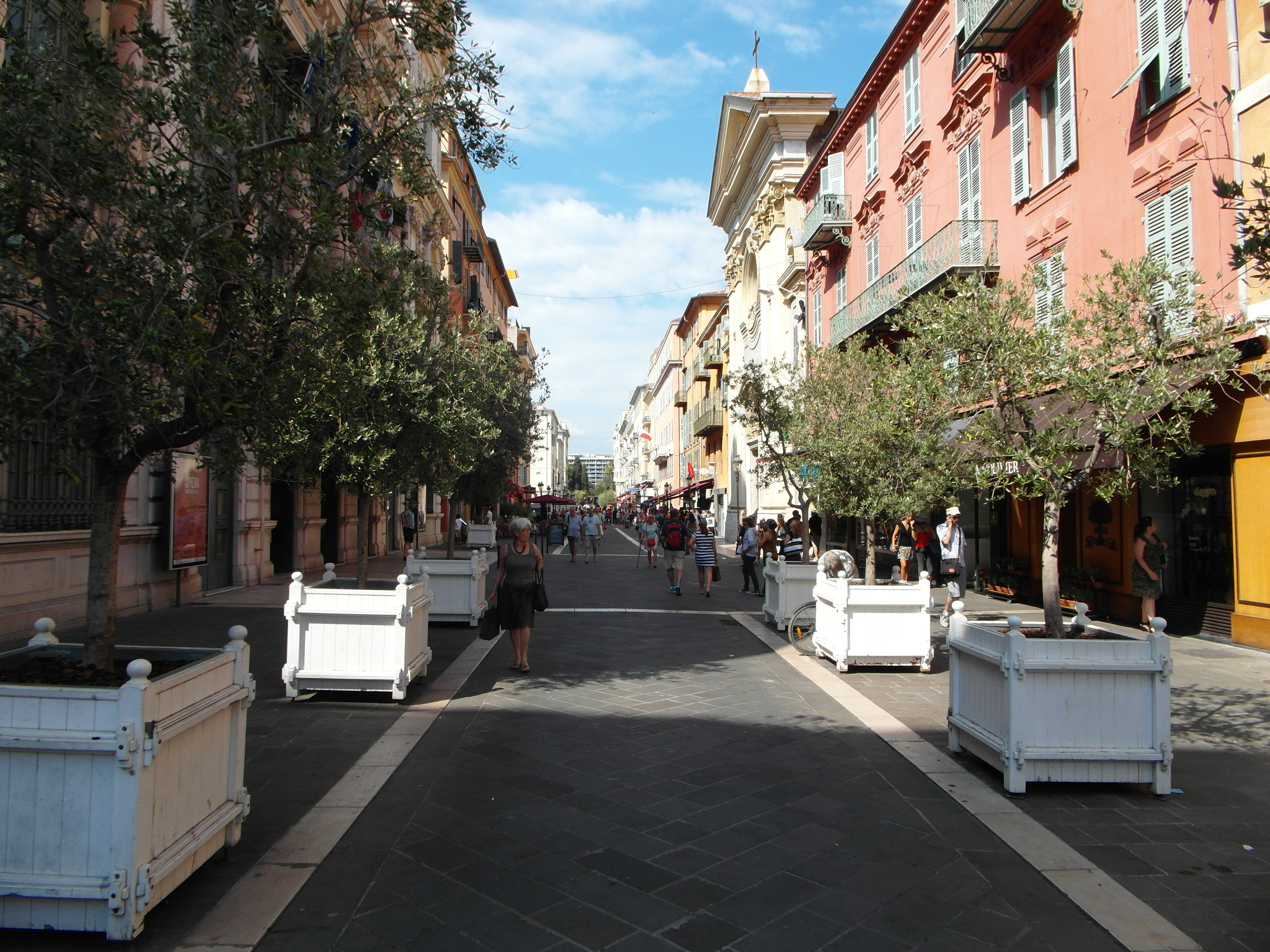
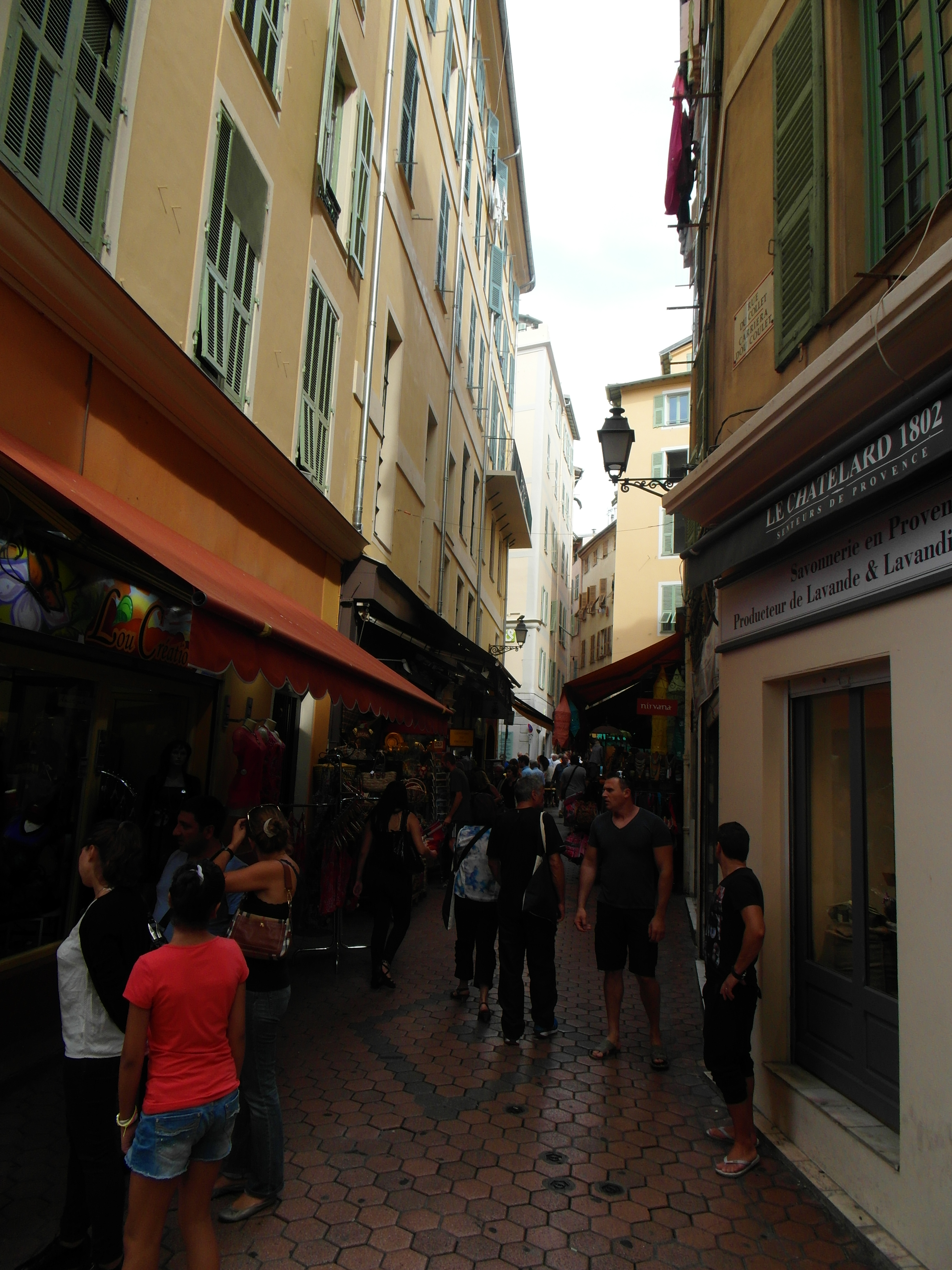
We love doing this, and Nice being in France, you can rest assured that there are pedestrian streets brimming with restaurants, cafes, shops and tourists as well as steep, narrow, streets in the old part of town that are accessible only by foot. If you are up to the climb, the latter streets can be fascinating as they take you back into medieval times.

SAM_1710

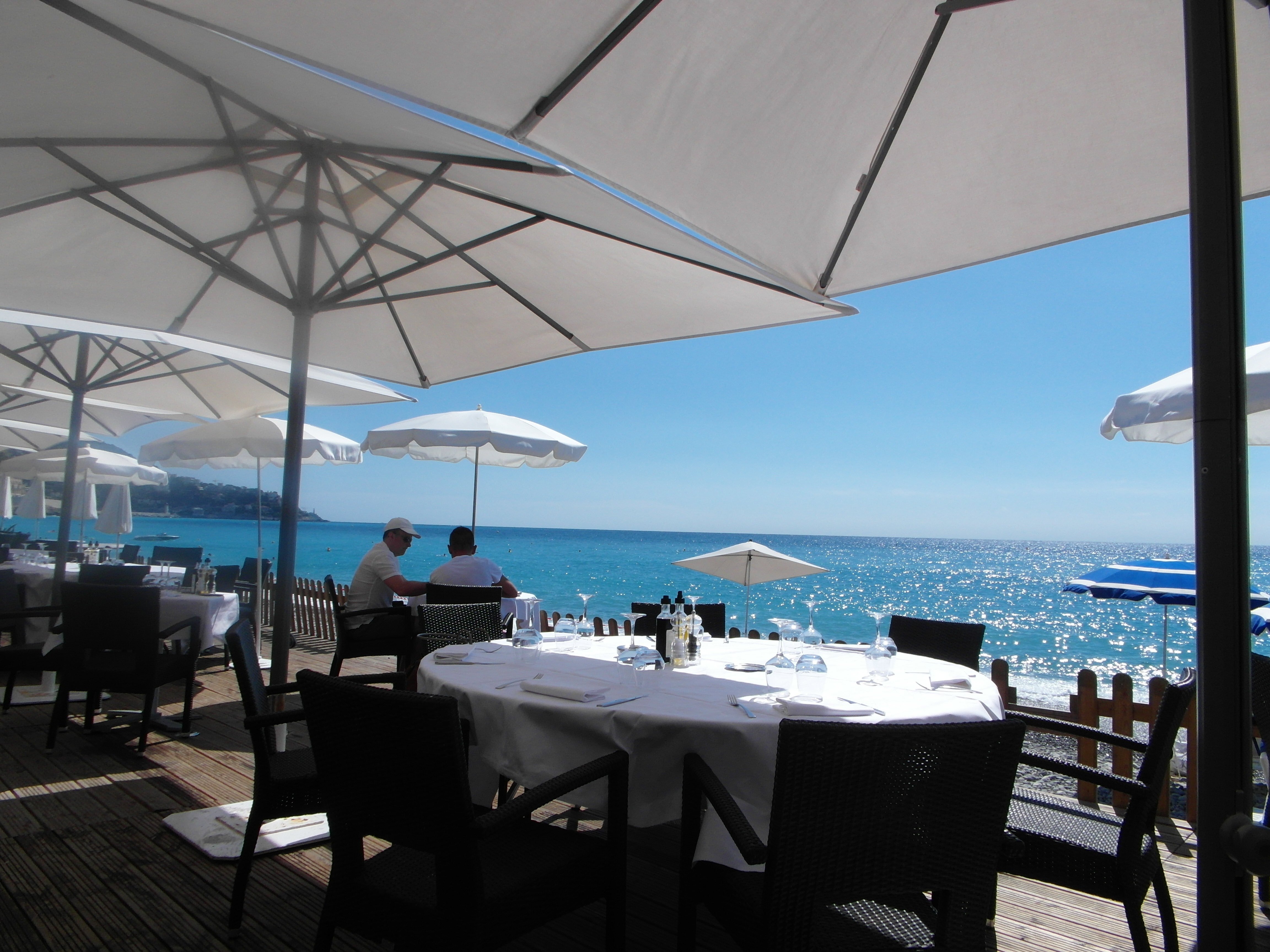
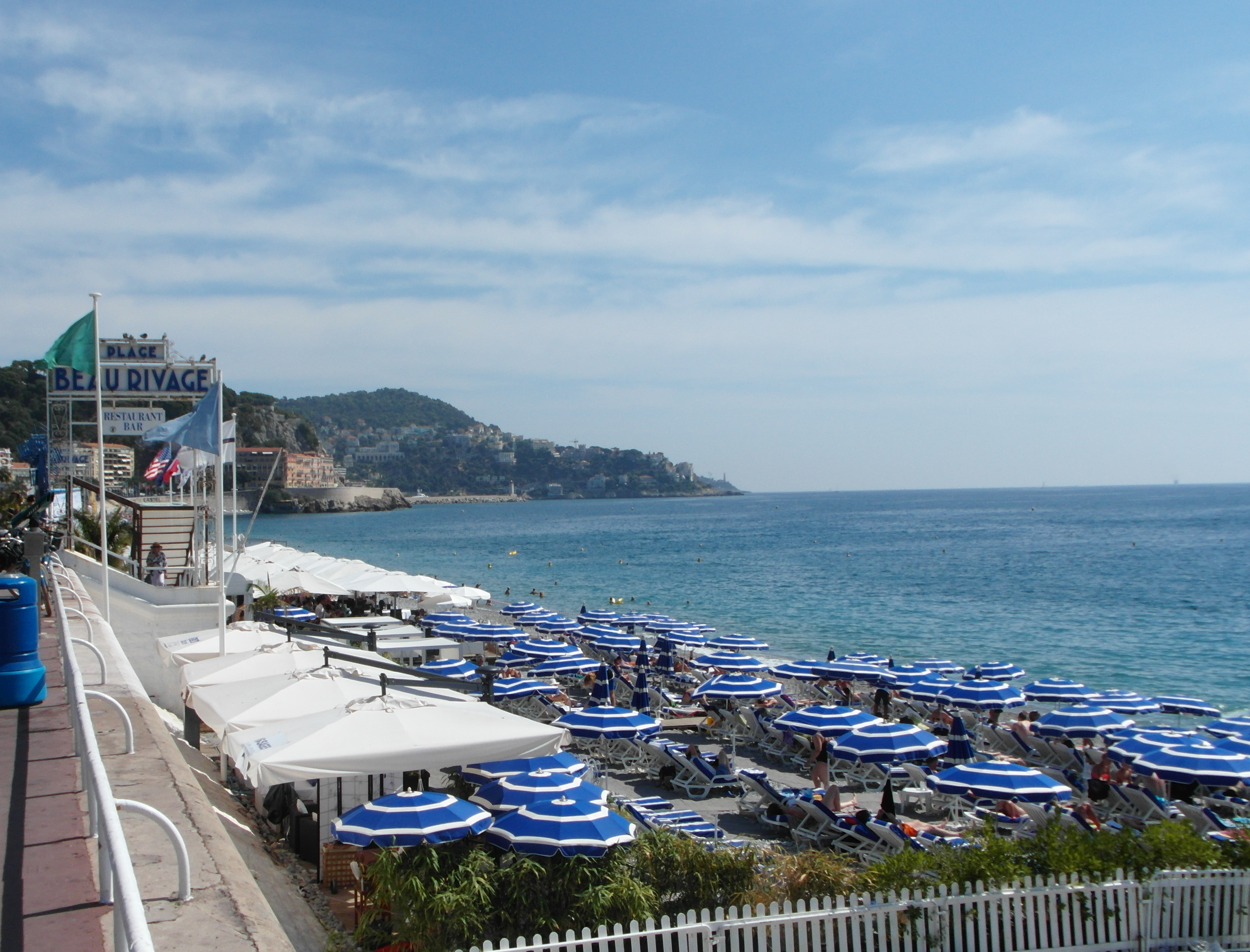
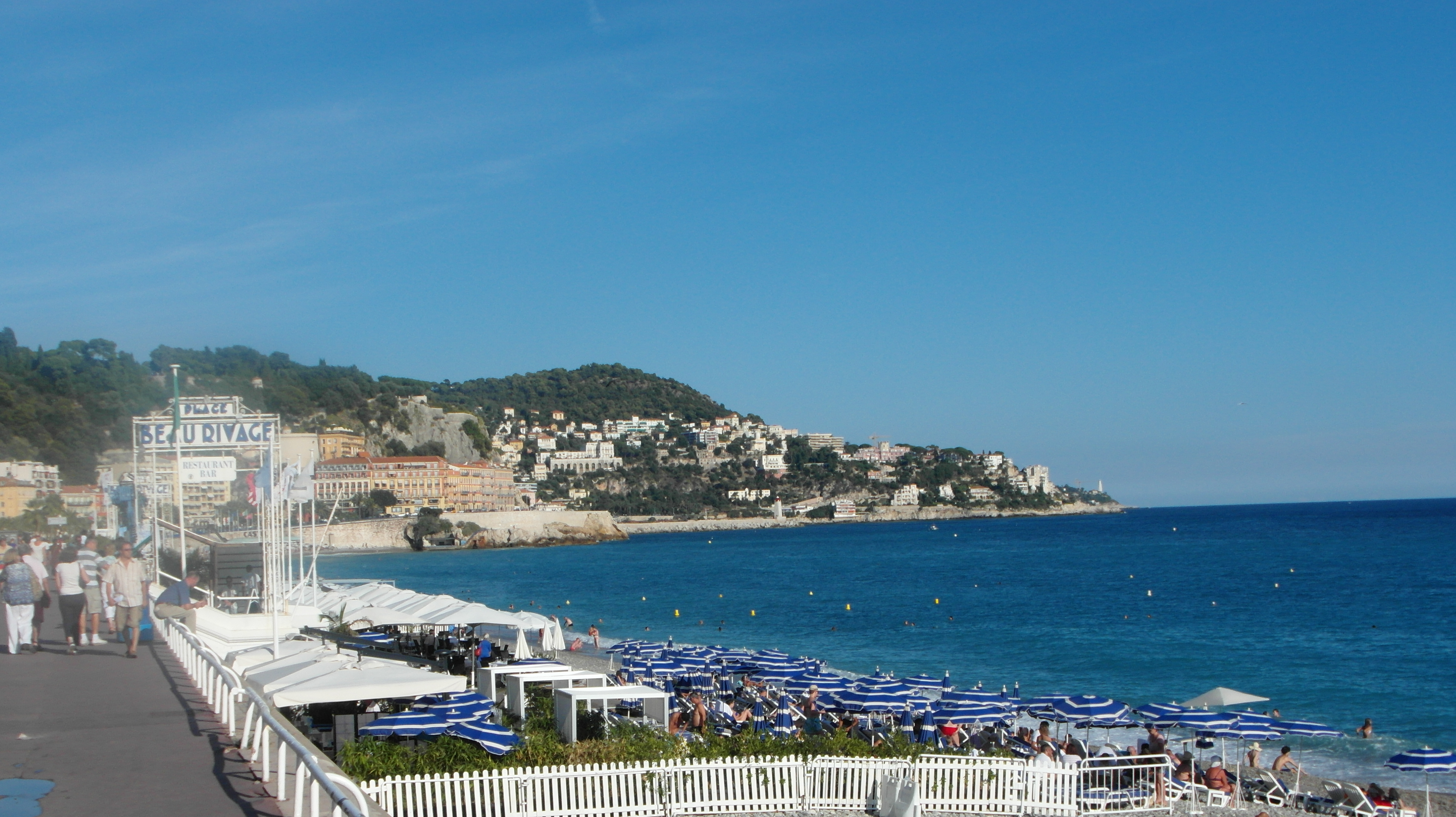
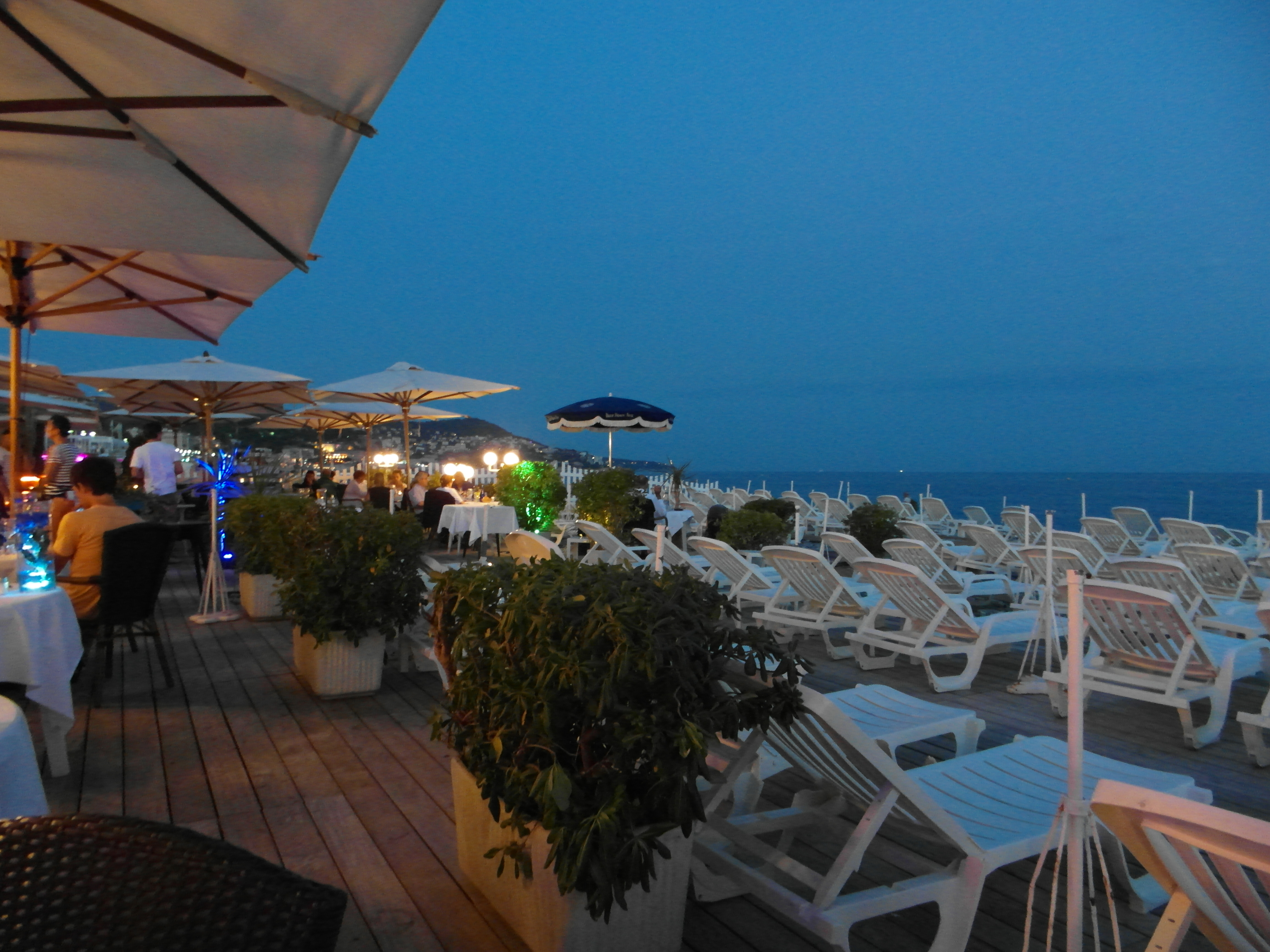
While Nice offers many cultural activities, from museums (for example, Chagall and Matisse), and opera during the end-of-September – May season at L’Opera de Nice, the city also is world renowned for its 10 km length beach, dotted with 15 private beaches and 25 public ones. The famous Promenade des Anglais extends right from the airport along the entire demi-lune stretch of beach at the edge of the Baie des Anges (“Bay of Angels”). Our favorite beach is well-covered in a previous blog on Nice, but let me add that I could easily spend every day , all day, at Plage Beau Rivage enjoying a 3-hour gourmet meal at the restaurant, or lying under an umbrella on one of the comfortable beach lounge chairs, or enjoying a drink at the large outdoor bar with its many comfy sofas, and simply stare at the azur water and listen to the waves, indulge in the French sport of people-watching, and watch the planes fly low into and out of the Nice airport and the ferries arrive and depart from the Old Port and the glorious yachts of the rich and famous move around the coastline. La vie est belle a Nice.

Julia Child once very aptly said, “In France, cooking is a serious art form and a national sport.” Down along the Mediterranean where olive trees and fresh herbs grow in abundance and fresh fish is often the star of the menu, the cuisine is lighter but no less a “serious art form”. No matter what your price range, you will find it very easy to have a delicious, memorable meal in Nice with its large selection of cafés, bistros, brasseries, restaurants and even take-out food.

SAM_0744

Lodging options are plentiful. There are lots of hotels servicing all price ranges and a large selection of apartments to rent. We chose the latter option, situated no more than a 10 minute walk to the beach, the train station, and most places we want to go. And we’ve been delighted by the range of conveniences available, including air-conditioning, bedrooms opening up into a quiet courtyard, a fully-equipped kitchen with dishwasher, a laundry-room, and wi-fi throughout the apartment.

Shopping serves both tourists and the locals, so the variety ranges from a fabulous outdoor marché in the old square of Nice, Cours Saleya, to local corner shops, super-markets and hyper-markets, and from the discount Monoprix at the charming Place Garibaldi to the Parisian department store, Galeries Lafayette, to the haute couture shops of rue de La Liberté, not to mention the multitude of souvenir and other shops catering to the needs of tourists.

SAM_0954

Despite media hype about robberies on the Cote d’Azur, one feels safe and secure walking the main streets of Nice, even in the evening. As long as you don’t wander off the beaten path, it’s not a city that makes you want to grab your purse or watch your back. While there are indeed lots of tourists and travelers moving about in Nice, the city feels comfortably navigable. Even when streets were closed off recently for the International Jeux de la Francophonie (“Games of the French-speaking peoples”) which brought in an influx of thousands of visitors from all over the world all at the same time, the city bore up well … the shops, the restaurants, the beaches, the transport – all were still readily available.

The climate of Nice is in a word … delightful. We’ve only had one brief rain shower in the 19 days we’ve spent here, the humidity is usually low and the sky is usually as blue and clear as the Mediterranean sea below it. Prior to the introduction of air conditioning in France, Nice was the winter playground of the nobility and Bretagne their favorite summer resort. Now, as the statistics in the 2nd paragraph above clearly indicate, Nice is an appealing year-round favorite for everybody!

For all the above reasons and more, we have felt a coup de foudre for Nice, and we hope to return to this magnificent city on France’s azur coast again and again and again …


Grasse, France ~ The scent of a woman …

SAM_1869

We had saved today for the historic and hilly town of Grasse, the world capital of perfume, located about ten miles up the hills of the Maritime Alps behind Cannes. The small town of Grasse still accounts for two thirds of France’s production of perfume essence and food flavorings. The hills around Grasse are full of fields of flowers, in particular jasmine and roses, which form the core of that production.

SAM_1876

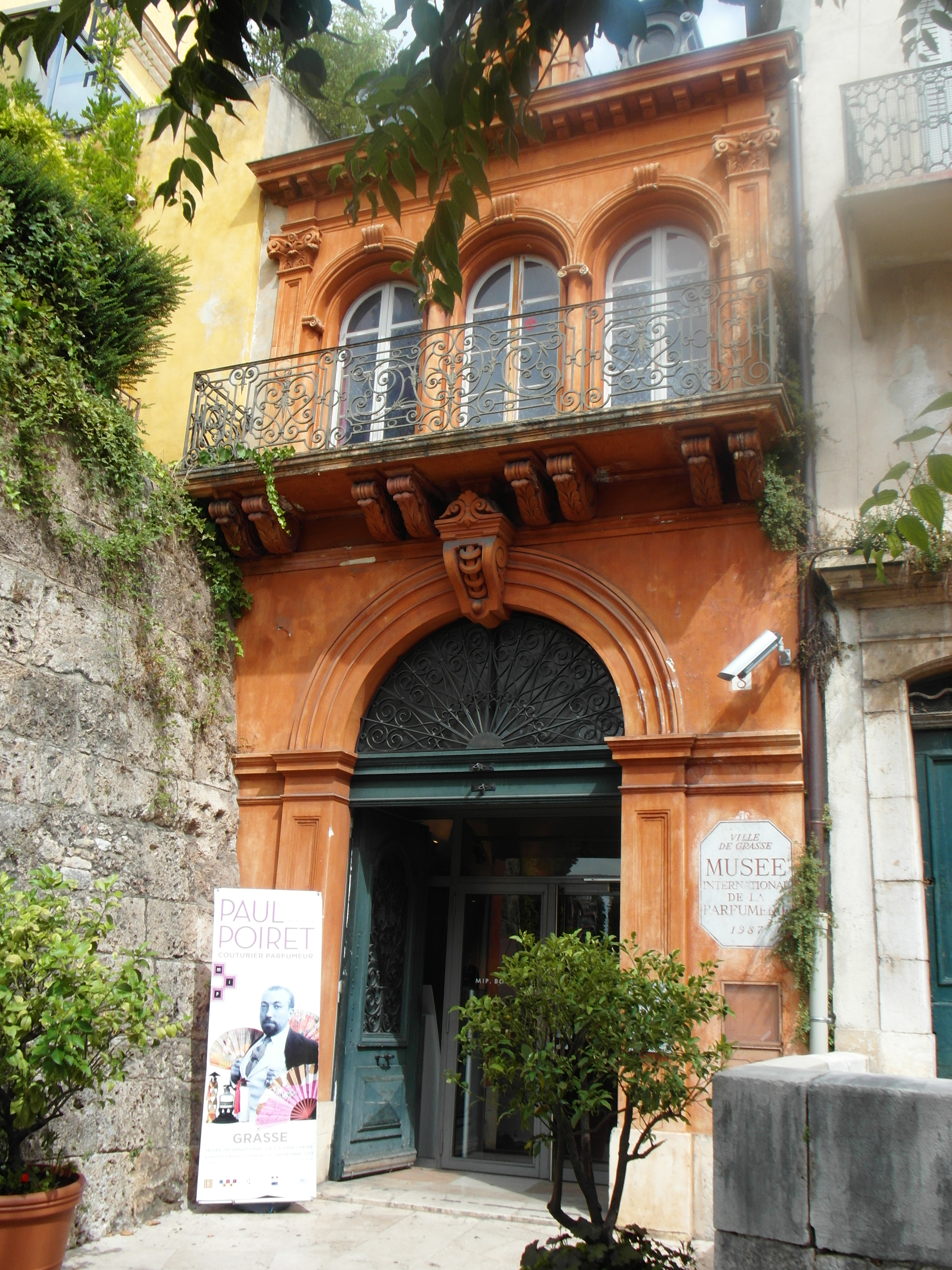
Musee International de la Parfumerie in Grasse

Our first stop in Grasse was the Musee International de la Parfumerie, a multi-story labyrinth of display rooms which focuses on the history of perfume through the ages. I was completely ignorant of the role which leather and gloves played in the development of the perfume industry and I found it fascinating. According to Wikipedia: “In the Middle Ages, Grasse specialized in leather tanning. Once tanned, the hides were often exported to Genoa or Pisa, cities that shared a commercial alliance with Grasse. The hides of Grasse acquired a reputation for high quality. But the leather smelled badly, something that did not please the glove wearing nobility. This is when Galimard, a tanner in Grasse came up with the idea of scented leather gloves. He offered a pair of scented gloves to Catherine de Medici who was seduced by the gift. Therefore, the product spread through the Royal Court and high society and this made a worldwide reputation for Grasse.” The leather gloves went out of fashion, but the perfume industry only continued to grow.

I was determined to learn all I could about perfume so that I could make some sense out of choosing one perfume over another. I thought that, perhaps by the end of the day, I would be able to select perfumes in a sensical and logical manner, or at the very least, with a good understanding of the different smells involved. Well, it seems that it is a lot more complicated than that. The “Nez” (Noses) are the experts who select and make perfumes, and they must be able to distinguish at least 2,000 different smells, with many handling more than 3,000! And not only are they not satisfied with natural smells, they have come up with lots of synthetic smells as well, thus creating untold possibilities of different smells.

SAM_1885

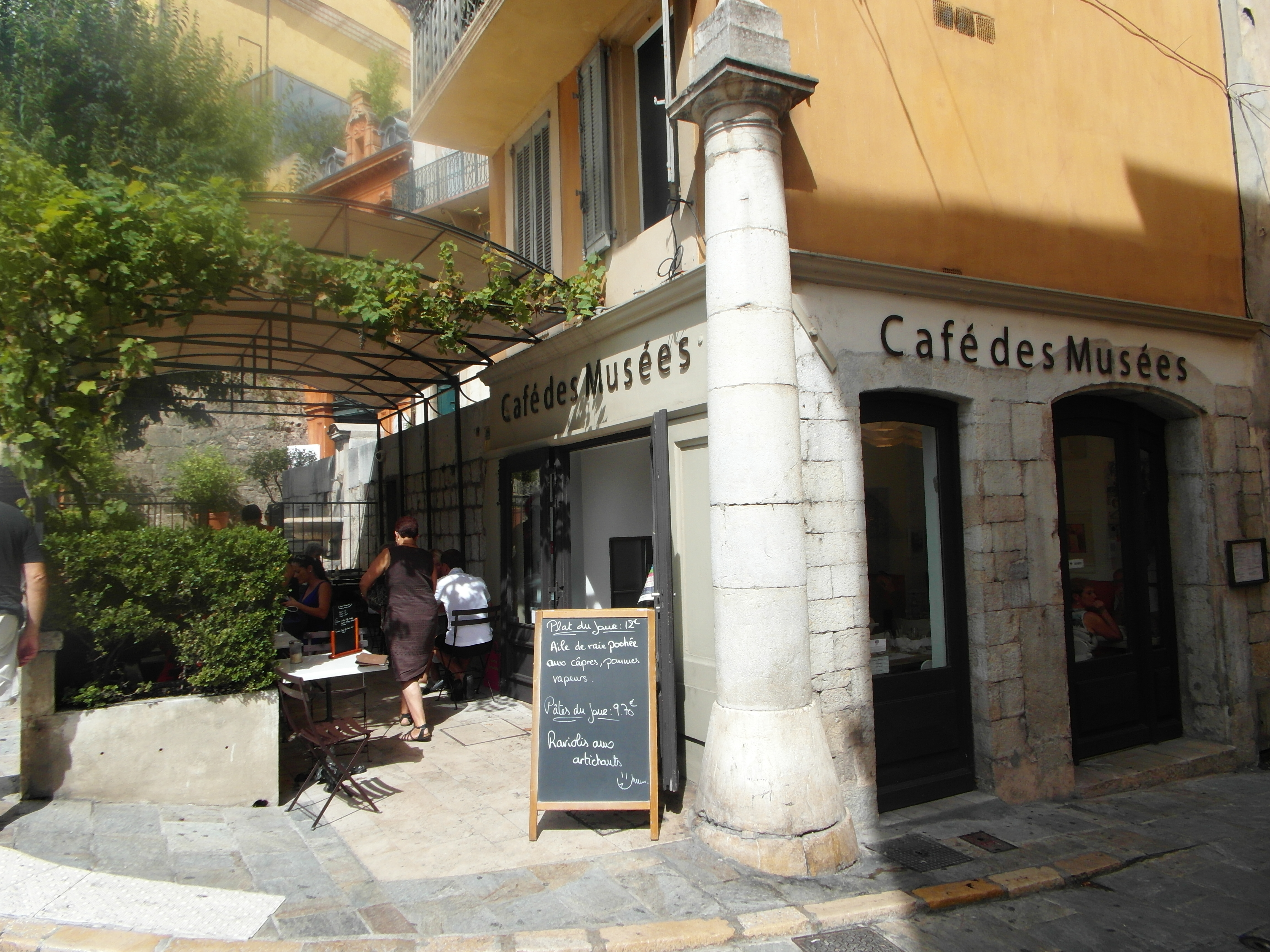
Cafe des Musees in Grasse

We needed a break to digest all this new information. Fortunately, right outside the museum, was the charming Cafe des Musees, a small bistro which provided us with a delightful light salad lunch.

SAM_1879

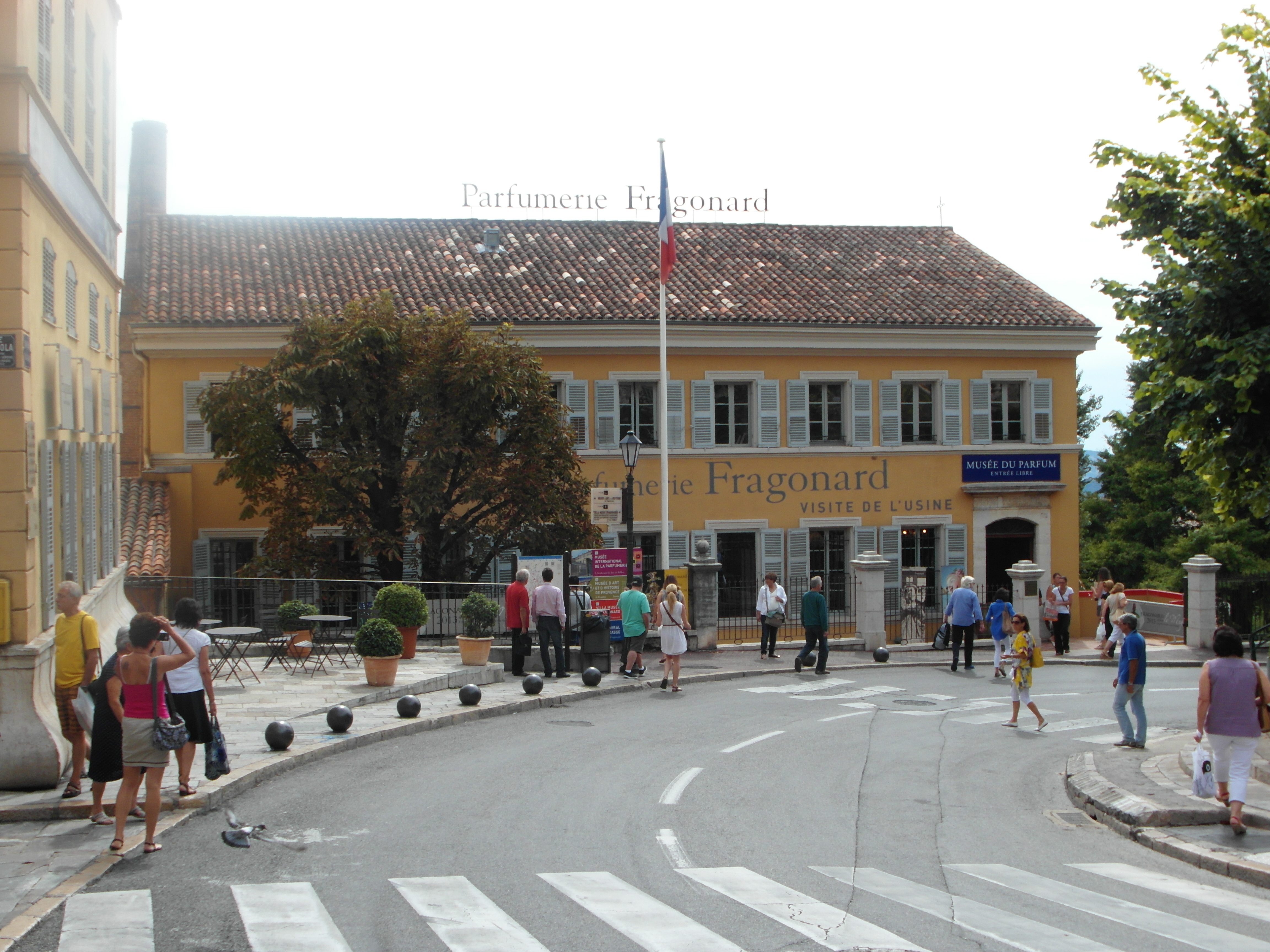
Musee du Parfum Fragonard in Grasse

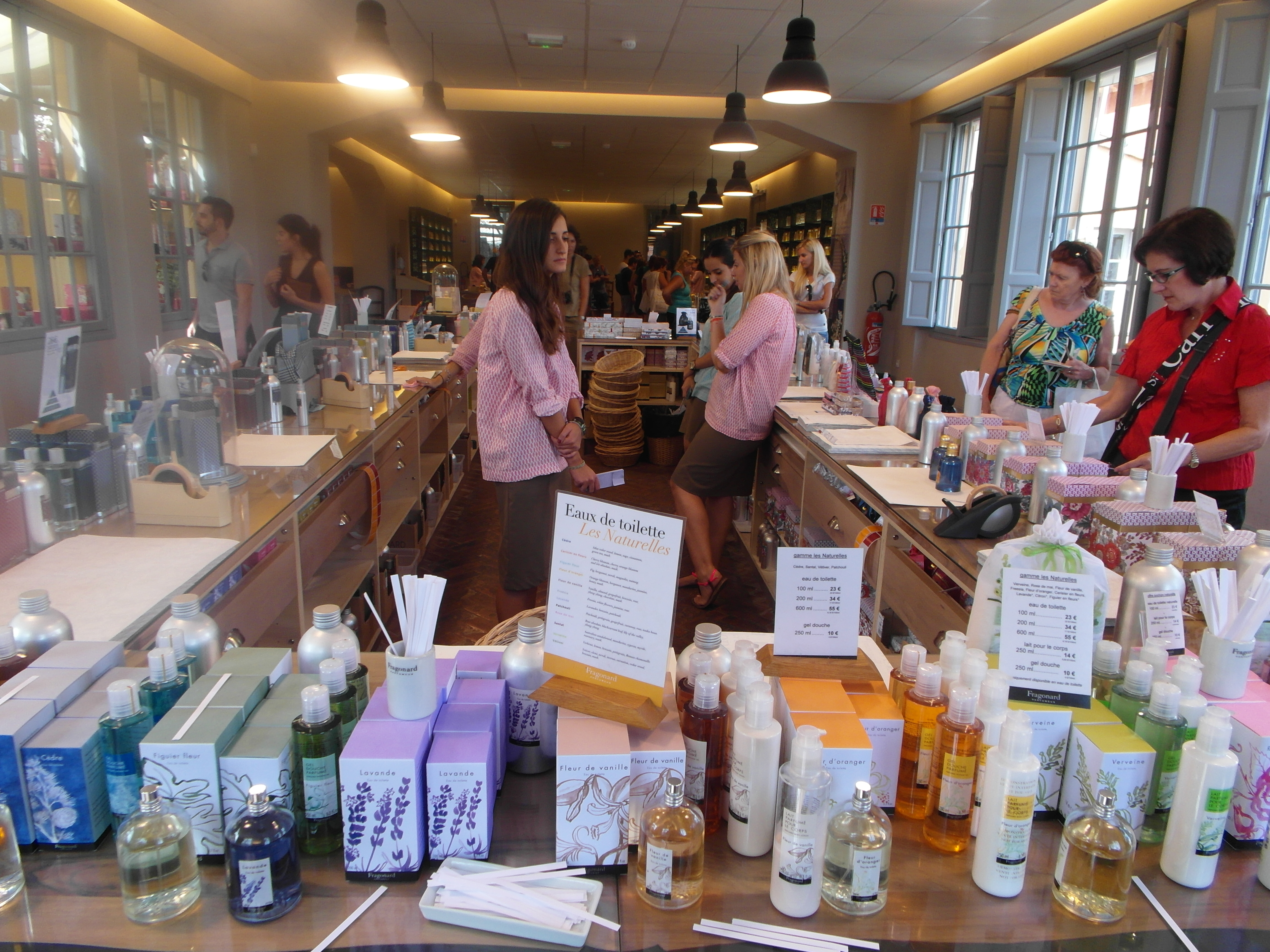
Next door to the Cafe des Musees is the Musee du Parfum Fragonard. Fragonard is a big name in the town of Grasse and we were going to visit many Fragonard locations during the day. Fragonard was a manufacturer of scented gloves which then became a perfume manufacturer. The painter Jean-Honore Fragonard is a member of that family and the favorite son of the town of Grasse. The Musee du Parfum Fragonard belongs to the Fragonard Perfume company and it quickly leads you into the large boutique where Fragonard products are sold. All the products are displayed with testers which allow you to smell the perfume, and we did a lot of that. There are some scents which I liked more than others, but I am not sure I could tell you why. Clearly, I don’t belong in the Noses club.

SAM_1901

Villa Musee Jean-Honore Fragonard in Grasse

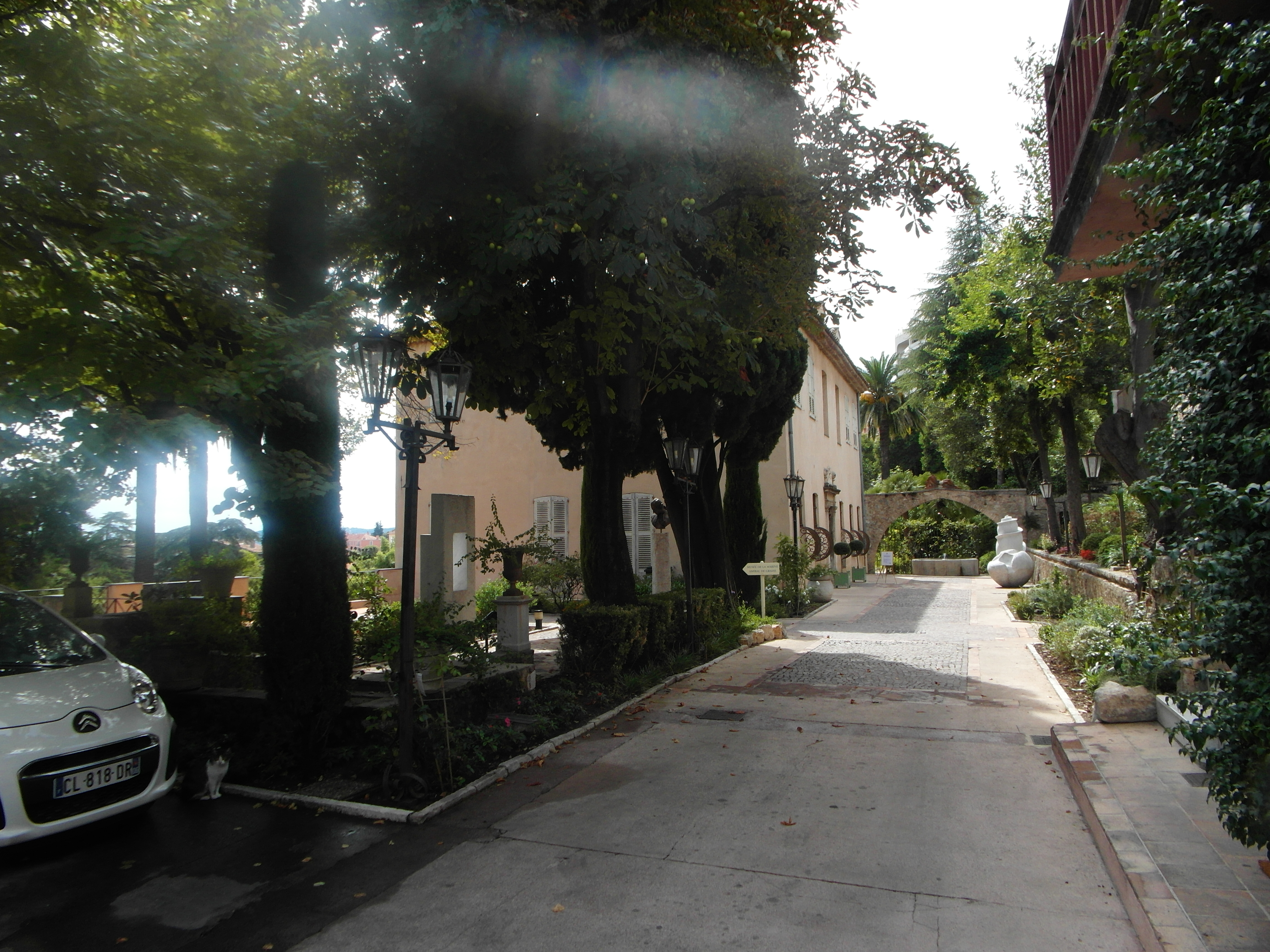
We then visited the Villa Musee Jean-Honore Fragonard. I have mentioned in an earlier post that Jean-Honore Fragonard is the painter who was called “le poete de l’amour gallant” (the poet of gallant love).

SAM_1910

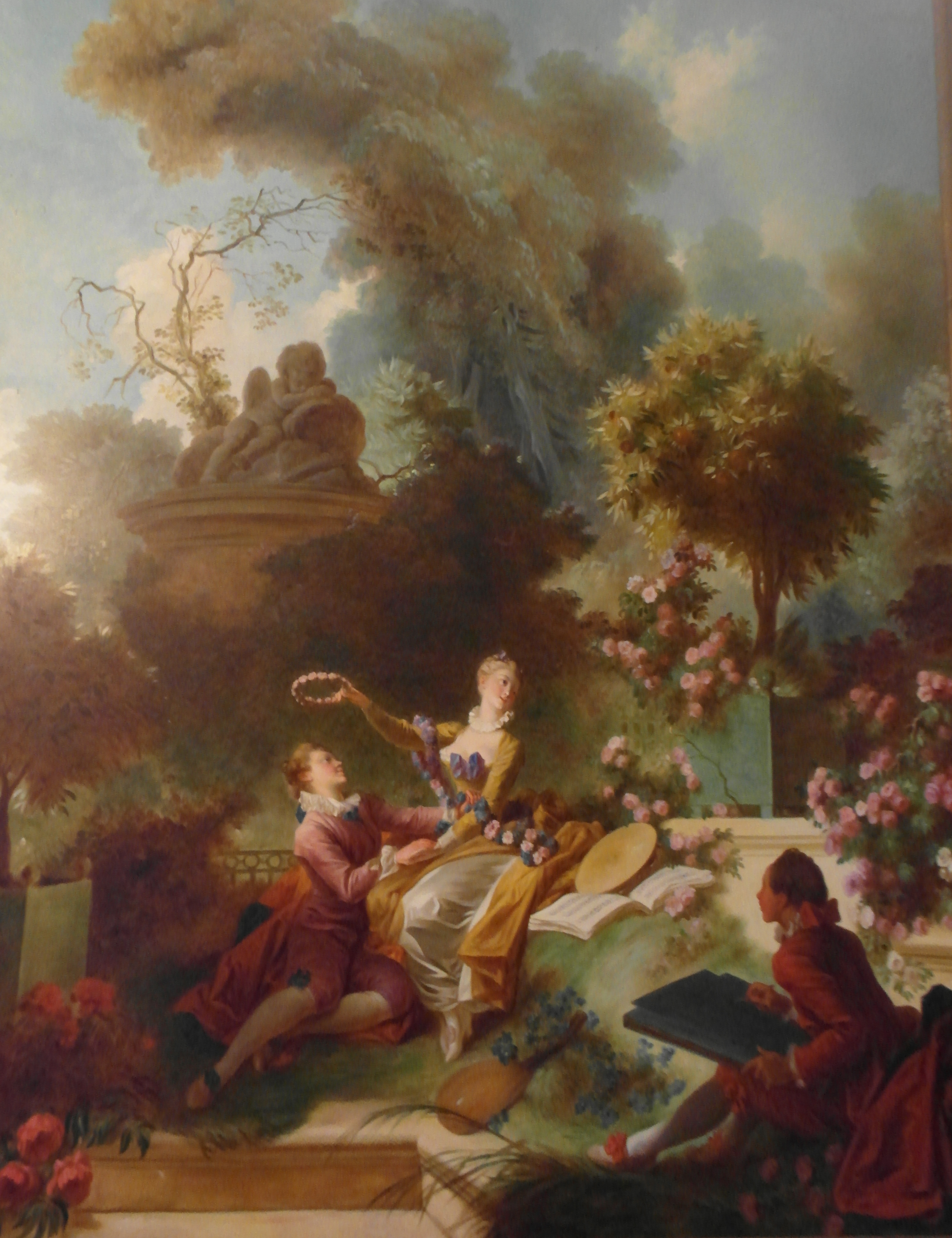
The originals of his paintings about the phases of love ( the meeting, the declaration of love, the pursuit, and the lover crowned), which had been commissioned by the mistress of the King of France, hang in the Frick Museum in New York City and the ones at the museum in Grasse are only copies, but they were a delight to look at nonetheless.

SAM_1912

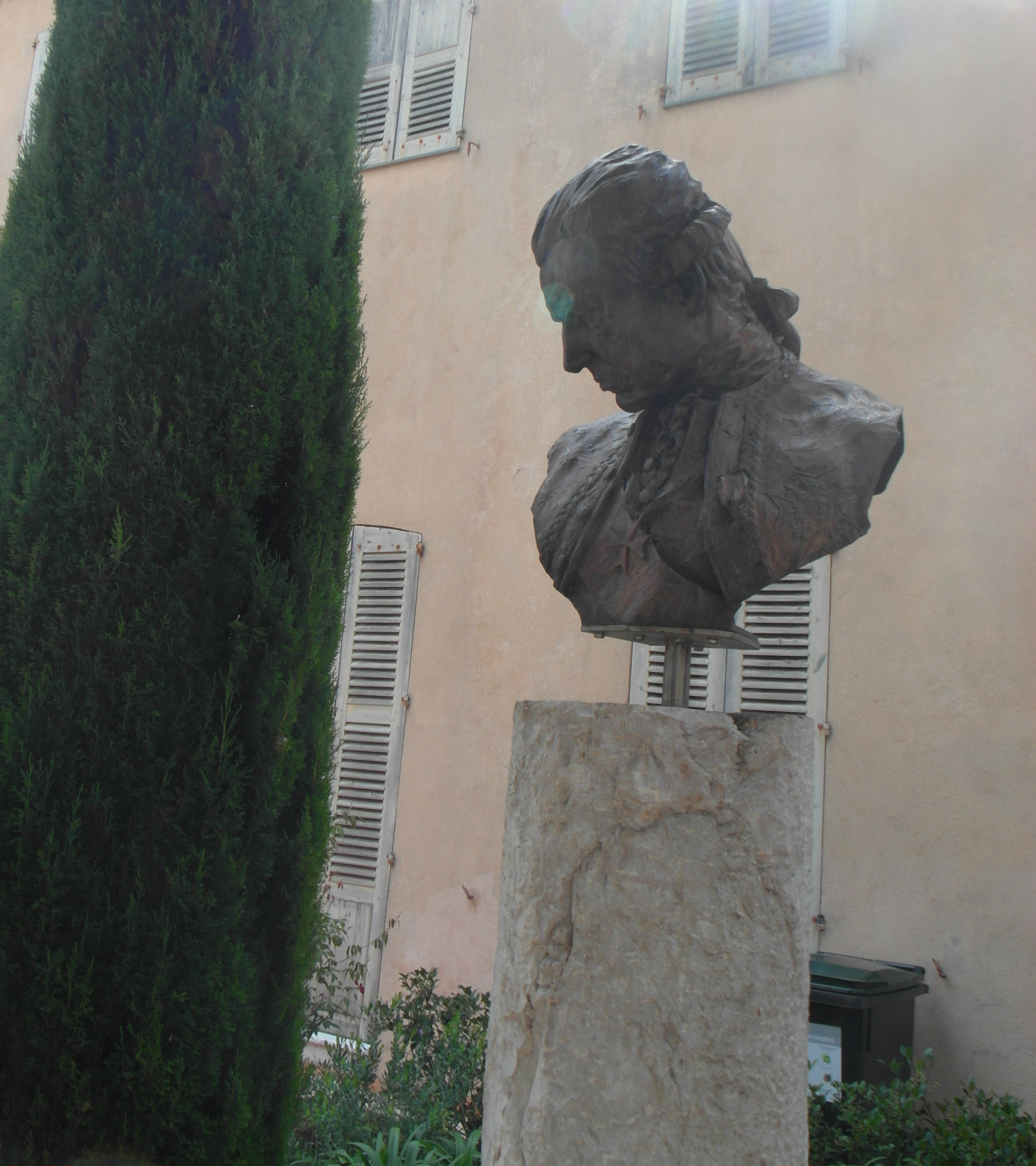
Bust of Amiral de Grasse, hero of American Independence, in Grasse

The museum is of great importance for two other reasons. First, in the courtyard stands a bust of Amiral de Grasse, the man who, perhaps more than any other, is responsible for American Independence. It was he, at the head of a substantial French fleet, who blockaded Yorktown harbour and forced Cornwallis to surrender to George Washington. I think that his contribution (and that of France?) to the USA has never been sufficiently recognized.

The second reason is that the house in which the museum is housed used to be the residence of Pierre de Montesquiou, Comte d’Artagnan, musketeer to the king. For those of you familiar with the novel The Three Musketeers of Alexandre Dumas, a story which animated my childhood, finding out that there was a real-life d’Artagnan is quite a treat.

SAM_1918

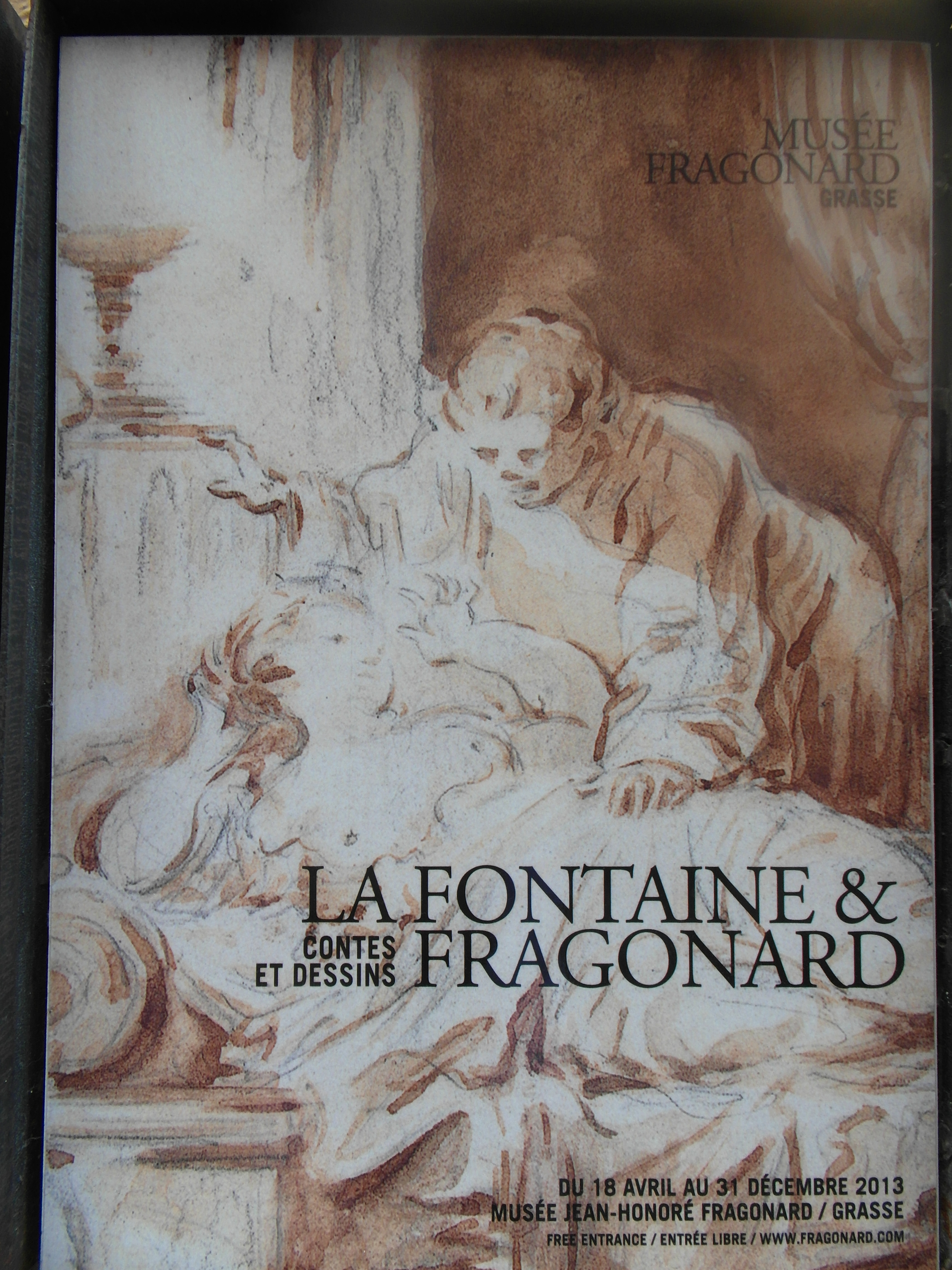
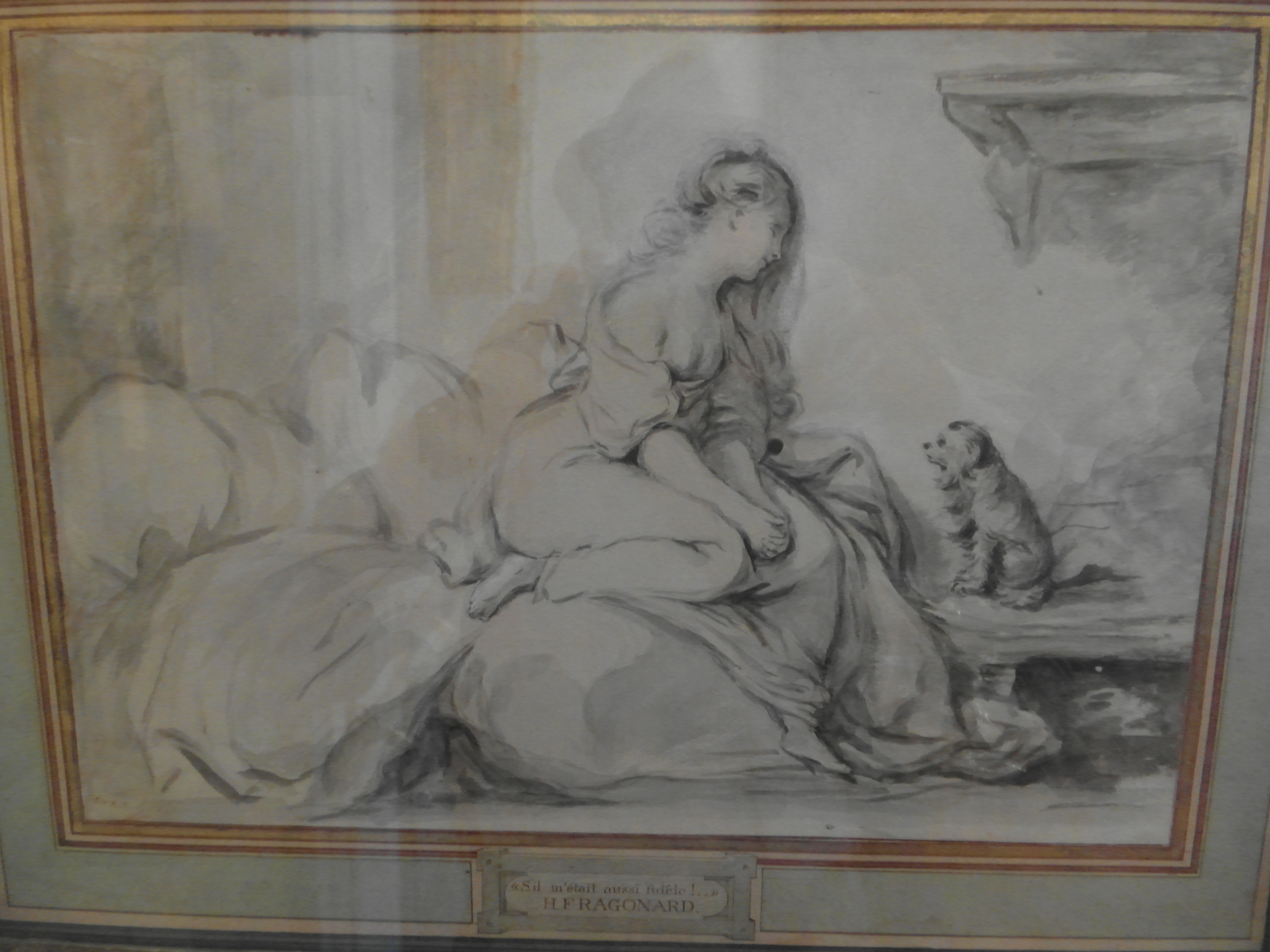
Would you believe that we then visited another Musee Fragonard? We did. A museum which included some Jean-Honore Fragonard paintings as well as the drawings he made for a book of the Fables of La Fontaine.

SAM_1891

In addition, as we toured the very narrow streets of the old town, we were faced with one Fragonard boutique after another, one selling Fragonard perfume, another Fragonard children’s products, another Fragonard clothing, etc… I was told there were all owned by the Fragonard perfume company. Most interesting, but someone ought to tell the Grasse people not to use the name Fragonard on everything, it does get unnecessarily confusing.

The best of our day was yet to come. After our return to Nice that evening, we went out to the old town for a dinner at an Italian restaurant called Da Vinci, which turned out to be extremely enjoyable.

We were serenaded by a couple of gipsy spanish singers with old favorites like Besa Me Mucho, Quisas Quisas, Piensa a Mi, etc…, ate the best pasta (spaghetti aux fruits de mer) we have had on this trip, and ended the evening with a refreshing lemoncello. I hope the video above gives you a little bit of a feeling for our evening in the old town.

Did you know?

Grasse is where Edith Piaf had her last residence and where she died at the age of 47?

Interested in how we got to Grasse?

It is a one and a half hour journey by direct bus from Nice to cover the 30 miles or so distance (still at the one euro cost) because of the many stops at Cagnes-sur-Mer, Villeneuve-Loubet and other small towns along the way. Another option would have been to take the train from Nice to Cannes, and then take a 30 minute bus ride to Grasse. A third alternative would have been to take the train to Grasse, although the train station is about two kilometers from the old town area (free shuttles are available at the station). We opted for the direct bus route on the 500 bus line, which went uneventfully on the trip to Grasse. The return trip also went well, although we were informed that there was a bus strike in progress, but not on our bus line. When asked why there was a strike, the bus driver gesticulated and proclaimed loudly: “Because we are in France!”. But of course …

a


Nice, France ~ Alluring breezes, views, meals and comfort at Plage Beau Rivage

The azur blue sky was back in its full glory today, but this time there was a stronger wind creating bigger waves on the beach and a more refreshing breeze ashore.

SAM_1860

Plage Beau Rivage in Nice

My plans to try another topless beach along the Nice shore were derailed by our love of everything that Plage Beau Rivage offers, its comfort, its gastronomic food, its service, its views, etc… Watch the video at the top of this posting to get a feel for this wonderful place.

SAM_1801

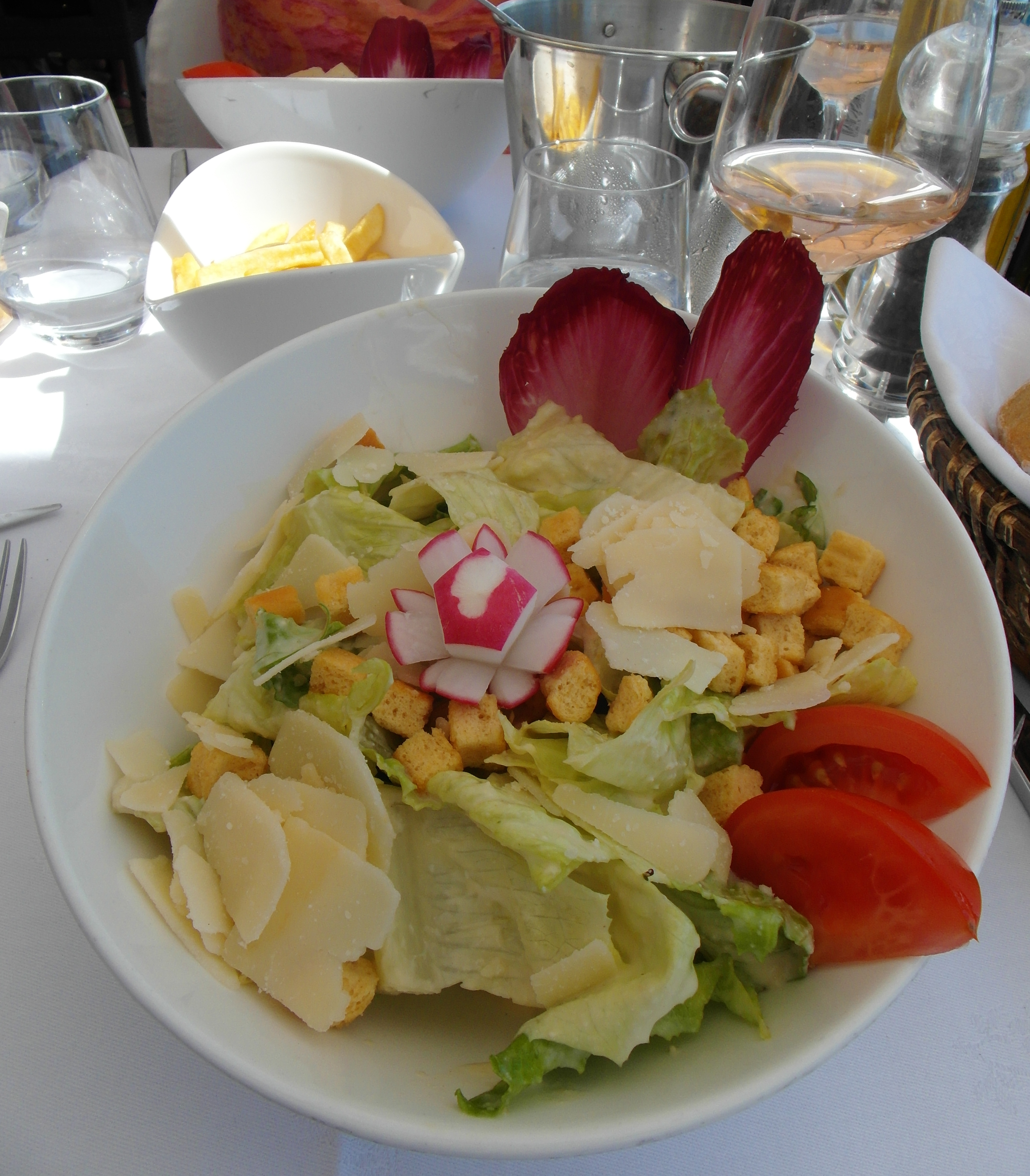
“The unavoidable plain (sic) Cesar Salad” at Plage Beau Rivage in Nice

We spent the whole afternoon enjoying another leisurely luncheon. The Cesar Salad we started with was the best I have had in a very long time.

SAM_1809

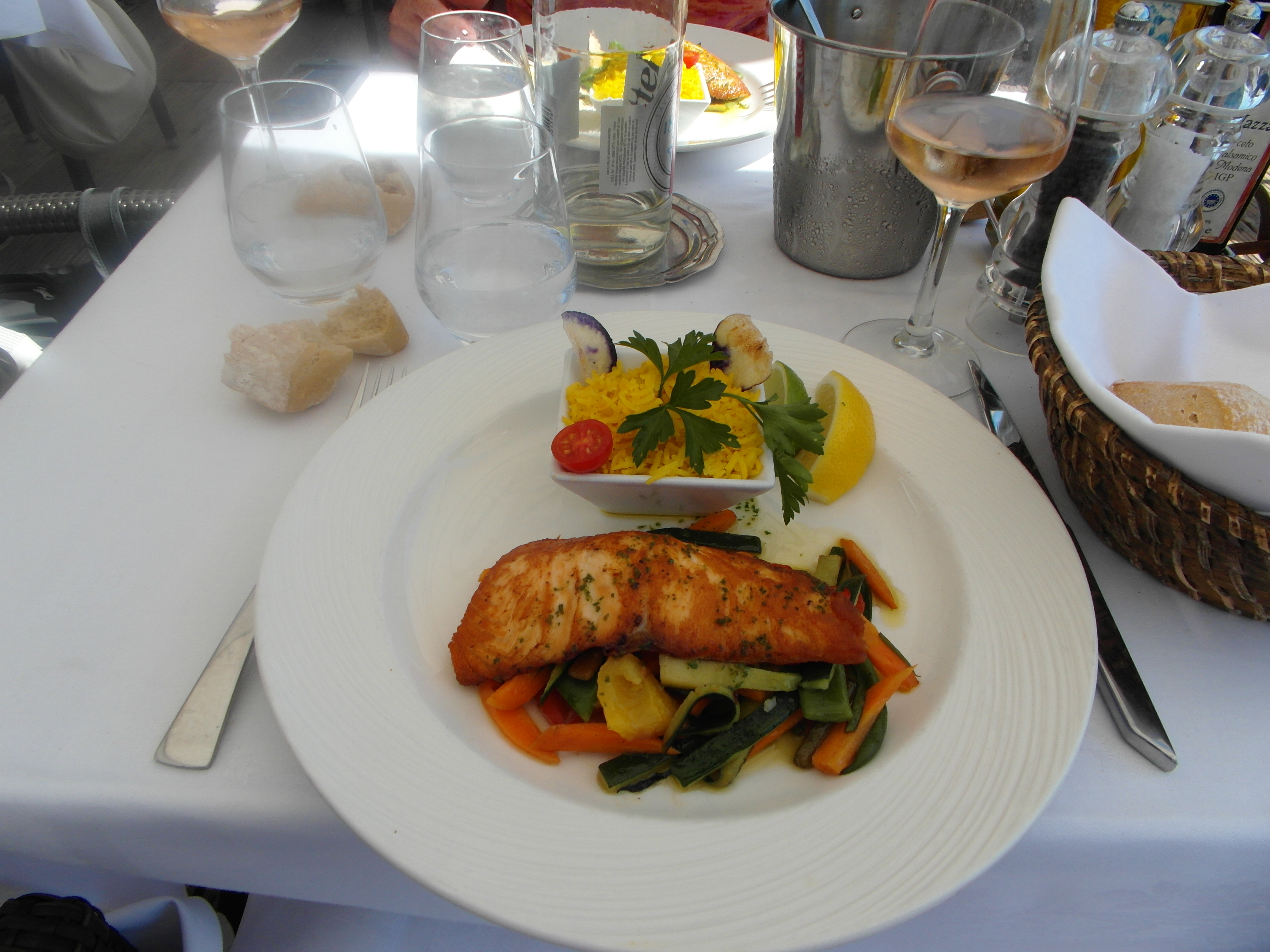
It was followed by a tender Saumon Roti au Four et son Pistou de Shiso Rouge, Riz Parfume aux Epices Douces (oven roasted salmon with red shiso pesto, rice flavored with mild spices). And finally, since we had loved so much the speculos ice cream we had been served on our previous visit, we splurged with the same moelleux au chocolat et sa creme glacee au speculos (chocolate melting cake with speculoos ice cream) but asked for a double portion of the ice cream!

SAM_1843

We had another “cracker day” (an Irish expression I picked up from the Northern Ireland couple we befriended at Plage Beau Rivage) at the beach!

Nice, France ~ Love a la Marcel Pagnol

marius

Marius and Fanny in the 2013 French movie Marius

It was raining in Nice this morning when we got up, a light drizzle. Our first day of rain during our trip, and, if we believe the current forecast, it will be the only one. So we put in motion our well thought out rainy day plan. We put on our jackets, packed umbrellas and ponchos and headed out towards the old town of Nice. Except that by the time we left our apartment, it was not raining any more, nor did it rain again for the rest of this wonderful yet cloudy day.

We did five things today:

SAM_1777

old Nice

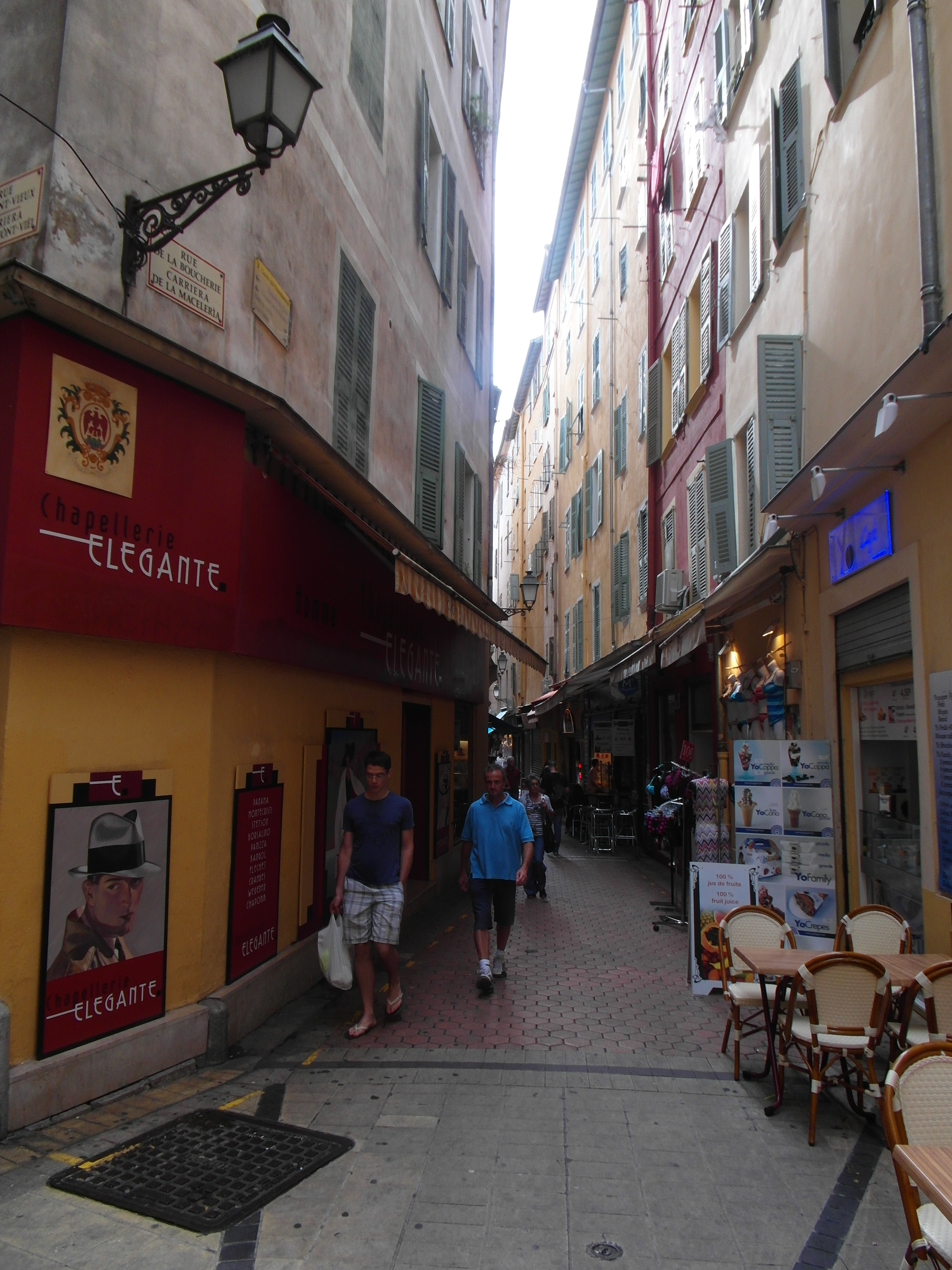
*We discovered and explored several fascinating although very touristy narrow streets of the old town of Nice, full of shops and cafes.

SAM_1767

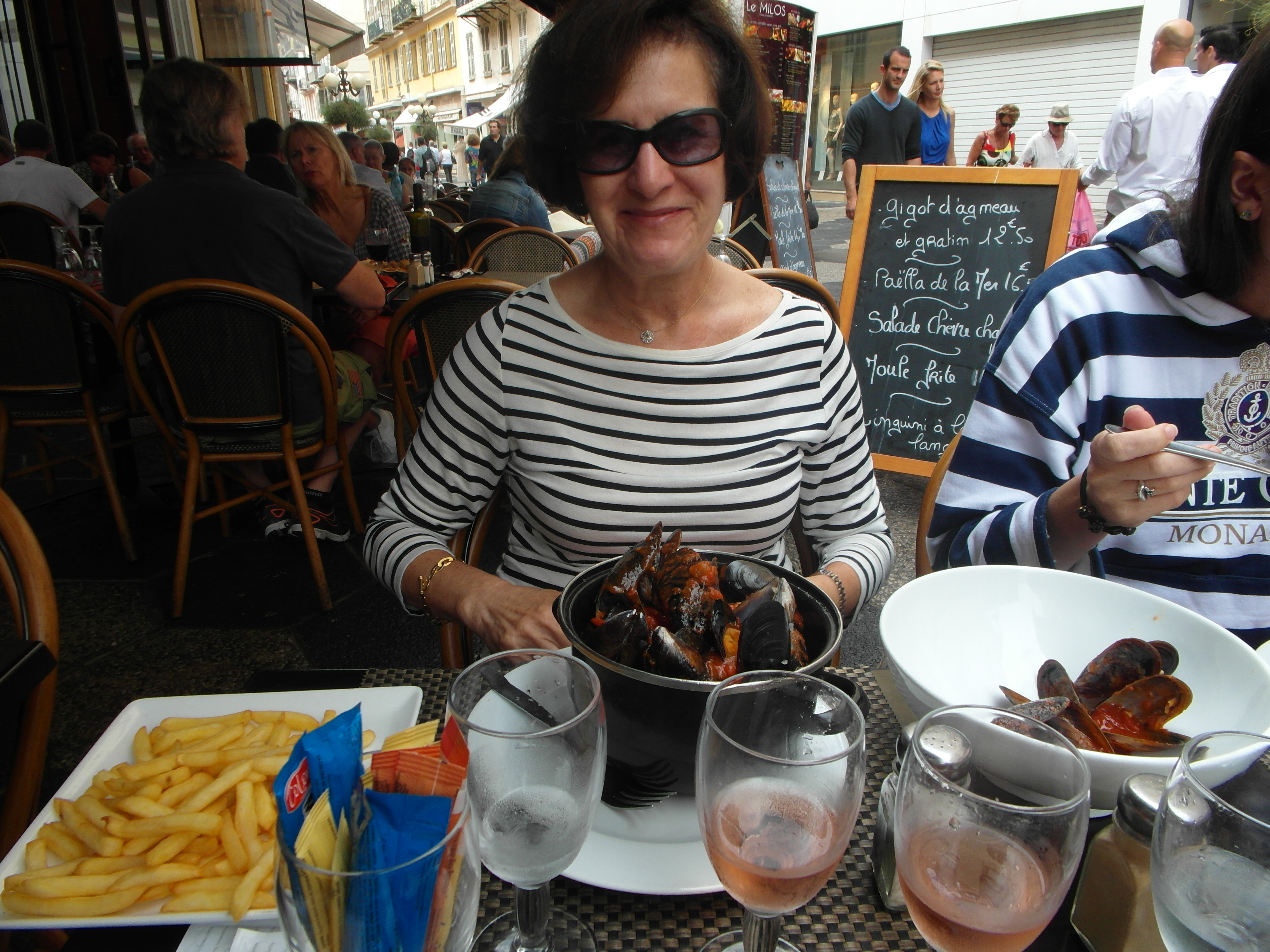
Lynn and her Moules all’Arrabbiata at the restaurant Milos on rue Massena

*We had a wonderful lunch at the restaurant Milos on the pedestrian rue Massena.

photo 803

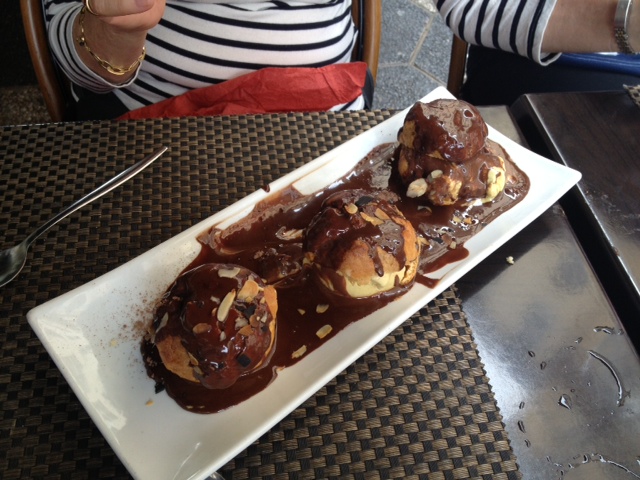
A single dessert order of Profiterolles at the restaurant Milos!

Calorically, this lunch was way over the top!

SAM_1785

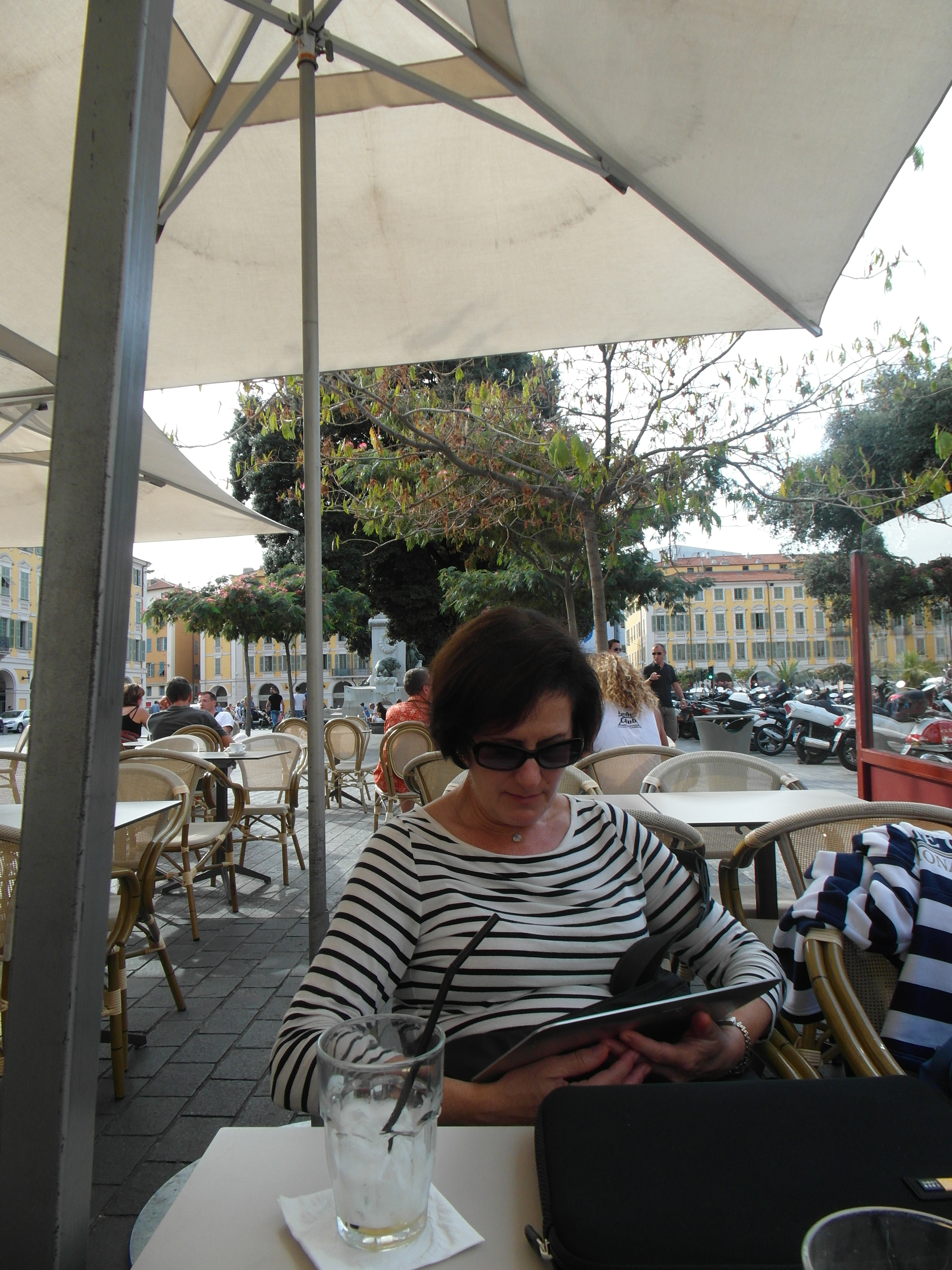
A little break from shopping at Cafe de la Place on Place Garibaldi in Nice

*We did some shopping at Galeries Lafayette at Place Massena.

casar

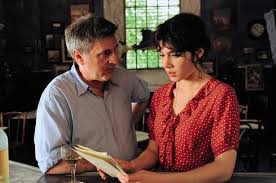
Cesar (Daniel Auteuil) and Fanny in the 2013 French movie Fanny

*We went to the movies to see a double feature in French, the latest two 2013 movies from Daniel Auteuil, Marius and Fanny, adapted from the Marcel Pagnol novels of the same name. Marcel Pagnol is one of our most favorite authors because of his understanding of human emotion and human nature and his uncanny ability to write realistically and movingly about love. Many, and that includes us, consider him the greatest French author of the twentieth century. We had spent some time in his footsteps when we spent a month in Provence a couple of years ago and we named our first cat, Cesariot, after a character in his trilogy, Marius, Fanny and Cesar.

SAM_1771

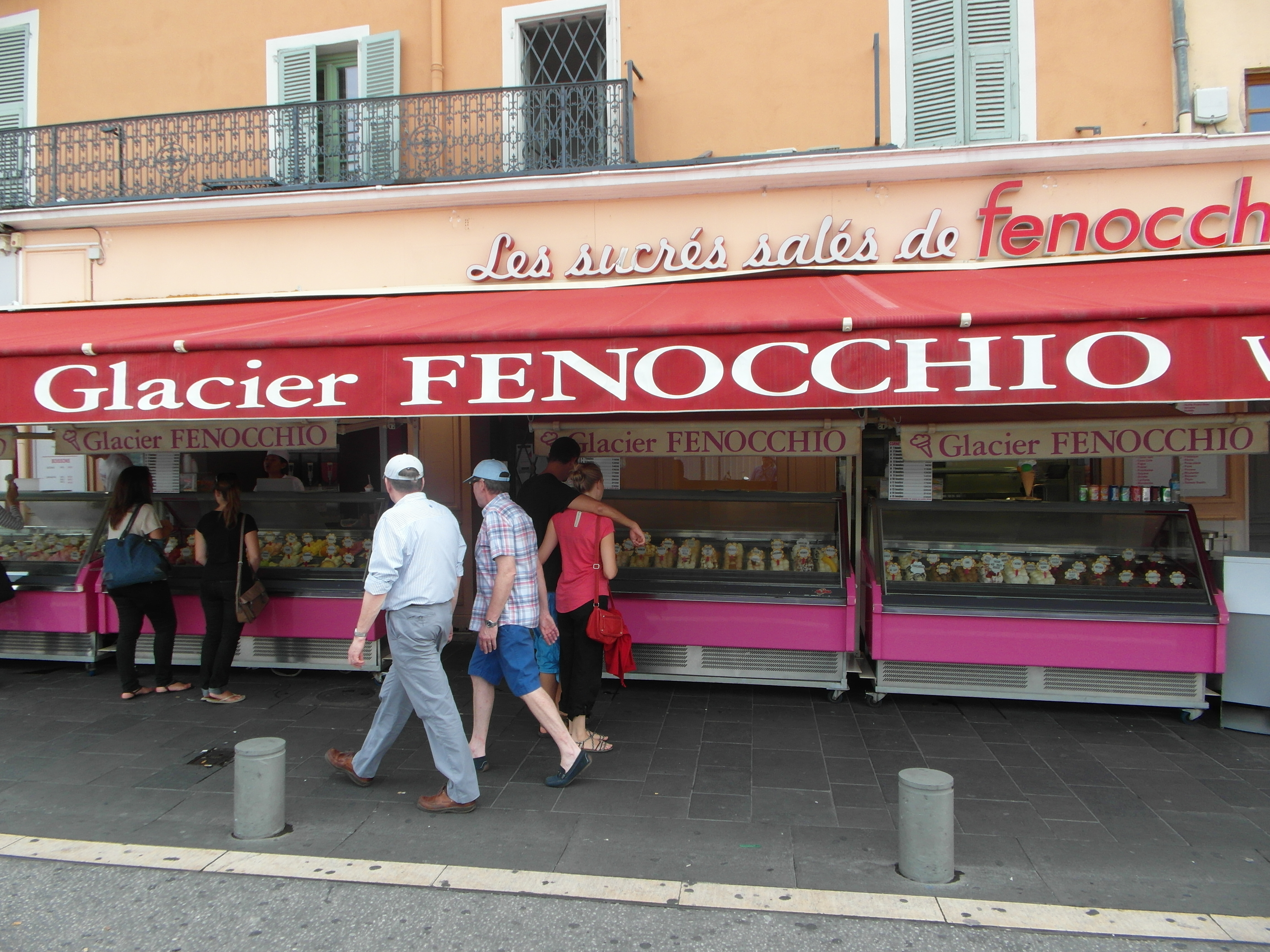
Fenocchio’s in Nice

*We had ice cream at the best Nice glacier, Fenocchio’s.

It ended up being another glorious day in Nice despite the mixed weather conditions.


The best topless beach on the French Riviera … Nice, France

SAM_1742

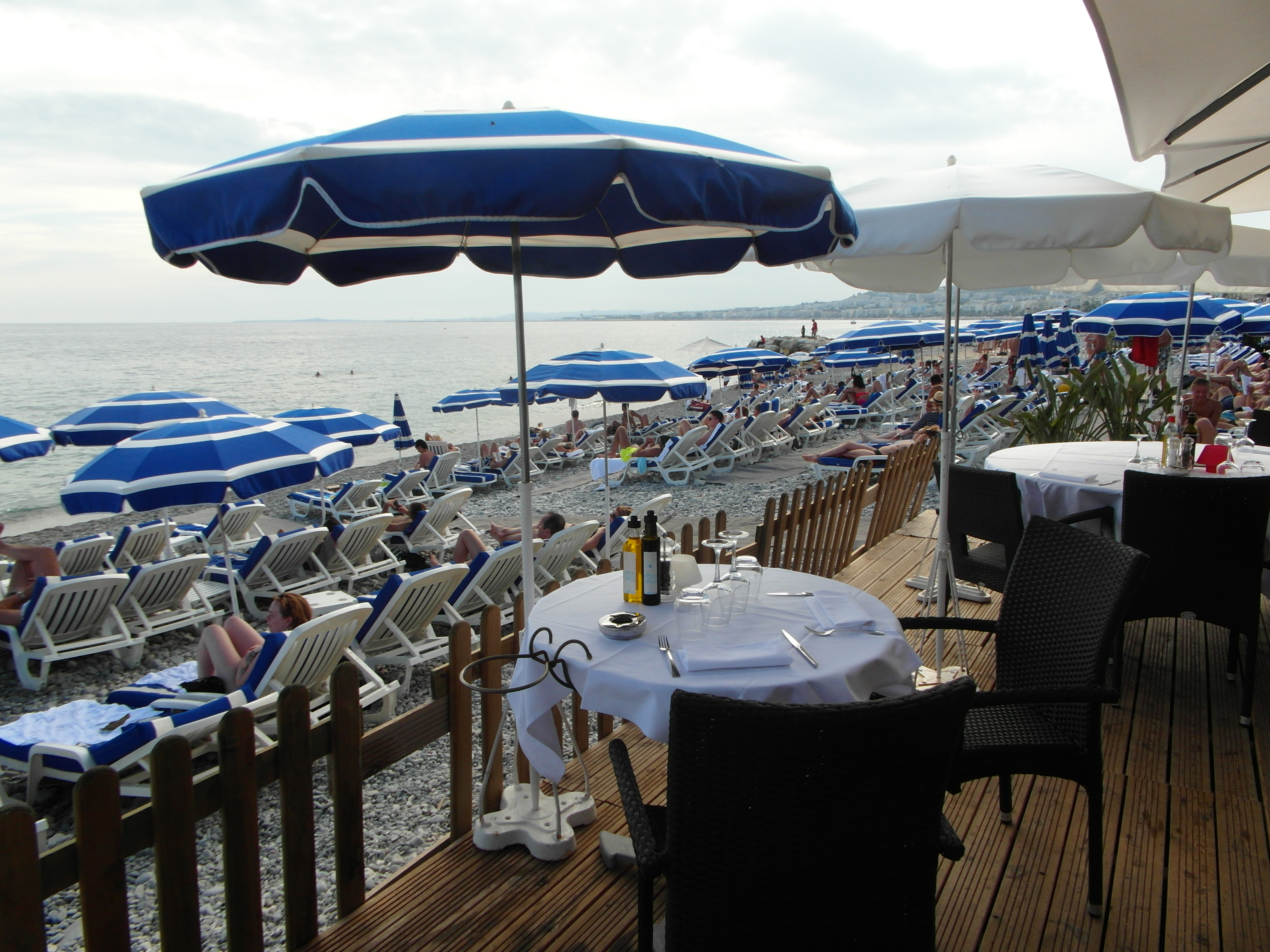
Restaurant at Plage Beau Rivage in Nice

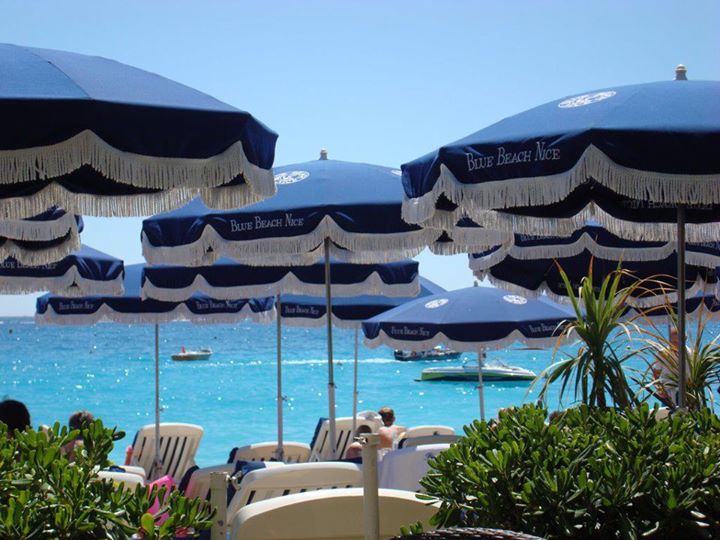
Nice has 40 beaches along its 10km (about 6 miles) shoreline, 25 public beaches and 15 private ones. We have so far during this trip enjoyed dinner on the beach at Blue Beach, a private beach near the Hotel Negresco and our apartment. But today, with the inviting blue sky of Nice enhanced by a refreshing light sea breeze, we decided to spend the day at the beach.

Not any beach, mind you. I wanted to find the best private and topless beach on the Nice seafront, so that I could mention it on my travel blog BonVoyageurs.com (I invite you to enter your email address on the home page and perhaps become the 1,000th follower of the blog!). The facilities available at a private beach can vary widely from one beach to another. I had read somewhere that the law on the French Riviera requires that all structures on the beach, including the restaurants and bars, be fully “demontables“, temporary structures which could easily be taken down and taken away. I was about to discover that the private beaches of Nice are testing this requirement to its limit.

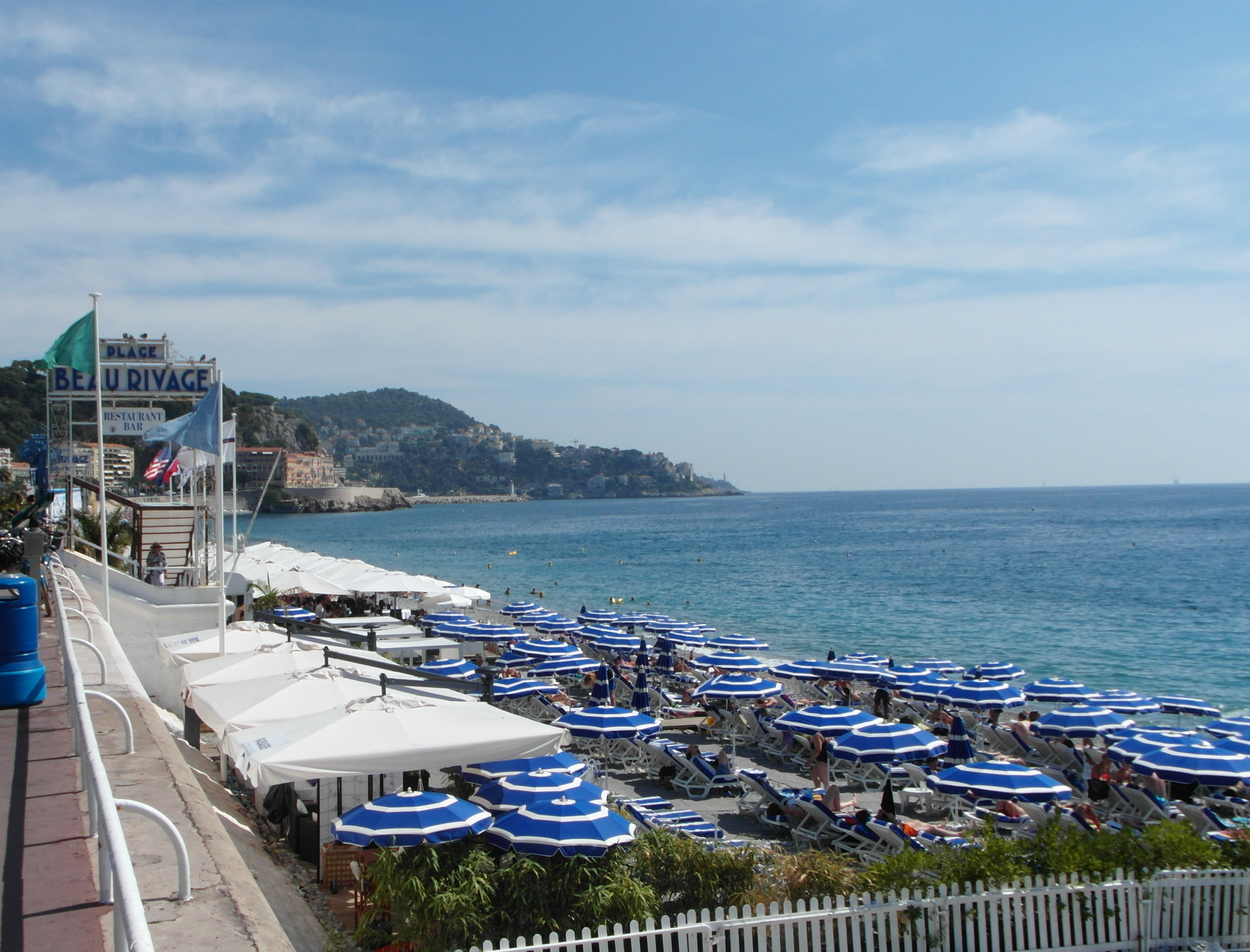
SAM_1710

Plage Beau Rivage in Nice

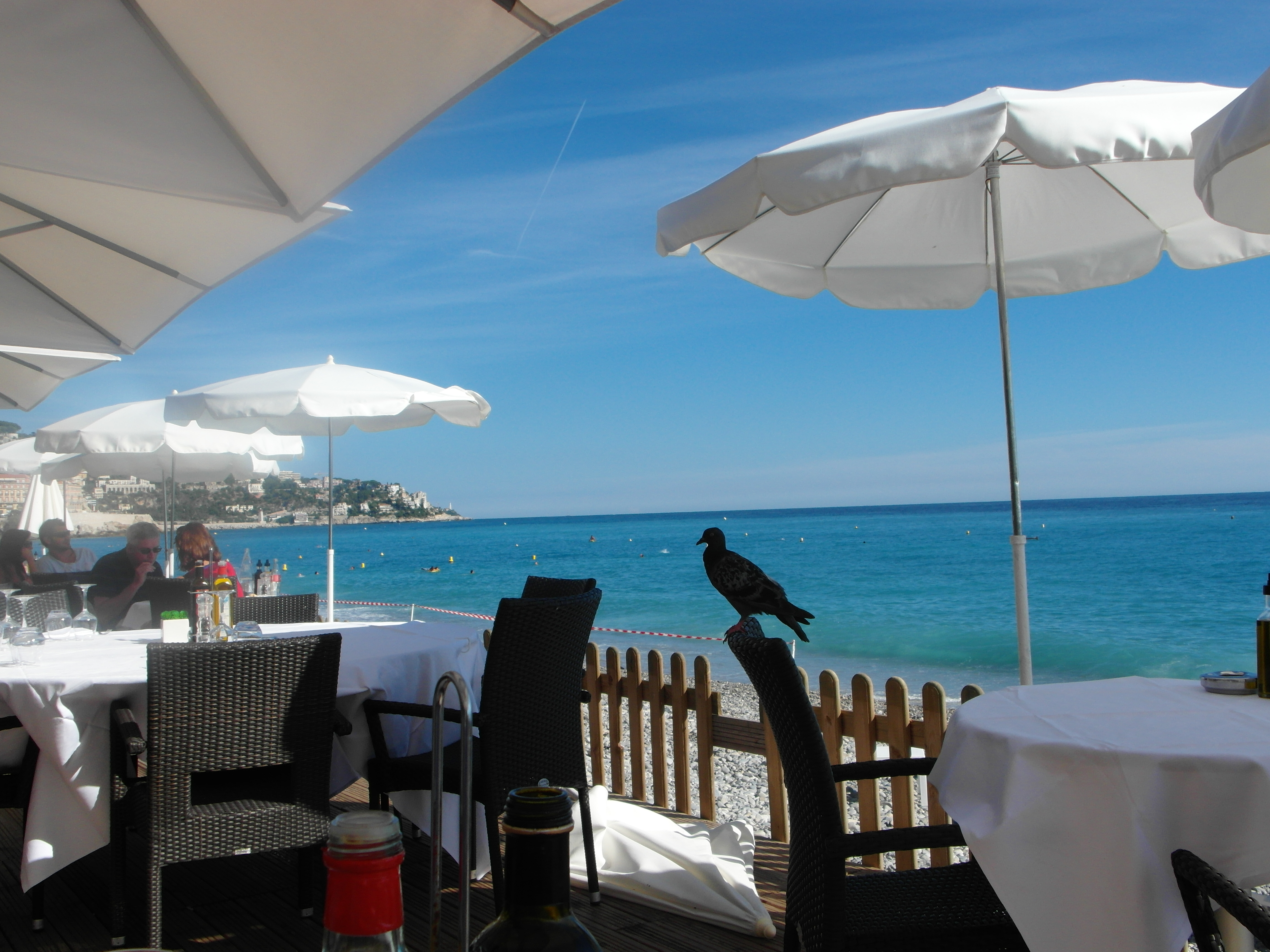
Naturally, we started at the top, with the largest private beach on the French Riviera and the one enjoying the highest reputation in Nice, Plage Beau Rivage. It is located right at the entrance to the old town and includes a full service white-table-cloth restaurant open from morning to night, a gorgeous luxury lounge bar area for drinks and light snacks, and of course, the beach lounge chair and umbrella section with waiter service, massages, and other offerings.

The beach is very narrow in this part of the shore, so the restaurant lies not more than about thirty feet away from the water’s edge. At the check-in desk for the restaurant, a number of magazines and newspapers are available freely, including our favorite, the International Herald Tribune. Reservations are highly recommended. The toilet and shower area would put a few five star hotels to shame. And, a big plus for us, Plage Beau Rivage offers free wi-fi service to its patrons.

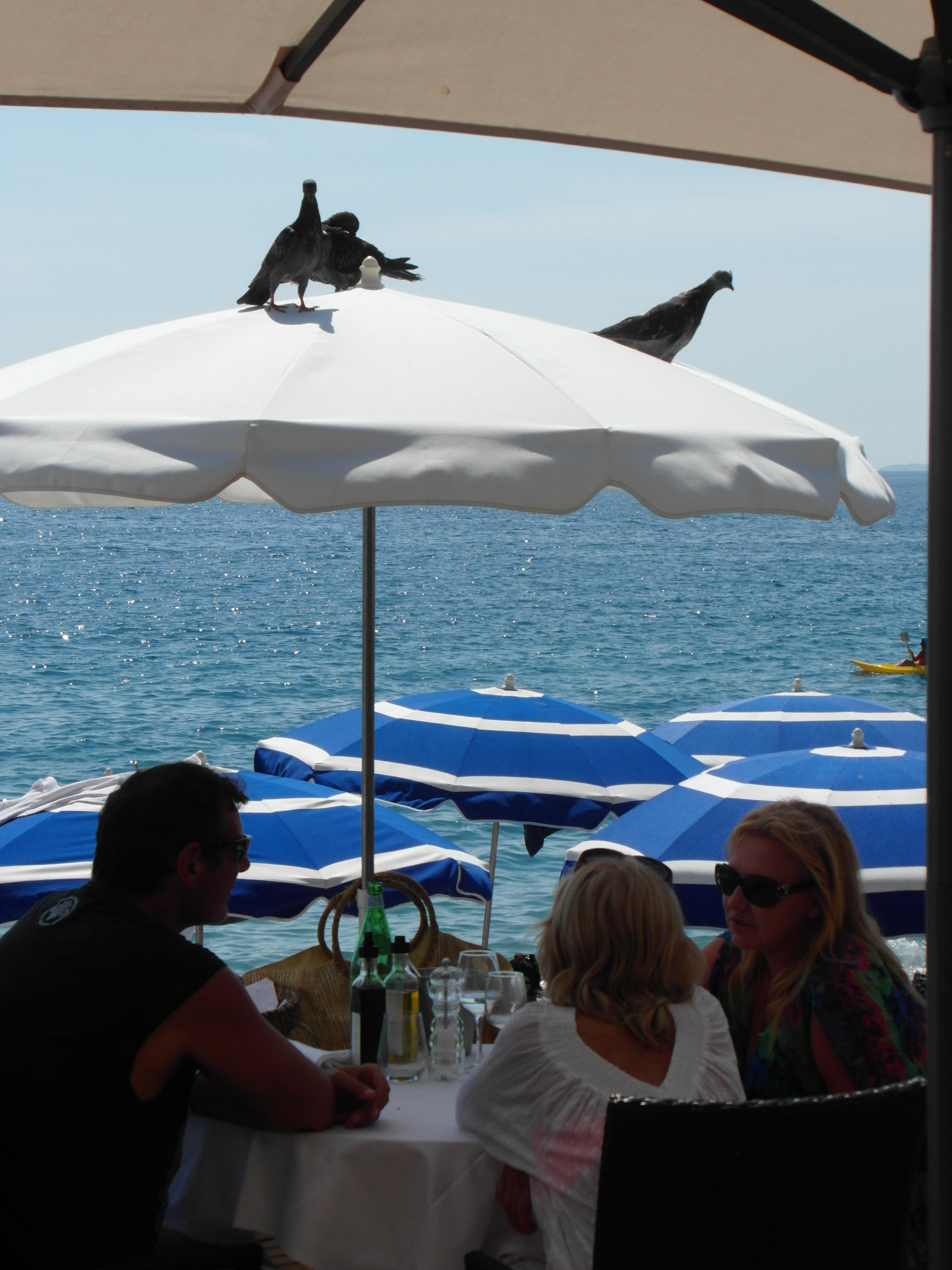
We sat down to yet another (!) gastronomic luncheon, this time a few feet from the water with the sound of the waves, the views of Nice, the Mediterranean sea, the sailing boats and the departing ferries to Corsica, the sound of French Caribbean music in the background, all keeping us in a state of heavenly bliss. Service was as relaxed as we were so the meal quickly turned into an afternoon affair.

photo 731

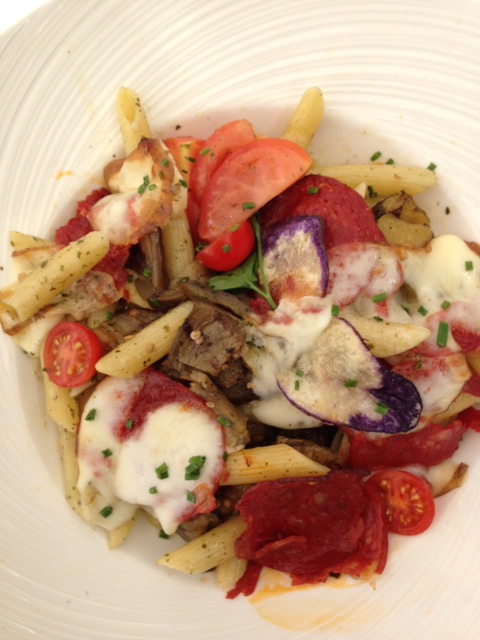
Penne pasta with Aubergines, chorizo, tomatoes and mozarella

The salade nicoise entree was eventually followed with a delicious penne pasta with aubergines (eggplant), chorizo, tomatoes and mozarella, finished with a pesto sauce which we absolutely savored until, after a suitably long break, a moelleux au chocolat with glace au speculos (chocolate melting cake with speculos ice cream) and a souffle glace au citron vert (key lime iced souffle) transported us into a state of total enjoyment. By the time my cafe au lait later arrived, I was totally in love. In love with the views, with the sounds, with the smell and with the taste of Nice and of the French Riviera. Here was a real life example of joie de vivre at its best.

SAM_1728

Restaurant at Plage Beau Rivage in Nice

Near the shore, coast guard vessels were ensuring that boats stayed clear of the beach swimming areas and, I imagine, were inspecting closely the hundreds of beautiful bodies undulating or sunbathing on the beach. I was also paying close attention, and pretended to be totally disinterested at the sight of the topless beauties parading on the beach or sunbathing a few feet away from me (Although I see absolutely nothing wrong with showing a nude human body, quite to the contrary, I am bowing to the Victorianesque prejudices of our society and refraining from posting the beautiful photos I did take on that beach).

However, my search for the best topless beach will clearly be more demanding and require much more time and attention than I had expected. My eyes will remain wide open. Still, for everything else, Plage Beau Rivage will do more than nicely as we have already fallen in love with its relaxing and ultra comfortable setting.

SAM_1759

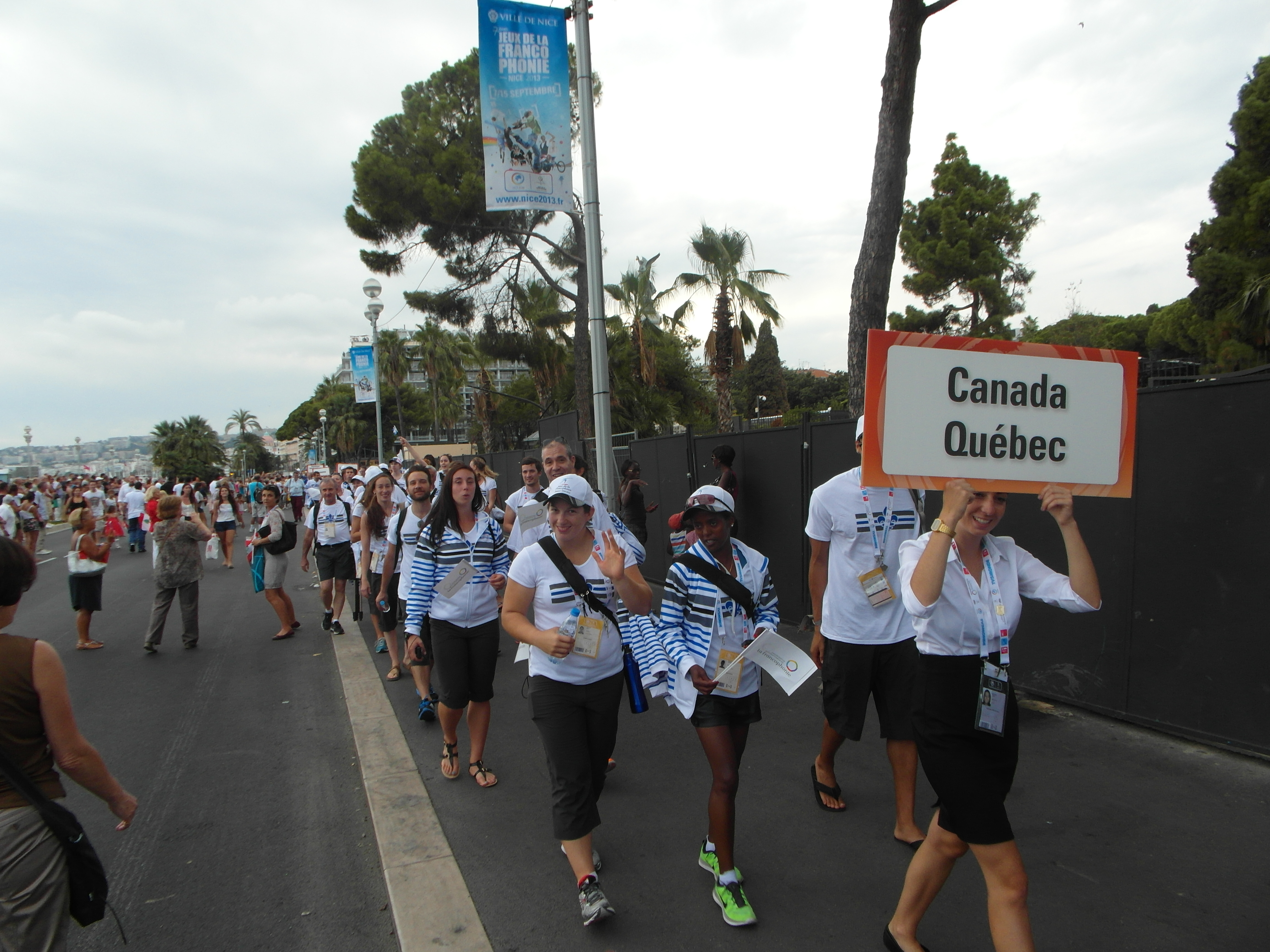
The Canada Quebec contingent getting ready for the opening parade of the Jeux de la Francophonie in Nice

We relaxed at the beach until evening started to set in. As we left for the walk back to our apartment, we noticed that streets were blocked and huge crowds were gathering. We came upon the preparations for the parade of the participants in the Jeux de la Francophonie (the Olympic Games of French speaking countries), whose opening ceremony was tonite at Place Massena in Nice. Interestingly, Canada was represented by three separate contingents, Canada itself, Canada Quebec, and Canada Nouveau Brunswick (New Brunswick), and we tried to cheer them all as they passed by.

Menton, France ~ The birth of the French Riviera

SAM_1682

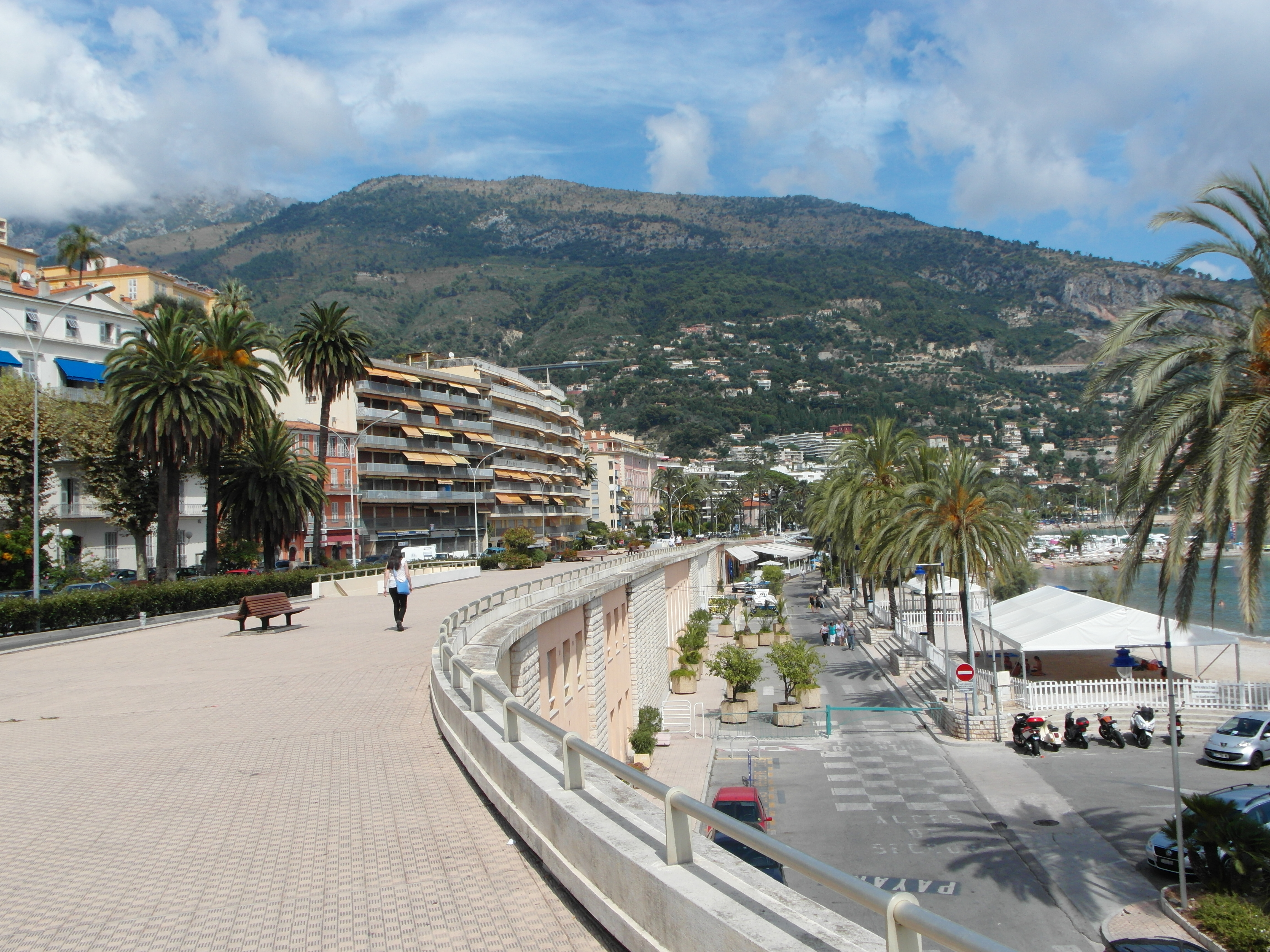
Promenade de la Mer in Menton

Menton, often called “the pearl of France” and historically famous for its lemons, is situated at the far eastern end of the French Riviera, right on the border with Italy (those clouds you see on the photo are on the Italian side of the border; the sky in France is still cloudless). It enjoys the sunniest weather in all of France, and the warmest weather in France during the winter months.

SAM_1658

Jardin Viodes in Menton

It was in Menton that the cult of the French Riviera began, and the marks of the British presence in Menton are everywhere, from the buildings to the street names, the gardens and the promenades. It was the most British town on the Riviera and is still a very pretty town.

The British are long gone, as are the aristocracy, the celebrities and the money. What is left is a calm and relaxed town living out the charms of its past, which was a bit of a relief to us after the frenzy of Monaco yesterday. Nowadays the town seems to have been taken over by working class French retirees and Italian tourists.

We had arrived in Menton by train, a simple half an hour ride from Nice. I did take notice of the fact that the train route is completely underground in a tunnel, from the cape before Monaco (Cap D’Ail) right until the cape after Monaco (Cap Martin). This means that nowhere in Monaco does the train appear above ground, including its stop at the underground Monaco station, so there is no view of Monaco to be had for the train traveler. Good thing we took the boat yesterday!

SAM_1665

Walking the old town part of Menton

We walked the town until we reached the pedestrian areas of the old town of Menton. There were lots of cafes and restaurants, as well as a few places to have the local “citronnade” made with local lemons. The crowds seemed to be all French or Italian.

SAM_1669

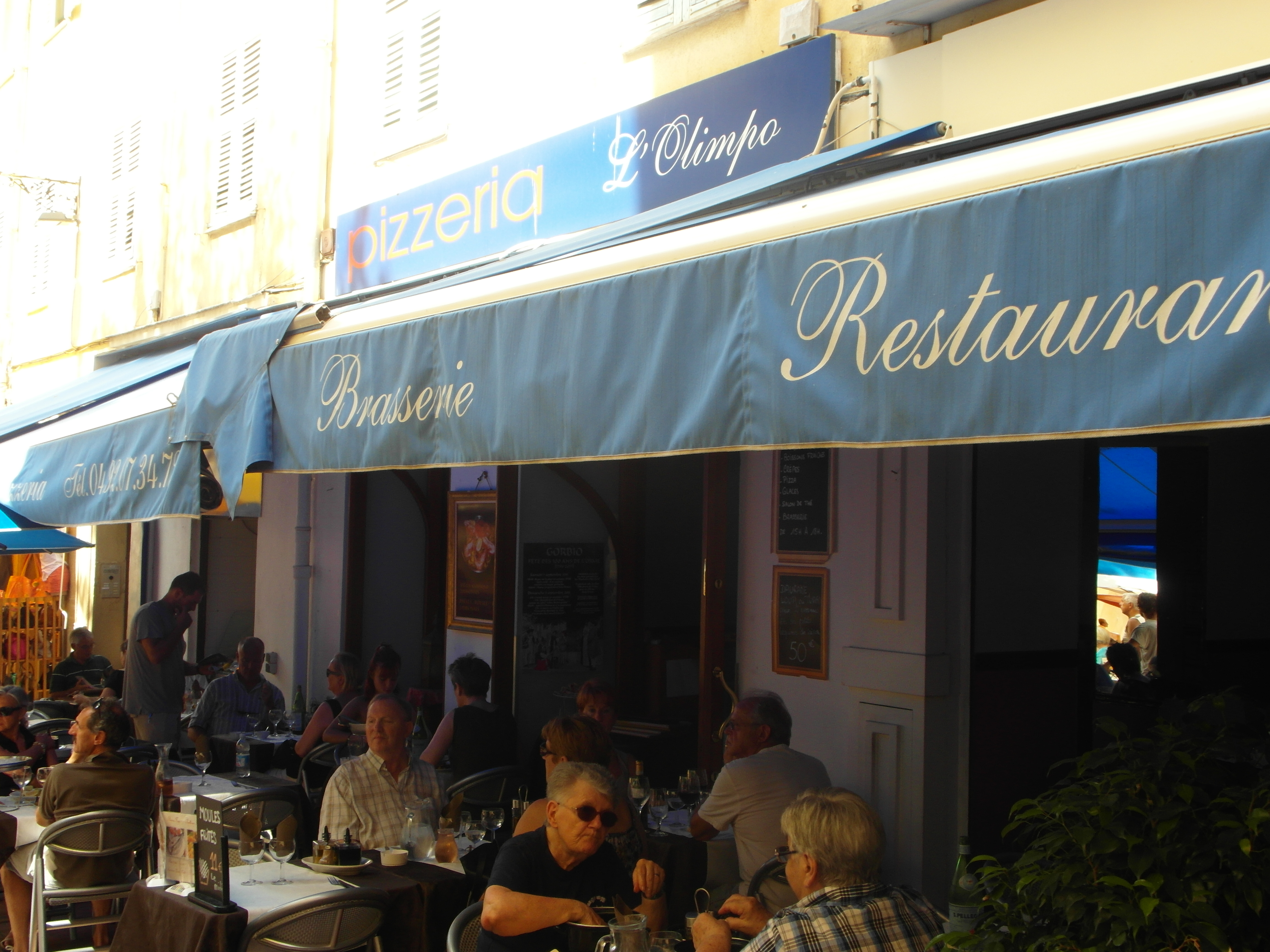
L’Olimpo restaurant on rue St-Michel in Menton

Being right next to the Italian border, we decided to have lunch at an Italian restaurant, and we selected one with the very un-Italian Greek name of L’Olimpo, with a fantastic Italian menu which turned out to be wonderful. Nearby, an accordeonist sat down and started serenading the patrons with romantic French and Italian love songs, like Volare and La Vie en Rose. When he took a break, a guitarist at a neighboring restaurant picked up the slack with tunes such as Elvis’ I can’t stop loving you, etc.. It was just wonderful and so relaxing.

Naturally, I could not resist having spaghetti aux fruits de mer again as my main course! I committed a faux-pas when I asked the waiter for a vinaigrette for my salade nicoise entree (meaning appetizer). The waiter explained at length that vinaigrettes are only for people in the north and, pointing to the olive oil and balsamic vinegar which had been on the table all along, added that in the South everyone uses olive oil and balsamic vinegar. But of course …

We had a very leisurely and totally enjoyable lunch, charmed by the music and the food, and knowing that we had little to do for the rest of our day in Menton. Nevertheless, when I finally asked for the check after a couple of hours, the waiter’s reaction was “Why? Are you in a rush?”

SAM_1692

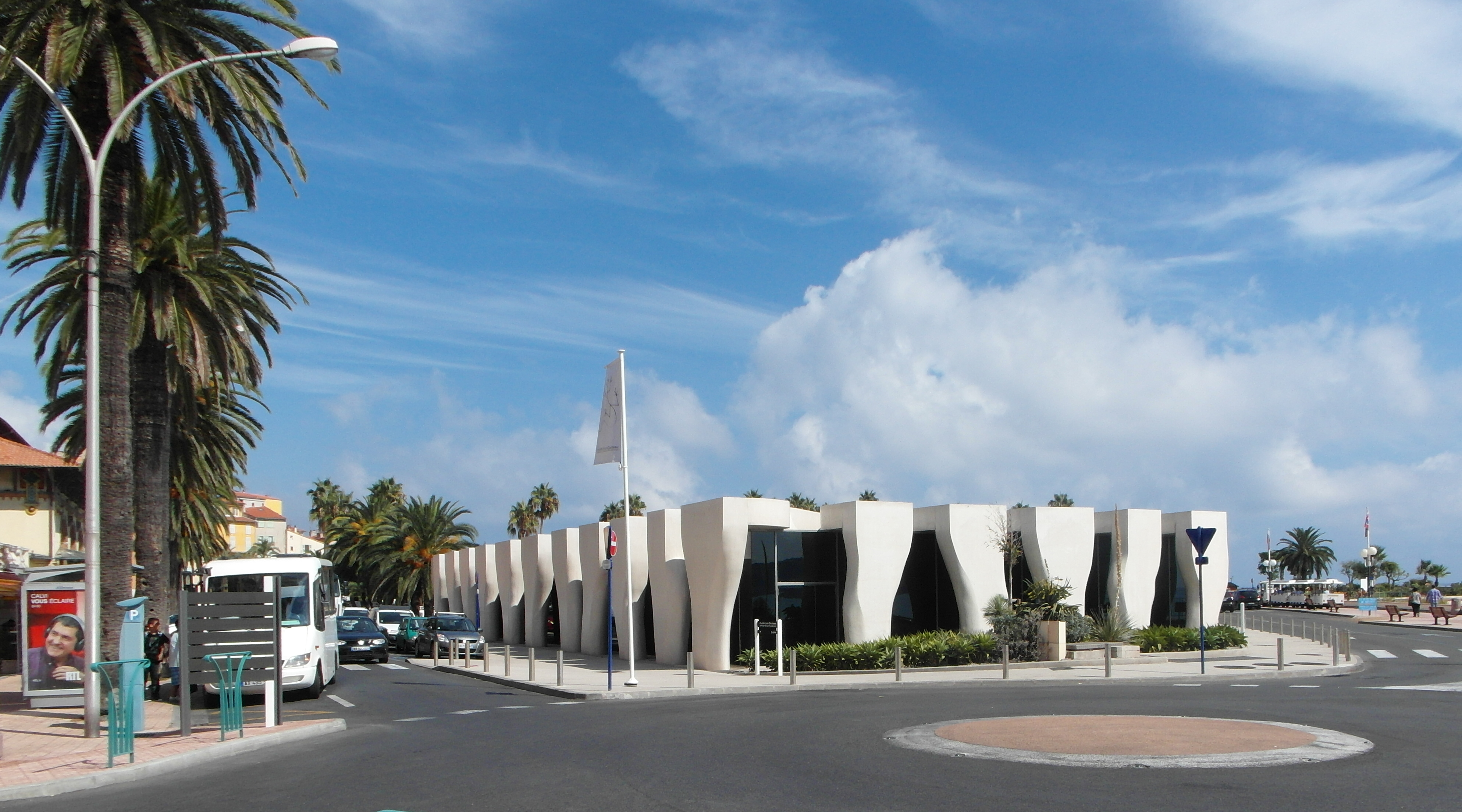
Musee Jean Cocteau in Menton

We took another walk east of the old town along the beachfront. Interestingly, the beach on the east side is a sand beach, while the beach on the west side of the old town is a pebble beach. In any case, we finally decided that we would visit the Jean Cocteau museum nearby.

We did not stay very long. The museum is quite forgettable (like the town). I just can’t relate to Jean Cocteau. He seemed to have been ill at ease with himself all of his life, an anti-conformist who wanted to shock, who really thought that art was anti-conformity. I happen to think that he never understood that art is beauty. And I still can’t forgive him for being a Hitler sympathizer!

We ended up taking an earlier train back to Nice. Unfortunately, that turned out to be a rush hour train. At the Monaco station, a huge number of people got on board and filled every seat, alley and closet on the train. It was impossible for anyone to move on that train, and I was wondering how we would be able to get off the train at the Nice station. Fortunately for us, it would seem that a lot of Nice people commute to and from Monaco for work, since a lot of people got off the train at the Nice station and cleared the way for us to disembark without any problem.


Monaco … or is it Monte Carlo? Posh either way!

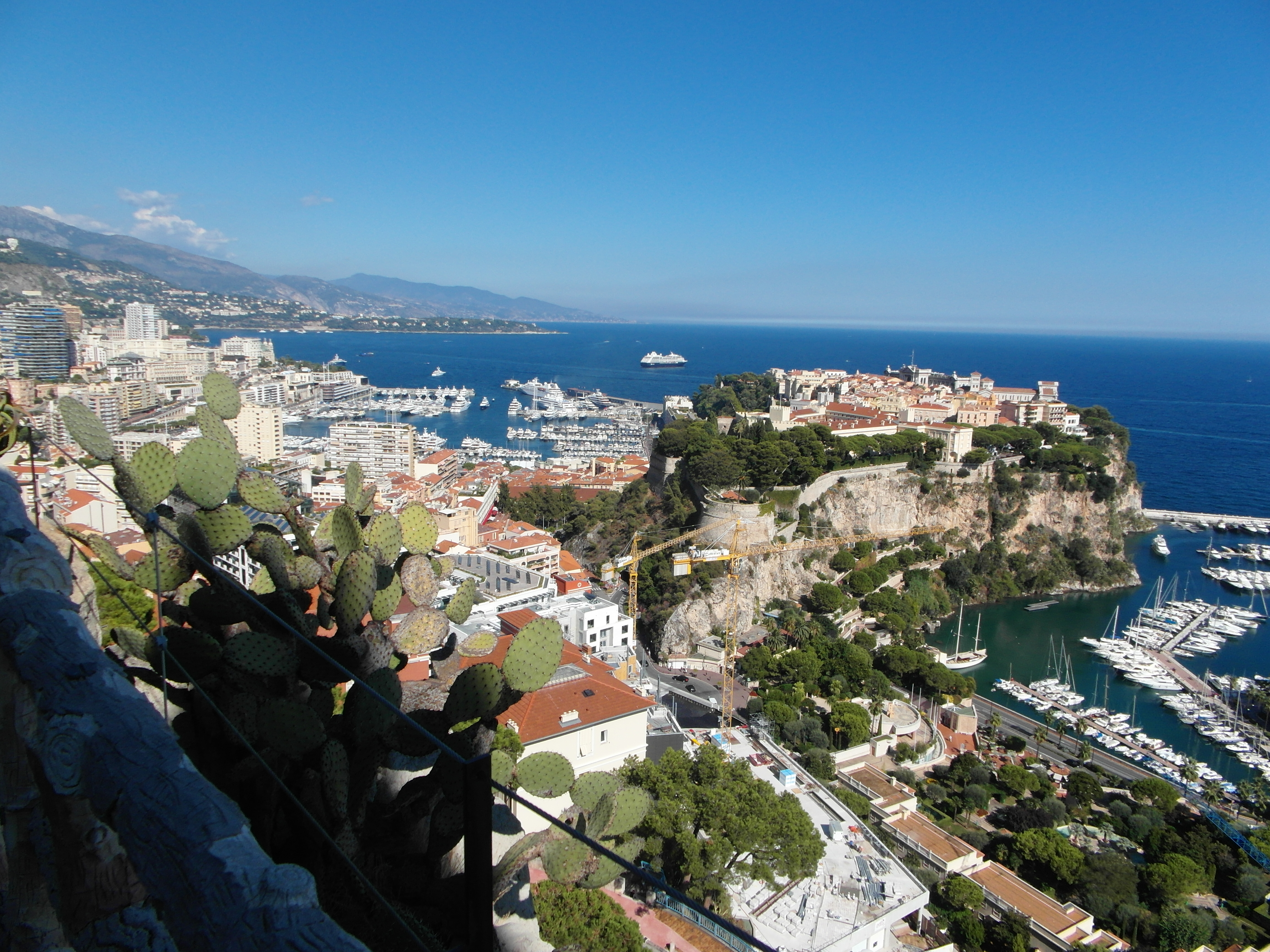
SAM_1618

View of Monaco from the Jardin Exotique (Exotic Garden)

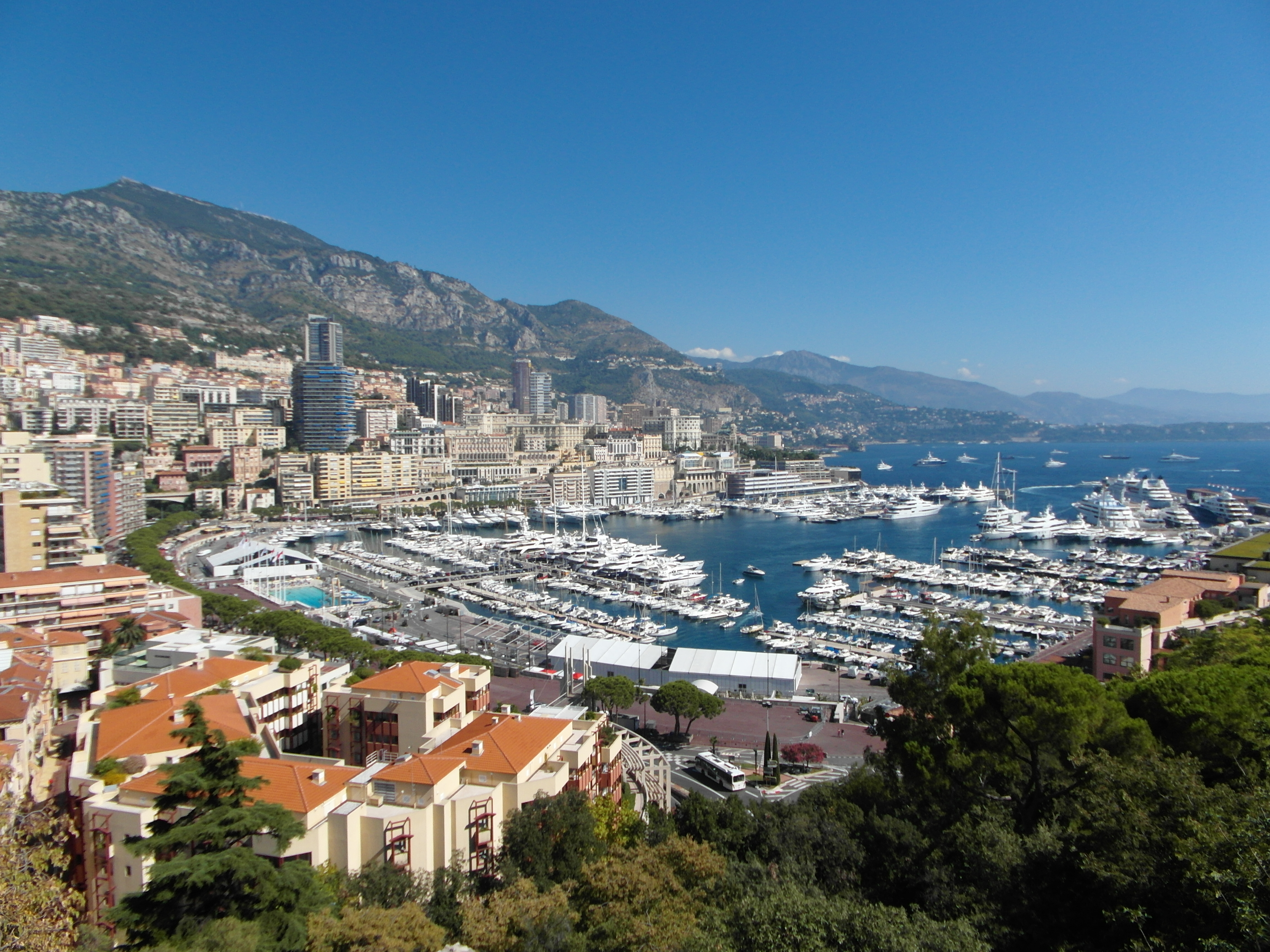
In addition to the extensive ferry schedule to Corsica and Sardinia, the port of Nice offers regularly scheduled day trips by boat from Nice to St. Tropez, Cannes and Monaco. The boat takes you there early in the morning and returns late in the afternoon, leaving you a full day of leisurely touring at your destination. Getting to Monaco along the coast on the no 100 bus (which runs very frequently) would have been a very scenic way to do it, taking the train would have been highly speedy, comfortable and efficient but lackluster, using a car would have been unnecessarily stressful, and finally taking the helicopter would have been extravagant and probably would have ruined me. So we decided to take the boat to Monaco and make an entrance through the Mediterranean sea. As the boat captain later humbly admitted on the loudspeaker system, we made the only intelligent choice.

SAM_1646

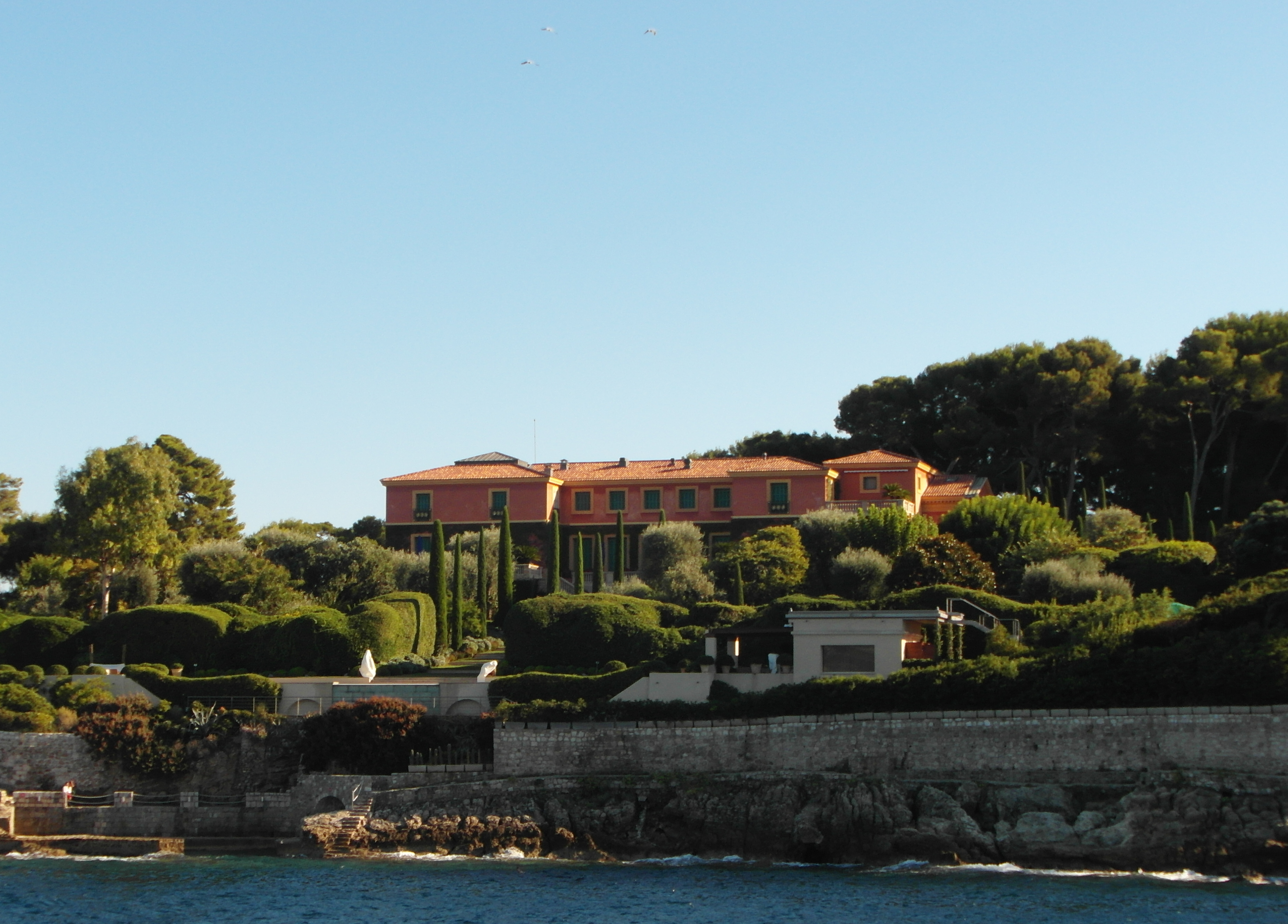
View of Givenchy’s summer villa

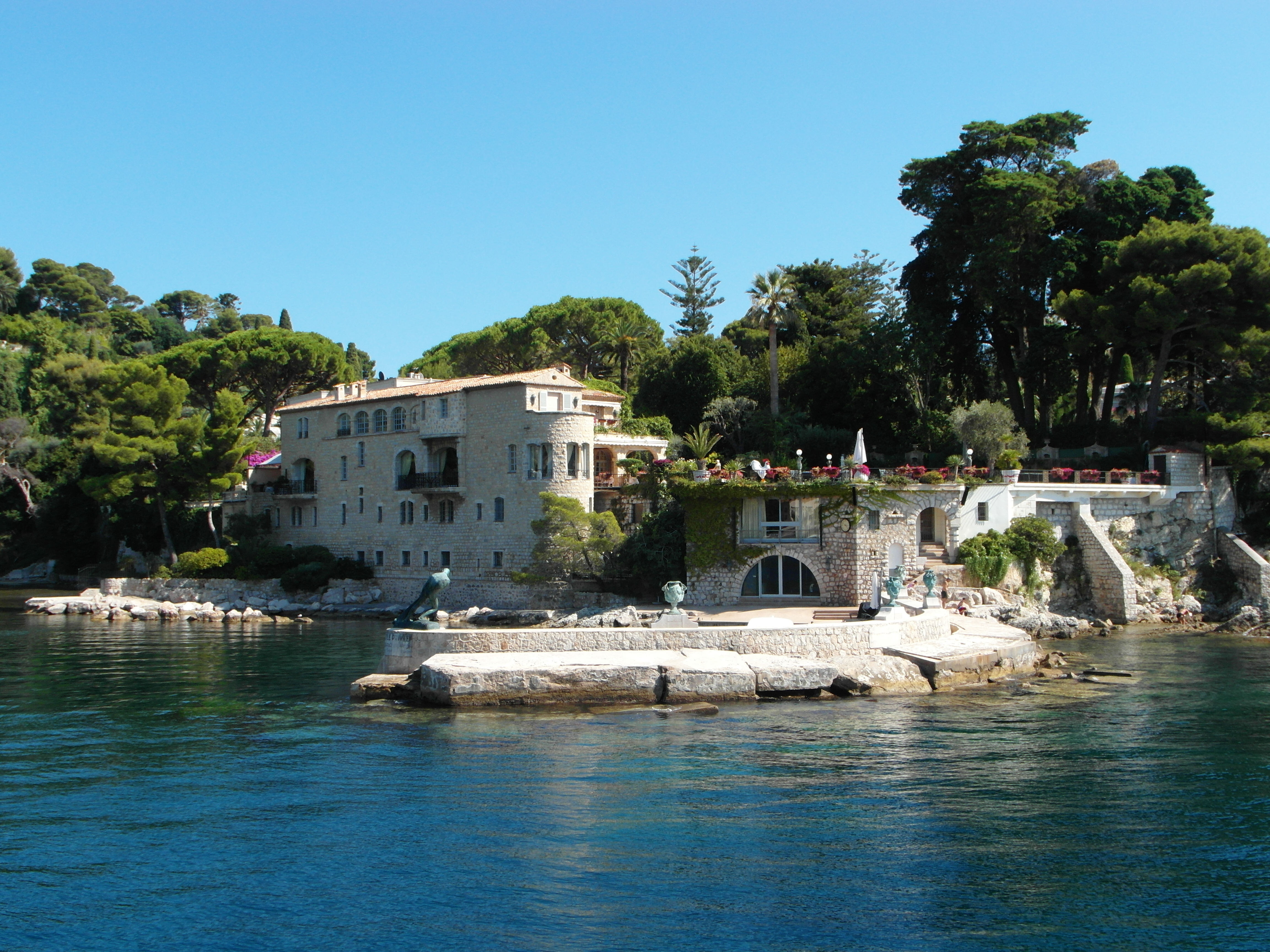
The boat trip takes only 45 minutes, and during virtually all that time, the boat hugs the shore and the captain points out noteworthy points of interest, which include a lot of summer villas of the rich and famous, such as Sean Connery, Paul Allen, Bill Gates, Givenchy, Bono, etc… It also includes other interesting sights, such as the nudist beaches, the Grand Hotel Cap Ferrat, the Hotel Cap Estel (referred to as the hotel of presidents, because you pretty much have to be the president of a country to stay there), and the list goes on and on.

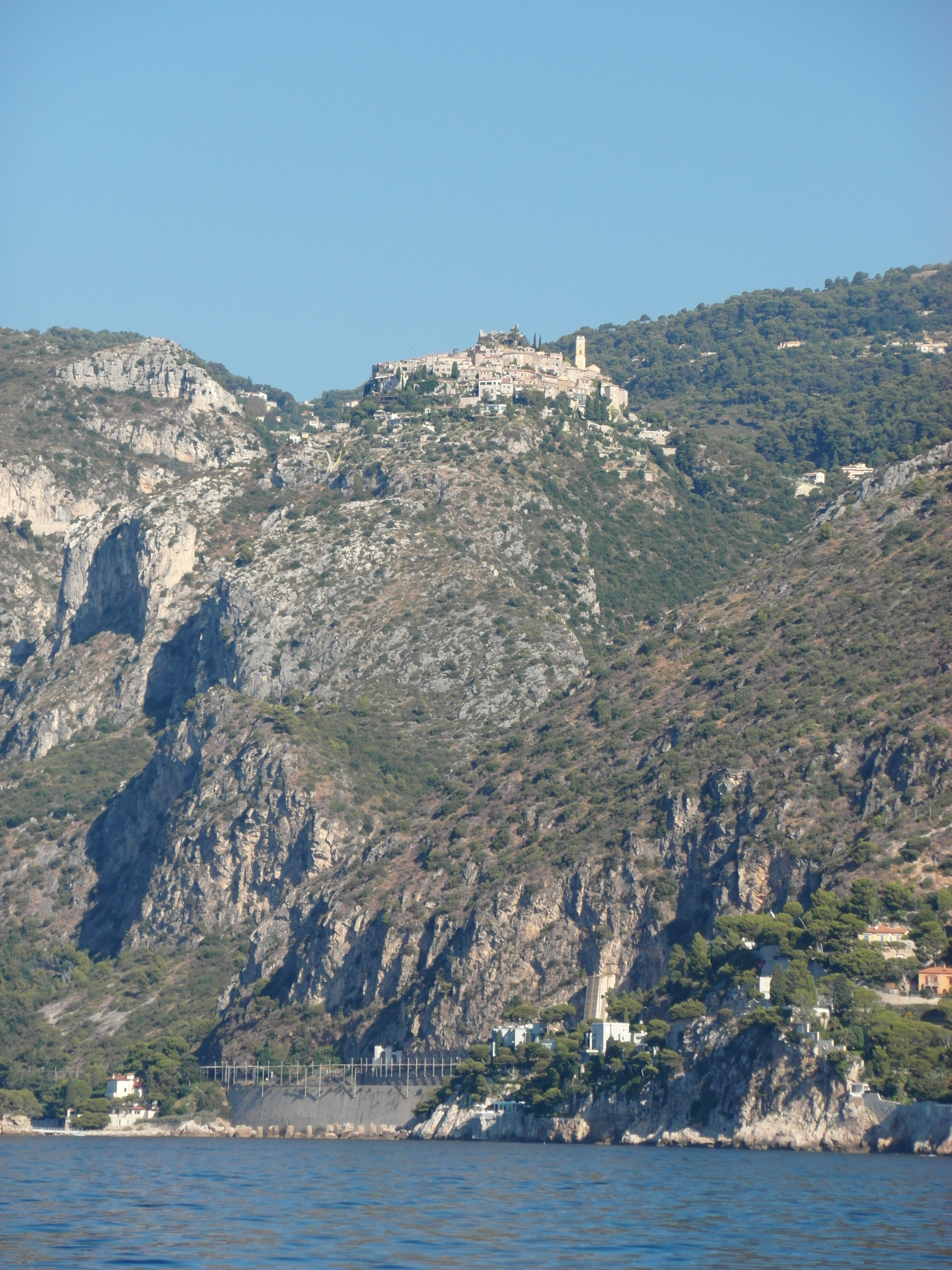
SAM_1460

The perched village of Eze viewed from the water

I had thought that I was simply buying a return boat ride to Monaco, but we ended up receiving comprehensive tours of the coastline as a bonus. This is so well organized that the points of interest on the return trip at the end of the day are totally different than in the morning, although along the very same coast.

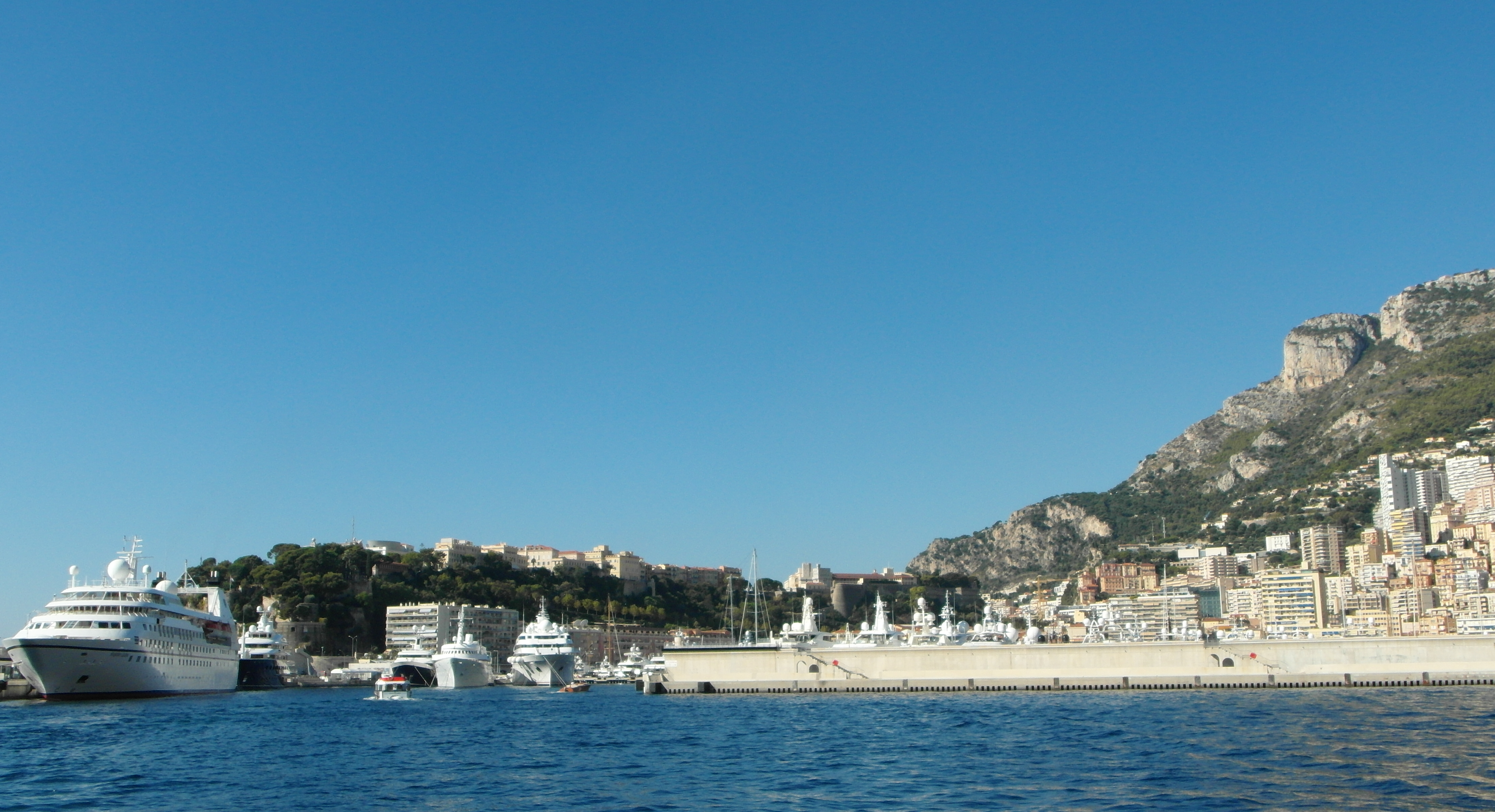
SAM_1498

entering the harbor of Monaco

Our arrival into Monaco provided us with splendid views of the country from the water. The first thing I learnt anew was that the country (principality) of Monaco is divided into five districts (towns): Monaco Ville also referred to as Le Rocher (The Rock), Monte Carlo, La Condamine (the port area), Larvotto (where the super rich live), and Fontvieille (the western area reclaimed from the sea during the past ten years).

SAM_1507

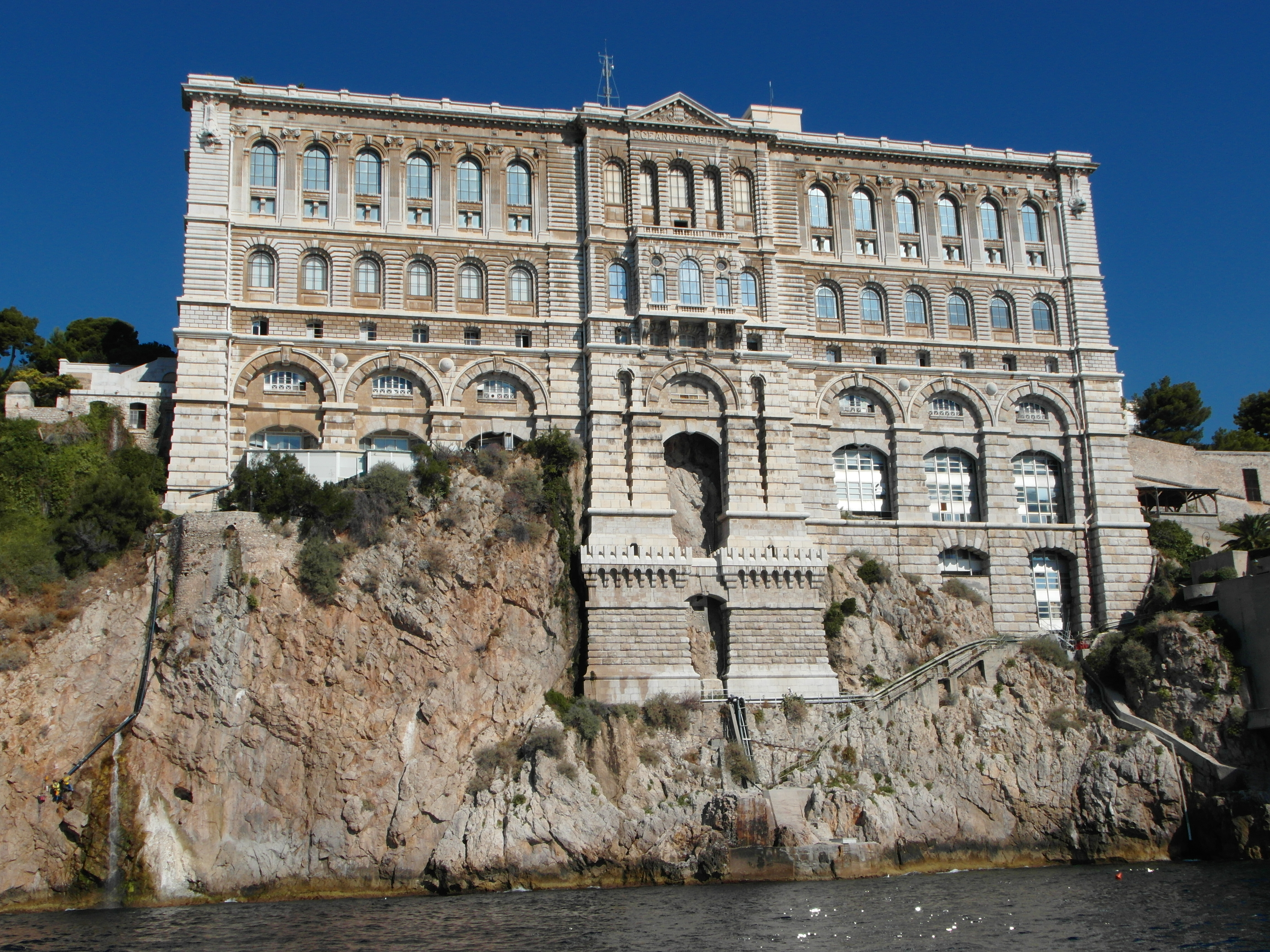
Musee Oceanographique de Monaco

Except for the world famous casino of Monte Carlo, most of the sights in Monaco are up the cliff in Monaco Ville. We had no idea how to get around the town when we landed, but it did not take us long to realize that walking up the cliff to Monaco Ville was not in the cards. Fortunately, a nearby bus stop provided us with all the information we needed to board the right bus, whose next stop was up the cliff at the Musee Oceanographique de Monaco, made famous by one of its previous long time directors, Jacques Cousteau.

SAM_1521

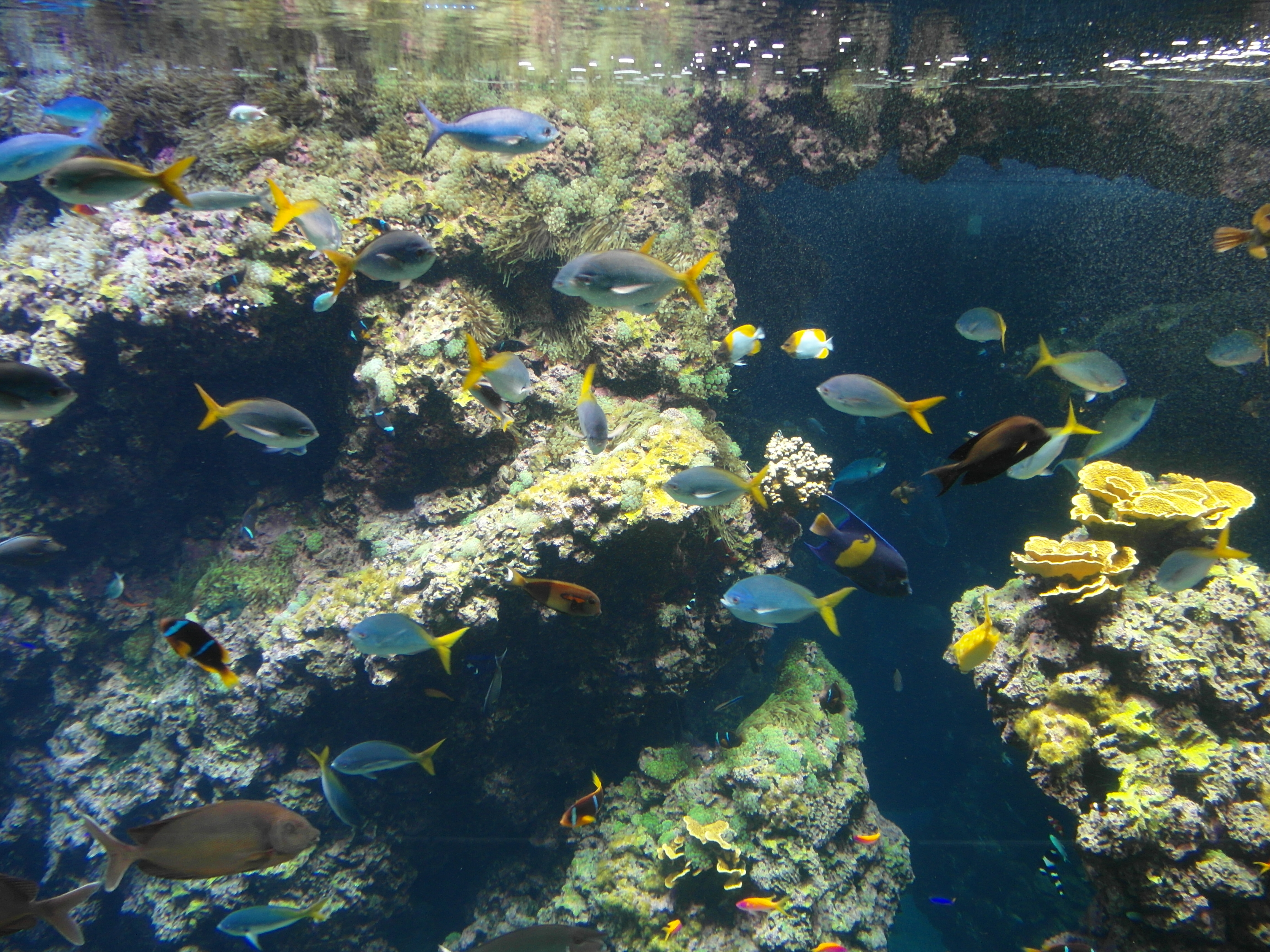
We could easily have spent the whole day in the museum, which has a huge amount of aquariums with very instructive presentations in several languages. I certainly am not aware of a better aquarium than this one in the world, and we felt a bit sorry that we could not give it all the time it deserved.

SAM_1542

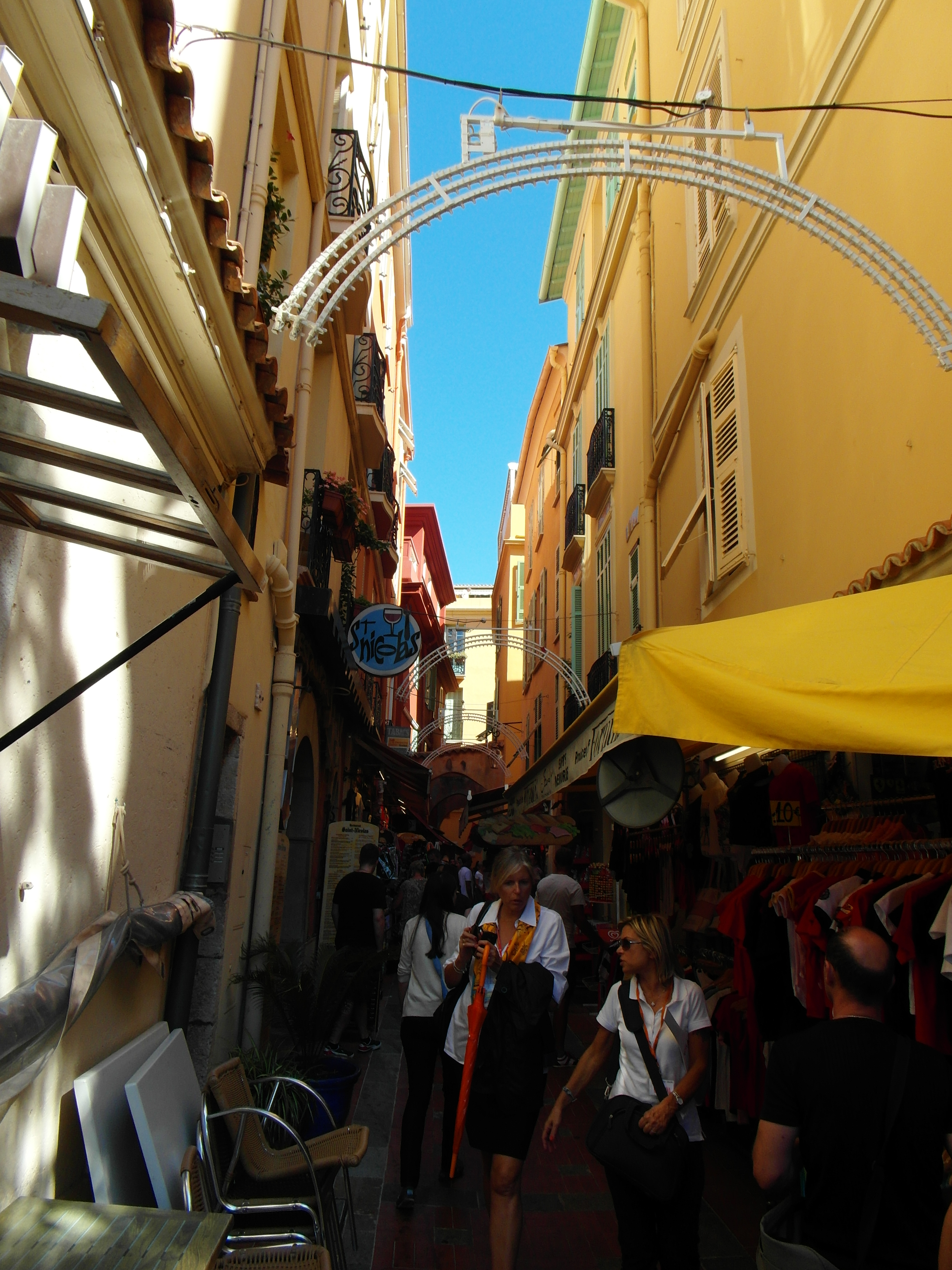
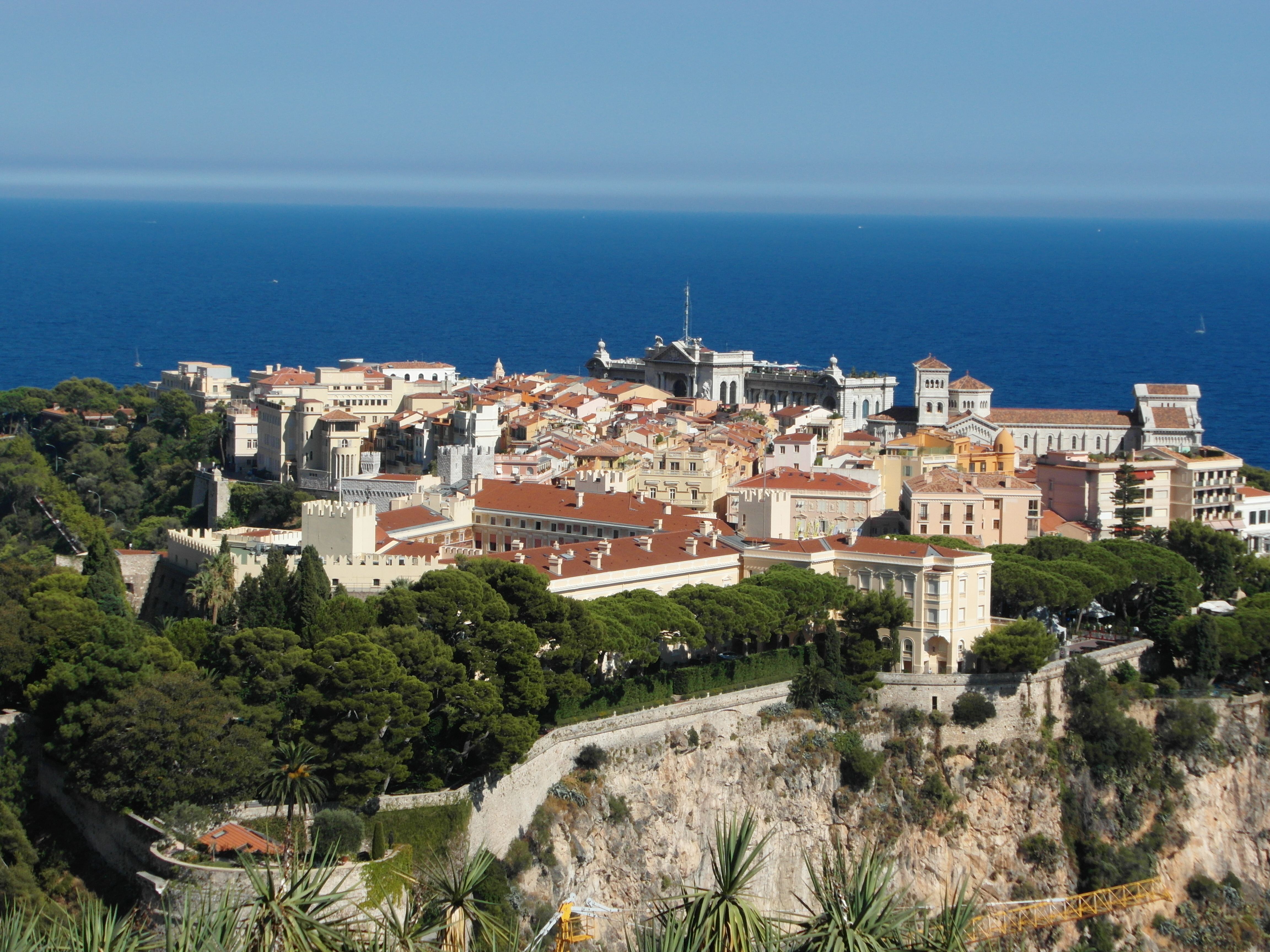
Street of the old town of Monaco Ville

We strolled through the very narrow streets of the old town of Monaco Ville, walking by the Cathedrale of Monaco (where Princess Grace was married), and inched our way towards the Palace.

SAM_1562

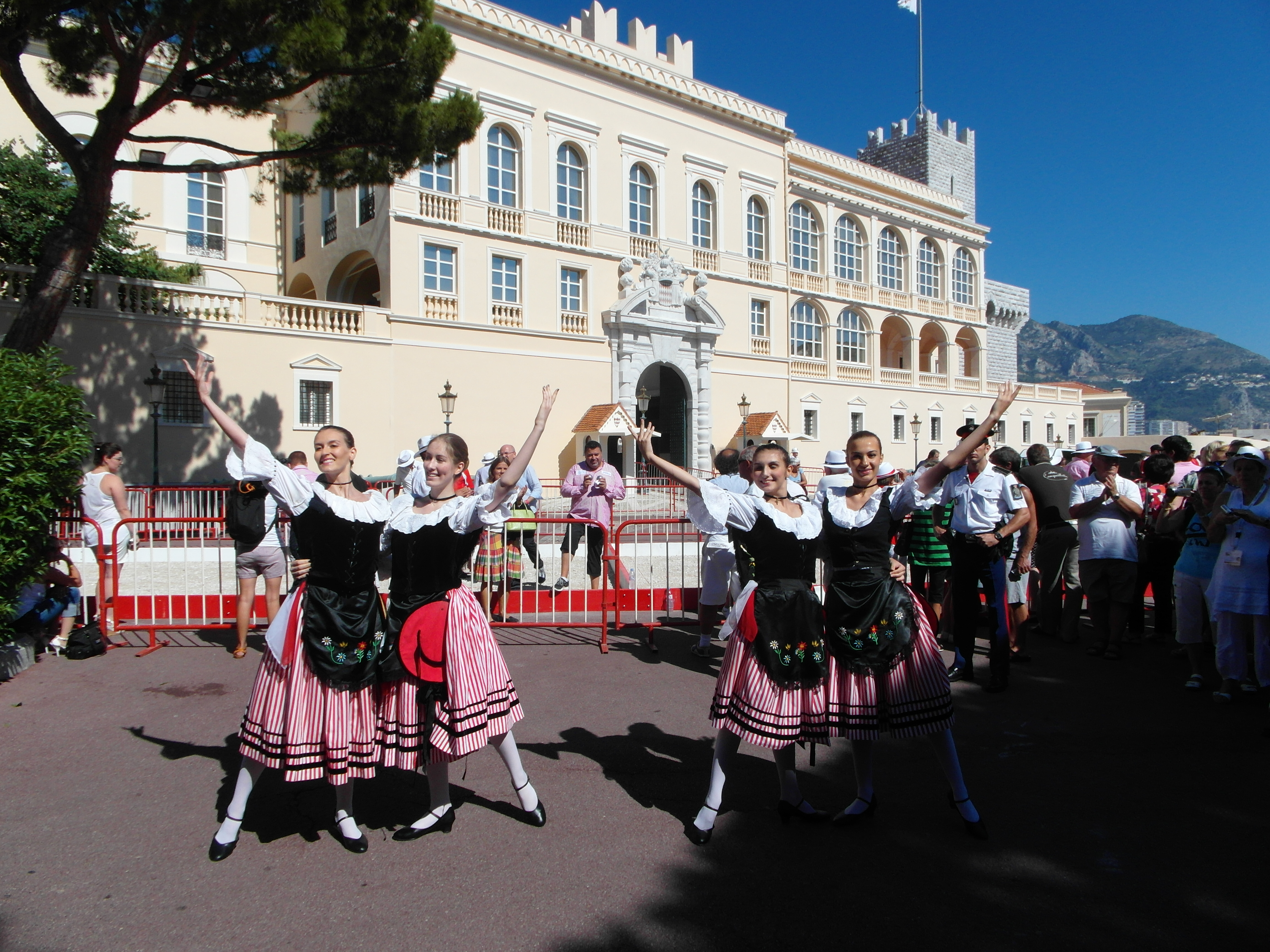
Dancers on Palace Square in Monaco

The Palace Square was abuzz with people and activity. The whole square had been taken over by the world championship of petanques. Competitive matches were in full swing on a dozen or so fields of petanques on the square. Dancers came to entertain the onlookers.

SAM_1569

Monaco

It was now time for lunch and we had opted for the Cafe de Paris at the Casino in Monte Carlo. Given the huge number of tourists, even the buses were full, so we took a taxi to Monte Carlo, enjoying some more phenomenal views of Monaco along the way.

SAM_1583

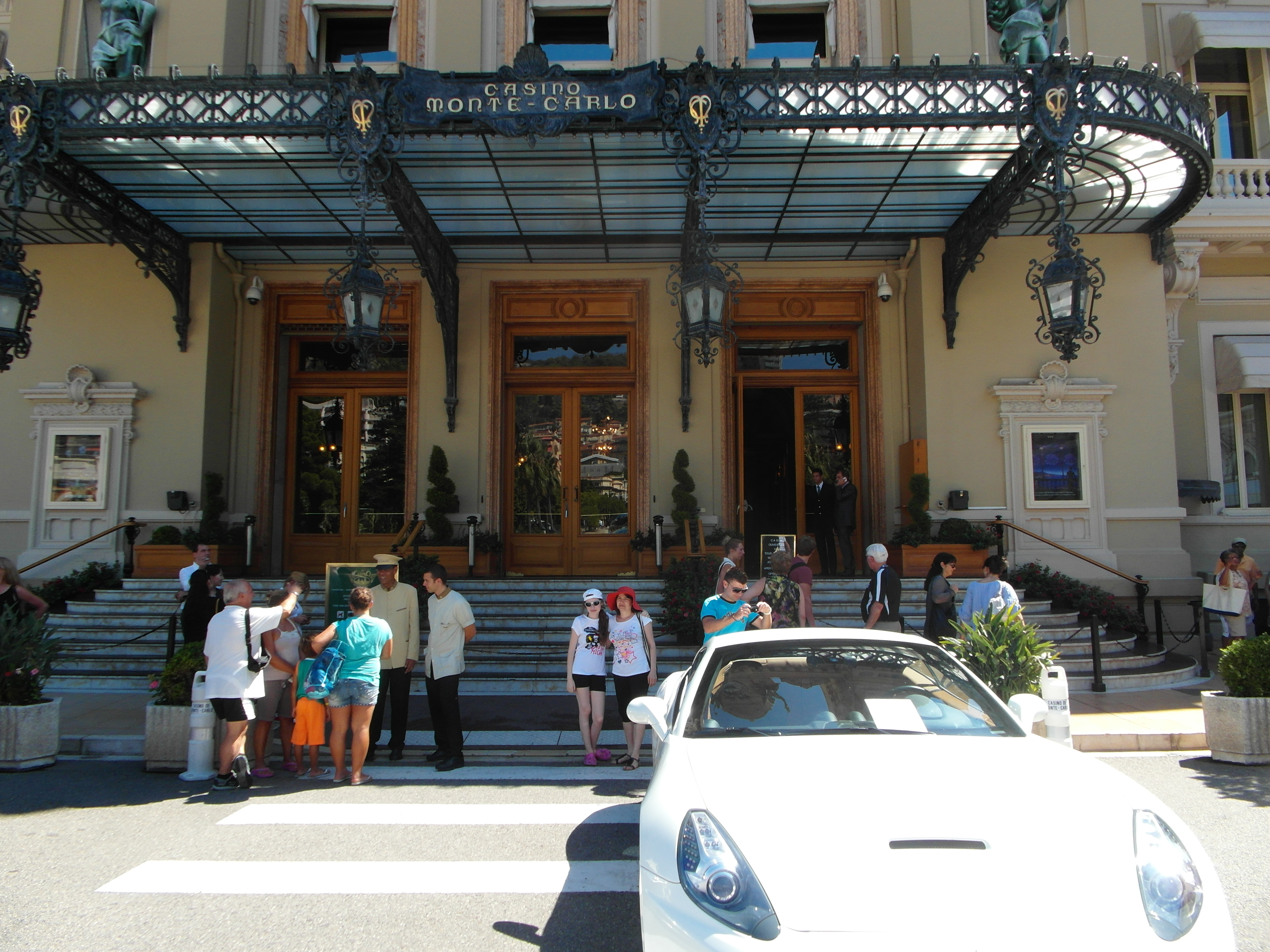
Main entrance of the Casino of Monte Carlo

We had an excellent meal at the Cafe de Paris, so good in fact that afterwards I swore that I would never again travel to places like France, Italy or Montreal, where I adore the food and end up having these fabulous meals which add inches to my waistline. In reality, I know that as soon as I lose that extra weight, I will be eager to do it all again! Today’s daube de boeuf a la provencale was just so exquisite!

After lunch, we decided to take the hop-on hop-off 11-stops open bus tour of Monaco. This gave us an opportunity to tour less frequented areas such as Larvotto, with its new National Museum (currently showing a Picasso exhibition) and the Monte Carlo Sporting Club (you’re nobody in Monaco if you don’t belong to that club!).

SAM_1613

View of Monaco Ville from the heights of the Exotic Garden of Monaco

We then headed up the cliff to the Jardin Exotique de Monaco (Exotic Garden), not so much for all of the marvelous plants but for the incredible views one gets from the scenic viewpoints inside the garden.

Unfortunately, it was then time to find our way back to the port for the boat ride back to Nice. Monaco has a number of public (meaning free) elevators to get up and down those cliffs and there was one right next to the Exotic Garden which we took to shorten our journey back to the port.

The world renowned Grand Prix de Monaco is I think the only time traffic really moves in Monaco. The large number of cars and buses mean that traffic is permanently in crawl mode. The number of tourists, particularly up in Monaco Ville and near the Casino of Monte Carlo, is irritating. Monaco is very clean, very luxurious, very safe (we saw several intersections during the day where policemen were watching closely every car that drove by and street cameras are everywhere). We enjoyed visiting Monaco, but we were very happy to leave it for Nice at the end of the day!

Luncheon inspired by Tender is the Night

Hotel_du_Cap-Eden-Roc_173382

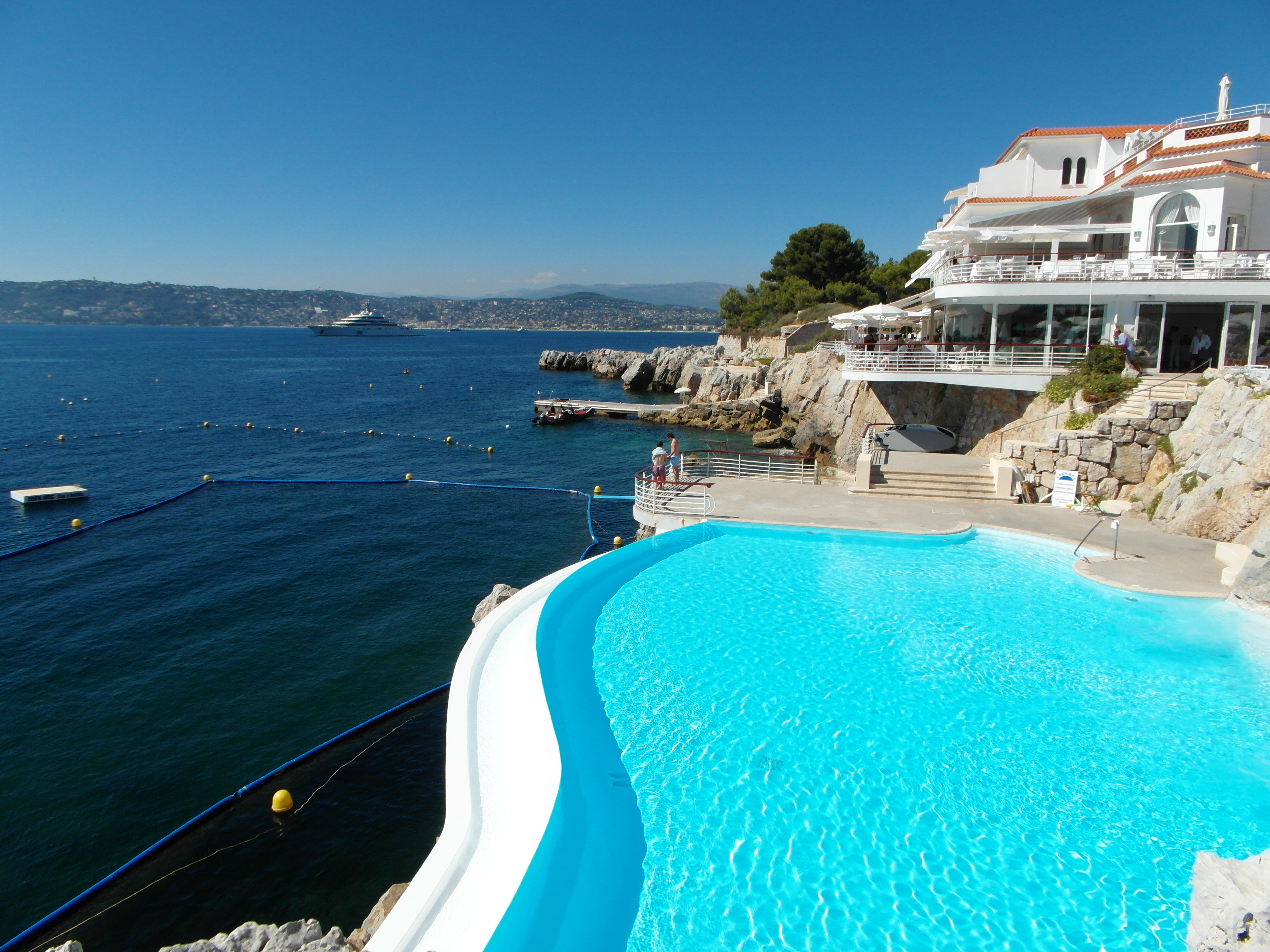
Hotel du Cap-Eden-Roc in Cap d’Antibes

F. Scott Fitzgerald was my favorite author in high school. His novels, as well as his short stories, took me to romantic places and introduced me to fascinating characters. I lived vicariously through Fitzgerald and knew that I absolutely wanted to visit the hotel described in the first line of my favorite Fitzgerald novel, Tender is the Night. In fact, I even planned on naming my first daughter after the main character in that novel, the alluring but complex Nicole Diver. Years later when our first daughter was born, I had to give up on the “Nicole” fantasy because we already had a close relative with that name. But I remained faithful to my first dream to make a pilgrimage to the hotel where the story unfolds …“On the pleasant shore of the French Riviera, about halfway between Marseilles and the Italian border, stands a large, proud, rose-colored hotel.”

edenroc-resto-vue

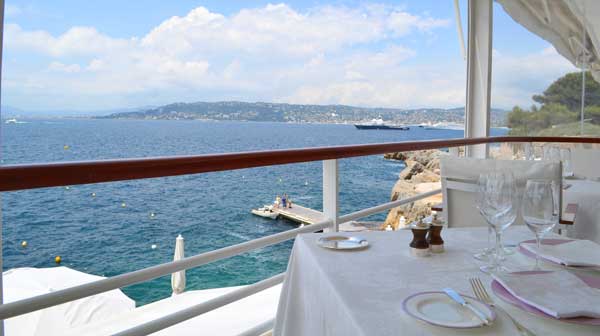
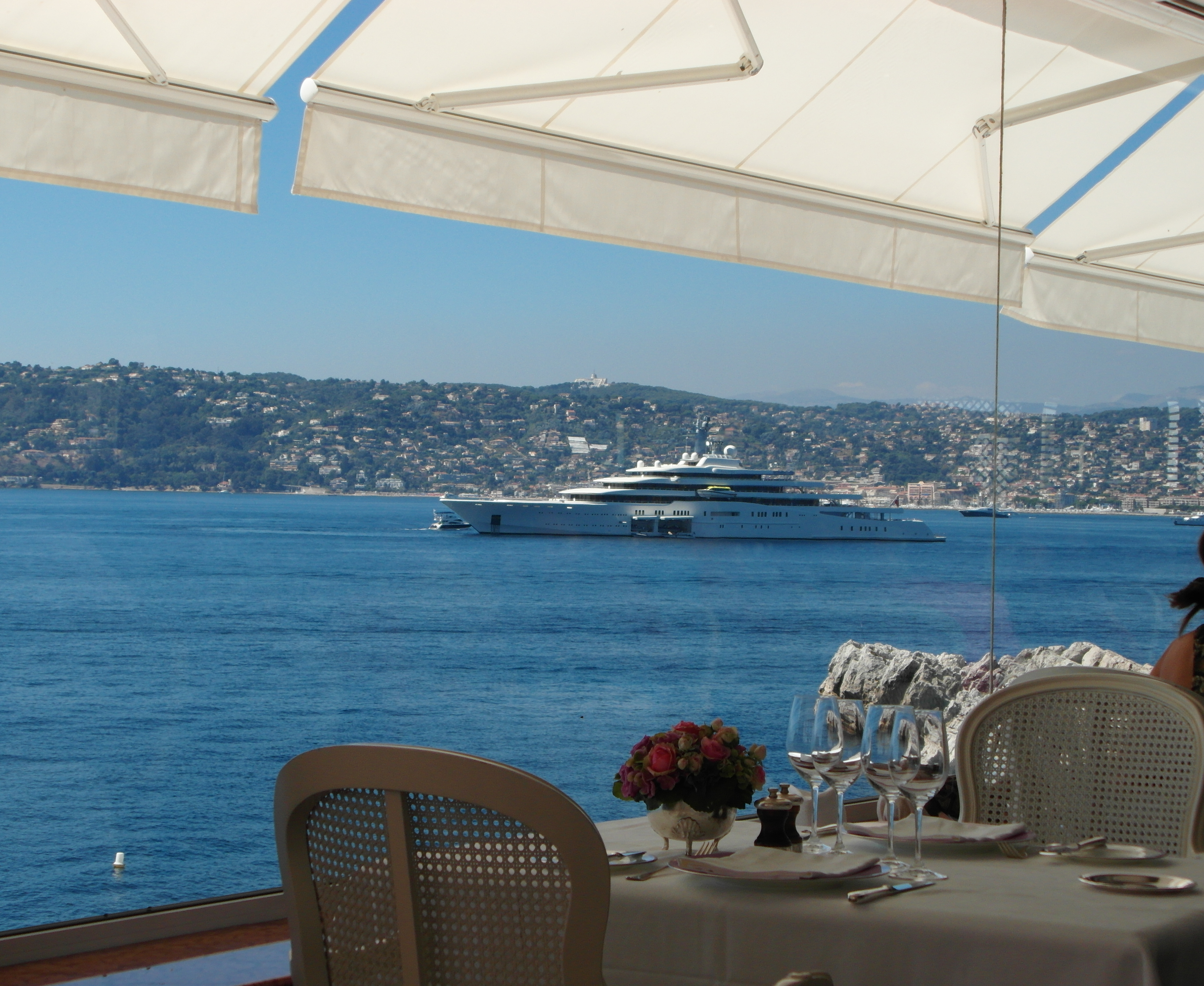
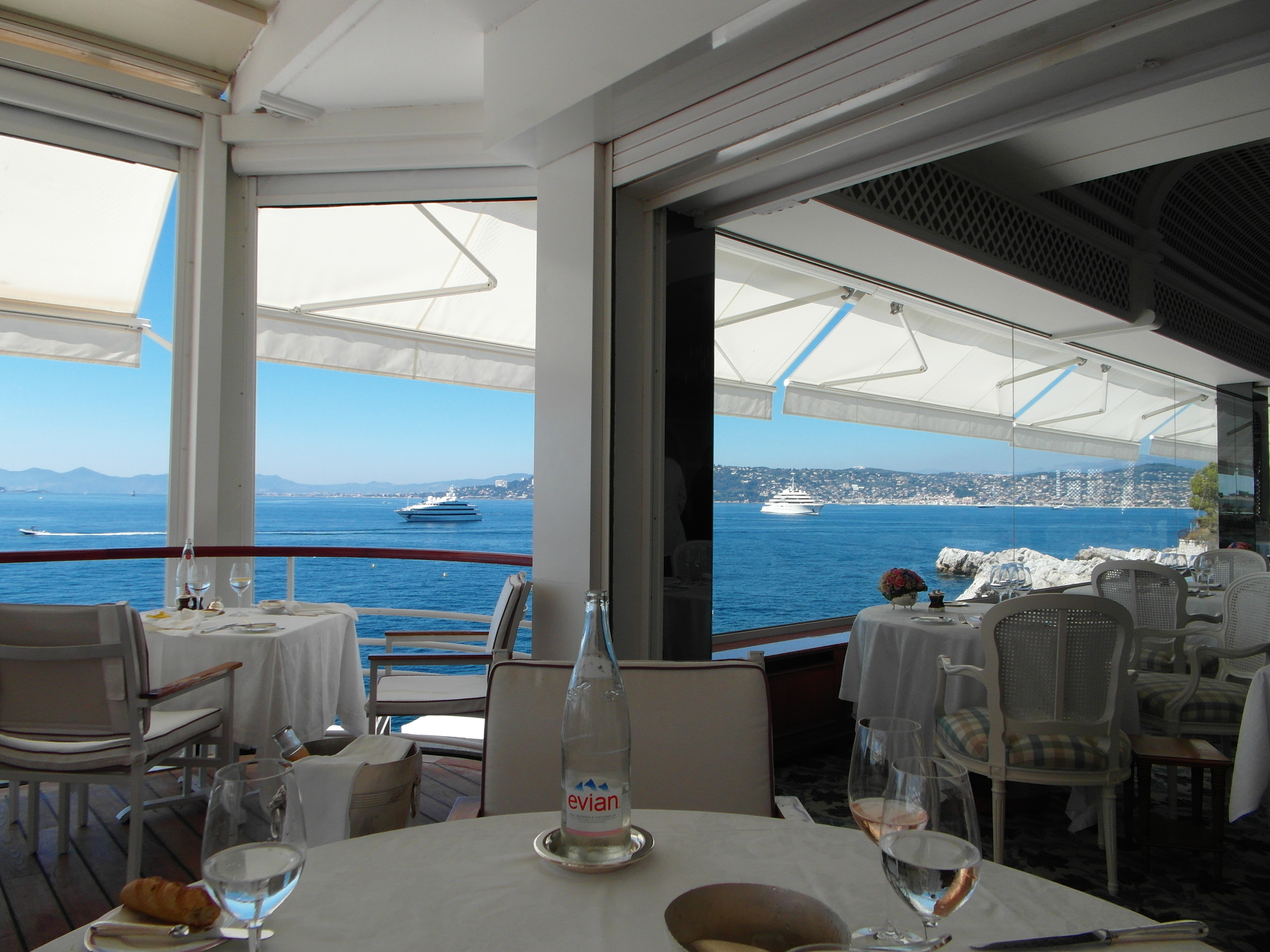
View from restaurant of the Hotel du Cap-Eden-Roc in Cap d’Antibes

The Hotel du Cap-Eden-Roc that inspired Fitzgerald’s “Hotel des Étrangers“ isn’t “rose-colored” any more, but it still is a magnet for the rich, famous and powerful – and by “rich”, I mean “Rich!” So once again, we decided to sample the good life with a luncheon at the hotel’s restaurant, the Eden-Roc, which the hotel’s splendid brochure describes as “”famed for its gastronomic cuisine”. Ambiance the Eden-Roc has in spades. The restaurant is sublimely elegant. The blue and white décor, with a touch of purple and pink, is the perfect backdrop for the Mediterranean sea which is really the star player in the view as it is visible for as far as the eye can see. Peppered with fabulous 200+ foot yachts along with a variety of other smaller sailing vessels and enhanced with a backdrop of the curvilinear coastline of Cannes and the Maritime Alpes rising in the background, the view is quite simply spectacular. The service is also first-class – a small army of servers were at our beck and call, sensing our needs before we even realized we had them, whisking away a plate or refilling a glass or offering to carry a platter from the buffet table to our table, and the sommelier impressed us with his expertise, selecting the perfect wines to accompany both our food and dessert. Awesome indeed, just like the view.

As over-the-top as the quality of the décor, service and view were, I regret to say that the food – the actual cuisine – was lacking in comparison. Don’t get me wrong — our meal was delicious and highly satisfying, but given the other three components of the meal, and the over-the-top price for each item on the extensive à la carte menu, we ended our meal concluding that the Chef wasn’t quite up to snuff and that we had paid princely for the name and the view. Still, the meal was exquisitely memorable and I’d like to share what we ate.

photo 427

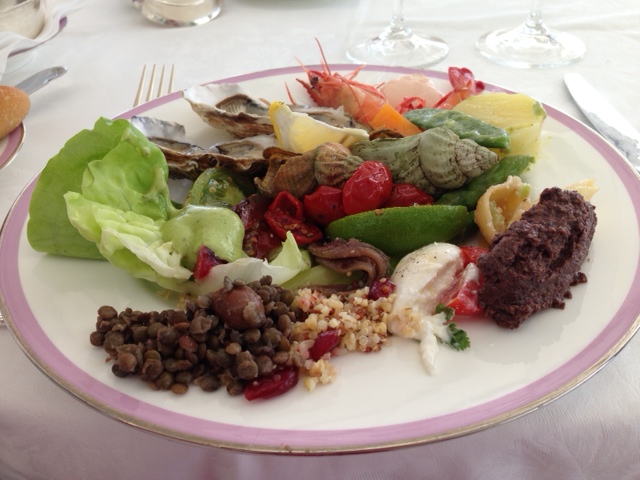
Platter from the Buffet Eden-Roc

We began with the restaurant’s formidable Buffet Eden-Roc comprised of mainly traditional classics prepared from the finest of the finest ingredients and presented on the buffet table to please the eye as much as to please the palette. Among the many selections was a superb gazpacho, a very thinly sliced prosciutto and an unctuous buratta cheese laced with olive oil and herbs — a nod to the Italian neighbors -, gigantesque shrimp, fresh local oysters, the largest escargots I’ve ever seen and the first time I’ve seen them cooked in their shells (but I found them a bit rubbery and tasteless), an impressive selection of cured sausages and meats, a variety of salads from lentil to pasta to quinoa, an assortment of cold steamed vegetables from asparagus to French haricots, heirloom tomato salad and bowls of assorted greens, tapenades, sauce bowls of mayonnaise in pink (flavored with tomato), green (flavored with herbs) and traditional white, assorted Niçoise accompaniments such as black olives and sun dried tomatoes, and more to be sure. After filling our platters and consuming them with a delightfully refreshing Cotes de Provence 2012 Chateau de Selle Domaine Ott Rosé, you might think we would be satiated … but you would be wrong.

SAM_1373

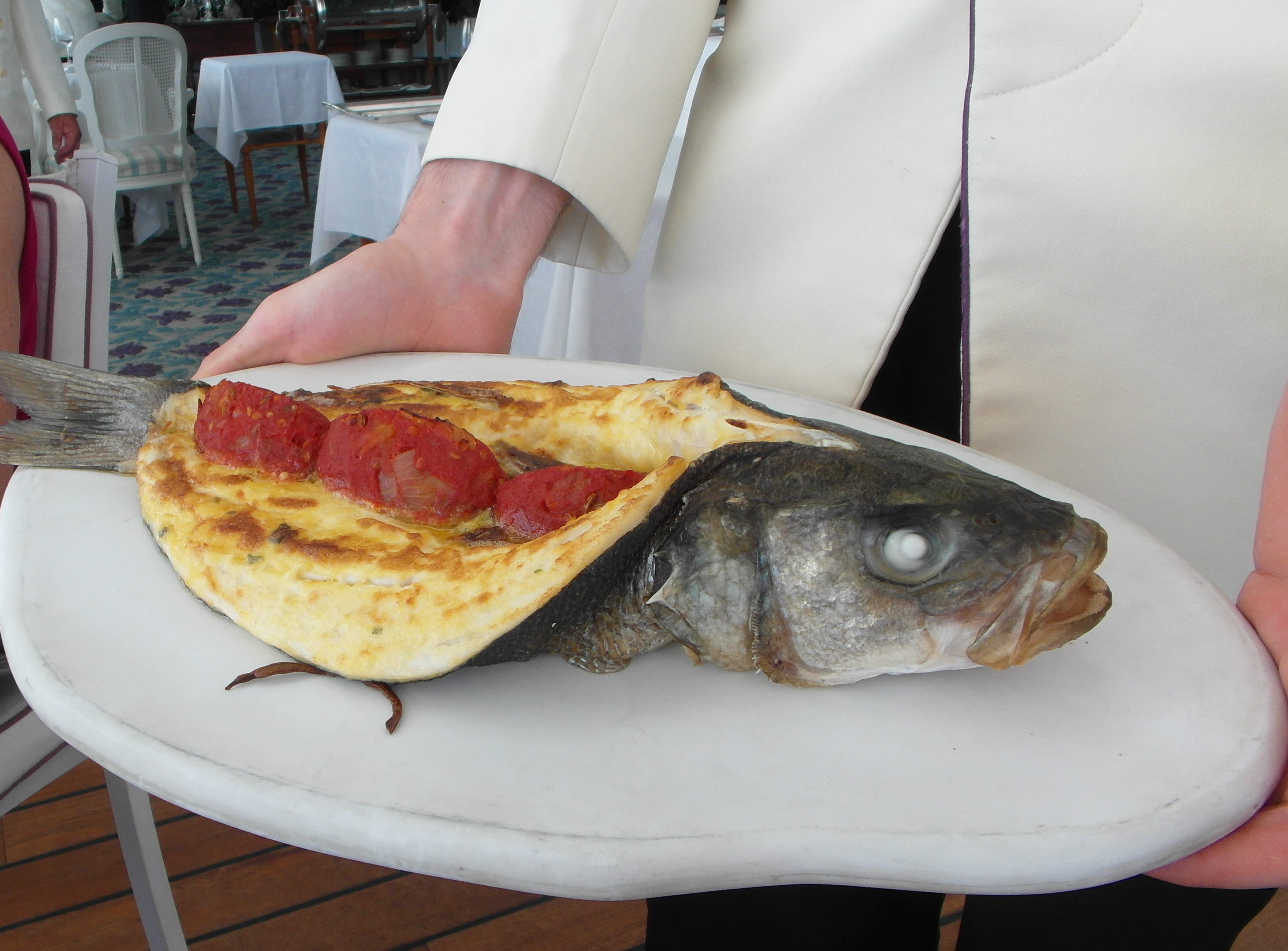
Sea bream grilled “en portefeuille” with mousseline and tomates a la provencale

We moved on to the chef’s specialty of Sea Bream grilled “en portefeuille” (literally “in wallet”), an elegant way to signify that the fish is de-boned and grilled open face with an airy light mousseline and tomatoes à la Provencale.

SAM_1374

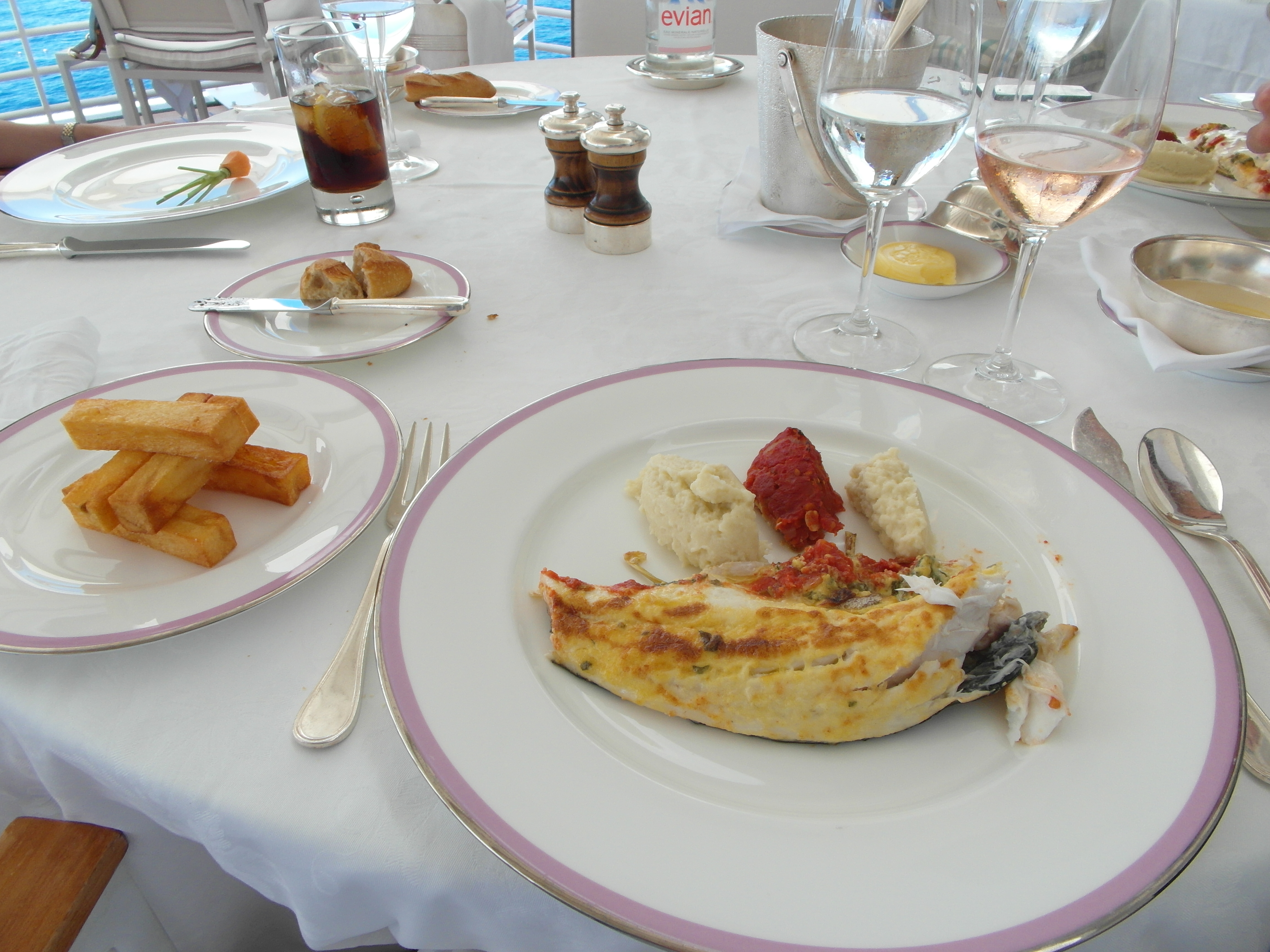
Sea bream with pommes Pont-Neuf

The fish was served with potato purée but that was not enough for Denis. Monsieur also ordered the Eden-Roc’s Pommes Pont-Neuf, aka thick rectangle blocks of crispy flash-fried potatoes that melt in your mouth. The superbly tender and delicious sea bream simply disappeared off our plates … and all that rested was a bit of purée.

photo 429

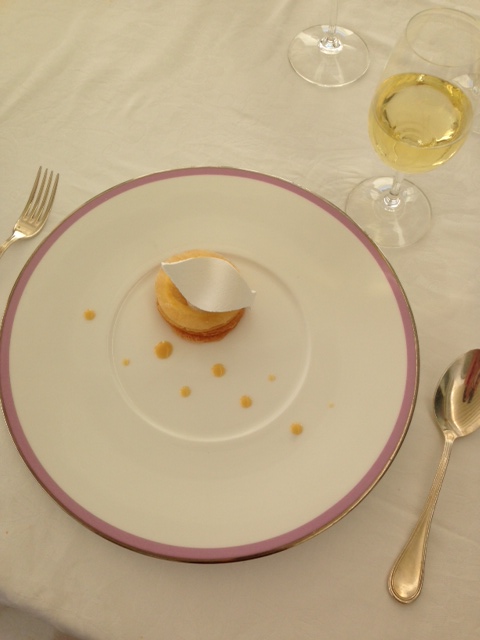
Dessert Le Citron accompanied by Moscato d’Asti

photo 426

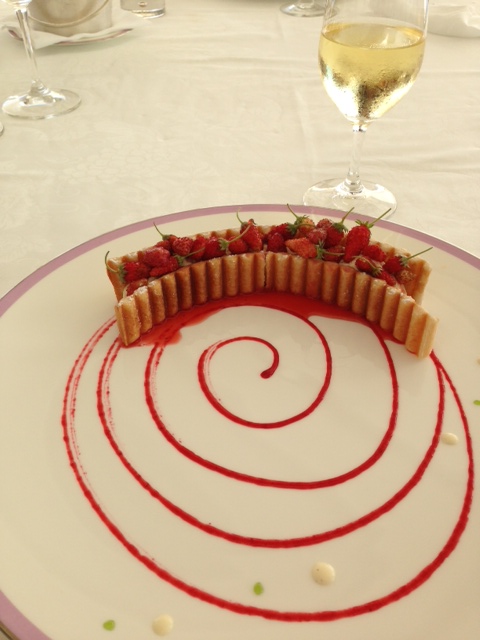
Dessert Millefeuille with “fraises des bois”

The dessert trolley arrived with a magnificent spread of classic French patisserie, but we decided to venture away from the “known” which we love and instead to sample the pastry chef’s creativity. We ordered Le citron, described as “lemon crunchy, tangy and iced ‘cloud’ grown in Menton”, and a Millefeuille, “revisited wild strawberries millefeuille with mascarpone cream”. When we inquired about a digestif the sommelier brilliantly suggested an Italian Moscato d’Asti Bricco Squaglia La Spinetta 2011 which he described as “fresh, light, with little acidity, and lightly sparkling”. It was a superb choice but the creative “unknown” pastries were lacking in flavor and the mignardises were unexciting. The Moscato saved the day for the dessert course.

The philosophy of the Eden-Roc Restaurant is utterly on point …
“De tous les sens, il n’y en a de plus délicieux, ni de plus nécessaire à la vie que celui du gout.” (“Of all the senses, there is not one more delicious, or more necessary to life than the one of taste.”) To truly abide by that philosophy, the Chef and his team must improve their mastery of the art of French cooking so that the flavors and textures create a feeling of heavenly satisfaction in the mouth, and perhaps they should offer the traditional amuse-bouches, as is the tendency of great French restaurants,’ to awaken and excite the palate before the “meal” is served. Not too surprisingly, Michelin gives the Eden-Roc Restaurant its top rating for service and ambience — five knives and forks in “red” for ultimate “ambiance” … but no star for the cuisine.

Still, we had a glorious meal and afternoon, and experienced another masterful and memorable French luncheon. Plus, I’ve finally achieved one of my youthful dreams … I visited the Hotel that inspired Tender is the Night and I walked in the footsteps of F. Scott Fitzgerald.

Antibes, Cap d’Antibes, Juan Les Pins, France ~ In memory of F. Scott Fitzgerald

SAM_1377

A mega yacht outside the Hotel Cap Eden Roc restaurant in Cap d’Antibes

Having substantially recovered from my somewhat stressful first experience with the electric car sharing service, Auto Bleue, we elected to try it again today for our trip to the Cap d’Antibes peninsula, about 15 miles southwest of Nice. That is the area made famous by F. Scott Fitzgerald, which explains why we have lunch reserved at the Hotel Cap Eden Roc of Gerald and Sara Murphy fame (see our posting of August 2nd 2013) . The peninsula also includes Antibes, where we plan to visit the Picasso museum, and Juan Les Pins along the coast, where F. Scott Fitzgerald rented a villa for a couple of years, Villa Picolette (currently up for sale at an asking price of 27.5 million euros, or about US$33 million). Juan Les Pins is also known for Rudolf Valentino and Charlie Chaplin who used to party there in the good old days, as well as for the King of Saudi Arabia, who owns a large estate there.

SAM_1119

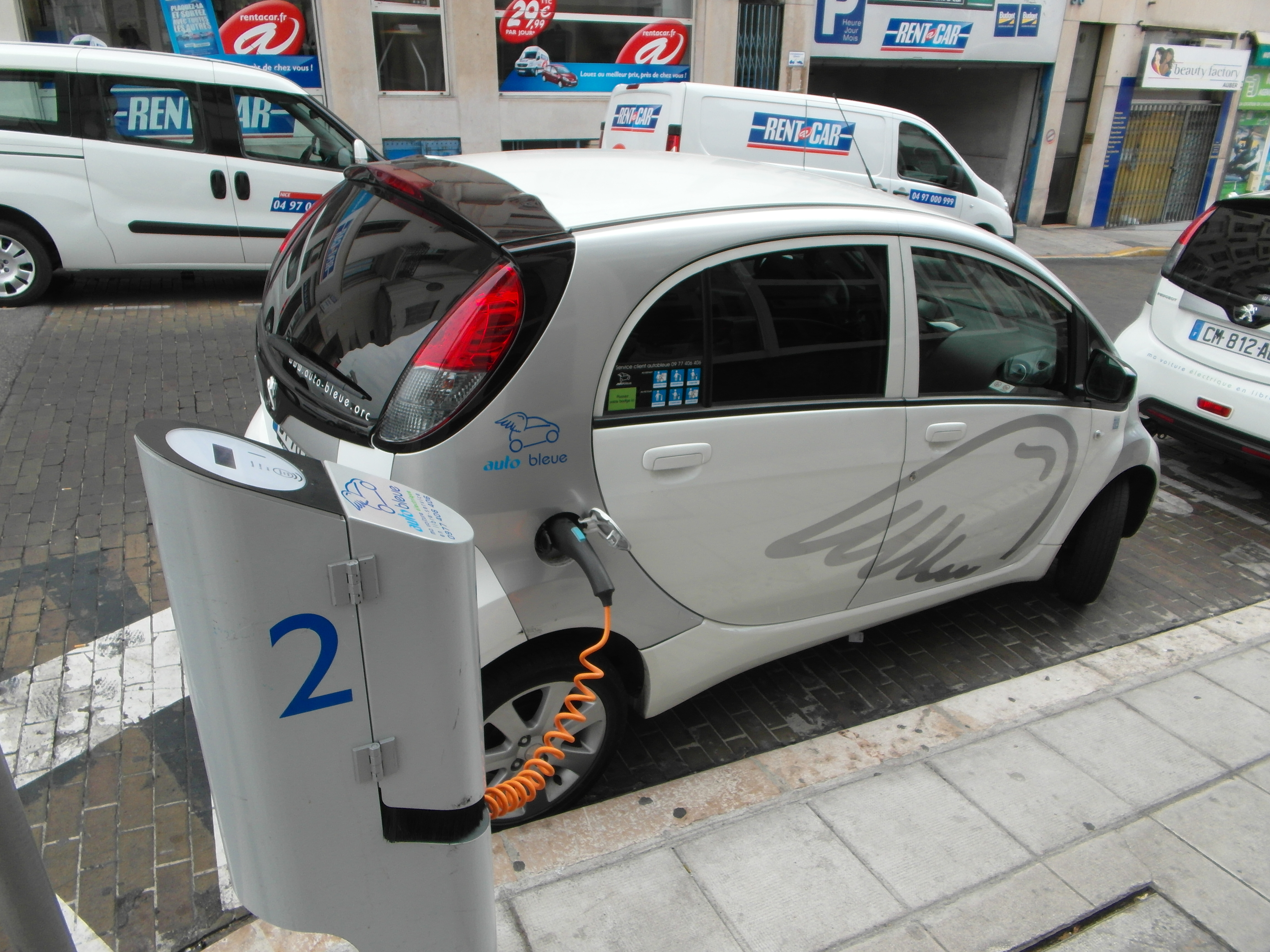
Auto Bleue Peugeot IOn electric car

The Auto Bleue Peugeot IOn electric car looks minuscule from the outside, but, I assure you, once you are on the road, you feel on an equal footing with the other seemingly minuscule cars on the road. It is only when you pull up at the valet entrance to the Hotel Cap Eden Roc behind a lamborghini that you feel your car does not quite measure up!

The electric car has a 100km (about 60 miles) range so we must be aware of the distances driven, although large displays on the dashboard make sure one knows the remaining range. We are afraid to put the air conditioning on in the car since we found out that it runs down the battery and reduces our range; on the positive side, however, having the windows open is not really an issue since the weather outside is picture perfect. Another day of a cloudless azur blue sky with a temperature between 75 and 80 degrees.

SAM_1354

View of Cannes from the beach in Juan Les Pins

Our first stop is Juan Les Pins, just west of Cap d’Antibes. The town is a bit out of the way of the main roads and as a result is pretty much a self contained beach resort with a sand beach (vs a pebbles beach as in Nice) and all the services to cater to beach vacationers. There seemed to be lots of restaurants along the beach as well as in town, and dozens of shops and boutiques catering not only to French but also to foreign tourists.

SAM_1356

Our Auto Bleue electric car on the beachfront in Juan Les Pins

If one did not wish to travel to other locations on the French Riviera, and merely wanted an excellent French Riviera beach resort, Juan Les PIns would nicely fit the bill, much better than Cannes could. Rick Steves’ characterization of Cannes as “superficial” is so much on the mark.

SAM_1395

Hotel Restaurant Cap Eden Roc in Cap d’Antibes

We drove along the shoreline to the Hotel Cap Eden Roc restaurant situated at the tip of the Cap d’Antibes peninsula. For some reason, I remembered the hotel as pink-washed. In fact, neither the main hotel building nor the restaurant building were pink-washed, they were more like pale yellow-washed.

There were a couple of mega yachts anchored just off the restaurant, providing an added touch (as if it needed it!) of opulence to this retreat of the super rich.

SAM_1366

Restaurant of the Hotel Cap Eden Roc in Cap d’Antibes

We sat down to a decadent two and a half hour lunch, which we thoroughly enjoyed as we admired the superb views around us.

SAM_1399

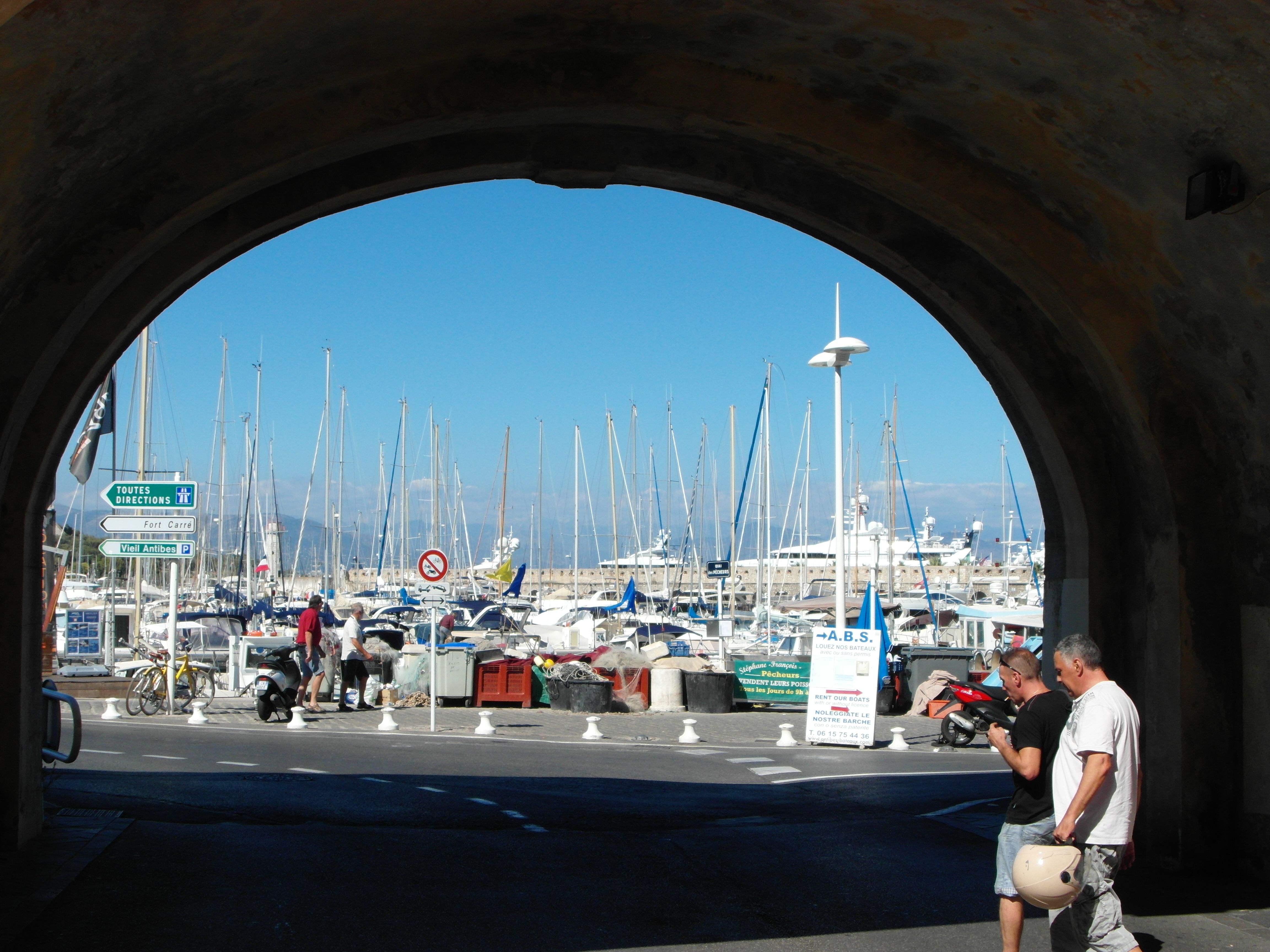
Port Vauban marina right outside the walls of old Antibes

We then drove up to Antibes, the old part of Antibes, and found a parking spot in Port Vauban, right outside the walls of the old town. Port Vauban is the largest yacht marina in Europe (possibly the world?) and includes the well-known Quai des Milliardaires (Pier of the Billionnaires), where the mega yachts are docked.

SAM_1422

old Antibes

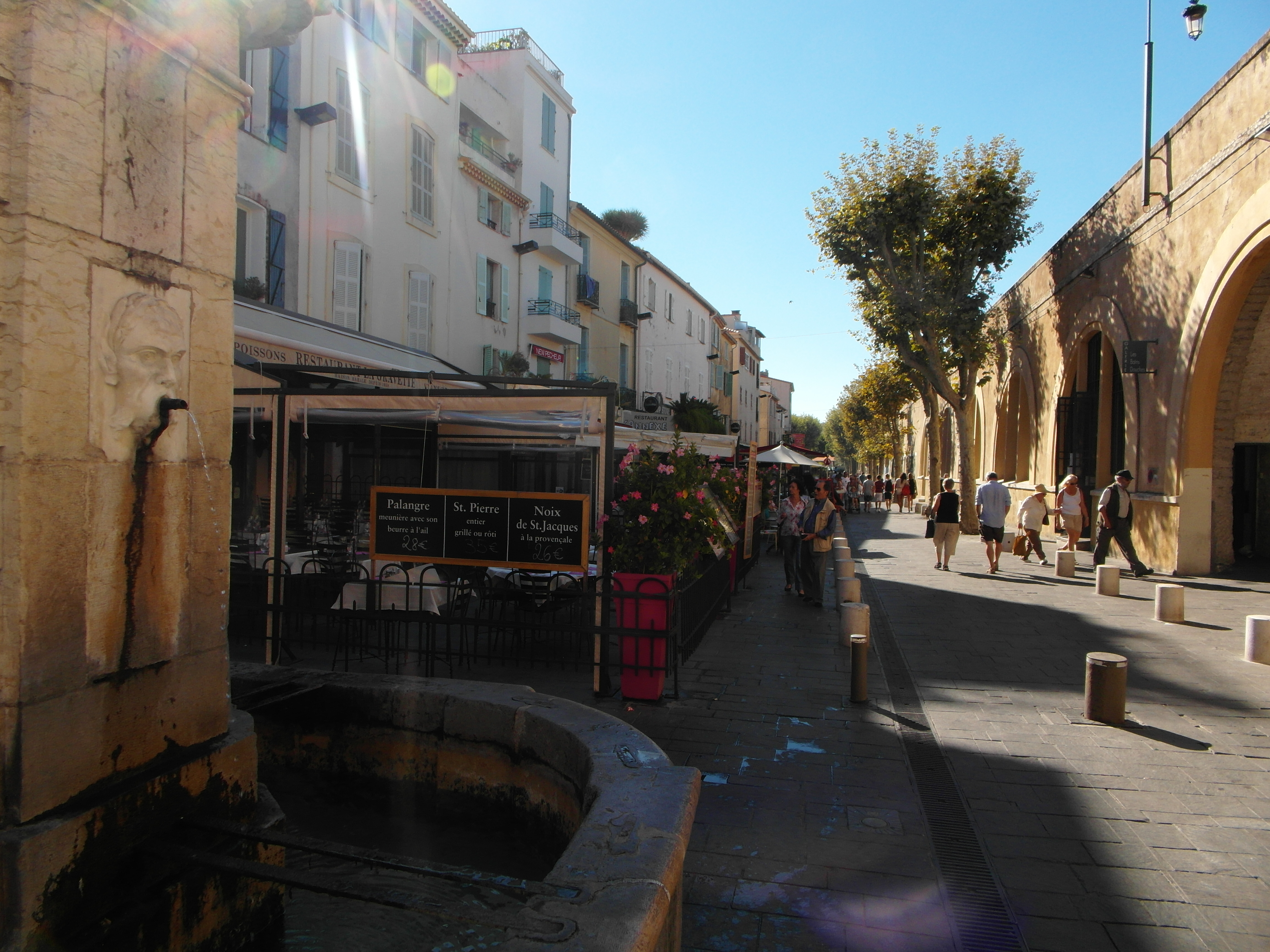
We walked the old town of Antibes, which seemed quite attractive with lots of cafes, restaurants and boutiques. I suspect the area is quite lively in the evenings. However, the whole area impressed me as being heavily traffic congested and I suspect is a lot harder to get around in than either Nice or Cannes.

SAM_1404

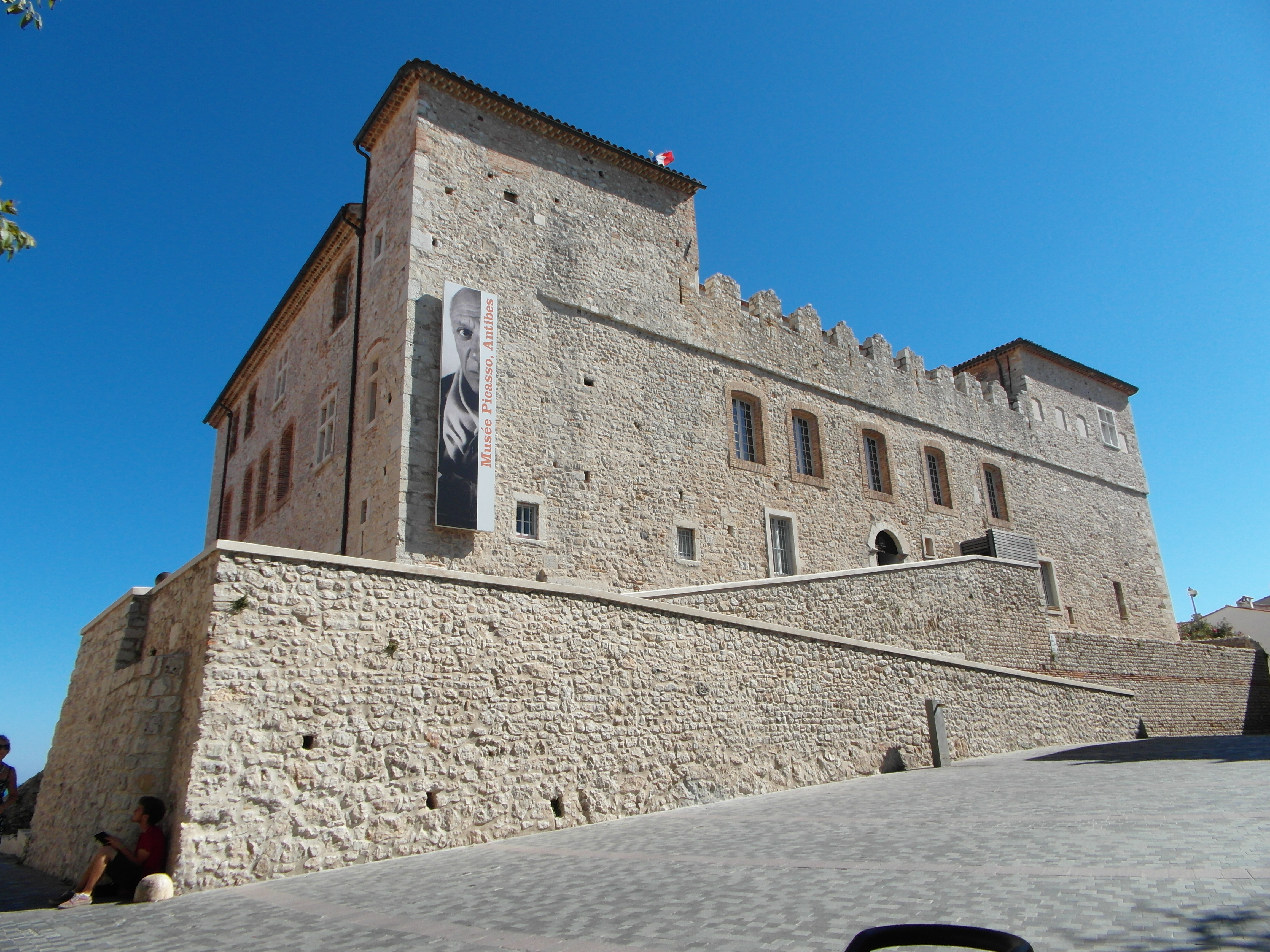
Musee Picasso in old Antibes

We ended up at the Musee Picasso, housed in what used to be the Grimaldi Museum. The change of name was apparently justified by the fact that the museum lent a room to Picasso for two months back in 1946 (someone clever organized that one; they now can attract more people and charge a higher entrance fee). At the entrance, I noticed a phrase from Pablo Picasso which I found interesting: J’ai mis toute ma vie a savoir dessiner comme un enfant (I took all my life to learn to draw like a child).

Essentially all of the Picasso drawings, paintings and sculptures are on a few rooms on the top floor. Two in particular attracted my attention.

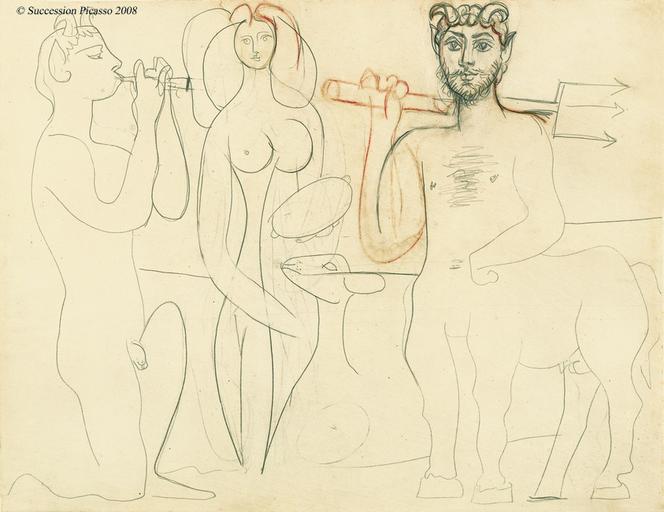
Faune Agenouille

Faune Agenouille jouant de la diaule, Nymphe debout au Tambourin by Pablo Picasso (1946)

The first one is a Picasso drawing called Faune agenouille jouant de la diaule, Nymphe debout au tambourin (Faune kneeling down playing the diaule, Nymphe standing up with a tambourine).

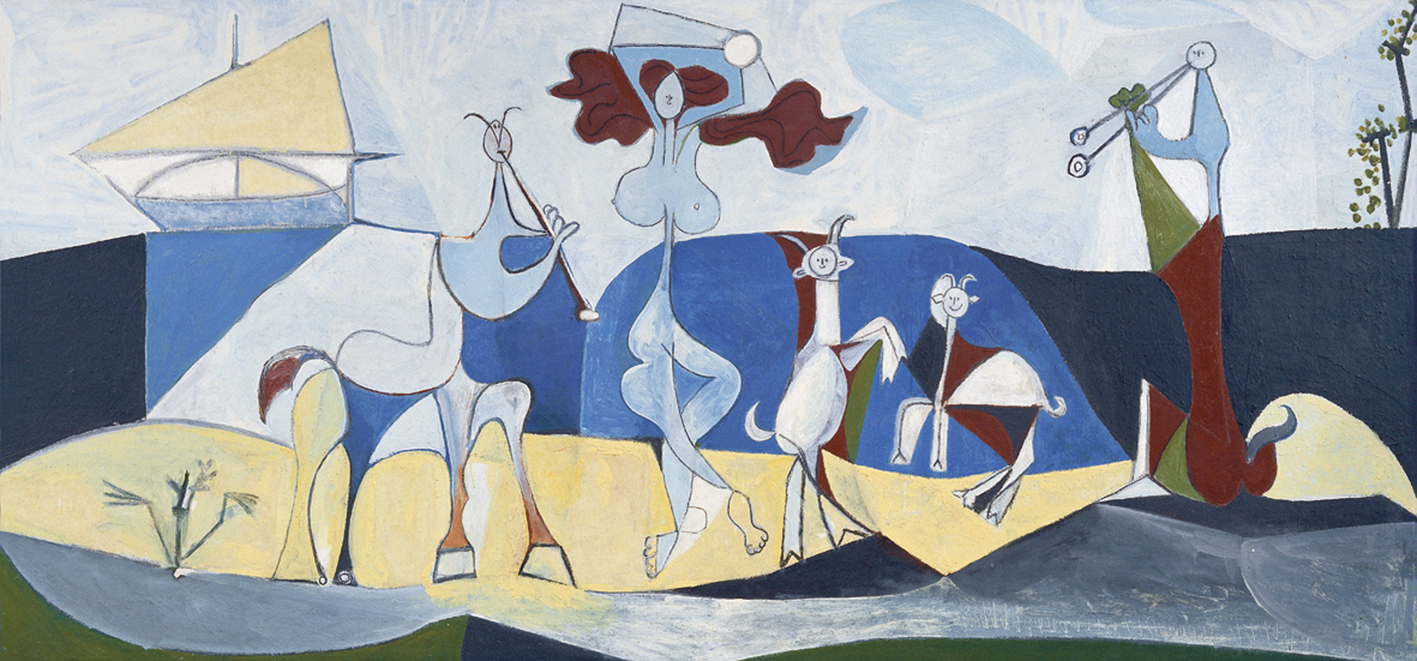
joie_de_vivre

La Joie de Vivre by Pablo Picasso (1946)

The second one is a 1946 Picasso painting called La Joie de Vivre! Since Joie de Vivre is central to my philosophy of life, I found myself studying the painting for clues as to Picasso’s own views on the subject. I have to agree with him that a happy dancing naked woman is central to joie de vivre, and I also agree with Picasso that music and animals are essential contributors.

SAM_1415

A view from the terrasse of the Musee Picasso in Antibes

After relaxing for a while on the beautiful terrasse of the museum, we departed back to Nice, driving along the sea to provide us with views of the beaches and the Mediterranean along the way.

Did You Know?

Did you know that water skiing was invented in Antibes in the 1920s?

Saint-Jean-Cap-Ferrat, France ~ This Cape is made for walking …

SAM_1286

View of Villefranche-sur-Mer from Cap Ferrat

I have come to appreciate more and more each day the invigorating light of the Riviera. Henri Matisse once said: “Quand j’ai compris que chaque matin je reverrais cette lumiere, je ne pouvais croire a mon bonheur!” (When I realized that each morning I would see this light again, I could not believe my happiness!). Going out each morning to fetch our croissants and pains au chocolat, I am hit as soon as I step outside with a feeling of happiness and readiness to face another day by the warm light of the azur blue sky above. No wonder those great artists of the Riviera, Picasso, Chagall, Matisse lived very long lives!

Today was no exception to the incredibly good weather we have experienced so far on this trip. Not a cloud in the sky and an azur-tinted blue sky to die for.

SAM_1305

Villa Ephrussi de Rothschild in Cap Ferrat

Our main destination today was the Villa Ephrussi de Rothschild , on top of the Cap Ferrat peninsula just east of Villefranche-sur-Mer. The easiest way to get there from Nice is bus no 81, whose route follows the coastline and therefore provides fantastic views of the old port of Nice, of Villefranche-sur-Mer and of the Mediterranean sea. In addition, the bus stops right outside the gates of the villa.

Villa Ephrussi de Rothschild is the mansion built by Beatrice Ephrussi de Rothschild in 1912 and in which she lived, either seasonally or full time, until her death in 1934. Thankfully, she donated it to France at her death, which is why it has been preserved and can be visited today.

Beatrice de Rothschild was the grand daughter of the founder of the Rothschild dynasty in France, James Rothschild, and inherited an immense fortune when her father died. Her family had welcomed her marriage to the older Maurice Ephrussi partly because he was Jewish but as importantly because he came from a powerful Russian banking family, and the Rothschilds wanted to improve their business with the tsar of Russia.

An interesting piece of information is that Charles Ephrussi, Maurice’s brother, was very fond of the arts and he befriended the artists of the day, Manet, Monet, Renoir, etc… which explains why he appears in one of my favorite paintings, Renoir’s Luncheon of the Boating Party.

A second interesting piece of information is that the Rothschilds acquired their barony from the emperor of Austria after the battle of Waterloo because the Rothschilds had organized the financing of the war against Napoleon.

SAM_1207

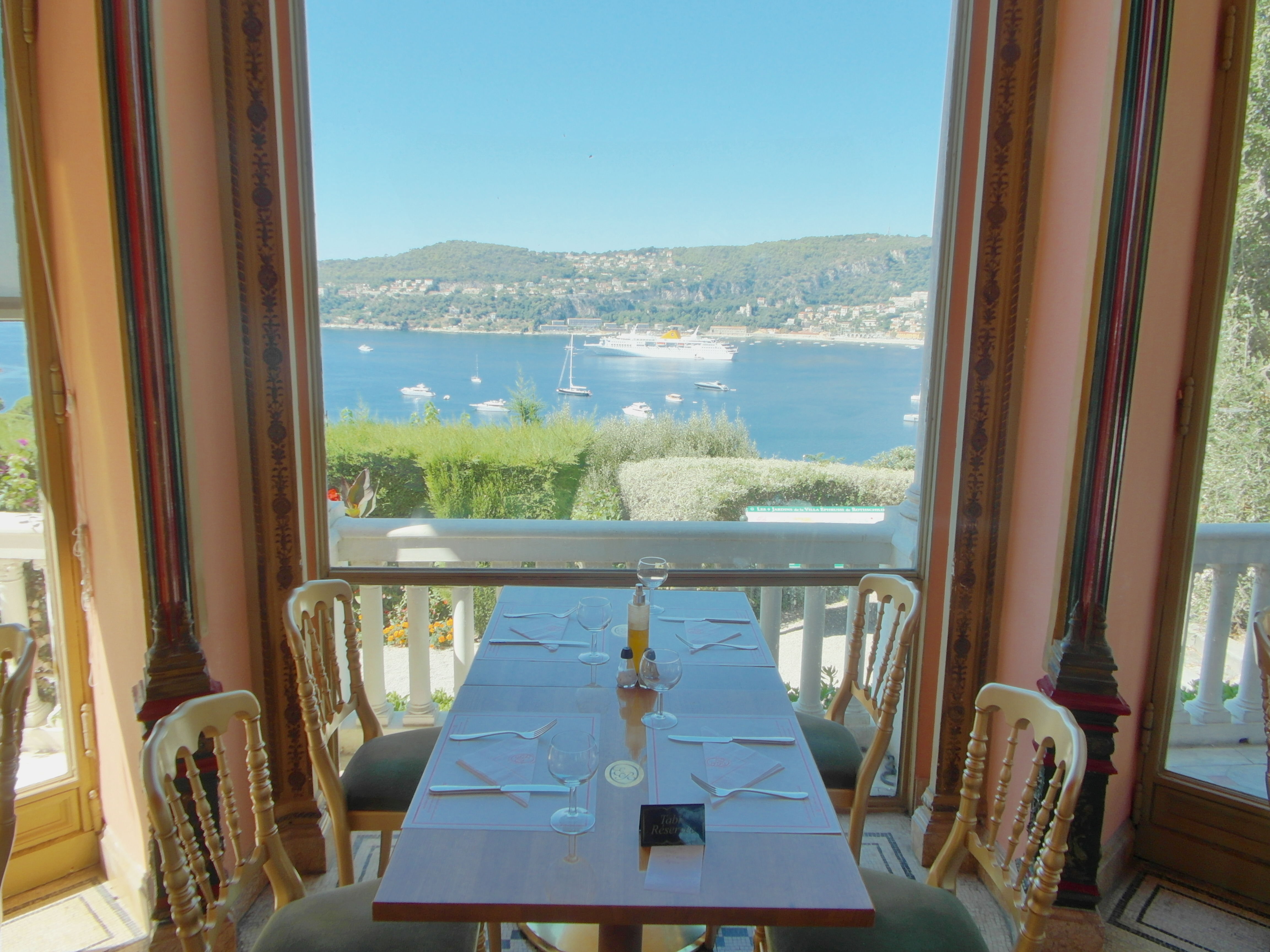
View from the dining room in Villa Ephrussi de Rothschild

Before touring the house, we took a light lunch in the beautiful room which used to be Beatrice’s dining room, and which offers incredible views of the bay of Villefranche. The ambiance was greatly enhanced by soft light classical music and operatic arias in the background.

SAM_1218

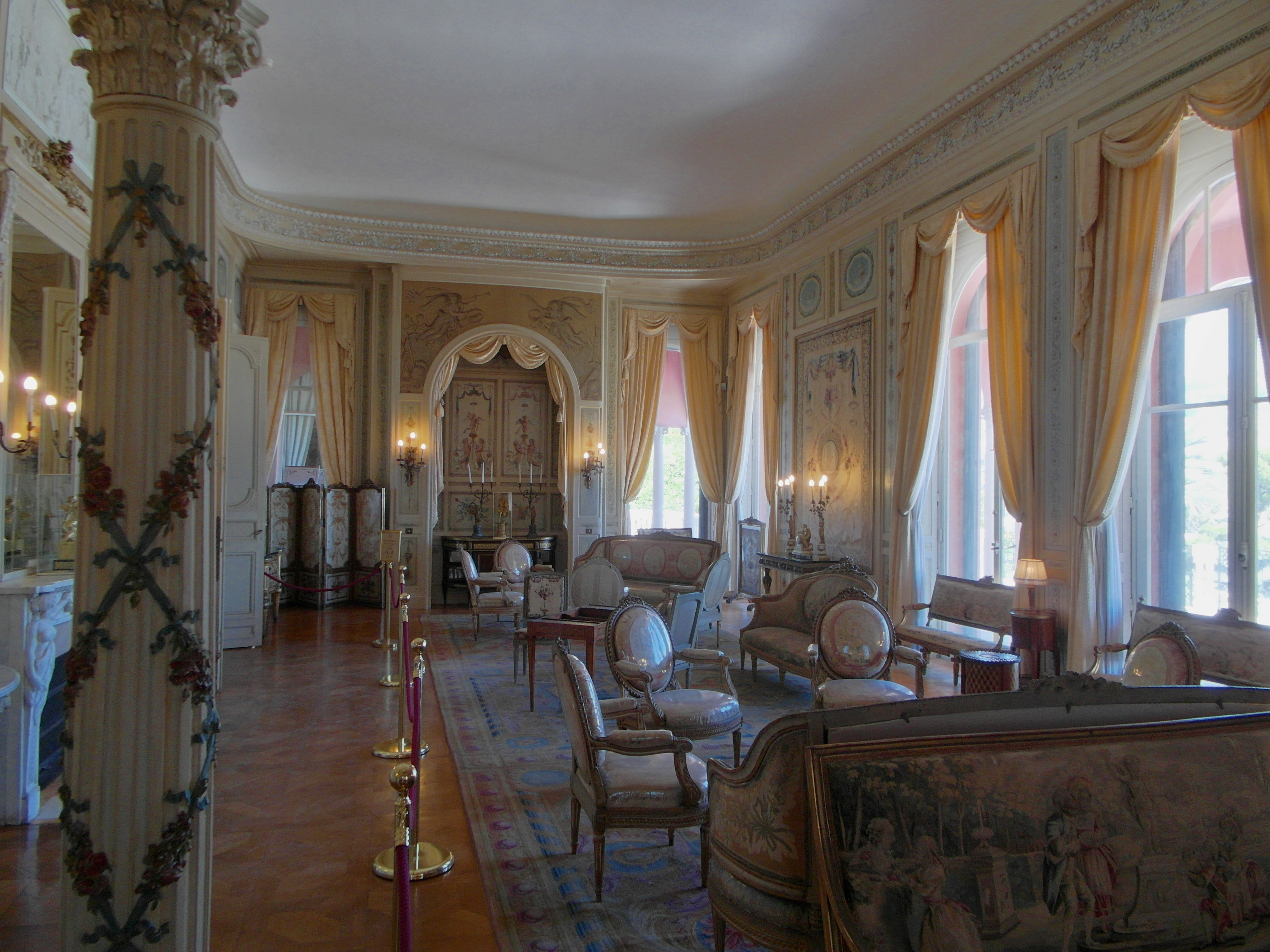
Salon of the Villa Ephrussi de Rothschild

Beatrice was a perfectionist, and as a result, everything about the house, the gardens and the furnishings are masterpieces. Beatrice had wanted her palace (and it is a palace) to be built in an Italian Renaissance style.

SAM_1254

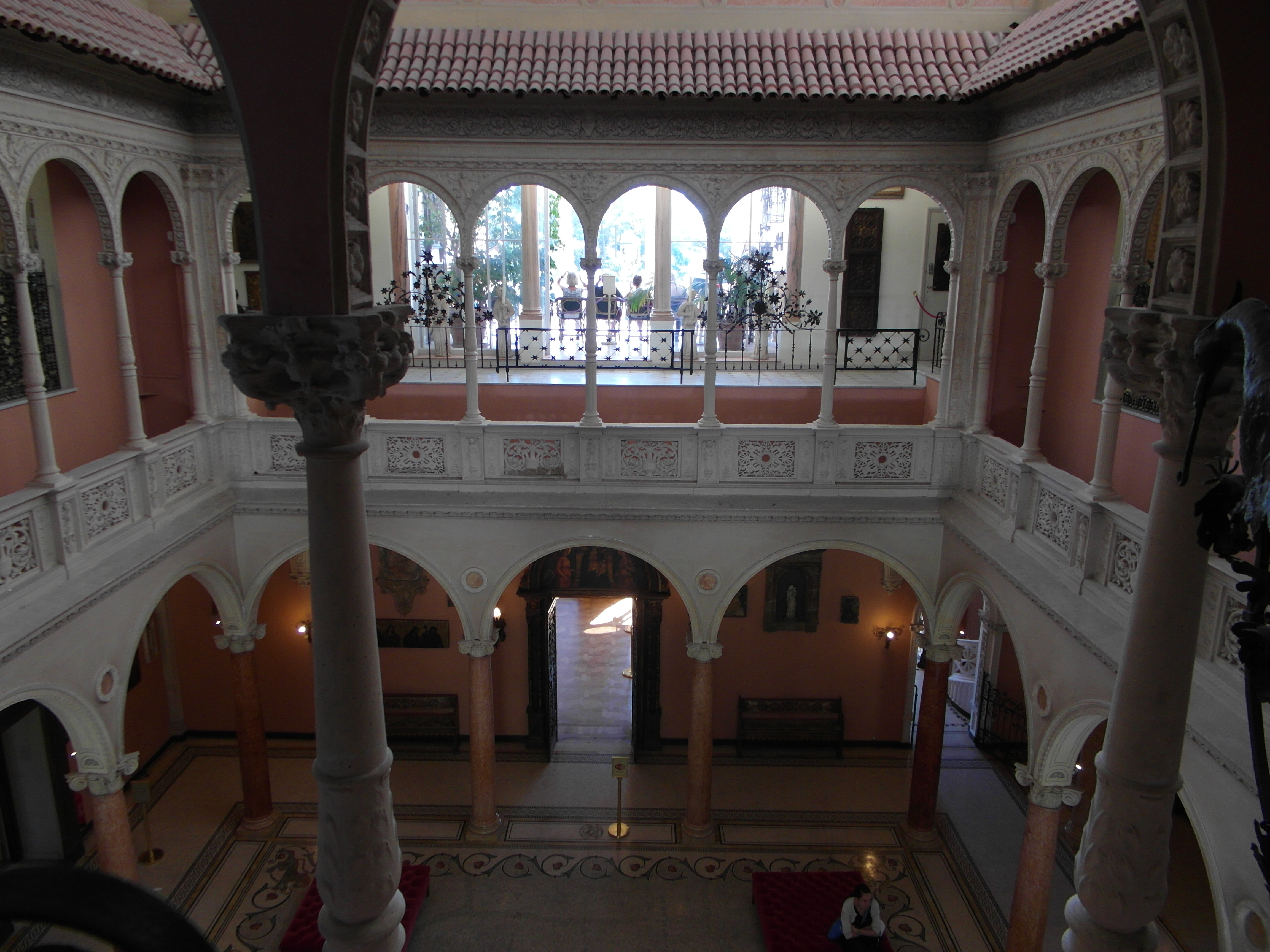
Central reception area of Villa Ephrussi de Rothschild

The large central reception hall area is magnificent with each room around it providing indescribable views of the French Riviera around it. There is no doubt that, from both the house and from the gardens, one gets some of the most spectacular views available anywhere in the world.

We toured the house with the help of a very useful and comprehensive audio guide. Everything about the house fascinated us as it represented the best of French manufacturing, whether it be furniture, tapestries, carpets, works of art, etc… As a result, we spent almost three hours inside the house, and I could easily have spent twice as long.

SAM_1224

Boudoir of Villa Ephrussi de Rothschild with “Bonheur du Jour” secretaire desk

One example out of hundreds: the secretaire desk in Beatrice’s boudoir. It was built specifically for Queen Marie-Antoinette by Jean-Henri Riesener, one of the most famous cabinetmakers in France. It is called a “Bonheur du Jour” (Happiness of the Day) desk, which means that it has an intricate detailed design, has many “armoirettes” (small drawers), and at least one secret compartment. Whatever we looked at, it was the best there was at that time.

SAM_1252

The villa has the best collection of French porcelain in the world, the best collection of French tapestries, and the list goes on. Of particular interest to me was her love of Jean-Honore Fragonard, also one of my favorite French painters of his period. Fragonard was regarded as the main poet of gallant love (l’amour gallant) and came from the Fragonard perfume family of Grasse. I am hoping that we will find time to go to Grasse during this trip to visit his museum.

SAM_1225

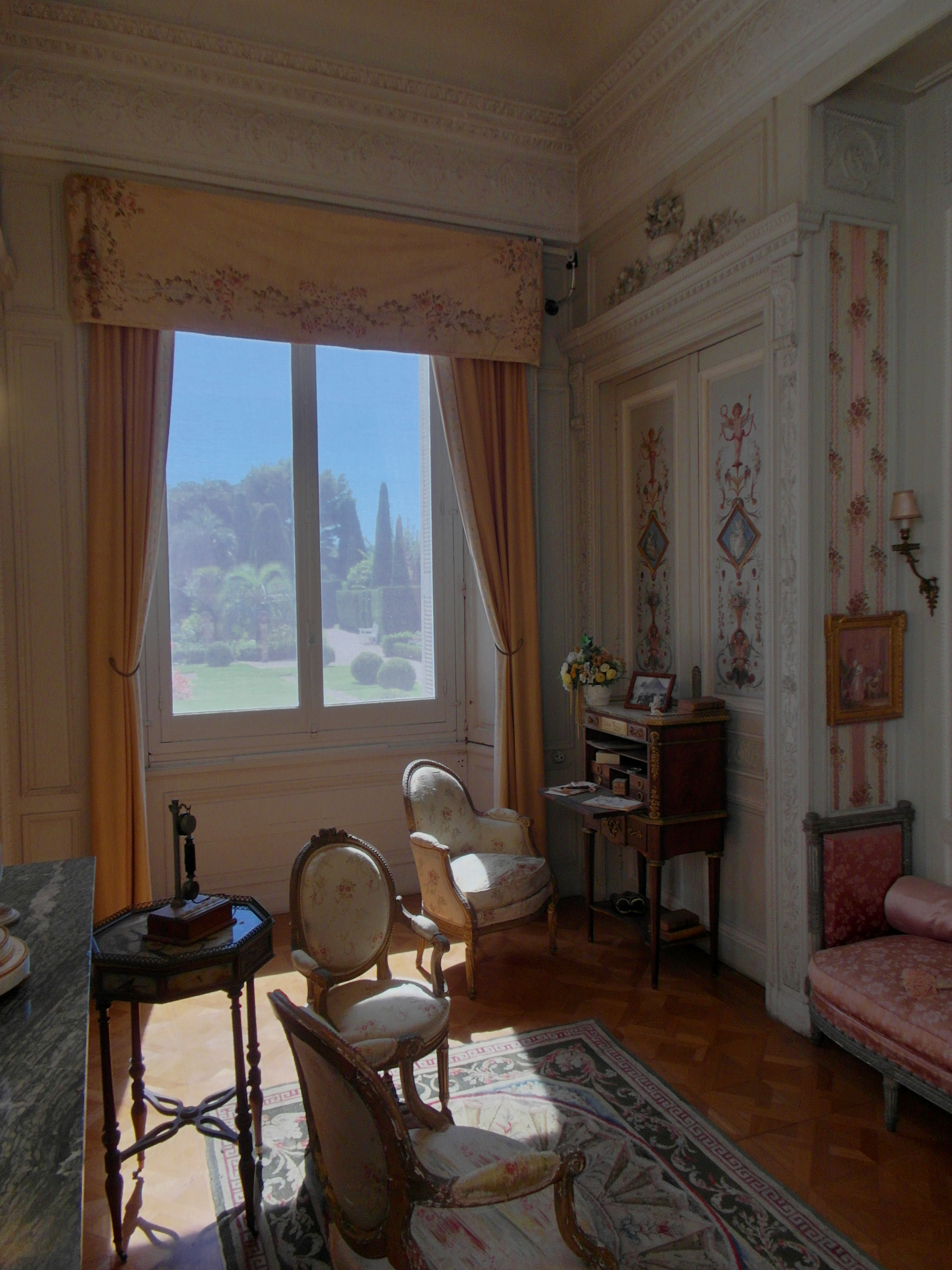
Part of Beatrice’s bedroom in Villa Ephrussi de Rothschild

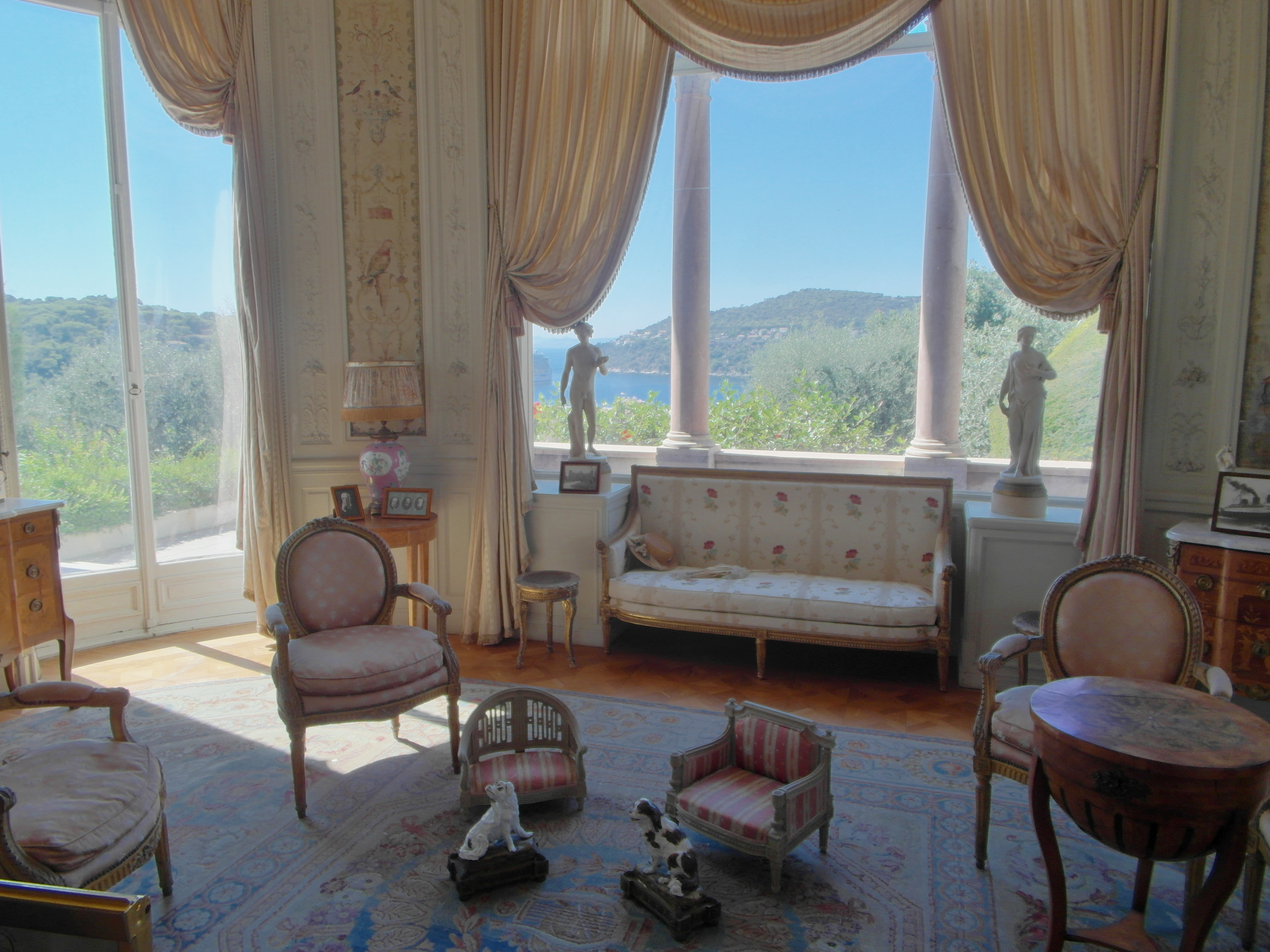
And Beatrice had her eccentricities. She loved animals and surrounded herself with them. She had dogs, monkeys, a mongoose from India, parokeets, etc… In her bedroom are two small upholstered chairs, one for one of her favorite dogs, the second one for her mongoose. In 1897, she organized an elaborate wedding for two of her dogs, including hundreds of canine guests and their masters all in tuxedo and bow ties.

SAM_1258

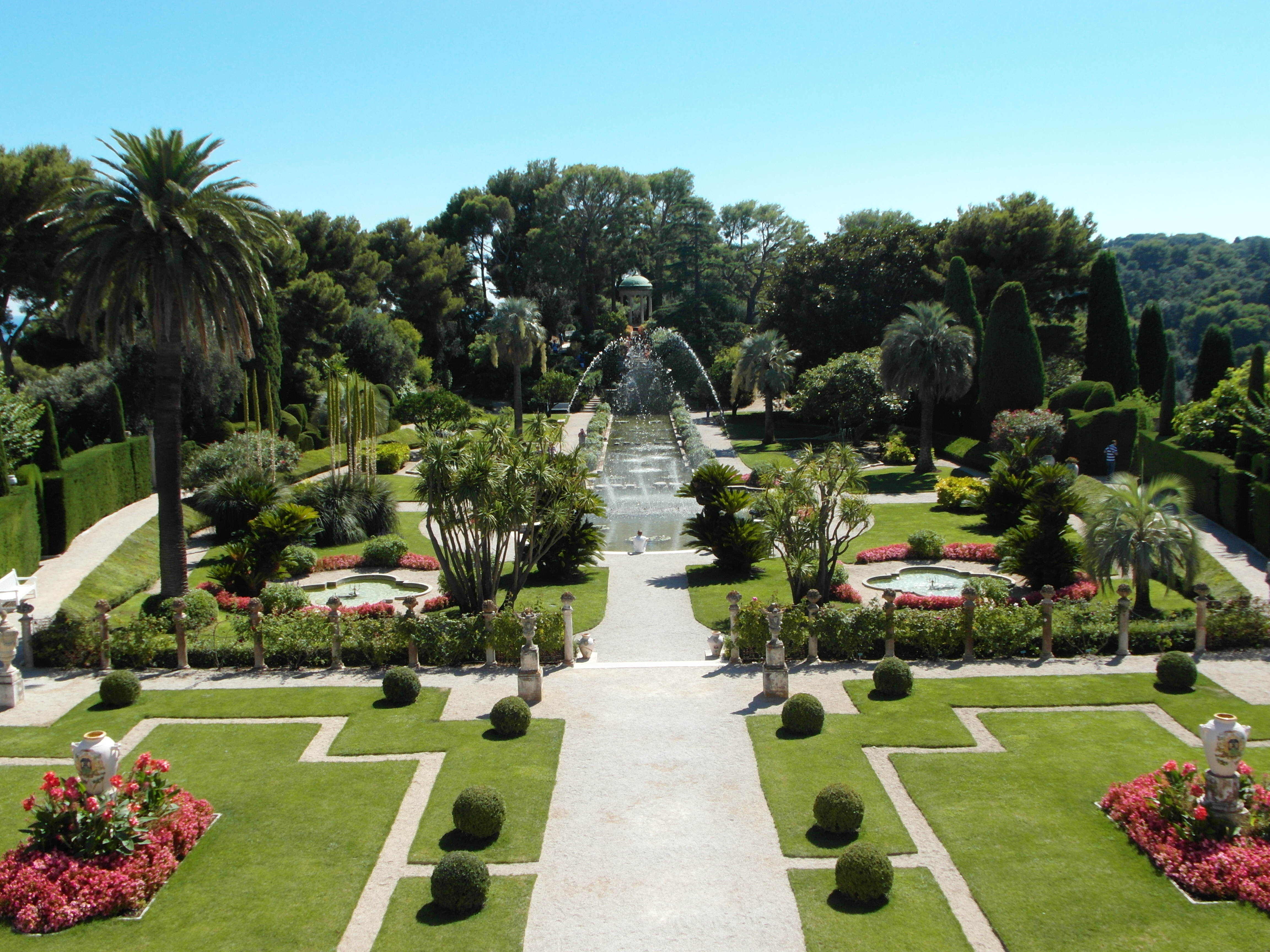
French garden at the Villa Ephrussi de Rothschild

Another aspect of Beatrice which fascinated me was that she was an insatiable traveler. She had cruised all over the world and particularly liked the french liner Ile de France, which is why she named her palace the Ile de France and designed the French gardens in her backyard to be in the shape of the deck of a ship.

Beatrice wanted her gardens to be an invitation to see the world, and therefore, in addition to the French garden, one also finds a Spanish garden, a Florentine garden, a Japanese garden, a Provencal garden, an Exotic garden, a Sevres garden, a Stone garden and finally of course a Rose garden (including a special breed of rose named after Beatrice).

SAM_1279

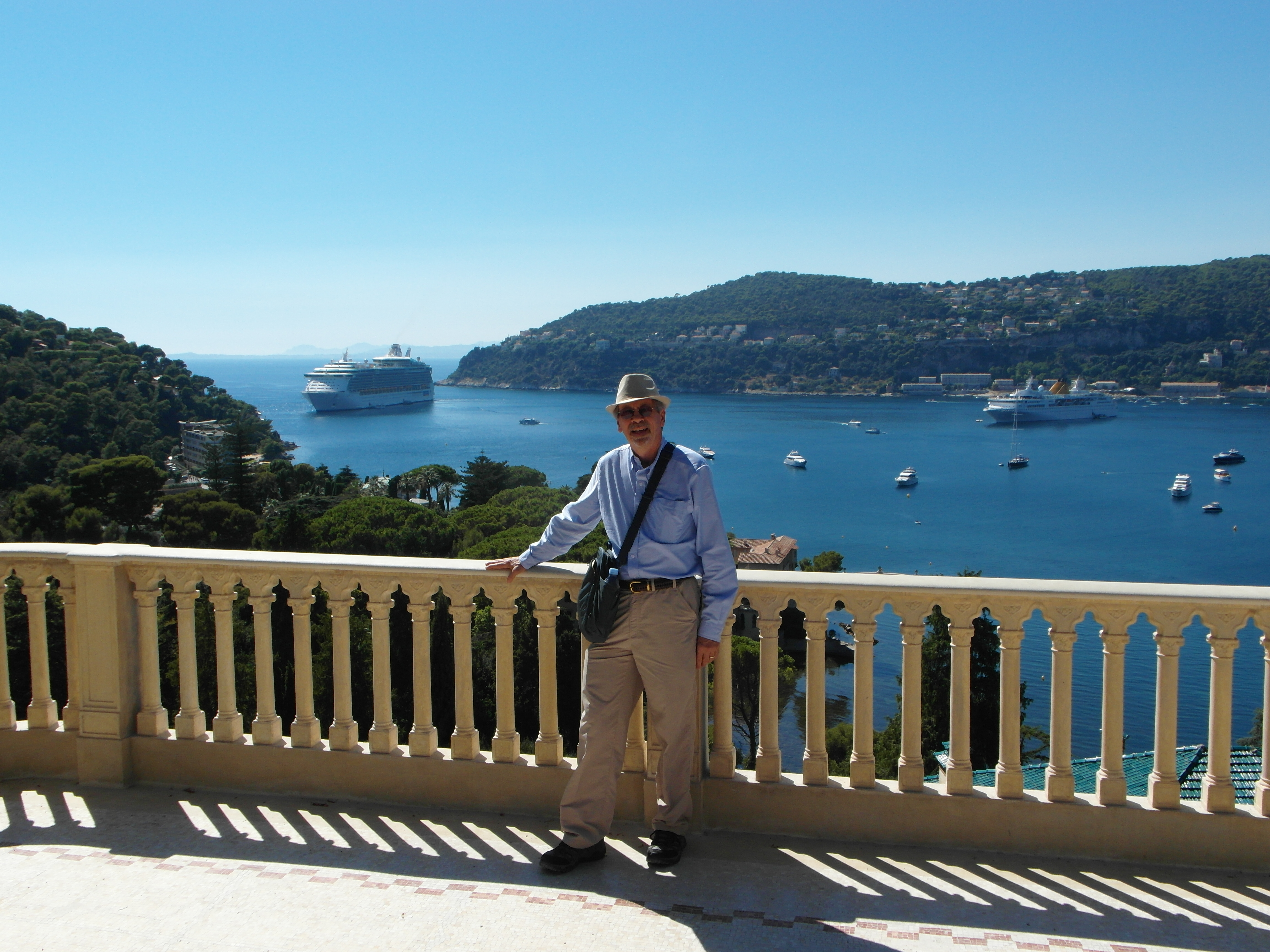
Me at one of the many scenic viewpoints at Villa Ephrussi de Rothschild

All along the gardens, on each side (one side facing the bay of Villefranche-sur-Mer, the other side the bay of Beaulieu-sur-Mer and Monaco), scenic viewpoints allow the stroller to take in spectacular views. This adds up to a lot of gardens and we walked all of them and stopped at all the viewpoints, so mesmerized were we by the beauty of the place.

SAM_1330

La Voile d’Or in Saint-Jean-Cap-Ferrat

As if we had not already walked enough, we decided to walk from Villa Ephrussi to the port of Saint-Jean-Cap-Ferrat, off the beaten track, where we settled down at the wonderful hotel restaurant La Voile d’Or first for drinks, but given the fabulous setting, lingered on and finally stayed for dinner. The walk, the views and the dinner could themselves make the subject of another blog. We settled for a taxi back to our apartment, which probably cost more in one ride than all of the other modes of transport we had taken in the past week in Nice (the service was excellent).

Overall, a memorable day which made us fall in love yet again with the French Riviera!

Cannes, France ~ Nice is nice, but Cannes … ?

SAM_1138

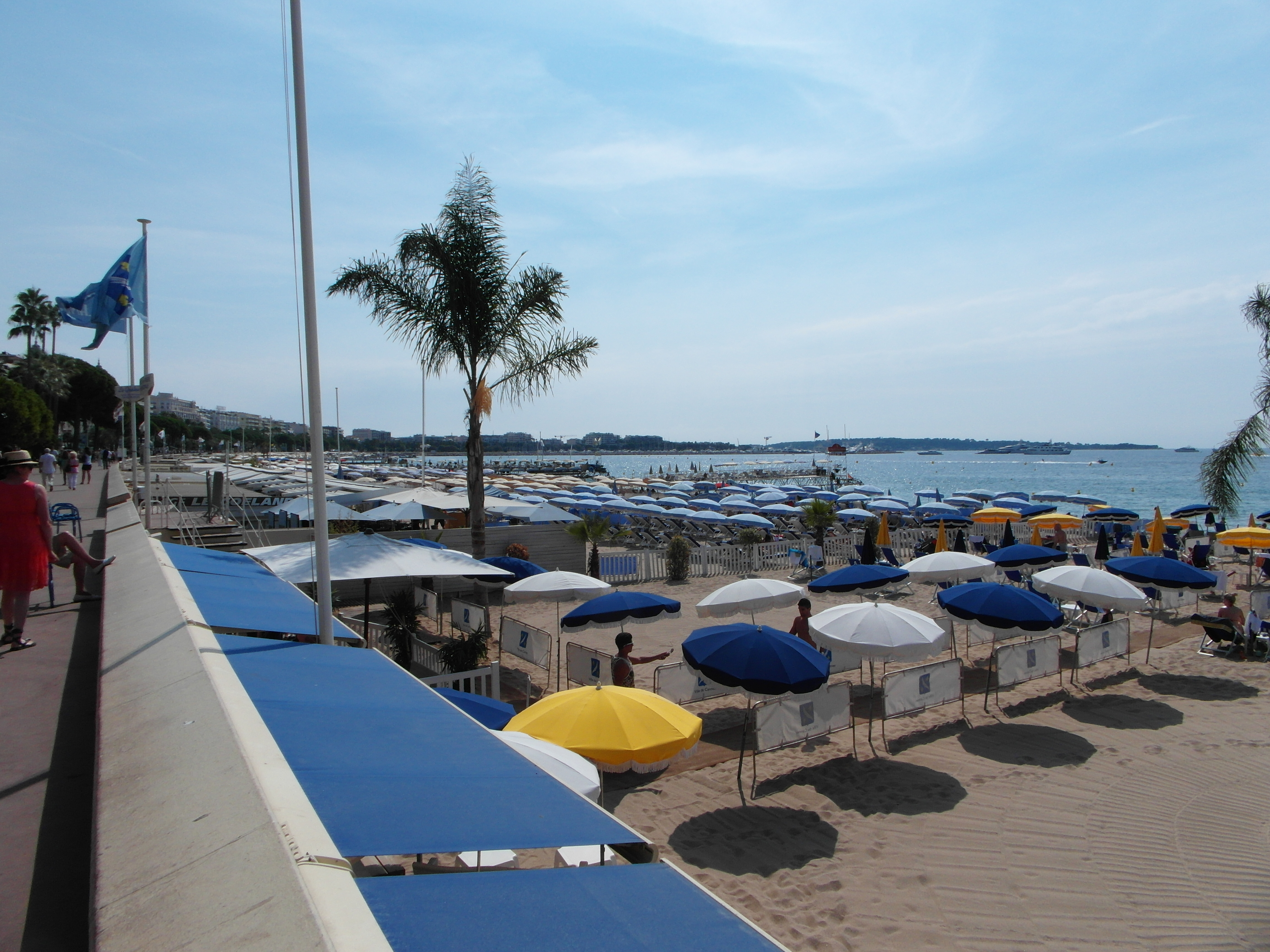
The beach in Cannes along the Promenade de la Croisette

Today, we took the train to Cannes, barely a thirty minute ride. For a change, I booked online for the high speed TGV train with first class pre-reserved seats. It only gets to Cannes about three minutes faster than the regional train, but it does so with a little more comfort (and with an electric outlet at every seat). It all seemed so perfect as we settled into our very large and comfortable reclining seats on the very nicely air conditioned train; our serenity was not to last. A hyperactive young boy moved into the seat behind Lynn, and for the whole thirty minutes or so of the ride to Cannes, he hit the seats, screamed, yelled, complained and whined; his mother seemed totally helpless in controlling him and we could not move away as all the other seats on the car were occupied.

SAM_1125

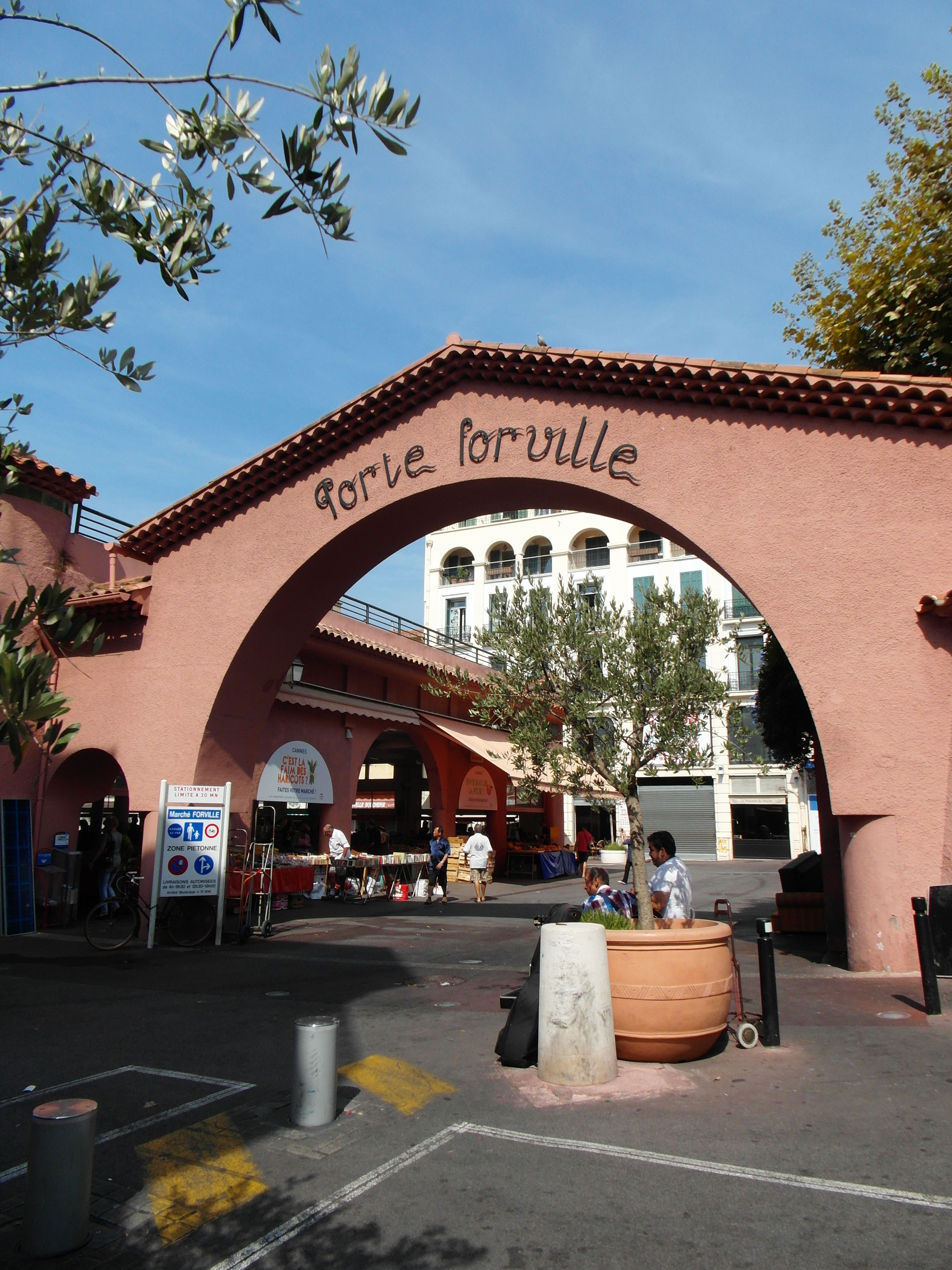
Entrance to the covered Forville market in Cannes

As soon as we arrived in Cannes, we headed by foot to the Forville Market nearby. This morning food market had been written up quite a lot in the tour books and I wanted to experience it before it started closing down around lunchtime.

SAM_1127

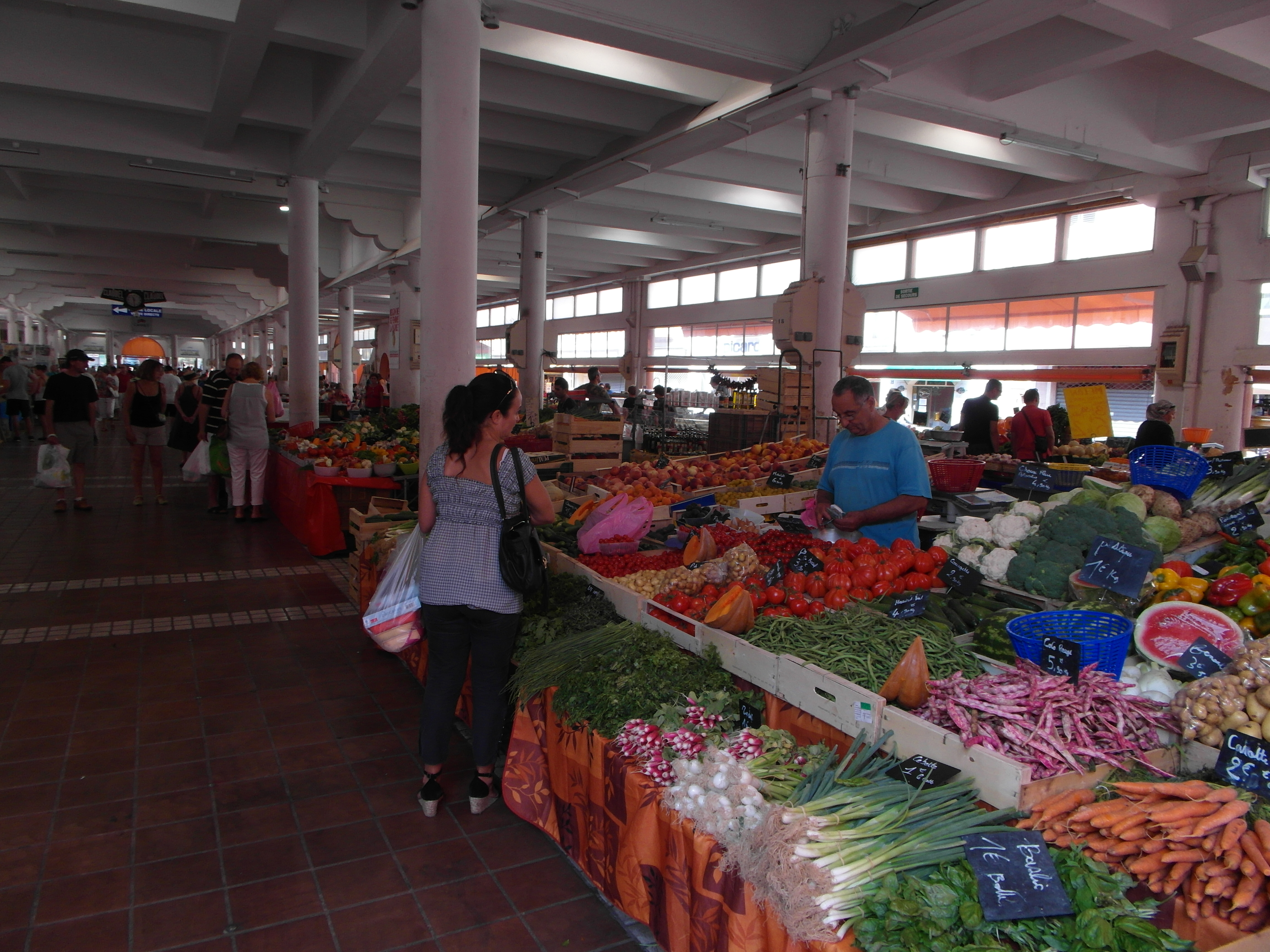
Forville market in Cannes

It turned out to be a big disappointment. The covered area is about a block long, and less than 20% of the space is allocated to the food market; the rest is a big flea market. The market in Nice is so much bigger, and so much better! This market was a waste of time. We took a quick walk around the market and left for the Promenade de la Croisette.

SAM_1130

Carroussel playing Pink Martini on the Promenade de la Croisette in Cannes

Interestingly, as we started our walk on the Promenade de la Croisette, the main road and walkway along the beach in Cannes, we passed by a carroussel for children which, to our delight, was loudly playing Pink Martini music. The Portland-Oregon based Pink Martini orchestra is one of our favorite music groups (we have been to eight of their live concerts in the US and in Europe).

The beach in Cannes is sand, a definite plus compared to Nice which has a pebble beach. This is indeed a plus for Cannes. Unfortunately, what we saw today as we walked around both the Promenade de la Croisette and the world famous rue d’Antibes was essentially a mix of Beverly Hills glamour and Atlantic City honky-tonk.

SAM_1150

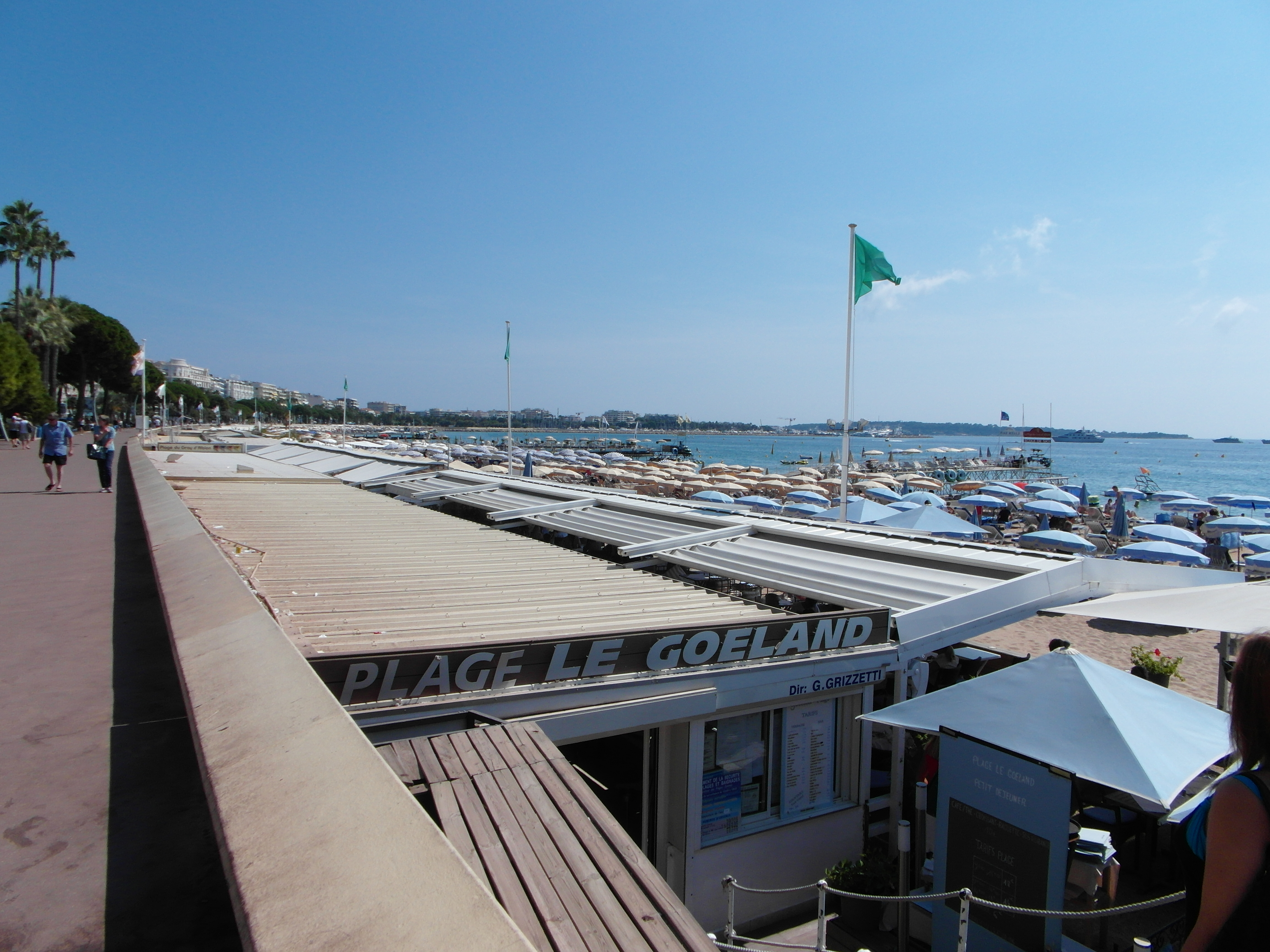
Plage and Restaurant Le Goeland on the Promenade de la Croisette in Cannes

At lunchtime, we opted to eat at a popular restaurant on the beach, Le Goeland (The Seagull).

SAM_1145

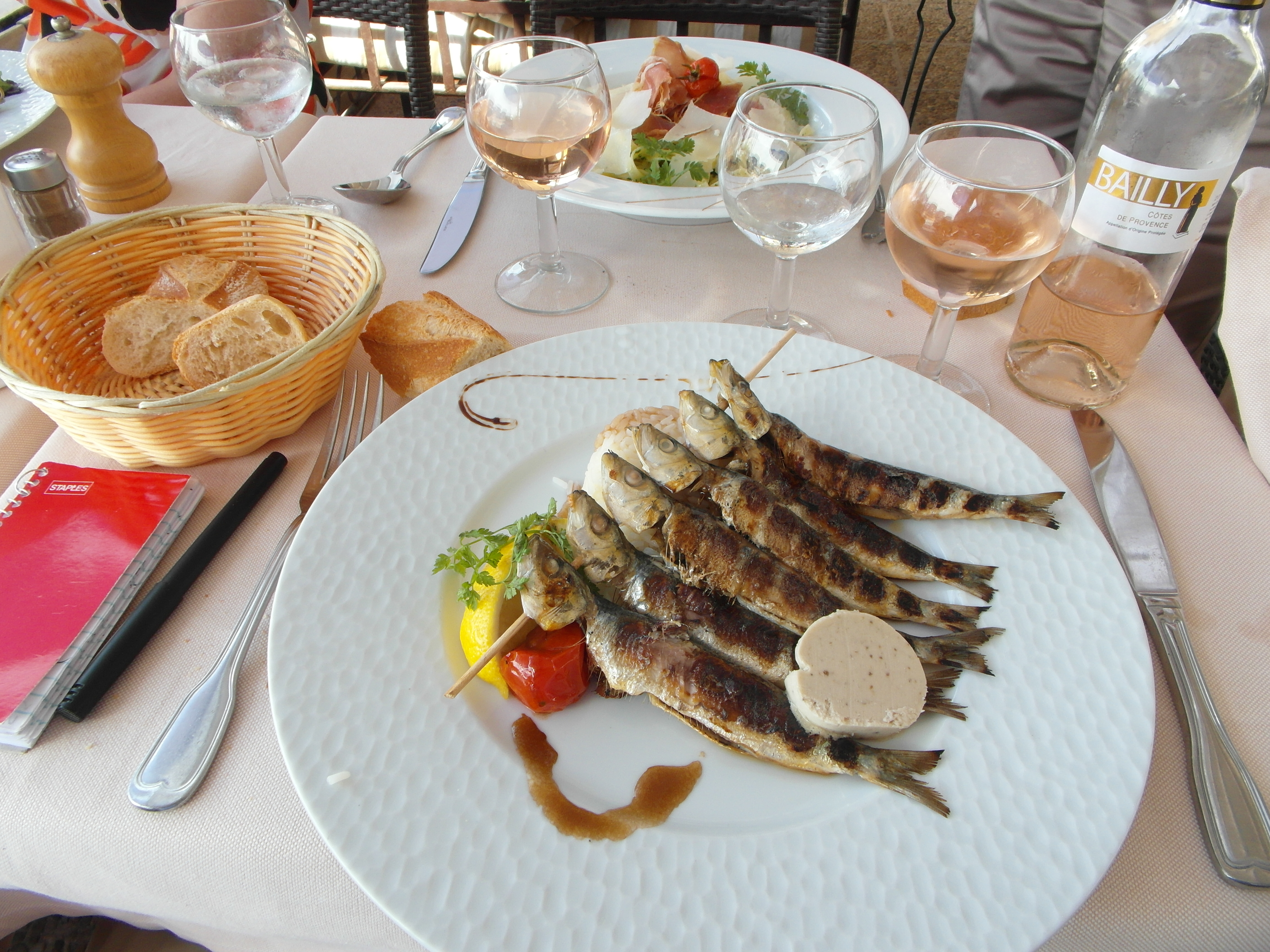
Sardines Grillees (forefront) and Tagliatelle au Pistou (rear) at Le Goeland on the beach in Cannes

It was a simple but very tasty lunch. We shared a mixed salad as an entree followed by tagliatelle au pistou for Lynn and sardines grillees for me, all washed down with a refreshing Cotes de Provence rose.

SAM_1154

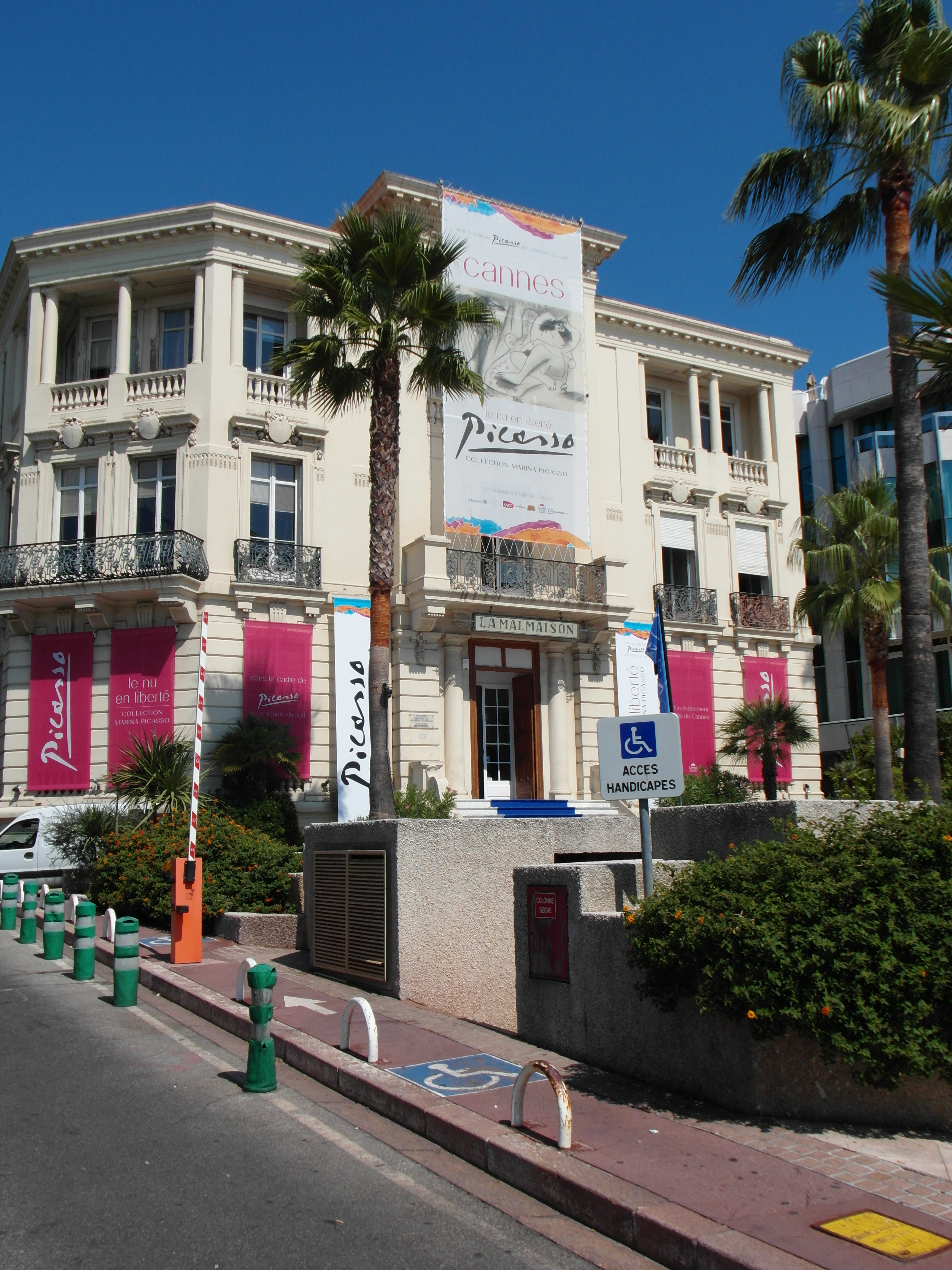
Centre d’Art La Malmaison on the Promenade de la Croisette in Cannes

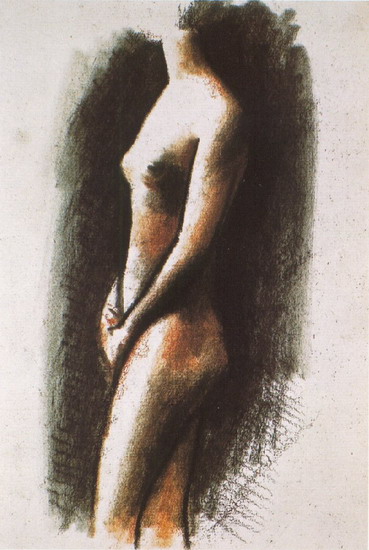
After lunch, we continued our walk along the Promenade de la Croisette. We came across the Centre d’Art La Malmaison which is hosting an exhibition of approximately 120 Picasso drawings focusing on nudes and erotism, called “Nu en Liberte” (nude at large).

image

Nu Debout de Profil by Picasso

This was quite an interesting collection of drawings along with a few paintings, ceramics and sculptures. My favorite was definitely the Nu Debout de Profil (Nude Standing from the Side).

SAM_1163

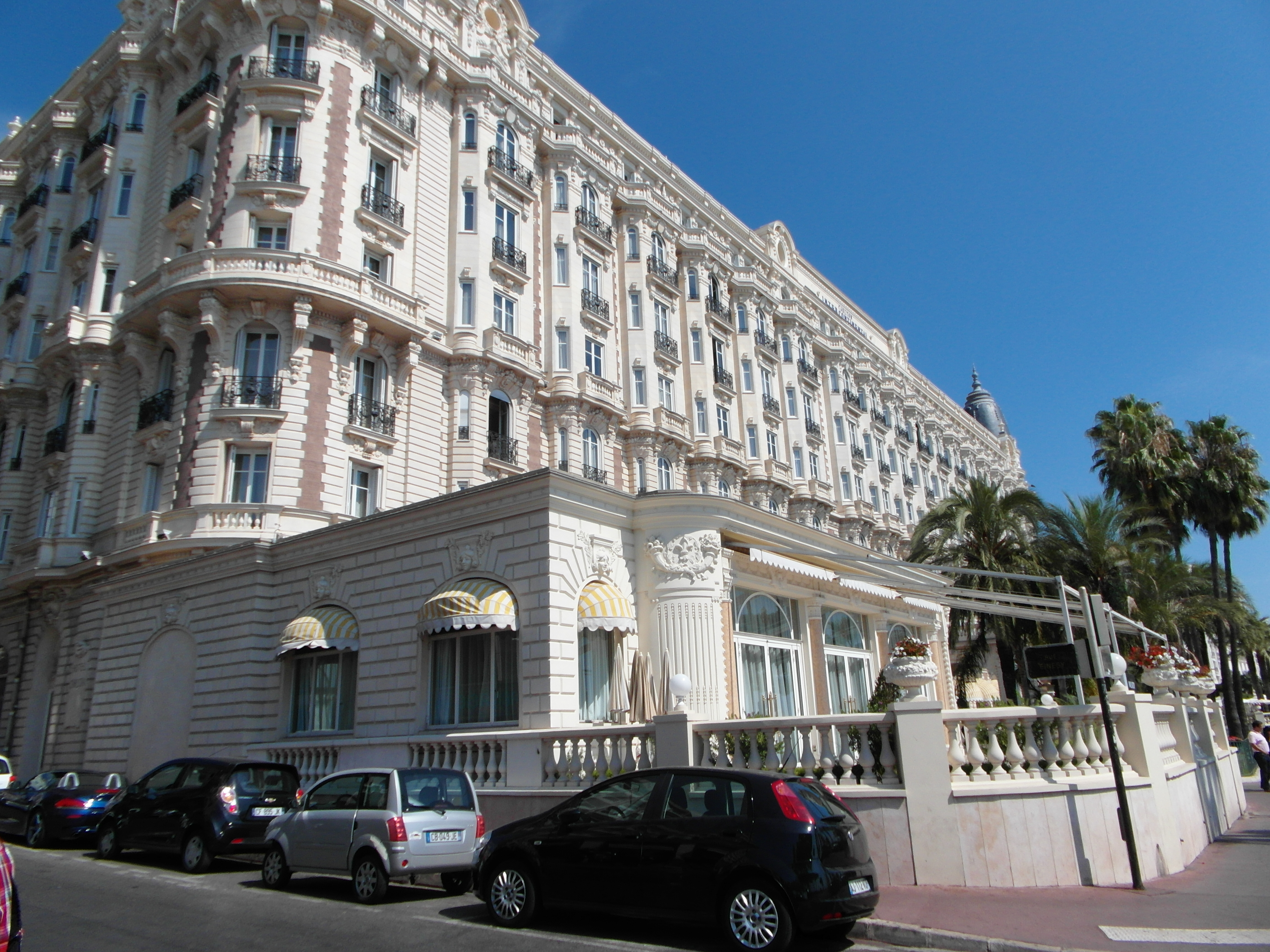
InterContinental Carlton Hotel along the Promenade de la Croisette in Cannes

We later walked by the InterContinental Carlton, the most famous hotel in Cannes, made even more famous recently by the brazen 130 million dollar jewelry heist which a single thief pulled off in less than sixty seconds. We decided to go in for a drink and meet the security guards on duty (they denied any involvement).

SAM_1166

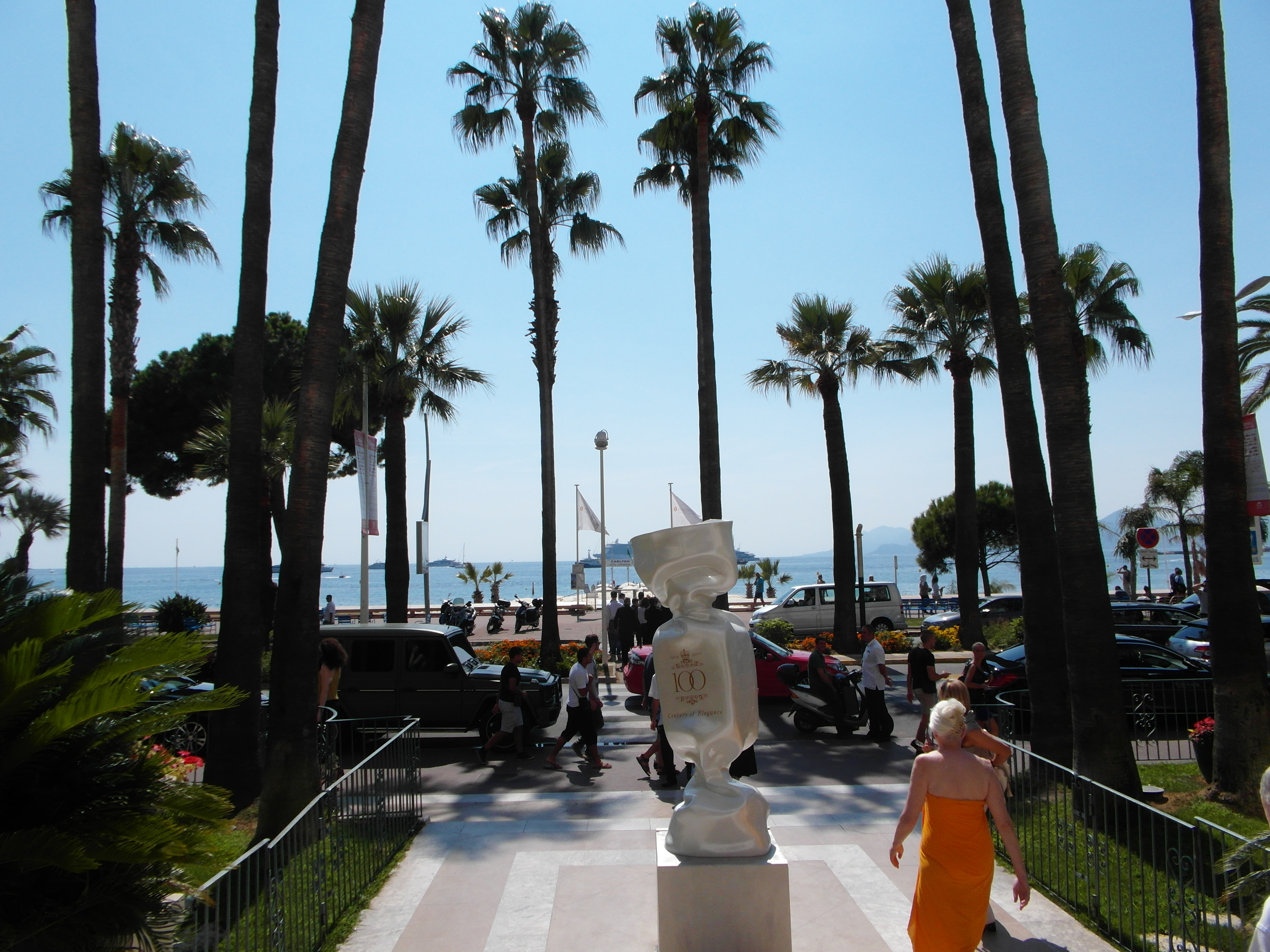
View as one steps out of the InterContinental Carlton Hotel in Cannes

The hotel is indeed ultra-luxurious — you could easily think you were in Beverly Hills. Only by stepping outside do you realize you are in France, on the shores of the beautiful Mediterranean.

SAM_1183

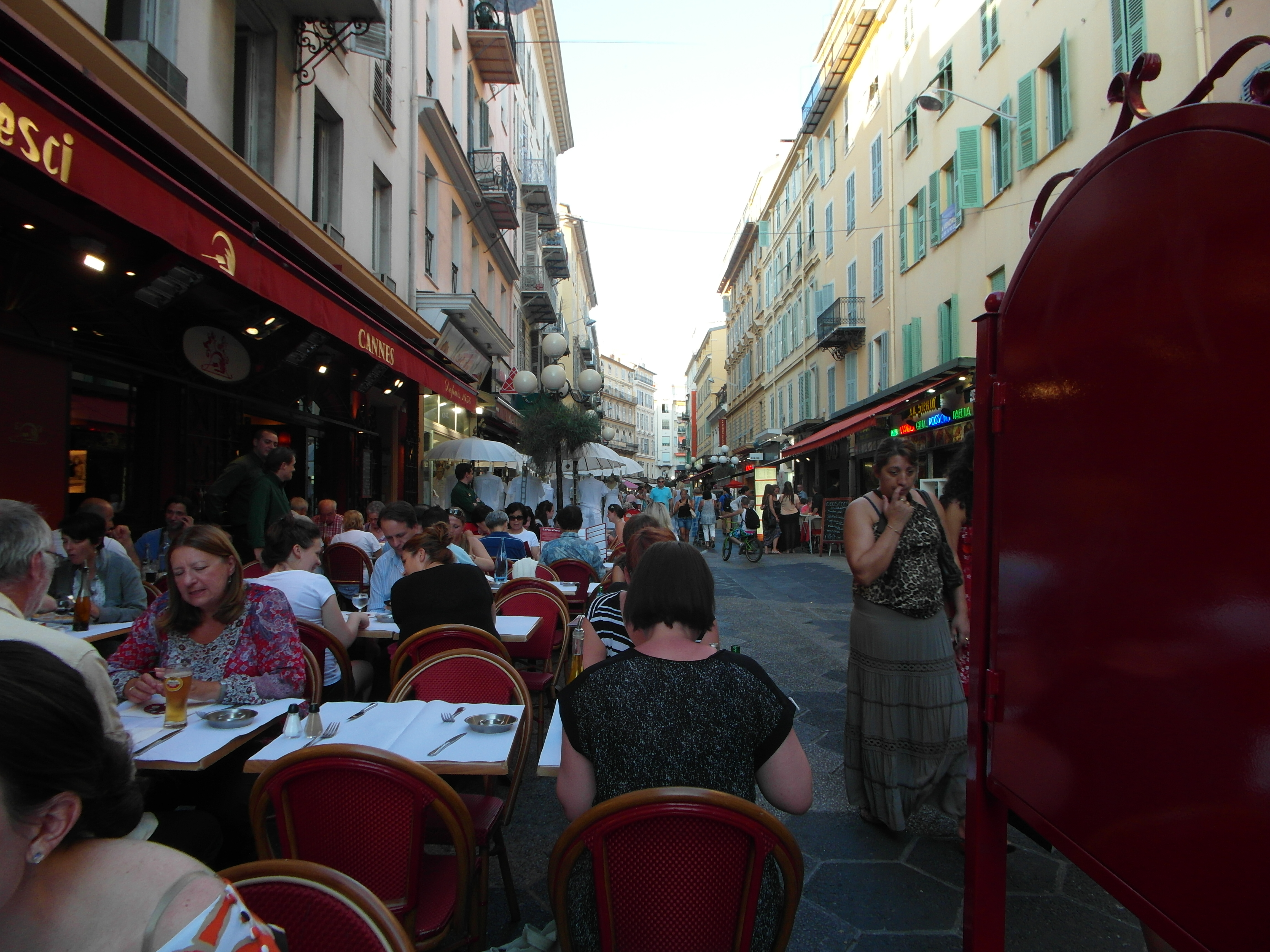
pedestrian rue Massena in Nice

Shopping on rue d’Antibes was next on the agenda, which we did with gusto until it was time to head back to the train station for the ride back to Nice, followed by a simple Italian dinner on the pedestrian Rue Massena, a few blocks from our apartment.

The verdict on our day in Cannes: there are only tourists in Cannes and the town offers little other than a great beach. Most certainly however, the city comes alive for the annual Cannes Film Festival in May but, for the meantime, Nice is nice, very nice.

BonVoyageurs Tip

*If you own a credit card with pin, buying your TGV train ticket online for pickup at the station is a very convenient service. The pickup at the station, from one of the self-service machines, is quick and easy: one simply inserts the credit card which was used when the reservation was made, and presto, the machine finds the reservation and prints the tickets.

Le Chantecler, Essence of a 2** Michelin Luncheon

SAM_1054

The sun is beginning to set here in Nice, and since lunch we have visited the Musée Matisse in the magnificent Nice neighborhood of Cimiez … yet I can still feel the pleasure of our three and a half hour luncheon, I can remember the flavors and the marvelous sensations of enjoying the food and wine. Let me bring you back to relive today’s memorable gastronomique luncheon with me.

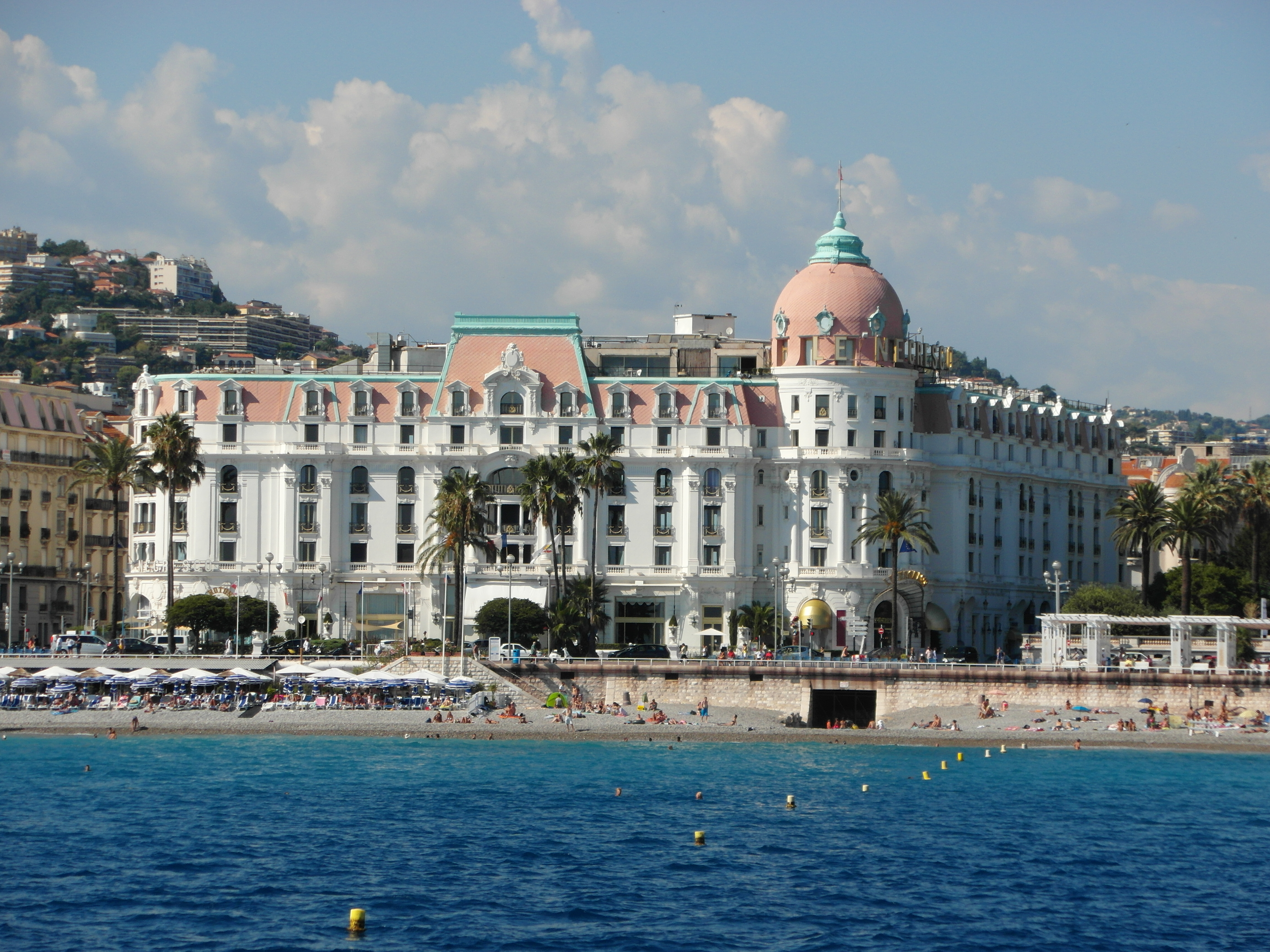
Just off the Promenade des Anglais on the Baie des Anges (“Bay of Angels”) in the heart of Nice, is the palatial Hotel Negresco, listed by the French government as a National Historic Building and a member of the Leading Hotels of the World. As we enter the hotel, we are greeted by a doorman dressed in the uniform of an 18th century elite bourgeois household servant who inquires after our needs and takes us to the Chantecler Restaurant. The “feast” has begun.

SAM_1088

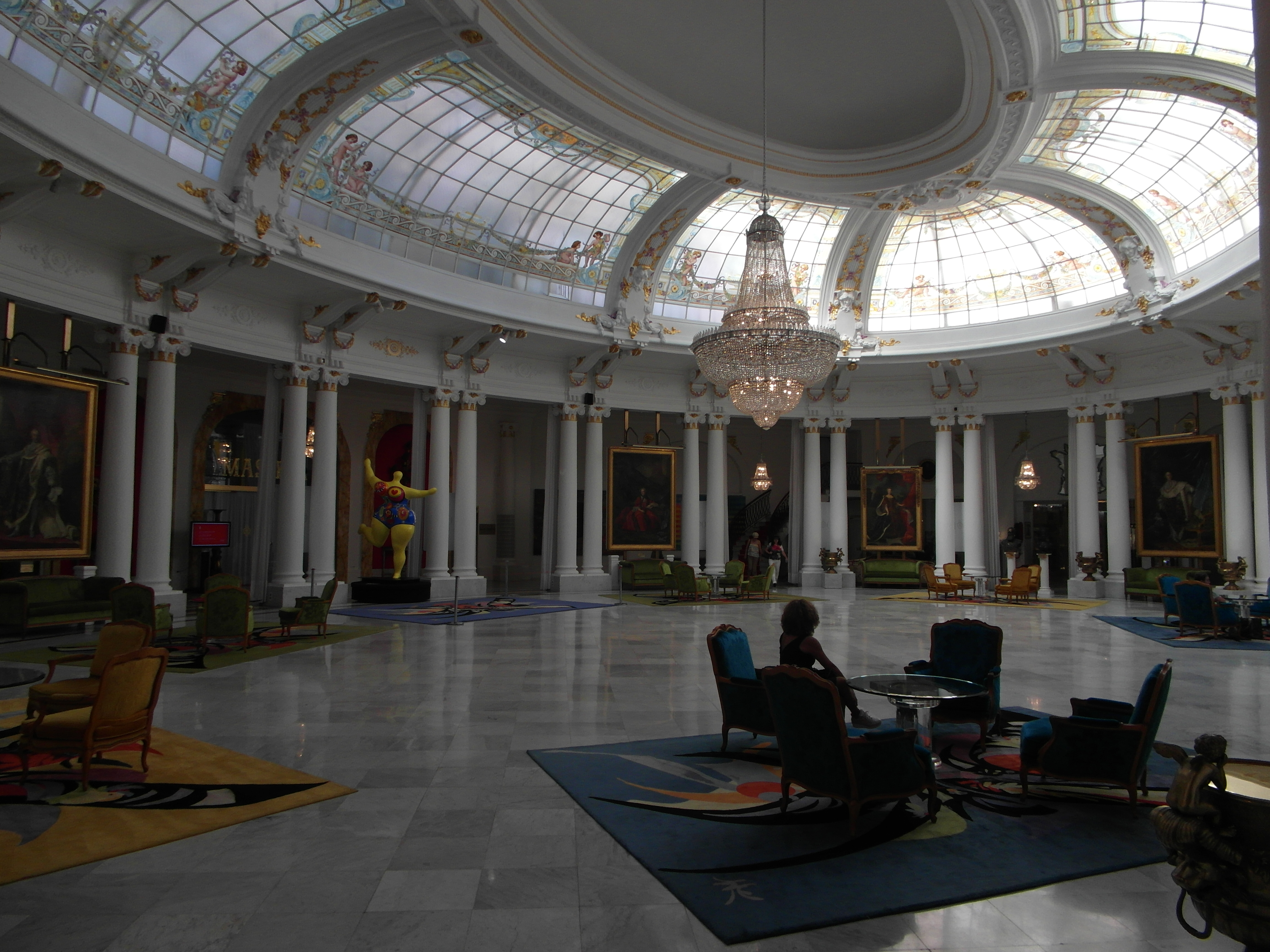
Our eyes take in the glamorous opulence of the architecture and décor of the hotel with its multitude of Mediterranean colors against a stark white setting and we are suitably impressed by the Gobelin tapestries and the impressive collection of paintings and sculpture.

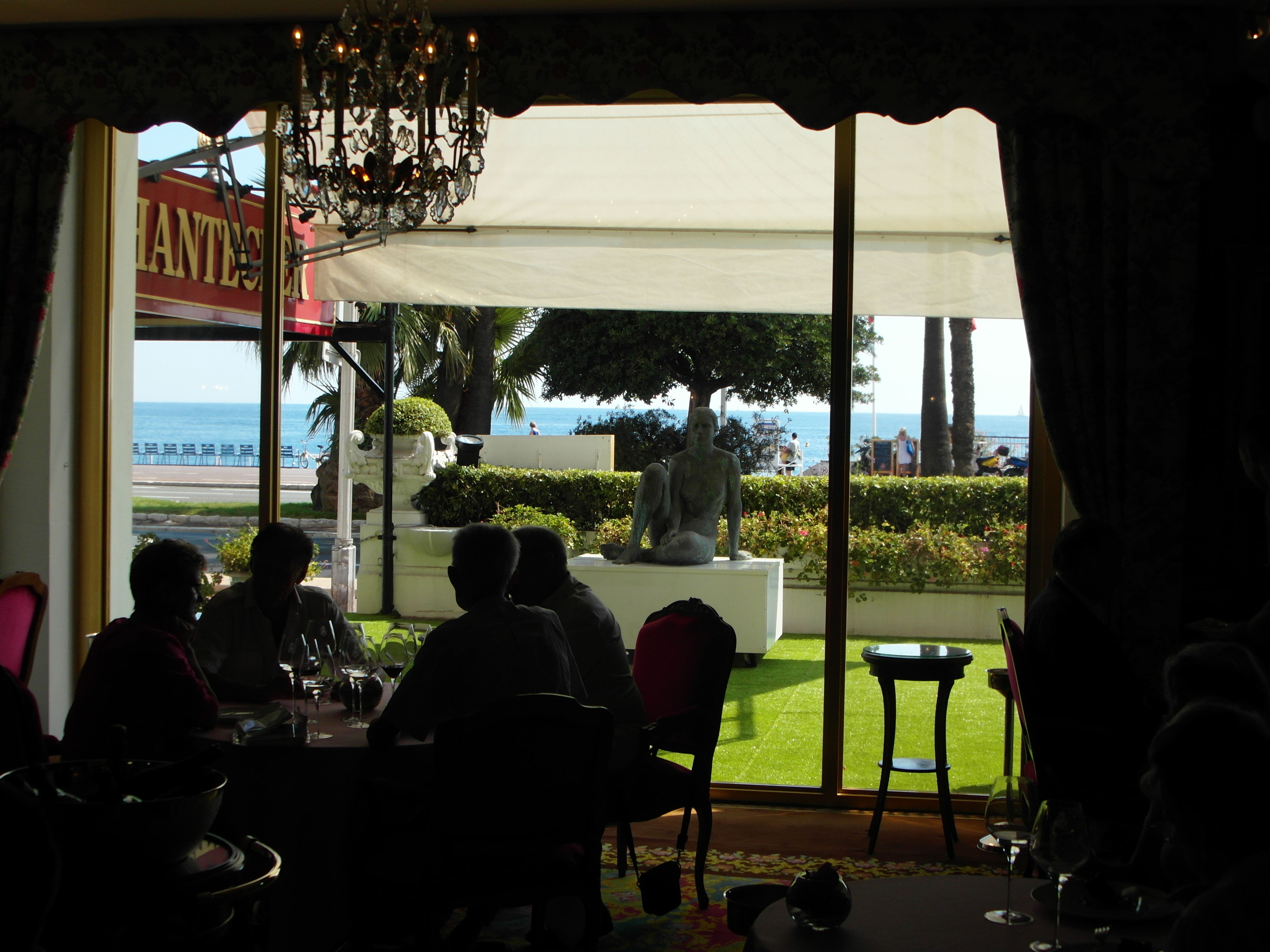
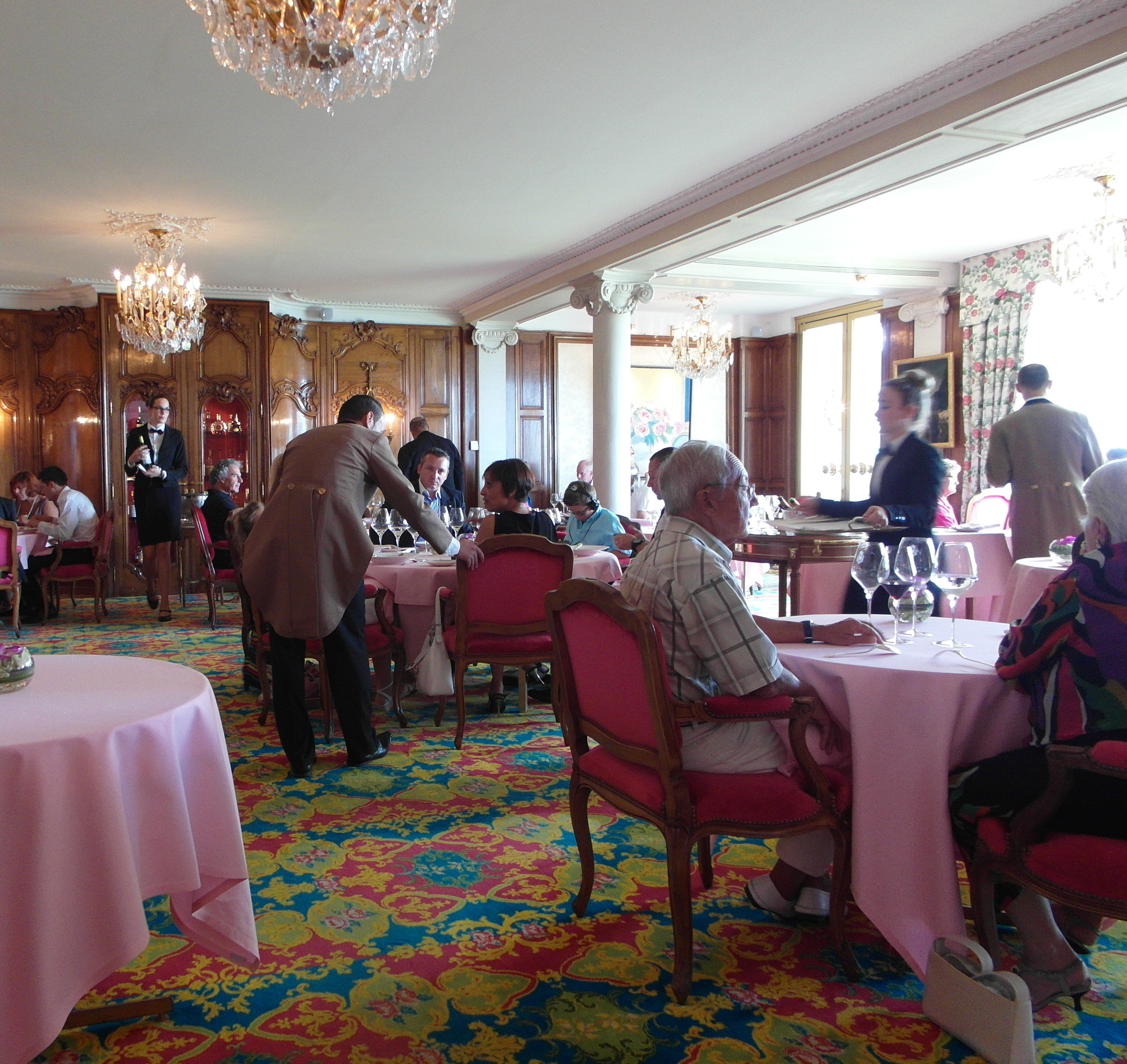
As we enter the restaurant, the visual feast continues. Our eyes roam from roccoco furniture in vivid shades of pink, lime, lemon, and cerulean blue to the custom-made Limoges table settings in these same colors to Baccarat Chandeliers to striking pink tablecloths which speak to the restaurant’s joie de vivre, and finally to the magnificent view of the Mediterranean from the huge glass doors at the entry. A visual treat no less impressive than that of the food to come … and the stage is set.

While the à la carte section of the menu is impressive, we decide to order Le Menu Plaisir, a set menu with wine pairings which appeals to us. By definition we are expecting a “pleasurable” meal, but the meal in all essence exceeds our expectations. After we place our order, the staff is delightfully attentive, and we find our water poured, we make our selections from the basket of freshly baked breads accompanied by a monogrammed butter, and we are toasting each other with our light Tariquet Cotes de Gascogne white wine ready for our gastronomical experience to begin.

photo 26

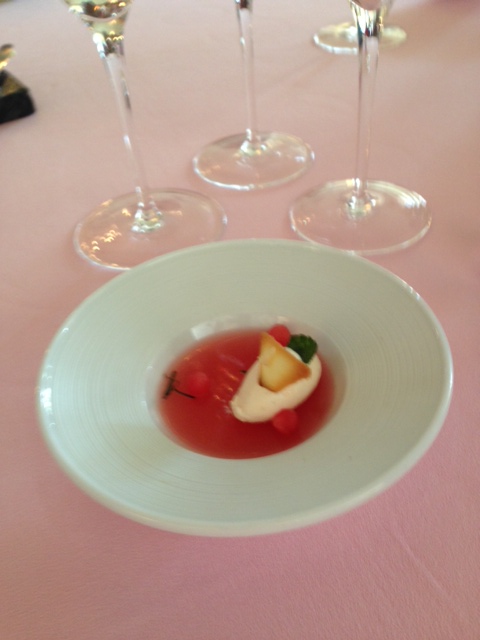
As is the custom of restaurants of this standing, the Chef sends out an amuse-bouche (“palate-teaser”) to welcome his guests and enhance the excitement for the meal to come. Jean-Denis Rieubland, the chef of the Chantecler, exerts his originality with a Mise-en-Bouche of Blanc-manger (“Blancmange”) of smoked salmon in watermelon aspic laced with balsamic vinegar. While a “blancmange” is typically a sweet dish, this one is a very light, almost ethereal savory dish that truly serves to arouse our interest in the meal.

photo 12
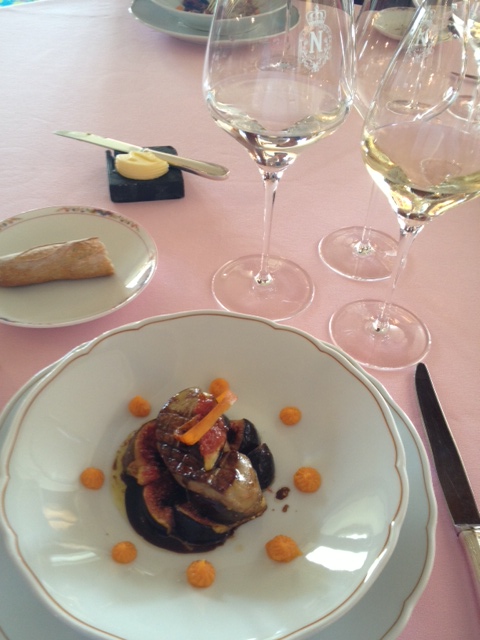
Pan fried duck foie gras with figs, sweet potato mousseline and balsamic sauce come next. While this dish may sound a bit rich and heavy for summer fare by the beach, it was surprisingly light. Of course, Chef Rieubland sets the portions at their ideal size so as to satisfy rather than satiate. The sweet figs enhanced by the touch of balsamic vinegar marries perfectly with the salty foie gras to produce a mouthful of exquisite satisfaction that is further enhanced by the light airy texture of the mousseline.

photo 14

photo 15

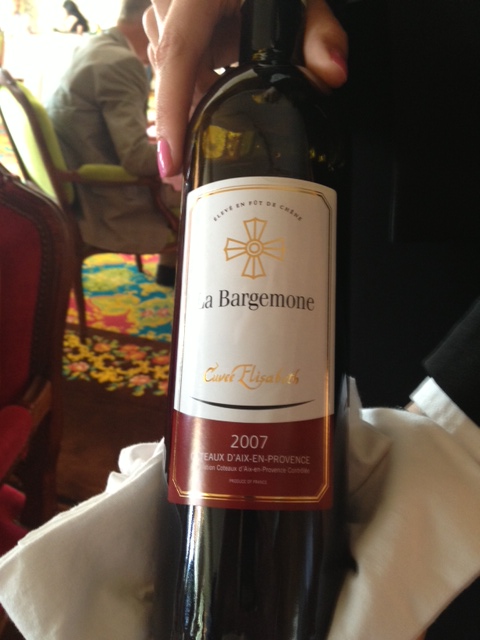
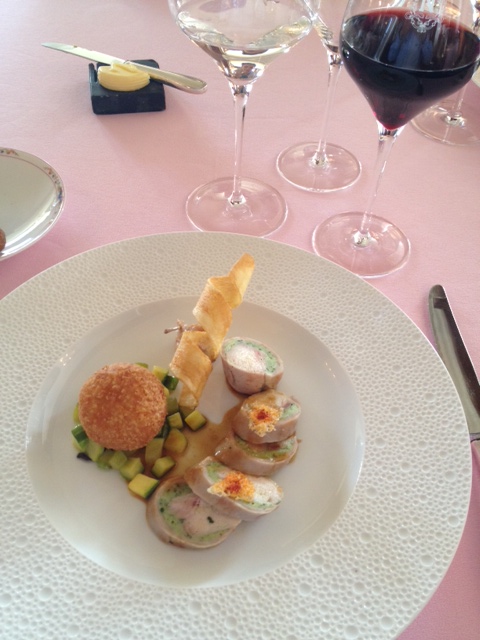
Prior to the main course of roasted rabbit with fresh herbs, rice and parmesan cromesquis, and local zucchini with black olives, our sommelier comes to offer us a Coteux d’Aix-en-Provence red wine, the 2007 La Bargemone. The Bargemone vineyard was founded by The Templar Knights in the 13th century. Full-bodied with light spice and loaded with rich, intense cherry fruit, this wine complements perfectly our Provence-inspired food with its divine mixture of French and Italian inspirations. Plus the blend of flavors and textures in this course, with the additional crunch of a playful home-made potato chip ribbon, leaves our taste buds and our stomachs completely satisfied.

photo 16

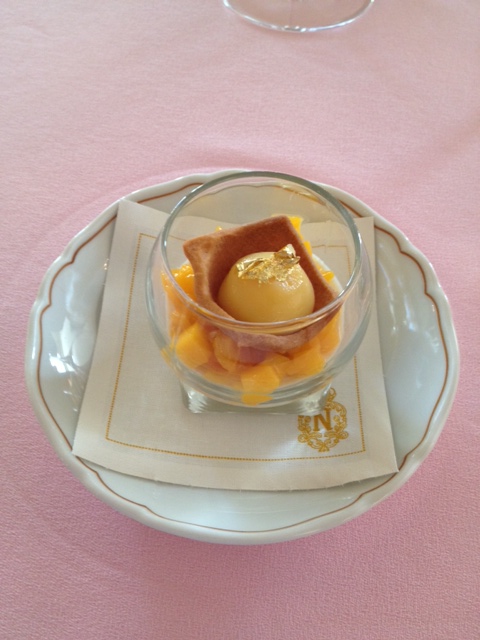
An unexpected treat arrives next – a “pre-dessert” of panna cotta with fresh mango. Light and refreshing, this little entremets kindles our desire for the sweetness of dessert.

phot 17

phot 4
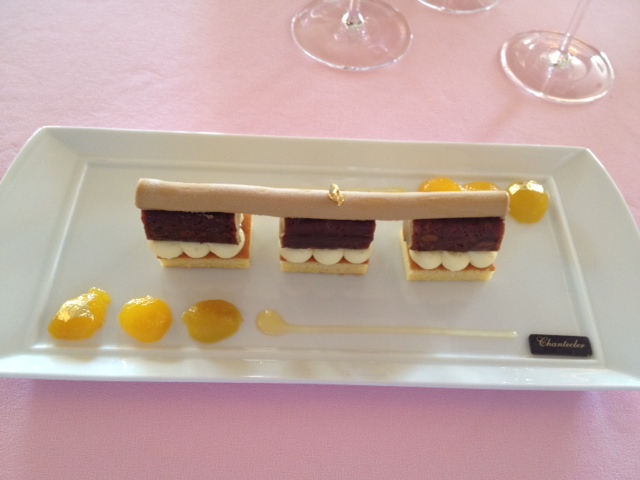
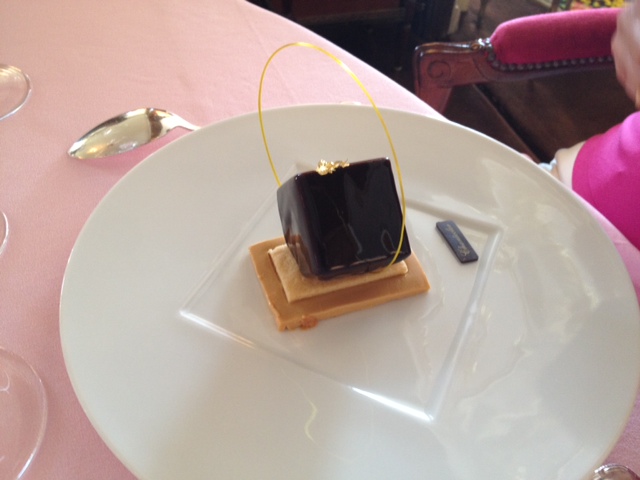
We shared two desserts, each of which reminds me of a piece of modern art — constructed forms of shape, color and flavor that arranged together provide an ultimate form of pleasure. The first original creation is a “harmony of mirabelle (yellow plum) and licorice, vanilla cream and Genova cake”, and the second is a “Bretagne shortbread and Manjari chocolate cube with crème brulée and caramel”. To describe them as “original” would be an understatement. Clearly the pastry chef is an artist in his own right whose creations are edible works of art.

photo 21

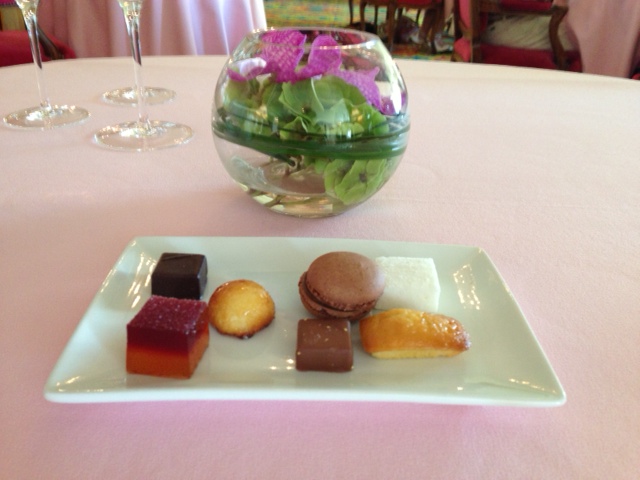
Our meal concludes with the pastry chef’s mignardises and coffees.

Long after our feast is over, the memory and the pleasures linger on.

Nice, France ~ Le Chantecler and Musee Matisse de Cimiez

SAM_1092

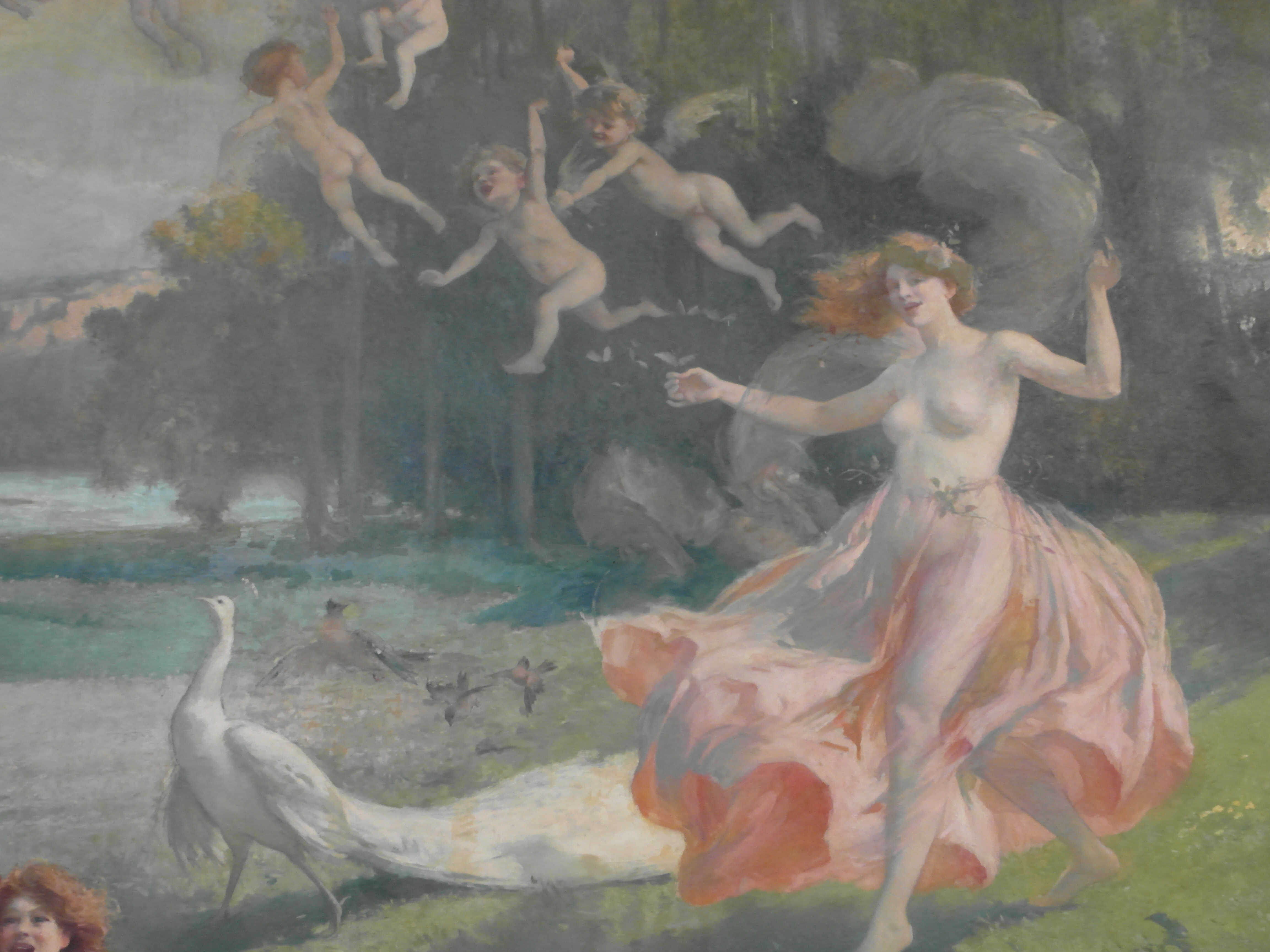
Toile peinte “Poesie Legere” par Hyppolite Lucas (1912) sur les murs de la rotonde de l’Hotel Negresco a Nice

Highlights of the day

Today had been planned for more than two months as a pilgrimage to the best food experience in Nice, lunch at the Michelin two-star restaurant of the Hotel Negresco, le Chantecler. By the way, a chantecler is a special breed of rooster which was developed in Oka, Quebec in the 1920s and known for being extremely cold resistant (which leaves me unclear as to its connection with warm and sunny Nice!).

SAM_1095

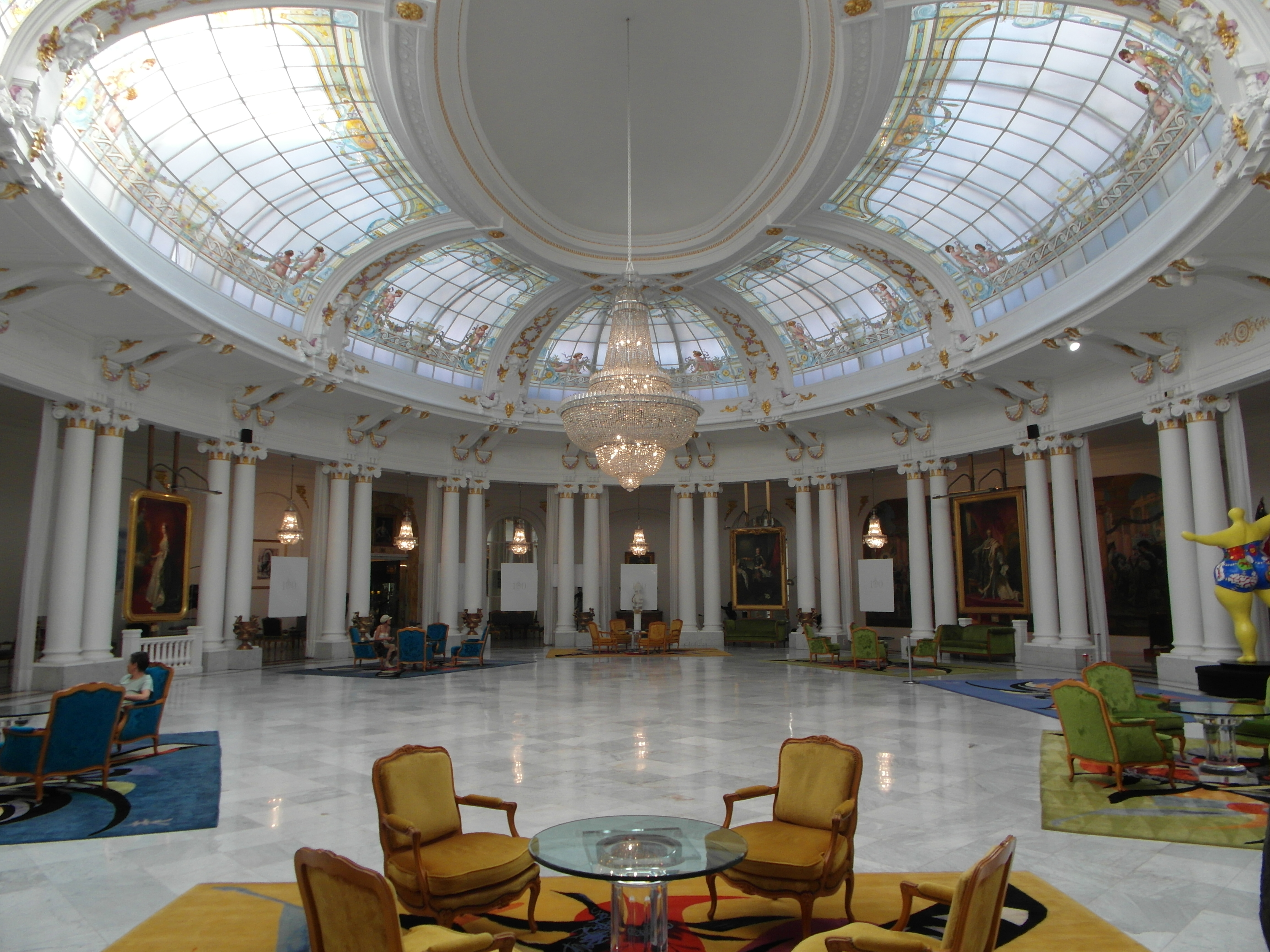
La Rotonde Centrale de l’Hotel Negresco a Nice

The Hotel Negresco, the grande dame of Nice hotels with a prime location along the Promenade des Anglais, is celebrating its 100th anniversary this year, and has received a fresh coat of paint and other sprucing up for its birthday. One feels like one is stepping back a hundred years into the jewel of the age, and the staff, dressed in period uniforms, help the illusion of a period otherwise long gone.

SAM_1087

Restaurant Le Chanteclerc at the Hotel Negresco in Nice

The wonderful meals which we have experienced during our first week in Nice were mere appetizers when compared to what was in store today at the Chantecler restaurant. A Michelin two-star restaurant, le Chantecler offered us a lunch experience we will remember for a long time. Appropriately called “Menu Plaisir” (Pleasure Menu), the three-course lunch actually included also a pre-appetizer course as well as a pre-dessert course.

SAM_10842

Restaurant Le Chanteclerc at the Hotel Negresco in Nice

The service, as one would expect in such a temple of gastronomy, was extremely well organized and efficient. One modern touch did make its way into the restaurant; I noticed that an elderly couple at the next table were busily taking pictures of the platters with their iphones, just as a Frenchman at another table was busy taking a phone picture of the bottle of wine he had ordered. Steve Jobs did change our lives and the world forever.

The lunch turned out to be a three and a half hour unparalleled affair (I know it’s tough, but someone has to do it!), which made it difficult for us to follow our plan to visit both the Musee Chagall and the Musee Matisse in the afternoon. Both museums are near each other on the hills of the Cimiez (pronounced like”See-me-hay”) district of Nice, along the same no 22 bus route; the walk between the two museums is less than fifteen minutes. Although the Musee Chagall offers free entrance on the first Sunday of the month (which is today), we elected to visit the Musee Matisse and leave the Musee Chagall for another day.

SAM_1104

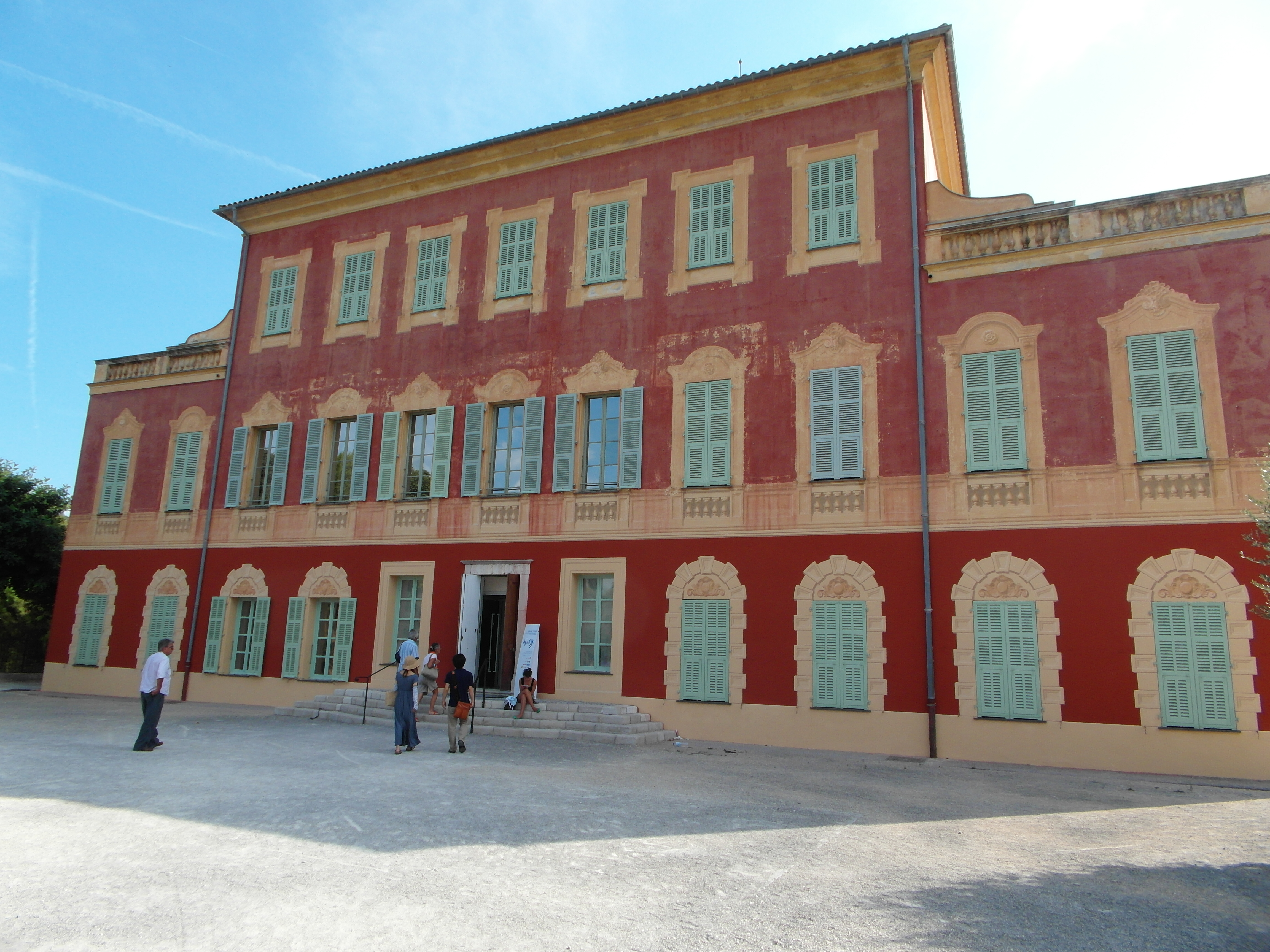
Musee Matisse in the Cimiez district of Nice

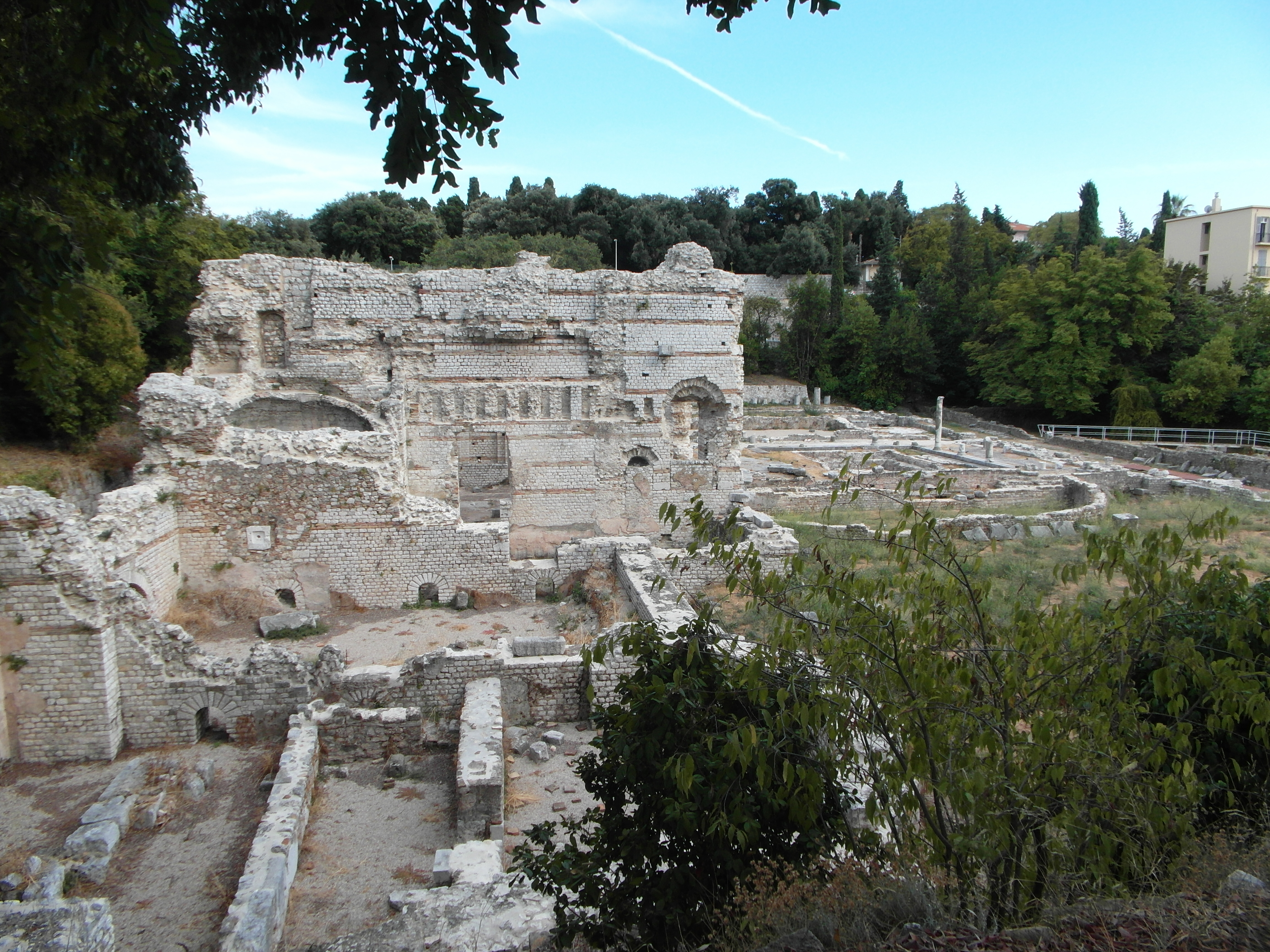
The Musee Matisse is in a beautiful location within the park around the Arenes de Cimiez (Arenas of Cimiez), Roman ruins around which a wonderful park has been built.

SAM_1108

Part of the Roman ruins in the Arenes de Cimiez in Nice

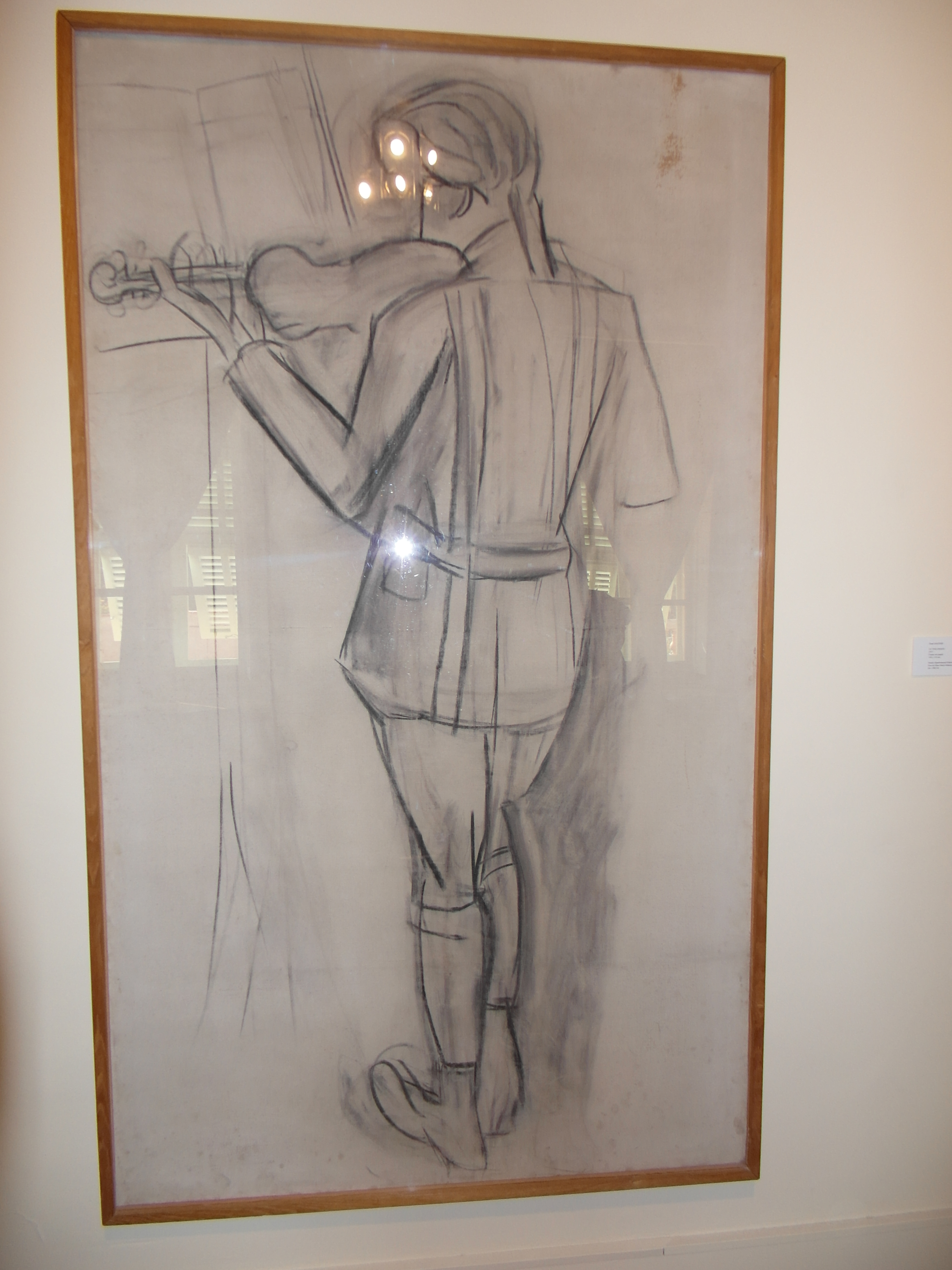
This summer, the city of Nice has organized a special program called “Un Ete pour Matisse” (A Summer for Matisse), in which works by Matisse are displayed in eight different museums of the city. The Musee Matisse itself has a special exhibition called “Matisse, the Music in the Work”, which I found most interesting.

SAM_1106

Matisse was a very dedicated violin player. He once said: “I’m afraid that I will turn blind. A blind man must give up painting, but not music”. Most of the ten exhibit rooms in the museum were dedicated to works by Matisse involving music, with the room about his Jazz series definitely my favorite one.

CRI_164250

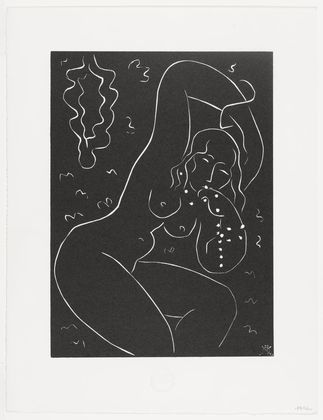
Nu au Bracelet (1940) by Henri Matisse

Among the other works exhibited today, my favorite would have to be the Nu au Bracelet (Nude with Bracelet) dating from 1940.

Quite understandably, we elected not to go out for dinner tonight, and rather had an at-home dinner of salade nicoise and pissaladiere, a Nicoise pizza with caramelized onions, anchovies and nicoise olives.

Nice, France ~ Le marche aux fleurs, le port et la mer

SAM_0955

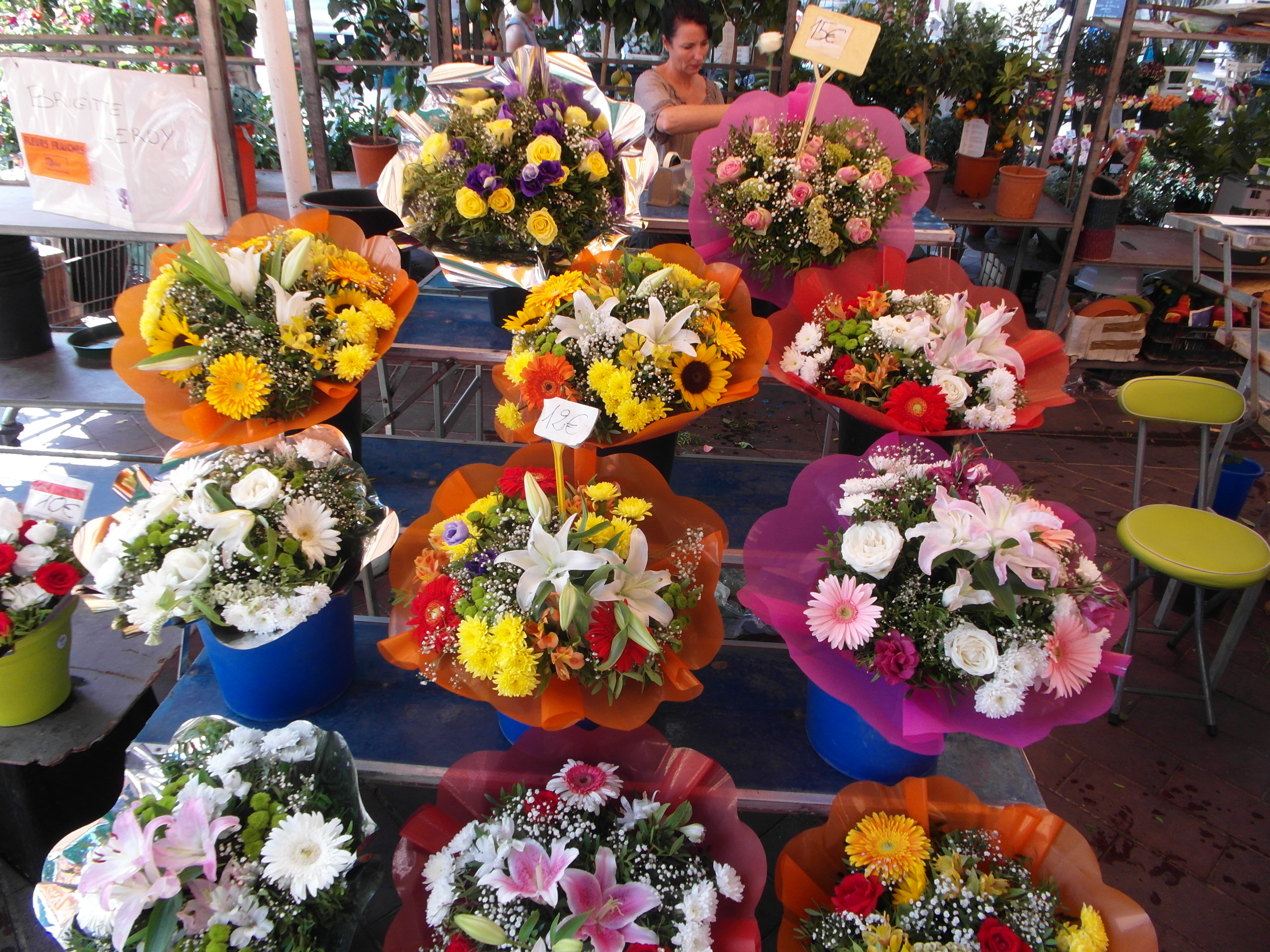
Marche aux Fleurs du Cours Saleya a Nice

Main events of the day

*Visited the Marche aux Fleurs (Flower Market) at Cours Saleya and enjoyed some socca

*Ate lunch on the harbor front at the gastronomic seafood restaurant l’Ane Rouge

*Took a boat tour of Nice, Villefranche and Cap Ferrat

*Enjoyed dinner again at Blue Beach on the beach in front of the Hotel Negresco

Highlights of the day

SAM_0957

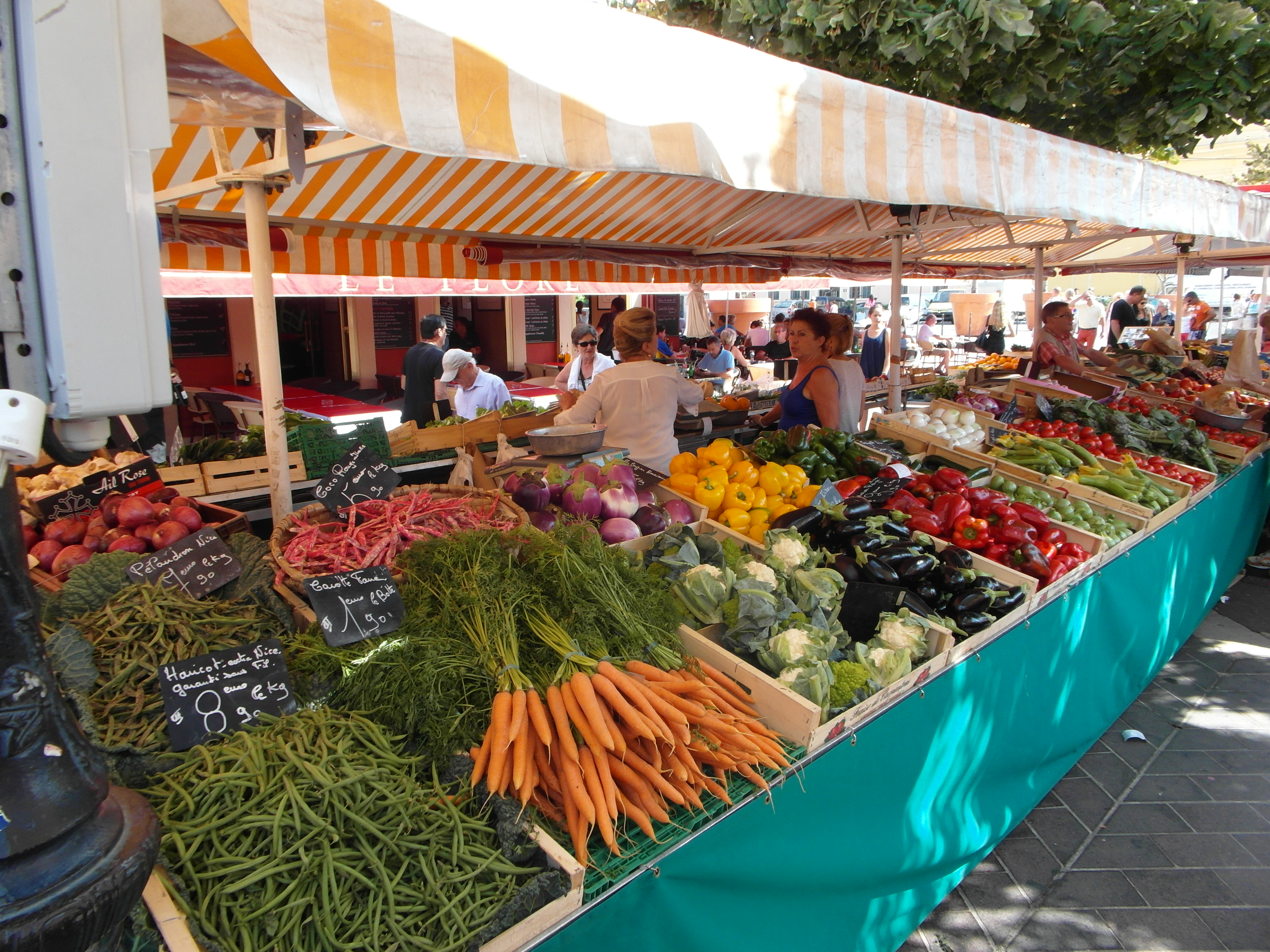
Vegetable stand at the Marche aux Fleurs of Cours Saleya in Nice

Since we have had a busy first few days in Nice, we decided to take it easy today. After breakfast, which for me so far has consisted of pain au chocolat, fruit and tea, we walked over to Cours Saleya in old Nice. This is about a fifteen minute walk, most of it walking thru pedestrian areas lined with bistros and cafes. I continue to be amazed at the number of outdoor restaurants in this town; we must have passed by at least a hundred just to get to Cours Saleya.

Although it is called the Flower Market, only a small part of the market consists of flower stands. Most of the market, several blocks long, consists of a food market (except on Mondays when it turns into a flea market). The breadth of selection and freshness is astounding, and Lynn wasted no time in buying enough fruit and vegetables to load me up with heavy bags to carry for the rest of the morning.

SAM_0969

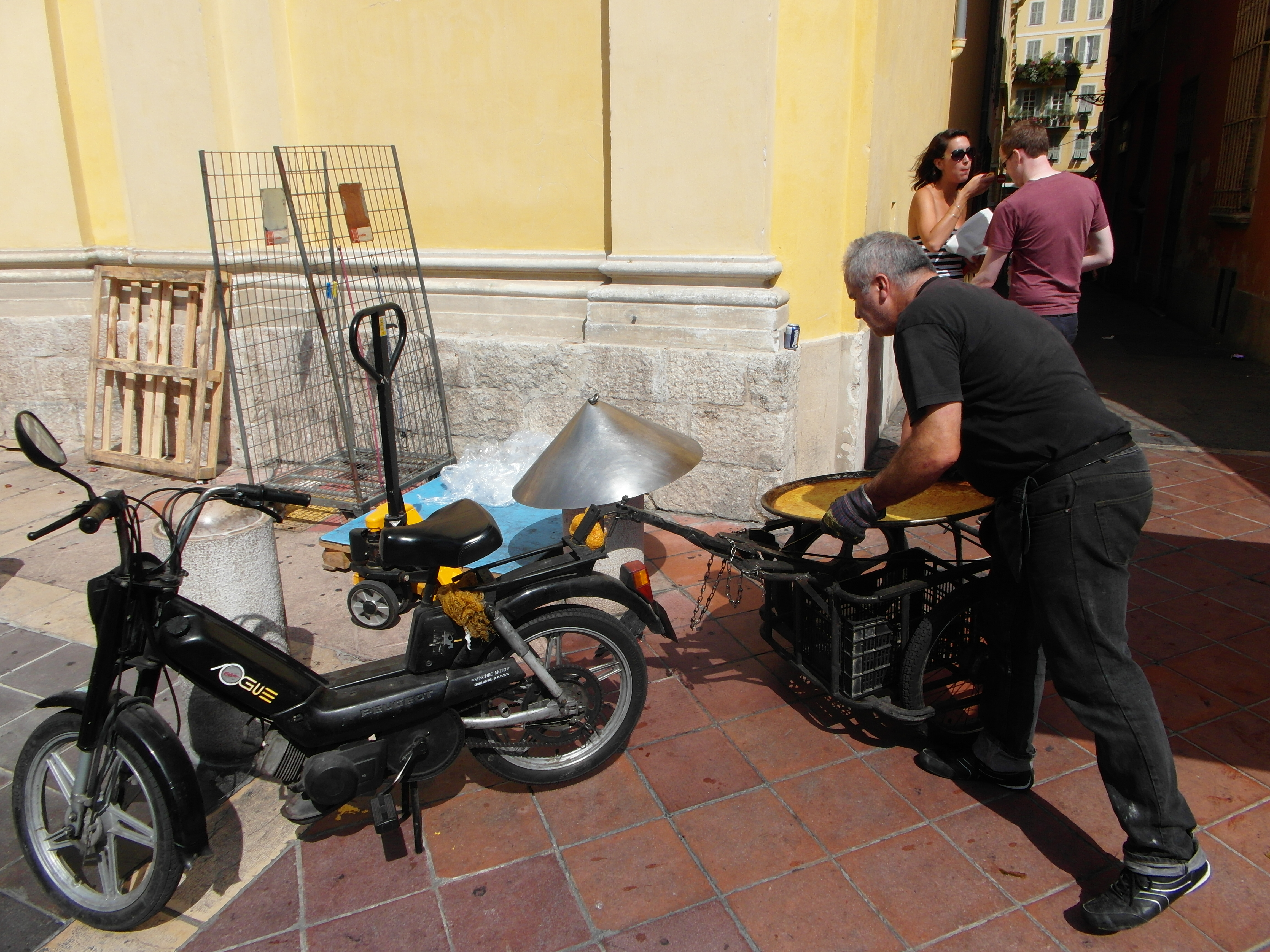
The socca is delivered by motorbike every few minutes to the food stand on Cours Saleya

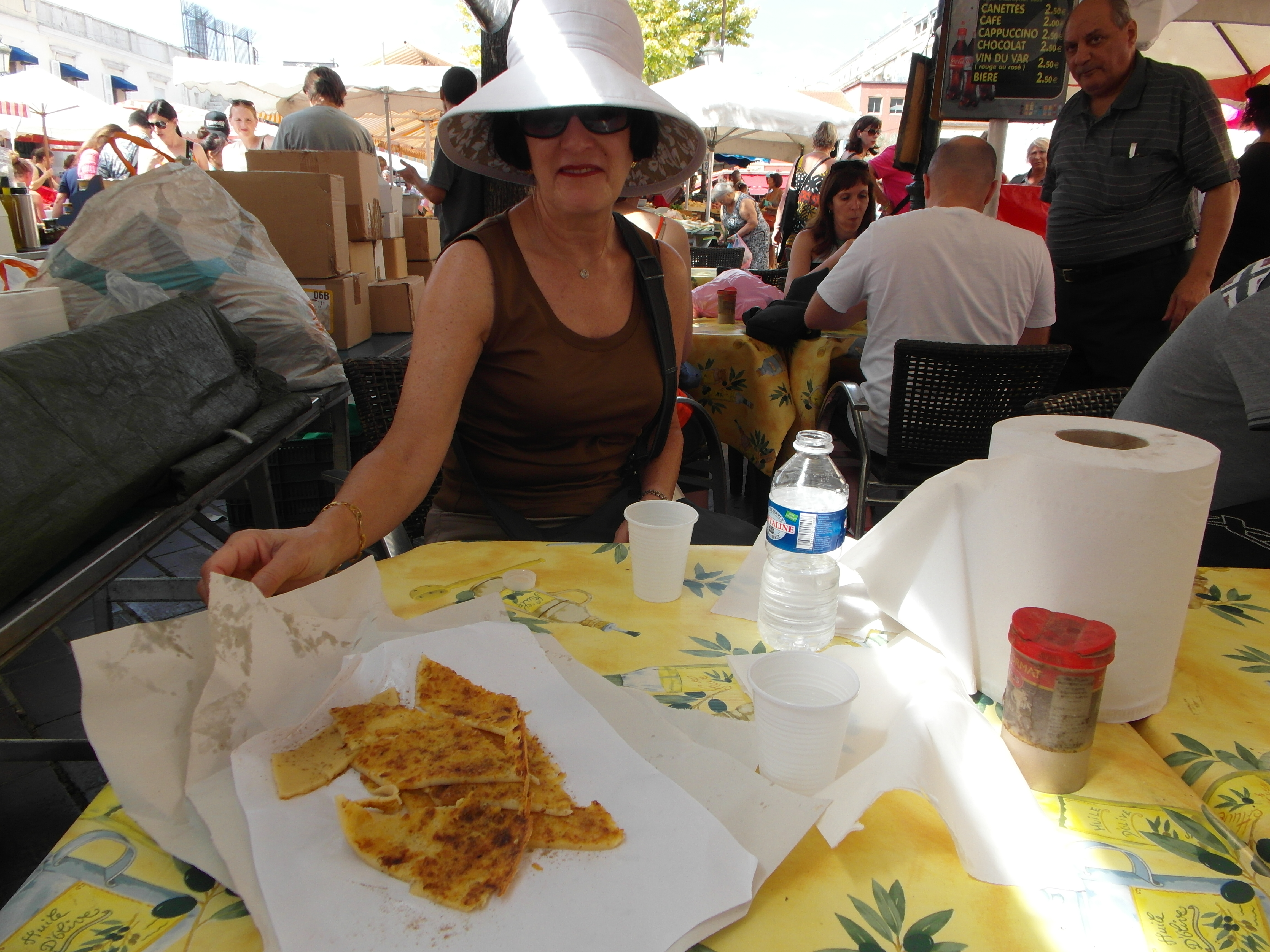
A tradition which quite a few visitors to Nice seem to respect is to eat some socca at the market. The food stand is in front of the church and offers in addition to the chick pea pancake socca other Nice specialities such as Pissaladiere and tourte de blette.

SAM_0968

Enjoying socca at the Marche aux Fleurs in Cours Saleya, Nice.

For 3 euros, we got one portion of socca which was more than enough to satisfy our desire to taste this delicacy and also provide me with enough nutrients to handle the twenty minute walk back to the apartment with my load of fruit and vegetables.

SAM_0975

The port of Nice

As soon as the groceries were put away, we headed out to the bus stop, a few steps away from our front door. It is quite easy to master the Lignes d’Azur iphone app, which is quite handy in that it will tell you what the next bus to take is in order to get to your destination, the route and the exact times of departure and arrival. So I knew when we left the apartment that a no 7 bus would be at the bus stop two minutes later and would take us to the Nice port in twelve minutes. Well worth the one euro (US$1.30) cost of the ride, don’t you think?

SAM_0988

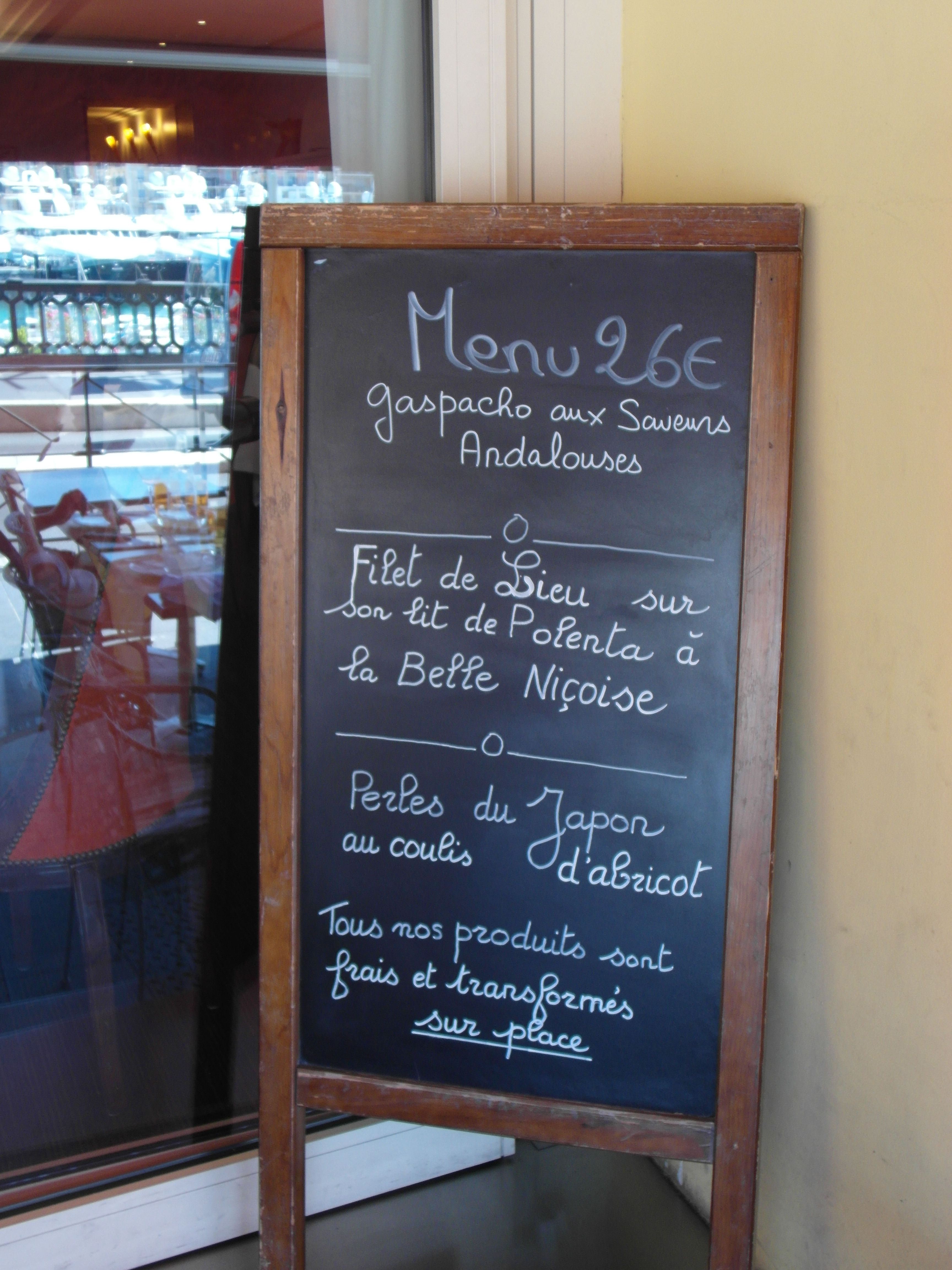
Menu of the day at L’Ane Rouge on the harbor front in Nice

We sat down for a simple lunch at l’Ane Rouge, a gastronomic seafood restaurant on the harbor front. We opted for the menu of the day and for a half bottle of a very refreshing Cotes de Provence Bandol rose. Close to us was the main access road for cars wishing to board the next ferry to Corsica, and it filled up quickly.

SAM_1000

Leaving Nice harbor for a boat ride around Villefranche, Cap Ferrat and Nice

After lunch, we had a reservation for a “promenade en mer”, a boat ride which would take us to Villefranche, Cap Ferrat and along the Nice coast as well. As soon as we left the protection of the port, the winds picked up quite a lot, even though it had seemed from shore to be a windless warm sunny day (by the way, we have just been having fantastic nice sunny warm weather since the first day after our arrival, and the forecast says it will continue that way!).

SAM_1024

The summer place of the Zanussis in Saint Jean Cap Ferrat

As our boat went along the shoreline of Cap Ferrat and Saint Jean Cap Ferrat, the tour guide started pointing to one fabulous mansion after another built or owned by a celebrity. Kurt Jurgens, Elton John, Tina Turner, Mick Jagger, King Leopold of Belgium, King Farouk of Egypt, Sean Connery, Bill Gates are but some of the names I remember being mentioned. I suspect that seeing them from the water is the only way we were ever going to see them. Of particular interest, Villa Leopolda (owned at some point by Bill Gates) and Villa Ephrussi de Rothschild are the only two “villas” which have a view both of the Villefranche bay as well as of the Monaco bay on the other side of the Cap Ferrat peninsula.

SAM_1031

The port of Villefranche-sur-Mer viewed from the water

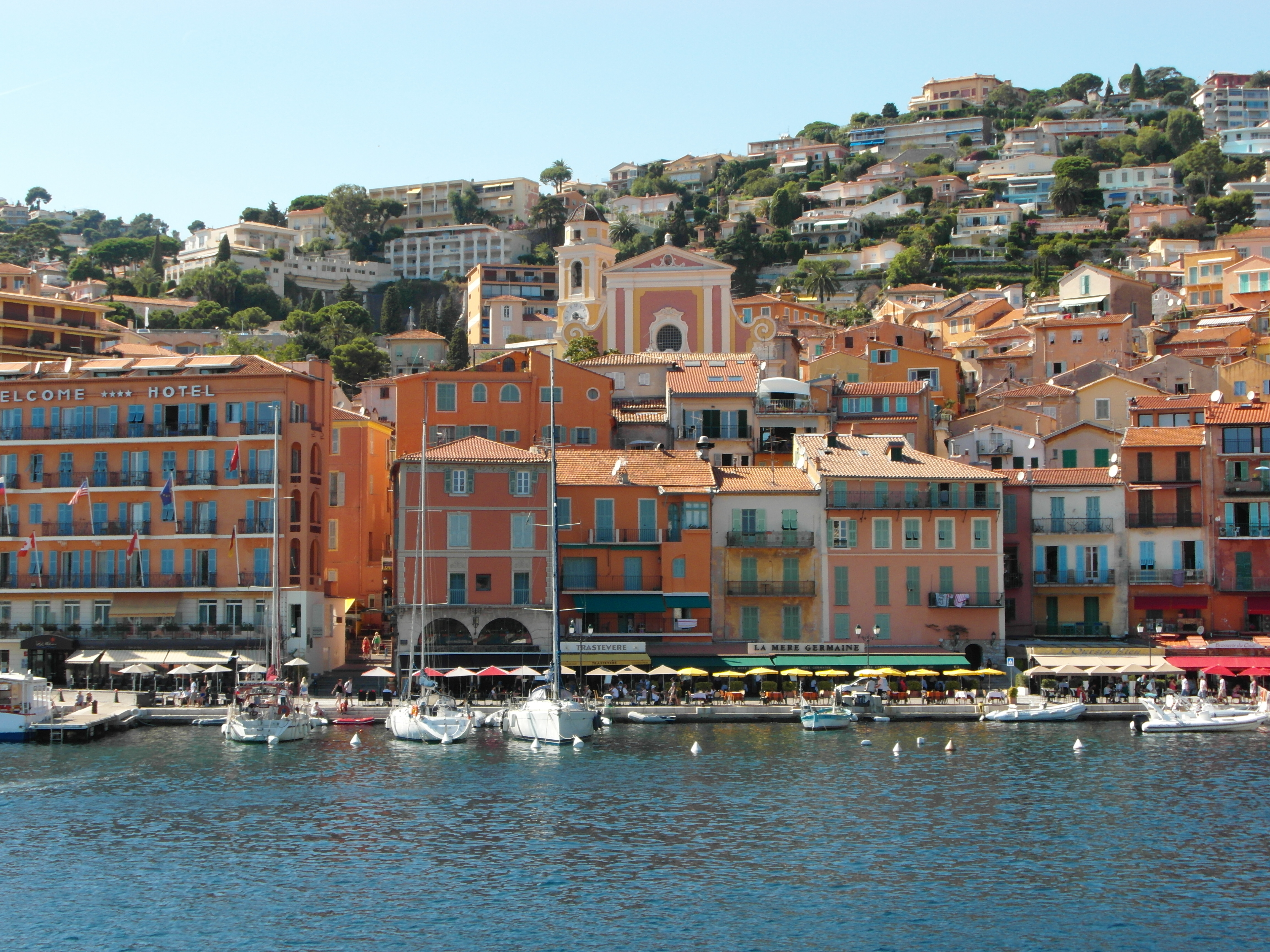
We particularly enjoyed passing in front of the port of Villefranche-sur-Mer, a fantastic view in itself, and hearing the guide point out the green awnings of La Mere Germaine (where we had bouillabaisse a few days ago) with the comment that it offered the best bouillabaisse in the whole world!

SAM_1054

Hotel Negresco of Nice, viewed from the sea

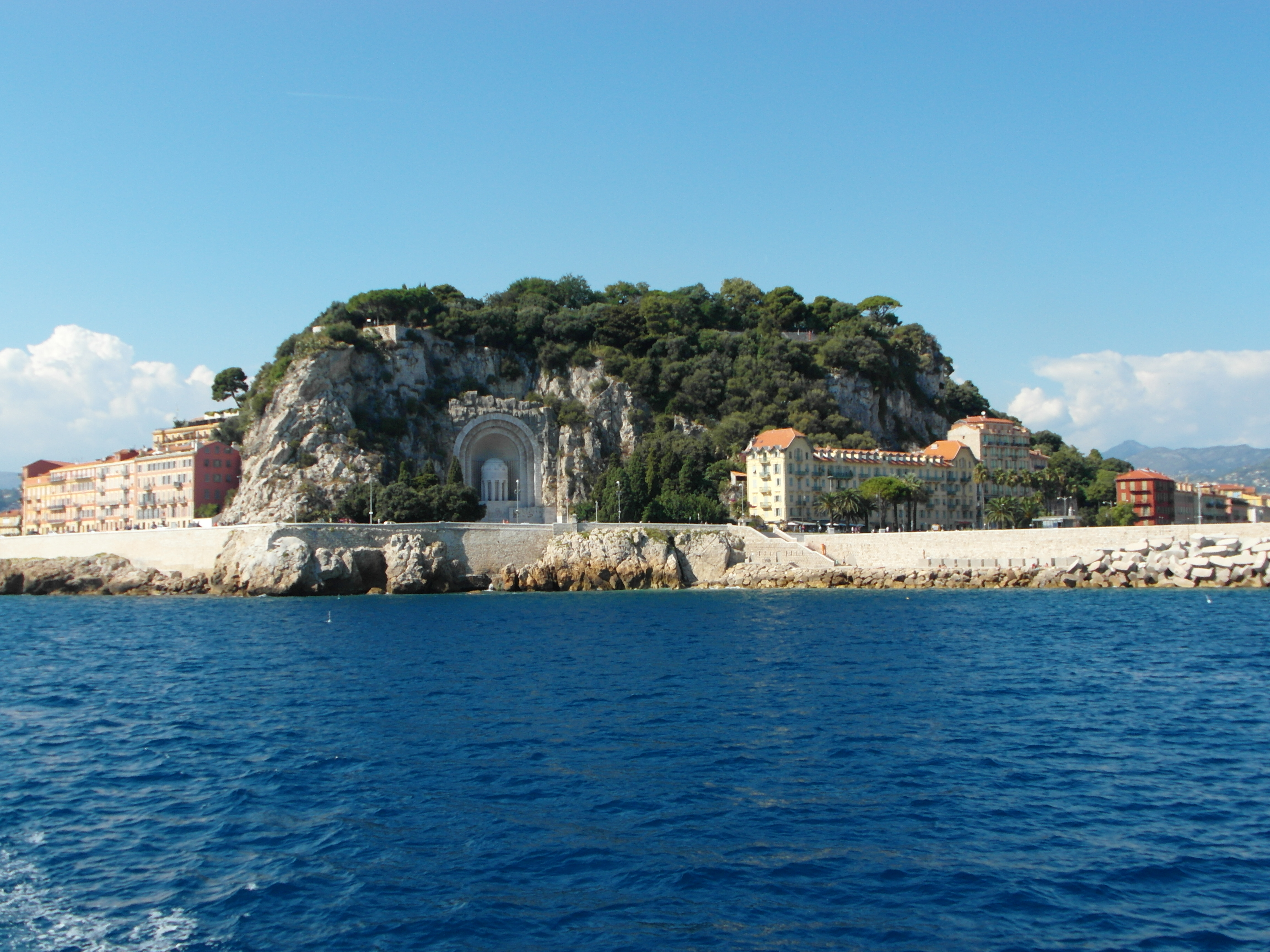
The boat tour later went along the Nice shoreline, offering us great views of Nice from the water.

SAM_1061

La colline tu chateau in Nice

SAM_1073

Sunset at the Blue Beach restaurant on the beach in Nice

And what better way to end a day than with a good salade nicoise at Blue Beach on the beach of Nice at sunset. It was so heavenly and peaceful … and then I remembered that they don’t have the waves and the tides and the noise of an ocean beach. They have the serenity of the Mediterranean.

BonVoyageurs Tips

*Take a photo of the menu with your phone. It saves having to remember what you ate, which is pretty hard to do as you get as old as we are and particularly if you eat out frequently.

*I cannot recommend highly enough the shirts with hidden pockets which I am wearing on this trip. Six pockets of which five are hidden give me plenty of carrying space for my iphone and my mobile hotspot. More importantly, the hidden pockets under the arms are so well hidden that they provide me with space which is not only pickpocket-proof but also mugger-proof. A great addition to my hidden cargo pants, which I have been taking on trips for a couple of years now.

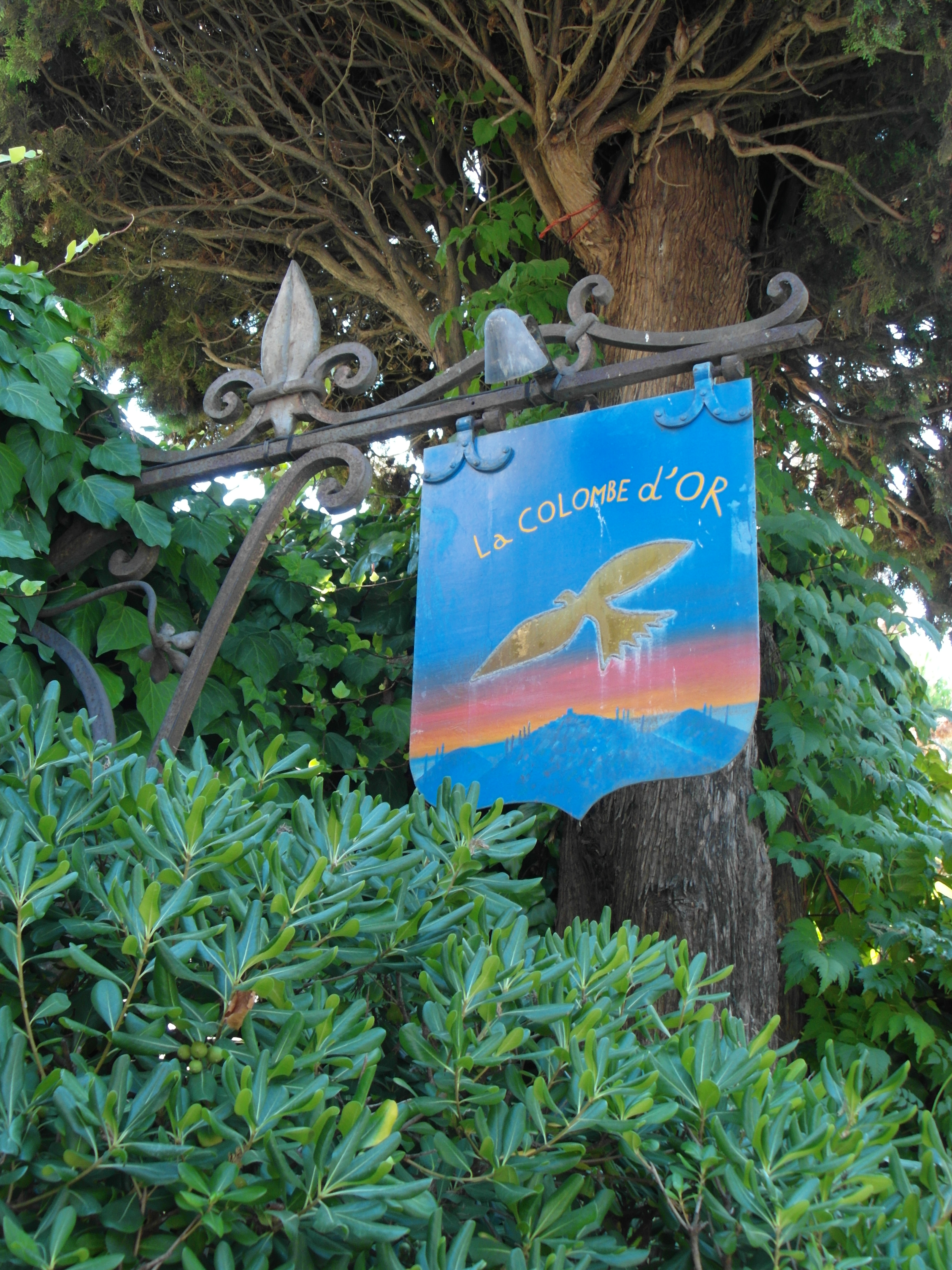
La Colombe d’Or ~ Luncheon in the shadow of artists

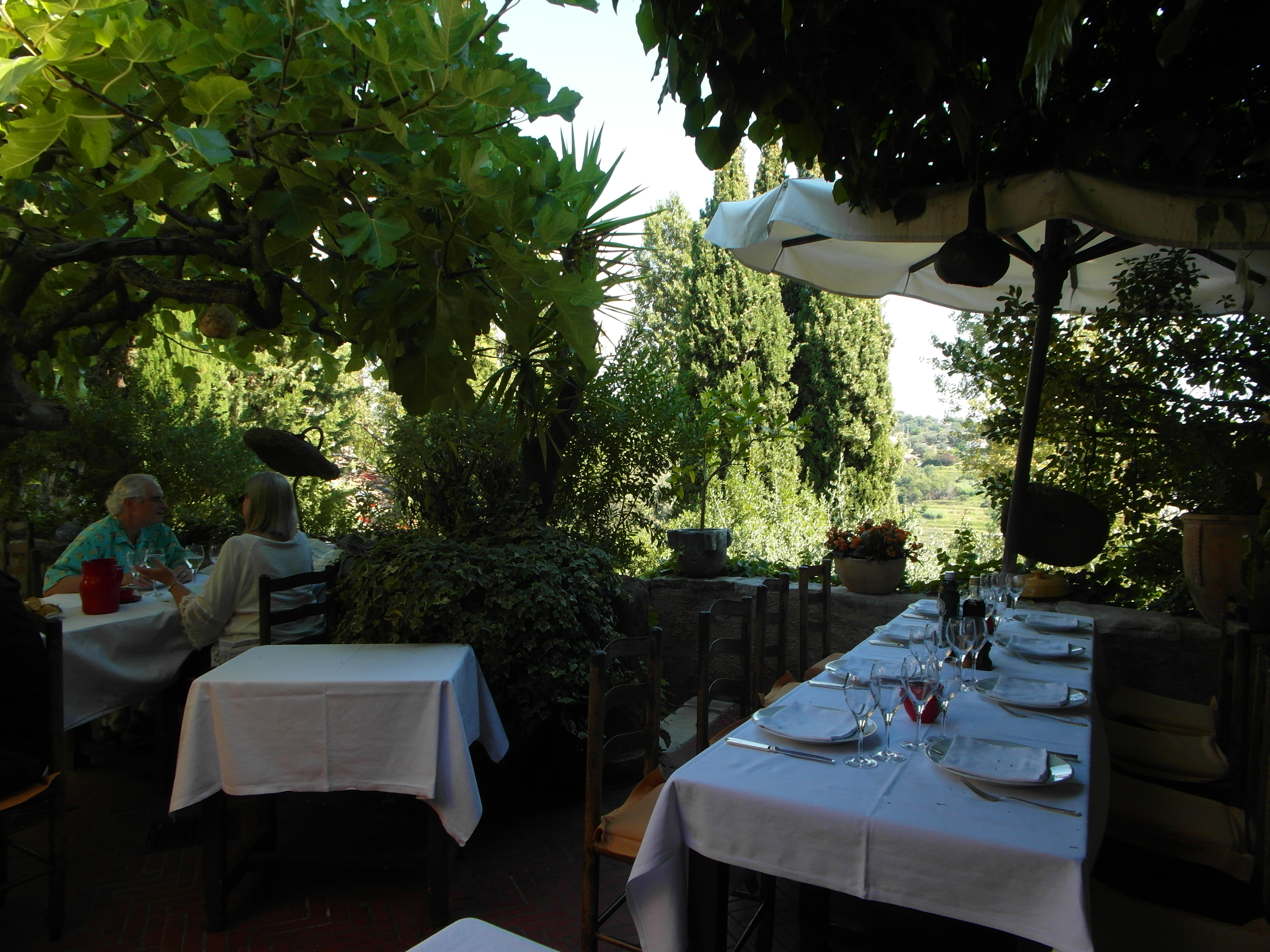
SAM_0902

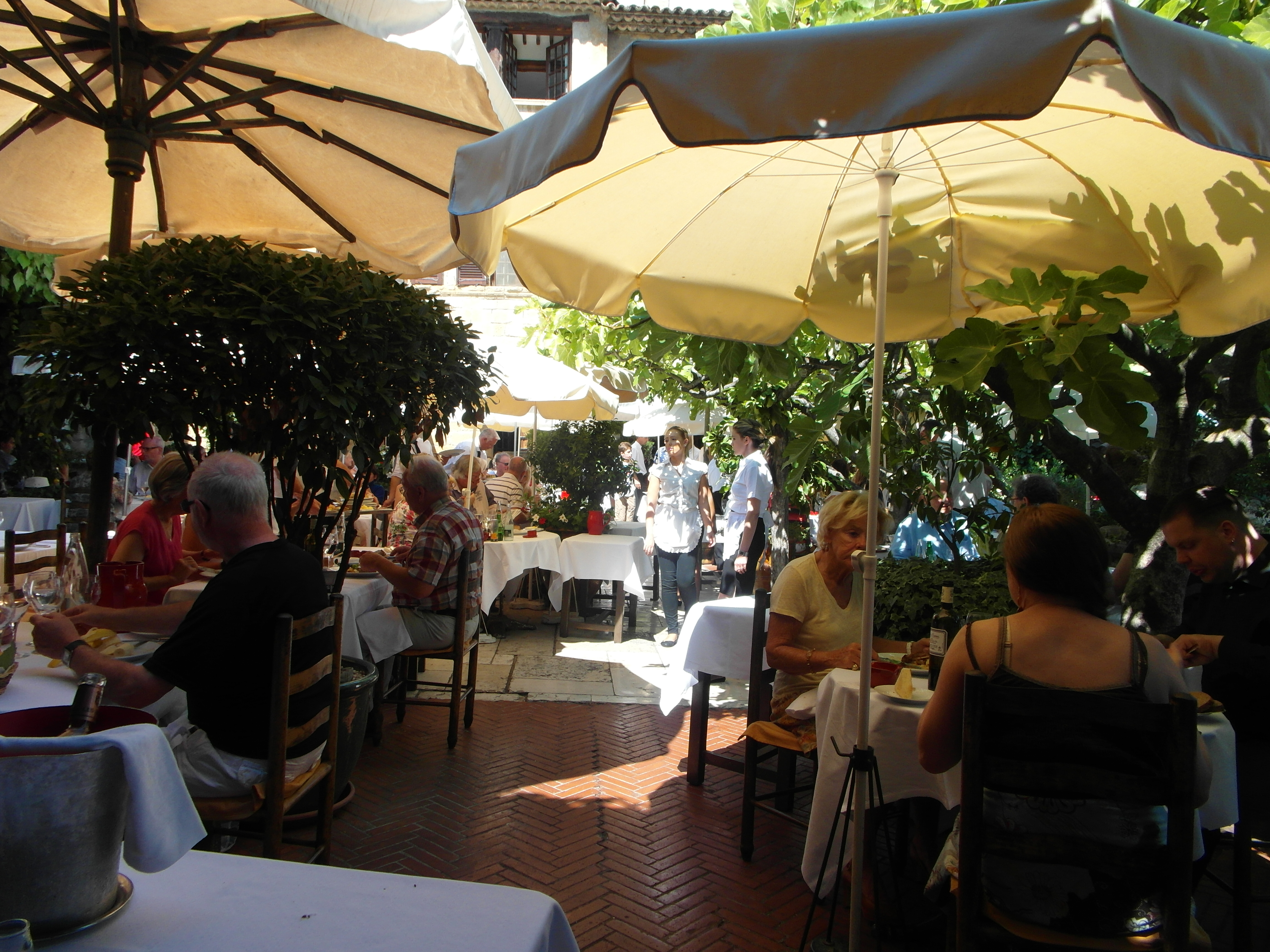
Terrasse Restaurant La Colombe d’Or in Saint-Paul-de-Vence

Sometimes the spirit of a place is so strong that its influence sets the mood and tone. Such is the case with La Colombe d’Or, a restaurant which was frequented regularly by artistic greats such as Picasso, Chagall, Modigliani, Matisse, Miro, Hemingway, Fitzgerald, Isadora Duncan, Yves Montand, Edith Piaf and the list goes on …

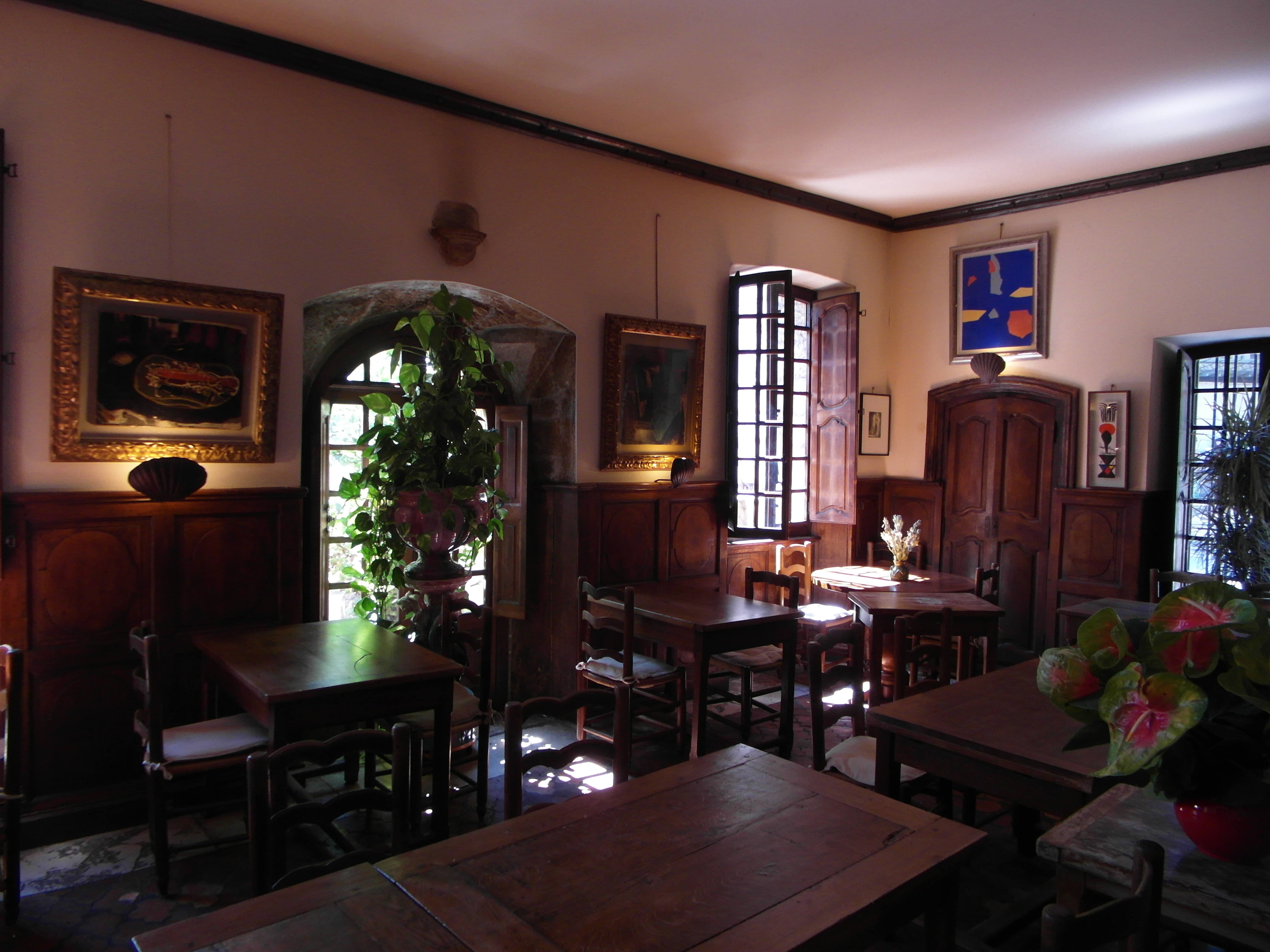
SAM_0882

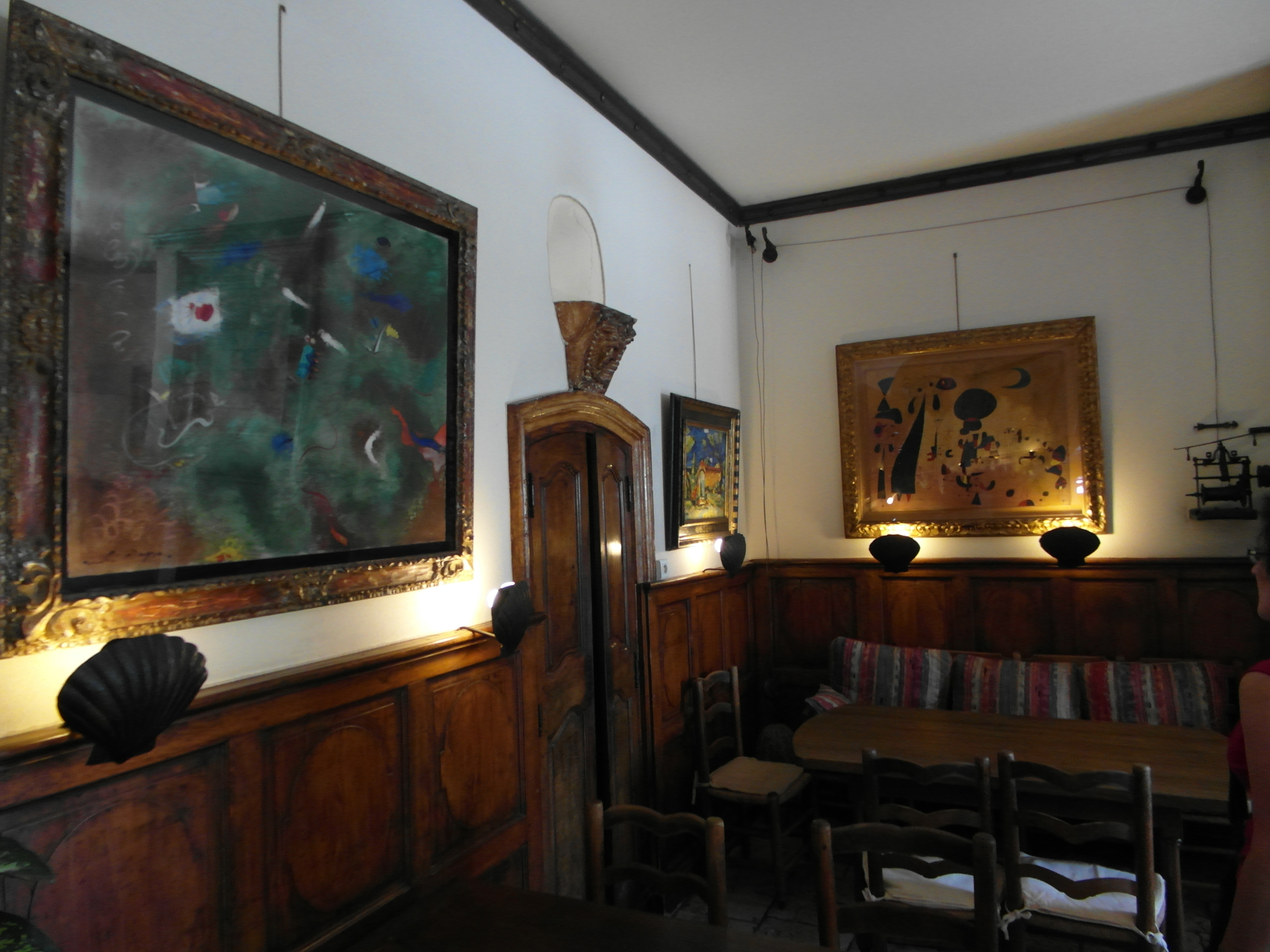
Interior of La Colombe d’Or featuring magnificent works of art

Why did this restaurant attract so many creative geniuses and why does it still serve as a mecca for the rich and famous? I suspect the artistic passions of the original owner, Paul Roux, who regularly accepted paintings in lieu of payment, gave birth to a tradition of artistic joie de vivre that is the hallmark of this captivating restaurant.

SAM_0910

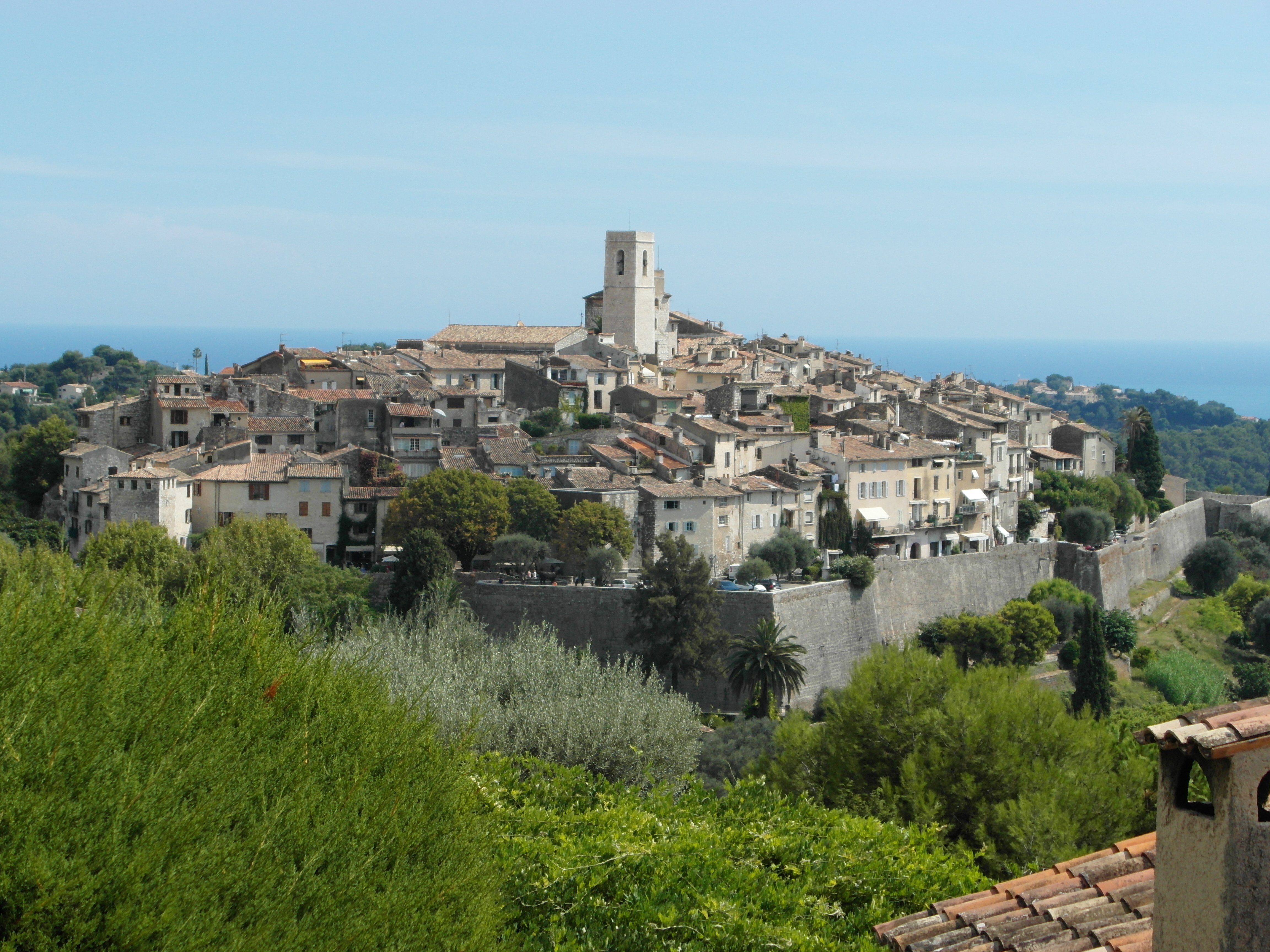
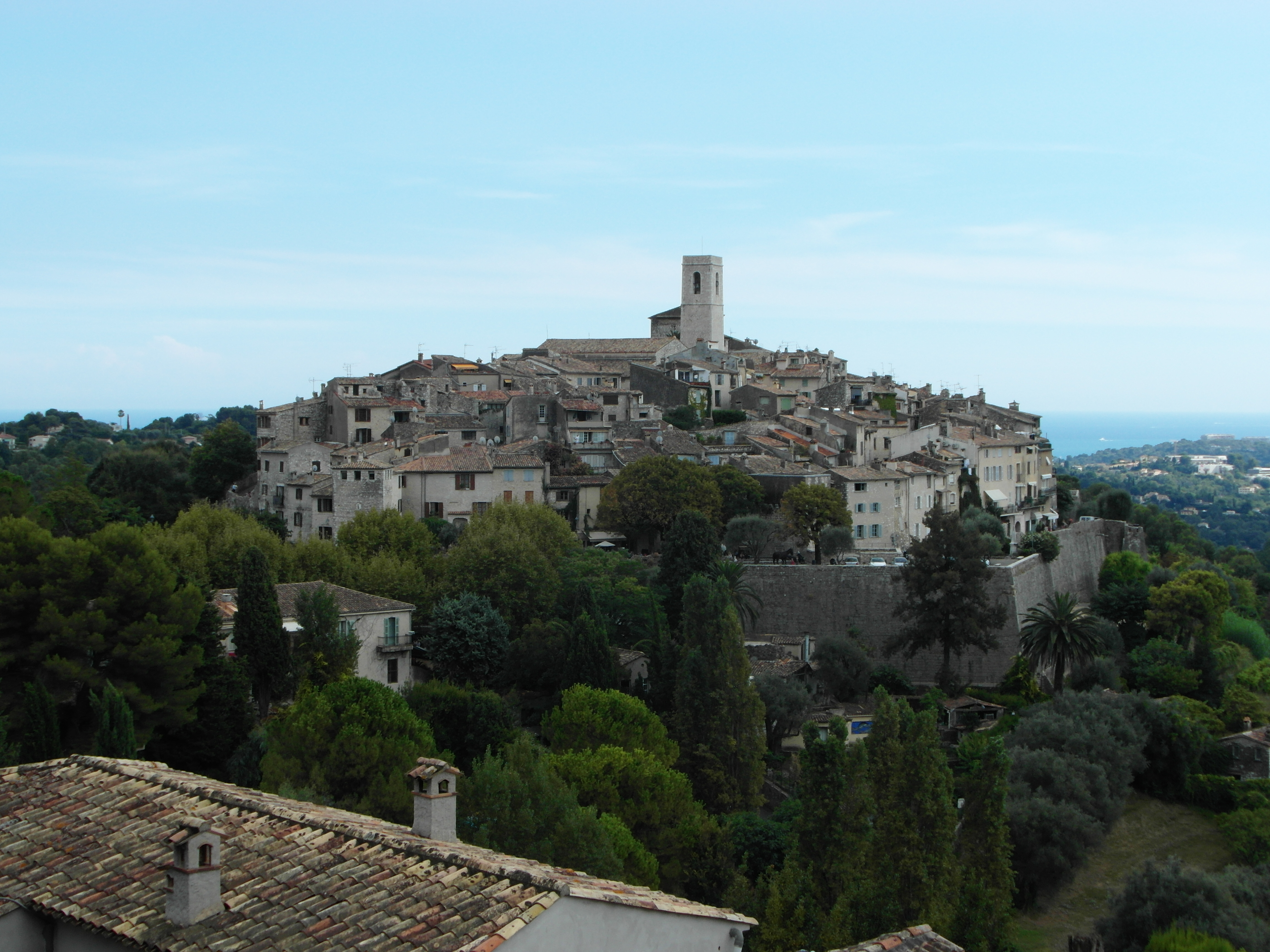
The village perche of Saint-Paul-de-Vence

But there’s more to the magic of La Colombe d’Or than simply art …. Picture a perfectly preserved Medieval village perched on a hillside … aah yes, another French village perché … simply a heartbeat away from the glorious Mediterranean on the magnifique Cote d’Azur. Just outside the Medieval walls of the village, with beautiful gardens and a commanding view of the valley below, lies a truly unique hotel, La Colombe d Or, which many have called the most romantic hotel in the world. This is the home of and the inspiration for this extraordinary restaurant which has inspired decades of artists and lovers. Over the years, artists have regularly left their mark by painting directly onto the walls or by offering a painting, sculpture or oeuvre d’art. The ambiance speaks of beauty, creativity, charm and romance.

So do the talents of the chef, Hervé Roy, live up to the restaurant’s legend? I don’t recall fresh oysters on the menu but otherwise … a resounding yes!

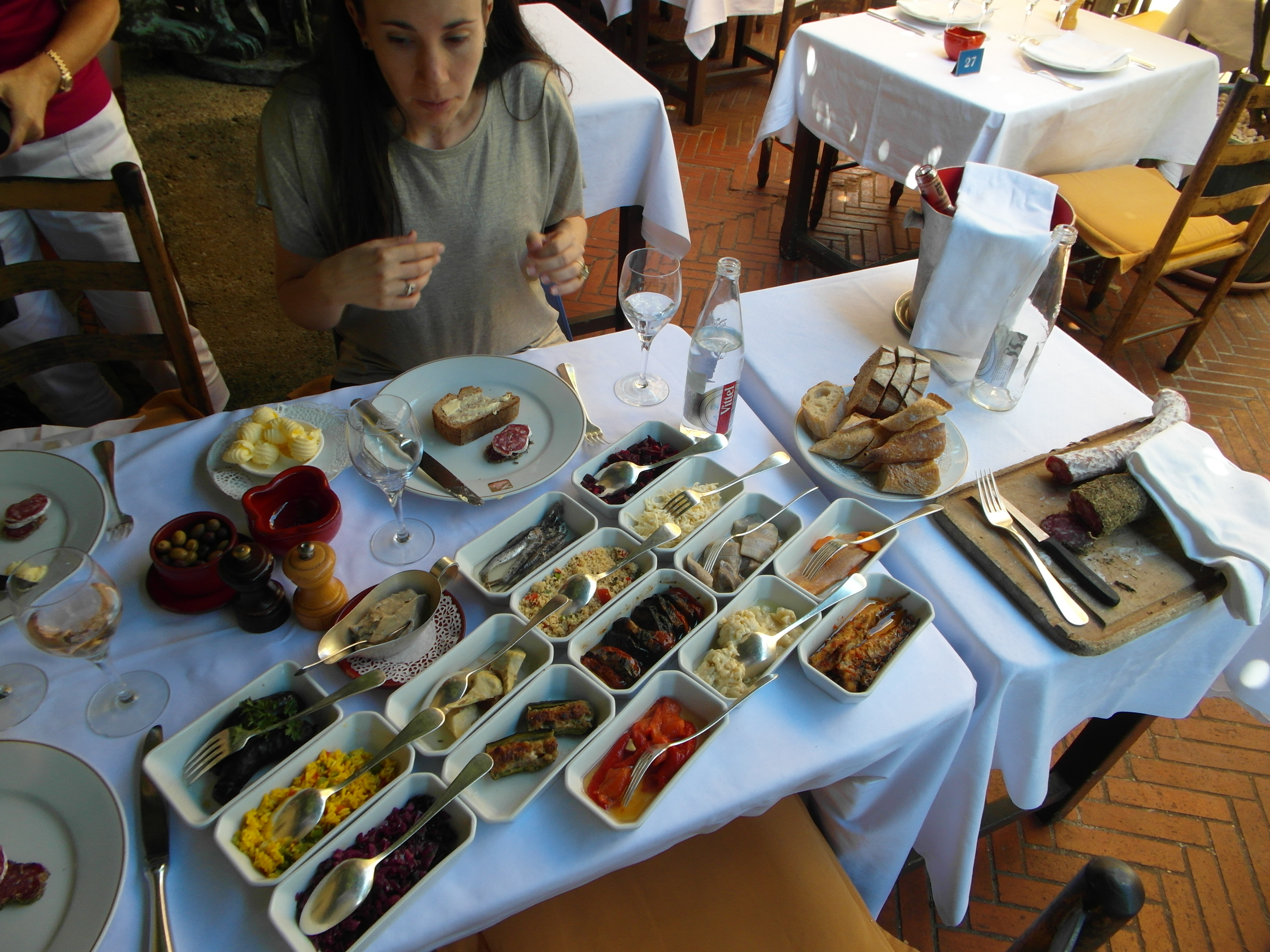
SAM_0887

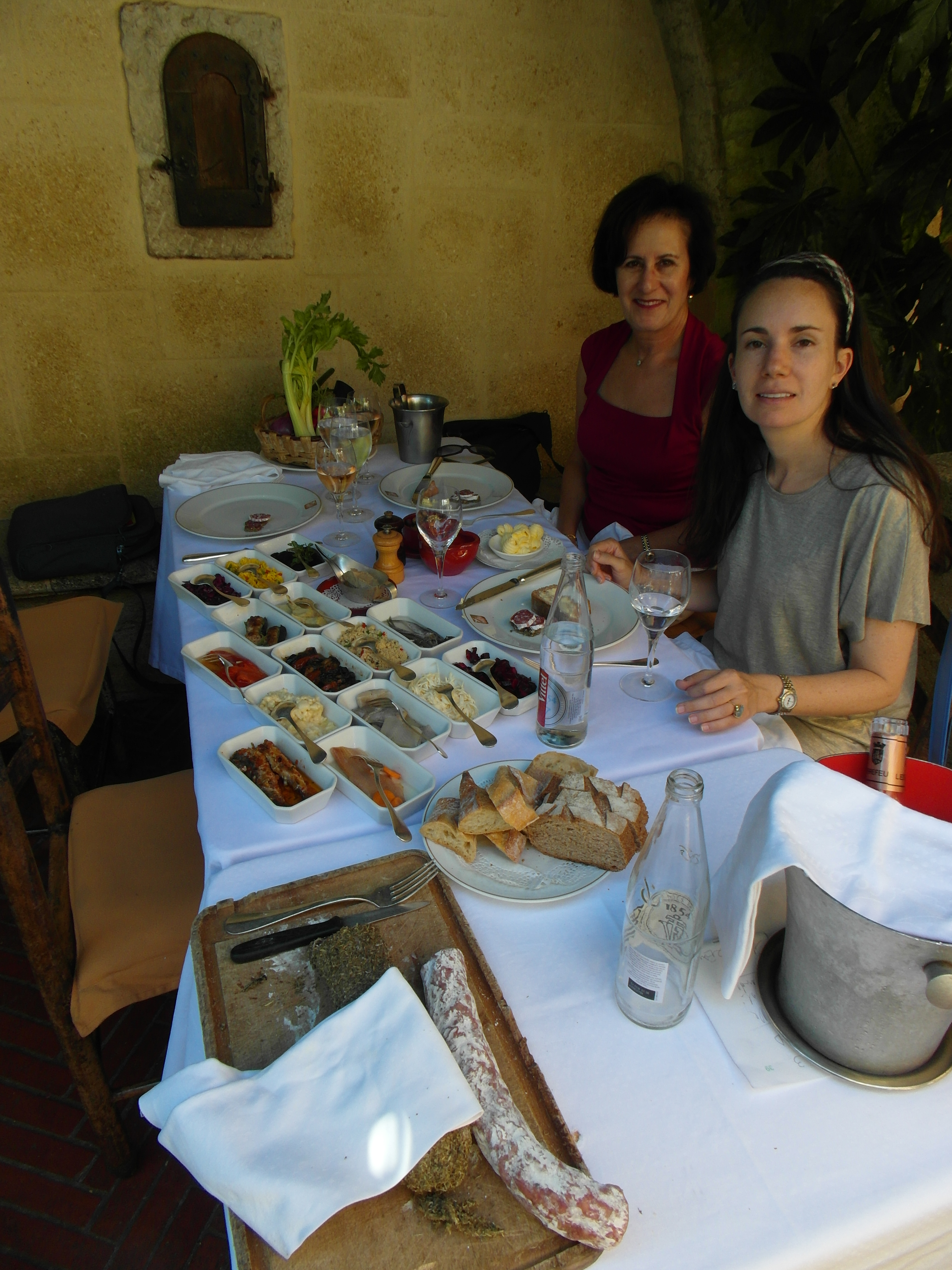
Les Hors d’Oeuvre Colombe d’Or with Charcuterie and Crudites

We began our luncheon with his classic entrée of Les hors d’oeuvres Colombe d’Or with charcuterie and were taken aback by the beauty, quality and quantity of the vast assortment of dishes that arrived. Each had its own special preparation, from grilled and marinated local eggplant and tomatoes to smoked fish, and each was prepared from fresh, local ingredients in traditional Provençal fashion. Freshly cut sausages and a big basket of farm fresh produce, including radishes and fennel, completed the experience. Many might have considered that first course a satisfying lunch in itself, but we had two more courses to come!

SAM_0898

Quenelles de Saumon Frais

Fish was the theme of the main course. Our daughter selected fresh salmon quenelles which were sumptuous in a light béchamel sauce.

SAM_0899

Aioli tout simple a la Morue fraiche et ses cinq legumes

Denis feasted on steamed fresh cod with 5 vegetables accompanied by a “simple aoli” sauce, and I enjoyed perfectly grilled fresh Mediterranean sea bream seasoned with fresh herbs and lemon. The freshness and quality of the ingredients needed no extra enhancement to be simply delicious beyond the assistance of a light, refreshing Cote de Provence Rosé.

For dessert we shared a country style French apple tart, prepared using Paul Roux’s mother’s recipe, and a dark chocolate cake. Both were equally satisfying.

A meal with generous portions, solicitous service, superb ingredients, perfection in preparation and charming presentations … in a magical, romantic and, most especially, artistic setting.

In the footsteps of Marc Chagall in Saint-Paul-de-Vence!

SAM_0921

Saint-Paul-de-Vence

Highlights of our day in Saint-Paul-de-Vence:

SAM_0870

La Colombe d’Or in Saint-Paul-de-Vence

*We had lunch at La Colombe d’Or in Saint-Paul-de-Vence. The founder of La Colombe d’Or, Paul Roux, liked to paint and as a result ended up attracting artists, writers, celebrities to his hotel, his restaurant and the hilltop village of Saint-Paul-de-Vence. From Picasso to F. Scott Fitzgerald, from Yves Montand to Ernest Hemingway, they all contributed to the world fame of this place. The inside walls of La Colombe d’Or really come to life with an incredible array of priceless art.

SAM_0884

Inside restaurant at La Colombe d’Or in Saint-Paul-de-Vence

In an earlier post, I mentioned the story of the famous jealousy row which led Zelda Fitzgerald to throw herself off the parapet of the terrasse restaurant because of the attention which F. Scott Fitzgerald was giving to the famed ballet dancer, Isadora Duncan.

SAM_0897

Terrasse restaurant at La Colombe d’Or with stone parapet made famous by Zelda Fitzgerald

Lunch on the terrasse was in itself an exceptional experience. Service was in a league by itself, as there were probably as many staff as patrons. As to the food, you should have seen the look on my daughter’s face when our appetizers arrived! Large saucissons with fifteen plates of assorted appetizers including black boudin, one of my favorites.

SAM_0886

Hors d’Oeuvres at La Colombe d’Or

The rest of the meal was no less impressive, and we enjoyed the complimentary house mandarine grappa at the end.

In the afternoon, we took a themed private guide tour of Saint-Paul-de-Vence, titled “Sur les pas de Chagall in Saint-Paul-de-Vence” (In the footsteps of Chagall in Saint-Paul-de-Vence). Marc Chagall lived the last twenty years of his life in Saint-Paul-de-Vence and is buried in the cemetery there.

SAM_0920

Marc Chagall painting shown where drawn in Saint-Paul-de-Vence

Chagall is noted for saying “I thank destiny for bringing me to the shores of the Mediterranean”.He had lived nearby in Vence since 1948 after he returned from the United States; he had been attracted to the area by Aime and Marguerite Maeght, who were his art dealers in Paris (as well as for Henri Matisse, Braque, Léger, Miró, Alexander Calder et Alberto Giacometti). Aime and Marguerite Maeght (pronounced like “mag”) had taken refuge in Vence during the second world war after a good friend of theirs, Jean Moulin, head of the French resistance, was arrested by the Gestapo. Today’s Fondation Maeght is a world famous museum in Saint-Paul-de-Vence.

An unexpected bonus, during our tour, was a stop at a chapel which an artist was in the process of completely decorating with wall paintings.

Our guide, Christophe, was extremely erudite and we thoroughly enjoyed being taken to the various spots where Chagall painted and hearing about each painting and the fabulous life of this great artist. Chagall went through various periods during his tumultuous life, but the theme of his paintings while in Saint-Paul-de-Vence seemed to be all about love, and they are marvelous pieces of art.

laid-table-with-view-of-saint-paul-de-vance-1968

BonVoyageurs Tips:

*Take the 400 bus to Saint-Paul-de-Vence from the first stop, Albert 1er, so that you don’t have to worry about getting a seat on the bus. Today, the bus was standing room only as of the third stop on the route.

*Ask for a tour at the small tourist office right at the entrance to the walled city of Saint-Paul-de-Vence. If a tour is not already scheduled, they will schedule one for you; and the cost of 5 euros per person won’t break your bank!

Art & Gastronomy … The finale of Renoir’s life and the debut of Escoffier’s

SAM_0805

Musee Renoir and his home for the last 12 years of his life in Cagnes sur Mer

Both Renoir and Escoffier practiced their art from an early age throughout the sunset of their years. Both worked passionately at their craft with an intense joie de vivre, were innovators in their professions, gained recognition at a relatively young age and fame before their death, and both had intimate connections to the region of Nice.

Born in Limoges to a working-class family, Renoir received his early training as a painter while drawing and painting on fine china in a porcelain factory, and critical acclaim at the age of 33 when 6 of his paintings were hung in the first Impressionist exhibition in 1874. Sadly, he developed the crippling illness of rheumatoid arthritis in his early 50’s, and finally in 1907, he moved to the warmer climate of the Cote d’Azure which was most suitable for his illness.

SAM_0813

Renoir’s painting of his beloved Les Collettes

He purchased Les Collettes. a farm on the edge of the charming village of Cagnes-sur-Mer with an utterly magnificent view of the Mediterranean and the glorious sunshine made famous by his colleagues such as Van Gogh, Cezanne, Matisse, and Chagall. It has been said Les Collettes was to Renoir what Giverny was to Monet.

For the next 12 years, despite crippling, unbearable pain from his arthritis which relegated him to a wheelchair and necessitated his painting with a brush tied to his hand at the end of his life, Renoir practiced his art with vigor and innovation, adapting his style of painting to his failing eyesight as well as to his failing mobility. This period of Renoir’s work is characterized by looser, more fluid brushwork to dissolve outlines and detail, and hence more impressionistic and at times slightly abstract work.

SAM_0812

Renoir’s atelier with his wheelchair

Seeing the custom made wheelchair and the apparatus constructed to enable Renoir to move up and down in order to work on large canvases was very revealing. So was his continued focus on painting voluptuous women. Although Renoir mourned the death of his beloved wife, Aline Victorine Charigot, who had served as a model for his renowned Le Dejeuner des Canotiers (“Luncheon of the Boating Party”), he never lost his love of the female body. His lifelong devotion to his work rewarded him with the honor of seeing his paintings hanging alongside those of the old masters in the Louvres in 1919. He passed away shortly thereafter.

SAM_0811

Some of my favorite paintings of Renoir at Les Collettes

Les Collettes has been transformed into the Musée Renoir. While unfortunately it houses few of Renoir’s most famous works, it provides the backdrop for understanding the personality behind the man who produced several thousand works of art over this lifetime and whose work is beloved world-wide.

SAM_0835

Musee National de l’Art Culinaire Auguste Escoffier in Villeneuve-Loubet

From the home of one grand master, we moved onto the village of Villeneuve-Loubet to visit the childhood home of another, Auguste Escoffier, a prolific culinary author and the founder of French haute cuisine who helped put the classic techniques and recipes of French cuisine on the world map. Escoffier’s childhood home has been transformed into the Musée Escoffier which we decided to visit after having lunch.

SAM_0840

Me enjoying the Fricassee de Lapin

Just down the street was a charming restaurant, L’Auberge Fleurie, which attracted our attention with its menu du jour. We sat outside on the terasse and ordered a Salade du Marché as an entrée prior to the “menu” which offered a Fricassée de Lapin (“rabbit stew”) and a Chocolat Fondant (cake) à l’Orange. We expected simple food in this old town which seemed to still be in the 20th century, and were frankly delighted well beyond our expectations with the taste, quality and presentation of the food. We were still savoring the meal long after it was over, so we weren’t too surprised to learn at ­­the museum later that the chef of this petit restaurant had been trained at the Ritz-Escoffier School of French Gastronomy. How à propos !

SAM_0852

Escoffier trained and inspired many world famous chefs

Auguste Escoffier, considered to be the first celebrity chef of the 20th century, elevated the work of a “cook” to that of a “profession” by introducing organized discipline and specific techniques to modern kitchen management. Born in 1846, Escoffier spent the first 18 years of his life in this charmingly refurbished home decorated in old Provençal style which the Fondation Escoffier now manages as the Musée National de l’Art Culinaire Auguste Escoffier. It was here in this home that his love for cooking developed as he watched his grandmother cook over the fire in the family fireplace.

SAM_0845

Seated at the desk of the King of Chefs and the Chef of Kings

The museum collection includes many handwritten recipes and letters by Escoffier, photos of him at the Savoy where he invented Peche Melba, at the Ritz in Paris, and at the Carlton in London. It houses many of Escoffier’s cooking implements, including many designed by him, as well as Escoffier’s desk and chair, menus written by him or inspired by him, menus from great chefs he taught and inspired, a room full of chocolate statues created by great chefs trained by him, and many other heirlooms of the history of French cuisine, including how Escoffier elevated it into an art and a science. A pilgrimage there is just as satisfying for a true lover of French cuisine, if not more so, as a pilgrimage to the exhibit on Julia Child at the Smithsonian’s Museum of American History.

Musee Renoir and Musee National de l’Art Culinaire Auguste Escoffier

SAM_0815

Les Grandes Baigneuses de Pierre-Auguste Renoir

SAM_0817Highlights of the day

*Musee Renoir

Luncheon of the Boating Party, by Pierre-Auguste Renoir, is one of my favorite paintings in the whole world, because of the way it stirs in one feelings of beauty and feelings of la joie de vivre. That painting, luckily, is housed near us at the Phillips Collection in Dupont Circle.

In addition, the recent movie Renoir, which we saw last March at the Avalon Theatre, introduced us to the last few years of Renoir’s life, which he spent at his farm in Les Collettes, in Cagnes-sur-Mer on the outskirts of Nice, now a museum.

SAM_0806

Musee Renoir (formerly la ferme Les Collettes) at Cagnes-sur-Mer

Visiting the Musee Renoir was a treat, particularly since it just reopened a couple of weeks ago after extensive renovations. I was however disappointed that the annex building was not visitable. The two atelier rooms in the main house were the most interesting for me. From the main house, there are great views of the Mediterranean coast as well as of the hilltop village of Hauts-de-Cagnes. The grounds are just as I imagined them from the movie, and we also enjoyed the dozen or so original Renoir paintings on display.

*Musee National de l’Art Culinaire Auguste Escoffier

The museum is located in Villeneuve-Loubet, in the house where Escoffier was born and where he spent the first 18 years of his life. It feels a little bit like a pilgrimage to visit this temple to the King of Chefs and Chef to the Kings, and it is well worth it.

One gets a good sense of his life and accomplishments. In addition, one gets a good overview of the history of French cooking and where it stands today. I was particularly pleased to see that the l’Auberge de l’Ill in Illhausern, one of our favorite restaurants in the whole world, was well represented in a display honoring today’s top chefs.

The history of the Peach Melba, created by Escoffier to thank the opera singer Nellie Melba, is featured prominently, and we were served a Peach Melba dessert at the end of our tour to enjoy at a table in their little courtyard.

*Rental and use of the electric car sharing service Auto Bleue to drive to Cagnes-sur-Mer, Hauts-de-Cagnes, Villeneuve-Loubet and Antibes. This was my first time driving an electric car, a Peugeot IOn (no big deal), and my first time using a car sharing service (to my knowledge, Nice is the first city to offer an electric car sharing system). At the end of the day, I was wondering why everybody is not using something so convenient and easy to use.

However, to be fair, I did struggle a bit with the GPS system in the car; the less important details are that the screen is too small and the blue direction line is very hard to see, the more important detail is that the verbal directions are given after the turn road has been passed. I was puzzled at the beginning to hear directions like “in 300 meters, turn right on rue Dalpozzo” just as we were passing that street! Nevertheless, in time, we adjusted well to each other and made it safely back.

A great advantage of Auto Bleue is that you return the vehicle to the same parking spot where you took the vehicle, and that spot is saved for you. You can therefore return the car at any time of day or night and be assured of a specific parking space. This is an invaluable feature for day rentals as compared to regular car rental companies.

SAM_0833

The narrow streets of Villeneuve-Loubet

*Scenic driving tour of the perched village of Hauts-de-Cagnes and unplanned driving tour of the hilltop village of Villeneuve-Loubet. Because the main road to our destination was closed due to construction work, I ended up hopelessly lost, having a hard time figuring out a way to drive out of the hilltop village, and driving aimlessly thru very narrow steep roads (see photo above), even at one time ending up in the village’s very pretty but dead end (yes, pun intended) hill cemetery. When finally the GPS system asked me to make a hairpin turn into what looked like a three foot wide alley headed down as steeply as a ski jump, I just parked the car where it was and we walked down the hill. It was lunchtime and I was sure we would find both a place to eat and someone to help us figure out how to get out of town. Fortunately for all our friends and family who might be interested in our eventual return home, we found both quite easily.

SAM_0839

L’Auberge Fleurie in Villeneuve-Loubet

*Delightful lunch at l’Auberge Fleurie in Villeneuve-Loubet. This was the first restaurant we saw on our way down the hill, and it just happened to be located within sight of the Escoffier museum we were trying to reach. In addition, the chef at l’Auberge Fleurie was a graduate of the Escoffier cuisine school. The main dish of the menu of the day was a fricassee de lapin with polenta (fricassee of fresh rabbit with polenta and Nice olives) which turned out to be superbly delicious and flavorful, another local specialty which we will remember fondly.

SAM_0859

Blue Beach restaurant on the beach in Nice

*Salade Nicoise dinner on the beach at sunset time at the Blue Beach restaurant in front of the Negresco in perfect 75 degree weather.

Eze ~ Gastronomy on the Top of a Cliff!

SAM_0758

View of Beaulieu-sur-Mer, the bay of Villefranche-sur-Mer and Cap Ferrat

Eze, one of the most spectacular of France’s imposing “Villages Perchés” has a principal attraction other than its breath-taking 360 degree views … the Michelin- starred restaurant, Chateau Eza, named for the charming hotel in which it resides. Naturally, this restaurant’s reputation for excellent cuisine combined with the views was irresistible. So on our third full day we found ourselves on the bus … mesmerized by the views … as we winded our way up to the base of Eze. The rest of the climb up the steep, narrow streets to the top of this Medieval village was by foot, but so absorbed were we in enjoying the views that we hardly minded the steep climb.

So what is “gastronomy”? I like to think of it as the art and science of cuisine, preparing food with the best quality ingredients – regional produce is often the preference — using time-honored techniques, tasting as you go (a chef must have refined taste buds), and producing with significant expertise a nutritious work of art, as beautiful to look at as it is to taste and savor.

photo 3

Watermelon & Strawberry Gazpacho with a touch of Coriander

Along with their à la carte menu, the Chateau Eza offers two different menus du jour. We selected the more extensive one which they very aptly call the “Menu du Prince”. Voilà the menu which we enjoyed with a very satisfying Côtes de Provence Rosé …

Amuse-Bouche of Salsify cooked in Truffled Veal Jus with Spinach
Watermelon & Strawberry Gazpacho with a touch of Coriander
accompanied by a lightly peppered Artichoke Muffin
Small casserole of White Beans from Paimpol, local Heirloom Tomatoes & Herbs, flavored with Bacon Confit
Filet of local Veal under Crust with Nicoise Olives & Tomatoes
Mille-feuilles with crusty Pastry & Lemon Custard, Lavender Ice Cream
Garnish of Raspberries & Raspberry Coulis
Sweet Indulgences of the Chef

photo(1)

Filet of local Veal under Crust with Nicoise Olives & Tomatoes

A truly memorable meal which enchanted our taste buds, was highlighted with extraordinary views of the Mediterranean sea, Beaulieu-sur-Mer, Cap d’Antibes, Cap Ferrat and Nice … in a magical hilltop setting perched at the edge of the cliff.

Eze le Village ~ Lunch with a view of paradise

SAM_0765

Events of the day

*Cafe au Lait on beautiful Place Garibaldi in Nice

*Scenic bus drive along the Nice harbor and up the mountains to the perched village of Eze

*Unforgettable lunch at Chateau Eza at the top of Eze

*Walk thru the narrow steep ancient stone streets of Eze Le Village

*Wild bus ride down to Eze-bord-de-Mer and Beaulieu-sur-Mer

*Visit of the stunningly fascinating Villa Kerylos, a Greek style mansion built in Beaulieu-sur-Mer by Theodore Reinach, a wealthy parisian banker whose wife was a cousin of Maurice Ephrussi (villa Ephrussi de Rothschild). Gustave Eiffel, of Eiffel Tower fame, lived next door.

*Wonderful at-home French dinner of salads, cheeses and pate, and of course French baguette.

*Nice celebration commemorating the Liberation of Nice by American troops on August 28th, 1944

SAM_0757

Highlights of the day

*Memorable lunch on the terrasse at the Michelin-starred Chateau Eza, a five star hotel which used to be the summer residence of the Swedish royal family in Eze. Amazing panoramic views of the riviera and the mega yachts in the harbor of Beaulieu-sur-Mer combined with an exceptionally creative five course lunch menu to make for an out of this world experience.

*Totally wild bus ride down the very curvy roads of the mountain at breakneck speed with a nonchalant only-one-hand-on-the-wheel driver seemingly accelerating at every hairpin turn. The highlight is the fact that we survived.

*Visit of Beaulieu-sur-Mer. The town’s beauty, classy understated wealth and sophisticated charm so reminded me of the fictional village of Beaumont sur Mer in the 1988 movie Dirty Rotten Scoundrels that, at every turn, I expected Michael Caine to appear, wearing a blue sports jacket and white pants, and a twinkle in the eye.

SAM_0796

Discovery of the day

Did you know that ravioli were invented in Nice, and remain a big specialty of the Nice cuisine?

BonVoyageurs Tips

*Feel perfectly comfortable at the bus stops to go to the front of the line or anywhere else along the line where you see a space wide enough to fit a thin bamboo pole. In fact, be suspicious if the line does look like a line; it must be made up entirely of foreigners. The French have no qualm about filling all the gaps since they know that there are only a few available seats on the incoming bus; they will go to the front of the line (or create a new line in front of the existing line) if there is any space that will allow it.

*It is not necessary to buy bus tickets in advance, or to have exact change. The bus driver has a till and will make change if you wish to buy your ticket on board.

*If you are using a bus ticket pass, such as the 10-ticket card we were using today, be aware that you need to validate the card as many times as the number of people you are paying for on the first bus, but you should validate the card only once on the connections. Validating the card more than once then may mean that you trip will cost you more than one euro per person.

*On the French Riviera, feel free to ask for help on the bus or on the train. We have found the locals to be amazingly helpful and friendly. At the main bus stop in Nice, where we took the bus to Eze, the local municipality has a man standing by the bus stop all morning every day simply to assist tourists with the transit system. He answered all of my questions in a very helpful manner. And so did the “chef de gare” (station chief) at the train station in Beaulieu-sur-Mer, after we unexpectedly decided to get back to Nice by train rather than by bus.

SAM_0799

Villefranche-sur-Mer ~ Bouillabaisse anyone ?

Why would you go to France … for the culture? the beauty? the outdoor activities? the entertainment? the shopping? the food? Yes, all of the above. As for us, while we strive to plan our touring around the cultural sights, somehow our taste buds take priority these days and they steer our course. So not too surprisingly, our first destination once we settled into our home base of Nice was a trip specifically planned to partake of the bouillabaisse at La Mere Germaine. This elegant restaurant, situated on the water’s edge in Villefranche-sur-Mer which is located just east of Nice, is reputed to be one of the top restaurants on the Cote d’Azur for bouillabaisse and it did not disappoint. The chef prepared special side salads (not on the menu) for us as entrées, which were followed by the main event … the bouillabaisse. The broth was divine, the Mediterranean fish fresh, tender and perfectly prepared, and the rouille, a garlicky red pepper sauce which you spread on garlic-rubbed croûtes or simply stir into your bouillabaisse broth, was the perfect complement. For dessert we shared an exquisite chocolate soufflé made to order by the restaurant’s in-house patissier. Accompanied by a well-chilled bottle of Provencal rosé, the meal was enhanced by top-notch service from our waiter, French music in the background, and a commanding seaside view over both the water full of impressive yachts and the steep hillside dotted with elegant homes.

Settlements in Villefranche date back to prehistoric times, but the village is particularly known for its medieval streets. So after lunch, we took a challenging walk up and down the city streets and stopped to look at Rue Obscure (Dark Street), a passage way under the harbor front houses that dates back to 1260. Did we walk off the multitude of calories that we ingested at lunch? Doubtful, but fueled by the bouillabaisse, we had a fascinating time trying.

Villefranche-sur-Mer ~ Idyllic and upscale

SAM_0708

The main events of our day:

*Day trip to the delightful town of Villefranche-sur-Mer

*Taking the train to and from Villefranche

*Having a bouillabaisse lunch at La Mere Germaine

The highlights:

SAM_0724

SAM_0729

*Definitely the meal at La Mere Germaine was outstanding. It was not simply that the bouillabaisse itself was superb, but the rest of the meal (including an out of this world chocolate souffle prepared by the house chef patissier), the ambiance, the service, the views make one want to relish the experience for as long as possible.

*The scenic views at Villefranche are extraordinary, both from the harbor and from the charming small hilly walkways of the old town. The town is built on a hillside at the mouth of a relatively small but deep water bay and overlooks the neighboring coastline of Saint-Jean-Cap-Ferrat and Cap Ferrat.

*This place is upscale. Seeing the mega yachts pull into harbor, or the Ferraris arrive at La Mere Germaine, or watching the house which Madonna rented last week for her vacation here right in front of you on the other side of the water, or knowing that what was Bill Gates’ villa, the most expensive house in the world, is just up the hill behind you, does make an impression, which the chihuahua on the chair at the lunch table (see photo above) only reinforces.

Traveling Tips:

*Use the SNCF/TER iphone app, which will give you in an instant all the upcoming train departures to your desired destination as well as real time traffic and delay updates; this will help avoid having to wait at the train station, which has no seating area, since platform numbers are not announced until twenty minutes before departure and noone is allowed into the track areas until then.

*There is a wonderful walkway between the Villefranche train station and the old town and harbor, offering splendid views and an easy commute.

*Don’t go to Villefranche on a Tuesday or a Friday; that is when the cruise ships come in and lay anchor in the bay, and, more importantly, absorb all the resources of the town. For example, no boat rides out of Villefranche on those days because they are all committed to the cruise ships.

Nice, France ~ My kind of town!

SAM_0696

Nice is my kind of town! One day in Nice was enough to sell me on the city. A boulangerie with unbelievably fresh croissants and pains au chocolat as well as a small grocery store with all our needs within a two minute walk of our apartment; there are boulangeries and epiceries everywhere. The seven-kilometer long Promenade des Anglais is a very wide stretch of paved walkway along the beach in downtown Nice and we found delightful to walk it; an ocean breeze helps make the very hot sun (even though it was only 77 degrees) more tolerable. The beach is covered with sunbathers and swimmers; the town seems to be filled with vacationers and seems to be well equipped to deal with them. Just inside from the main road along the beach, long streets, full of bistros, pizzerias, trattorias, brasseries, cafes, restaurants by the dozens, each with their specialty, and all within a few minutes walk. For lunch, we opted for Le Safari restaurant located along the main market square Cours Saleya, where we experienced four Nice specialties, farcis nicois, salade nicoise, spaghetti aux fruits de mer, and linguini au pistou. The tiny mussels in the spaghetti dish - sweet, flavorful and plentiful — were the highlight of the meal.

There is a small touristic train which brings people to the top of the castle hill overlooking the city, and the view from there is phenomenal. Don’t be misled by the ominous clouds in the picture above; we had a whole day of very warm sun and those clouds disappeared as quickly as they showed up (which is in some ways unfortunate, since we spent a good deal of time hunting for shade).

We visited the Palais MassenaSAM_0707, which aims to present a history of the city. It was holding a special exhibition called “Un Ete pour Matisse” (A summer for Matisse). While the building is a beautiful mansion (Massena was a top general for Napoleon, born in Nice), both Lynn and I agreed that its visit is entirely unmemorable.

For a day intended to be a day of recuperation from jet lag as well as a day of several errands (would you believe bus tickets to go anywhere on the Riviera cost me one euro each), we ended up walking pretty much the whole downtown area, visiting the castle hill and the Massena museum, having lunch in the old town and dinner at a trattoria near the sea (where Lynn raved about her branzino fish platter).

Nice is a very walkable city and my kind of town!

Nice, France ~ Never on Sunday?

blue beachInternational travel during weekends can often be very relaxing and hassle-free, with both airports and planes operating at much less than capacity. In fact, as we were going thru Washington Dulles Airport yesterday (a Saturday), I was reflecting to myself on how great an airport this was, from a passenger’s perspective, compared to most other airports around the world (and I’ve been thru many of them regularly over the years). One does not get the sense of being crowded at Dulles; there is that feeling of space, of room to spare, which is partially due to the architecture of the buildings and also due to excellent organization and capacity planning. The whole process of checking in, going through passport control and security, transfer to the terminal, access to the executive lounges, boarding, etc… is efficient, smoooth, painless (unlike so many other airports).
Today we landed at London’s Heathrow Airport, collected our luggage, caught a National Express transfer bus to Gatwick Airport, and had a wonderfully refreshing shower and breakfast at the British Airways lounge in the north terminal before boarding our flight to Nice. It all went very smoothly and without any delay or incident, remarkably so. True to form, it was raining and cold in London when we landed and during our fifty-minute bus ride to Gatwick; I assume the Brits simply wanted to make sure we knew we were in the UK.
Well, the French wanted to make sure we knew we had arrived on the French Riviera when we landed in Nice, cause they greeted us with blue skies, blue seas and a warm sun. The last ten minutes of the flight offered us a spectacular aerial view of the French riviera coast, going west to east towards the Nice airport. The number of sailboats and powerboats underway all along the coast was nothing short of amazing. Quite a nice way to arrive.
However, we were arriving in France on a Sunday afternoon, and that simple fact had triggered all sorts of memories for me, and not my favorite ones. When my wife and I moved to France for the first time, back in 1974, we arrived in Besancon, the capital of the eastern province of Franche Comte in the Jura, on a Sunday afternoon. We were booked in the hotel Frantel, rated then as the best hotel in town, with a top location along the Doubs river and providing a fabulous view of the city. That hotel does not exist under that name anymore; I believe it is now called the Mercure Besancon Parc Micaud hotel, part of the Accor hotel chain. We were scheduled to stay at the hotel for a month or so until our belongings arrived from the States and until we were able to move into the apartment which was waiting for us. After we had checked in and settled into our room, we went down to the hotel restaurant to have dinner only to find out that the hotel restaurant was closed, the one and only restaurant in the hotel. I went over to the reception desk to obtain more information. Well, as I was told, it was Sunday and the hotel restaurant closed on Sundays, and oh, by the way, so did room service. I was puzzled; what did hotel guests do on Sundays in order to eat if both the hotel restaurant and room service are unavailable? Did they all go out to other restaurants in the city? Actually, so I was told, restaurants in the city also closed on Sundays! A suggestion was made that I might try to see if the restaurant at the casino next door was open. So we hopped into our car and drove over to the casino. Nope, that was also closed. How about a fast food restaurant of some sort? No luck there either, since there were absolutely no fast food restaurants in the city of Besancon in 1974, not one. Surely there must be some place to get food to eat, I said to my wife as I started driving around the city looking for a place, any place, that was open. Finally, after an hour or so of driving through Besancon, and that means it was already around 9pm, I came across a place which was open. It turned out to be a bar of some sort, but they did have a couple of sandwiches and food platters amid their offering, so we ate our dinner there.
The next day, still amazed at that experience, I related the story to my new work colleagues at the office. They were curious to know where I had been able to find food on a Sunday; I told them that the restaurant or bar was called the Kronenbourg.
You must have gotten the name wrong, they said, there is no such restaurant or bar in town. It was there in big bold letters in bright neon colors, I replied. My colleagues started smiling and laughing before explaining to me that what I had seen was the name of a beer sold at that location. Kronenbourg is the name of an Alsatian beer (which has become better known since then, and now appears on many bright neon signs all over Besancon), not a restaurant name. To this day, I don’t know the name of the place where we ate!
Ever since that fateful Sunday, I have been a bit leery of arriving in France on a Sunday, and that was the case today when we showed up in Nice. I had done some prior checking as part of my trip planning and I knew that grocery stores were closed on Sundays (a few are open on Sunday mornings) so I was already expecting that our first grocery shopping would occur on Monday. I also knew that most restaurants were closed on Sundays; this left room for hope, since I had read about a few places which supposedly would be open. And the world had changed since 1974, I kept saying to myself, fast food not only had arrived in France, it was doing very well and fast expanding if you will forgive the play on words. Would the Nice McDonald’s be open on Sunday evening? I wondered. And if it were open, was that what I wanted to do for my first meal on the French Riviera?
Being cautious and prudent, we had decided to pre-eat our dinner at the British Airways lounge in Gatwick; it was noontime there, not dinner time, but our jet-lagged and over-fed tired bodies did not know the difference. The lunch spread in the lounge was enticing, with, among many offerings, a warm tasty tomato soup and a salad bar that included quiches and bean salads. Afterwards, I thought, our stomachs would be able to handle the starvation of a Sunday evening in Nice.
Actually, I am not being totally honest here. For several weeks now, I had put together a plan for our first Sunday evening dinner in Nice, and it consisted of taking the five minute walk down to the beach from our rental apartment. There are five beach restaurants along the world-famous Promenade des Anglais beach in central Nice; my research indicated that the best one was Blue Beach, located right in front of the best hotel in Nice, the Negresco Hotel. Blue Beach happened to be open on Sundays and to be located about a five minute walk away. I already imagined myself eating a salade nicoise or a spaghetti aux fruits de mer on the beach with the sun setting on the sparkling Mediterranean sea and the Promenade des Anglais behind us; I had verified that sunset would be at 8pm today, perfect timing since that is about the time when dinner starts getting served in southern France. Sounds like a great plan, doesn’t it?
Well, guess what was waiting for us when we boarded our London to Nice flight? A charming stewardess who immediately said: Mrs. Gagnon, I see that you ordered a special low sodium meal, and Mr. Gagnon, I see that you ordered a special seafood meal!

Pure Enjoyment!

imagesSoon after we settled into our comfy business class alcove seats on the British Airways 747 flight to London, a smiling stewardess handed me the flight’s menu, titled in large letters “Pure Enjoyment”. How appropriate a description, I thought, both for my current state of mind as well as my hopes for this trip to the French Riviera.

For more than 40 years, British Airways has been my favorite way to fly over the Atlantic ocean. I don’t receive the same level of attention I used to get when I had British Airways Premier status, in the good old days. The Premier status was not listed in the published frequent flier tiers, because it was a uniquely special level given by invitation only to the select few who spent more time with British Airways than with their wives. Back then, a British Airways representative would be waiting for me at the exit door of the plane so as to escort me to my next flight, not through the terminal, but via a British Airways car waiting by the plane. Sometimes, I would be invited to sit in the cockpit with the pilots for either take-offs or landings; I used to particularly enjoy the landings at the old, now mothballed, Hong Kong airport in Kowloon. If a flight was fully booked, someone would get bumped off in order to make room for me. Ahh, those were the good old days of flying (unless you were the person who got bumped in order to make room for me). Of course, I flew around the globe every month for my work, more than 25,000 air miles, month after month, year after year, so I had a lot of frequent flier miles, in the millions, and my company paid enough money to British Airways so that they should indeed take good care of me.

They may well still be the best over the Atlantic. I am not sure, because I don’t fly as much as I used to, so I have fewer opportunities to try other airlines; I try to fly British Airways any chance I get. But we did fly United Airlines and Lufthansa over the Atlantic in June of this year, which gave me a chance to compare, and I have to say that, while the Lufthansa business class seems to have improved a great deal and United seems to be worse than ever, both airlines fall way short of the standard set by British Airways.

But is British Airways living up to its own standards? Hiccups sometimes happen, as seems to be the case already on this flight (I am typing these words an hour or so into the flight). Our issue started with the “Pure Enjoyment” menu I mentioned at the start of this post. I was drooling over the dinner menu choices, hesitating between the lasagna, the crab or the beef, before finally settling on the beef because the crab platter, otherwise divine, came with a chipotle sauce. Speaking more generally, I think it is regrettable that all the kitchens around Washington, many good restaurants, and now even the British Airways kitchen at Dulles, seem to be staffed with Hispanics who want to inject Mexican food into everything I eat! I have lived in Mexico for almost five years in the gastronomic capital of the country, Puebla, so I consider myself reasonably fluent when it comes to Mexican food. I do not rank Mexican food among the best cuisines of the world and I particularly don’t want chiles, cilantro or chipotle in my food! In fact, I don’t want to eat Mexican food unless I go to a Mexican food restaurant (and I rarely want to do that). Anyway, I decided to go with the fillet of beef in the pure enjoyment menu.

Soon after, the stewardess came to take our order, … or so we thought. Mrs. Gagnon, she said, I see that you have ordered a special low sodium meal, and Mr. Gagnon, I see that you have ordered a special seafood meal. I was about to respond that I had done nothing of the sort, when I decided to think about it a little more. Meanwhile, Lynn was telling the stewardess that she did not want a low sodium meal; she had eaten a low sodium meal on the last British Airways flight we took to Africa and she thought the food was tasteless. I put two and two together, and figured out that the special meals we had ordered for our previous flight to Africa, something we had done merely as an experiment, were now part of our permanent British Airways profiles! Unless I remember to correct this when I get home, we are doomed to low sodium and seafood meals for the remainder of our British Airways flights.

I turned to Lynn and said: “I’ll be happy to take your low sodium meal and you can have my seafood platter, if you would prefer that”. No, Lynn answered ever so kindly, I do not want to take your seafood platter away. I turned to the stewardess, who was patiently waiting for some sort of decision; “What is the seafood platter?” Salmon and pasta, she replied. Oh great, I said, Lynn, would you not like salmon and pasta? Again, Lynn turned me down: “Enjoy the salmon and the pasta, you love both.” She then turned to the stewardess: What is the low sodium meal tonight?

Oh, replied the stewardess, it’s the same meal, the low sodium meal platter is salmon and pasta, just like the seafood special meal. The low sodium meal and the seafood meals are one and the same! I smiled to myself; do I dare ask what’s on the beef platter?

Pure enjoyment!

Barberousse and the woman who saved Nice!

seguraneWe will be taking off for London in a few hours, on our way to Nice.

The hero of Nice is a woman named Caterina Segurana, or Catherine Segurane as she is now referred to in this French city. But back in 1543, Nice was part of Savoie, to the chagrin of Francois 1er, the king of France. He made an alliance with the Ottoman Turks in order to fight his great enemy Charles Quint and ordered that Nice be conquered. A French-Turkish army and fleet, under the command of the notorious Barberousse (Red Beard), attacked Nice from the land and the sea.

On August 15th 1543, a date which will live forever in the memory of all self-respecting Nicois, the Turkish army attacked. A Turkish soldier planted the Ottoman flag on the top of a fortification. An irate Catherine Segurane, a poor clothes washer, ran up and beat the Turkish soldier over the head with her clothes beater and took the flag away. She then is said to have turned around, lifted her skirts, bent down and shown her bare behind to the Turkish army, a gesture of defiance which apparently raised the morale of the Nicois troops to such a degree that the attack was repelled. Others suggest that she also or perhaps instead simply bared her chest to the invading troops.

That is why the people of Nice have erected statues, named streets and bus stops, and hold annual celebrations and parades in the honor of their savior, Caterina Segurana!

La Baie des Anges: Deux legendes et une histoire de poisson (Two Legends and a Fish Story)

Bay des Anges

First, I need to clarify that I did not write the story below but copied and pasted it from a website. All credits apparently should go to a Margo Lestz, who lives in London and has a second home in Nice, and writes a very interesting blog called Riviera Ramblings: http://blogs.angloinfo.com/riviera-ramblings/

La Baie des Anges (Bay of Angels) is the bay in which Nice is located. Here’s what Margo wrote:

How the “Baie des Anges” (Bay of Angels) got its name:

Legend No. 1: Adam and Eve

Many rich and famous tourists visit Nice every year, but according to a legend, the first visitors were actually Adam and Eve – yes, the ones from the Bible.

They lost their home… As the story goes, after they were kicked out of Paradise for being naughty, they were standing outside the locked gates looking at their new hostile surroundings. Everywhere was barren and inhospitable. They had no idea where to go or what to do.

Led by angels… Then they heard the sound of rustling wings, looked up to see a band of angels flying overhead and motioning to them. As they watched, the angels flew across the waters and hovered over a certain spot. They were showing the couple a glorious bay, in front of a land that was as lush and beautiful as the Eden they could no longer enter.

And where do you think that bay was? Right here on the French Riviera. According to some, that is how the lovely bay which fronts Nice got its name, the “Baie des Anges” (Bay of Angels).

Same legend, different city… Menton, a city just down the coast from Nice, also claims this legend, with one addition. Apparently when Eve left the Garden of Eden she took a lemon with her. She was looking for a place worthy of the lovely fruit and when she saw Menton she left the lemon there. Menton is known for its lemons and has a wonderful lemon festival every year.
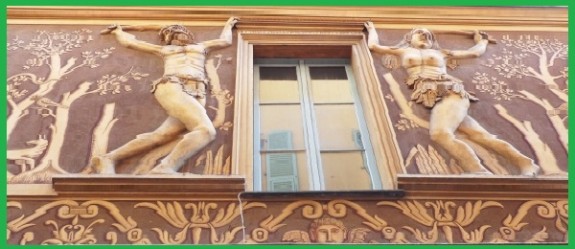
Adam-and-Eve-Nice-02-resized-575x249

Adam and Eve’s house (Maison d’Adam et Eve) in the Old Town

Where did they live?… Well, I can’t say for sure if Adam and Eve settled in Menton or in Nice, but my theory is this: First, they visited Menton, thought it was beautiful, left the lemon and then saw that Nice was even more beautiful and made it their home.

Why do I think this? Well, for one thing, their house is still standing in the Old Town of Nice. It has a magnificent carved frieze depicting the first couple sporting their fig leaves. They each have some sort of club and it looks like they might be having a domestic quarrel. It is called “La Maison d‘Adam et Eve” (Adam and Eve’s house) and is at No. 8, rue de la Poissonnerie where the street meets Cours Saleya. This house is dated 1584 (ok, so maybe the first couple didn’t really live there). Some say that this club-toting couple represents the original owners of the house who were known for their arguments. Whatever it is meant to symbolise, it is a lovely bit of decoration and easy to miss if you are not looking for it.

Legend No. 2: Sainte Réparate
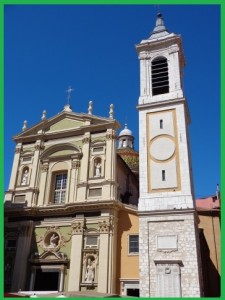
ST-RPA~1

St Réparate Cathedral, Place Rossetti in the Old Town

If the first legend is a bit too far-fetched for you, how about this one: It has to do with a 15 year old Christian girl from Caesarea, Israel who was a victim of Roman persecution in the year 250.

Killed by the Romans… They tried to burn her at the stake but it started to rain and put out the fire. Then they forced her to drink boiling tar but that didn’t do the job either. Finally they cut off her head and put her body in a little boat which they set adrift on the Mediterranean Sea.

She arrives in Nice… The angels guided the boat into the same bay where they had guided Adam and Eve all those years before. The bones of Sainte Réparate are in the cathedral in the Old Town which bears her name in Place Rossetti. But wait a minute…according to the Cathedral history, her bones arrived in 1060. So, was the poor girl adrift at sea for 800 years? I don’t know, but this is another theory for why the bay is called the “Baie des Anges” (Bay of Angels).
Angel-Shark-300x150

Angel Shark

A fish story

If the above two legends don’t suit you, how about a fish story? At one time the bay had many angel sharks in it. But don’t worry, the angel shark is a relatively harmless shark with fins shaped like wings and they are no longer found in these waters. When the fishermen saw these winged sea creatures they must have thought they resembled angels. There you have it, the third possible explanation for the name, “Baie des Anges” (Bay of Angels).

So did the name come from heavenly angels or underwater angels? Who knows? Personally, I prefer the first legend. It is more romantic (and less violent). What about you? Which one is your favourite?
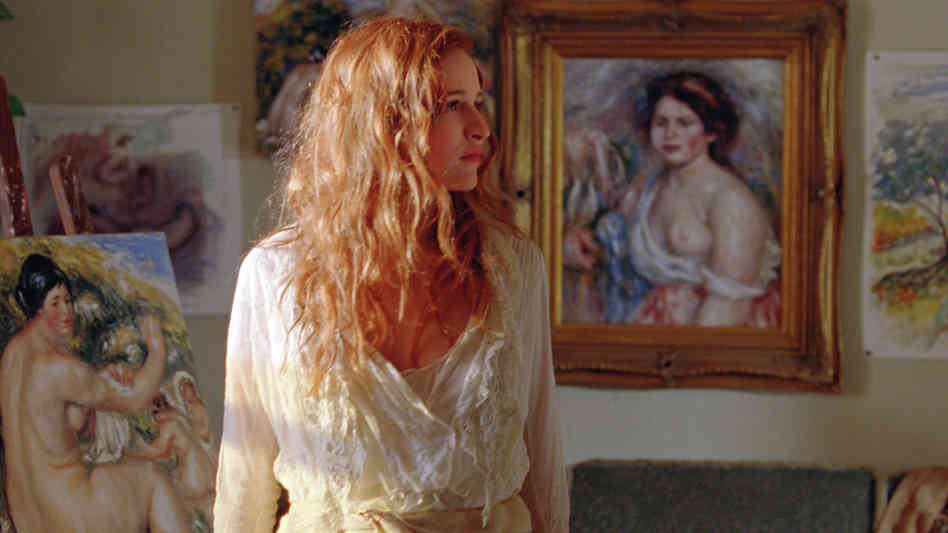
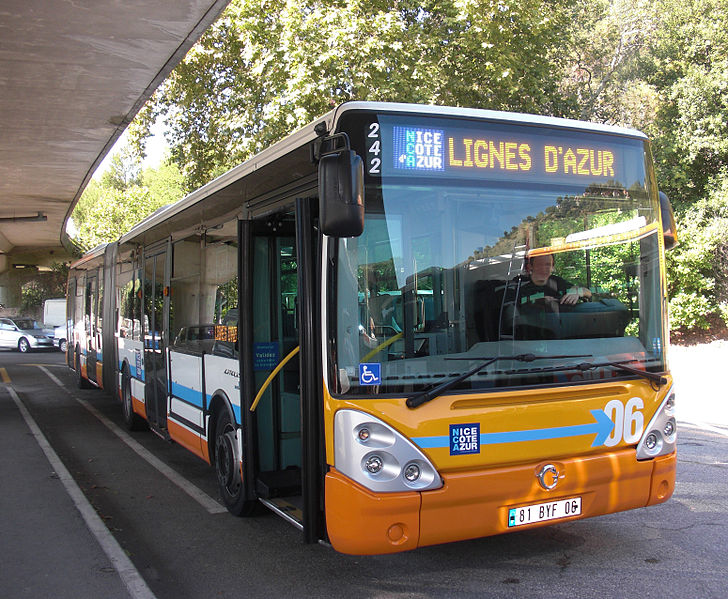
Insalata di Nizza or Salade Nicoise?

renoir2_wide-1369cf772993e75ef515e18ae2419e71deab5a16-s6-c30

Christa Theret as Andree Heuschling in the movie Renoir

I should be ready soon to make a list of our touring priorities and determine what will need to be cut. Meanwhile, I keep finding tidbits of interesting information of relevance to our trip. Here are a few examples of the things I take note of:

1. Nancy a le torticollis (Nancy has a stiff neck): I have been looking forward to having a bouillabaisse at La Mere Germaine on the port of Villefranche sur Mer. In looking up the story of La Mere Germaine, I was and am intrigued by her connection with the officers and sailors of the US Sixth Fleet, who were regular visitors and who put up a plaque in her honor outside the restaurant. A book has been written about her as the “mother of the sixth fleet”! Why would the sixth fleet, which is based in Napoli, visit Villefranche sur Mer? Well, it turns out that the bay of Villefranche is a very deep water bay which can accommodate large ships such as the warships of the US Navy; this also explains why nowadays large cruise ships tend to throw anchor in the bay of Villefranche as one of their stops on the Mediterranean. But there is more.
Did you know that a couple of months after D-Day, on August 15th 1944, there was another Allied Forces landing, this time on the beaches of the French Riviera? I wonder, how did the beautiful topless bathers on the beaches of the Riviera react to the sight of an army of soldiers coming out of the water? It was August after all. I felt the need to find out more.

The operation had been named Operation Dragoon by Churchill, who was opposed to it, saying that he had been “dragooned”, forced into it. Churchill had wanted a landing further east in Italy in order to head straight north and get to Berlin before the Soviets did. However, a weak Eisenhower was unable to resist the fit thrown by General de Gaulle, who threatened to pull out the French Forces (made out largely of Pieds-Noirs from North Africa) if the landing did not occur in France so as to head north and liberate France first. I just can’t imagine how the idea of a small number of North African French forces could prove so threatening to Eisenhower, until I realize that the decision might have had more to do with the attraction of the beautiful topless beaches of the Riviera than to global military considerations. Naturally, General de Gaulle would not think of going anywhere else on a nice warm summer day; the mere thought of landing as a conqueror on a beach full of gorgeous women has got to be irresistible to generals and sailors alike. Think about it; the end of the war and the whole cold war period might have been totally different if Eisenhower had listened to Churchill and landed in say Serbia.

On August 14th 1944, the BBC broadcast the code signal “Nancy a le torticollis” (Nancy has a stiff neck) to tell the resistance forces of the impending invasion the next day. The invasion force, largely American forces but with some British and about 10% made up of French troops, took about two weeks to gain full control of the French Riviera. Nice, which as you may recall had been handed over to Italy by the Germans, fell on August 28th 1944. That is why we now say “salade nicoise” and not “insalata di nizza”!

2. Andree Heuschling: Did you have a chance to see the movie “Renoir“, which was released in the USA last March? It relates to the last few years of Pierre-Auguste Renoir‘s life at his farm “Les Collettes” in Cagnes sur Mer. The farm has since become the Musee Renoir and has recently reopened after a two-year renovation period. Central to the movie is the story of Andree Heuschling, usually called DeeDee, who became a model for Renoir in 1915 at the age of fifteen. Her beauty and charm motivated Renoir to keep painting, which he did until his death in 1919. DeeDee later married Renoir’s son, Jean Renoir, who apparently was quite indecisive but became a filmmaker at her urging. He starred DeeDee in fifteen movies, mostly silent movies, under the screenname Catherine Hessling. I look forward to visiting the Musee Renoir in a couple of weeks and admiring the (nude?) paintings of Andree Heuschling by Pierre Auguste Renoir. :)

3. Auto Bleue: Yesterday, I wrote my blog about French public transport on the French Riviera. Since then, I have discovered that it gets even better than I thought. Since 2011, they have a system of electric car sharing rental in operation, called Auto Bleue, with more than 50 stations in and around Nice. There is a station just a couple of hundred feet from our rental apartment. Similar to the bike rental services one sees in all large cities nowadays, one just reserves a car by internet or by phone and simply picks it up at one of the stations and returns it to the station when finished. The rates are quite reasonable and all inclusive. The cars are Peugeot 4-seater electric cars with a 100km range, so good enough for anywhere we want to go on the French Riviera (Cannes for example, which is our furthest point west, is only about 30 km west of Nice). I hope I get a chance to try this out, and if it works out, that could be our way to get to the Musee Escoffier and the Musee Renoir, or we could simply try it out on the Grande Corniche on the way to Monaco (after I check the brakes; I don’t want to have the same fate as Princess Grace).

4. SNCF by phone: did you know that the French railway company, SNCF, operates an English language phone service whereby you can get information as well as reserve and pay for your train ride by phone? It is available from 7am to 10pm every day.

5. Brigitte Bardot: Did you know that Brigitte Bardot, who lives in St-Tropez as you may already be aware of, has been taken to court and fined five times for writing that the Muslims are invading France and ruining the French way of life?

6. Le Festin des Baguettes (The Feast of the Baguettes): While checking on events happening during our stay on the Riviera, I came across the Festins des Baguettes in Peille, held on the first sunday of September. The article mentioned a Bal des Baguettes and women hitting their chosen men with baguettes. I was wondering if I had found the origin of the omnipresent French baguette bread, although I was puzzled by the idea of a beautiful woman hitting me with a baguette. It actually sounds like a lot of fun, doesn’t it? Well, in reality, we are talking here about a different type of baguette. Baguette in the French language can also mean a wand. Ever since the fourteenth century, when a young shepherd used a wand to find water for a very dry town, Peille, a town in the hills not far from Nice, has been celebrating the Festin des Baguettes (Feast of the Baguettes) every year on the first sunday in september. Oh well, strike that one out!

The marvel of French public transport

aphoto34852As I am planning our movements around the French Riviera, I keep being impressed by French public transport, whether bus or train. We have come to know and like the high speed TGV train service between Paris and the rest of France and Europe offered by the SNCF, but I am now discovering how fantastic the public transport service is along the French Riviera. Not only does it turn out to be the most convenient way to get from one place to another, it is also by far the cheapest, and quite often the fastest as well. The Nice Train station will be about a ten minute walk from our apartment, and several bus stops will be a couple of blocks from our digs on rue Marechal Joffre. Buses run frequently to all destinations on our target list. The Lignes d’Azur bus line website has downloadable schedules for all of their lines and routes, and I have put all of the relevant ones on my iphone, ipad and laptop. Both the train and bus companies also have several mobile apps, providing real time GPS-based info on itineraries and the next available departures, etc… That should come in handy during our trip.

For our visits to towns along the coast, the regional train TER (part of the SNCF)is usually the best way to go. We have Cannes at the western end of our area, and Menton at the eastern end, next to the Italian border. So traveling to Cannes, Cagnes, Antibes, Juan Les Pins, Beaulieu sur Mer, Monaco, Menton, etc… should probably be done by train. For example, relative to our home base in Nice, there are several trains going to and from Cannes every hour, taking about 30 minutes to get to the Cannes train station, and that will cost us the sum of about US$5 per person! If that sounds like too much, one can always take the Lignes D’Azur bus, which costs about $2 to go anywhere on its network on the Riviera; the bus from Nice to Cannes takes about one and a half hours. To get to and from Menton on the eastern side, there is a train every half hour which also takes about half an hour to get there; because it is a less frequented destination, the cost is higher, a mind boggling US$7.

Generally, from what I am reading, the sightseeing rule seems to be to take the train to go west of Nice, and to take the bus to go east of Nice. The reason is that the bus going east of Nice follows a gorgeous road along the Mediterranean coast and thus provides some great sightseeing. The Nice-Monaco-Menton 100 bus line is a great tour in itself if one can afford the time; it runs just about every ten minutes, and takes 45 minutes to get to Monaco, one and a half hour to get to Menton. Unless reduced by a multiple ticket card of some sort, the individual ticket is always 1.50 euros (about US$2). By comparison, the train to Monaco, one every half hour or so, takes only 22 minutes and costs about US$4. One difference between the train and the bus is that you can reserve and buy your ticket in advance (and usually even your seat assignment) for the train, but not for the bus.

To reach the destinations which are not directly along the coast, but in the countryside or up the hills, the bus will be the only way to go. That will be the case for our trip to La Colombe d’Or in Saint-Paul-de-Vence, or to Chateau Eza in the famous perched village of Eze, east of Nice. We may also choose the bus for our visits to the Musee Renoir in Cagnes and the Musee Escoffier in Villeneuve Loubet, simply because the bus stops are closer to those destinations than the train station. In most cases, the train station is extremely convenient for walking tours since it is located right in the center of town, near the old parts of the town and the port; consequently, one just walks out from the station into the main pedestrian center of town.

We always have the option to rent a car for a day (with door to door delivery and pick up service), but it just seems right now to be totally unnecessary, and actually less practical than public transport. We will soon find out, and my travel blog, BonVoyageurs.com, will broadcast our findings.

La Petite Maison

COUPLE -SARKOZY ET COUPLE DE JORDANIELe roi de Jordanie et son épouse, Rania, avaient invité, ce mardi le couple Sarkozy à un dîner entre amis à Nice. En se rendant à “La petite Maison”, Carla et Nicolas Sarkozy, n’ont pas pu éviter un mini-bain de foule aux abords du Vieux-Nice. The king of Jordan and his wife, Rania, invited Mr. and Mme Sarkozy to a dinner between friends in Nice last Tuesday. While making their way to “La Petite Maison”, Carla and Nicolas Sarkozy could not avoid enjoying the admiration of the crowds near Old Nice.

This article in the Nice Matin newspaper made me feel a bit more comfortable about walking the streets of Nice. It certainly made me want to check out the restaurant “La Petite Maison”, which is about a ten minute walk from the apartment we will be renting. From the photos in the newspaper, it appears that the restaurant has a nice outside terrace. La Petite Maison is one of those restaurants with branches in expensive cities around the world, in this case Paris, London, Cannes, Dubai and Beirut. So far, I have been unable to find on the internet the menu for the main restaurant in Nice; that is unusual.

This is my first posting on my new website, bonvoyageurs.com. My previous blog website, blog.com, had been having technical difficulties these past few days, which had hampered my ability to post blogs. My blogs did not show the photos I had uploaded. Last year, I had to move away from blogger.com because the Chinese were blocking access to it.

Follow

Get every new post delivered to your Inbox.

Join 17,895 other followers

%d bloggers like this: