Daily Archives: August 29, 2013
Art & Gastronomy … The finale of Renoir’s life and the debut of Escoffier’s
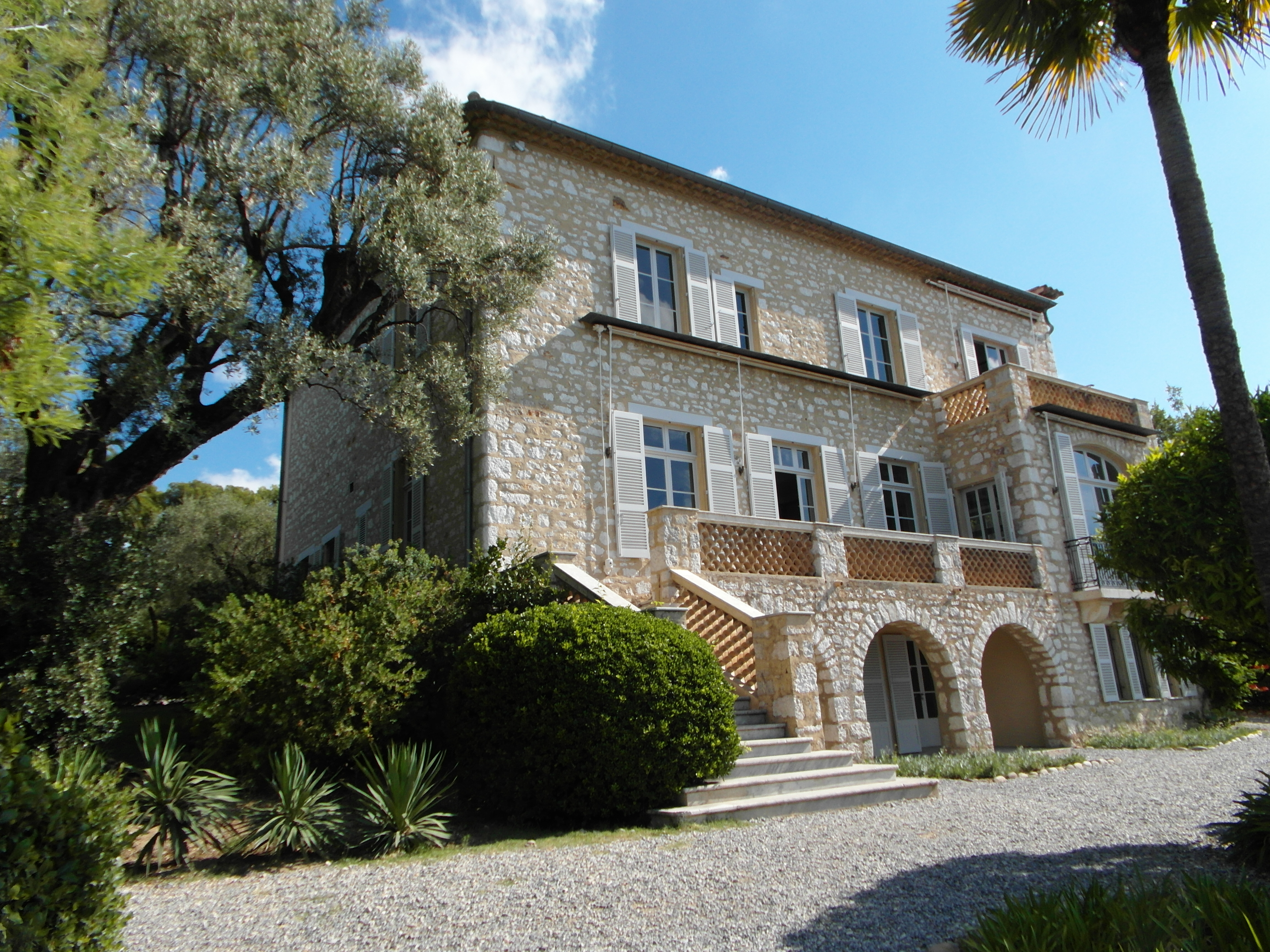
Musee Renoir and his home for the last 12 years of his life in Cagnes sur Mer
Both Renoir and Escoffier practiced their art from an early age throughout the sunset of their years. Both worked passionately at their craft with an intense joie de vivre, were innovators in their professions, gained recognition at a relatively young age and fame before their death, and both had intimate connections to the region of Nice.
Born in Limoges to a working-class family, Renoir received his early training as a painter while drawing and painting on fine china in a porcelain factory, and critical acclaim at the age of 33 when 6 of his paintings were hung in the first Impressionist exhibition in 1874. Sadly, he developed the crippling illness of rheumatoid arthritis in his early 50’s, and finally in 1907, he moved to the warmer climate of the Cote d’Azure which was most suitable for his illness.
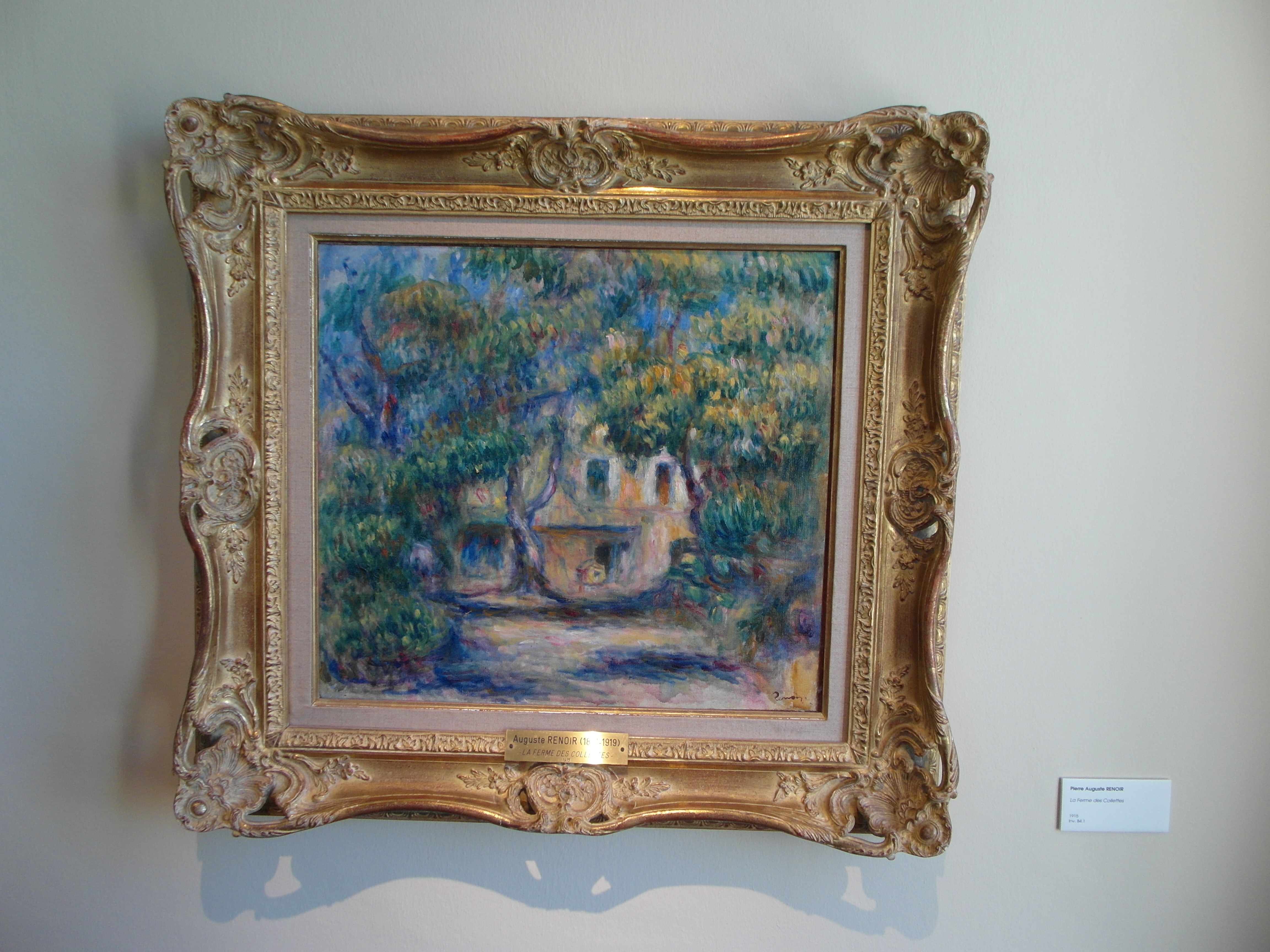
Renoir’s painting of his beloved Les Collettes
He purchased Les Collettes. a farm on the edge of the charming village of Cagnes-sur-Mer with an utterly magnificent view of the Mediterranean and the glorious sunshine made famous by his colleagues such as Van Gogh, Cezanne, Matisse, and Chagall. It has been said Les Collettes was to Renoir what Giverny was to Monet.
For the next 12 years, despite crippling, unbearable pain from his arthritis which relegated him to a wheelchair and necessitated his painting with a brush tied to his hand at the end of his life, Renoir practiced his art with vigor and innovation, adapting his style of painting to his failing eyesight as well as to his failing mobility. This period of Renoir’s work is characterized by looser, more fluid brushwork to dissolve outlines and detail, and hence more impressionistic and at times slightly abstract work.
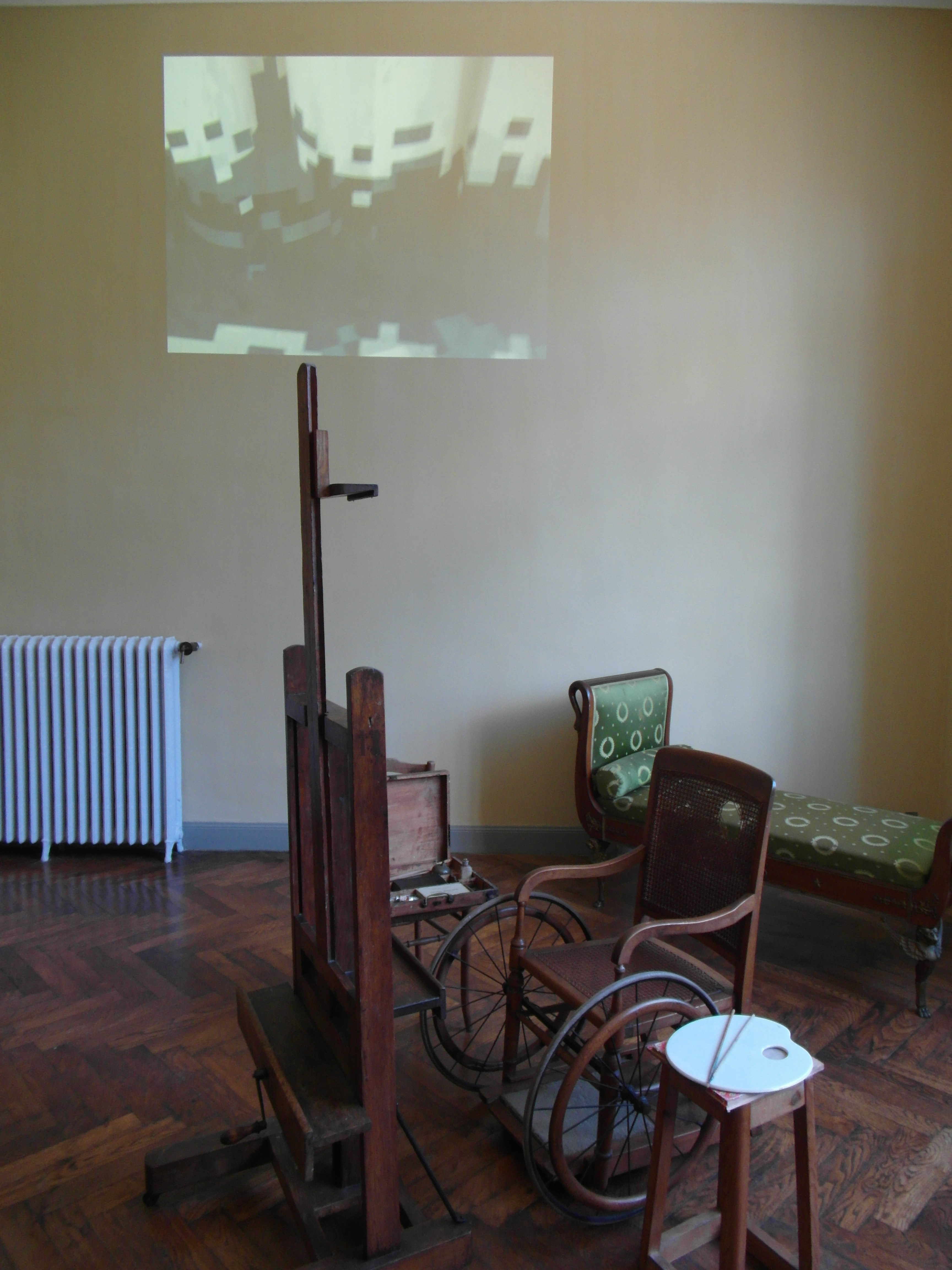
Renoir’s atelier with his wheelchair
Seeing the custom made wheelchair and the apparatus constructed to enable Renoir to move up and down in order to work on large canvases was very revealing. So was his continued focus on painting voluptuous women. Although Renoir mourned the death of his beloved wife, Aline Victorine Charigot, who had served as a model for his renowned Le Dejeuner des Canotiers (“Luncheon of the Boating Party”), he never lost his love of the female body. His lifelong devotion to his work rewarded him with the honor of seeing his paintings hanging alongside those of the old masters in the Louvres in 1919. He passed away shortly thereafter.
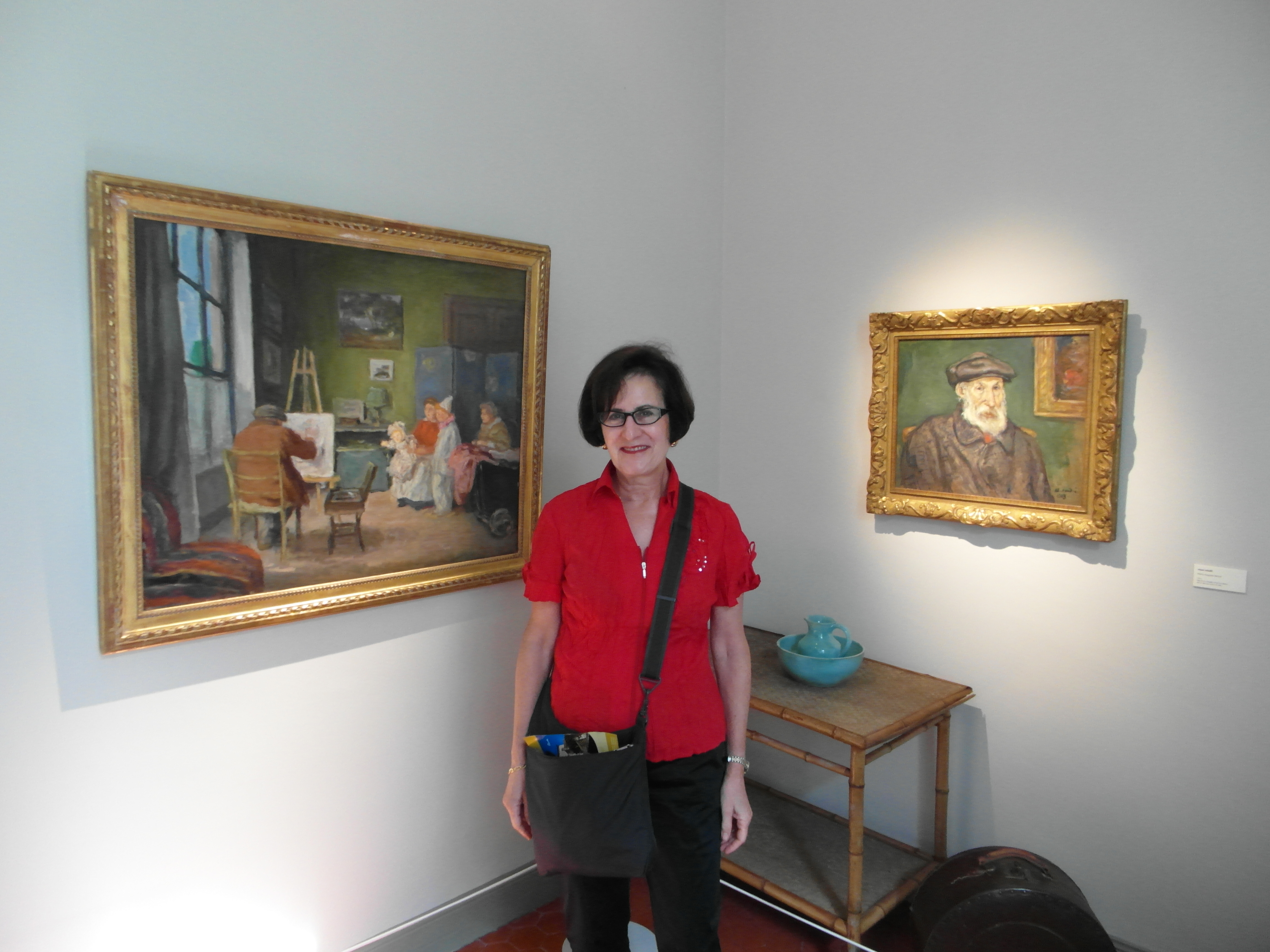
Some of my favorite paintings of Renoir at Les Collettes
Les Collettes has been transformed into the Musée Renoir. While unfortunately it houses few of Renoir’s most famous works, it provides the backdrop for understanding the personality behind the man who produced several thousand works of art over this lifetime and whose work is beloved world-wide.
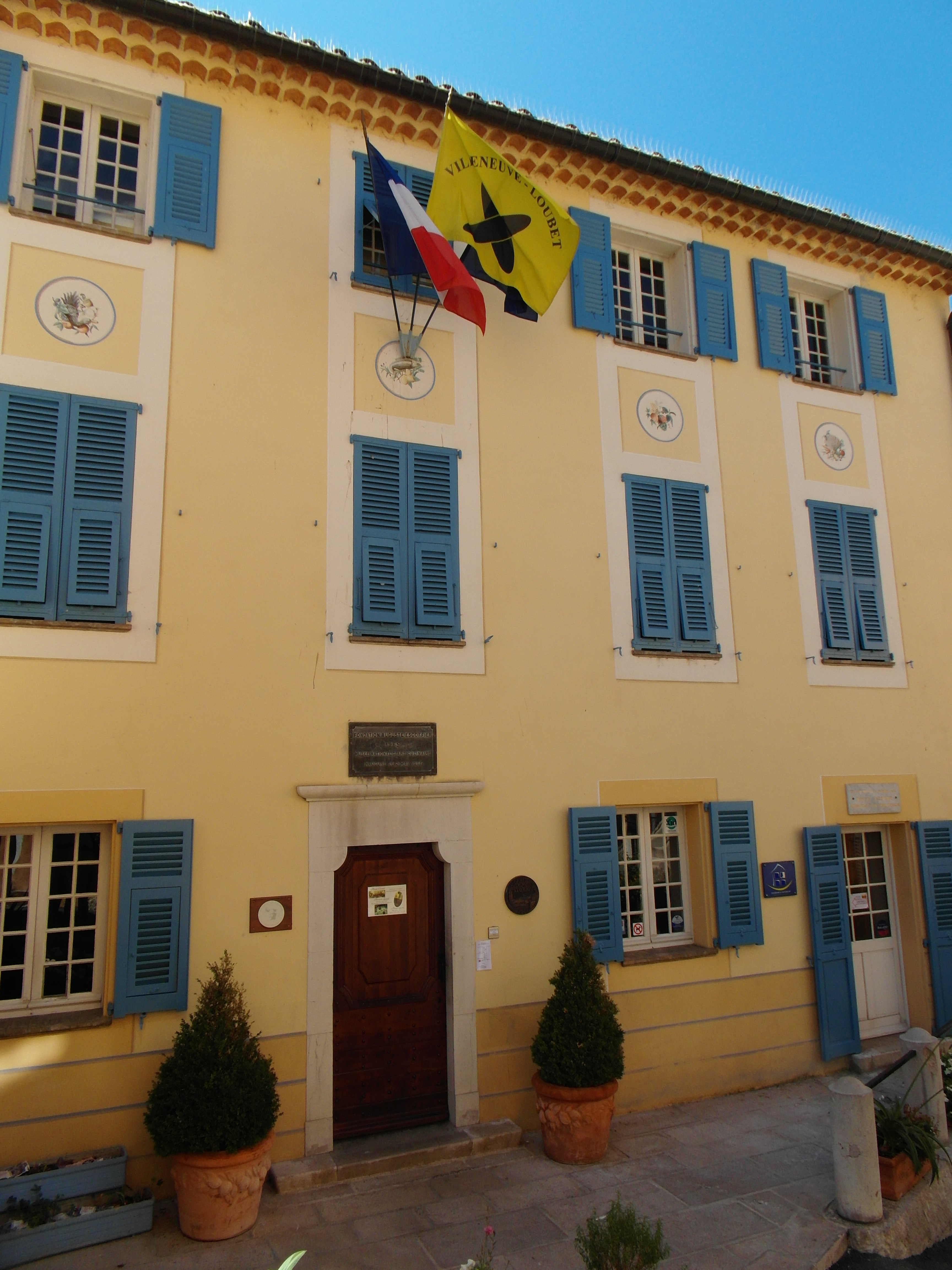
Musee National de l’Art Culinaire Auguste Escoffier in Villeneuve-Loubet
From the home of one grand master, we moved onto the village of Villeneuve-Loubet to visit the childhood home of another, Auguste Escoffier, a prolific culinary author and the founder of French haute cuisine who helped put the classic techniques and recipes of French cuisine on the world map. Escoffier’s childhood home has been transformed into the Musée Escoffier which we decided to visit after having lunch.
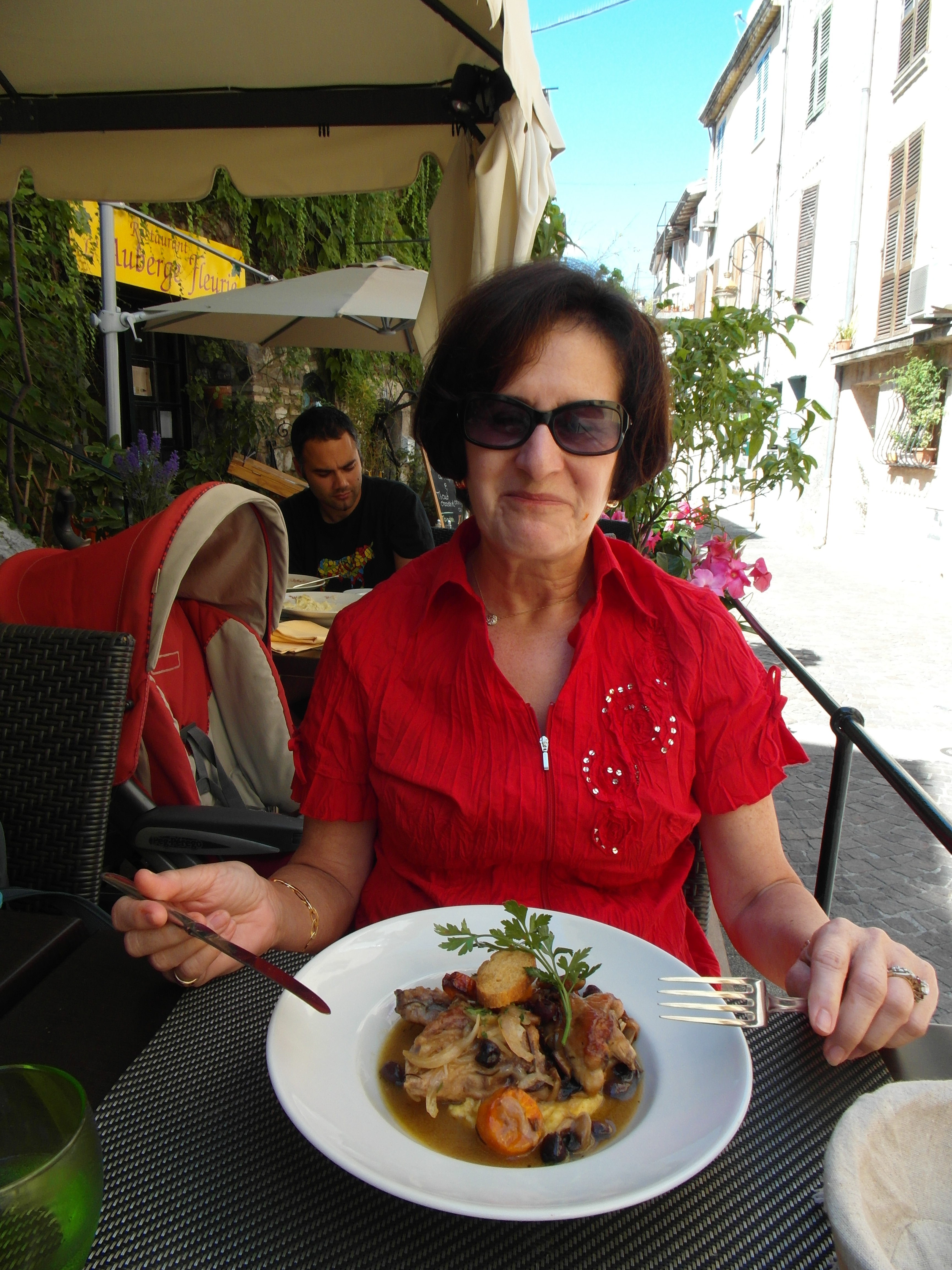
Me enjoying the Fricassee de Lapin
Just down the street was a charming restaurant, L’Auberge Fleurie, which attracted our attention with its menu du jour. We sat outside on the terasse and ordered a Salade du Marché as an entrée prior to the “menu” which offered a Fricassée de Lapin (“rabbit stew”) and a Chocolat Fondant (cake) à l’Orange. We expected simple food in this old town which seemed to still be in the 20th century, and were frankly delighted well beyond our expectations with the taste, quality and presentation of the food. We were still savoring the meal long after it was over, so we weren’t too surprised to learn at the museum later that the chef of this petit restaurant had been trained at the Ritz-Escoffier School of French Gastronomy. How à propos !
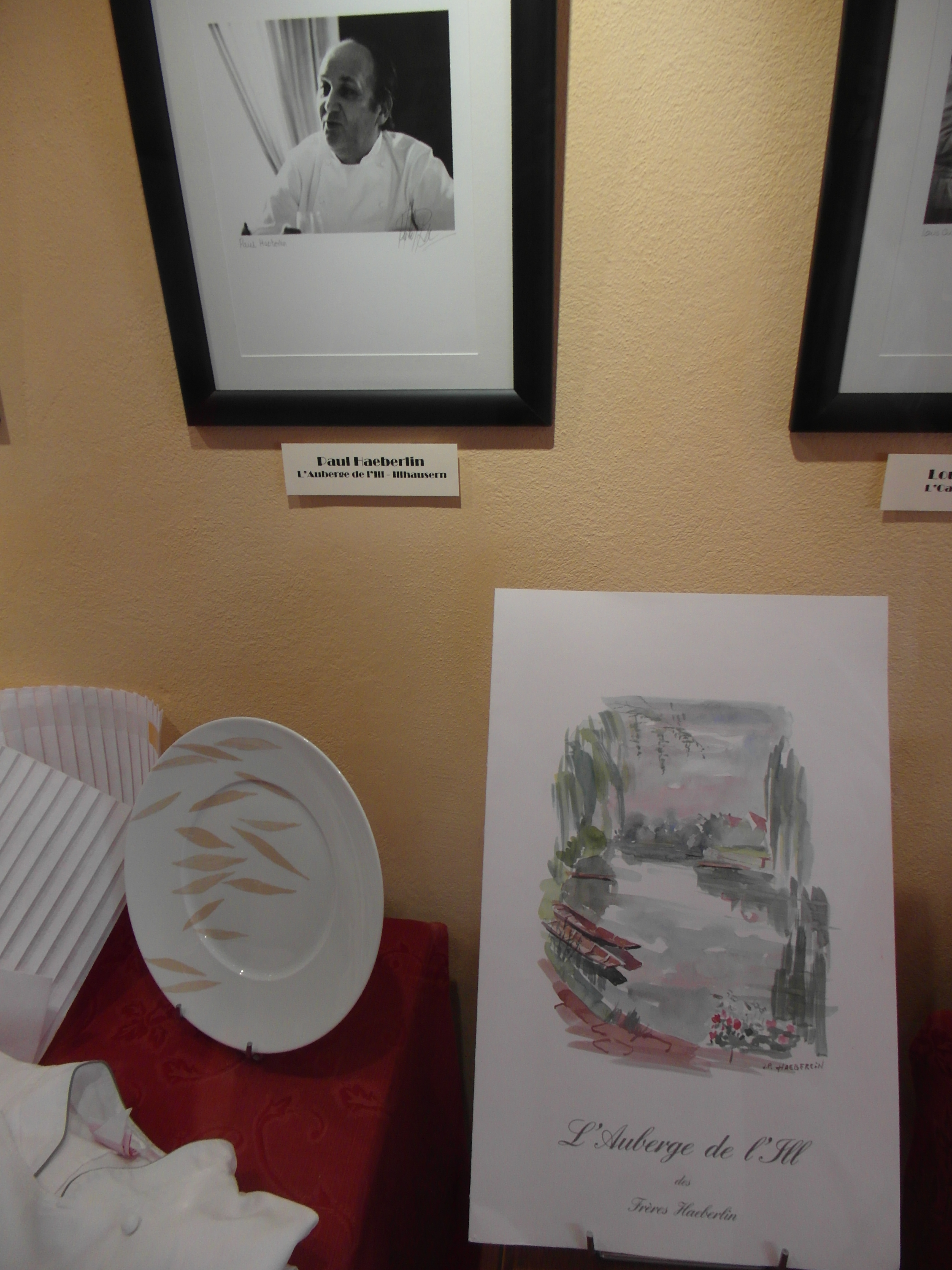
Escoffier trained and inspired many world famous chefs
Auguste Escoffier, considered to be the first celebrity chef of the 20th century, elevated the work of a “cook” to that of a “profession” by introducing organized discipline and specific techniques to modern kitchen management. Born in 1846, Escoffier spent the first 18 years of his life in this charmingly refurbished home decorated in old Provençal style which the Fondation Escoffier now manages as the Musée National de l’Art Culinaire Auguste Escoffier. It was here in this home that his love for cooking developed as he watched his grandmother cook over the fire in the family fireplace.
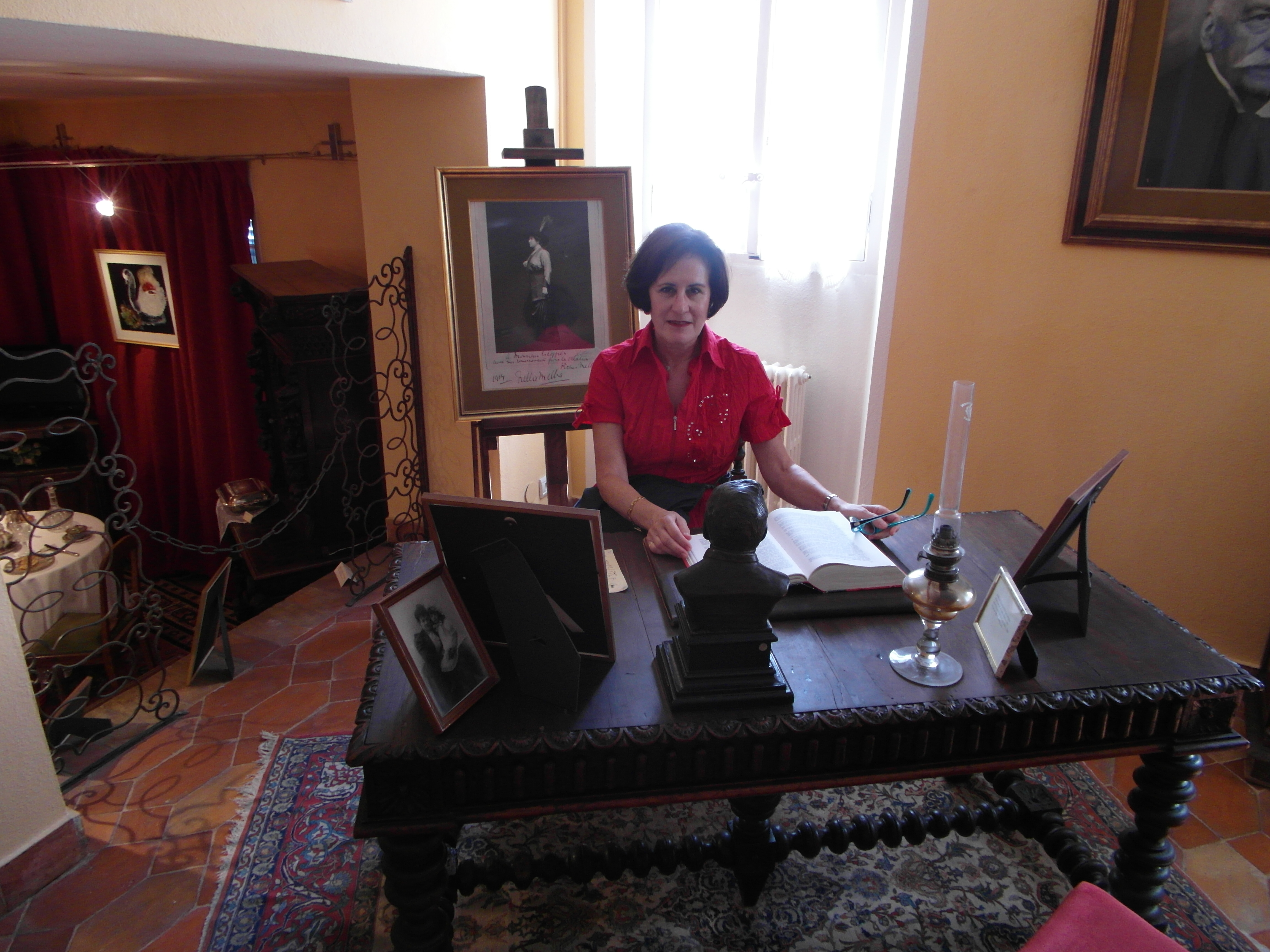
Seated at the desk of the King of Chefs and the Chef of Kings
The museum collection includes many handwritten recipes and letters by Escoffier, photos of him at the Savoy where he invented Peche Melba, at the Ritz in Paris, and at the Carlton in London. It houses many of Escoffier’s cooking implements, including many designed by him, as well as Escoffier’s desk and chair, menus written by him or inspired by him, menus from great chefs he taught and inspired, a room full of chocolate statues created by great chefs trained by him, and many other heirlooms of the history of French cuisine, including how Escoffier elevated it into an art and a science. A pilgrimage there is just as satisfying for a true lover of French cuisine, if not more so, as a pilgrimage to the exhibit on Julia Child at the Smithsonian’s Museum of American History.
Musee Renoir and Musee National de l’Art Culinaire Auguste Escoffier
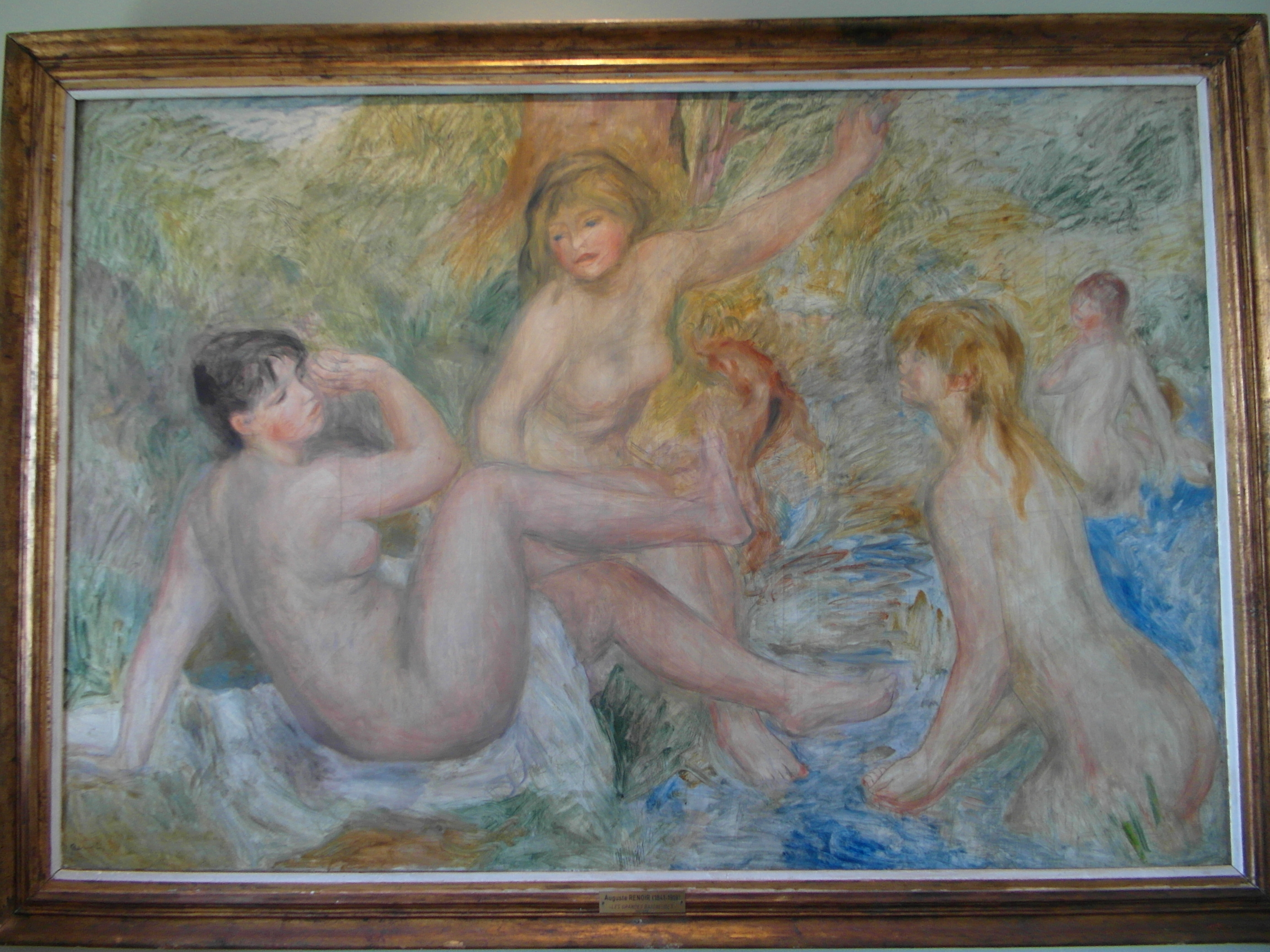
Les Grandes Baigneuses de Pierre-Auguste Renoir
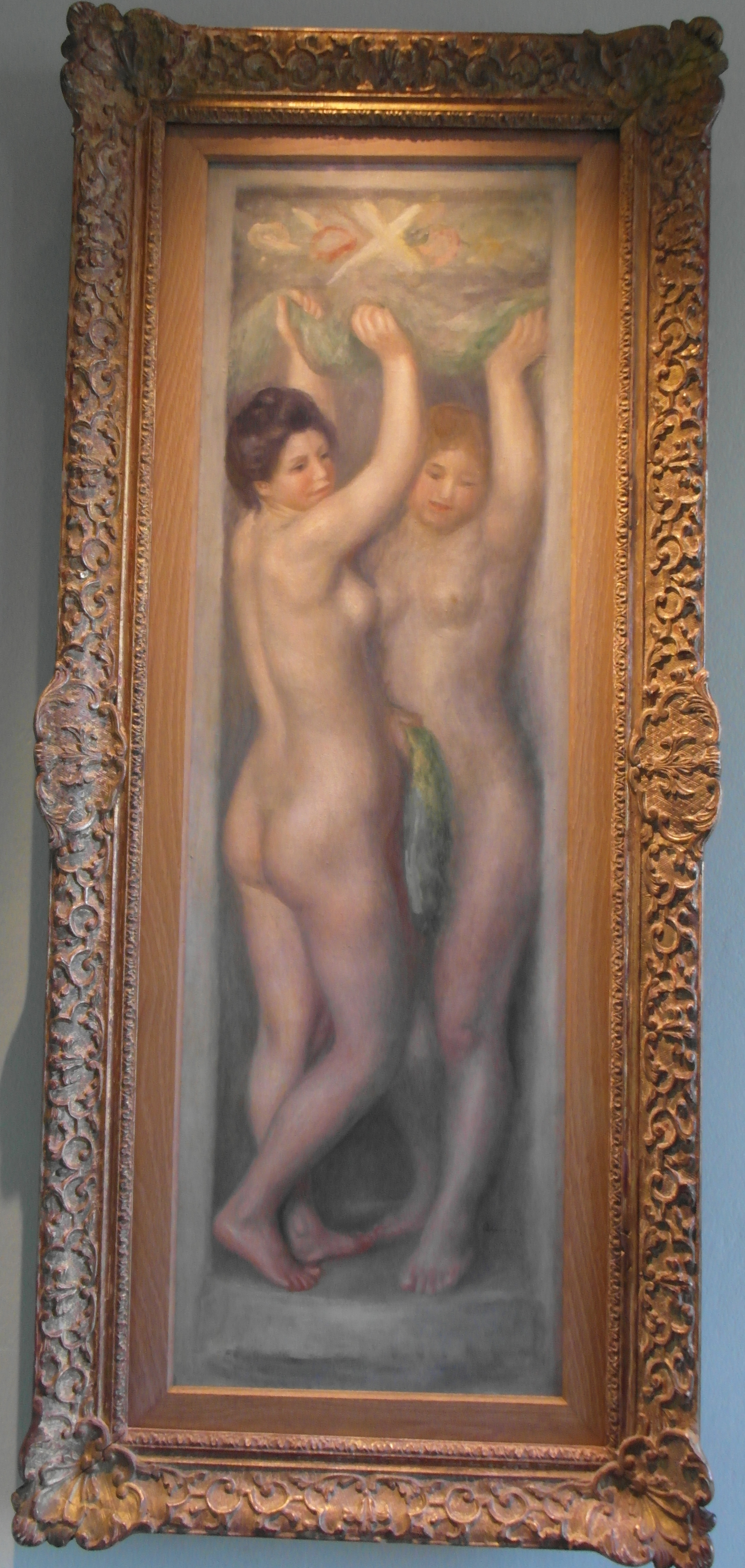 Highlights of the day
*Musee Renoir
Luncheon of the Boating Party, by Pierre-Auguste Renoir, is one of my favorite paintings in the whole world, because of the way it stirs in one feelings of beauty and feelings of la joie de vivre. That painting, luckily, is housed near us at the Phillips Collection in Dupont Circle.
In addition, the recent movie Renoir, which we saw last March at the Avalon Theatre, introduced us to the last few years of Renoir’s life, which he spent at his farm in Les Collettes, in Cagnes-sur-Mer on the outskirts of Nice, now a museum.
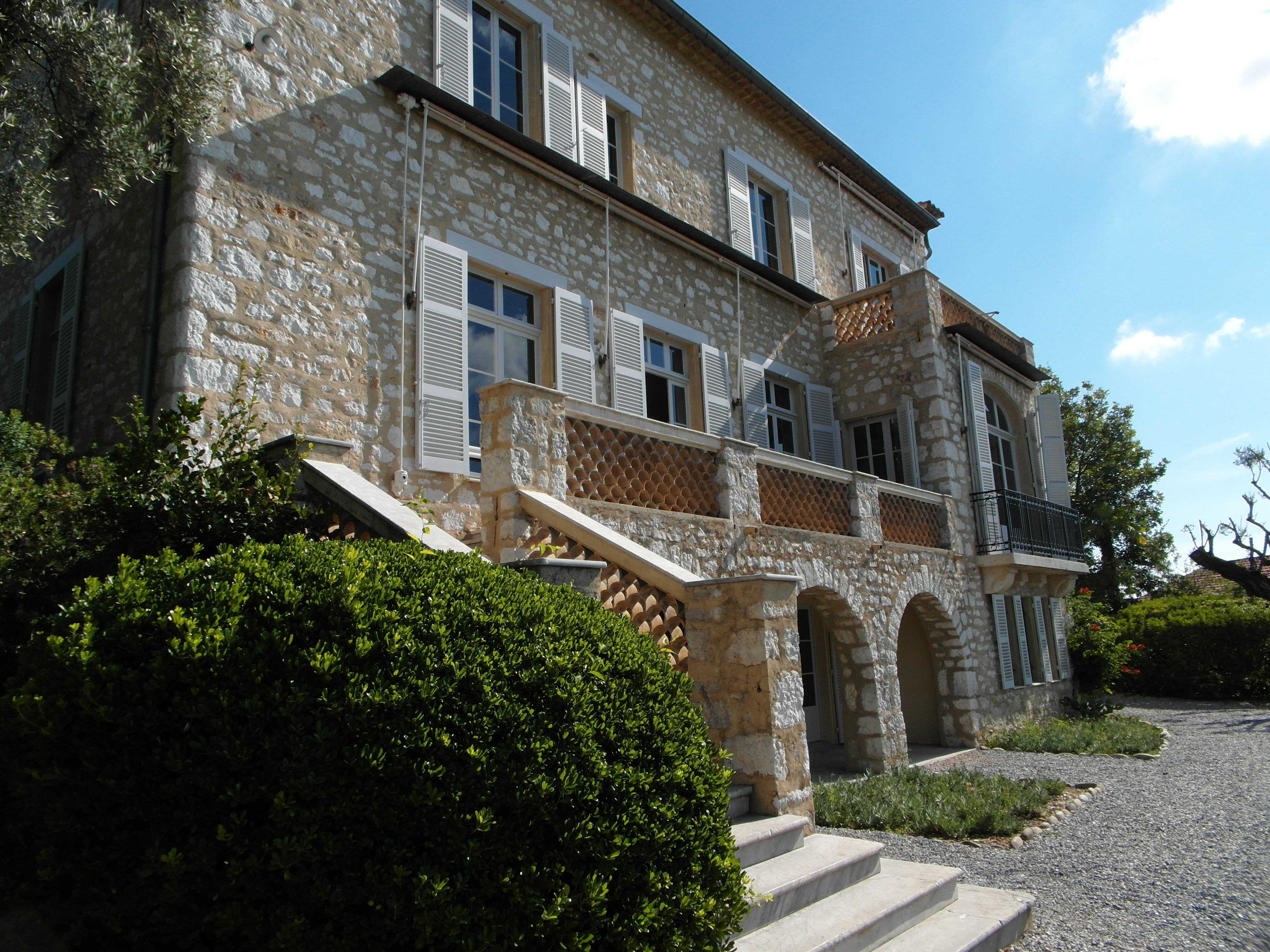
Musee Renoir (formerly la ferme Les Collettes) at Cagnes-sur-Mer
Visiting the Musee Renoir was a treat, particularly since it just reopened a couple of weeks ago after extensive renovations. I was however disappointed that the annex building was not visitable. The two atelier rooms in the main house were the most interesting for me. From the main house, there are great views of the Mediterranean coast as well as of the hilltop village of Hauts-de-Cagnes. The grounds are just as I imagined them from the movie, and we also enjoyed the dozen or so original Renoir paintings on display.
*Musee National de l’Art Culinaire Auguste Escoffier
The museum is located in Villeneuve-Loubet, in the house where Escoffier was born and where he spent the first 18 years of his life. It feels a little bit like a pilgrimage to visit this temple to the King of Chefs and Chef to the Kings, and it is well worth it.
One gets a good sense of his life and accomplishments. In addition, one gets a good overview of the history of French cooking and where it stands today. I was particularly pleased to see that the l’Auberge de l’Ill in Illhausern, one of our favorite restaurants in the whole world, was well represented in a display honoring today’s top chefs.
The history of the Peach Melba, created by Escoffier to thank the opera singer Nellie Melba, is featured prominently, and we were served a Peach Melba dessert at the end of our tour to enjoy at a table in their little courtyard.
*Rental and use of the electric car sharing service Auto Bleue to drive to Cagnes-sur-Mer, Hauts-de-Cagnes, Villeneuve-Loubet and Antibes. This was my first time driving an electric car, a Peugeot IOn (no big deal), and my first time using a car sharing service (to my knowledge, Nice is the first city to offer an electric car sharing system). At the end of the day, I was wondering why everybody is not using something so convenient and easy to use.
However, to be fair, I did struggle a bit with the GPS system in the car; the less important details are that the screen is too small and the blue direction line is very hard to see, the more important detail is that the verbal directions are given after the turn road has been passed. I was puzzled at the beginning to hear directions like “in 300 meters, turn right on rue Dalpozzo” just as we were passing that street! Nevertheless, in time, we adjusted well to each other and made it safely back.
A great advantage of Auto Bleue is that you return the vehicle to the same parking spot where you took the vehicle, and that spot is saved for you. You can therefore return the car at any time of day or night and be assured of a specific parking space. This is an invaluable feature for day rentals as compared to regular car rental companies.
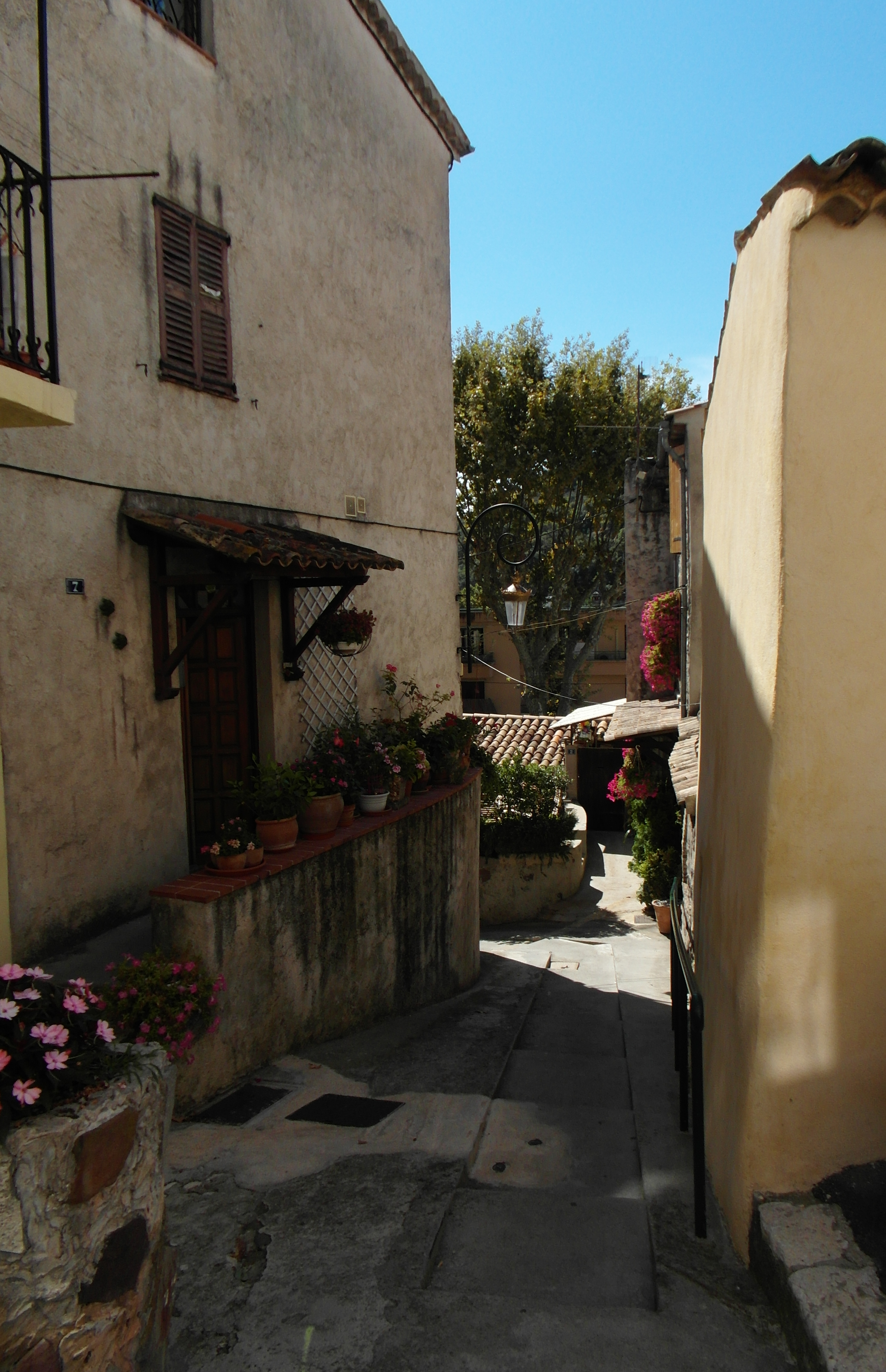
The narrow streets of Villeneuve-Loubet
*Scenic driving tour of the perched village of Hauts-de-Cagnes and unplanned driving tour of the hilltop village of Villeneuve-Loubet. Because the main road to our destination was closed due to construction work, I ended up hopelessly lost, having a hard time figuring out a way to drive out of the hilltop village, and driving aimlessly thru very narrow steep roads (see photo above), even at one time ending up in the village’s very pretty but dead end (yes, pun intended) hill cemetery. When finally the GPS system asked me to make a hairpin turn into what looked like a three foot wide alley headed down as steeply as a ski jump, I just parked the car where it was and we walked down the hill. It was lunchtime and I was sure we would find both a place to eat and someone to help us figure out how to get out of town. Fortunately for all our friends and family who might be interested in our eventual return home, we found both quite easily.
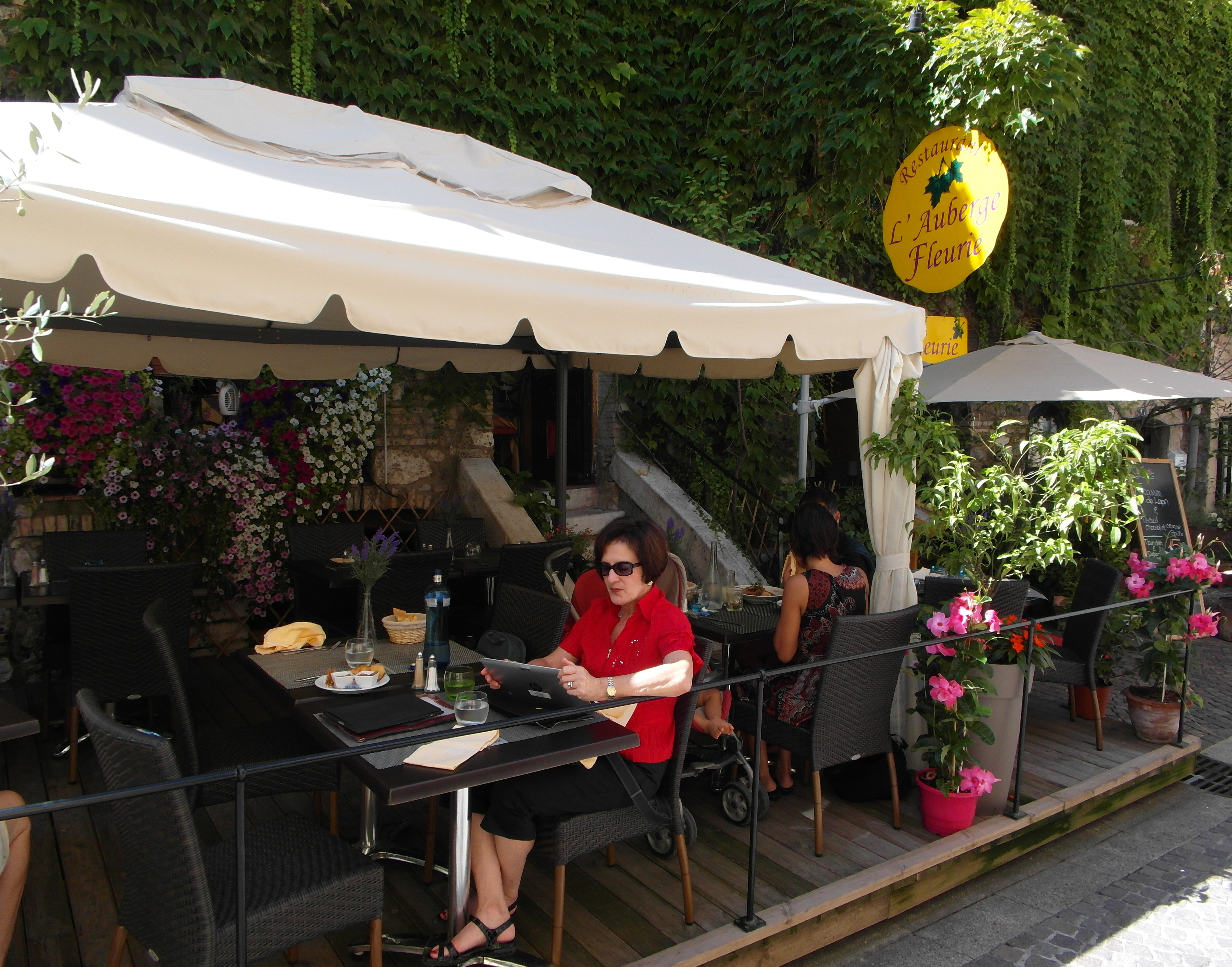
L’Auberge Fleurie in Villeneuve-Loubet
*Delightful lunch at l’Auberge Fleurie in Villeneuve-Loubet. This was the first restaurant we saw on our way down the hill, and it just happened to be located within sight of the Escoffier museum we were trying to reach. In addition, the chef at l’Auberge Fleurie was a graduate of the Escoffier cuisine school. The main dish of the menu of the day was a fricassee de lapin with polenta (fricassee of fresh rabbit with polenta and Nice olives) which turned out to be superbly delicious and flavorful, another local specialty which we will remember fondly.
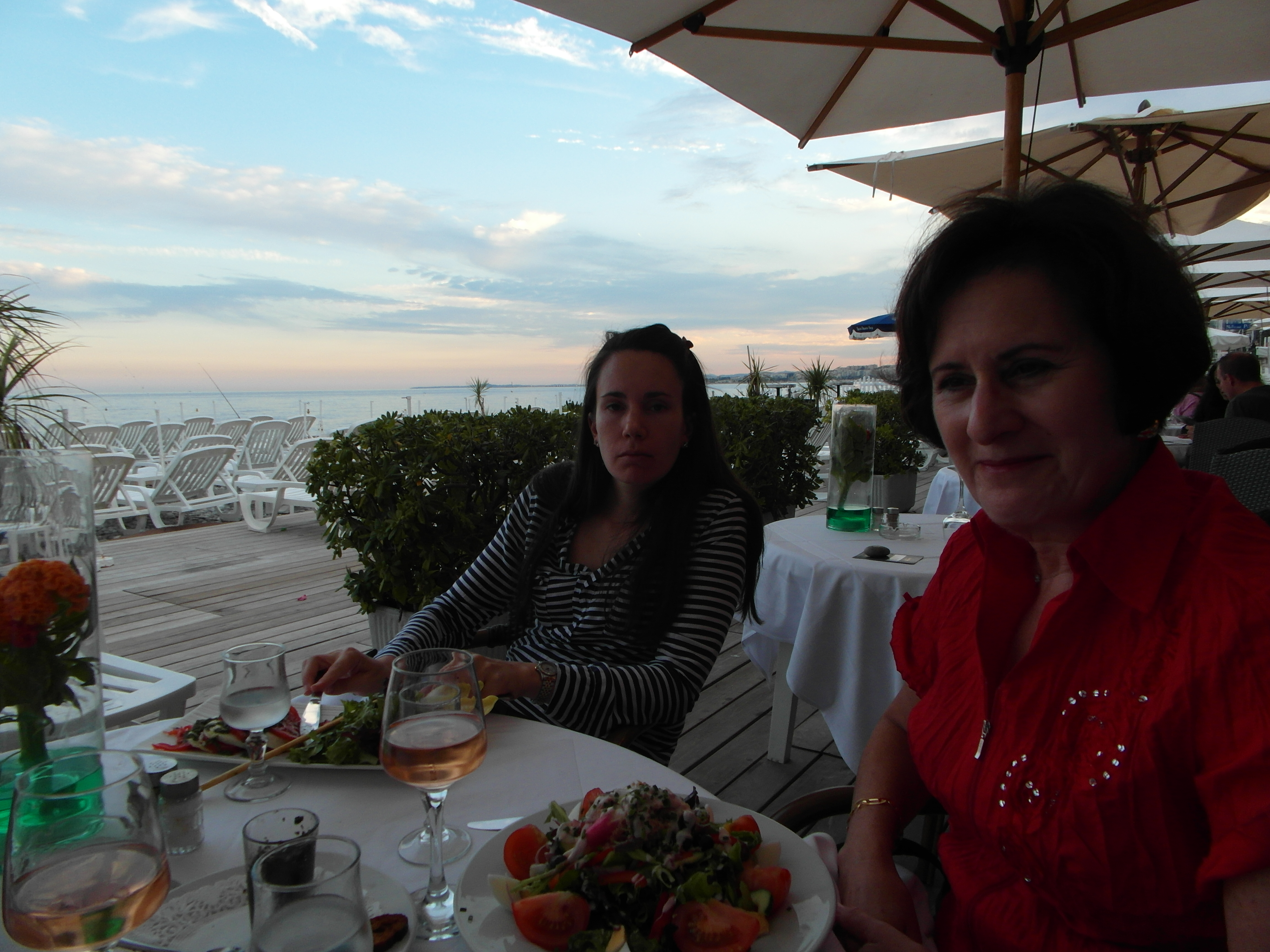
Blue Beach restaurant on the beach in Nice
*Salade Nicoise dinner on the beach at sunset time at the Blue Beach restaurant in front of the Negresco in perfect 75 degree weather.