Daily Archives: February 12, 2014
Battielal and the Ranthambore Tiger Reserve in Sawai Madhopur, Rajasthan, India
Battielal was our naturalist guide for our game drives through the Ranthambore Tiger Reserve in Sawai Madhopur, a town located about 100 miles southeast of Jaipur, reached by way of a four-hour hair-raising, constantly bumpy but most interesting drive.
Until 1971, the year Indira Gandhi brought about a constitutional amendment which took away most of the rights and properties of the former kings, the 400 square kilometers of what is now the Ranthambore Tiger Reserve was the private hunting reserve of the maharajah of Jaipur.
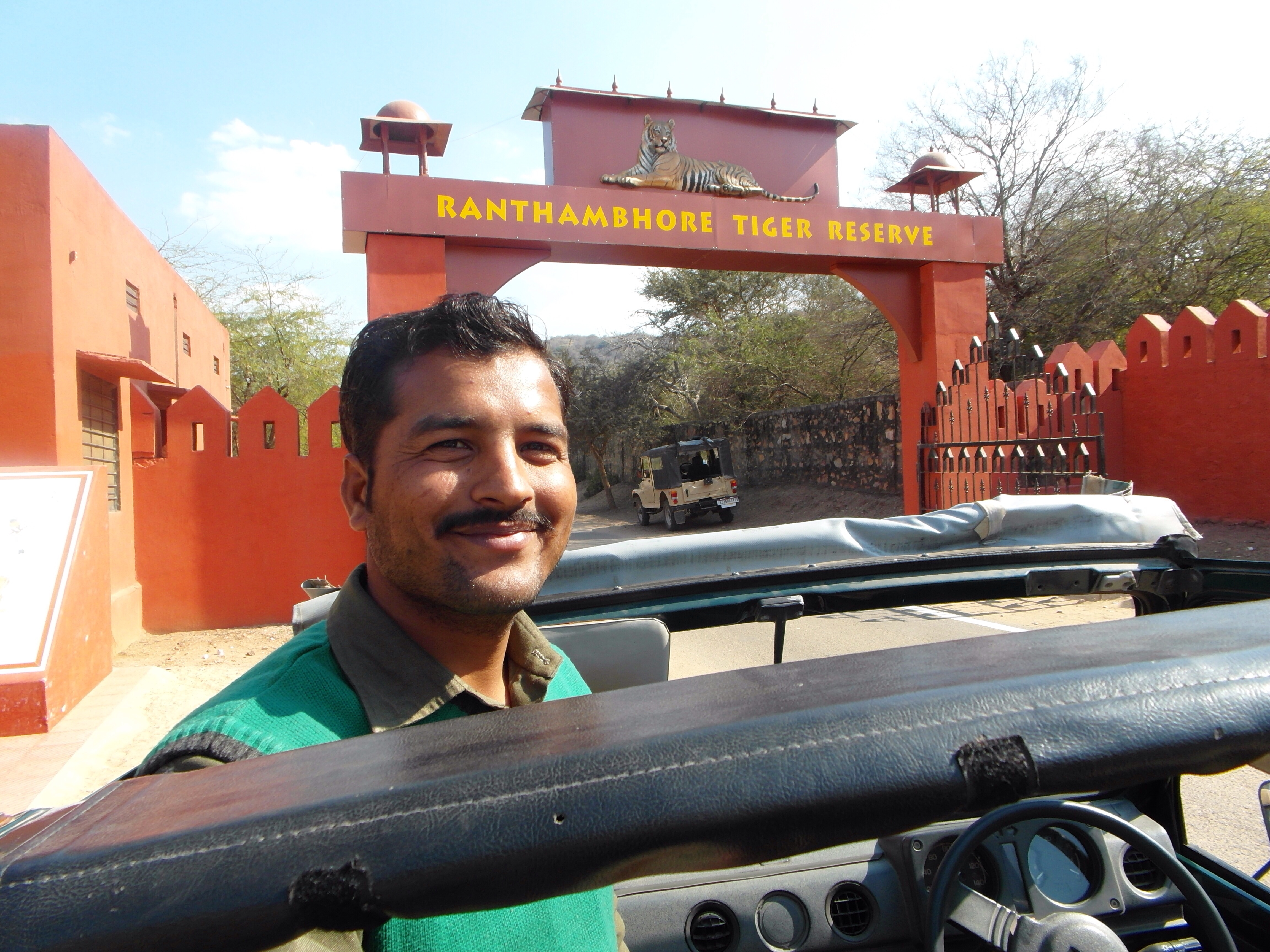
Our guide Battielal at the entrance to Ranthambore Tiger Reserve
Battielal is a good looking young man who was born around the time of the changeover in a village located within the reserve. There were 22 villages within the reserve when the government took over the property in 1972 and asked all the villagers to relocate outside the reserve, promising jobs and housing if they did so.
Ten villages, whose villagers did not initially agree to move, are still located inside the Tiger Reserve. After realizing that the government had not fulfilled its promises to those who did relocate, they have decided to take a firm stand against moving.
Battielal lived in one of those villages. He was eventually asked to come into a government office for a job interview. “What type of job do you want?” he was asked. “I’ll do anything you want” he replied. “What can you do?”, he was asked, “Can you drive?” “No? OK, then can you speak English?” “No? Hmmm.”
Battielal was sent to a two-week evaluation program, at the end of which it was decided that he would become a naturalist and a guide, which he did.
He is now married, a marriage arranged by his mother, which is fine with him because, as he says, mothers know you best and know what’s best for you. Battielal and his wife have a five-year old son, and it is because of him that Battielal rented a place in Sawai Madhopur and moved his family there from the village in the Tiger Reserve. He wanted his son to go to school and enrolled him in a private school. Private Catholic schools are best, he says, because they are very strict and you have to learn; they also teach English, which the public schools do not do.
His son has a one hour school bus ride each way to and from school. He goes to school with a lunch that his mother has prepared for him; she also has prepared one for Battielal at the same time because she will leave home for work as soon as the school bus has picked up her son and she won’t be back home until 5pm when her son gets home from school. Battielal found her work in a crafts store aimed at tourists, where they have taught her how to make handicrafts.
Battielal speaks English well now. He has never traveled anywhere and dreams of going on an airplane some day. What he knows about the rest of the world is what he has learnt from his customers over the years. He knows Ranthambore Tiger Reserve inside out, so well that other guides now rely on him for guidance.
We are doing the rides in an open air six-passenger Indian “Maturi” jeep, although we have the whole vehicle to ourselves.
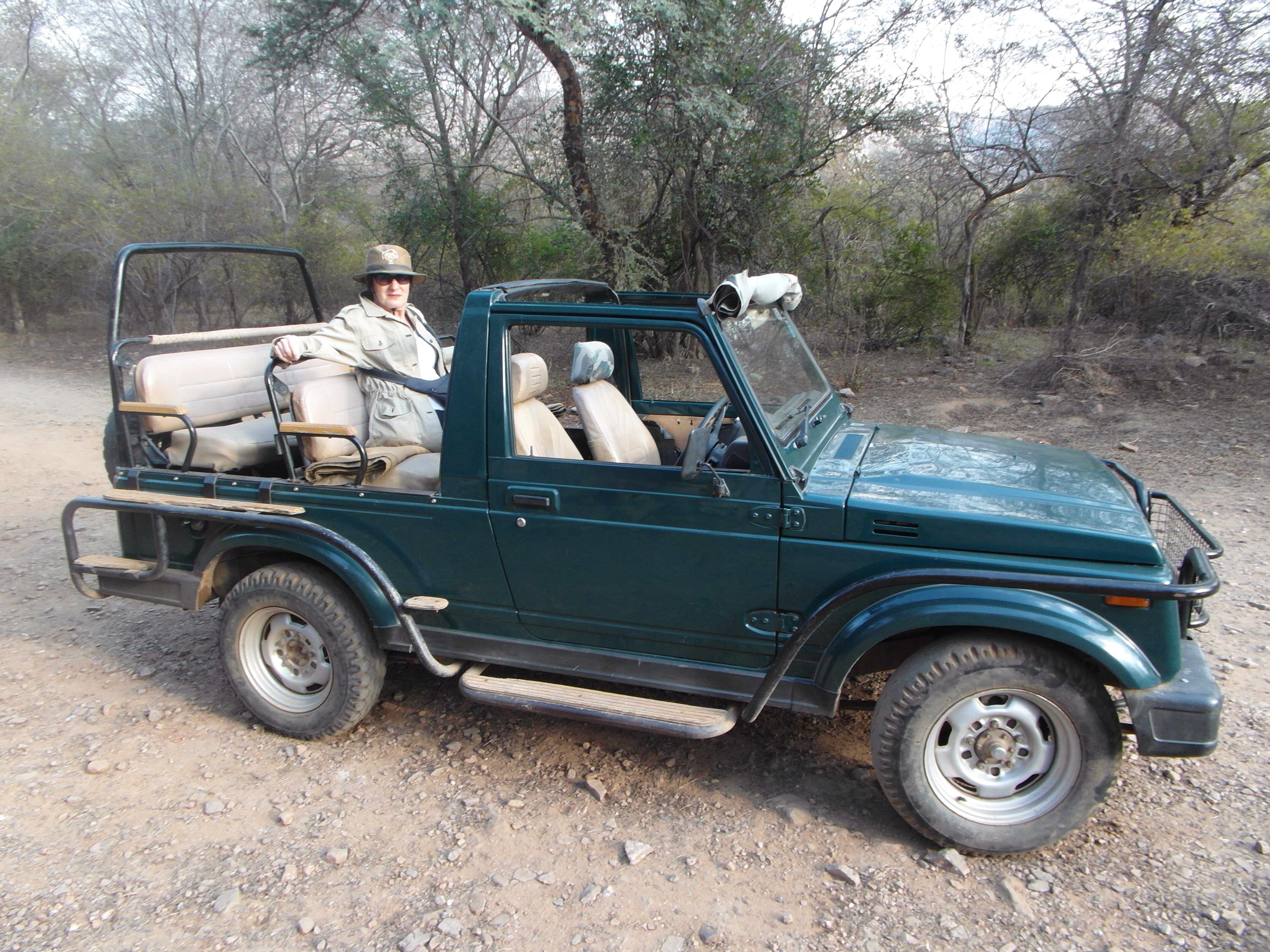
The government has divided the park into zones and randomly assigns zones to vehicles each day. A maximum of 24 “gypsies” (six-passenger jeeps), and 20 buses (twelve-passenger vehicles) are allowed in the reserve at any one time.
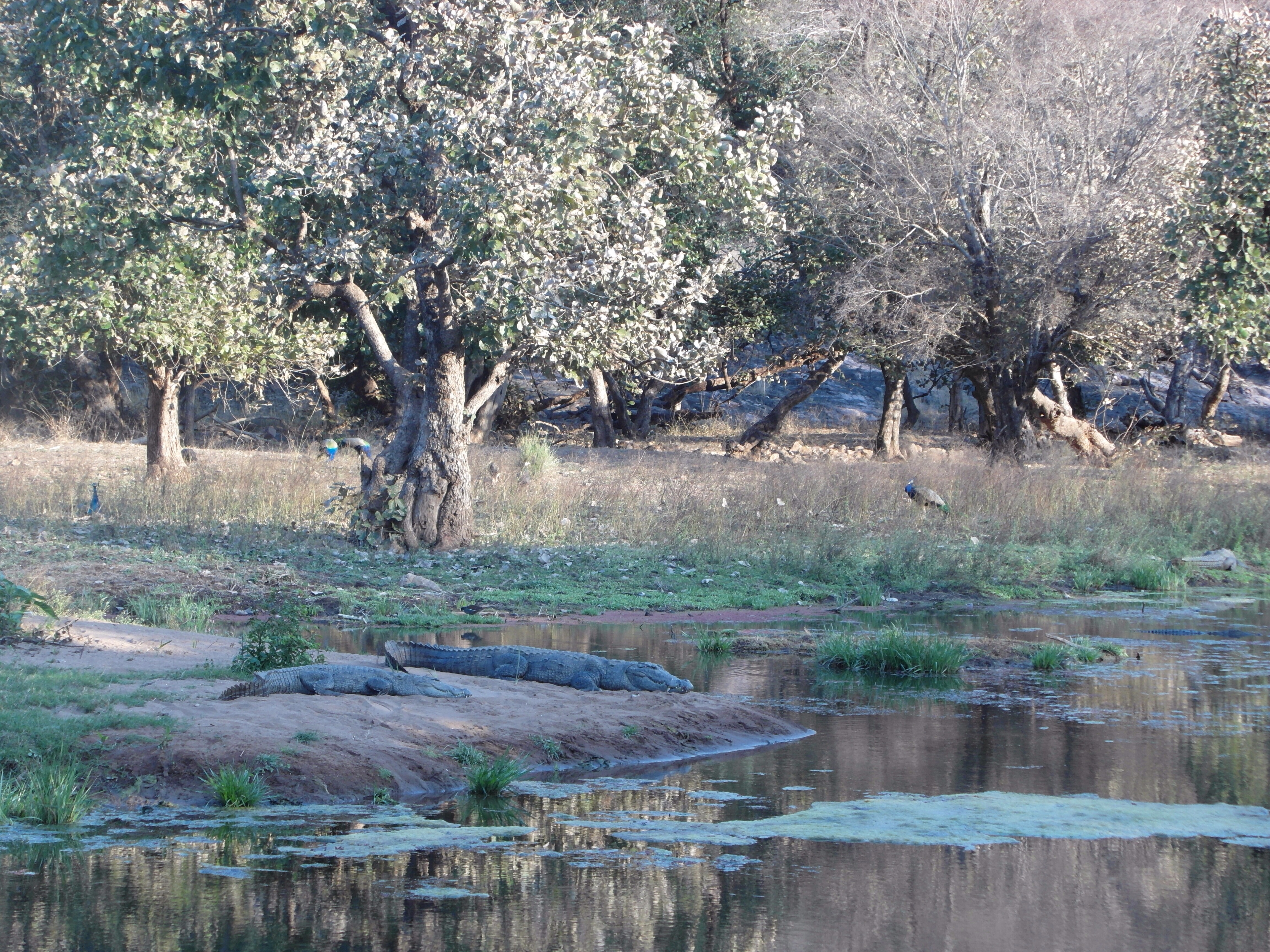
Crocodiles and peacocks at the Ranthambore Tiger Reserve
There are 55 tigers in the park right now and Battielal is determined to make sure we get to see one of them. He also makes sure that we don’t miss any of the breathtaking views the park has to offer.
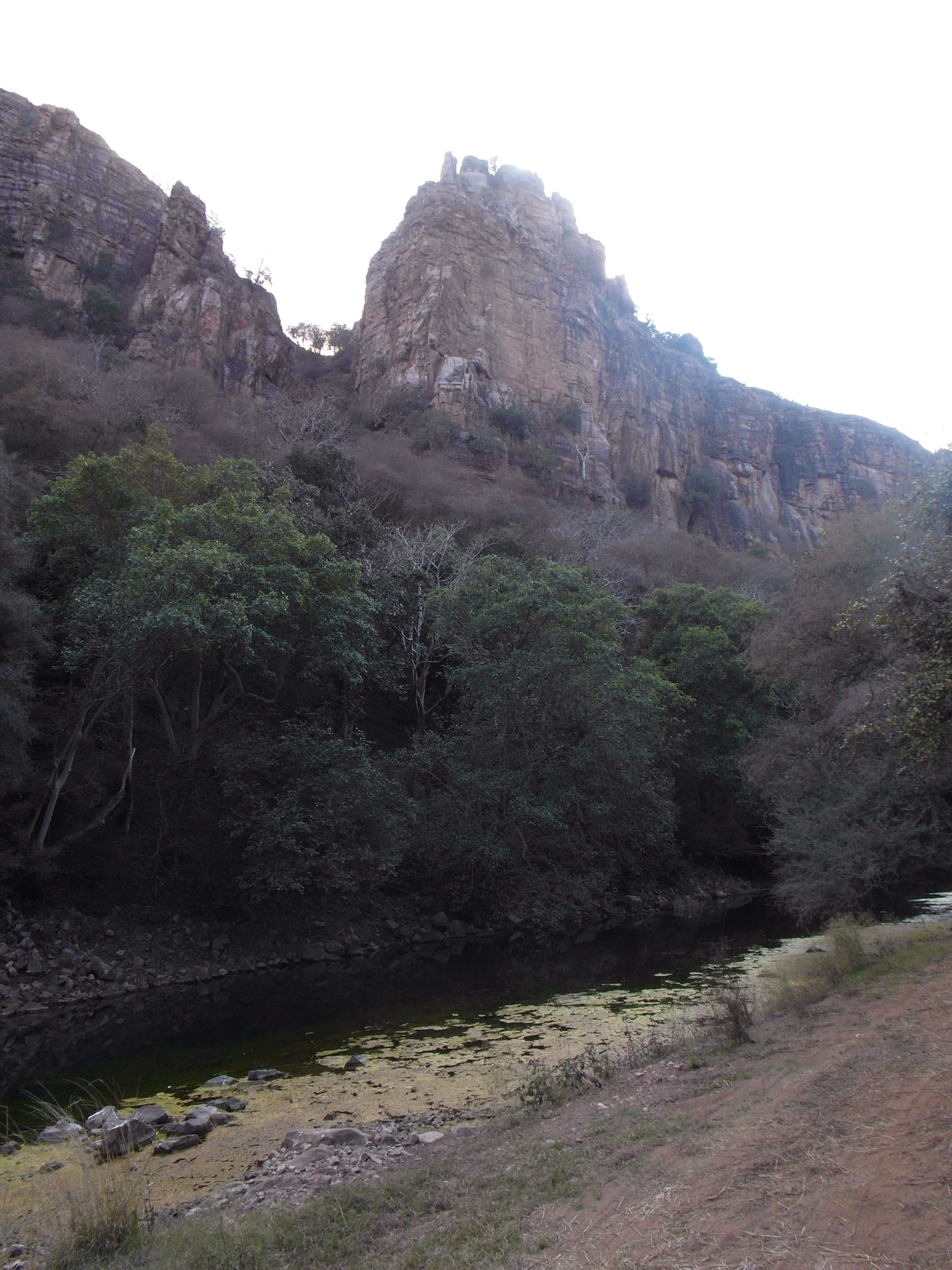
Whether we do encounter a tiger or not, we will have had the pleasure of getting to know Battielal, and through him, another fascinating facet of Indian life.
CULINARY SPOTLIGHT: Peacocks, Fenugreek and Blue Pottery
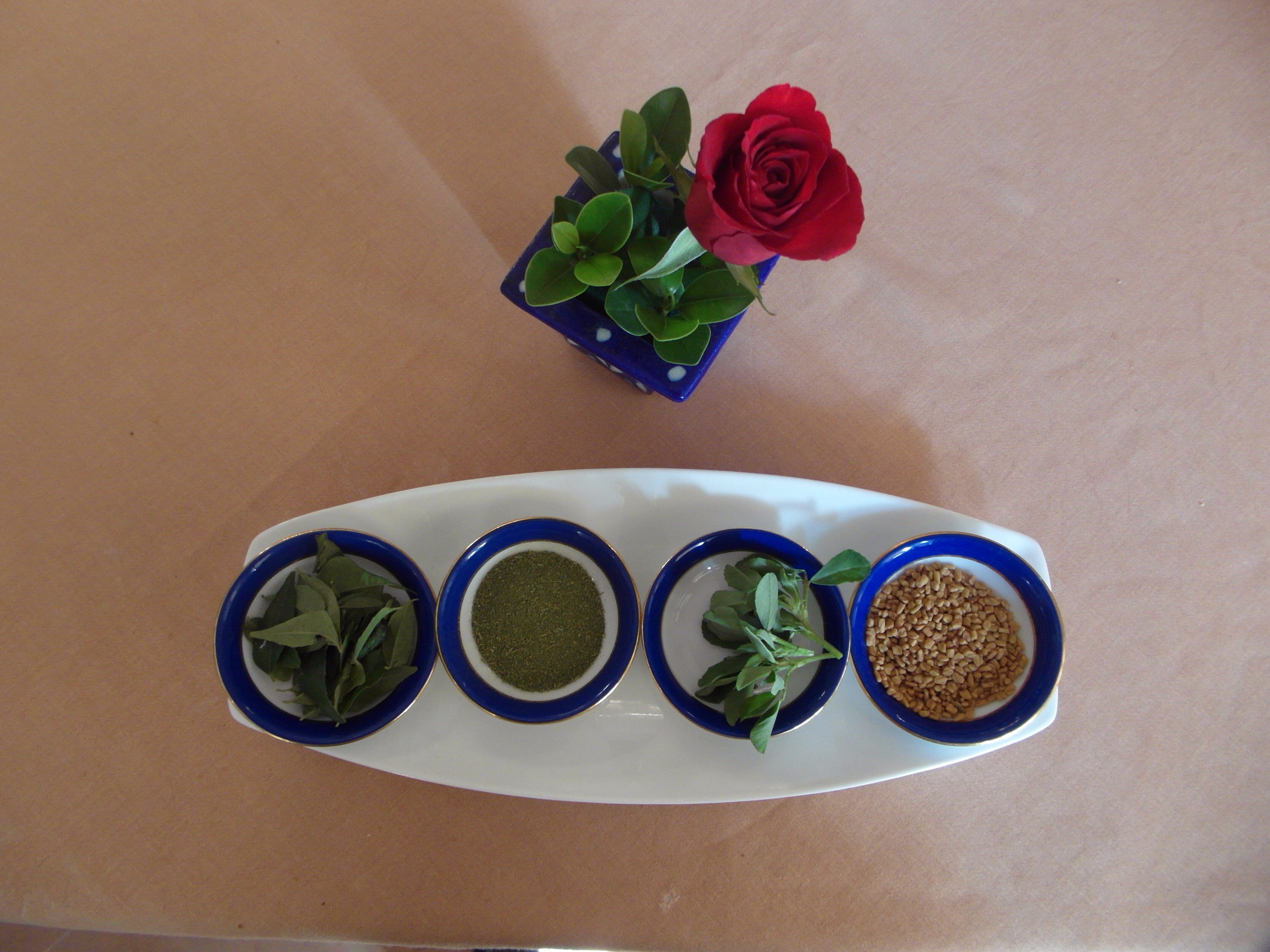
Fresh coriander, ground fresh fenugreek, fresh fenugreek and fenugreek seeds
In exotic Jaipur, I am having breakfast after a short but wondrous visit and am feeling adventurous. After all, we have surveyed the city from 2000+ feet above it in a sunrise hot air balloon ride, entered the courtyard of the magnificent Amber Palace dating from 1592 on top of an elephant just as royalty used to do in the days of kings and maharajahs, and encountered peacocks who appeared magically in the garden outside our hotel room just after I verbalized my desire to see some.
So to accompany the elegant “western-style” breakfast of scrambled eggs with smoked salmon which I ordered, I go up to the “Indian” side of the buffet table and take a generous serving of vermicelli. When I take my first bite of the vermicelli, there is a divine explosion of flavor in my mouth. I can taste the onions, garlic, tomatoes and chilies, but there is something else I don’t associate with vermicelli and can’t identify. I ask the chef when he comes by what the little flavorful seeds are that add such a punch to the dish. “Coriander seeds” is his reply, and then we chat a bit about Indian food, including “fenugreek” which I say interests me. He asks me to wait a brief moment.
To my delight, he returns with a tasting of fresh coriander (“cilantro”), ground fenugreek leaves, fresh fenugreek, and fenugreek seeds (see the photo above). But that is just the beginning … When I finish my tasting, he asks me to wait again for a moment, and then returns with the herbs and seeds, each in a sealed package along with the famous “blue pottery of Jaipur” which I had previously admired.
I have learned in Jaipur — be careful what you wish for, or it may become yours. Luckily, I only wished to “see” the peacocks, not to bring them home.
Hot air balloon, elephants and peacocks in the land of maharajahs - Jaipur, Rajasthan, India
The peacock is the national bird of India, and our hotel, the Oberoi Rajvilas in Jaipur, has several of them running around freely on the property. They are not only beautiful, even though it is early in the year and their annual “plumage” has not grown yet, but, as I found out quickly, they are quite chatty and do enjoy a good conversation, sometimes right outside the window of our ground level suite. Good thing we have an ample supply of ear plugs with us.
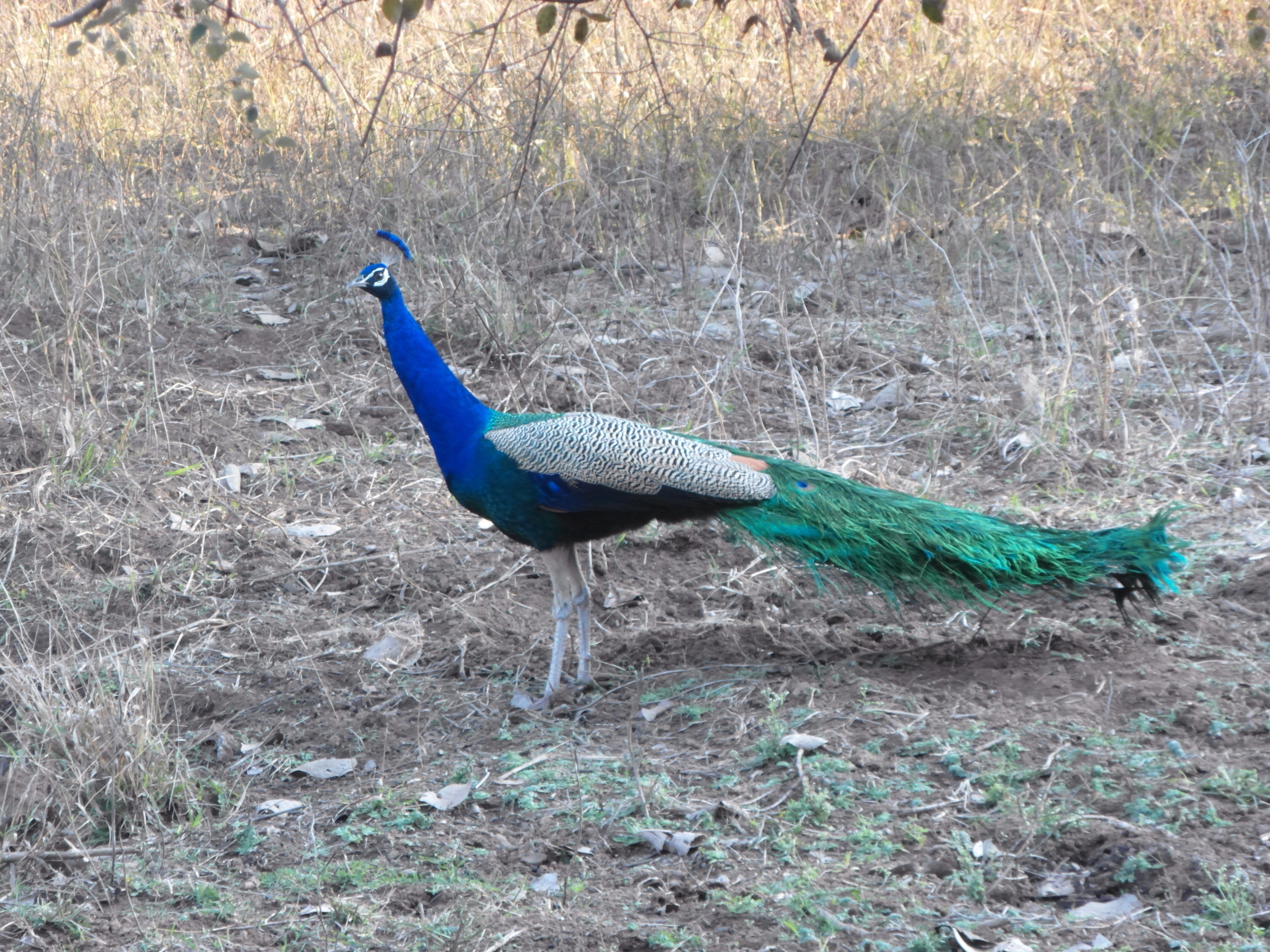
Peacock from Ranthambore Tiger Reserve in Sawai Madhopur, Rajasthan, India
Jaipur is the capital of the state of Rajasthan, the biggest state in India and a state which did not exist before the independence of India in 1947. The “land of the kings” (translation of Rajasthan) was put together as a state by the merger of 22 kingdoms of the Rajputs, historically a clan of famous warriors, as part of a negotiated deal to bring these legally independent states into the new India. More than 560 such kingdoms existed in India at the time of independence. As part of the deal made with all those kingdoms across India, the ruling families, the “maharajahs”, were allowed to keep their titles and property and moreover became entitled to receive an annual stipend from India commensurate with their status.
That arrangement lasted until 1971 when Indira Gandhi helped pass a constitutional amendment which abolished the titles, the stipends and most of the property rights of the former maharajahs, save for a few grand-fathered exceptions.
While the maharajahs of Rajasthan lived in incredible luxury, the same cannot be said of the rest of the population. The status of the women in Rajasthan was and is known to be an issue. We were able to see that for ourselves when I asked our guide why all the road construction crews we passed by were made up entirely of hard-working women being supervised by an idle man. Moreover, the literacy rate in the state, which stood at a hard-to-believe 8% at the time of independence (it has improved significantly since then), still stands below the average for the country.
Jaipur, called the “Pink City” since its inhabitants painted the town pink to welcome the Prince of Wales in 1878 and forgot to wash it off after he left (?), is an excellent city to admire the wealth of a maharajah.
Our first step was to get an “overview” (pun intended) of Jaipur by taking an early morning hot air balloon ride over the city. The balloon ride company was at least as professional as the one we had used to fly over the Serengeti in Tanzania, and our flight captain, a Spaniard with more than 17 years of experience, inspired total confidence as he maneuvered his balloon for more than an hour over the magnificent landscape of Jaipur.
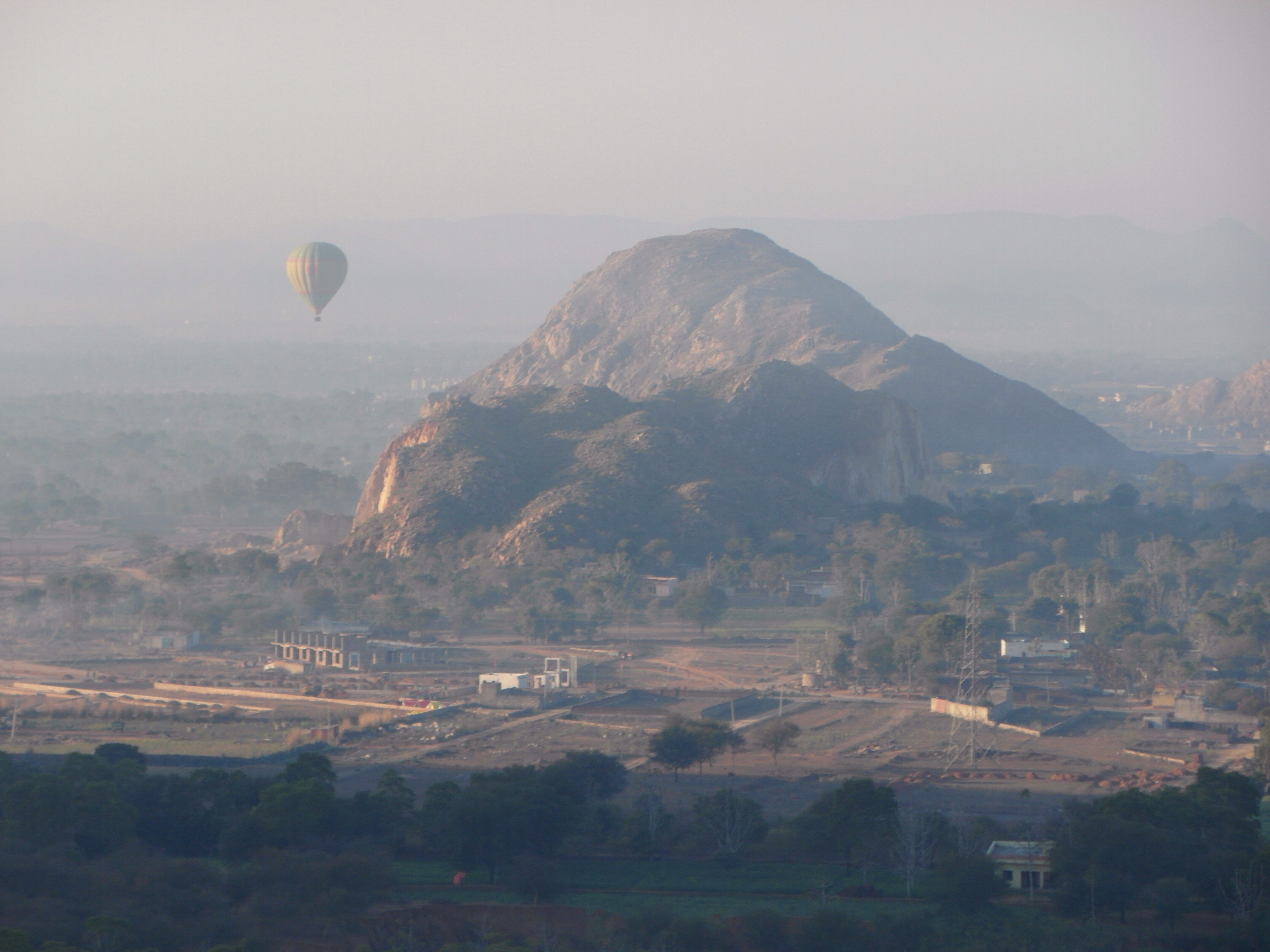
The balloon flight allowed us to get an unbeatable view of Amber fort and what I call the “Great Wall of India”, the protective ring of walls in the hills surrounding Amber Fort.
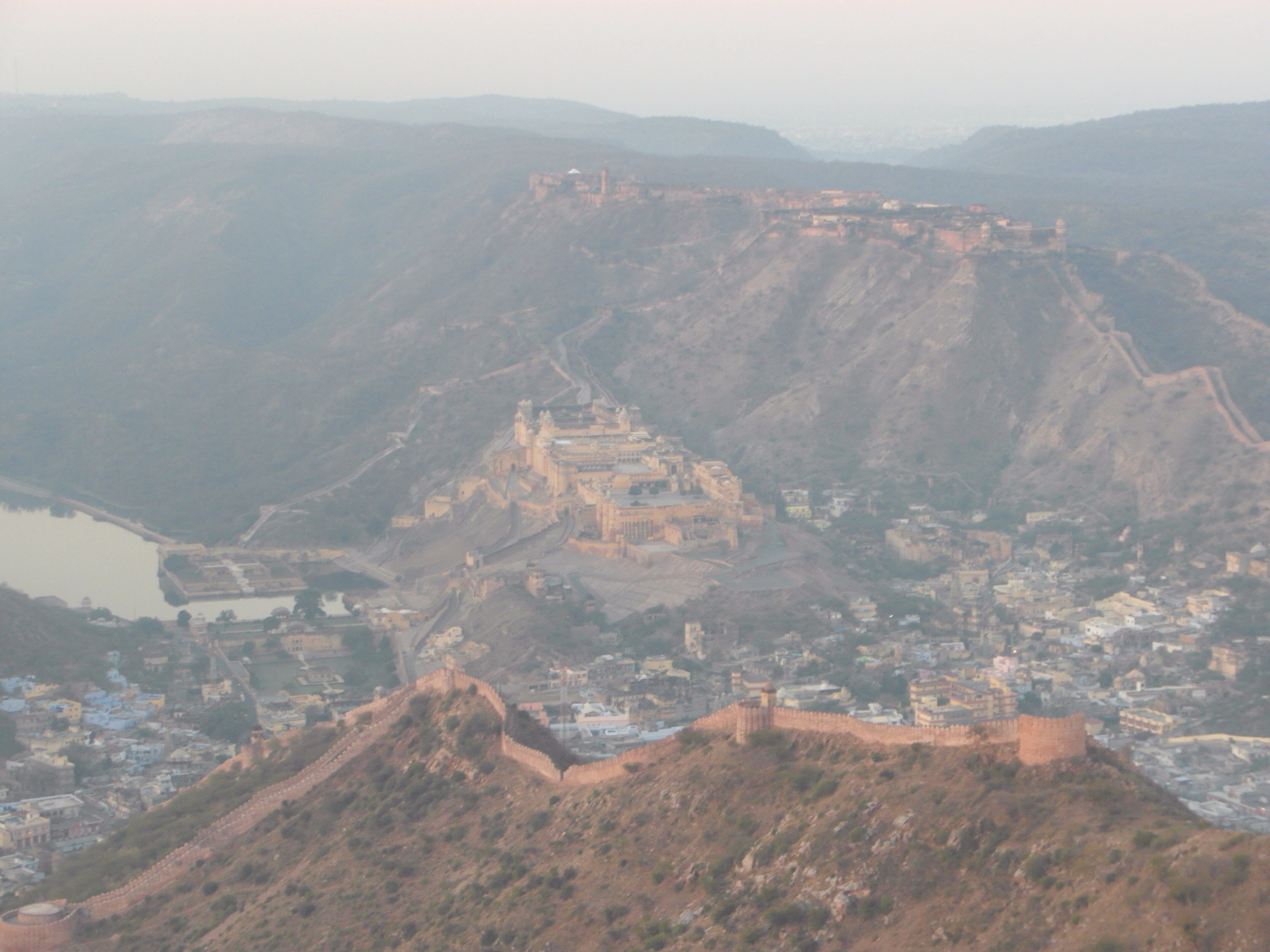
We went back to Amber Fort later that morning, using a totally different mode of transportation, an elephant.
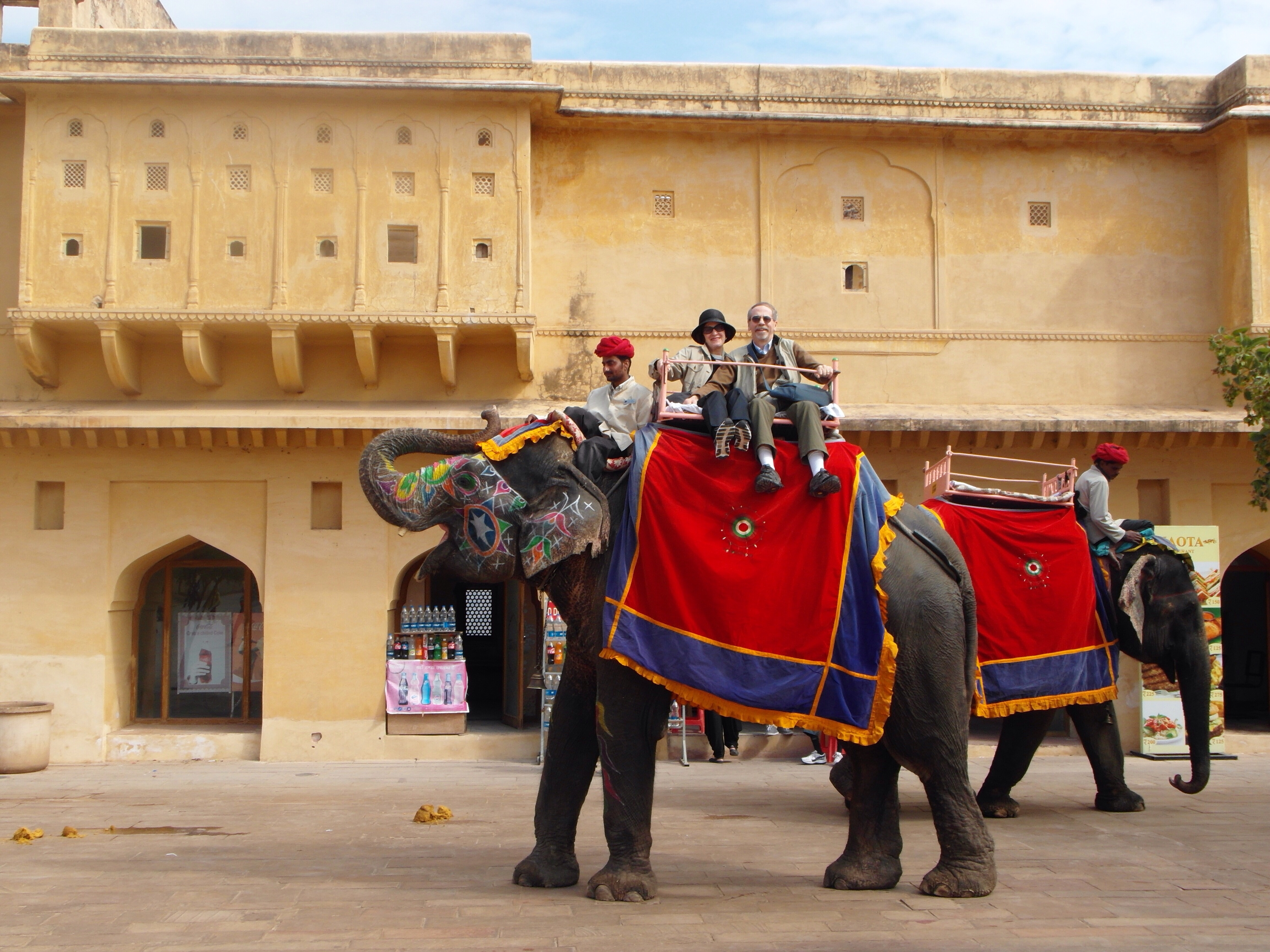
Amber Fort proved fascinating to visit to learn about the life of a ruler, who had actually started life as a slave, and the magnificent palace fortress he built for himself. The last major section of the fort, protected by eunuchs and accessible only to the king, is subdivided into 12 separate residential areas, one for each of the king’s 12 queens and each queen’s 12 attendants (concubines). Our guide informed us that, when the king entered that section, each of the 144 women had to retire to her bedroom and stay there until the “all clear” was sounded. Who had received the king’s favors was undeniably the subject of conversation and speculation for the rest of the day.
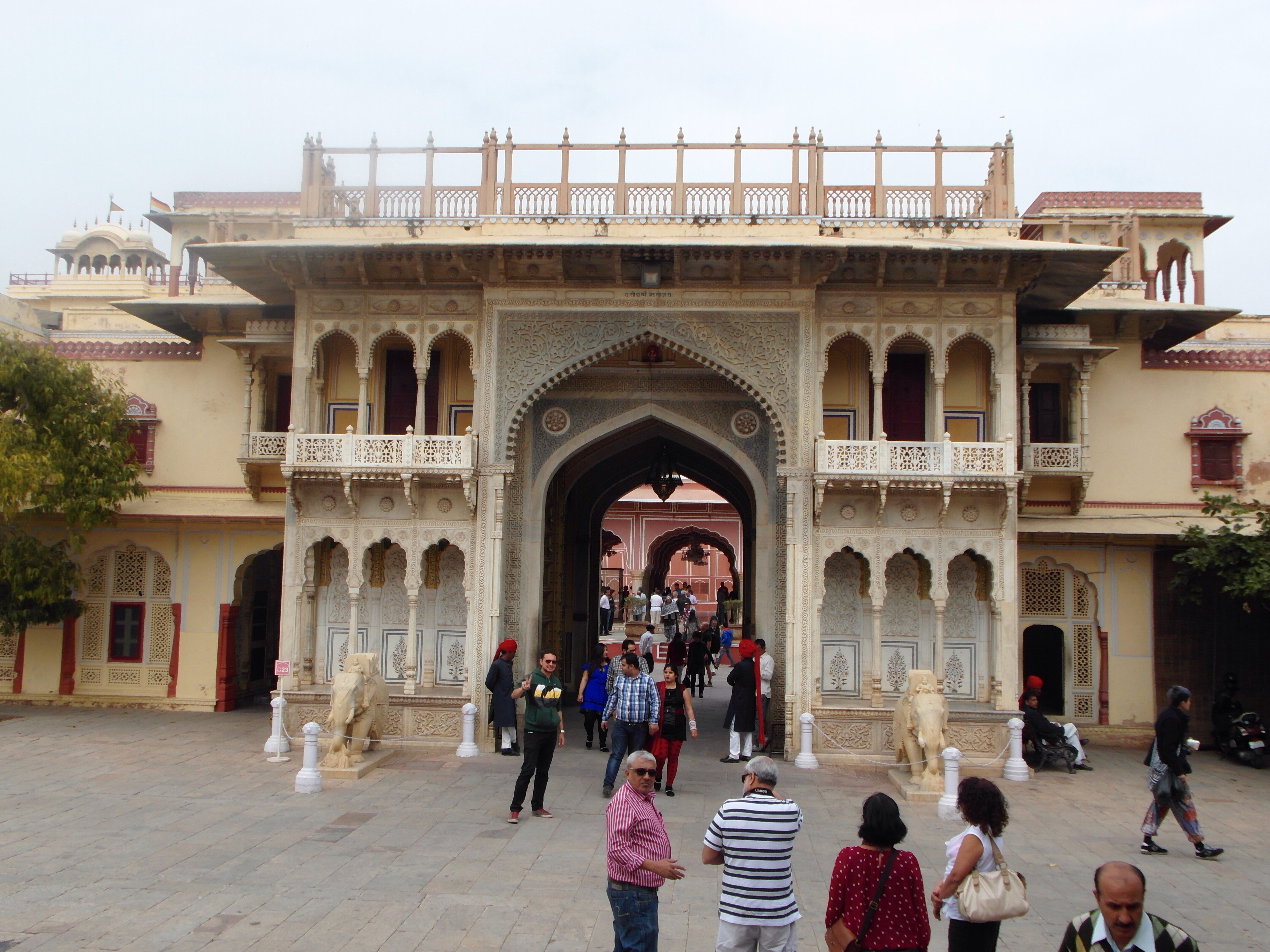
We next toured the opulent City Palace in the center of Jaipur, part of which is out of bounds to commoners like us as it is still used as a residence by the ex-royal family.
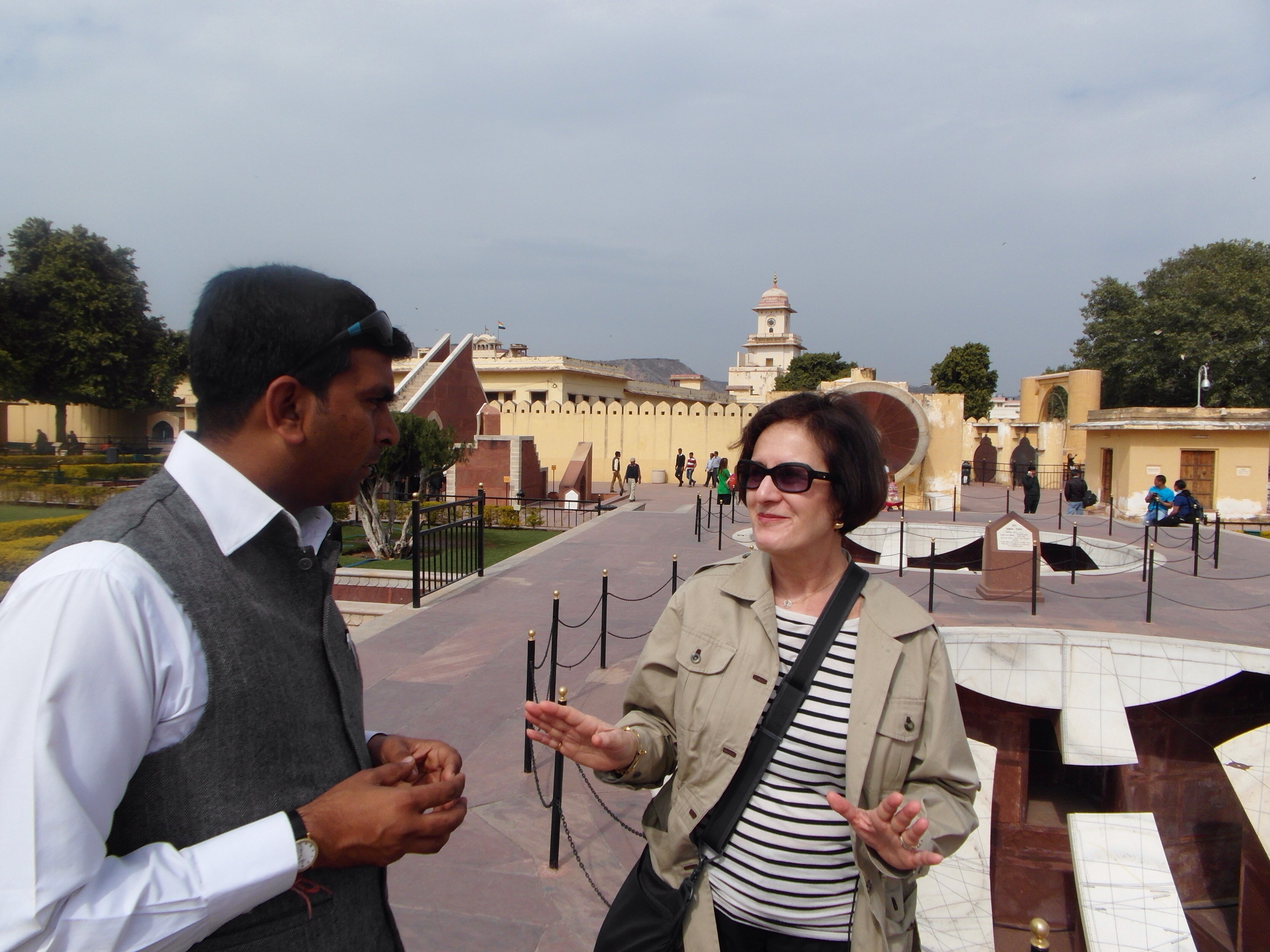
We also visited Jantar Mahar, the king’s impressive personal astronomical observatory.
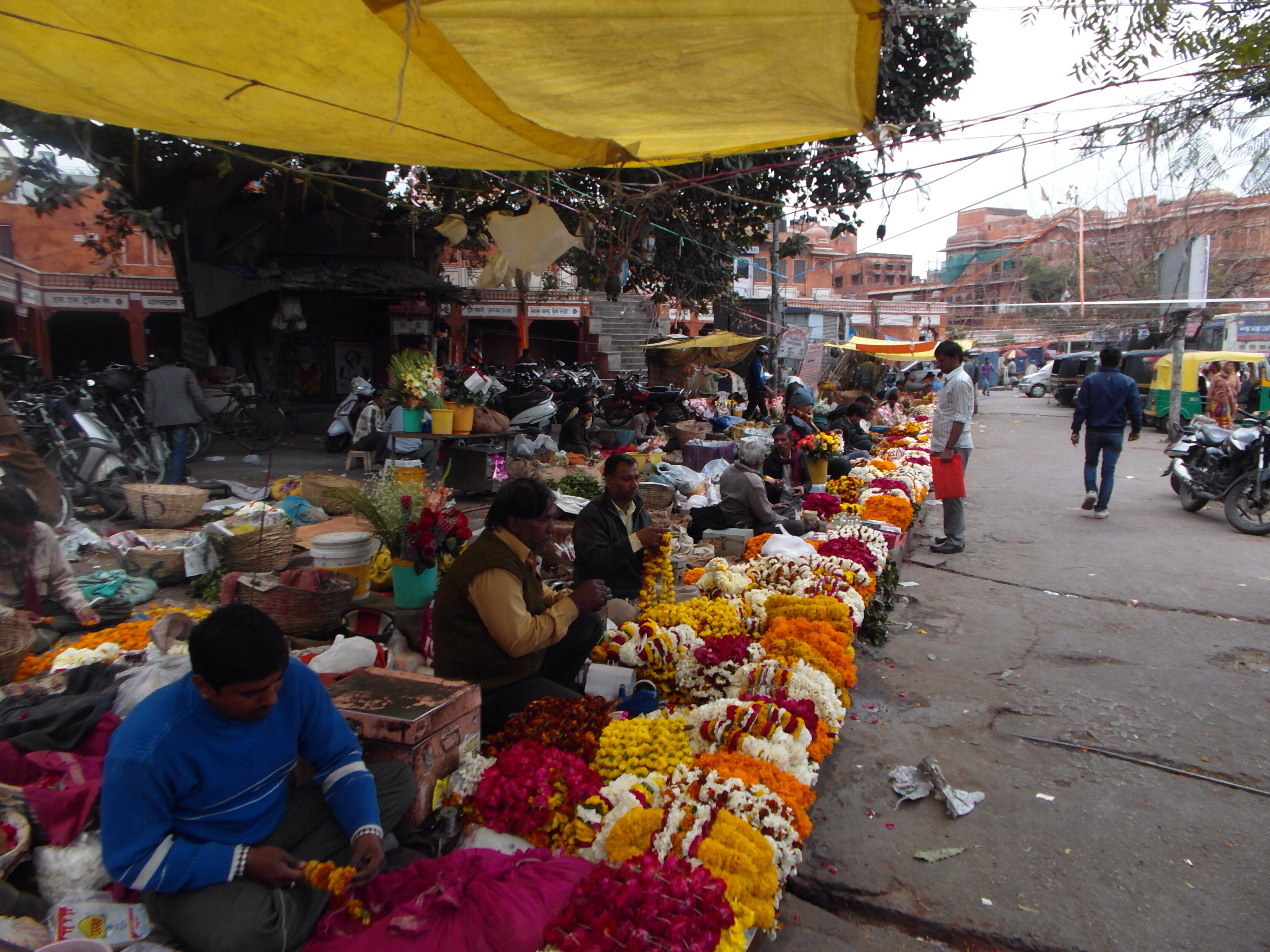
To divert our minds from all this wealth, we ended the afternoon with an exhausting and fruitless search for the right thing to buy in the bazaars of Jaipur.
Another facet of India to add to our voyage of discovery.