Daily Archives: February 23, 2014
CULINARY SPOTLIGHT: Six Course Nepalese Dinner in Kathmandu
Imagine a palatial hotel recently restored to its 13th century glory, full of priceless antiques from bygone civilizations, with service and elegance to match in the heart of exotic Kathmandu. Now imagine the hotel’s signature restaurant where you leave your shoes as you enter, and walk into another century and another world. The bold red and black décor of the dining room is stunning and the ambiance offers a very old-world Nepalese dining experience, from the authentic low-rise, over-sized chairs, to the flickering candlelight and traditional Nepali music playing softly in the background. You would be at the extraordinarily unique Krishnarpan Restaurant in Dwarika’s Hotel at an elevation of 4,600 feet, in the shadow of Mt. Everest. Simply awesome.
So now that you have a sense of the dramatic backdrop, do I have you salivating yet? The food prepared at Krishnarpan in the traditional Nepalese manner was delicious, all of it. I need to emphasize that the portions were not those of a tasting menu, which presented a daunting challenge in the face of most gracious waitresses who so very much wanted to please and were concerned, when we did not finish each and everything, that it was not to our liking. While Nepali cuisine bears many similarities to that of India, such as the essential inclusion of rice and dal (lentils) with dinner, in general, Nepali food is not as spicy and fiery as Indian food so often is.
The menu du jour was printed in both Nepalese and English on hand-made menus with our names personalized according to our passports. Pampering and personal touches are the hallmark of the Dwarika and they do it well. Here is the English version of our extraordinarily memorable meal …
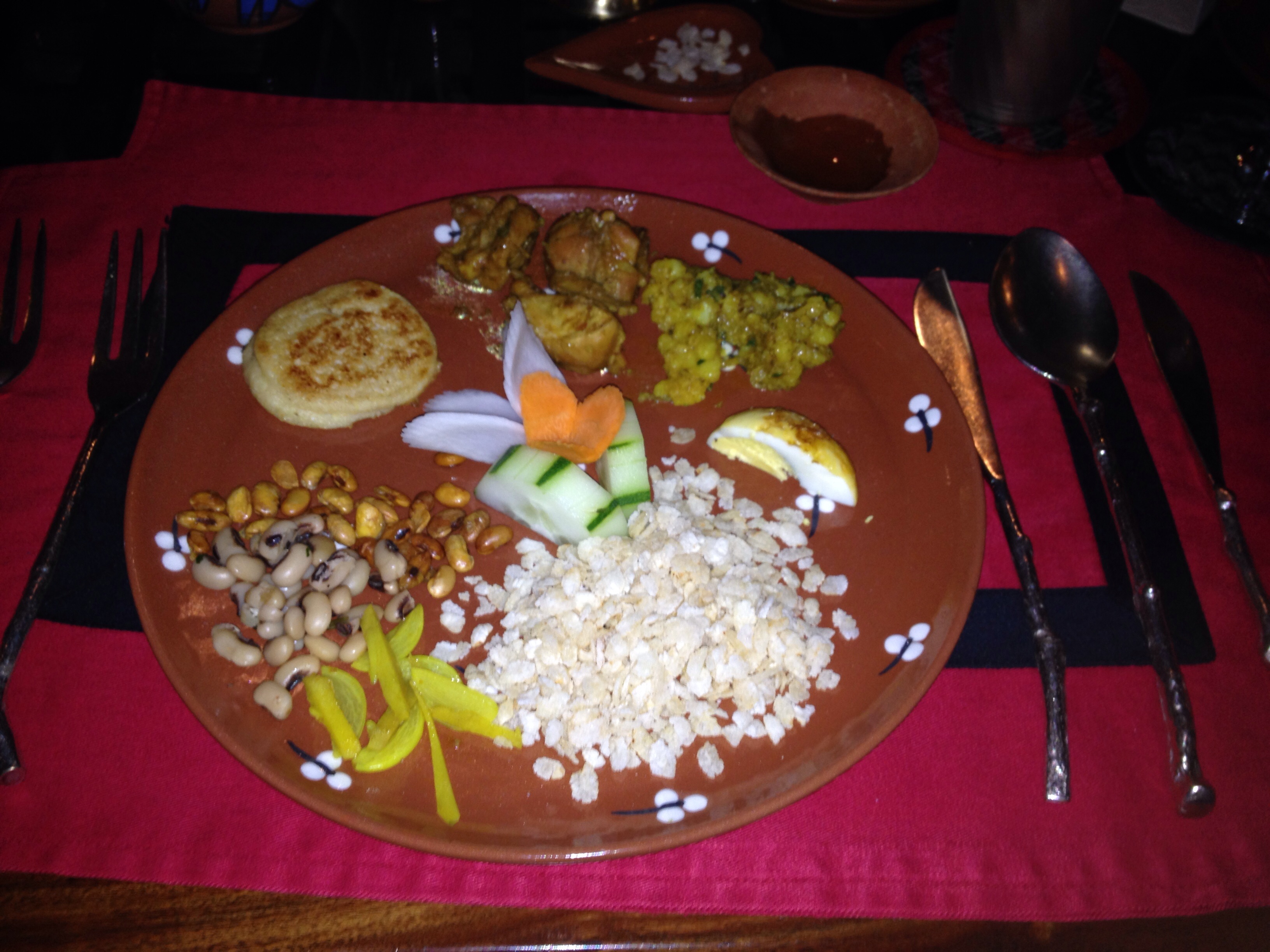
First Course: Assortment of Hors D’Oeuvres served during religious ceremonies
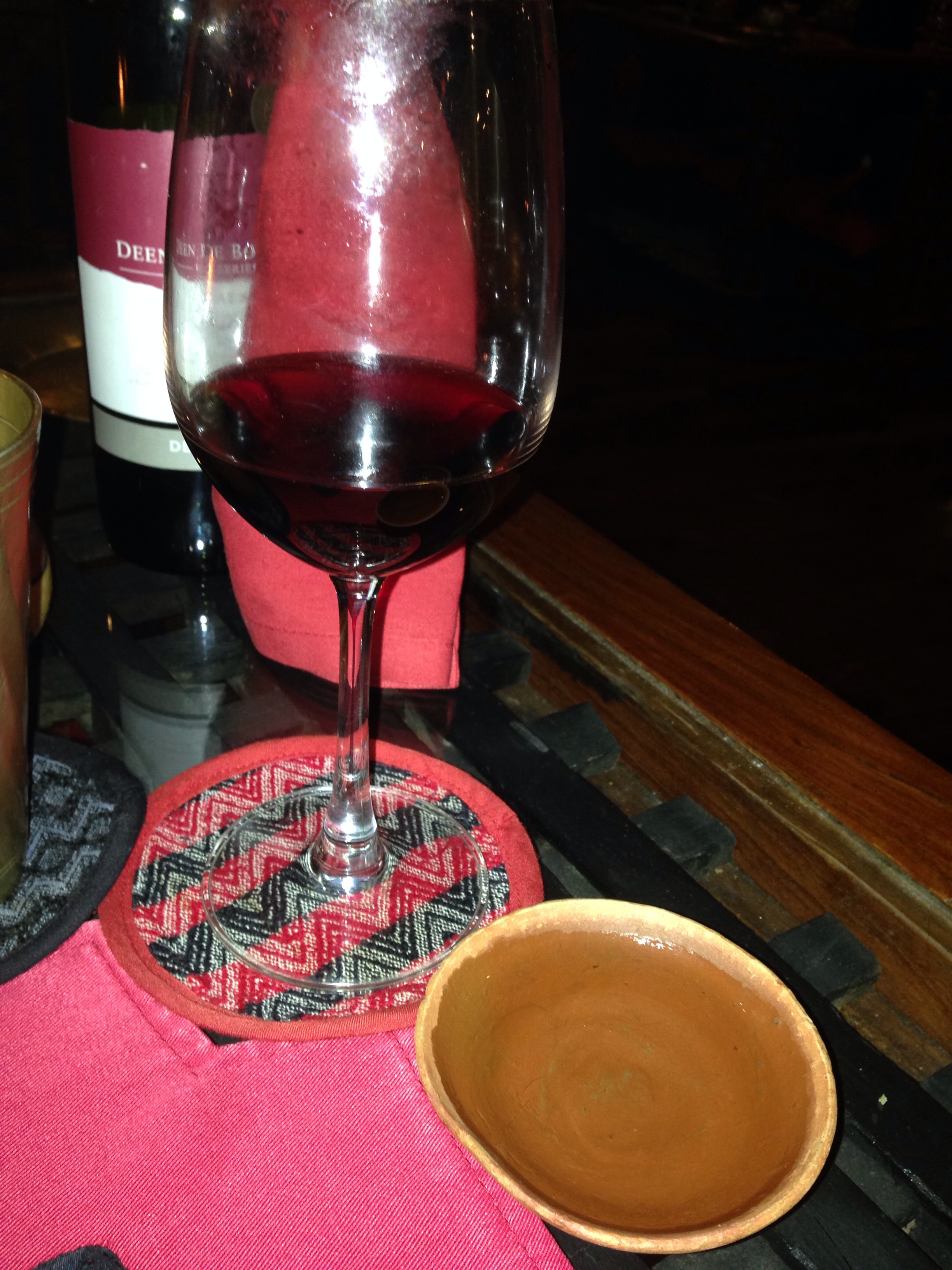
A very fortified Rice Wine is a traditional offering with the meal, and we ordered a spicy Shiraz as well
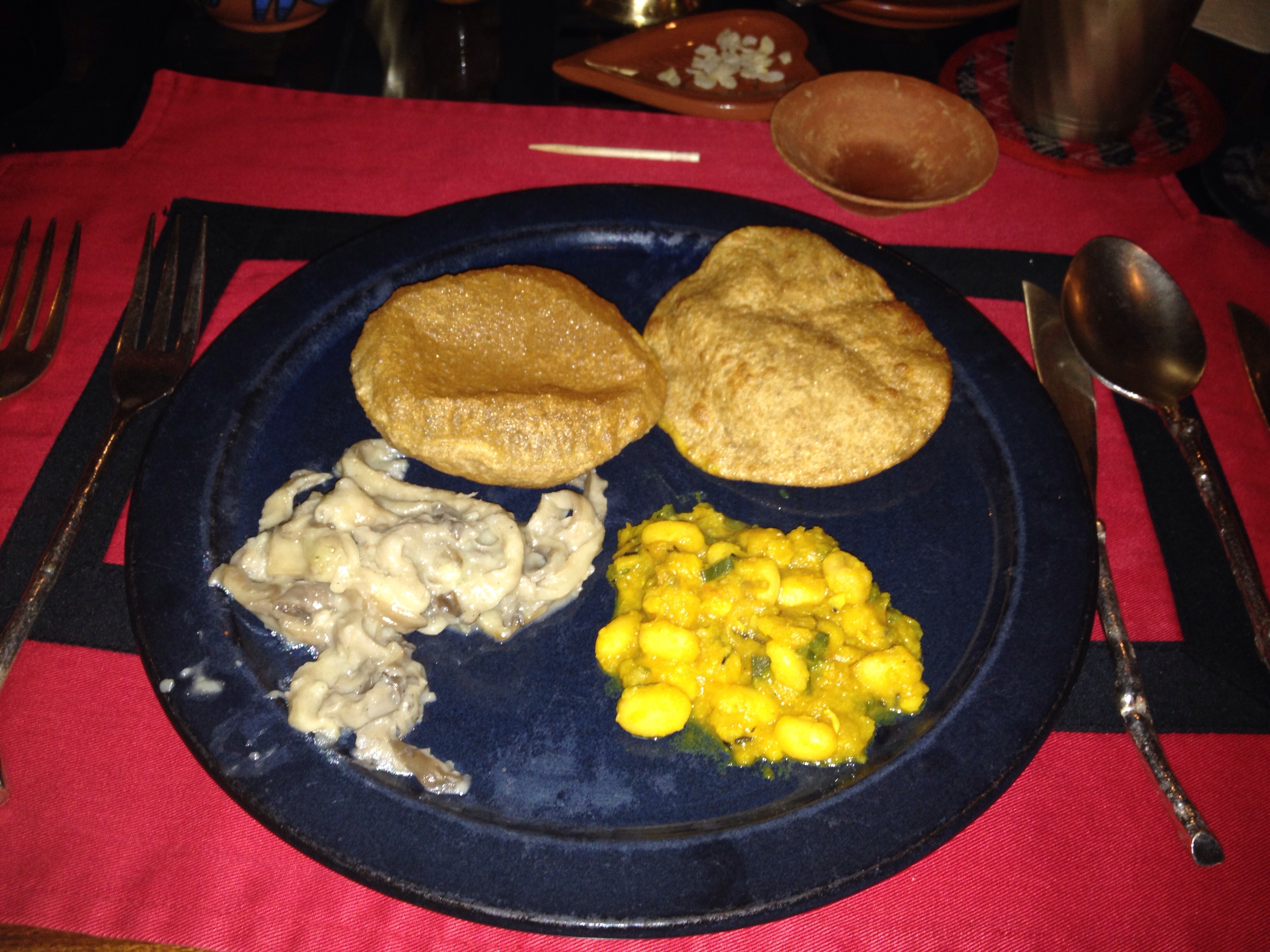
Second Course: Roasted Mushrooms marinated with Fresh Cream, Deep Fried Soft Fine Flour Bread, Organic Kidney Beans Curry
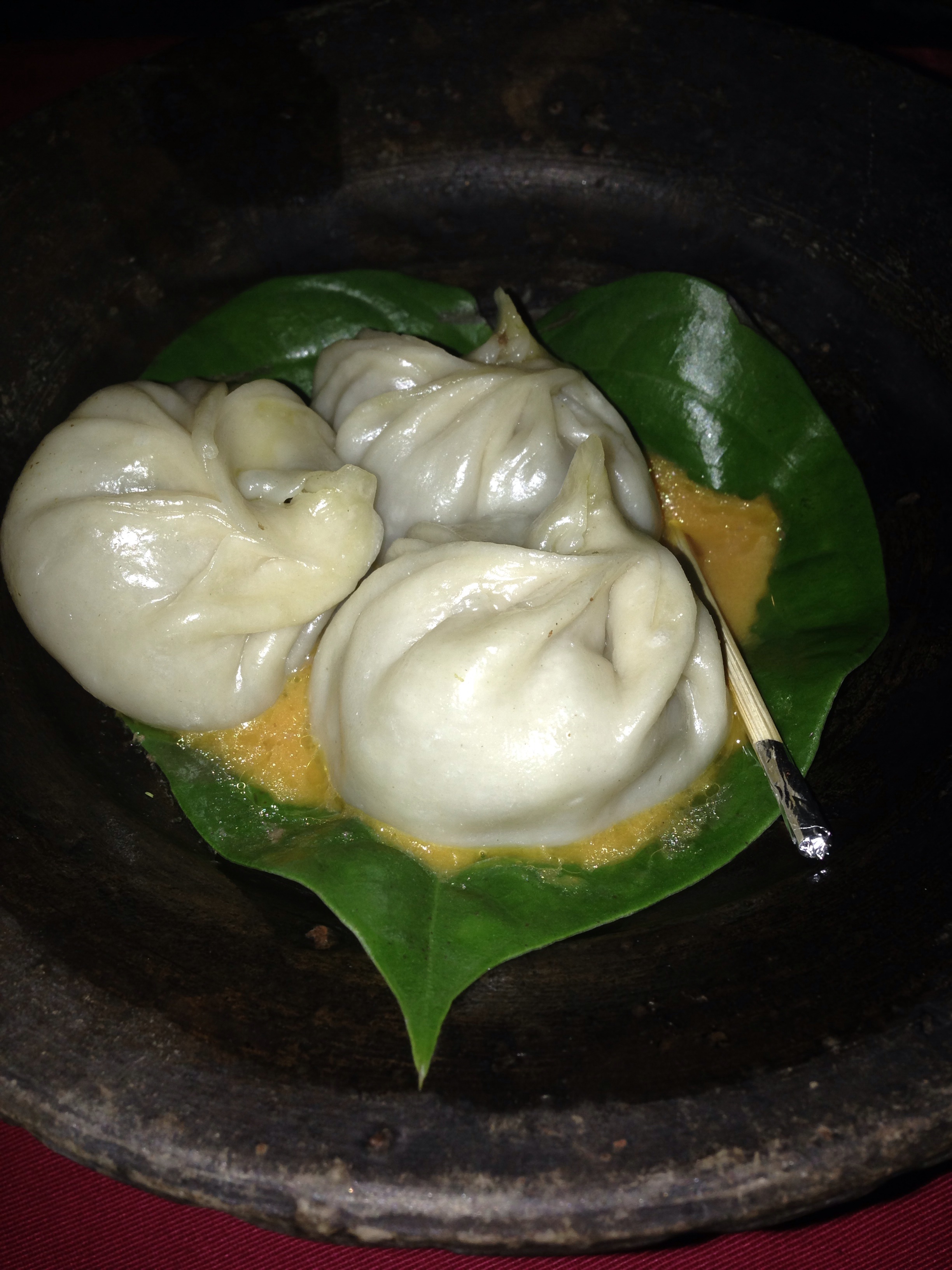
Third Course: Traditional Nepali minced Wild Boar Dumplings served with home-made Chutney
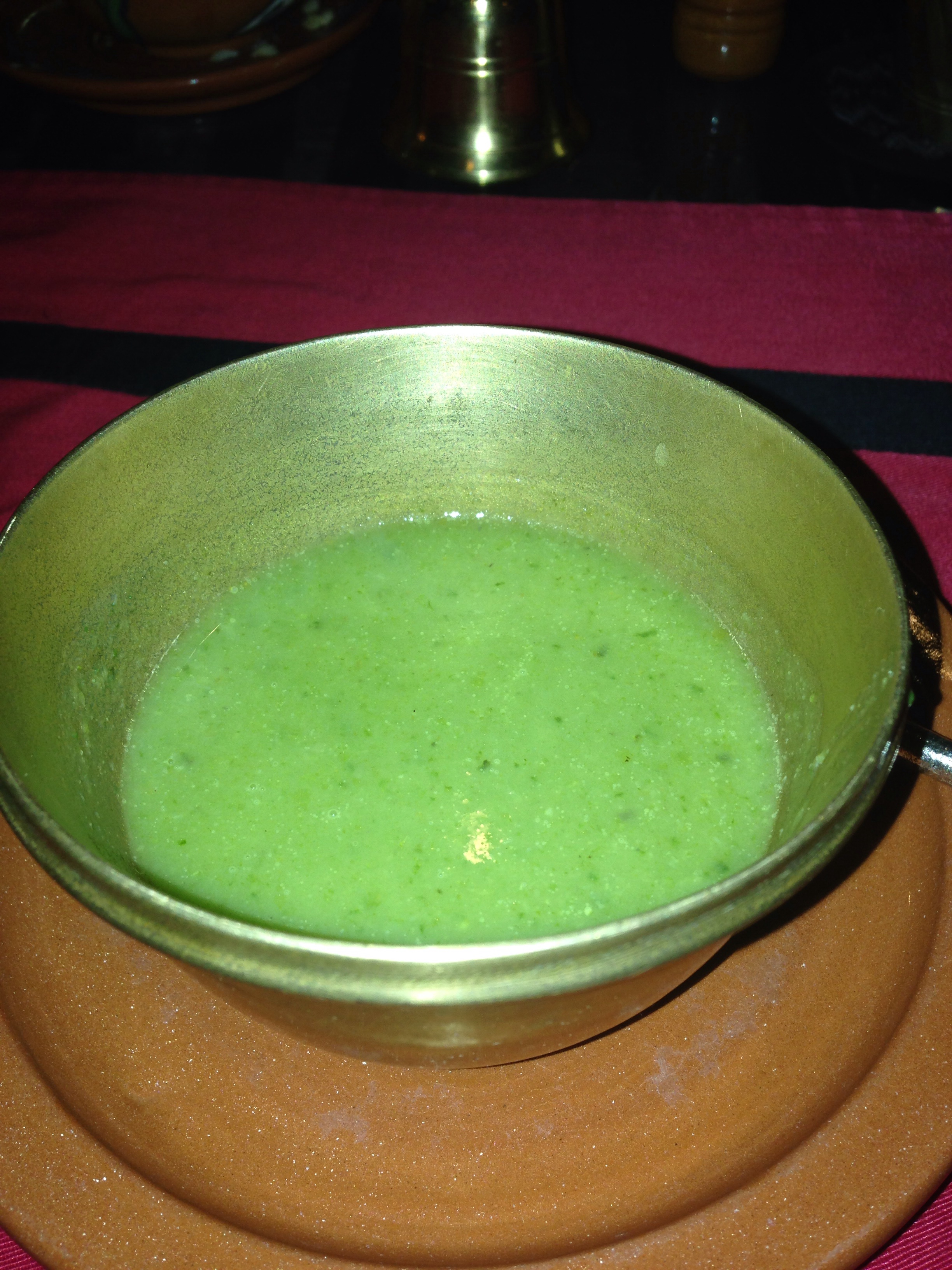
Fourth Course: Mixed Vegetable Soup with Nepali Spices
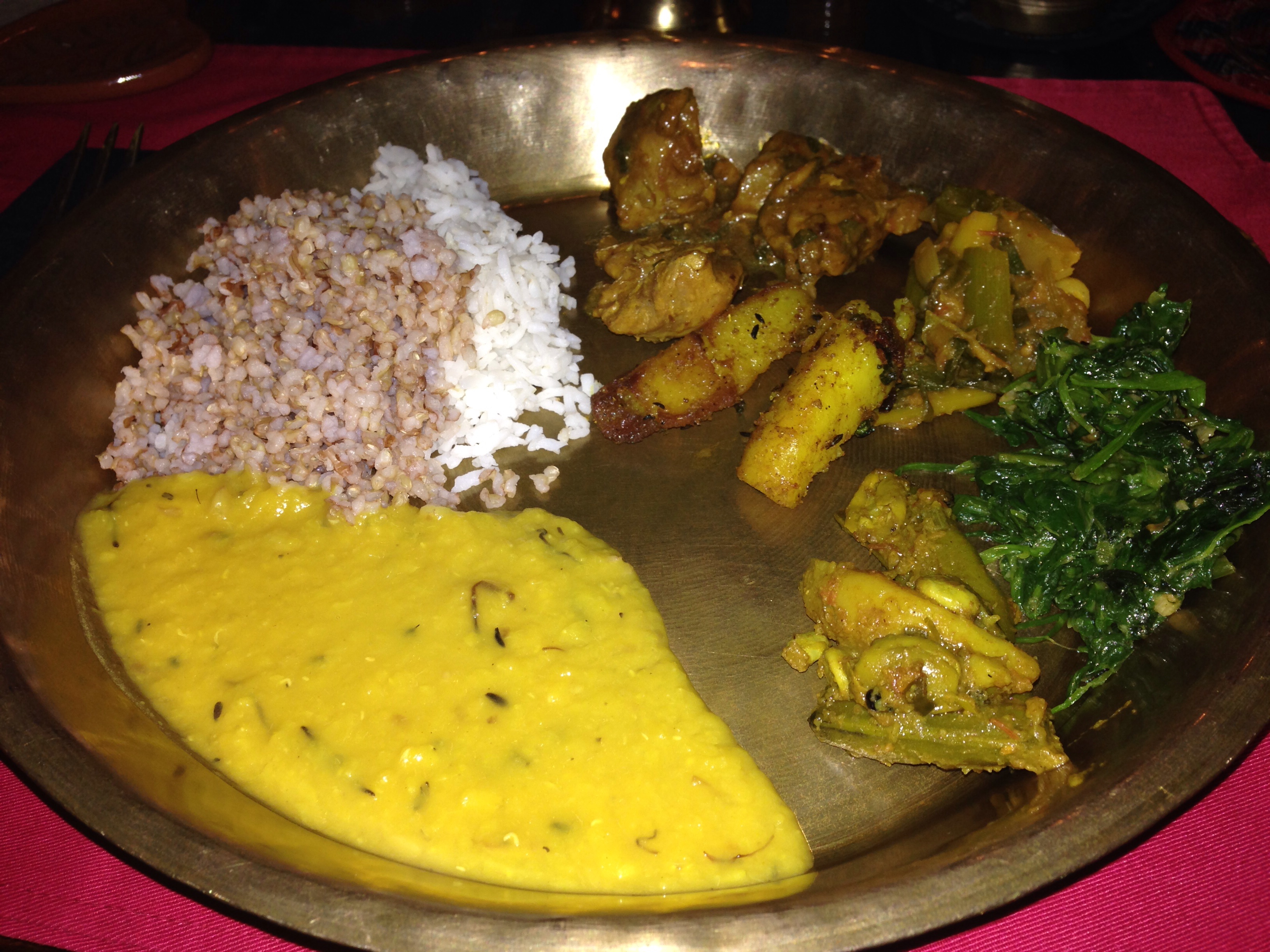
Fifth Course: Steamed Organic Rice, Organic Lentils flash fried with Himalayan Herbs, Sauteed Organic Spinach with Nepali Spices, Radish and Garlic Gravy, Bitter-Gourd Pickle, Homemade Hug-Plum Pickle
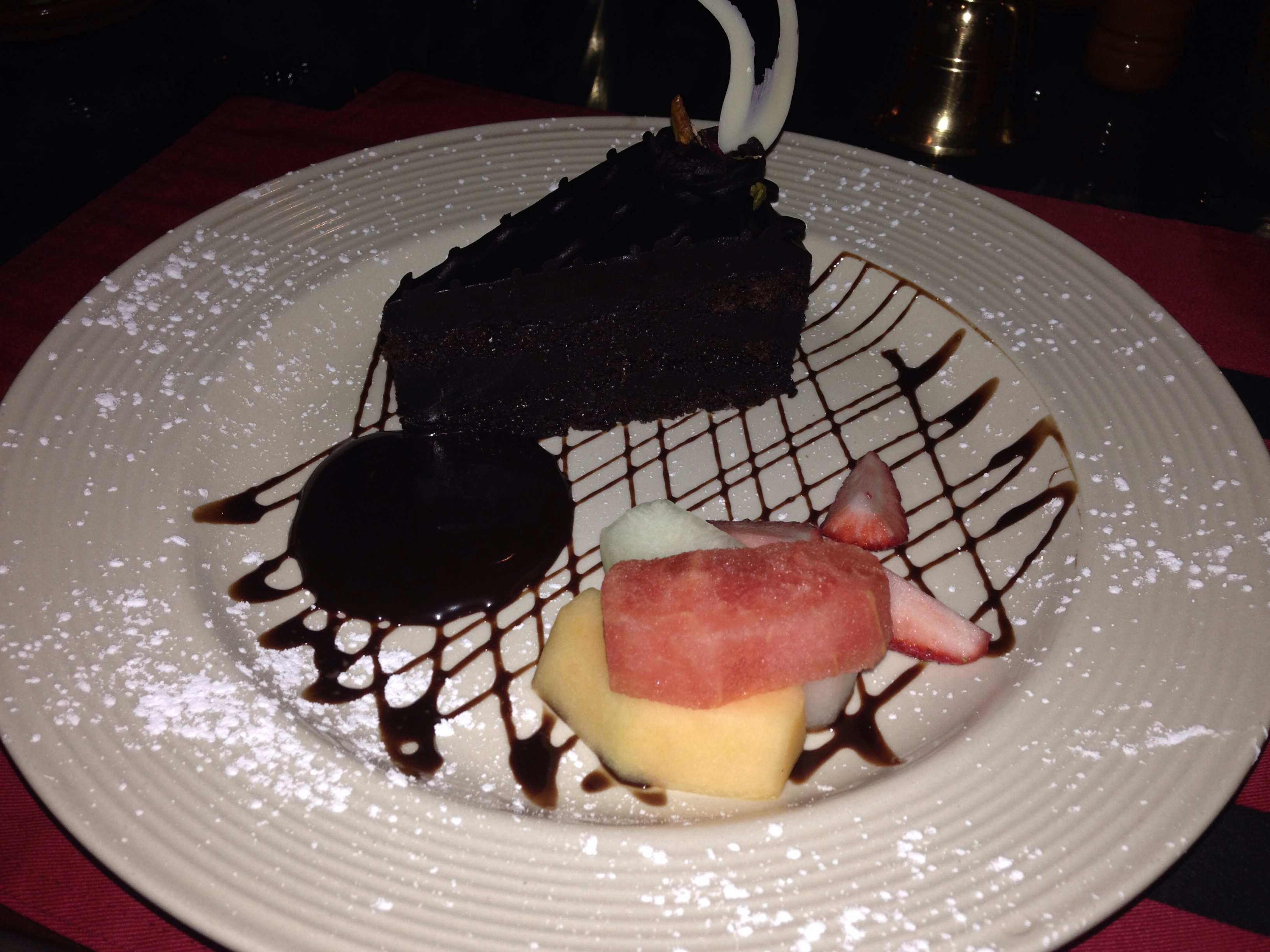
Sixth Course: Dark Chocolate Cake with Dark Chocolate Sauce
The entire meal is served harmoniously, one course flows after another, so that you have enough time to appreciate the course you have just eaten before the next one arrives. The produce is all organic, and most comes from the Dwarika’s own garden. Dinner concludes with coffee and tea, including fresh mint tea with mint from their garden. We chose mint and ginger tea which was sublime. Dessert, it should be noted, according to the menu was supposed to be Fresh Yoghurt flavored with Cinnamon sweetened with Honey, Nepali Pumpkin Pudding, Cut Fresh Fruit - but we opted for the divine chocolate cake we had had the night before when we all of a sudden got a craving for chocolate and called room service for our chocolate fix (actually, I negotiated this change from the fixed menu prior to confirming our reservation at the Krishnarpan but this is all hush-hush).
Aside from the chocolate cake, our favorites from this 6 course menu were the second, third and fourth courses. The organic kidney bean curry was light with layers of flavor, the bread was also extremely light and full of flavor, the wild boar dumplings rivaled any we had eaten in China’s best restaurants, and the soup, comprised primarily of pureed green vegetables with the hint of sweetness from the corn was memorable.
But “memorable” describes the whole evening. When in Kathmandu, make sure to have dinner at Krishnarpan, and come with a hearty appetite!
The Royal Kumari or Living Goddess of Kathmandu
Across from the Royal Palace of Durbar Square in downtown Kathmandu stands a smaller but well decorated house called Kumari Ghar, the House of the Kumari.
It would be easy to simply walk by and focus instead on the pagodas, shikarahs and temples vying for attention a few feet away around the square, but that would be a mistake. You would be missing out on a meeting with the Royal Kumari, the living goddess of Kathmandu, revered by millions.
At the entrance to the house, a few women are selling postcards bearing a photograph of the living goddess residing in that house. Our guide explains that, while we will meet the living goddess, we will not be allowed to take any photographs of her, hence the postcards.
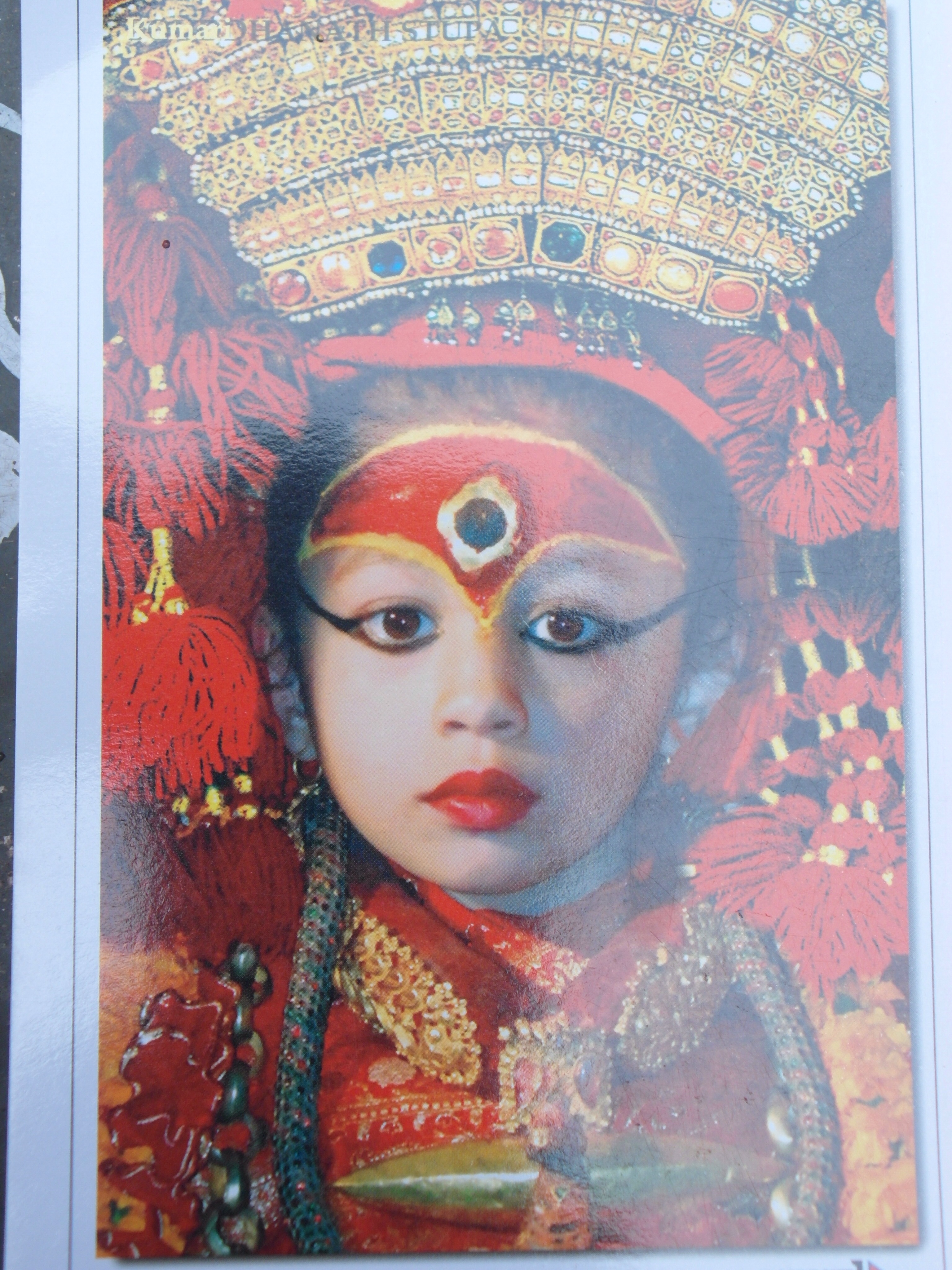
The living goddess is a young pre-pubescent Nepalese girl who is essentially confined to living in that house until she reaches puberty. While in that house, she is truly a living goddess and revered as such by the Nepalese people.
Once she reaches puberty, the living goddess will be replaced by a new Kumari and will be allowed to go back home with a lifetime stipend from the government of Nepal.
A panel of old wise men selects the living goddess from a field of candidates according to a long established torturous process. A candidate must be very beautiful, having to meet a set of 32 physical traits defining beauty.
All the candidates pass a series of tests ( dark rooms, severed animal heads, etc… ) aimed in part at scaring the hell out of the young four-year olds in an effort to flesh out the best candidate.
Once anointed, the new living goddess has to move into the Kumari Ghar and remain there until puberty.
Foreigners are only allowed to see her from the inner courtyard of the house as she peers down from a window on the third floor. She will come to the window upon request (with the expectation of a donation into the conveniently located donation box), stare at you for a few seconds and then disappear quickly back into the dark.
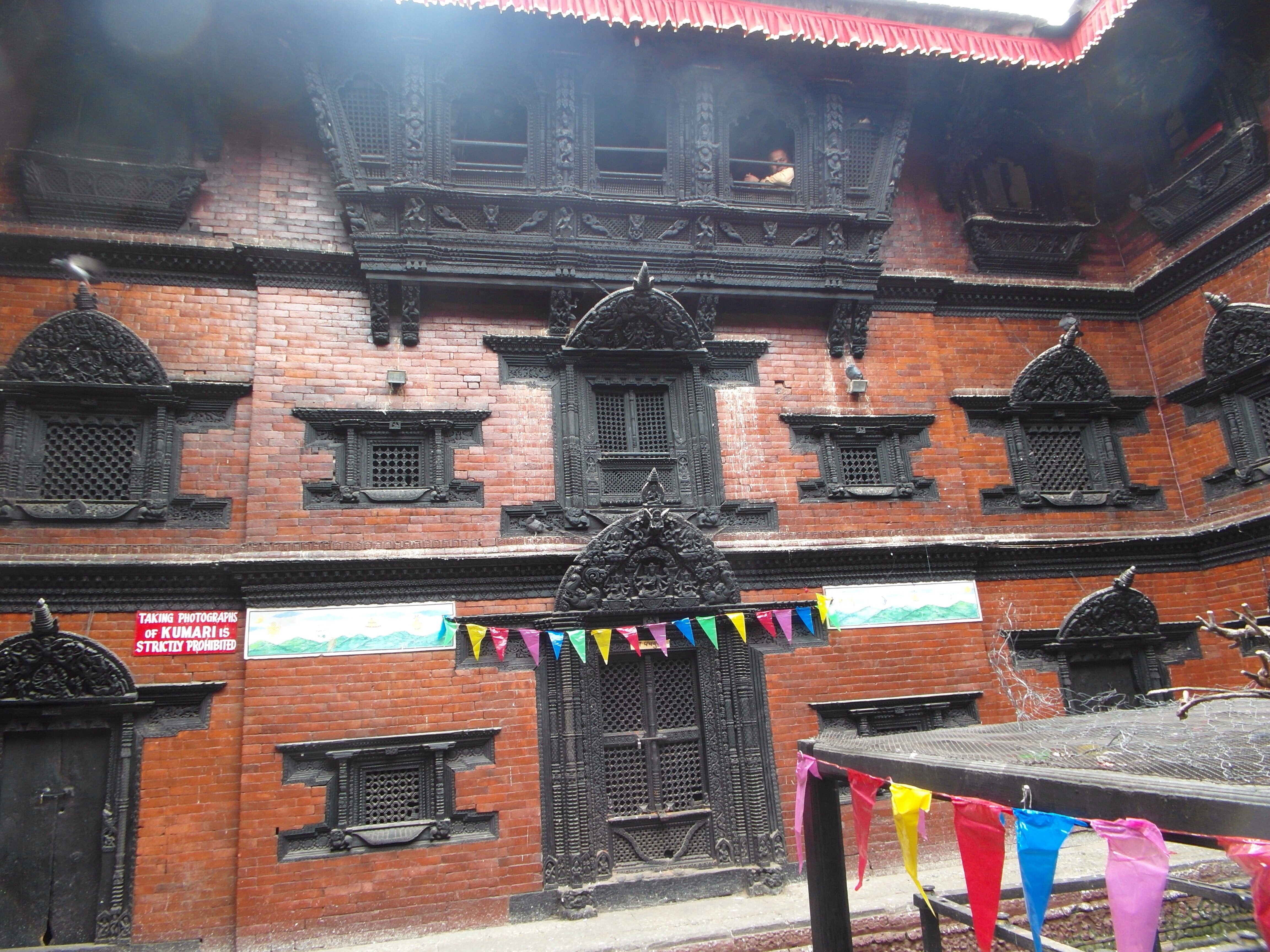
Nepalese people, however, can walk up the stairs into the inner sanctum and meet the living goddess face to face. Our guide explained that the living goddess will place a red dot on the forehead of those she meets in this way.
If the living goddess blinks while doing so, you will go to jail. If she cries, you will die. If she is steady and calm, you will meet with good fortune.
The living goddess is always dressed in red and gold, with very elaborate make-up.
Five times a year or so, on the date of important festivals, she will leave the house on a giant decorated chariot stored right next to the house.
When in Nepal, please go meet the Royal Kumari, the living goddess of Kathmandu.
Climbing Mount Everest the hard way!
Touring Kathmandu and Patan yesterday was surprisingly interesting and exotic. However, the main purpose of our trip to Nepal was to go up Mount Everest. Since Kathmandu is already at an elevation of 4,600 feet, we only had another 25,000 feet or so to climb to reach the summit.
I had been warned to be prepared for bitter cold, and I had four layers of protection when I left my hotel room to meet the guide at the scheduled time of 5:50am. Masesh is an interesting young man, who loves trekking and mountain climbing. When I had asked him why he did not drink coffee or tea, he had an unusual response: “My father is a farmer and we have a cow in our home, so we drink milk”. Makes sense, I thought.
The local news are headlining the increased security measures being taken by Nepal around Mount Everest because of scuffles between the many climbers who are making the trek up the mountain. Climbing Mount Everest is not as hard as it used to be, thanks to very well defined tracks and oxygen masks, and hordes of people are crowding those tracks.
Nowadays, the most terrifying thing about climbing Mount Everest, from what I have read, is the first leg of the trip, the landing at the LukLa airport, built on the side of a cliff at an altitude of about 9,200 feet, and the beginning stage of all climbs of Mount Everest.
Masesh is late showing up, and I am getting concerned that we will miss our flight. When he finally shows up, he explains that he had been trying to find out if the flight was going to take off as all of Kathmandu is enveloped in a dense fog. We decide to take our chances and leave for the airport.
The domestic terminal of Kathmandu airport is a sight to behold. I would not be surprised if the building predates the first flight of the Wright brothers. Looking around the terminal at the scruffy crowd around me, I was expecting Indiana Jones to appear at any moment. We had gone through numerous security checks to get to the boarding gate area, yet nobody had questioned the electronics in my pockets: American cell phone, Indian cell phone, Nepal cell phone, mobile hotspot, battery charger, ipad, camera, etc…
By 7:30am, there was still no information available on our 6:30am flight, despite the numerous airport and airline personnel standing around sipping coffee and pretending to be gainfully employed. An announcement came on the loudspeaker system: “All passengers flying to @$#%^$% on $%#$&%^$, please URGENTLY %$#$%$#$%!”.
Finally, at about 8am, the sad news came. A test flight had taken off and gone up towards the mountain only to turn back because of the fog. All flights were cancelled for the day. We would have to try again the next day.
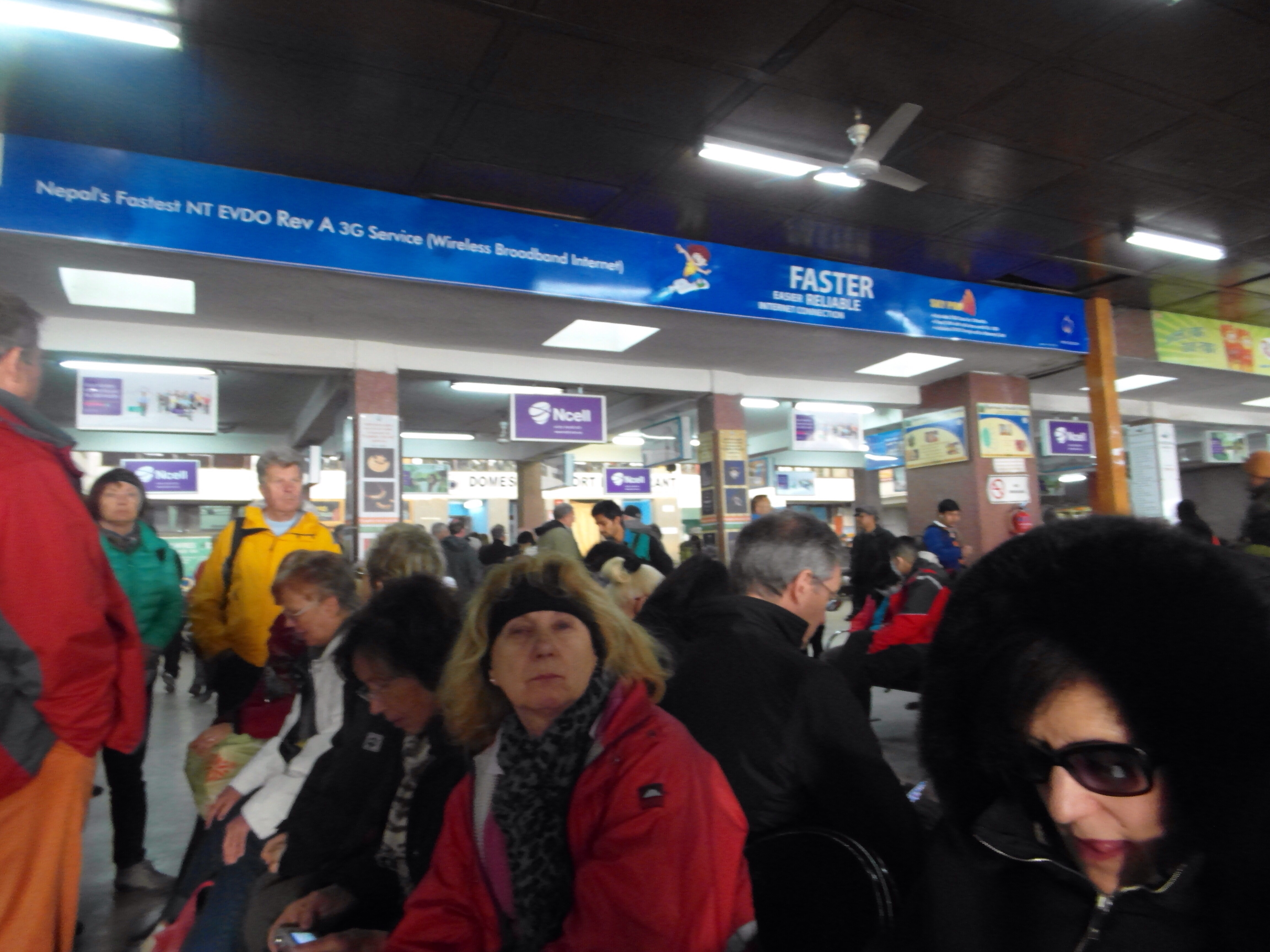
We repeated the same routine the next morning, and again sailed through all the security checks and found ourselves comfortable seats in the boarding area of the windowless cold-as-an-icebox terminal. “All flights are a go this morning”, we were told when we arrived at the airport. The weather forecast called for a sunny day, all day long.
However, nature continued to interfere. At about 7am, we were able to find out that our 6:30am flight would not take off on time. At 8am, we were informed that the airport was closed down because of the fog but that it would reopen half an hour later and the flight would then leave.
At 8:30am, the news was that we would get the all clear at 9am. At 9am, our flight was cancelled for “visibility” reasons. Outside, the cloudless sky was clear and blue.
Clearly climbing Mount Everest was going to be a lot harder than I thought!