Category Archives: Greece
Live the life of a Greek shipping magnate!
A stay at the Villa Galini Hotel in the Halkidiki region of northern Greece probably represents one of the very few opportunities you will ever have to live the life of a Greek shipping magnate. And that is because, before being turned into a hotel, Villa Galini was the residence of Yiannis Carras, a Greek shipping tycoon who lived there until his death in 1989.
In 1960, while sailing in the Halkidiki region of northern Greece aboard his yacht Carita, Yiannis Carras had fallen in love with the area and ended up buying a huge tract of land on the Sithonia peninsula, just south of the coastal town of Neos Marmaras. He named his new property Porto Carras.
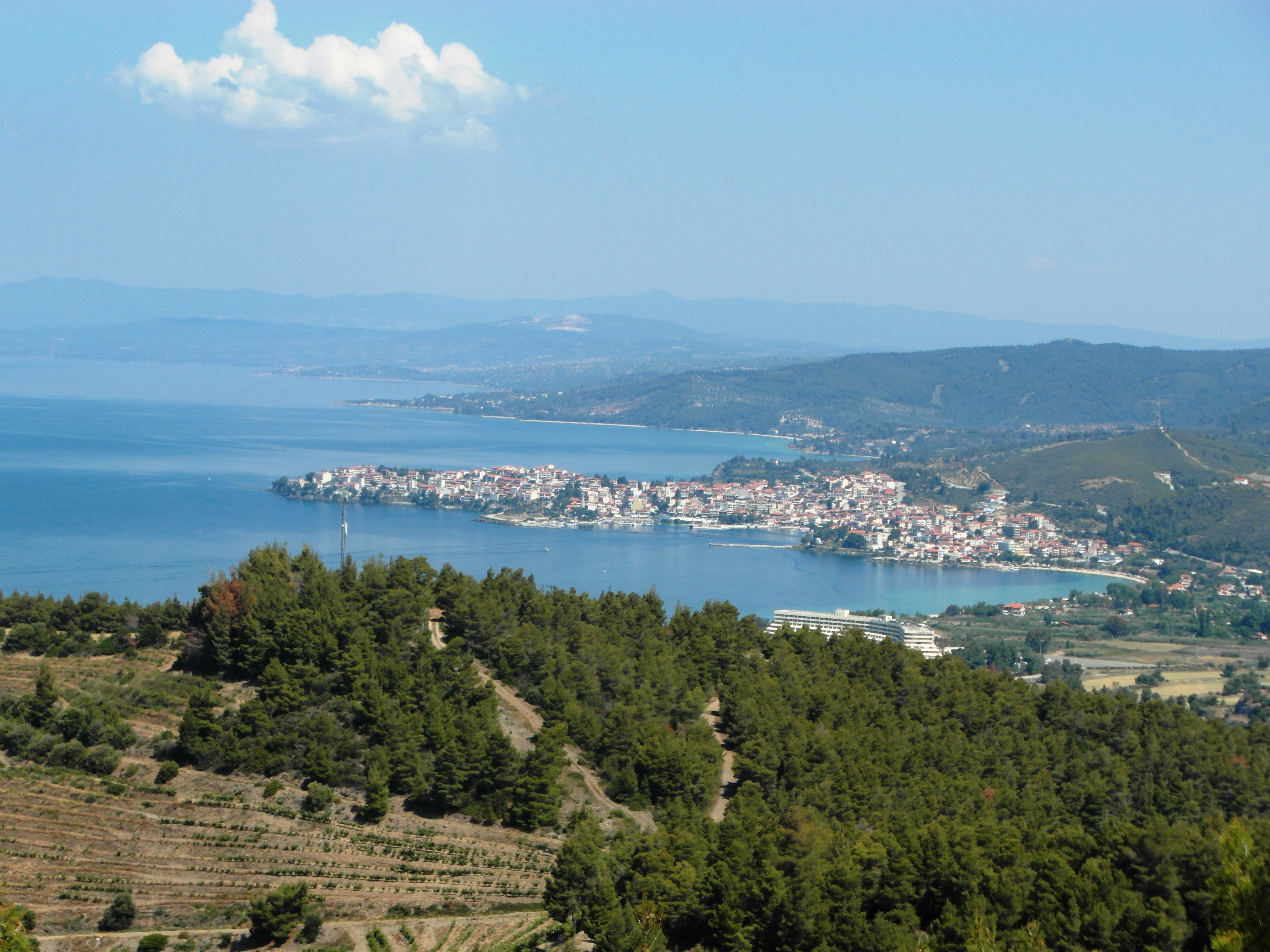
The Porto Carras vineyard and the town of Neos Marmaras viewed from a guest room balcony at Villa Galini
He also decided to build himself a new home on the high rocky cliff of Mount Meliton, at the center of his immense new property, on a spot offering eye-popping panoramic views of the coastline and the gulf of Toroneos. When it was finished at the end of the 70s, Villa Galini was celebrated in several magazines as one of the most beautiful buildings in Greece.
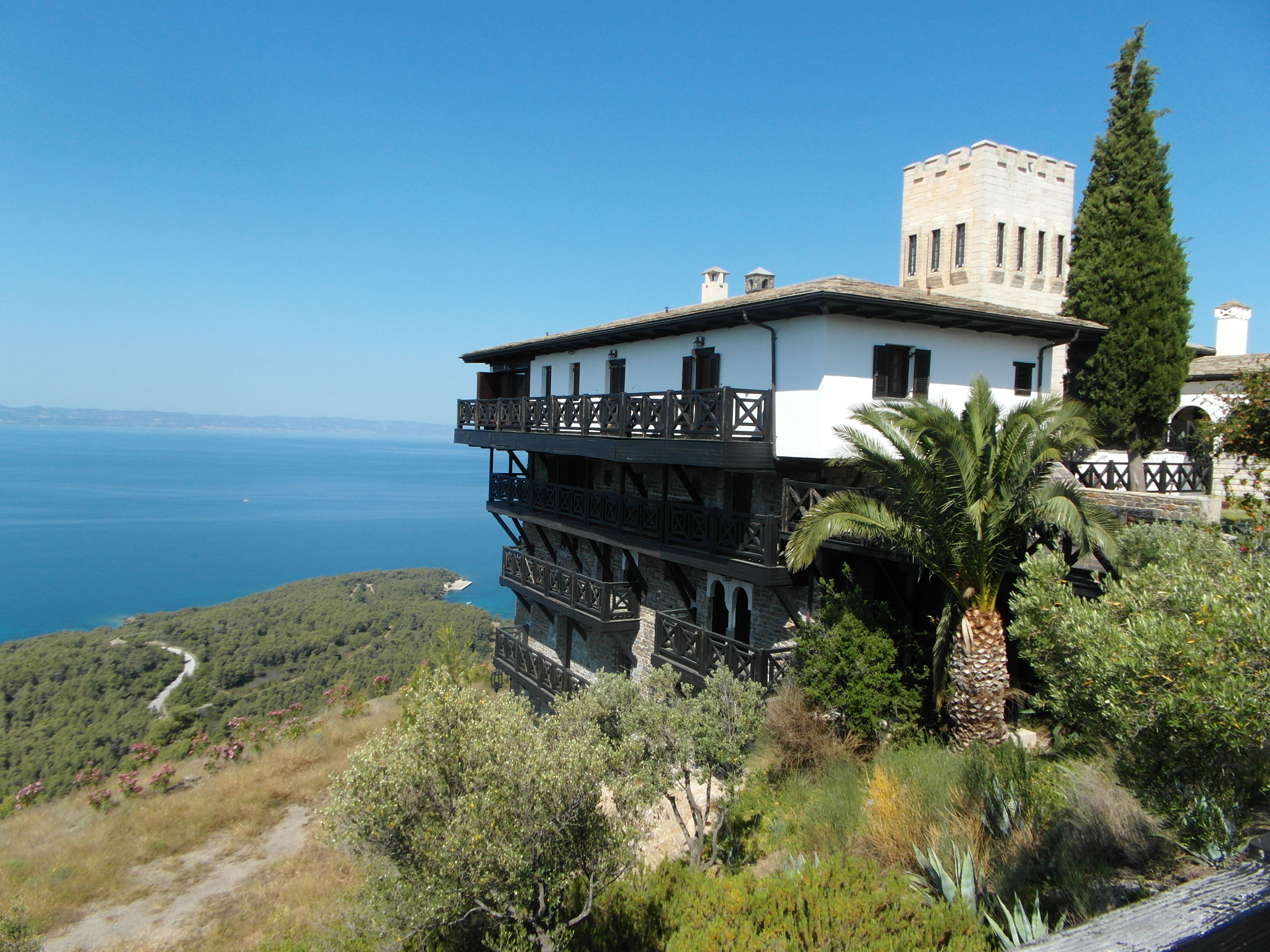
Villa Galini
The views are obviously the primary assets of Villa Galini, with windows and balconies spread throughout the three sides of the house protruding from the cliff. But the views are nowhere as phenomenal as outside on the immense terrace of the pool area. The blues of the pool, the sea and the sky seem to blend themselves into a feeling of infinity and bliss.
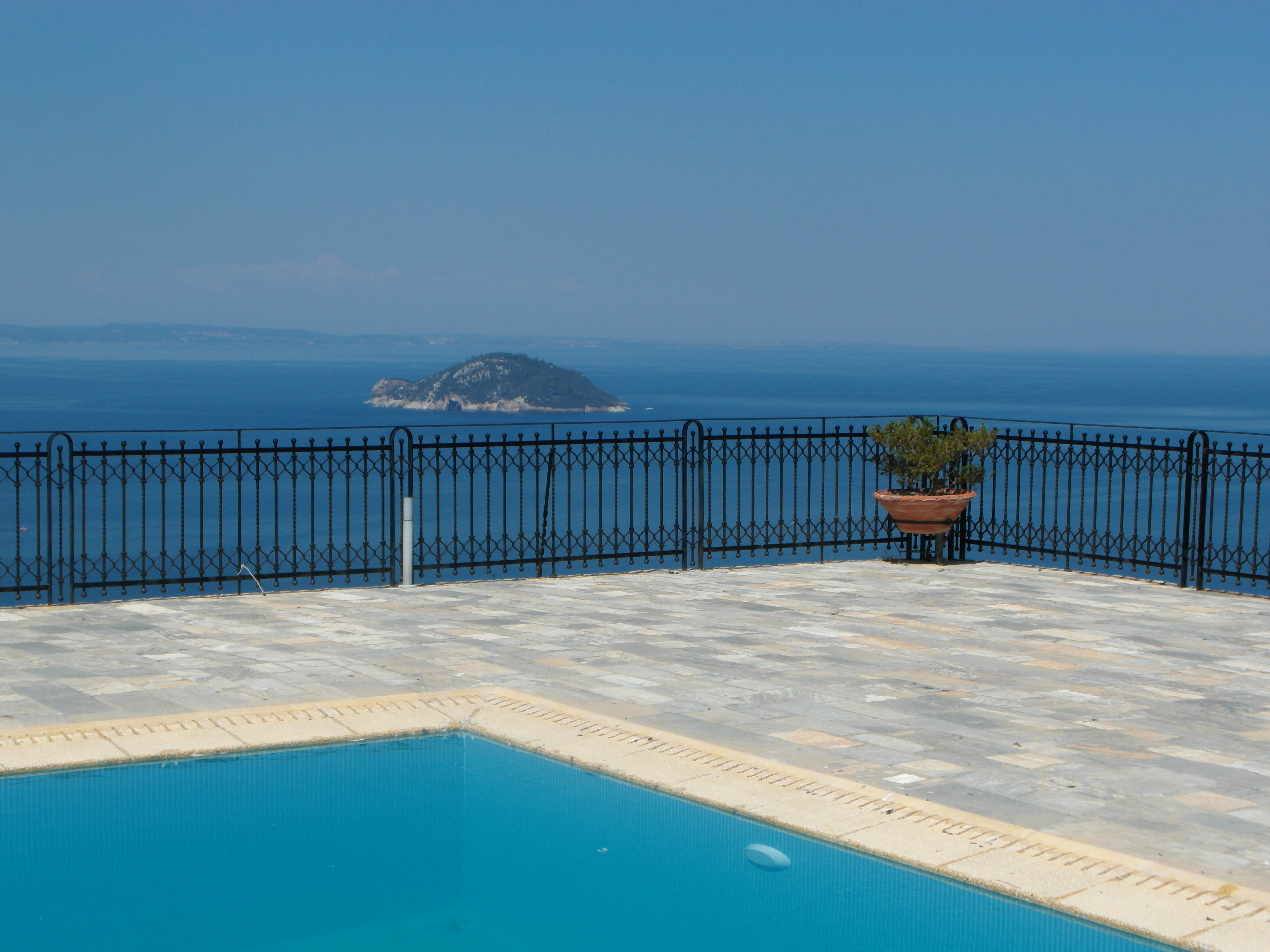
View of Turtle Island from the pool terrace at Villa Galini
There are large living areas both outside around a large central courtyard as well as inside in beautifully decorated rooms along the sea side of the mansion.
Lest you think that Villa Galini is just your average billionaire’s mountaintop mansion, featuring several floors of richly furnished guest rooms with views to die for, think again. It seems that Yiannis Carras had a lot of interesting friends and visitors at Villa Galini. Queen Juliana of Holland, Salvador Dali, the son of Aga Han, Rudolf Nureyev, President Francois Mitterrand of France, Konstantinos Karamanlis, Margot Fonteyn, Joan Baez, Fiona Von Thyssen, the Rockefellers, Prince Albert of Monaco, President Vladimir Putin, Valery Giscard d’Estaing to name a few.
Some simply left an autographed picture and you will see many of them throughout the house. My favorite is a picture of Yiannis Carras with Melina Mercouri.
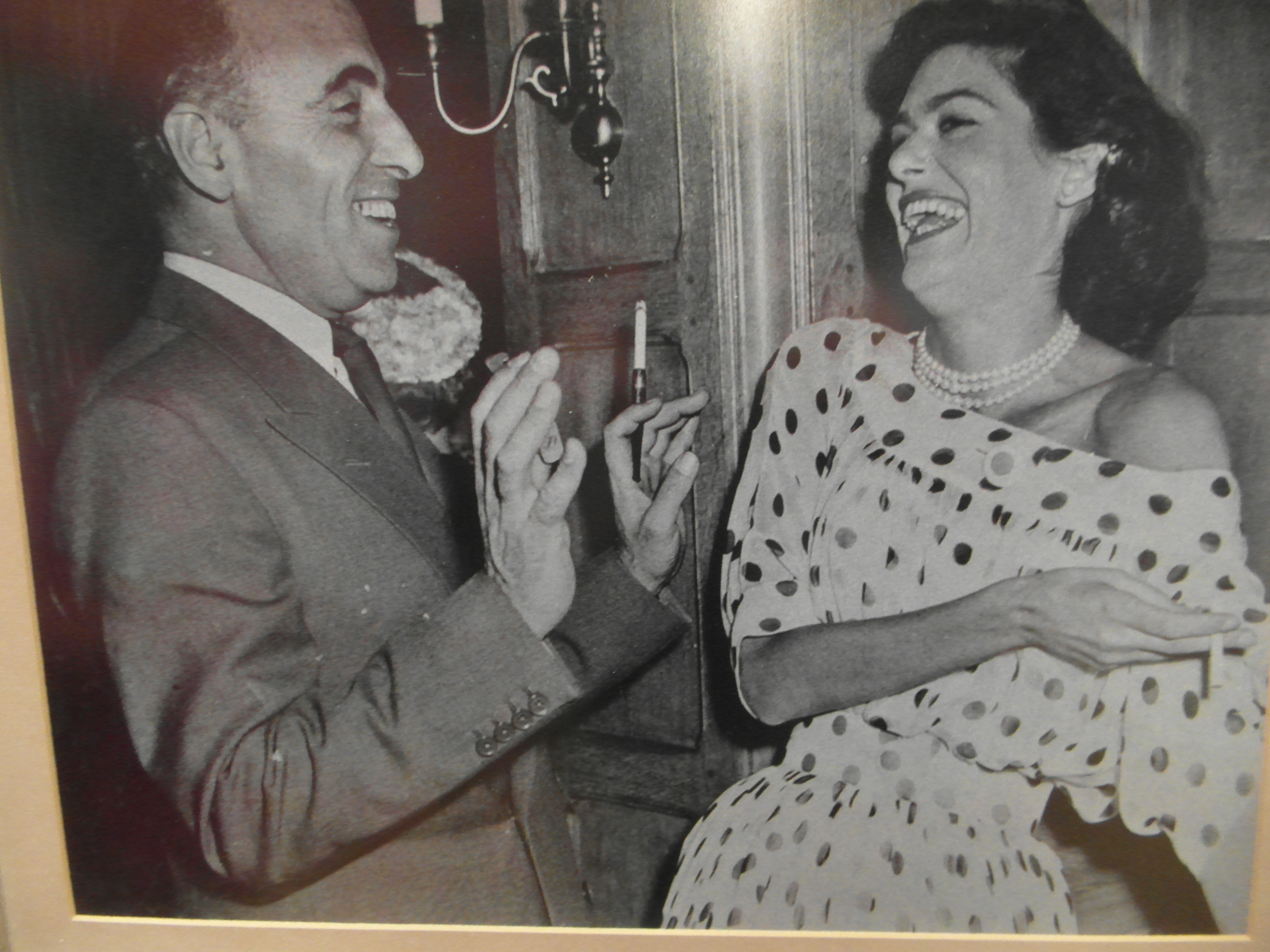
Picture of Greek shipping magnate Yiannis Carras and Melina Mercouri at Vila Galini
But others left their imprint in other ways. One of the guest rooms has a Salvador Dali bathroom, and there are a couple of impressive Dali sculptures in the courtyard.
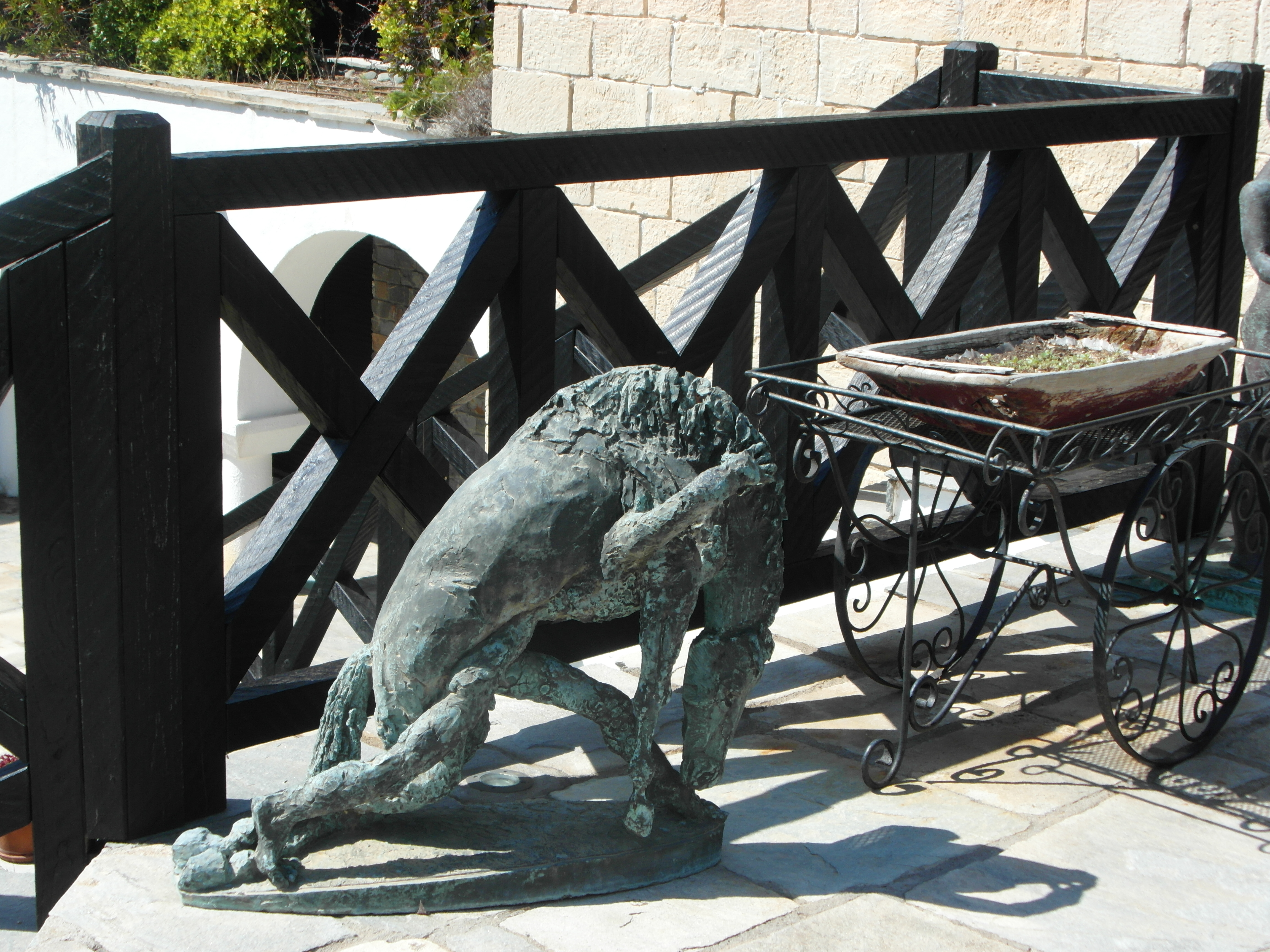
Salvador Dali sculpture in the central courtyard of Villa Galani
There is a magnificent colorful alcove room on the main floor by Yves Saint Laurent. And the music suite of the main living room features the piano of the famous Greek classical pianist, Gina Bachauer.
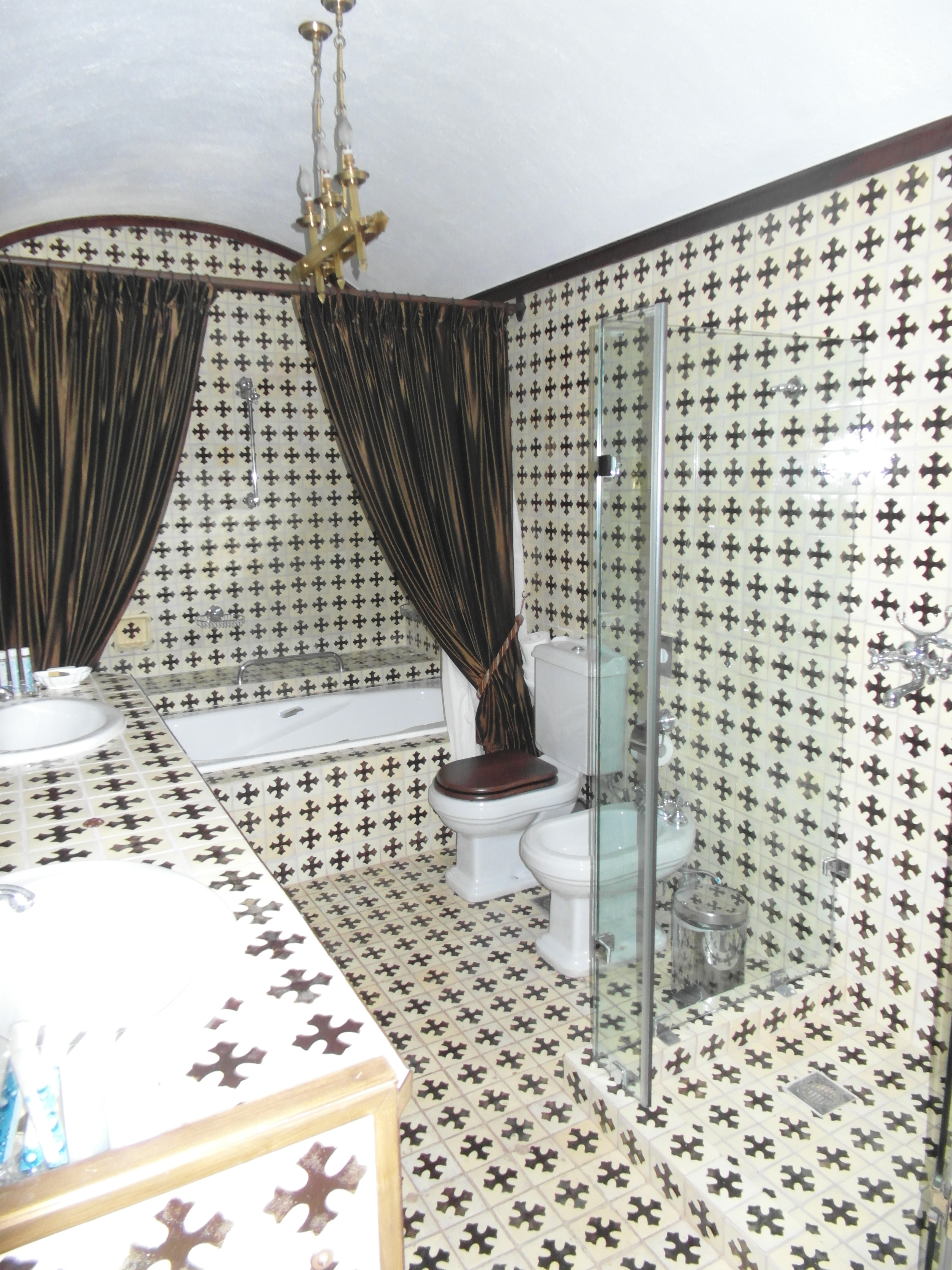
Guest bathroom designed by Salvador Dali at Villa Galini
Villa Galini has been transformed into a hotel which should appeal to all those interested in a totally unique, spectacular and memorable experience. Wedding planners as well as corporate executives in search of a first class locale for meetings, conferences or retreats should give Villa Galini serious consideration. Porto Carras includes three helipads and one the best private marinas in Greece for those who travel in style!
However, should you feel that Villa Galini Hotel is beyond the reach of your wallet, or you simply wish to stay further down the slopes of Mount Meliton, have no fear. Porto Carras is one of the most outstanding resorts in all of Greece. Within the boundaries of Porto Carras lie, in addition to Villa Galini, two five-star hotels, a luxurious casino, two thalassotherapy and spa centers, an olive grove of 45,000 trees and one of the best vineyards in Greece.
But would it not be fun to live the life of a Greek shipping magnate at Villa Galini, if only for a few days?
The autonomous polity of Mount Athos!
In 1960, Greek shipping magnate Yannis Carras, aboard his three-mast 58-meter schooner yacht Carita (later renamed Argonaftis), decided to cruise north to the Mount Athos peninsula of the Halkidiki region of Greece to celebrate the 1,000 year anniversary of the establishment of monasteries around Mount Athos,
I am instinctively intrigued by any anniversary which is worthy of a shipping magnate’s attention, but a millennium anniversary has to be something special and, although I had not heard of Mount Athos before in my Western ignorance of all things related to the Orthodox church, I decided that finding out more about Mount Athos might be worthwhile. Little did I know that I was in store for a real eye-opening voyage of discovery!
Named after the majestic mountain dominating its southern skyline, Mount Athos, the most easterly of the three finger-shaped peninsulas protruding south into the Aegean Sea, has been inhabited by christian monks as early as in the third century AD. Christians believed that the Virgin Mary had landed in Mount Athos with Apostle St John and that the land, referred to as the “Garden of the Virgin”, was sacred territory.
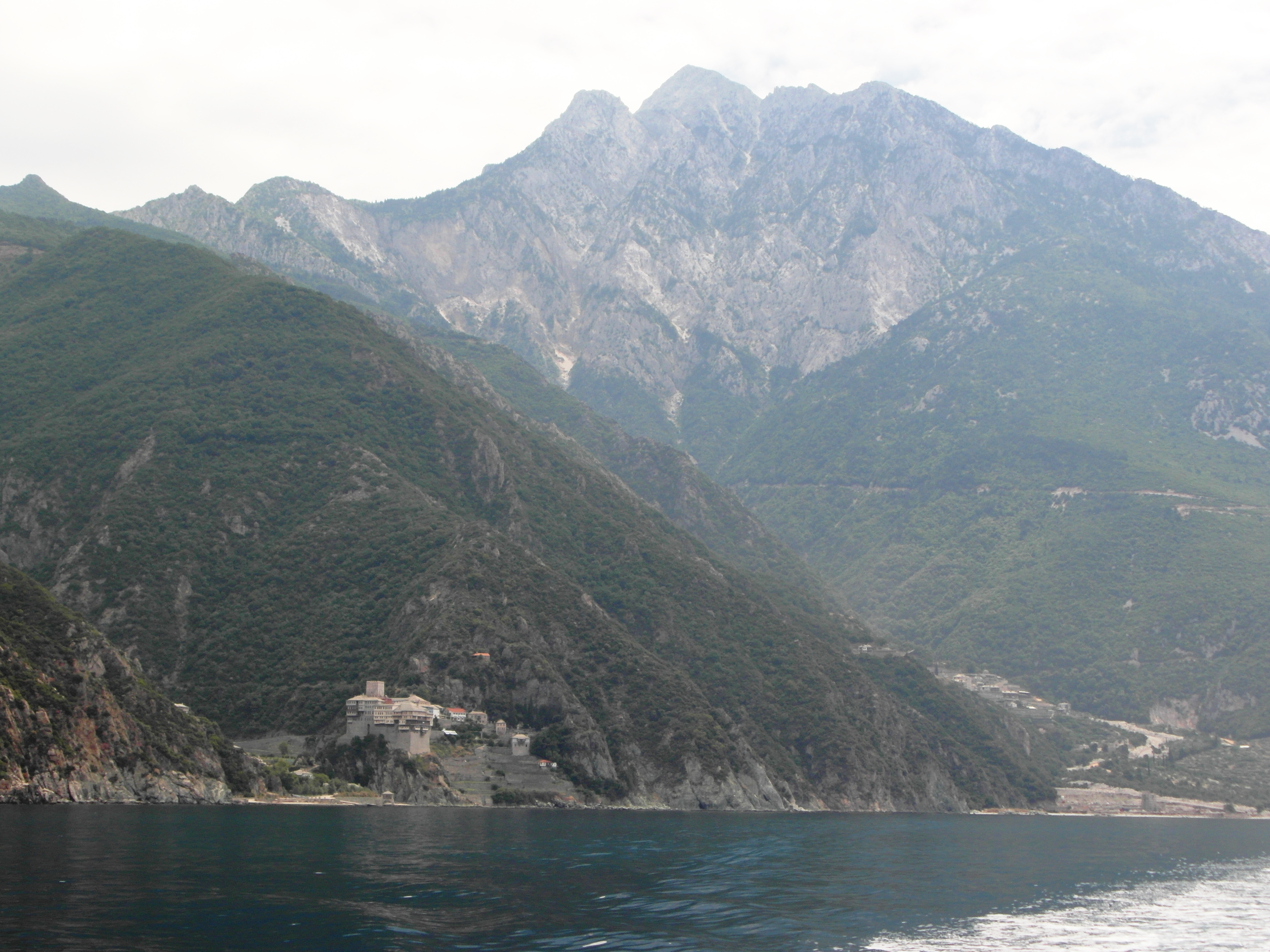
The Holy Mountain was formally set aside exclusively for monks and monasteries of the christian church by the Constantinople Emperor Basil I in 885 AD. During the ensuing one thousand years, monastic rule oversaw the establishment of as many as 180 monasteries on the peninsula, and amazingly survived the fall of the Roman Empire and Constantinople, the breakup of Christiandom into Catholic and Orthodox churches and even the conquest and five-hundred year rule of all of Greece by the Ottoman Empire.
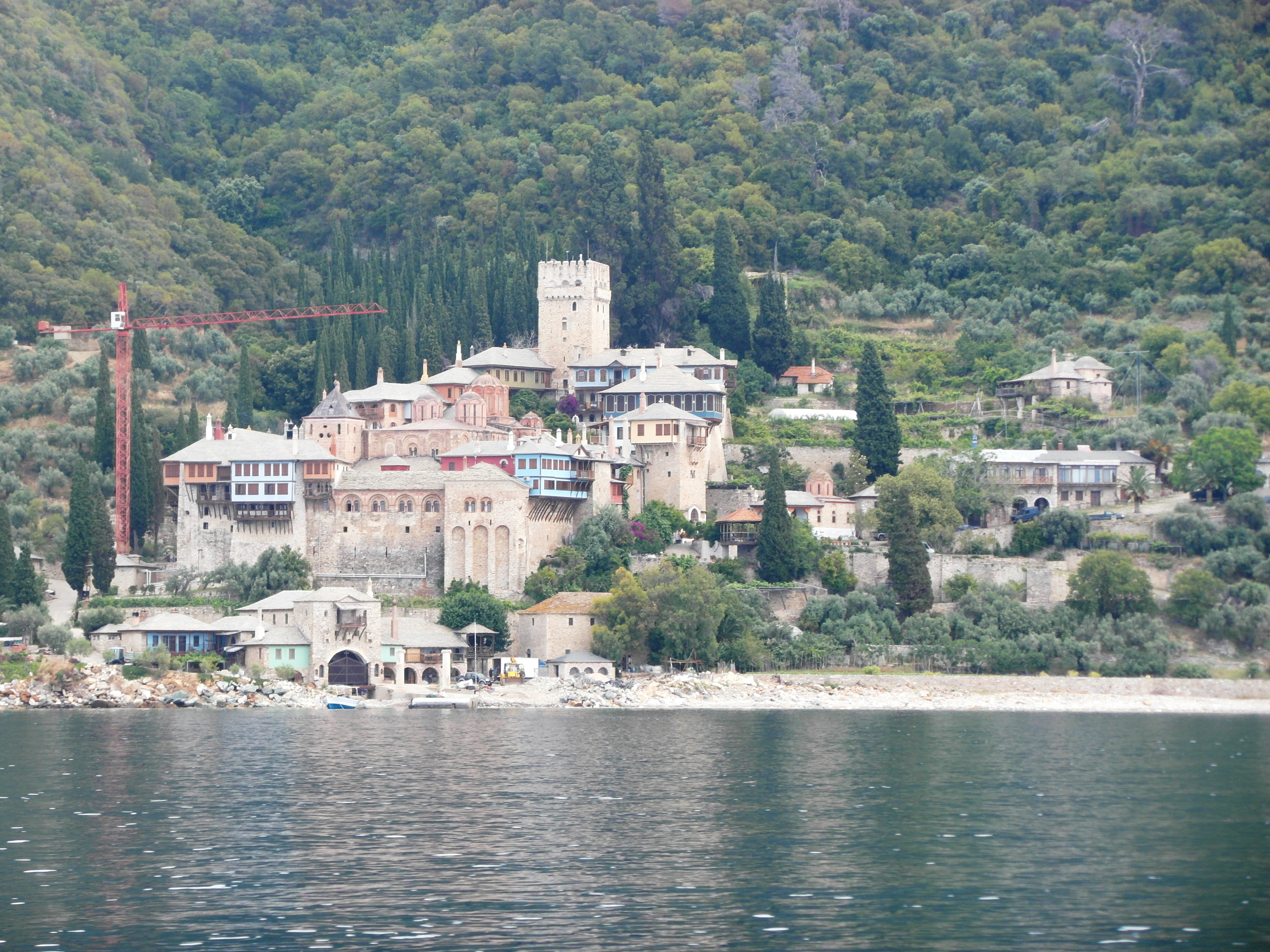
To this day, Mount Athos is for most practical purposes a separate “country”, with special autonomy and powers guaranteed under the Greek constitution as well as the European Union treaties, ever since the Mount Athos monks agreed, in the early part of the twentieth century, to negotiate their entry into the unified Greece following the fall of the Ottoman Empire. In a system largely unchanged since the eight century AD, the twenty Orthodox monasteries currently in Mount Athos by and large operate independently, under the umbrella of a “Holy Community” governing body.
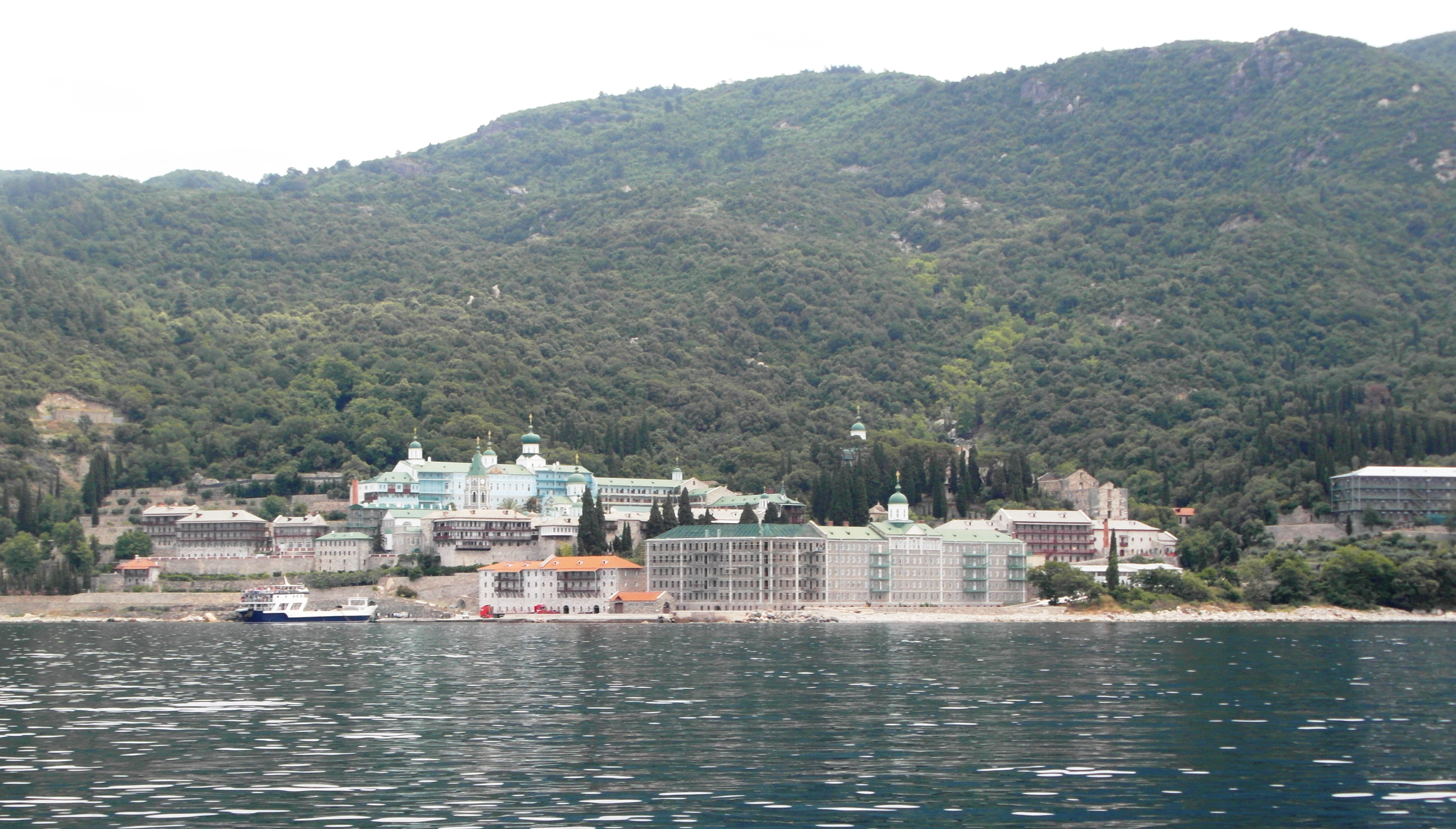
The representative of the government of Greece on the peninsula, technically the governor of the special region, is understandably referred to by some locals as the ambassador of Greece to Mount Athos! He resides in the “capital” of Mount Athos, the administrative town of Karyes.The equivalent of a frontier, near the northern end of the peninsula, prevents entry to all those who have not applied for and received a special written invitation to visit one or another of the monasteries. Save for orthodox monks, the number of entries is restricted to about 120 and the duration of the “visas” is usually less than three days. And only men need apply; this is one “country” where no women are allowed!
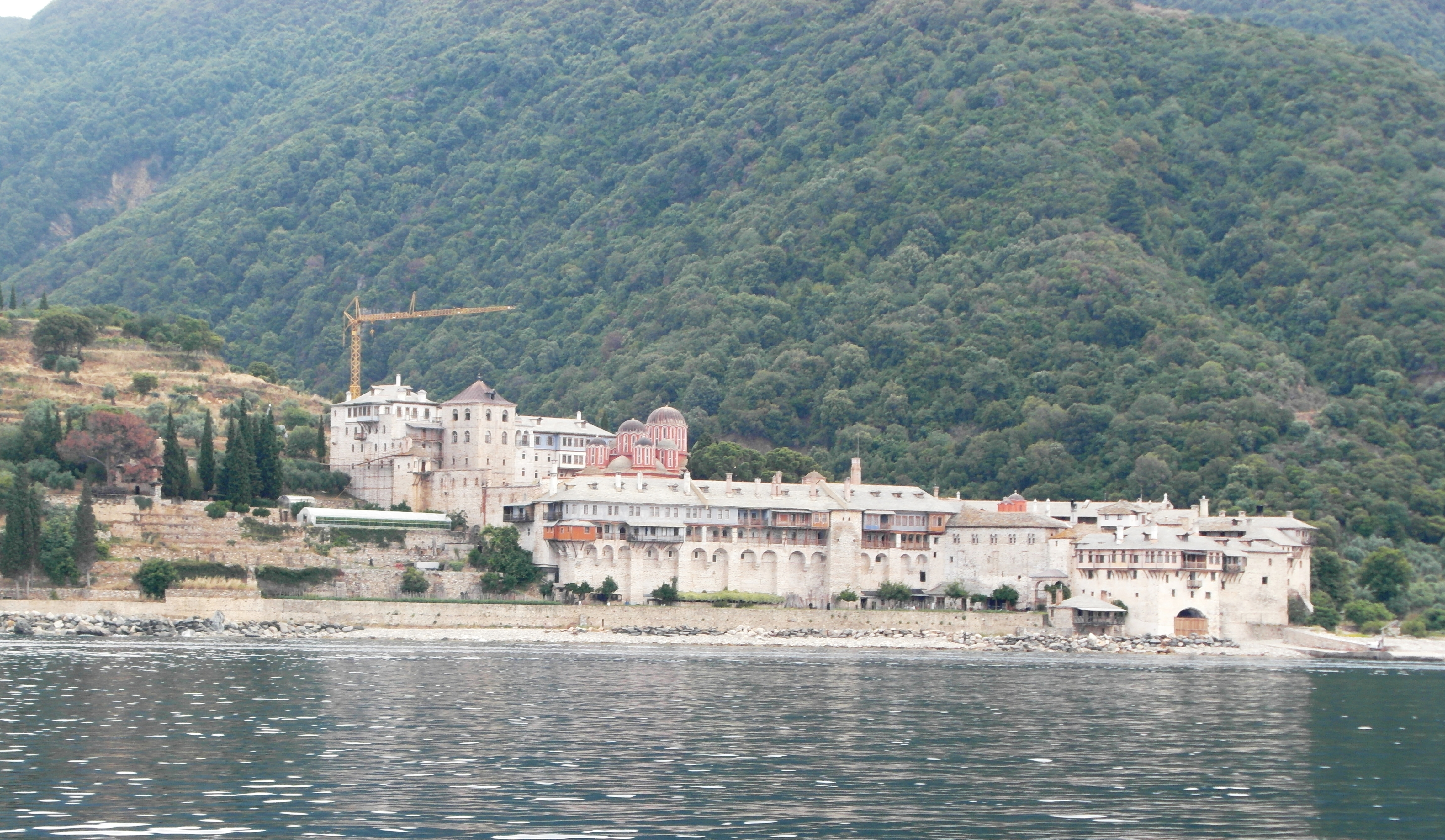
The Mount Athos peninsula holds very special historical, cultural and religious significance to all members of the Orthodox Church, whether they be part of the Russian, Serbian, or Greek Orthodox churches. Its monasteries were and are the repositories of the treasures of the Constantinople church which escaped the Ottoman conquest and have become the most sacred of pilgrimage sites for members of the Orthodox churches.
With entry into the Mount Athos peninsula so severely restricted, most visitors to the area simply tour Mount Athos by way of a boat cruise out of Ouranoupoli, the northern “border” town for Mount Athos, equipped with all the hotel, restaurant and souvenir shops tourists and pilgrims alike have come to expect.
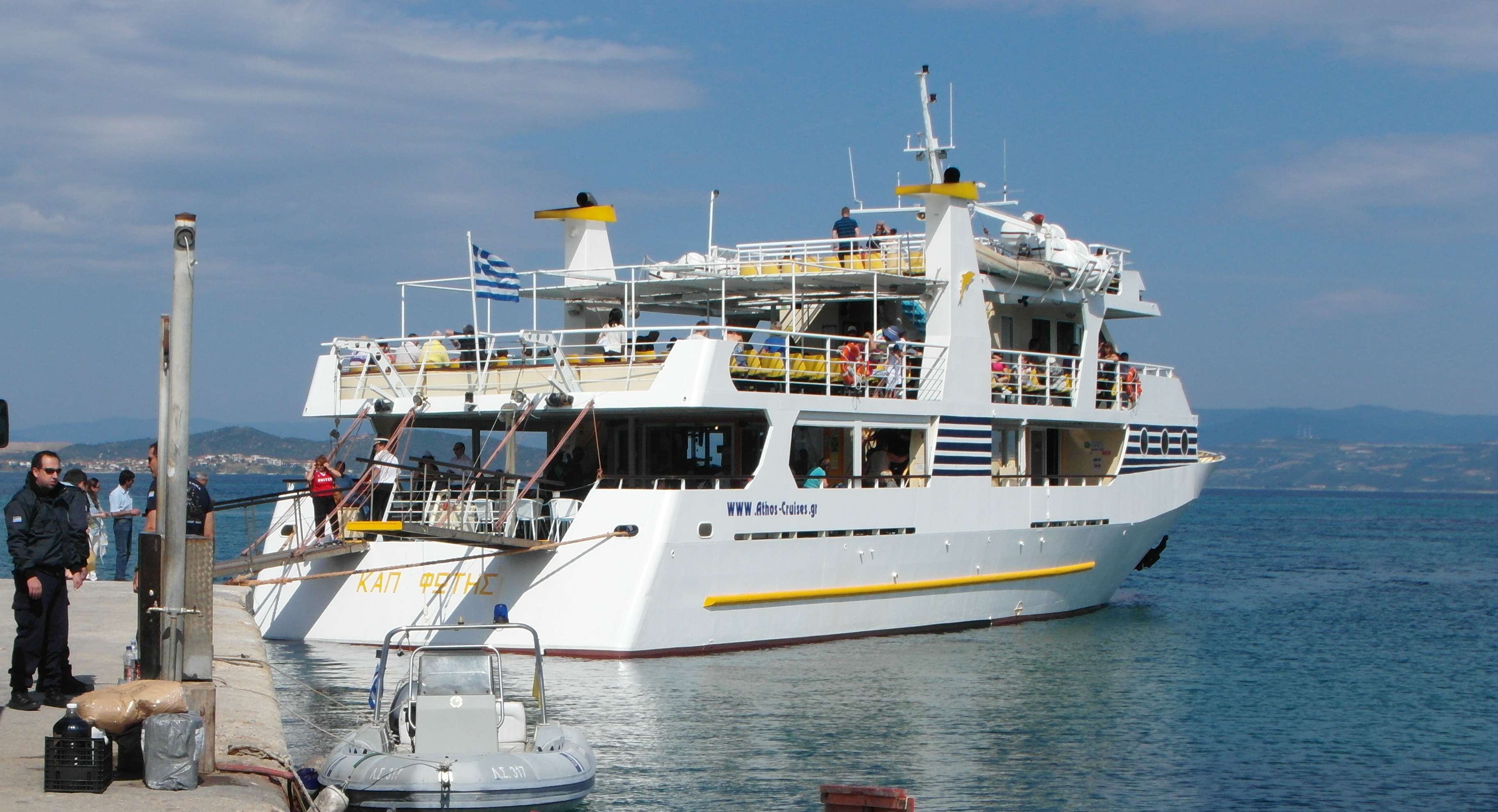
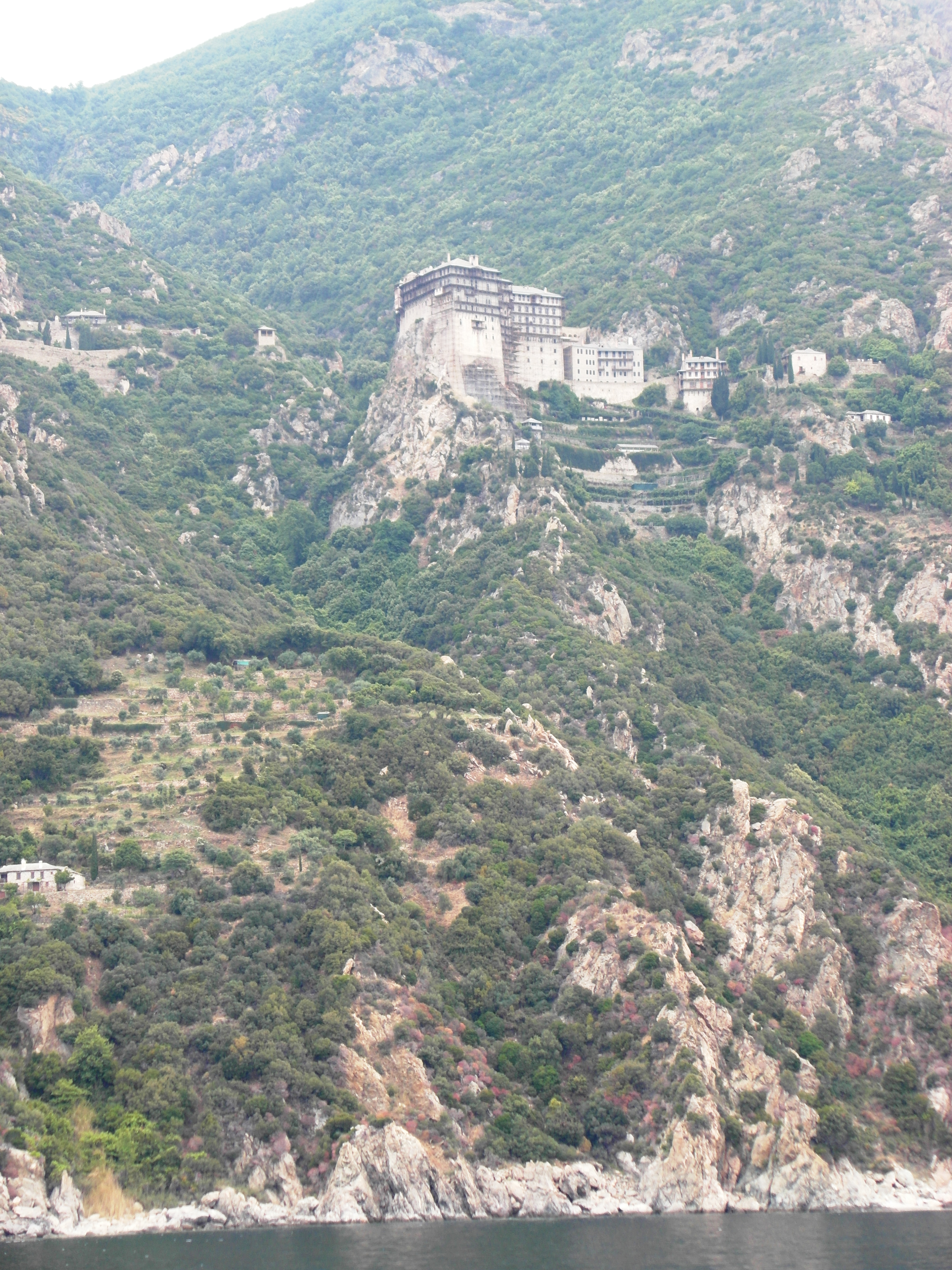
The daily half day morning or afternoon cruise offers visitors a fascinating and scenic three-hour ride along the deserted coast of the peninsula, with breath-taking views of several of the monasteries along the way, each clinging to the sharp cliffs of the peninsula in its own way.
Towards the southern end of the peninsula, the landscape will start rising until the majestic 2,000 meter high Mount Athos takes over the scenery and leaves you breathless and in awe.
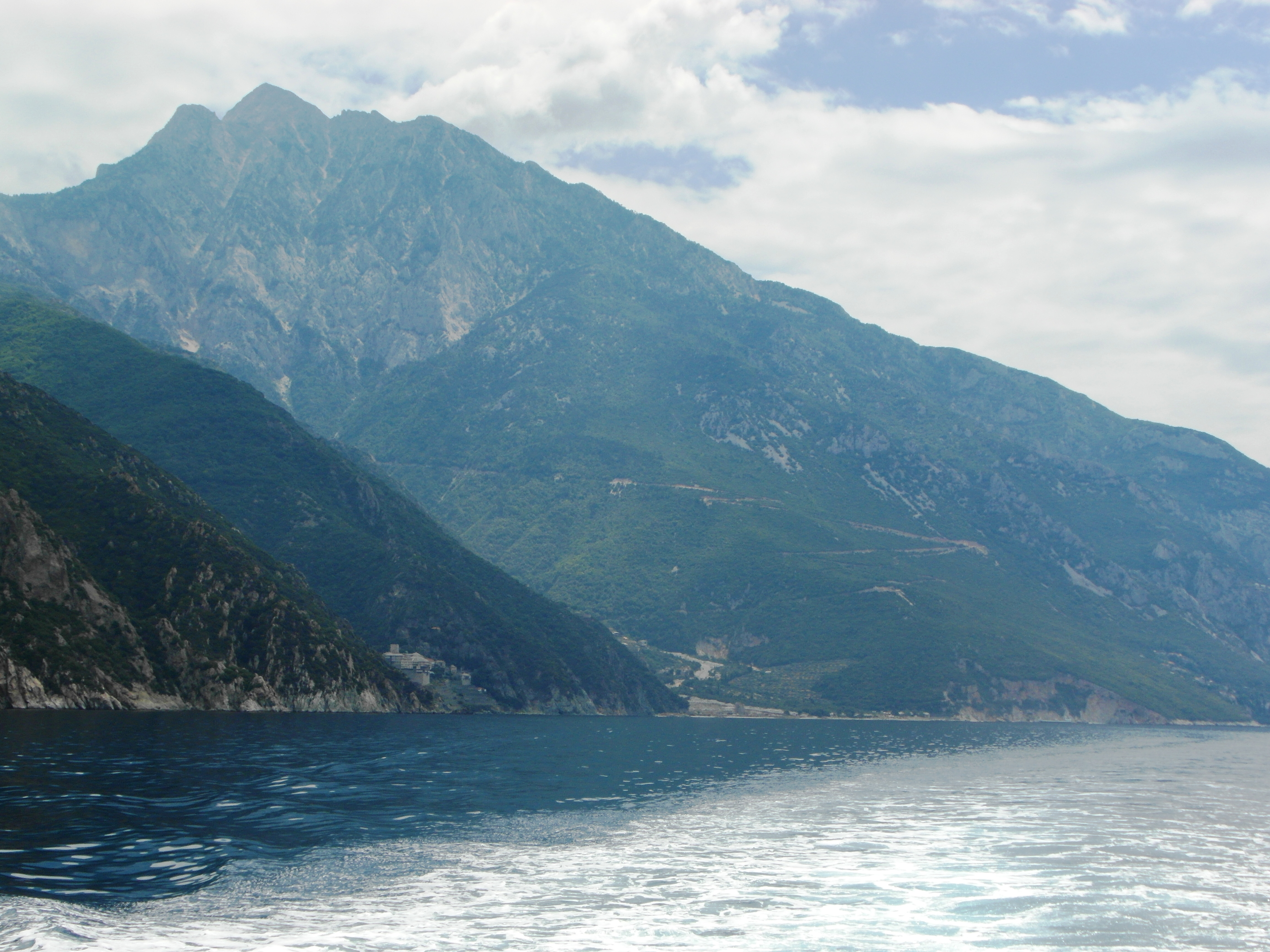
I understand better now why a Greek shipping magnate would want to celebrate the millennium anniversary of such a holy land by sailing north to the Halkidiki region, and I am glad that, in my own way, I have sailed the waters of Mount Athos.
Thessaloniki, formerly the Jerusalem of the Balkans
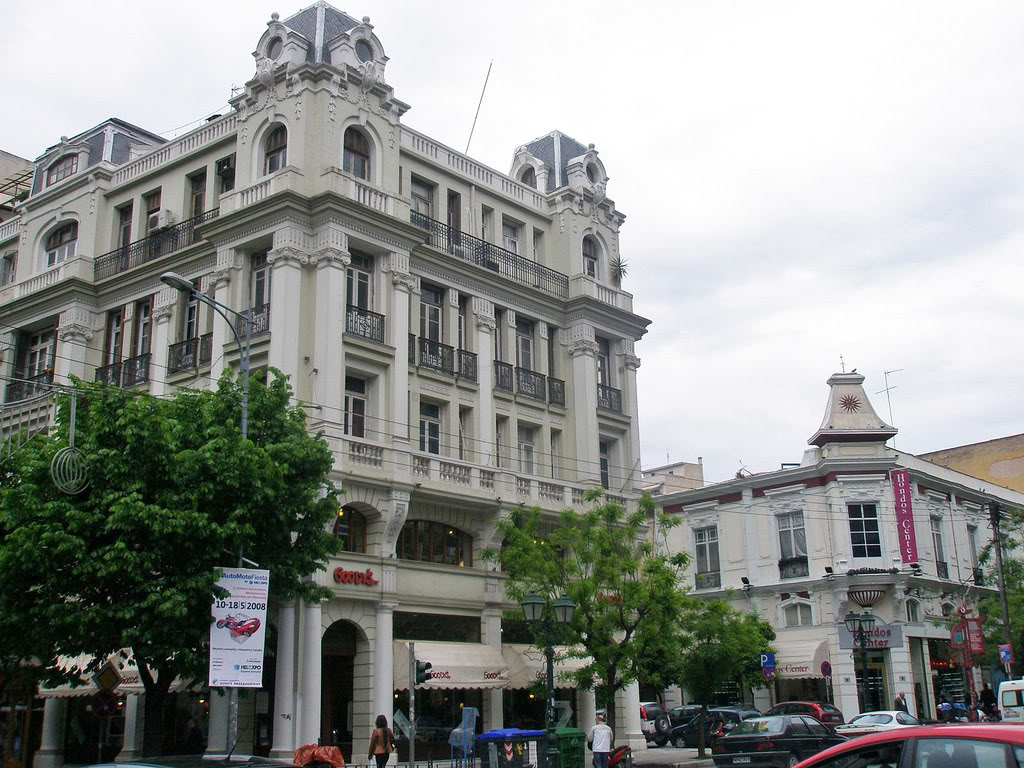
On the right: Banque d’Athenes building now the Jewish Museum of Thessaloniki
Thessaloniki, Greece is a city with a long history, which many nationalities have helped build over the centuries. The Greeks, the Turks, the Bulgarians, the Romans have all played major roles but one group whose major contribution is at risk of being overlooked, because relatively few traces remain of its presence, is the Jews of Thessaloniki.
Yet, barely one hundred years ago, Thessaloniki, the second largest city in Greece, was the “Jerusalem of the Balkans”, as it had been for the previous five hundred years or so.
In fact, the Jewish population of Thessaloniki is the oldest Jewish community in all of mainland Europe. Jewish people had inhabited Thessaloniki almost from the time of its founding in the third century BCE when it was named after Thessalonike, wife of the king of Macedonia and half-sister to Alexander the Great. The apostle Paul came to Thessaloniki in the first century AD to preach to the Jews of Thessaloniki.
The biggest and most significant change came in 1492, a year which most people associate with the discovery of America by Christopher Colombus, but which is also the year of the infamous Alhambra decree in Spain. It is in 1492 that the king and queen of Spain, Ferdinand of Aragon and Isabelle of Castille, passed a decree expelling from Spain all Jews who did not agree to convert to Christianity. Fourteen years earlier, those same two monarchs had created the Tribunal of the Holy Office of the Inquisition, the start of the infamous Spanish Inquisition.
In case you have ever wondered where the Jews expelled from Spain found refuge, the Ottoman empire and the city of Thessaloniki seem to have been the answer for at least 20,000 of them. They were Sephardic Jews who spoke Ladino, a mixture of Spanish and Hebrew comparable to the Yiddish language, a mixture of German and Hebrew, spoken by the Ashkenazi Jews of Germany and Eastern Europe. The Ottoman empire valued the contributions of the Jews to trade and commerce and provided them with a great deal of autonomy in Thessaloniki. The city prospered and Ladino, impressively enough, became the prevalent language of trade in the Adriatic Sea area for a long time. Thessaloniki was second only to Constantinople in size and importance to the Ottoman Empire. For much of the period between the early 1500s to the early 1900s, roughly 500 years, the majority of the population of Thessaloniki was Jewish. At the beginning of the twentieth century, 90,000 of the city’s 170,000 population was Jewish.
The fall of the Ottoman rule in 1912 quickly resulted in major upheavals for the Jewish population of Thessaloniki. A major fire burnt down the city in 1917 and made most of the Jewish population homeless as well as eradicated centuries of Jewish history and buildings. Many Jews left the city as a result. The arrival of a major influx of Greek refugees altered the population mix significantly and permanently. The coup de grace came from the Nazis during the second world war, when all but 1,900 of the 54,000 jews in pre-war Thessaloniki were sent to Polish death camps. Most of them died in the gas chambers of Auschwitz.
Today, Thessaloniki is no longer the Jerusalem of the Balkans, but the Jewish Museum of Thessaloniki, at 13 Agiou Mina Street in the city center, serves as a reminder of the major contribution of the Jews to the growth of the city. The museum is open from 11am to 2pm every day except Monday and Saturday, and 5pm to 8pm on Wednesday and Thursday.